Best Restaurants in Tainan
Tainan is the city Taiwanese food writers point to when they argue about where Taiwan's food culture began, and its restaurant scene is built on dishes that started as street snacks before they ever had a dining room.
Short answer
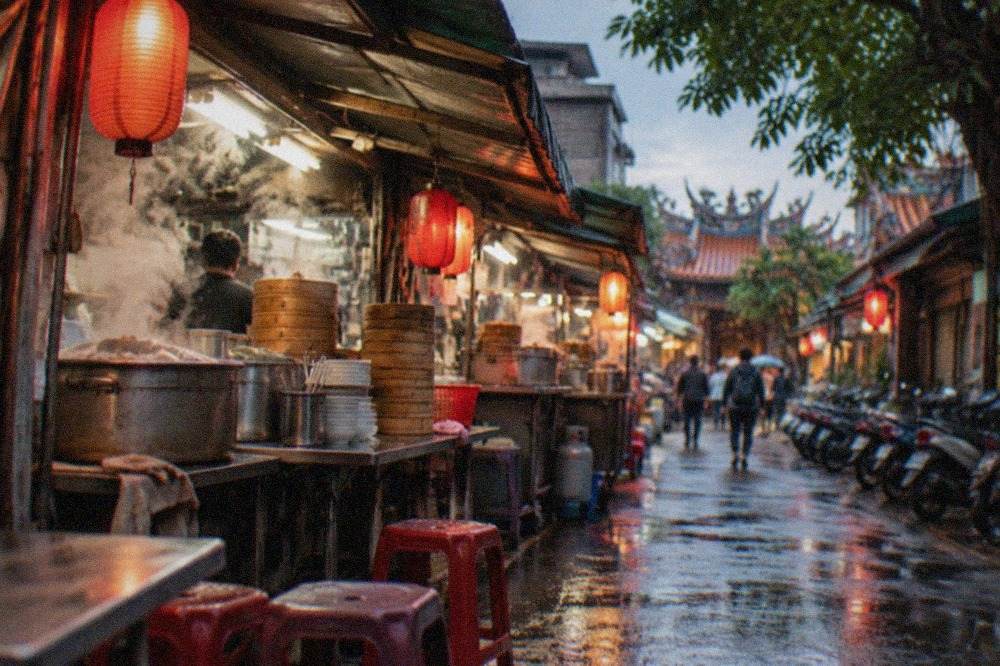
Tainan's restaurant scene runs on beef soup at dawn, danzai noodles and coffin bread as snacks, and milkfish dishes at old-family shops, with the best eating concentrated in West Central District, Anping and the streets around Guohua Street.
Tainan was Taiwan's capital for more than two centuries, until the late nineteenth century, and the city's kitchens kept the habits of that era long after the politicians left. What that means on a plate is a restaurant culture rooted in snack food: dishes invented to be eaten standing up, at a temple festival or a harbor stall, that later moved into family shops with tables. The city's Tourism Bureau markets Tainan as Taiwan's capital of cuisine, and the claim rests on density more than on fine dining. Small shops, long histories and a rotation of night markets that changes by the night of the week.
This guide walks through the dishes that define Tainan's restaurants, the neighborhoods where each one is concentrated, and the practical scheduling that makes a food trip work. For the broader eating landscape, including markets and breakfast, our Tainan Food Guide covers the ground in more detail.
What Makes Tainan's Restaurant Scene Different from Taipei's?
Tainan's food identity is built on snack dishes with long histories rather than on restaurant concepts, and the flavors lean sweet and slow-cooked in a way that traces back to the city's merchant past. Its kitchens favor small family shops over chains, and its most famous dishes, beef soup, danzai noodles, coffin bread and milkfish, all began as street food before they got dining rooms.
Taiwanese food writers often describe Tainan's palate as sweeter than the north's, and the usual explanation is historical: the city's sugar trade and its merchant class shaped a cuisine where sweetness signals care rather than shortcuts. That is a tradition, not a rule, and plenty of Tainan cooking is savory or intensely herbal. What is consistent is scale. The shops that carry the city's reputation are frequently single-dish operations, sometimes a handful of tables, that have served one thing for generations.
The practical consequence for a visitor is that "best restaurant" is the wrong frame. The better question is which dish you want, because the shop that makes the definitive bowl of beef soup is rarely the shop that makes the definitive coffin bread. A good Tainan eating day is a crawl, not a sitting.
Nobody writing this site has eaten in Tainan, so nothing below is a tasting note. Every dish description comes from what the dish is and what published sources say about it, and the scheduling advice comes from the city's own published hours.
Which Dishes Should You Plan a Restaurant Trip Around?
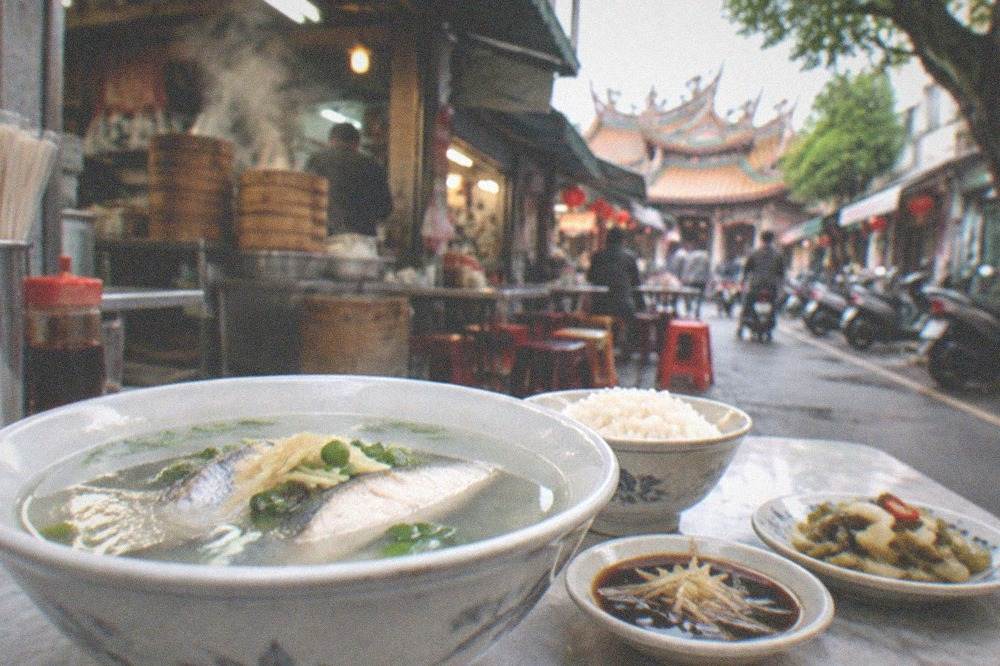
The four dishes that define Tainan restaurant menus are beef soup, served at dawn from freshly butchered meat, danzai noodles, a small bowl of noodles in shrimp-and-meat broth, coffin bread, a hollowed fried bread loaf filled with a creamy stew, and milkfish, served as soup, porridge or pan-fried fillets. Each has its own shop culture and its own time of day.
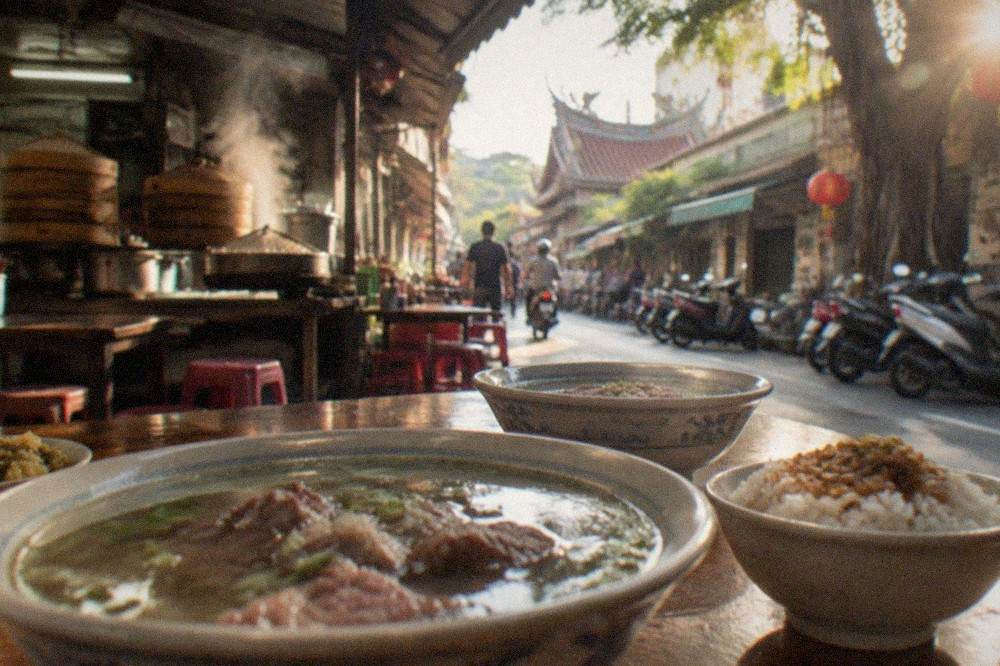
Tainan beef soup is the city's signature restaurant dish and the one with the strangest clock. Shops open before sunrise because the beef arrives from the abattoir in the early hours and is sliced and dropped into boiling broth while it is still warm. The result, by every published description, is a delicate broth and meat that barely cooks in the bowl. It is a breakfast dish, and shops sell out by mid-morning. Our Tainan Beef Soup page covers the dish and the dawn routine in detail.
Danzai noodles began as a shoulder-pole street stall in Tainan, and the city's oldest shops still serve the same small format: a modest portion of noodles, a shrimp or two, bean sprouts and a dark broth, meant to be eaten in a few bites. The Danzai Noodles guide covers its history and where to find it.
Coffin bread is Tainan's most theatrical dish: a thick slab of bread, fried until golden, hollowed out and filled with a creamy chicken or seafood stew, then capped with the cut lid. The name translates exactly as it sounds. The Coffin Bread page explains the origins and the fillings.
Milkfish is the coastal dish. Tainan's lagoon and estuary made milkfish a staple, and restaurants serve every part: belly meat as a soup or pan-fried, milkfish congee as a breakfast, and the fish's intestines as a crisp-fried delicacy that locals treat as a delicacy and first-timers treat as a dare.
| Dish | What it is | When locals eat it | Character |
|---|---|---|---|
| Beef soup | Sliced fresh beef in clear broth, rice on the side | Dawn, before 08:00 | Delicate, barely cooked meat |
| Danzai noodles | Small bowl of noodles, shrimp, sprouts, dark broth | Any time, as a snack | Savory, shrimp-forward |
| Coffin bread | Fried hollowed bread filled with creamy stew | Afternoon or evening | Rich, theatrical |
| Milkfish soup | Belly fillet in clear broth with condiments | Breakfast or lunch | Clean, coastal |
| Milkfish congee | Rice porridge with milkfish and gut | Early morning | Gentle, traditional |
| Shrimp rolls | Anping's crisp-fried shrimp rolls | Lunch or dinner | Street snack gone sit-down |
A walking tour is the efficient way to sample several of these in one evening, since the shops that serve them cluster in walkable old streets and a guide knows which counter to queue at.
Which Neighborhoods Have the Best Restaurants in Tainan?
West Central District holds the densest concentration of old snack shops around Guohua Street and the streets off Minsheng Road, Anping pairs its historic sites with shrimp rolls and fish shops near the old fort, and the area around Tainan Railway Station carries the student-priced eateries of the university quarter. Each district has a distinct food character rather than a ranking.
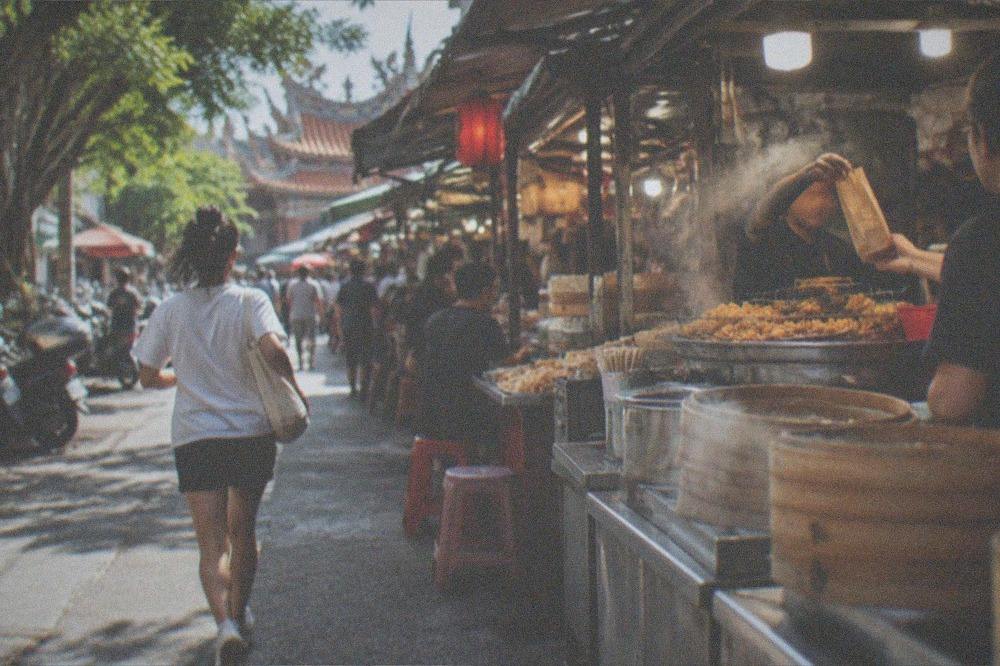
West Central District is the old capital's commercial heart, and its food streets are the reason most visitors stay here. Guohua Street is the spine: a narrow street of snack stalls and old shops where the city's food writers send people who want maximum dishes per kilometer. The blocks around it hold beef soup shops that open at dawn and close before noon, and dessert shops serving shaved ice and tofu pudding. Our Guohua Street page maps it.
Anping is the historic coastal district, and its food follows the harbor: shrimp rolls, fish-ball soup, eel noodles and the candy stalls of Anping Old Street. The eating clusters around the old fort and the tree house, which makes it easy to pair a sightseeing morning with a seafood lunch. The Anping area guide covers the layout.
The station and university quarter, around National Cheng Kung University, runs cheaper and later, aimed at students. It is not where the heritage dishes concentrate, but it is where a visitor on a budget eats well after the old city's shops have closed for the afternoon lull.

| District | Food character | Best for | Timing note |
|---|---|---|---|
| West Central | Heritage snack shops, beef soup, desserts | Maximum variety on foot | Many shops close mid-afternoon |
| Anping | Harbor seafood, shrimp rolls, candy | Lunch with sightseeing | Busy on weekends |
| Station / NCKU | Student eateries, late hours | Cheap evening meals | Runs latest |
| East District | Night markets, newer restaurants | Dadong market nights | Mon, Tue, Fri |
| Yongkang | Local residential eating, few tourists | Escaping crowds | Spread out, needs a bus |
If you are deciding where to base yourself for eating, the Where To Stay In Tainan guide weighs the same districts for hotels.
How Do the Night Markets Fit Into a Restaurant Trip?
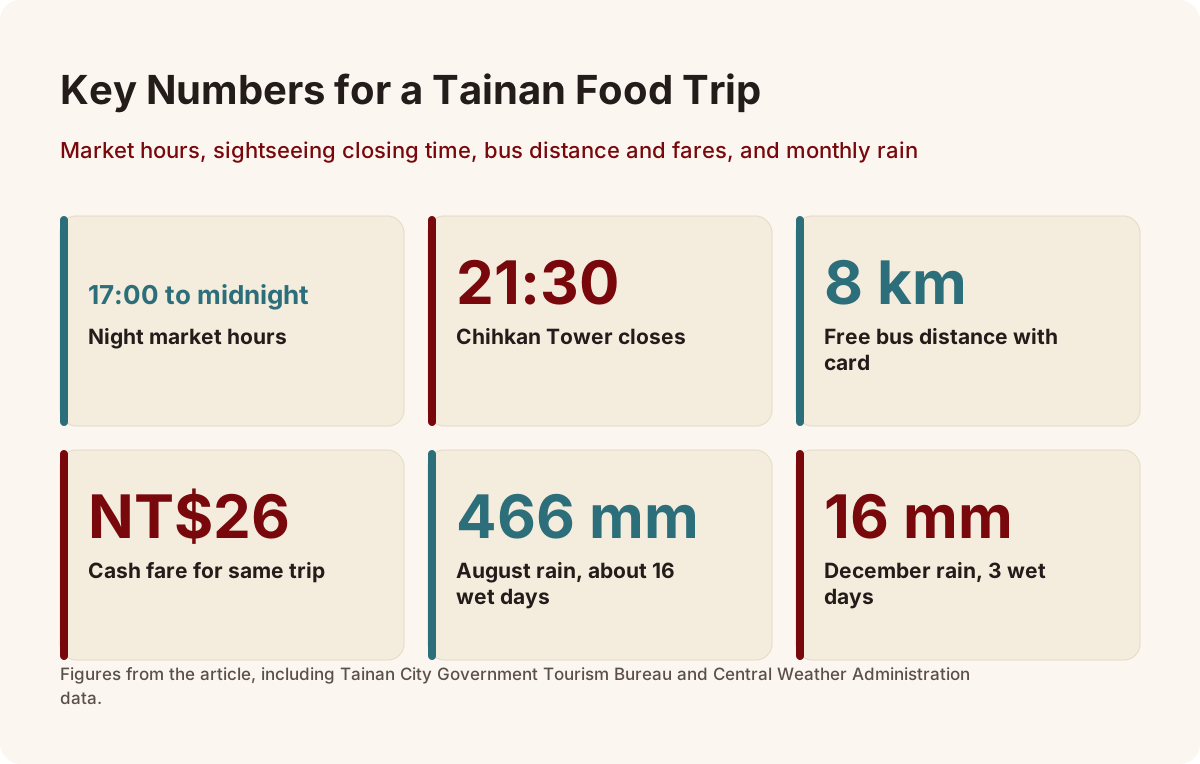
Tainan's three big outdoor night markets rotate by day of week: Garden opens Thursday to Sunday, Wusheng opens Wednesday, Friday and Saturday, and Dadong opens Monday, Tuesday and Friday, all from around 17:00 to midnight. Friday is the only night all three run, and Siaobei, which is indoors and open every day, is the wrong-night and wet-weather answer.
This rotation is the single most useful scheduling fact for a Tainan food trip, and it is verified market by market from the Tainan City Government Tourism Bureau's own attraction pages. The Bureau's roster of registered markets is maintained by the city's market administration, and the days do change, so check the current listing before you plan a night around one.
| Day | Markets open |
|---|---|
| Monday | Dadong (Siaobei, indoor, every day) |
| Tuesday | Dadong |
| Wednesday | Wusheng |
| Thursday | Garden |
| Friday | Dadong, Wusheng and Garden |
| Saturday | Wusheng, Garden |
| Sunday | Garden |
The practical read: a Friday arrival gives you every option. A Wednesday arrival gives you Wusheng and the indoor Siaobei market, which is no hardship, since Siaobei runs noon to midnight daily and covers the wet-weather case. Locals compress all this into a seven-character rhyme, but the rhyme is shorthand and the table above, not the rhyme, is the schedule. Our Tainan Night Markets page carries the full market-by-market detail, including hours.
A night market is not a restaurant, but it is where a lot of Tainan's best cooking happens, and the stalls there serve the same dishes the old shops serve, cooked in front of you. Treat the two as one scene. The Tainan Street Food guide covers the stall side.
What Does a Full Day of Eating in Tainan Look Like?
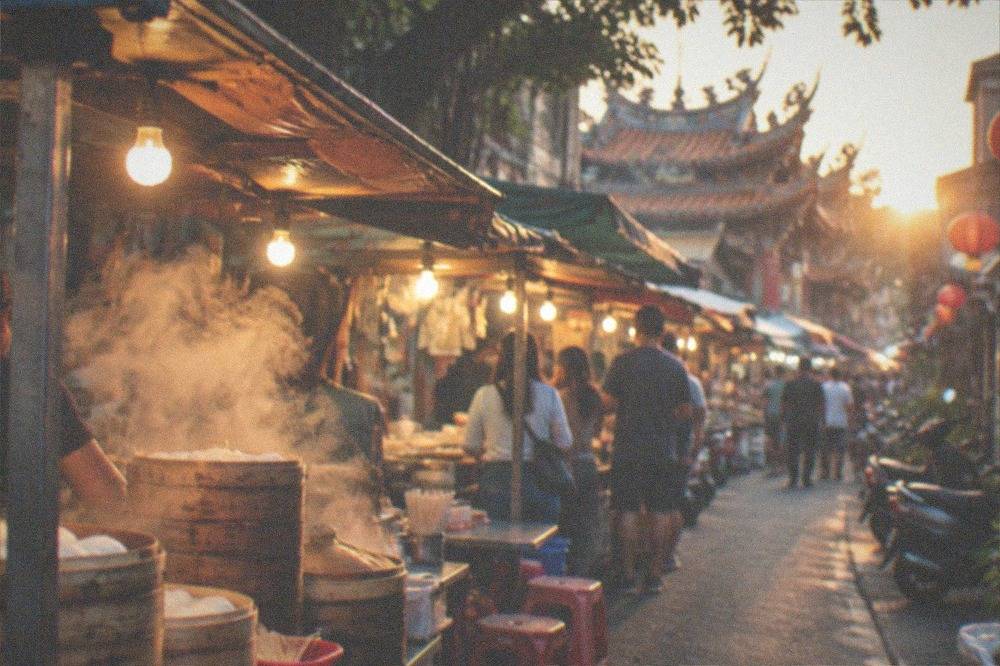
A classic eating day starts with beef soup at dawn, moves to milkfish congee or danzai noodles mid-morning, uses the afternoon lull for coffin bread and a temple walk, and ends at whichever night market is open that evening, with Chihkan Tower open until 21:30 as the after-dinner option. The city's bus network makes the first 8 km of every trip free with an electronic card.
The dawn start is not a gimmick. Beef soup shops open in the early hours because the meat does, and by mid-morning the best bowls are gone. The city's bus system makes the rest of the day cheap: the first 8 km on the trunk and branch network is free with an EasyCard, iPASS, Citizen Card or iCash 2.0, provided you tap on and tap off, and tap off is the part visitors miss. The cash fare for the same trip is NT$26. The scheme runs for the 2026 calendar year, so treat it as current policy rather than a permanent one. The Getting Around Tainan guide covers the cards.
The afternoon lull is real and worth planning around. Many old shops close after lunch and reopen in the evening, which makes the stretch between 14:00 and 17:00 the natural time for the sightseeing that sits beside the food: the temples of West Central District, or Anping's forts. Chihkan Tower is open 08:30 to 21:30 daily, per the Tourism Bureau's page for the site, and that late closing is unusual in Tainan, where most historic sites shut at 17:30. It is one of the few heritage sights a visitor can see after dinner, which pairs neatly with an evening food crawl.
Seasonally, two calendar facts shape the menu. The city's festival calendar puts mango season in June and July, when Yujing's orchards flood the dessert shops and shaved-ice stalls with fresh mango, and the Qigu Seafood Festival in July and August, when the lagoon coast's oyster and milkfish cooking gets its annual showcase. Our Best Time To Visit Tainan guide weighs the seasons.
How Do You Order at a Tainan Shop Without Speaking Chinese?
Most old Tainan shops operate by pointing, picture menus and a small set of dish names you can learn, and the city has been expanding bilingual signage at tourist-facing markets and facilities, though the coverage is uneven in older, smaller shops. Cash is essential at night markets and small eateries, while cards work at hotels, chains and larger restaurants.
The city government runs an English-friendly program that has been adding bilingual signage and menus at key sites, including Garden Night Market as a demonstration site, but the honest expectation is uneven coverage: strong in the tourist core, patchy in the older shops that serve the best food. Our English In Tainan page covers the reality in detail.
Payment matters more than language. Night markets, street stalls, small family restaurants and temples are cash-first, and the reliable ATMs are the ones inside convenience stores, which are everywhere. Cards work at hotels, department stores, chain restaurants and larger shops. The Tainan Cash And Cards question is covered on the practicalities pages.
A few phrases carry a long way: the names of the dishes themselves, since ordering is often just saying the dish and holding up fingers for the count, and "shao tang" for less soup if you want a dry version of a noodle dish. Beyond that, the pointing-and-nodding system at a one-dish shop is close to foolproof, because there is only one thing to order.
Can You Build a Restaurant Trip Around Tea and Desserts?
Yes, and Tainan's tea and dessert culture is deep enough to carry a whole afternoon: the city has a formal tea-ceremony tradition you can sit for, dessert shops serving shaved ice, tofu pudding and mango ice in season, and old streets where tea houses occupy heritage buildings. The tea ceremony is bookable as a short experience with a guide who explains the oolong service.
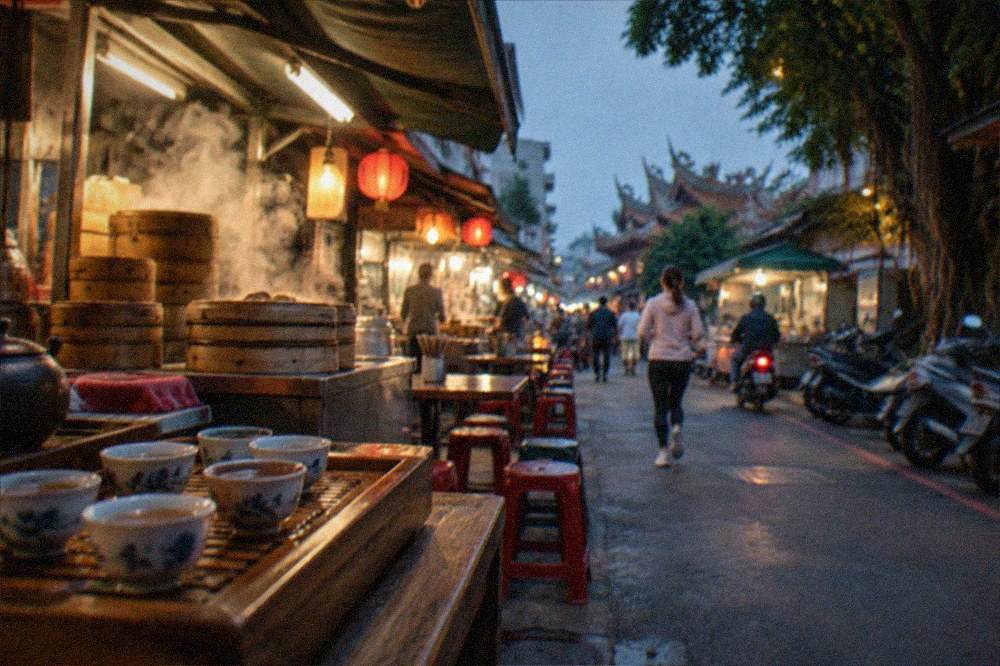
Tea in Tainan is not just a drink with a meal. The city has shops offering a formal Chinese tea ceremony built around oolong, where the service, the water temperature and the sequence of infusions are the point, and a short guided session explains all of it to visitors. It converts an afternoon gap between the lunch lull and the night market into a structured experience, and it is one of the few food-culture activities in the city that is genuinely bookable rather than walk-in.
Desserts are the other half. Tainan's dessert shops are a category of their own: tofu pudding in ginger syrup, shaved ice mountains topped with mango in June and July, and the old confectioners around Anping selling candied fruit and peanut brittle. The Tainan Desserts page and the Tainan Mango page cover the sweet side of the city.
The pairing that works on a schedule: tea ceremony in the mid-afternoon, dessert crawl after, night market after that. It fills the one dead stretch in the Tainan food day, the hours when the old shops are closed and the markets have not opened.
What Should You Know Before Booking a Food Tour in Tainan?
A food tour in Tainan is worth booking if you want the old-city snack streets interpreted rather than navigated, because the shops are small, the signage is mixed-language and the dish knowledge is local. The city has no free walking tours at all, so the choice is between a paid guided walk and going it alone with a good map.
The walkable old city makes self-guiding genuinely viable, and a lot of visitors do it well with the dish list above and the night market table. What a paid tour adds is the counter-level knowledge: which shop on Guohua Street serves the version of a dish locals queue for, what to order at each stop, and the history that explains why the dish exists. Tainan's food tours are mostly walking formats of four to six hours with tastings built in, and the food-and-culture walk is the one that covers the most ground in the old city.
For visitors arriving from Kaohsiung, a day-trip format bundles the food stops with the heritage sites and the drive, which trades depth for not having to plan the rail transfer. The Kaohsiung To Tainan guide covers the route and the fare.
One honest caveat on timing: tours run rain or shine, and Tainan's rain is a summer event. The Central Weather Administration's 1991 to 2020 normals for the city show August bringing 466 mm of rain across about 16 wet days, against December's 16 mm across 3. From October to March the city is dry and warm, which is when the walking formats are at their best. The Tainan Weather and Taiwan Typhoon Season pages carry the full picture.
If the guided walk is not your pace, the tea ceremony is the other food-culture experience worth reserving, and it fits the afternoon gap that the walking tours do not cover.
Common Questions About Tainan Restaurants
What is the best restaurant in Tainan?
There is no single best restaurant in Tainan, because the city's food reputation rests on small single-dish shops rather than destination restaurants. The better approach is to pick the dish first, beef soup, danzai noodles, coffin bread or milkfish, and then find the shop known for that dish. Nobody writing this site has eaten in Tainan, so we do not rank shops, and no verified ranking exists.
Is Tainan or Taipei better for food?
Tainan is the city Taiwanese food culture writers most often credit as Taiwan's food capital, on the strength of its snack heritage and its density of old family shops. Taipei has more variety, more international dining and later hours. The two are different propositions rather than a ranking, and visitors with time for both usually eat street food in Tainan and everything else in Taipei.
What food is Tainan famous for?
Tainan is famous for beef soup served at dawn, danzai noodles, coffin bread, milkfish in soup and congee, shrimp rolls from Anping, and a dessert culture built on tofu pudding and mango shaved ice. The night markets, which rotate by day of week, carry the same dishes in stall form.
Do I need to book restaurants in Tainan in advance?
Almost never. The old snack shops are walk-in, first-come operations, and the queue is the booking system. The exceptions are formal experiences like a tea ceremony or a guided food walk, which are worth reserving ahead, and large seafood restaurants in Anping on weekends.
What time do restaurants close in Tainan?
Many old shops close in the mid-afternoon after the lunch trade, and beef soup shops close by mid-morning once the day's meat is gone. Evening eating shifts to the night markets, which run from about 17:00 or 18:00 to midnight depending on the market and the day of the week, and to the student quarter around the railway station, which runs latest.
Can vegetarians eat well in Tainan?
Yes. Taiwan has a large Buddhist vegetarian tradition and Tainan, as an old temple city, has a strong vegetarian restaurant base, including buffet-style shops priced by weight. Our Tainan Vegetarian page covers the options, and temple districts are the most reliable places to look.
The short version of all of this: pick your dishes, sleep early enough to catch the beef soup, plan your market night against the rotation table, and leave the afternoon to the tea houses and the temples. Tainan rewards a slow crawl and punishes a single reservation, and the city has been cooking this way since before it stopped being Taiwan's capital. If you are planning the wider trip, our Tainan Travel Guide homepage carries the full attraction, transport and itinerary coverage alongside this food track.