Anping Old Street
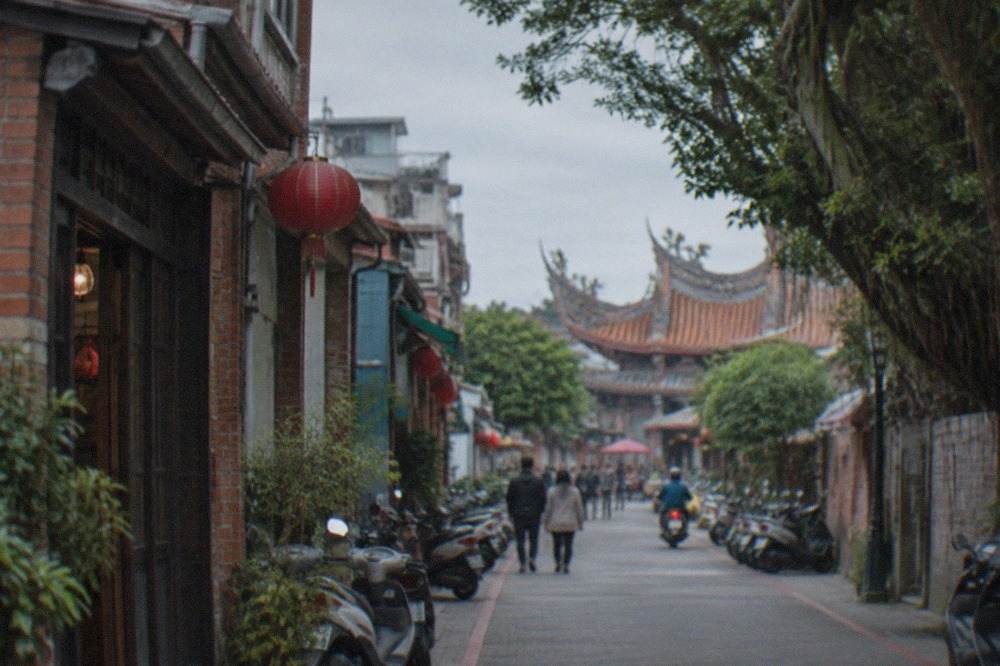
Anping Old Street is the historic lane network at the heart of Anping District in Tainan, the oldest continuously settled part of the city, where the Dutch East India Company established Fort Zeelandia in 1624.
Short answer
Anping Old Street is a cluster of narrow lanes in Tainan's Anping District, walkable in one to two hours, surrounded by ticketed historic sites such as Anping Old Fort and the Anping Tree House and free temples, reachable by city bus from the old city center.
Anping Old Street
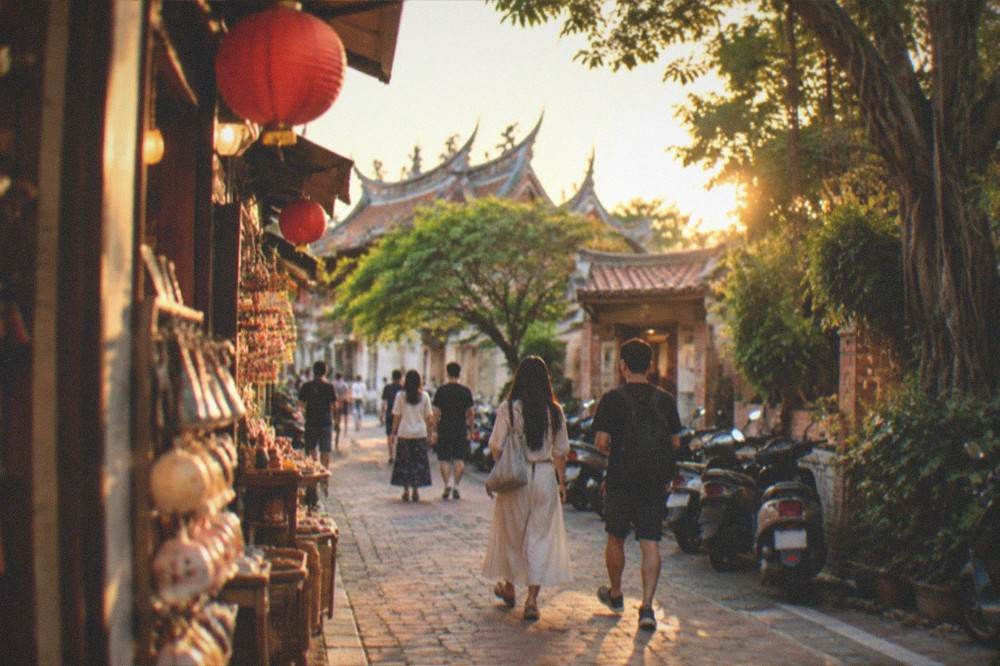
Anping Old Street is the lane network at the center of Anping District in Tainan, on the site where the Dutch East India Company established its Taiwan foothold in 1624 and completed Fort Zeelandia in 1634. The Tainan City Government Tourism Bureau's page for Anping Old Fort records that after Koxinga took the fort in 1662 he renamed the place Anping, and the streets around it grew into the settlement that locals called the King's Castle. Today the district draws millions of visitors a year: the Tourism Administration's 2023 dataset records 4,441,443 visitors to Anping as a district, roughly ten times the number recorded at Chihkan Tower in the old city.
The street itself is free to walk. The lanes are narrow, brick-walled and shaded, and the sights that charge admission sit at their edges: Anping Old Fort, the Anping Tree House and the Eternal Golden Castle, each NT$70 at the gate. This page lays out what the street is, what you can see on it, how to reach it, what it costs, where to eat, and when to go, using figures published by the city and by the venues themselves.
What Is Anping Old Street?
Anping Old Street is the collective name for the historic lane network at the heart of Anping District in Tainan, on the site of Taiwan's oldest Dutch-era settlement, established when the Dutch East India Company began building Fort Zeelandia in 1624. It is free to walk, roughly one to two hours of wandering, and it sits inside a district that recorded 4,441,443 visitors in 2023.
The settlement predates the city center across the river by more than two centuries. The Tourism Bureau's own page for Anping Old Fort states that the Dutch occupied the Anping site in 1624 and completed Fort Zeelandia in 1634, and that after Koxinga took the fort in 1662 the inner fort became his residence, known locally as the King's Castle. The streets around that castle grew into a fishing and trading town, and that town's lane pattern is what visitors walk today.
One honest detail from the Bureau's page is worth carrying: the only genuine Dutch-period remains at Anping Old Fort are the brick walls of the south outer rampart in front of the fort. Most of what a visitor photographs there, including the pointed-roof lookout tower and the white walls, is Japanese-era rebuilding and a 1975 city government renovation. The old street is the same story, a living layering of Dutch foundations, Qing-period lanes, Japanese-era brick and postwar shopfronts, not a preserved film set.
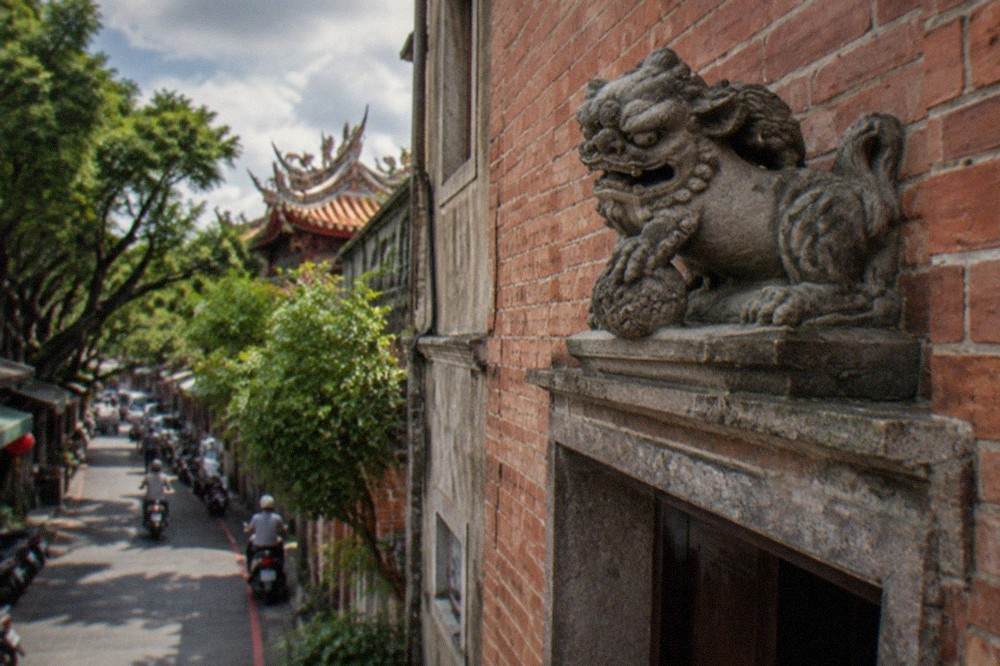
The street is also the home of the Anping sword lion, the carved guardian face that appears on doorways and shopfronts across the district. The Anping sword lions have their own page on this site, and hunting them door to door is the single most common way visitors structure a walk through the lanes.
Anping is not a single street but a district-scale destination, and the Anping area guide covers the full spread: the fort, the tree house, the canal, the old street, the temples and the waterfront. Plan on at least half a day; the Anping half-day itinerary sequences the district's sights for exactly that.
What Can You See on Anping Old Street?
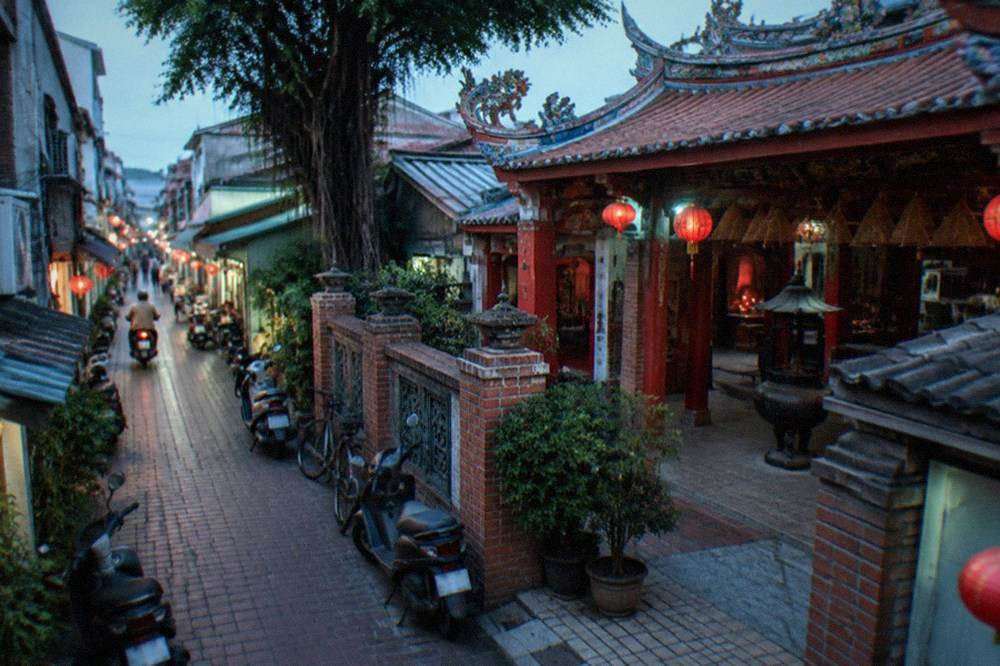
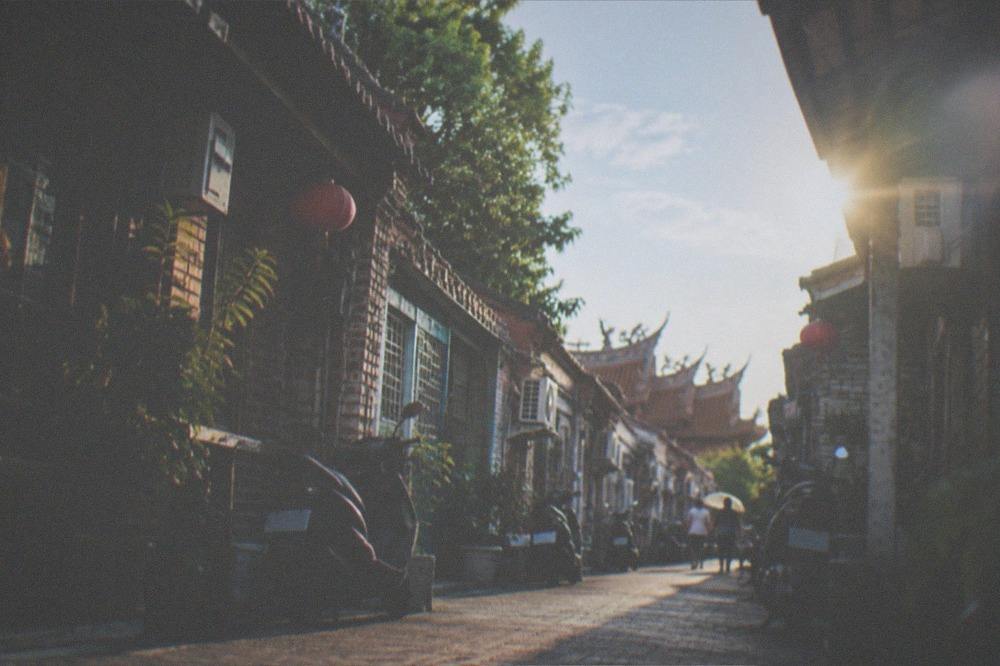
The lanes themselves are the main sight: narrow brick streets lined with sword lion carvings, old doorways, snack stalls and small shrines, all free to wander. Around their edges sit Anping Old Fort at NT$70, the Anping Tree House at NT$70 and the Eternal Golden Castle at NT$70, plus the Grand Matsu Temple, which charges no admission and opens 06:00 to 21:00 daily.
The sword lions are the street's signature. These carved or painted lion faces, biting a sword, appear on door lintels and wall mounts throughout the old lanes, and the Tourism Bureau treats them as a distinctive Anping craft tradition. A walk organized around finding them turns the street into a slow treasure hunt, and the shops along the lanes sell modern versions in ceramic and wood.
The Grand Matsu Temple is the district's most important temple and one of the free-entry sites the city lists. The Bureau's page gives hours of 06:00 to 21:00 daily, with no ticket. It sits within walking distance of the old fort, and its scale explains part of why temple tourism, not fort tourism, is Tainan's real visitor economy: the Tourism Administration's 2023 dataset shows temple complexes drawing millions against the hundreds of thousands at the ticketed Dutch sites.
The Anping Tree House is the most photographed ticketed site in the district. The Bureau's page describes a former merchant warehouse engulfed by banyan roots, open 08:30 to 17:30 daily, NT$70 at the gate, half price for concessions and free for Tainan residents with ID. The city's own pages carry the disclaimer that prices are for reference and the on-site notice governs, so treat every figure here as the published rate rather than a guarantee.
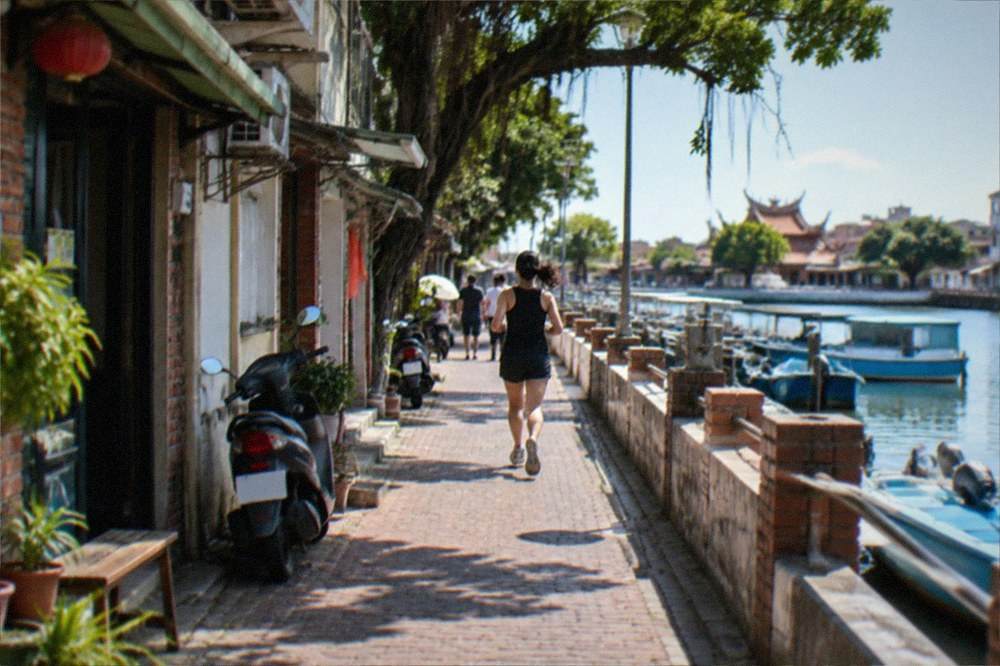
The Anping Canal runs along the district's edge, and the Anping canal page covers the waterfront side of a visit. Further afield, the Sicao Green Tunnel boat ride through the mangroves costs NT$200 for either of its two routes, the Green Tunnel route and the longer Taijiang route, which cost the same; never let anyone tell you one is cheaper.
One experience that pairs naturally with the street's old brick backdrop is costume. Qipao rental on Anping Old Street is a well-reviewed way to walk the lanes dressed for them.
The operator's live listing carries the current from-price, availability and pickup details. Rental runs for a full day, which is long enough to walk the lanes, visit the tree house and photograph the canal in the same outfit.
How Do You Get to Anping Old Street?
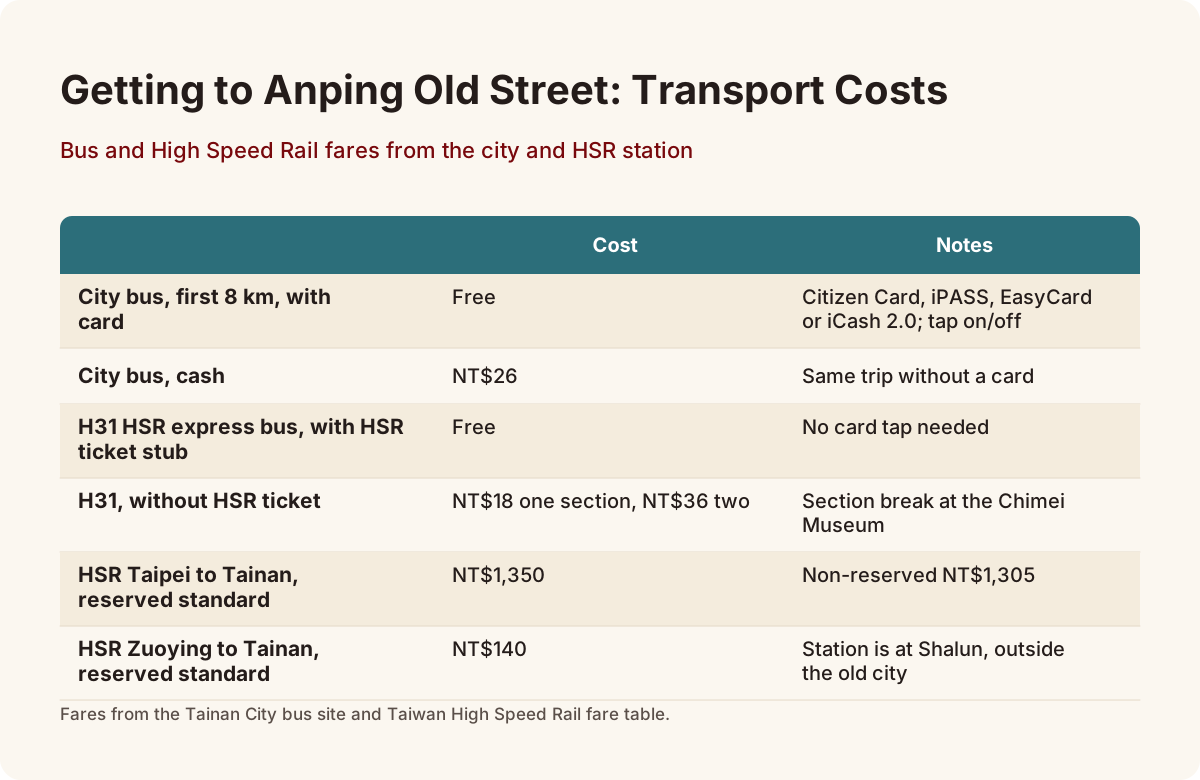
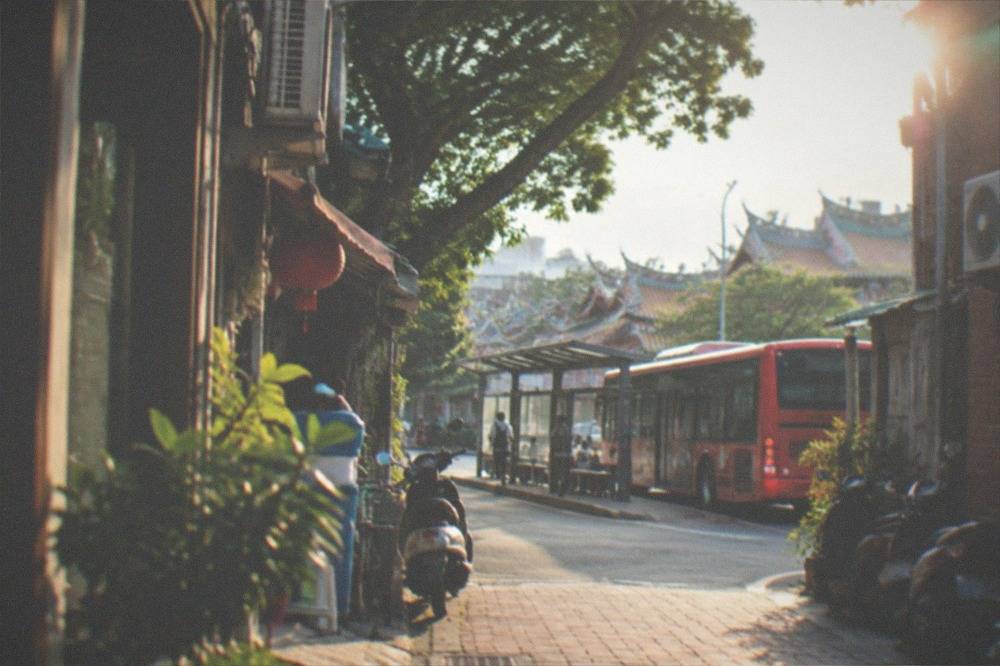
Anping Old Street is about 20 to 30 minutes by city bus from Tainan's old city center, and buses are free for the first 8 km with an electronic card: tap on and tap off, or pay NT$26 in cash. Visitors arriving by High Speed Rail land at Shalun in Guiren District, well outside the old city, and transfer by bus, shuttle or train to reach Anping.
The bus scheme is the single most useful transport fact in Tainan. The city's own bus site states that trunk and branch routes, the green, blue, brown, orange, yellow and red network, are free of charge for the first 8 km of travel with a stored-value card: a Citizen Card, iPASS, EasyCard or iCash 2.0. The cash fare for the same trip is NT$26. The scheme runs for the 2026 calendar year, so it is a current annual policy rather than a permanent one, and the conditions matter: you must tap on at boarding and tap off at exit, and tap off is the part visitors miss.
High Speed Rail arrivals should note that Taiwan High Speed Rail's own fare table puts Tainan station at Shalun in Guiren District, not in the city. A reserved standard seat from Taipei is NT$1,350, and from Zuoying in Kaohsiung NT$140. From the HSR station, the H31 Tainan City Government Line express bus is free for HSR passengers on production of a ticket stub, with no card tap needed; other passengers pay NT$18 for one section or NT$36 for two, with the section break at the Chimei Museum.
| Transport | Cost | Notes |
|---|---|---|
| City bus, first 8 km, with card | Free | Citizen Card, iPASS, EasyCard or iCash 2.0; tap on and tap off |
| City bus, cash | NT$26 | Same trip without a card |
| H31 HSR express bus, with HSR ticket stub | Free | No card tap needed |
| H31, without HSR ticket | NT$18 one section, NT$36 two | Section break at the Chimei Museum |
| HSR Taipei to Tainan, reserved standard | NT$1,350 | Non-reserved NT$1,305 |
| HSR Zuoying to Tainan, reserved standard | NT$140 | Station is at Shalun, outside the old city |
The free-8-km policy is the reason a card matters more than a ticket in Tainan. The city's bus ticketing page also records a transfer discount: transferring between Taiwan Railway and a Tainan bus within two hours gives NT$9 off a city bus, or the free basic distance plus a further NT$9 off on a trunk or branch bus, though inserting another mode such as a public bike in between voids it.
Taxis exist but no published Tainan fare schedule could be confirmed on a city page, so this site prints no flagfall figure. Scooter rental is possible but an International Driving Permit is not automatically sufficient in Taiwan: the Taipei City Motor Vehicles Office's own page frames the IDP as something you register at a Motor Vehicles Office, and rental shops may refuse without it. Check the official rules before planning around a scooter.
For a full transport briefing, including the HSR station transfer and the bus network, see the getting around Tainan coverage on Tainan Travel Guide.
What Are the Opening Hours and Ticket Prices Around Anping?
The walkable street costs nothing and never closes, while the ticketed sites around it each charge NT$70 at the gate: Anping Old Fort 10:00 to 17:10, the Anping Tree House 08:30 to 17:30, and the Eternal Golden Castle 08:30 to 17:30, all daily. Concessions are half price at city sites, and Tainan residents enter free with ID, a benefit visitors do not share.
The city's own attraction pages carry these figures, and each page carries the disclaimer that the on-site notice governs. That is the honest framing: NT$70 at the gate, not NT$70 guaranteed. The half-price concession at the city sites covers students, military, police and fire personnel, those 65 and over, and public-agency volunteers, depending on the site.
| Site | Adult | Concession | Hours | Closed |
|---|---|---|---|---|
| Anping Old Fort | NT$70 | NT$35 | 10:00 to 17:10 daily | none listed |
| Anping Tree House | NT$70 | NT$35 | 08:30 to 17:30 daily | none listed |
| Eternal Golden Castle | NT$70 | NT$35 | 08:30 to 17:30 daily | none listed |
| Grand Matsu Temple | Free | n/a | 06:00 to 21:00 daily | none |
| Sicao Green Tunnel boats | NT$200 | NT$100 primary-school children | 08:00 to 16:00 daily | none listed |
One gap worth flagging honestly: whether a single ticket covers both the Anping Tree House and the adjacent Former Tait and Co. Merchant House is not confirmed on a city page, and neither is any combined Anping Old Fort plus Tree House ticket. Treat them as separate NT$70 admissions until the on-site notice says otherwise.
The contrast with the old city is worth knowing when you budget a day. Chihkan Tower charges the same NT$70 but stays open until 21:30 daily, one of the few historic sites in Tainan a visitor can see after dinner. The free-entry list in the old city includes the Tainan Confucius Temple, open 08:30 to 17:30 and closed only on Lunar New Year's Eve, and the Five Concubines Temple and Kaiyuan Temple, both free.
Where Should You Eat on and Around Anping Old Street?
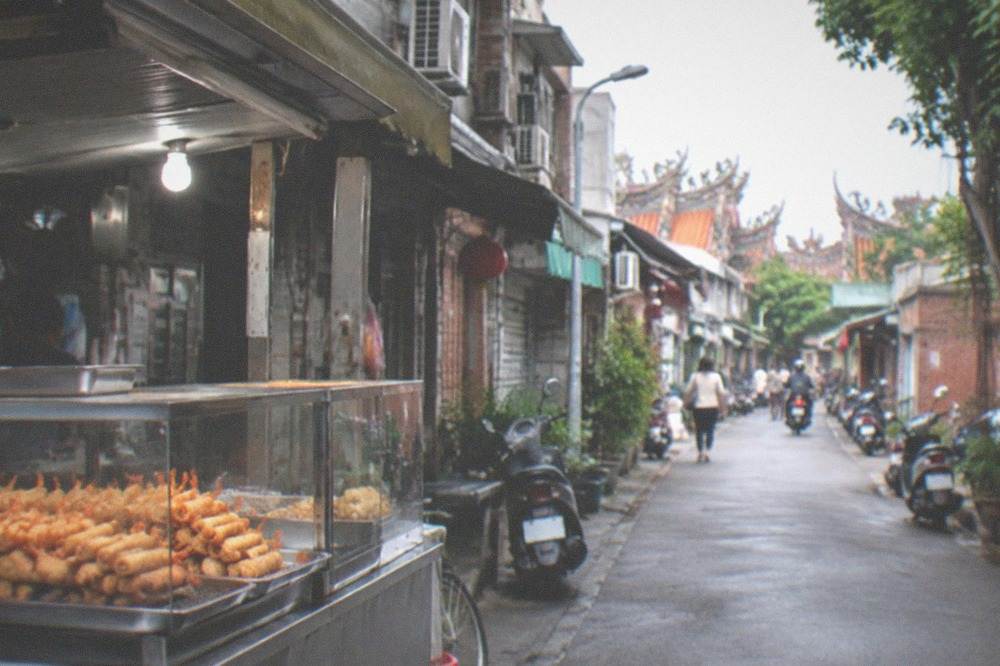
Anping Old Street is one of Tainan's densest snack corridors, and the honest answer on cost is that no official price list exists for any of it: not for shrimp rolls, not for coffin bread, not for beef soup. Budget qualitatively, carry cash, and expect street food to be the cheapest eating in one of Taiwan's cheapest big cities.
The district's food identity is coastal: shrimp rolls, milkfish, oyster omelettes and fish soup dominate the stall fronts, with the Anping area's shrimp roll shops among the most written-about snacks in Tainan. The Tainan street food guide covers the dishes in depth, and the individual food pages on this site, including danzai noodles, coffin bread and beef soup, do the same.
What this site will not do is print a price. The verified facts file marks every dish and night-market plate price as unverified, because no official price list exists. Ranges you find online are crowd-reported, not published by any authority. Carry cash: cards are widely accepted at hotels and chains but street stalls, night markets and small eateries remain cash-first territory.
The night market question matters if your Anping day runs into the evening. Tainan's big outdoor markets rotate by day of the week, verified market by market from the Tourism Bureau's own pages, and the city's Market Administration maintains the official roster. Check before you go, because the city updates these pages and the days do change.
| Night market | Open | Hours |
|---|---|---|
| Garden Night Market | Thursday, Friday, Saturday, Sunday | 17:00 to 00:00 |
| Wusheng Night Market | Wednesday, Friday, Saturday | 17:00 to 00:00 |
| Dadong Night Market | Monday, Tuesday, Friday | 18:00 to 01:00 |
| Siaobei Night Market | Every day, indoor | 12:00 to 00:00 |
Friday is the one night all three big outdoor markets run. Siaobei, indoors and open daily, is the wet-weather and wrong-night answer. The Garden Night Market page covers the biggest of them.
An evening walking tour is one of the few things in Tainan worth booking rather than improvising, and it pairs well with a day spent in Anping.
The operator's live listing carries meeting point and availability. The tour runs about three hours, which leaves room for a night market afterward on any night the schedule cooperates.
When Is the Best Time to Visit Anping?
October to March is the best window: the Central Weather Administration's 1991 to 2020 normals for Tainan show October averaging just 2.8 wet days while still reaching 30.8C maxima, and December just 16.2 mm of rain across about 3 days. Close to three-quarters of the annual 1,761 mm of rain falls between May and September, with August alone bringing 466 mm across 16 wet days.
The climate table is unusually decisive for a travel destination. Tainan records 186 days a year above 30C, and from April to October it is above 30C on most days, so the dry half of the year is not a cold half. October is the driest month by wet days while staying summer-warm. Annual sunshine runs to 2,185 hours.
| Month | Mean max C | Rain mm | Rain days |
|---|---|---|---|
| January | 23.0 | 20.7 | 3.8 |
| April | 29.3 | 69.8 | 5.9 |
| July | 33.0 | 374.6 | 13.0 |
| August | 32.6 | 466.1 | 15.8 |
| October | 30.8 | 30.8 | 2.8 |
| December | 24.4 | 16.2 | 3.0 |
The visitor data matches the climate table in a way that surprises most first-time visitors. The Tourism Administration's 2023 counts show Tainan's peak months are January and February, driven by temple pilgrimage and Lunar New Year, not summer. Anping as a district peaks in February. The European assumption of a summer high season is backwards here, and for good reason: summer is the wet, typhoon-affected half of the year.
Typhoon risk concentrates in the late summer months, and this site prints no frequency statistic because none is verified. What is verified and concrete is the closure rule: the Tainan Art Museum's own hours page states it closes when the Tainan City Government announces a work suspension for a typhoon or earthquake, and city sites generally follow the same pattern. When Tainan declares a typhoon day, attractions and transport may suspend, so check the city's announcements if a storm is in the forecast.
Timing within the day matters too. The ticketed sites close between 17:10 and 17:30, so the fort and tree house belong earlier in the day, while the street itself, the Grand Matsu Temple until 21:00 and the food stalls into the evening, reward a late finish. Shennong Street across the river is the old city's own lantern-lane answer to Anping, and the evening city rewards the same late pace.
What Else Is Within Walking Distance of Anping Old Street?
Anping Old Street sits inside a walkable district that includes Anping Old Fort, the Tree House, the Eternal Golden Castle, the Grand Matsu Temple and the canal, all reachable on foot from the lanes, with the Sicao Green Tunnel boat dock a short ride away at NT$200 per boat trip. A half day covers the core; a full day absorbs the district without rushing.
The core cluster sequences naturally: the lanes and sword lions first, the fort and tree house in the cooler morning hours, the temple and the food stalls through the middle of the day, and the canal at the end. Beyond the district, the Taijiang National Park wetlands and the Sicao boat dock connect Anping to the lagoon coast, and the Qigu salt flats further up the coast make a natural second day.
For visitors who want the history in air-conditioned depth, the National Museum of Taiwan History sits east of Anping and is the island's most wide-ranging museum of Taiwan's past.
The operator's live listing carries the current price and availability. The museum's own page gives hours of 09:00 to 17:00, Tuesday to Sunday, closed Mondays, with regular admission at NT$100 and concessions at NT$50, though a maintenance closure was noted in the museum's calendar in early September, so check its own site before going.
If Anping's lanes win you over, two other old streets in Tainan deserve the same slow walk: Jingliao Old Street in the rural north, a restored period street that sees a fraction of Anping's crowds, and the old street in the Xinhua area, further out, with a Sunday-empty feel Anping never has.
Common Questions About Anping Old Street
Is Anping Old Street Free?
Yes. The lanes themselves cost nothing to walk and have no gate, no ticket and no closing time. The ticketed sites around them, Anping Old Fort, the Anping Tree House and the Eternal Golden Castle, each charge NT$70 at the gate, and the Grand Matsu Temple is free with hours of 06:00 to 21:00 daily.
How Long Do You Need at Anping Old Street?
The lanes themselves are a one to two hour wander at street pace, longer if you stop for snacks or hunt sword lions door to door. A half day covers the street plus the fort and the tree house, and a full day absorbs the district including the canal and the Eternal Golden Castle.
What Is Anping Old Street Known For?
The street is known for its sword lion carvings, its snack stalls, its brick lanes on the site of Taiwan's 1624 Dutch settlement, and its concentration of historic sites: Anping Old Fort, the Anping Tree House and the Grand Matsu Temple. The Tourism Bureau's pages record the district's history from the 1624 Dutch landing through Koxinga's 1662 takeover of the fort.
Can You Walk from Anping Old Street to Anping Old Fort?
Yes, the fort sits at the edge of the old street network and the whole core of Anping District is walkable: fort, tree house, temple and canal. The Eternal Golden Castle is further out and most visitors ride there. Wear for heat, because Tainan is above 30C on most days from April to October.
When Is Anping Old Street Open?
The street never closes. The sites around it keep daytime hours: Anping Old Fort 10:00 to 17:10, the Anping Tree House 08:30 to 17:30, the Eternal Golden Castle 08:30 to 17:30, all daily, and the Grand Matsu Temple 06:00 to 21:00. The city's pages say the on-site notice governs, so re-check hours before a long trip.
Anping Old Street rewards the slow visitor: a card for the free bus ride out, cash for the stalls, a morning at the ticketed sites and an evening on the lanes. The district's four centuries of layered history, from the 1624 Dutch landing to the sword lions on the doorways, are all within a walk of a single lane network, and the city's own pages, not guesswork, are where every figure on this page comes from. Check the hours before you go, pick a dry-season month if the calendar allows, and give Anping more time than the guidebooks suggest.