Anping Sword Lions
The sword lion is Anping's own emblem: a lion biting a sword, carved in stone or painted on a wall, set above a doorway to ward off harm. This guide explains where the tradition came from, which streets still carry the best examples, and how to build a half-day around finding them.
Short answer
Anping sword lions are lion-and-sword carvings and paintings placed above doors in Anping, Tainan, as protective talismans. They trace back to the garrison culture of the old fort town, and the densest surviving clusters sit along Anping Old Street and the lanes around Anping Old Fort.
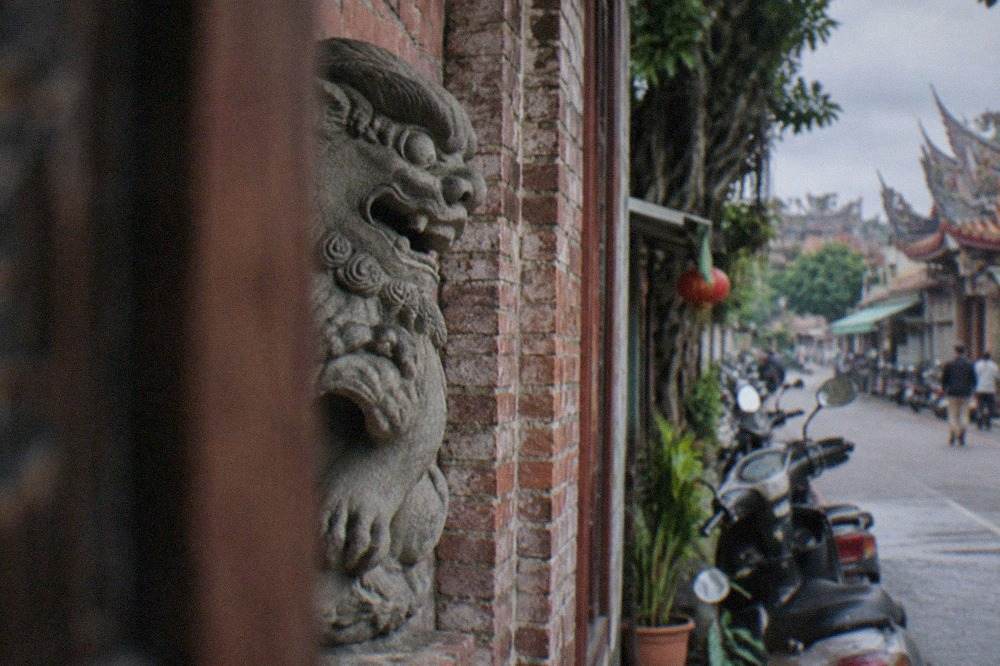
Tainan's most distinctive piece of street iconography is not in a museum. It is set into the walls of Anping: a lion's face gripping a sword in its teeth, carved in stone, molded in plaster, or painted straight onto brick. Locals call them sword lions, and for roughly three centuries they stood guard above the doors of the old fort town. Many have been lost to redevelopment, but enough survive that a visitor can still hunt them in an afternoon, and the hunt is one of the best free things to do in the district.
What Are Anping Sword Lions?
Anping sword lions are protective emblems showing a lion's head biting a sword, placed above doorways, on gable ends and on wall corners throughout Anping, Tainan. They are folk talismans rather than temple decoration, and the sword is understood to drive off evil spirits and bad luck from the household entrance they watch over. Anping is their home territory, and the motif has become the district's unofficial emblem, reproduced on souvenirs, manhole covers and street furniture across the neighborhood.
The tradition belongs to Anping rather than to Tainan at large, and the reason is historical. Anping was a garrison town, built around the Dutch stronghold that later became Anping Old Fort, and soldiers hung swords where a household could see them. The story told locally, and repeated in the city's own material on the district, is that the lion's face and the crossed blade fused into a single image: an animal guardian holding the soldier's weapon in its jaws. Whether every detail of that origin story is literal hardly matters. What is documented is that the sword lion appears on Anping's oldest surviving domestic architecture, and that it does not appear with the same density anywhere else in Taiwan.
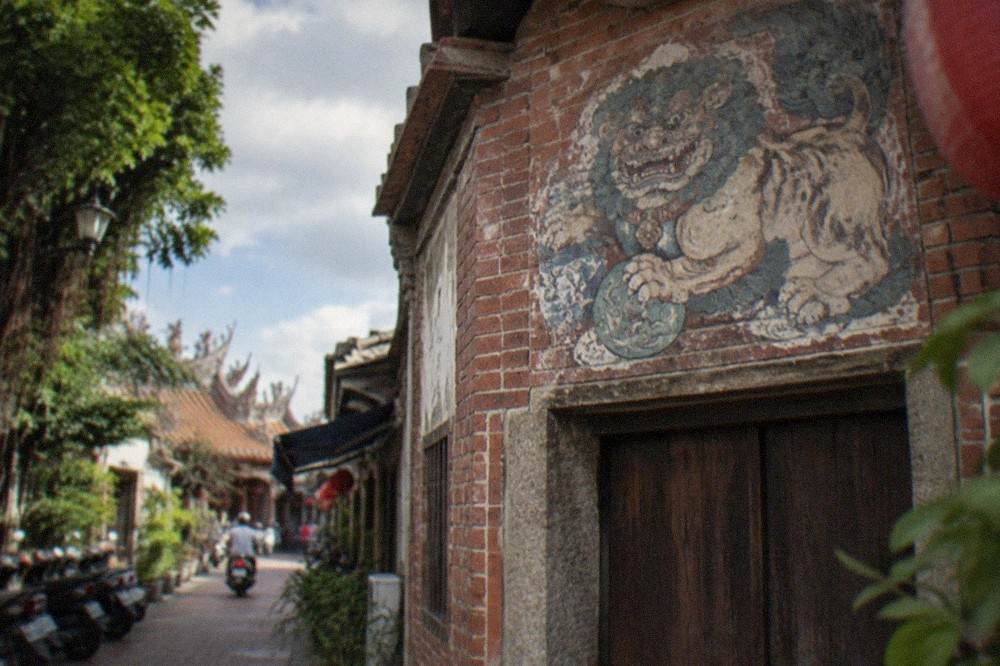
The city's Tourism Bureau describes Anping as the place where the sword lion culture is concentrated, and the district's own visitor material treats the motif as its signature. The Tainan City Government Tourism Bureau's page for Anping Old Fort records the site's Dutch and Koxinga-era history that frames all of this: the Dutch East India Company occupied the Anping shoreline in 1624, completed Fort Zeelandia in 1634, and Koxinga took the fort in 1662, renaming the place Anping. The garrison town that grew around those walls is the soil the sword lions grew in.
Three details help a visitor read them. First, the sword usually points downward or is held horizontally in the jaws, and the orientation is said to carry meaning in local telling. Second, the lion faces vary enormously, from fierce and detailed carvings to almost cartoonish painted faces, because each household commissioned its own. Third, the material tells you the age: stone and brick relief work tends to be older, painted plaster and cement newer.
| Feature | What to look for | What locals say it means |
|---|---|---|
| The lion face | Eyes wide, mouth open, gripping the blade | Vigilance at the threshold |
| The sword | Held in the teeth, usually horizontal or angled down | The power to cut down evil approaching the door |
| Placement | Above the door, on gable ends, at wall corners | Guarding the household's openings |
| Material | Stone carving, brick relief, painted plaster, cement | Older houses carry stone and brick; later ones paint |
Where Can You Find Sword Lions in Anping Today?
The densest surviving sword lions sit in the lanes around Anping Old Street and the streets leading toward Anping Old Fort, especially Yanping Street, Jishan Street and the small alleys off them. Anping Old Street, the historic Haishanlang area, carries the best-known examples, and the walk between the old street and the fort passes several more on house fronts and courtyard walls. A slow loop of the district takes in most of them without transport.
The practical route is simple. Start at Anping Old Street, where the sword lions are thickest and the buildings oldest, then walk toward the fort along the lane network, then drop south to Anping Tree House and the canal side. The whole loop is compact: Anping is a walkable district, and the Anping half-day itinerary on this site follows almost exactly the shape a sword lion hunt needs. Nothing along the route charges an admission fee. The lions are on private house walls and public lanes, free to look at, and the only paid sites are the fort and the Tree House, each NT$70 at the gate.
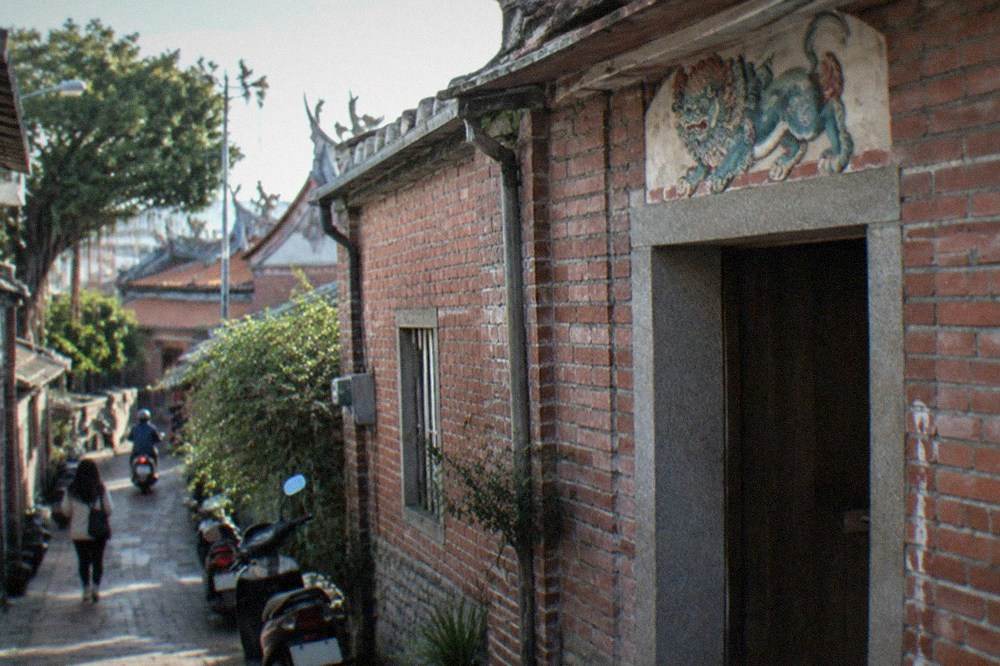
Honest expectations matter here. Redevelopment has removed many of the originals, and the city's material on the district is candid that the surviving stock is a fraction of what once existed. Some of the lions a visitor photographs are modern restorations or outright new installations, part of Anping's self-branding, and the manhole covers, street signs and shop signage carrying the motif are all contemporary. That does not spoil the hunt. It means the reward is in the old lanes, where weathered paint and worn stone still sit above doors that families use every day.
The district context helps too. Anping drew 4,441,443 visitors in 2023 according to the Tourism Administration's own dataset, roughly ten times Chihkan Tower's count, and the crowds concentrate on the fort and the old street food stalls. Two streets back from the main drag, the lanes go quiet and the lions are easier to photograph without a queue of people in frame. The busiest stretch, Anping Road and the old street itself, is at its most crowded on weekends.
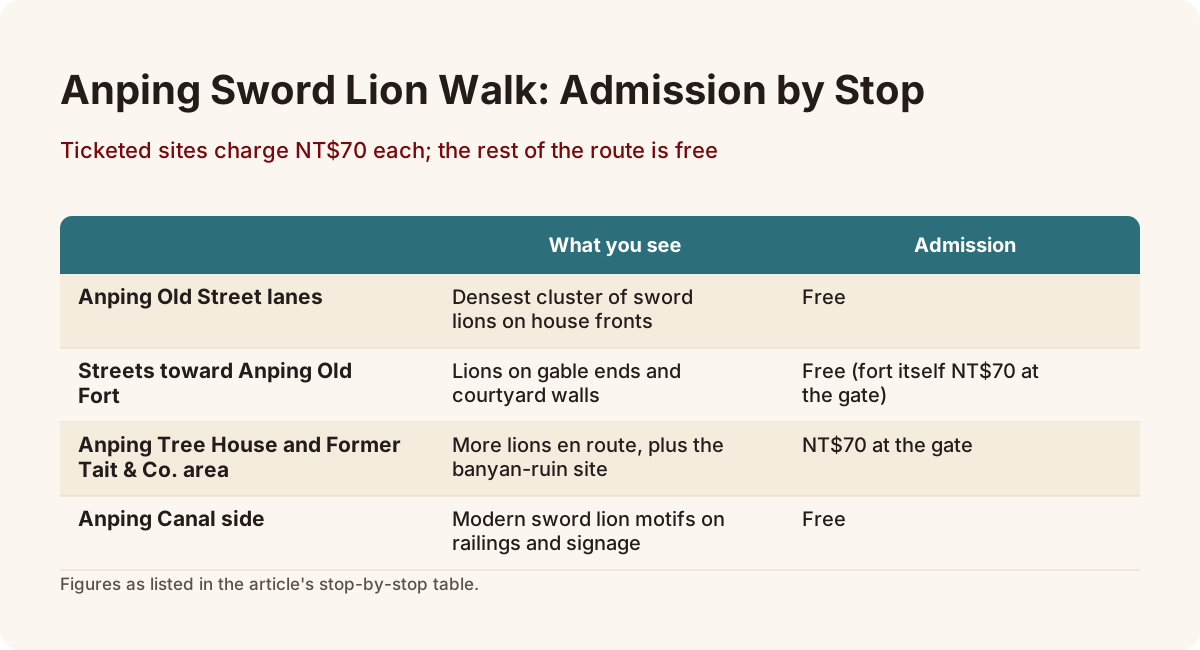
| Stop on the walk | What you are looking at | Admission |
|---|---|---|
| Anping Old Street lanes | Densest cluster of sword lions on house fronts | Free |
| Streets toward Anping Old Fort | Lions on gable ends and courtyard walls | Free (fort itself NT$70 at the gate) |
| Anping Tree House and Former Tait & Co. area | More lions en route, plus the banyan-ruin site | NT$70 at the gate |
| Anping Canal side | Modern sword lion motifs on railings and signage | Free |
If the walk is the point, a guided evening version exists too, and the district reads differently after dark.
Why Did Anping Houses Put Lions Above Their Doors?
Anping households placed sword lions above their doors because the district was a military settlement, and the image fused two protective ideas: the lion, a borrowed guardian figure common across Chinese folk religion, and the sword, the weapon hanging at the door of a soldier's home. Locally the combined emblem is said to repel evil and misfortune from the threshold. The practice belongs to domestic folk custom, not to formal temple worship, which is why the lions sit on houses rather than on altars.
The garrison origin is the part worth understanding, because it explains the geography. Anping was for two centuries a fortified town, first Dutch, then the seat of Koxinga's regime after 1662, then a Qing coastal defense post. The Tourism Bureau's Anping Old Fort page records that after Koxinga took the fort, the inner fort became his residence and locals called it the King's Castle. Soldiers and their households lived packed inside a small walled area, and the door of a house was also, functionally, the wall of a town. A talisman above it did double duty.
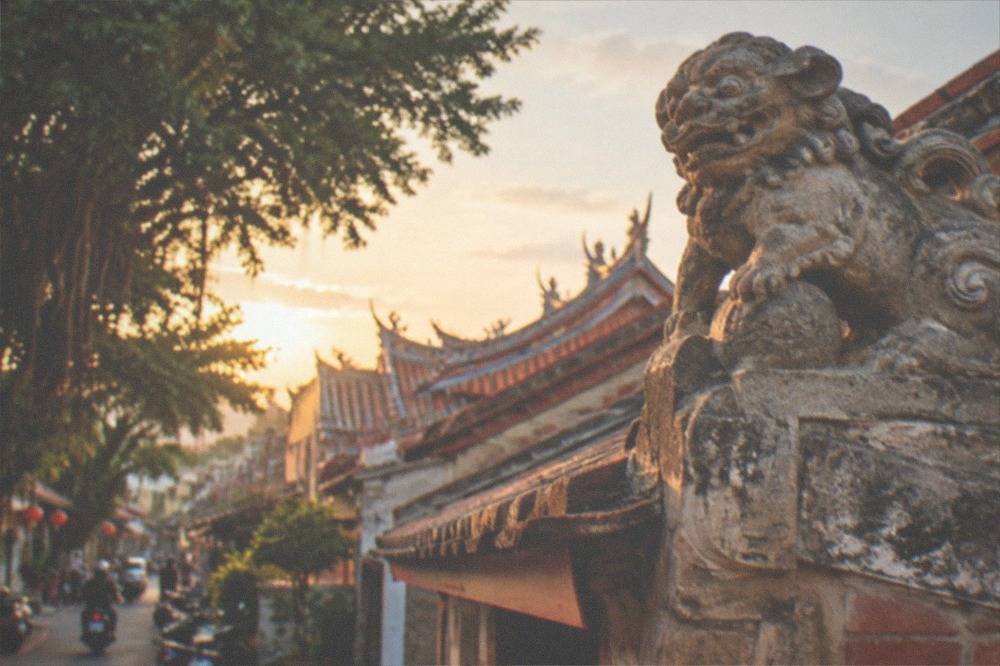
The lion itself arrived through the wider Chinese world. Lion guardian figures guard temples, banks and gateways across Taiwan and the Chinese-speaking world, usually in pairs, usually stone. Anping's twist was to give the lion a sword in its teeth and to put it on ordinary homes, which is the detail that makes the motif local. Some accounts also link the sword lion to the sword-lion banners said to have hung on naval vessels and garrison buildings during the Koxinga period, marking units and ranks. Treat the finer points of that story as local tradition rather than settled history: what is verifiable is the physical record on the walls, and the walls are old.
A comparison makes the distinctiveness clear. In central Tainan, the old capital's protective imagery lives in the temples and formal sites: the Tainan Confucius Temple, free to enter and open 08:30 to 17:30 daily, carries its own scholarly iconography, and the Eternal Golden Castle, the Qing-era battery at NT$70 at the gate, shows the military architecture of the same defensive era. Anping's lions are the folk, domestic version of the same instinct, and that is why they are on houses, above doors, at human eye level and slightly above.
| Guardian tradition | Where it sits | Who it belonged to |
|---|---|---|
| Anping sword lions | House doors, gables, wall corners | Ordinary garrison households |
| Temple stone lions | Temple entrances, formal gateways | Religious institutions |
| Door god paintings | Temple and wealthy house doors | Temples, merchant families |
| Modern sword lion branding | Manhole covers, signage, souvenirs | The district's contemporary identity |
How Do You Plan a Half-Day Around the Sword Lions?
A workable sword lion half-day runs Anping Old Street first, then the lanes up to Anping Old Fort, then the Tree House and the canal, with a street food stop in the old street itself. Allow three to four hours on foot, more with the fort and Tree House interiors. Admission at the two ticketed sites is NT$70 each at the gate, with half-price concessions, and everything else on the route is free.
The best light for photographing the lions is mid-morning, before the old street crowds build.
Getting there is the first decision. From central Tainan, city buses serve Anping, and the city's own bus fare policy makes short hops cheap: trunk and branch routes are free for the first 8 km with an electronic card, a Citizen Card, iPASS, EasyCard or iCash 2.0, provided you tap on and tap off. The cash fare for the same trip is NT$26. The scheme covers the 2026 calendar year, so check it still applies when you travel. The city's bus ticketing page sets out the policy in English.
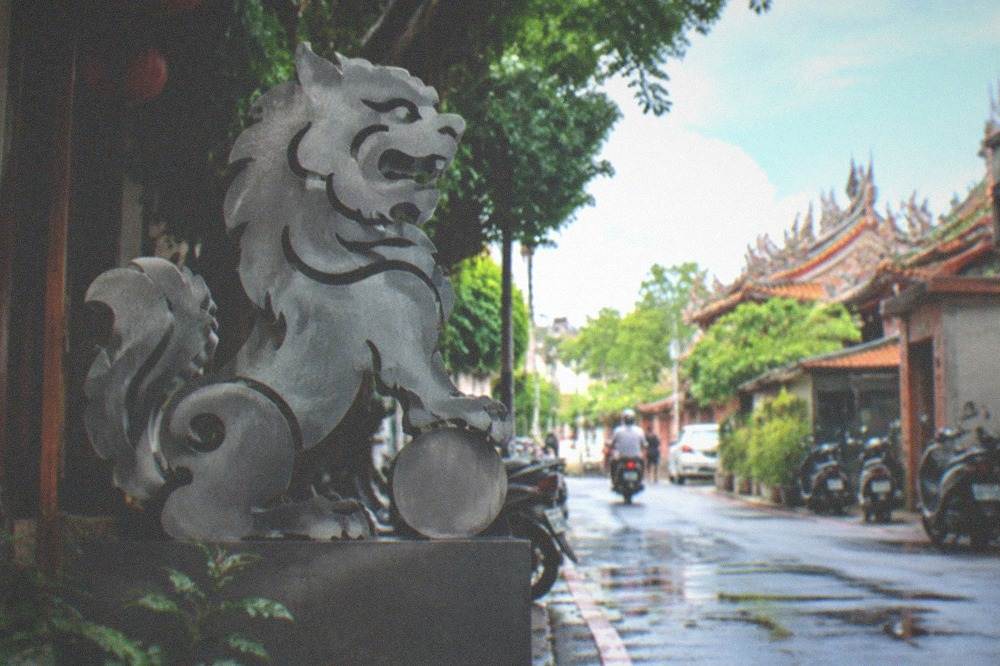
Timing within the week matters less in Anping than it does for the night markets, but it still matters. The old street is busiest on Saturdays and Sundays, and the fort closes at 17:10, earlier than most visitors expect, so a morning start protects both the photography light and the fort visit. Chihkan Tower in the city center is the site with the unusual late closing, 08:30 to 21:30 daily, so save any evening historic-site visit for there, not Anping. If Anping runs long, the Anping Canal side is a relaxed way to end, and the modern sword lion motifs along it photograph well in late afternoon.
For visitors who want the old streets to look the part in photographs, costume rental is the one bookable extra that fits this walk naturally. A qipao day in Anping works because the lanes are short, the backdrops are brick, and the sword lions give a frame with a story attached. The listing on the operator's live listing describes a full-day rental, and the walk above is exactly the scale of loop that suits it. Rental stock on weekends is the constraint, so it is worth checking before committing to a date.
Are the Sword Lions Connected to Anping's Other Historic Sites?
Yes, directly. The sword lions belong to the same layered history as Anping Old Fort, the Tree House and the old merchant houses: a Dutch fort town, then Koxinga's Anping, then a Qing garrison and trading port, then a Japanese-era and postwar neighborhood. The lions are the folk-art residue of the garrison centuries, which is why the best hunting ground is the street network around the fort rather than anywhere else in Tainan.
The fort anchors the story. The Tourism Bureau records that the only genuine Dutch-period remains at Anping Old Fort are the brick walls of the south outer rampart in front of the fort, and that most of what visitors photograph there is Japanese-era rebuilding plus a 1975 city renovation that added the pointed roof and painted the walls white. The sword lions sit in the same historical layer cake: a few old survivors, a larger number of later pieces, and a modern identity campaign on top. Reading the district that way, with honest eyes about what is Dutch, what is Qing, what is Japanese and what is 1975 or later, makes the whole walk richer.
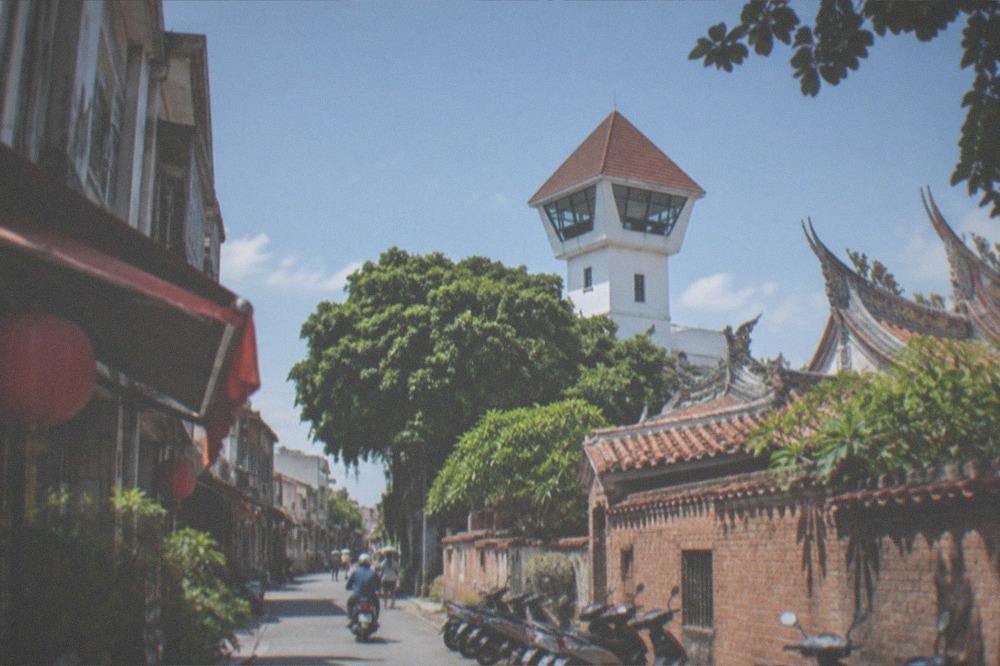
The wider frame is worth one more link in the chain. Tainan was Taiwan's capital for more than two centuries, until the late nineteenth century, and Anping was its port face: the point where the political city met the sea. That is why the district carries both the military architecture and the merchant architecture, the fort and the Former Tait & Co. Merchant House next to the Tree House. The National Museum of Taiwan History, out toward the lagoon coast, tells the island-scale version of the same story, and it makes a natural second half of a day for visitors who want the context behind the walls.
| Anping site | Period it shows | Admission at the gate |
|---|---|---|
| Anping Old Fort | Dutch rampart remains, Japanese-era rebuild, 1975 renovation | NT$70 |
| Anping Old Street lanes | Qing and later domestic architecture, sword lions | Free |
| Anping Tree House | Japanese-era warehouse ruined by banyan roots | NT$70 |
| Former Tait & Co. Merchant House | 19th-century merchant architecture | Listed at NT$70 |
What Should You Know Before Going?
Anping is walkable, free at street level, and at its best in the morning. Bring cash for street food, expect the fort to close at 17:10, and check bus tap-on and tap-off rules if you use the free first 8 km fare. The sword lions are on private homes, so look and photograph from the lane without entering courtyards. Nothing on the route needs a booking except optional extras like costume rental or a guided walk.
A few practical notes round it out. Water: bottled and filtered water are everywhere and convenience stores are on every corner in Anping; most locals boil or filter tap water rather than drink it straight, so follow that habit. Weather: the Central Weather Administration's 1991 to 2020 normals for Tainan show October to March as the dry, comfortable half of the year, with October averaging just 2.8 wet days while still reaching 30.8C maxima, and August bringing 466 mm across 16 wet days, so a walking hunt is far more pleasant in the cooler half of the year. Summer visitors should start early and use the indoor options, the Tree House and the old street's covered sections, for the midday hours.
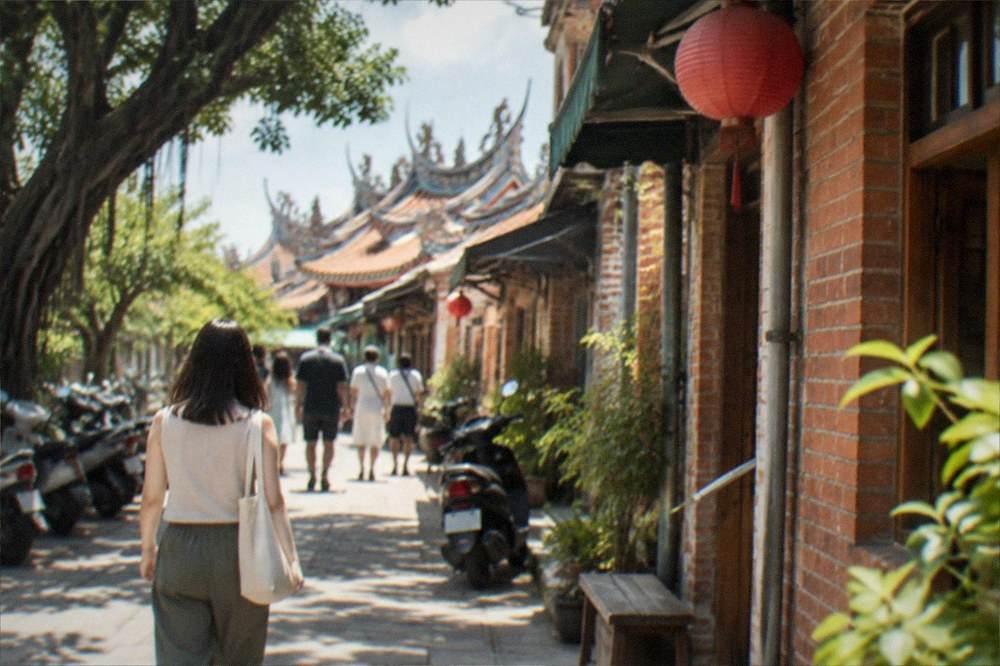
The evening option deserves a mention. Anping's lions are a daytime sight, but Tainan after dark has its own layer, and the city center's late-closing Chihkan Tower plus the rotating night markets make a good second half of the day. The night market schedule is the one thing to check before any evening plan: Garden Night Market opens Thursday to Sunday, Wusheng Wednesday, Friday and Saturday, Dadong Monday, Tuesday and Friday, and Siaobei is indoors and open daily, but the city updates these pages, so check before you go.
For the full picture of what the district offers beyond the lions, the Anping area guide on this site carries the site-by-site detail, and Tainan Travel Guide covers the city around it. Visitors pairing the walk with a longer stay can also fold in the Chihkan Tower page for the city-center counterpart to Anping's fort story.
Common Questions About Anping Sword Lions
What are Anping sword lions?
Lion-and-sword carvings and paintings placed above doorways in Anping, Tainan, as protective folk talismans. The lion grips a sword in its teeth, and the image is said to ward off evil and misfortune from the household entrance. The tradition belongs to Anping's garrison history and the motif is now the district's unofficial emblem.
Where can I see sword lions in Tainan?
In the lanes around Anping Old Street and the streets leading to Anping Old Fort, especially Yanping Street, Jishan Street and the small alleys off them. The densest surviving cluster is in the old street area, and the walk to the fort and Tree House passes more examples on house fronts and courtyard walls.
Do you have to pay to see the sword lions?
No. The lions sit on private house walls and public lanes and are free to view. The only paid sites on a sword lion walk are Anping Old Fort and Anping Tree House, each NT$70 at the gate with half-price concessions, and both are optional to the hunt itself.
Are Anping sword lions old or modern?
Both. Some surviving lions are old stone and brick work from the district's garrison centuries, others are later painted plaster, and many of the most visible ones today are modern restorations or branding installations on manhole covers, signage and street furniture. The old lanes carry the genuine survivors.
Why do the lions bite swords?
Local tradition links the image to Anping's soldier households: the lion is the guardian animal, and the sword is the weapon of the garrison town, so the combined emblem puts a soldier's blade in the jaws of a watchful beast above the door. The finer points of the origin story are local tradition; the carved record on the walls is what is verifiable.
How long does a sword lion walk take?
About three to four hours at a relaxed pace, covering the old street, the lanes to Anping Old Fort, and the Tree House area. Add time for street food stops and for the interiors of the fort and Tree House if you go inside. A morning start gives the best light and beats the weekend crowds.
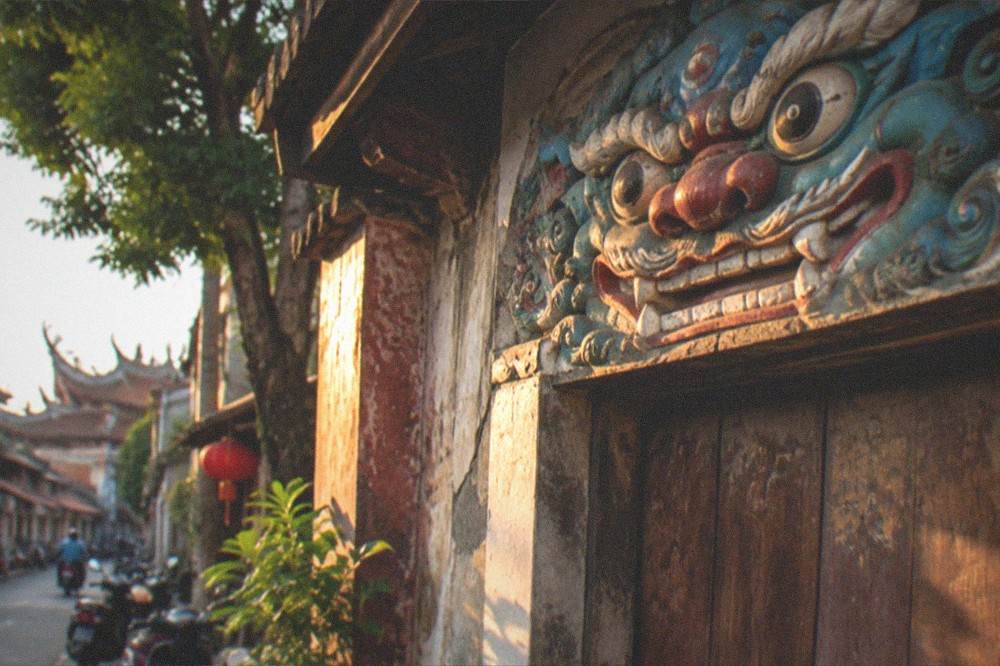
The sword lions are Anping's best free experience precisely because they ask something of the visitor: attention. Anyone can photograph the fort's white tower; finding a faded lion above a working family's door, in a lane two streets back from the souvenir stalls, takes a slower kind of looking. Walk the old street, drift into the alleys, keep your eyes at just above door height, and the district will show you its guardians one by one. Pair the morning hunt with an afternoon at the Tree House or a museum run, and Anping fills a half day without a single compulsory ticket until you decide you want one.