Danzai Noodles
Danzai noodles are Tainan's most famous small bowl, a snack-size serve of noodles in shrimp broth that grew out of a shoulder-pole street trade and now appears on menus across the city.
Short answer
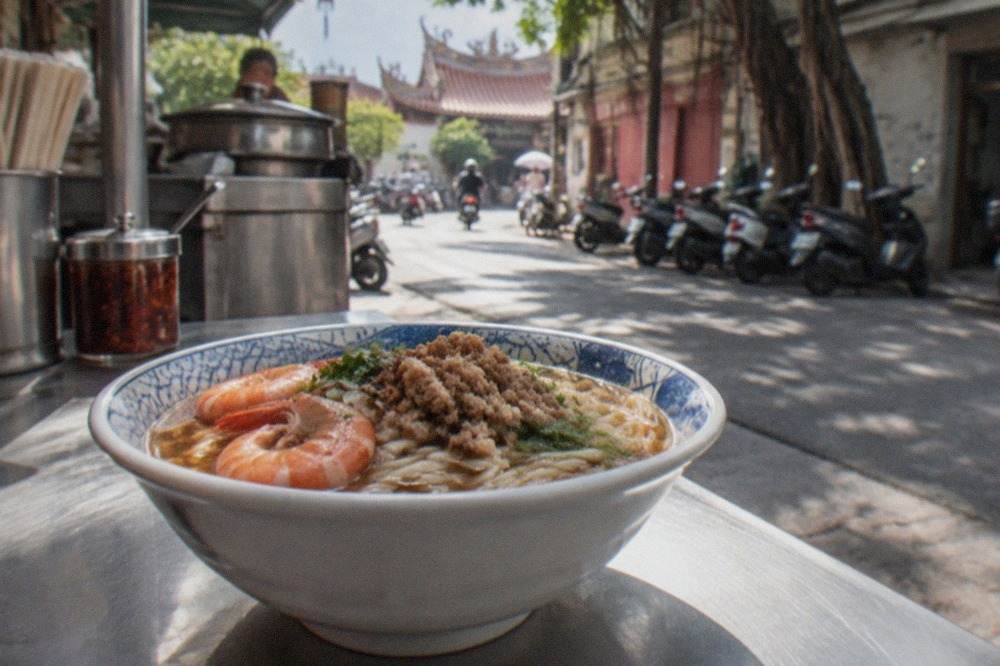
Danzai noodles are a small Tainan bowl of thin noodles in a shrimp-based broth, topped with minced pork, a shrimp or two, bean sprouts, garlic and a dark sauce. The name comes from the shoulder pole, danzai, that vendors once used to carry the whole stall, and the dish is eaten as a snack rather than a full meal.
Danzai noodles are the smallest famous dish in Taiwan. A bowl that would count as a starter anywhere else is, in Tainan, a signature: thin noodles in a shrimp-flavored broth, a spoonful of minced pork, a shrimp, bean sprouts, a hit of garlic and dark sauce, served in portions sized for a shoulder-pole street trade rather than a restaurant kitchen. The city that was Taiwan's capital for more than two centuries, until the late nineteenth century, has kept its food culture in small formats, and this bowl is the clearest example. This page sets out what the dish is, how its origin story is told, where to look for it, and how to plan a trip around it, using the verified opening days of the night markets and the city's own transport rules.
What Are Danzai Noodles?
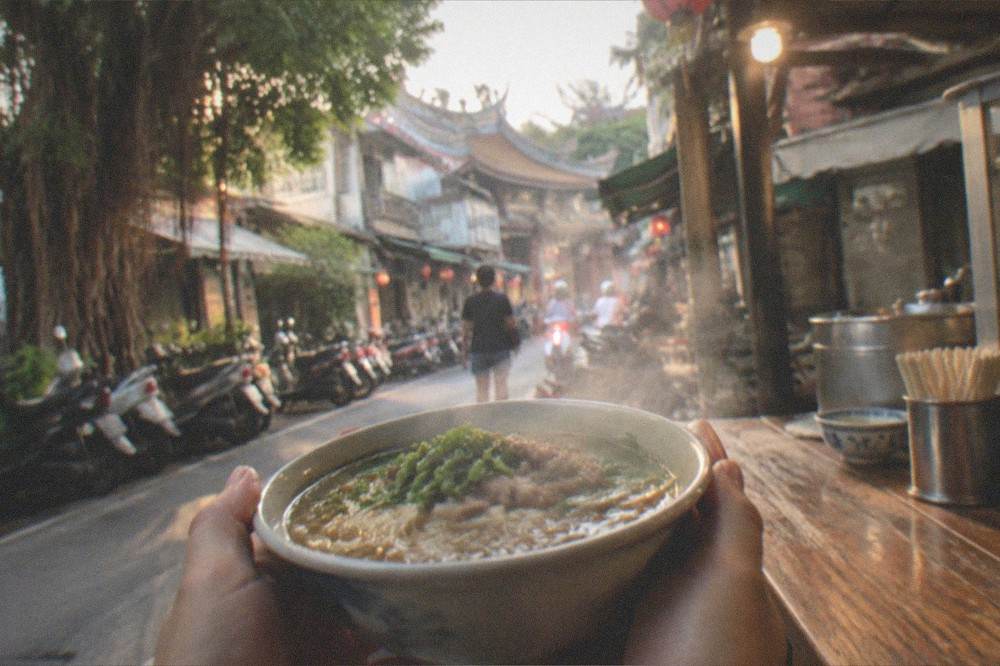
Danzai noodles are a snack-size Tainan bowl of thin wheat noodles in a broth built on shrimp and pork, topped with minced pork, shrimp, bean sprouts, garlic, dark soy sauce and often a sprinkle of vinegar. The portion is deliberately small, because the dish began as street food carried on a shoulder pole and eaten standing, and it still works best as a between-meals bite rather than a full meal.
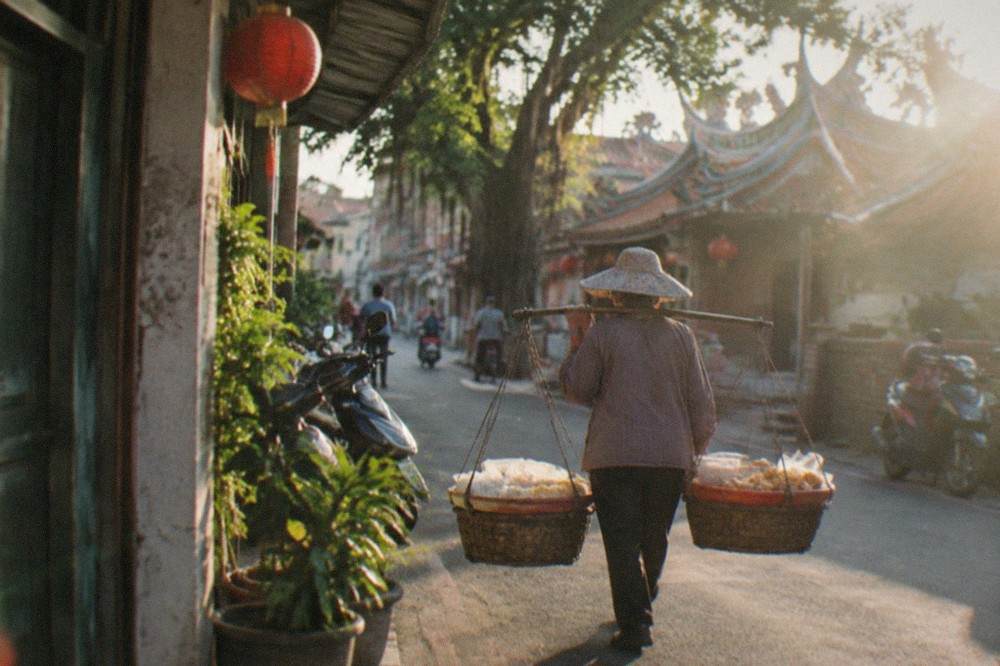
The name is the first thing to understand. "Danzai" (擔仔) refers to the shoulder pole, danzi, on which a vendor could carry an entire cooking operation: a small stove, a pot of broth, bowls, chopsticks and a few stools. A dish named after its carrying equipment tells you it was designed for mobility, not for a dining room. That origin shapes everything about the modern bowl. The portions stay small. The broth is light enough to finish in a few spoonfuls. The toppings are things that keep well on a moving stall: dried or cooked shrimp, seasoned minced pork, pickles.
The composition matters more than the size. The broth is the heart of it, traditionally made by simmering shrimp shells and pork bones, and the noodles are cooked to order in a separate strainer so they stay firm. A dark, slightly sweet sauce goes into the bowl first, then the noodles, then a ladle of broth, then the toppings in order: minced pork, shrimp, bean sprouts, a touch of garlic. Some versions add a quail egg or a slice of pork liver. The result is a bowl you can finish in five minutes, which is exactly the point: in a city whose food culture runs on grazing, a danzai bowl is one stop among several.
Where Did Danzai Noodles Come From?
The story told about danzai noodles is that a fisherman from Tainan's coastal lagoon country began selling noodles from a shoulder-pole stall during the season when the sea was too rough to fish, and the trade outlived its founder. The dish is associated with the old harbor quarter of Tainan, and the name most often attached to the story is Du Hsiao Yueh. No official city page pins the founding to a single year, so read it as local tradition rather than dated fact.
The shape of the story is consistent across tellings, even when the details are not. A fisherman based around the lagoon and coastal waters near Tainan, where the season for safe fishing had quiet months, needed an income when the boats could not go out. Cooking noodles from a portable stall required no shop, no lease and no fixed address, just a pole and a recipe built from preserved ingredients. The snack caught on, the stall became a shop, and the shop became a name. What the verified record does support is the setting: Tainan's history as an old harbor capital, described on the city's own attraction pages, from the Dutch stronghold at Anping begun in 1624 to the silting of the Taijiang inner sea that slowly pushed the city's economy inland and reshaped its coastal trades. A fisherman's fallback dish fits that world exactly.
The one name that cannot be separated from the dish is Du Hsiao Yueh, whose shopfront is the fixed point of the danzai story as it is told today. The site's page on Du Hsiao Yueh covers the shop and the legend in detail. What matters here is the honest framing: the tale of one founder and one first bowl is a story that has been polished by a century of retelling, and the city's own published pages do not certify a founding year or a single inventor. That does not make the dish less real. It makes the dish a piece of living street history, the kind where the recipe is the evidence and the legend is the garnish.
What is certain is the trade pattern the dish preserved. Shoulder-pole vending was once a whole category of Tainan street food, and the danzai bowl is its most successful survivor. When you order one, you are eating a portion size set by what one person could carry, a topping list set by what would keep without refrigeration, and a broth designed to be assembled in minutes. That is a working fisherman's answer to a slow season, still on the menu.
A walking tour is one way to encounter the dish in context, and a food-focused walk is the most direct one, but the bowl itself needs no guide. The sections below cover the practical side of finding it.
Where Can You Find Danzai Noodles in Tainan?
Danzai noodles are served across Tainan in three main settings: dedicated old-name shops in the West Central District around the old streets, sit-down restaurants with full menus, and night market stalls. The night markets are the most useful target for a visitor because their open days rotate by day of week, and the city's own pages publish the schedule: Garden runs Thursday to Sunday, Wusheng Wednesday, Friday and Saturday, Dadong Monday, Tuesday and Friday, and Siaobei is indoors and open every day.
The rotation is the single most useful practical fact in Tainan food planning, and the city's Market Administration maintains the official night market roster that backs it up. Plan around the days, not around a single market, because arriving on the wrong night means the big outdoor market near your hotel simply is not there. The verified schedule is below, and the standing advice applies: check before you go, because the city updates these pages and the days have changed within the last two years.
| Market | Open | Hours | Notes |
|---|---|---|---|
| Garden Night Market | Thu, Fri, Sat, Sun | 17:00 to 00:00 | The largest of the outdoor markets |
| Wusheng Night Market | Wed, Fri, Sat | 17:00 to 00:00 | The only big outdoor market on Wednesday |
| Dadong Night Market | Mon, Tue, Fri | 18:00 to 01:00 | Runs latest, past midnight |
| Siaobei Night Market | Every day | 12:00 to 00:00 | Indoors, the wet-weather answer |
Friday is the one night all three big outdoor markets run at once, which makes it both the best and the most crowded night for a food crawl. Wednesday is the thinnest, with Wusheng alone among the big outdoor markets. Siaobei's indoor, daily format makes it the answer for a wrong night or a rainy one. The site's page on Tainan night markets covers each market in detail, including addresses and how the nights pair up.
For the old-name shops rather than the markets, the center of gravity is the West Central District, the old walled city where the historic streets and temples sit. This is the district where the danzai story is set, and it is also where the city's other heritage sites cluster, which makes a noodle stop easy to fold into a day of sightseeing. One scheduling detail worth knowing: Chihkan Tower, the old Dutch Provintia site, is open until 21:30 daily, one of the few historic sites in the city a visitor can see after dinner, so a late bowl and a lit-up historic site can share one evening. The Tainan history page gives the longer background.

Should You Book a Food Walk or Find the Stalls Yourself?
Both approaches work. The stalls are findable, the city is compact and the bus system is cheap. A guided walk simply compresses the search, and the linked tour above includes snacks in its price.
How Do Danzai Noodles Fit Into a Tainan Food Crawl?
Danzai noodles work best as one course in a crawl rather than a meal on their own, because the portions are small by design. A classic Tainan evening moves through several dishes: a danzai bowl as the opener, then beef soup, coffin bread, milkfish soup or guanmiao noodles at other stops, with the night markets or the old streets as the route between them. No dish price can be printed here because no official price list exists, so treat cost as a range and check the stall.
The crawl format is not a tourist invention. It is how the city's food culture is built: many small, specialized shops, each doing one dish well, packed into walkable old streets. The table below places the danzai bowl among the other dishes a visitor will meet, and each dish has its own page on this site. The full index of guides sits on Tainan Travel Guide.
| Dish | What it is | How it fits a crawl |
|---|---|---|
| Danzai noodles | Small bowl, shrimp broth, minced pork, shrimp | The opener, eaten standing or on a stool |
| Beef soup | Fresh beef in clear broth, a Tainan breakfast tradition | The morning stop, see Tainan beef soup |
| Coffin bread | Thick fried toast hollowed out and filled with stew | The filler between markets, see coffin bread |
| Milkfish soup | Milkfish, the coastal lagoon fish, in light broth | The local classic, tied to the lagoon coast |
| Guanmiao noodles | Dry-mixed noodles from Guanmiao district | The substantial stop, see Guanmiao noodles |
The order matters less than the pacing. A danzai bowl is light enough that it leaves room for everything else, which is why locals treat it as a snack between meals rather than dinner. The site's wider Tainan food guide and Tainan street food pages cover the full spread of dishes, from breakfast stalls to dessert shops, and the crawl logic there is the same: small portions, many stops, one district at a time.
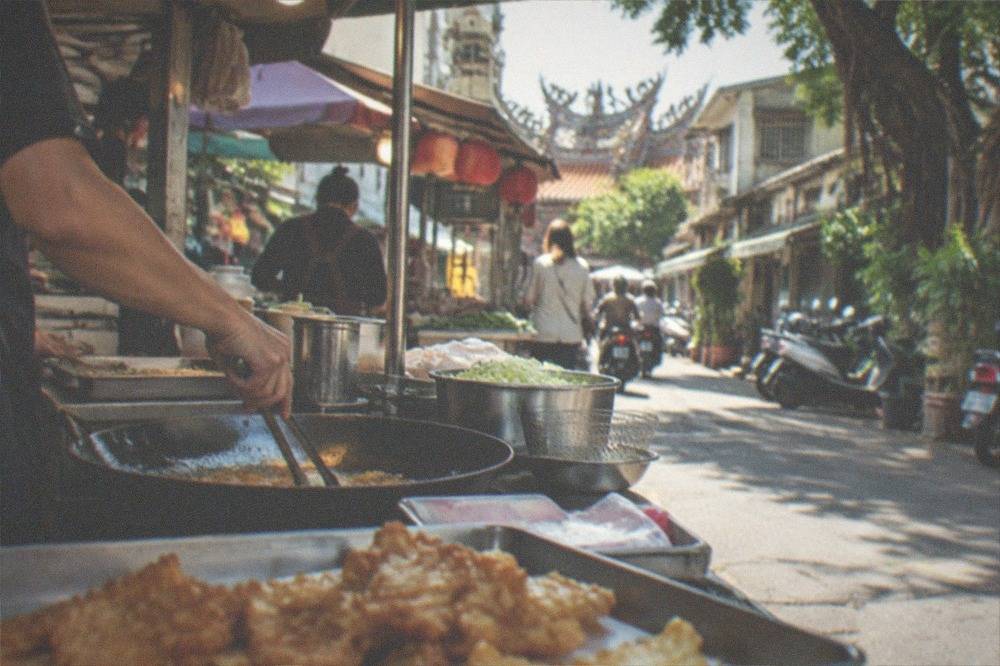
If you want the crawl led rather than self-directed, the four-hour food and culture walk below is built exactly around this grazing pattern, with snacks included in the ticket and a guide who handles the ordering.
How Do You Get Between the Noodle Stops in Tainan?
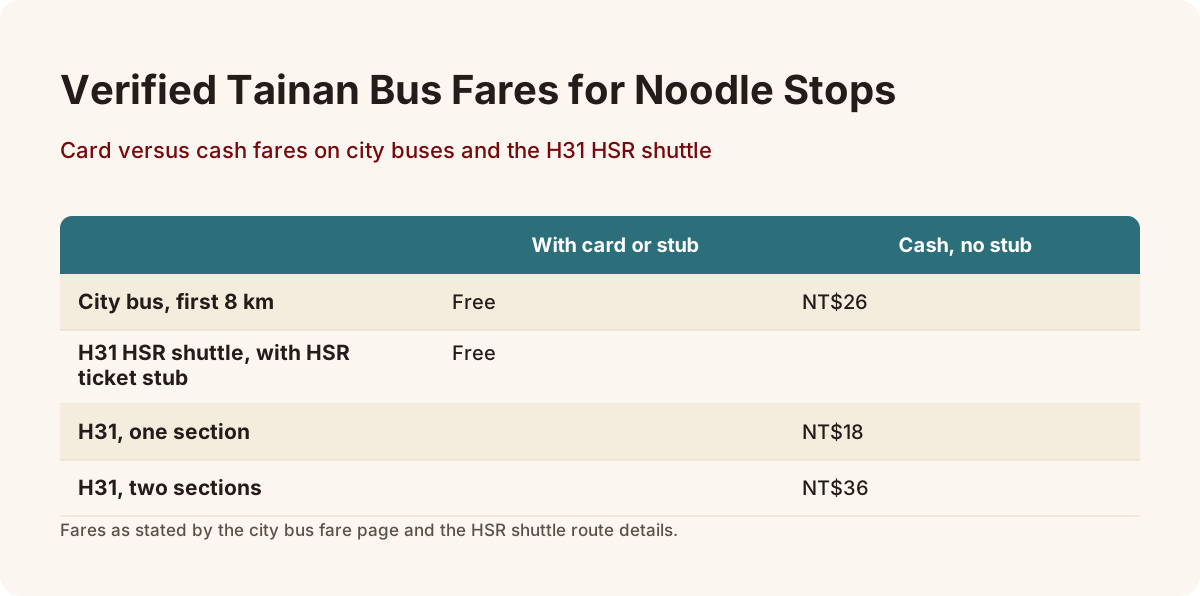
Tainan city buses are free for the first 8 km with an electronic card, a Citizen Card, iPASS, EasyCard or iCash 2.0, on the trunk and branch network, and the same trip costs NT$26 in cash. The card must be tapped on and tapped off, and tap off is the part visitors miss. The scheme runs for the 2026 calendar year, so it is a current policy rather than a permanent one, and the city's bus fare page sets out the conditions.
The city's own bus fare page states the free first 8 km rule for the main and branch routes and the 26 base fare it waives. For a food crawl this is close to ideal, because the distances between the old streets, the night markets and Anping are short hops, well inside 8 km each, so a loaded EasyCard or iPASS moves a visitor between noodle stops for nothing. The card also works at the Tainan Art Museum ticket desk, though not on the High Speed Rail, and the site's pages on EasyCard use in Tainan and getting around Tainan cover the details.
Visitors arriving from outside the city should note one structural fact that surprises people: the High Speed Rail station is not in Tainan's center. It sits at Shalun in Guiren District, outside the old city, and reaching the food streets means a transfer. Two verified options cover that last leg. The H31 HSR express bus is free for HSR passengers on production of a ticket stub, with no card tap needed, and its route passes the Chimei Museum, which sits on the section break. Other passengers pay NT$18 for one section or NT$36 for two. The Shalun Line train is a paid Taiwan Railway ticket, not a free transfer. The pages on the Tainan HSR station, Taipei to Tainan and Kaohsiung to Tainan cover each arrival route.
| Leg | Verified fare | Notes |
|---|---|---|
| City bus, first 8 km, with card | Free | Citizen Card, iPASS, EasyCard or iCash 2.0, tap on and tap off |
| City bus, same trip, cash | NT$26 | Base fare the card scheme waives |
| H31 HSR shuttle, with HSR ticket stub | Free | No card tap needed, route passes Chimei Museum |
| H31, one section, without stub | NT$18 | Section break at the Chimei Museum |
| H31, two sections, without stub | NT$36 | Full length of the route |
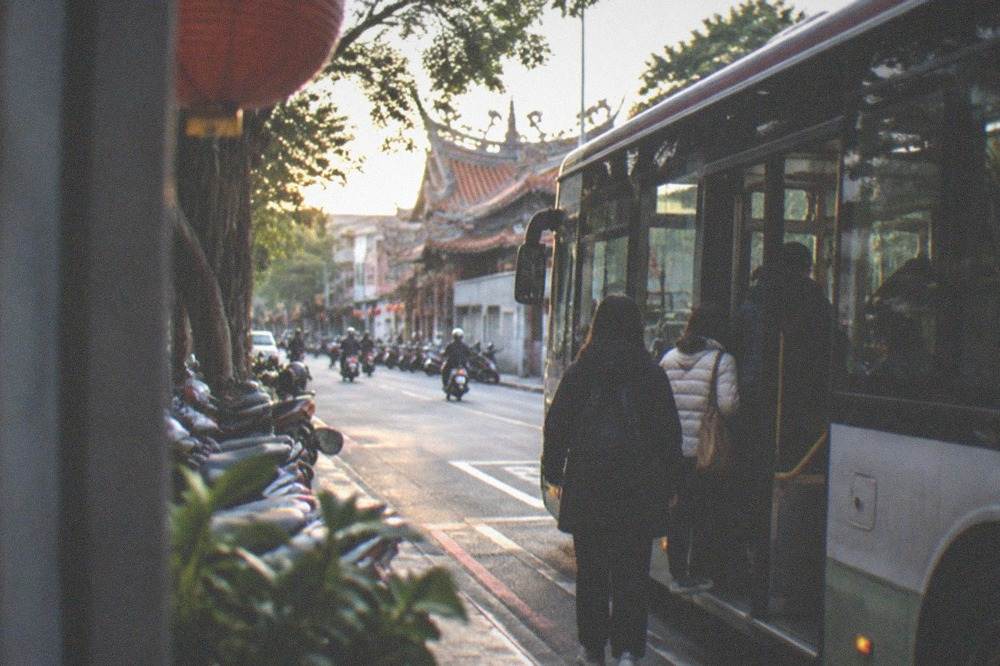
For the crawl itself, walking is the better mode inside the old district. The West Central District's food streets sit within a few blocks of each other, and the point of the format is the walking between bowls.
What Is the Best Time of Year for a Danzai Noodles Trip?
The best months for a Tainan food trip are October to March, the dry half of the year, when the Central Weather Administration's 1991 to 2020 normals show Tainan getting as few as 2.8 wet days in October against 30.8C maxima, and December bringing only 16 mm of rain across 3 wet days. The summer is the opposite: August averages 466 mm across 16 wet days, and close to three-quarters of the annual 1,761 mm falls between May and September.
The climate table is the planning tool. Tainan's rain is almost entirely a summer event, and the city has 186 days a year above 30C, so a winter or spring visit trades a few degrees of heat for dry streets and open-air eating. October is the quiet sweet spot: the driest month by wet days while still averaging above 30C maxima, which means night market seating and warm evenings without the downpour risk. The site's pages on Tainan weather, the best time to visit Tainan and the Taiwan typhoon season carry the full breakdown.
| Period | Rain pattern | What it means for eating |
|---|---|---|
| October to March | Dry, 16.2 to 30.8 mm per month, 2.4 to 4.2 wet days | Outdoor markets and street stalls in comfort |
| April to May | Rain rising, 69.8 mm in April then 165.6 mm in May | Workable, carry an umbrella |
| June to August | 370.5 to 466.1 mm per month, 12.1 to 15.8 wet days | Indoor Siaobei market becomes the fallback |
| September | Easing, 170.5 mm | Late typhoon risk, improving |
There is a counter-intuitive wrinkle worth knowing. Tainan's peak visitor season is January and February, driven by temple pilgrimage and Lunar New Year, not by summer, and the city's biggest draws by visitor count are its temples rather than its forts. A food trip in the winter months therefore shares the streets with the year's biggest domestic crowds. If a traveler wants the dry weather without the pilgrimage peak, November or early December is the narrower window.
Can You Try Danzai Noodles on a Guided Tour?
Yes, danzai noodles appear on Tainan food walking tours, and a guided walk is the most efficient way to meet the dish alongside the city's other snacks, since the walks visit multiple food streets in one outing and include tastings in the ticket. For visitors who want the dish placed in the city's full historical context rather than only its food context, a day tour covering the old capital's sites pairs well with an evening food walk.
The food walk is the natural fit, and the site's Tainan food tour page compares the options. The four-hour food and culture walk above is the strongest match for a crawl built around small bowls, because its whole format is the multi-stop grazing pattern the city's food culture runs on. A traveler with a full day and a broader interest in the city can pair it with a general tour, and the two options below show the range: a culture-focused tour built around a tea ceremony, and a full-day private tour of the city's historic layers.
The tea ceremony is the quieter complement to a food-heavy day: a 90-minute sitting that gives the afternoon a slow hour between the morning markets and the evening crawl.
The full-day private tour is the choice for a visitor who wants the city's history, streets and viewpoints handled end to end, with the evening left free for a self-directed bowl.

For travelers planning the wider trip, the practical pages on where to stay in Tainan and Tainan hotels cover the districts, and the Tainan attractions overview covers what else the city holds beyond the food streets.
Common Questions About Danzai Noodles
What are danzai noodles?
A small bowl of thin wheat noodles in a shrimp-based broth, topped with minced pork, shrimp, bean sprouts, garlic and a dark sauce. The name comes from the shoulder pole, danzai, that vendors once used to carry a whole cooking stall, and the portion is snack-size by design.
Why are danzai noodles served in such small portions?
Because the dish began as street food carried on a shoulder pole, where every item had to be portable and quick to assemble. The small bowl survived into restaurant menus as the standard format, and it fits the city's grazing food culture, where one evening moves through several small dishes rather than one large meal.
Where did danzai noodles originate?
The story told in Tainan is that a fisherman from the coastal lagoon country began selling noodles from a shoulder-pole stall during the season when the sea was too rough to fish. The name most often attached to the story is Du Hsiao Yueh. No official city page pins the founding to a single year, so treat it as a strong local tradition rather than a dated fact.
Can you find danzai noodles at the Tainan night markets?
Yes, along with dedicated shops and restaurants. The night markets rotate by day of week: Garden runs Thursday to Sunday, Wusheng Wednesday, Friday and Saturday, Dadong Monday, Tuesday and Friday, and Siaobei is indoors and open daily. Friday is the one night all three big outdoor markets run.
Are danzai noodles a full meal?
No, and they are not meant to be. A bowl is a snack or a first course in a crawl that continues through beef soup, coffin bread, milkfish soup and other small dishes. Ordering two bowls is a reasonable dinner, but the local pattern is one bowl and then the next stall.
When is the best time to eat your way around Tainan?
October to March, the dry half of the year. October averages only 2.8 wet days while still reaching 30.8C maxima, and December brings just 16 mm of rain. Summer concentrates the rain, with August averaging 466 mm, so the indoor Siaobei Night Market becomes the wet-weather fallback then.
That is the full picture of the dish: a small bowl with a working fisherman's logic behind it, a story the city tells with pride even where the record stays quiet on dates, and a practical setting that rewards a little planning. Check the market days before you go, carry a card for the buses, aim for the dry months if the schedule allows, and treat the danzai bowl as the opening move in a long evening rather than the whole game. Tainan's food streets have been running on that pattern for generations, and the city's own published schedules, fares and festival calendar, all linked above, are the sources worth checking before you fly.