Du Hsiao Yueh: The Original Danzai Noodle Shop
Du Hsiao Yueh is the Tainan institution most closely tied to danzai noodles, the small bowl of noodles in seasoned broth with braised pork and shrimp that the city treats as its signature dish. This guide covers what the dish actually is, where the shop sits, how to reach it, and how to plan a food day around it.
Short answer
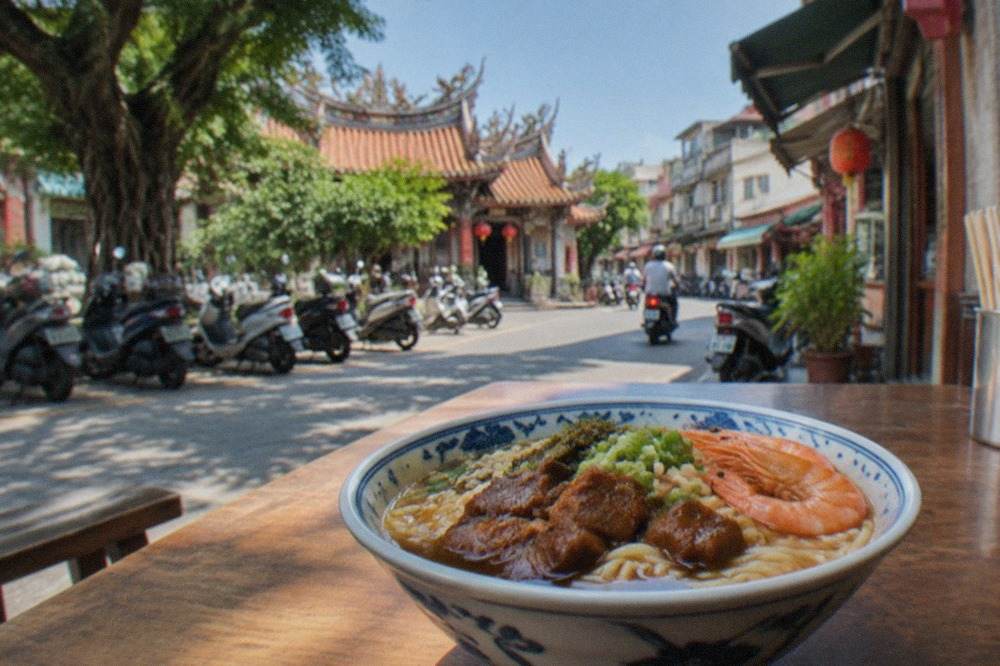
Du Hsiao Yueh is a Tainan restaurant famous for danzai noodles, a small bowl of noodles in soy-seasoned broth topped with braised pork and shrimp. The name is usually translated as tiding over a slow month, from the story of a fisherman who sold noodles when the seas were too rough to fish.
Tainan treats danzai noodles as its signature dish, and no name is more closely tied to that dish than Du Hsiao Yueh. The shop's story, as it is usually told, begins with a fisherman who sold noodles from a shoulder pole to tide over the slow summer months when the weather kept boats in harbor, and the name itself is usually translated as exactly that: tiding over a lean month. What began as street vending became a seated restaurant, and the bowl it built its reputation on, noodles in a soy-seasoned broth topped with braised pork and shrimp, is now served across Taiwan. But the version people travel for is the one in Tainan's old city, where the dish was born. This guide sets out what the bowl is, where the shop sits, how to get there, and how to fold it into a full day of eating in a city that takes its food more seriously than almost anywhere else on the island. For the wider picture of the city's food culture, start with our Tainan food guide.
What Is Du Hsiao Yueh in Tainan?
Du Hsiao Yueh is a Tainan restaurant famous for danzai noodles, a small bowl of noodles in soy-seasoned broth topped with braised pork, shrimp and garlic. The shop's founding story, as it is usually told, involves a fisherman who sold noodles from a carrying pole during the storm months when fishing stopped, and the name translates roughly as tiding over a slow month. It is now a seated restaurant in the old city, and the dish it popularized is served all over Taiwan.
The bowl itself is small, and that is the point. Danzai noodles were street food, eaten standing or perched on a stool, priced for a fisherman's customers rather than a banquet. The classic version pairs springy noodles with a broth built on soy sauce and pork, then finishes the bowl with a spoonful of braised minced pork, a shrimp or two, a sprinkle of garlic and sometimes a dash of vinegar. It is a snack-sized serving by modern restaurant standards, and most people order it as one stop in a longer eating walk rather than as a full meal.
The shop's own history is woven into how it presents itself, with the fisherman-and-shoulder-pole story on the menu and the carrying pole displayed as an emblem of the brand. The details of that story belong to the shop, and this guide reports them as the shop tells them rather than as independently verified history. What is not in dispute is the dish's status: ask a dozen Tainan residents what a visitor must eat in their city, and danzai noodles will appear on nearly every list, usually alongside beef soup and coffin bread.
The relationship between the shop and the dish runs both ways. Du Hsiao Yueh did not invent noodles, and other vendors in Tainan serve danzai noodles too, some of them long-established in their own right. What the shop did, by most accounts, was popularize the bowl and turn it into a brand that spread far beyond Tainan. For a fuller account of the dish itself, its components and where else to find it in the city, see our dedicated danzai noodles guide.
What Goes in a Bowl of Danzai Noodles?
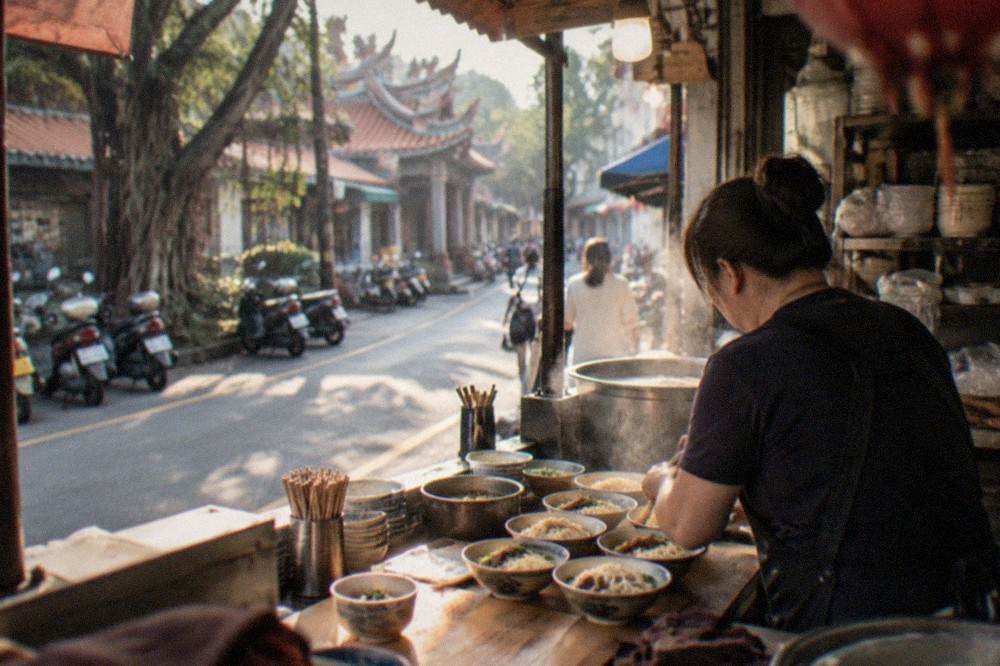
A classic bowl of danzai noodles is built on a small portion of noodles in a soy-and-pork broth, topped with braised minced pork, whole shrimp, garlic and often a touch of vinegar or spicy sauce. The portion is deliberately snack-sized, reflecting its origins as street food sold from a carrying pole, and the dish is usually eaten as one stop in a longer food crawl rather than as a complete meal.
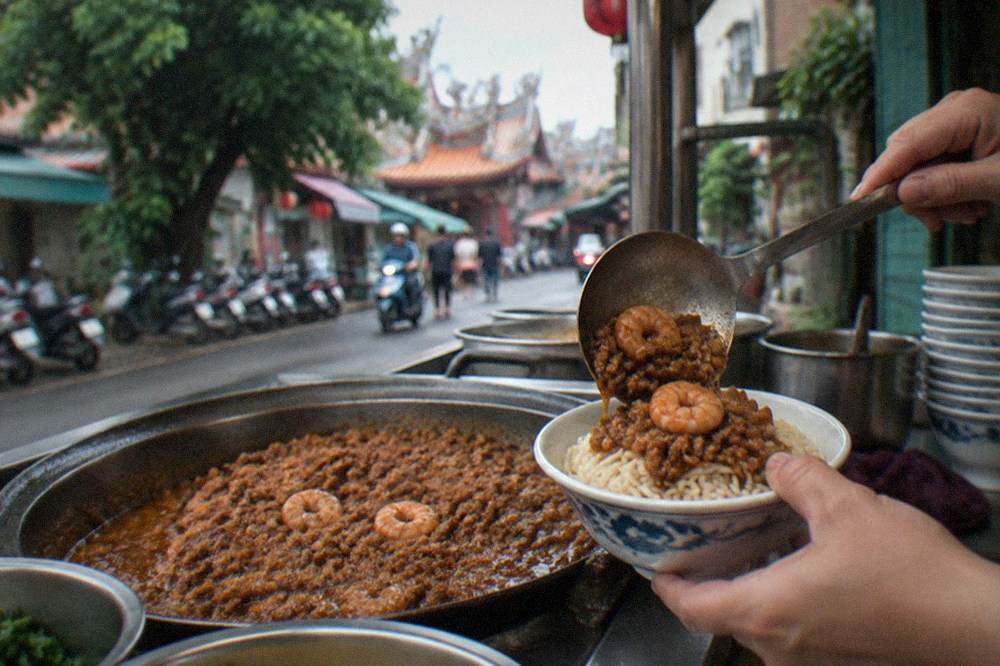
The braised pork is the heart of it. Minced pork is cooked slowly in soy sauce and sugar until it breaks down into a dark, savory paste that clings to the noodles, and the same braising pot flavors the broth beneath. The shrimp, usually small and often head-on, add sweetness and a hint of the sea, a nod to the dish's coastal origins. Garlic, fresh or fried, sharpens everything, and many versions finish with a few drops of vinegar that lift the broth without making it sour.
Because the portion is small, the way locals eat danzai noodles matters for planning. It is one dish in a sequence. A typical Tainan eating walk might move from a bowl of noodles to a serving of beef soup, then to a snack like coffin bread, then to a dessert, with each stop small and cheap by the standards of a full restaurant meal. That rhythm is why the old city's food lanes are so dense: the whole neighborhood is built for grazing. Our Tainan street food guide maps that rhythm across the city, and our coffin bread guide covers the other old-city dish most visitors pair with the noodles.
Where Is Du Hsiao Yueh and How Do You Get There?
The shop associated with the original Du Hsiao Yueh sits in Tainan's West Central District, in the old city core near Zhongzheng Road, within walking distance of Chihkan Tower and the main food lanes. From the High Speed Rail station at Shalun, visitors reach the old city by transfer, either the TRA Shalun Line to Tainan Railway Station or the H31 HSR shuttle bus, which is free for HSR passengers on presentation of a ticket stub.
The location matters more than it sounds. The old city core is compact, and most of the dishes visitors come to Tainan for, including this one, sit within a walkable grid of lanes between Chihkan Tower and the canal. The Tourism Bureau's page for Chihkan Tower places that landmark in the middle of the same district, and the shop is a short walk from it. Anyone basing themselves in the old city can reach the restaurant on foot; anyone staying out by the coast or in the HSR corridor will need a bus or a taxi.
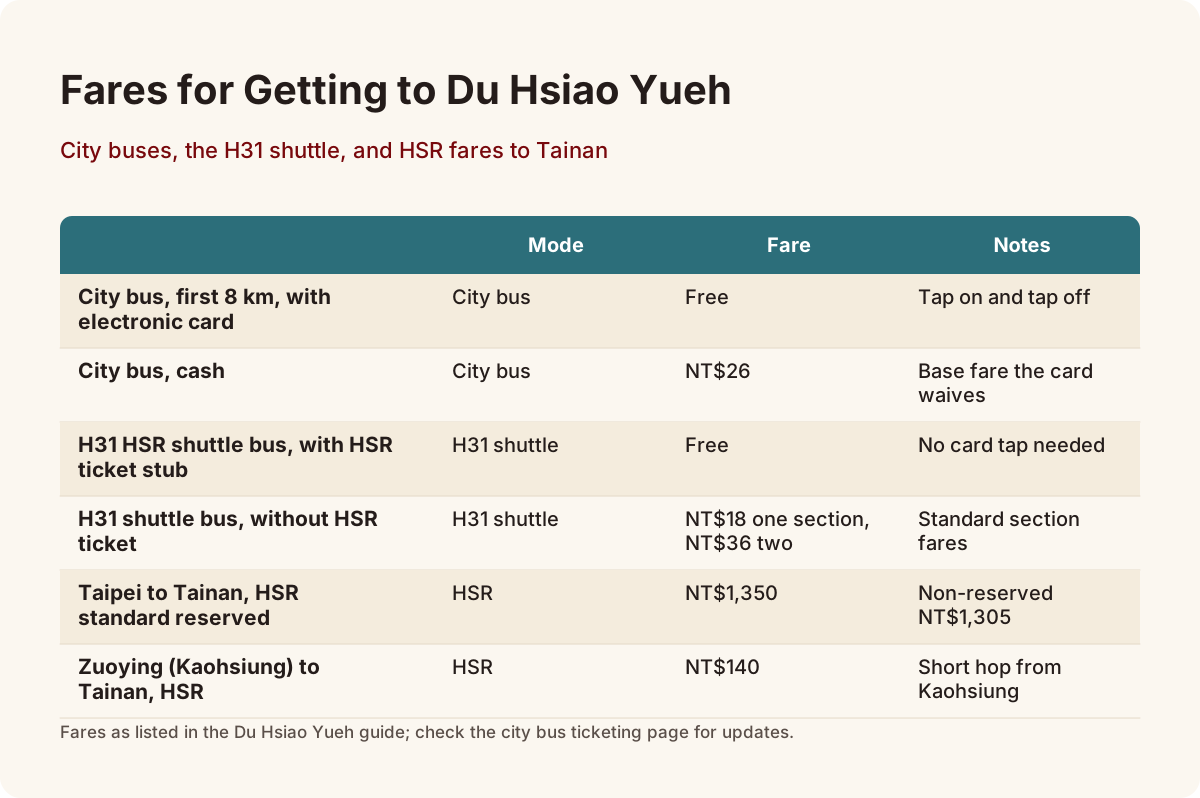
The transfer from the HSR station is the part visitors consistently underestimate, and every arrival guide on this site says so: the station is at Shalun in Guiren District, outside the old city. The Tainan HSR station guide covers the options in full. The H31 shuttle is worth knowing about because it is free for HSR passengers, with no card tap needed, on production of a ticket stub, and its route runs via the Chimei Museum. Other passengers pay by section, 18 for one section or 36 for two.
| Route or mode | Fare | Notes |
|---|---|---|
| City bus, first 8 km, with electronic card | Free | Tap on AND tap off; Citizen Card, iPASS, EasyCard or iCash 2.0; trunk and branch network; runs for the 2026 calendar year |
| City bus, cash | NT$26 | The base fare the card scheme waives |
| H31 HSR shuttle bus, with HSR ticket stub | Free | No card tap; section break at the Chimei Museum |
| H31 shuttle bus, without HSR ticket | NT$18 one section, NT$36 two | Standard city bus section fares |
| Taipei to Tainan, HSR standard reserved | NT$1,350 | Non-reserved NT$1,305; the operator's grid also shows a business fare of NT$2,230, which is not the standard price |
| Zuoying (Kaohsiung) to Tainan, HSR | NT$140 | The short hop from Kaohsiung's HSR station |
The bus fare row deserves its own sentence, because it is one of the most useful facts in the city: Tainan city buses are free for the first 8 km with an electronic card, per the city's own bus ticketing page, provided you tap on and tap off. Tap off is the step visitors miss. For the full picture of moving around the city, including the free-8-km scheme and what it does not cover, see getting around Tainan.

What Else Should You Eat Near Du Hsiao Yueh?
The old city around the shop is dense with Tainan's signature dishes, and the practical plan is a crawl rather than a single meal: danzai noodles at one stop, beef soup at another, coffin bread at a third, with the night markets rotating by day of week in the evening. Garden Night Market opens Thursday through Sunday, Wusheng Wednesday, Friday and Saturday, Dadong Monday, Tuesday and Friday, and Siaobei is indoors and open every day.
Beef soup is the dish most often named alongside danzai noodles as the one a visitor cannot skip, and Tainan's version is its own thing: thin slices of raw beef dropped into scalding clear broth at the table, served at breakfast shops as much as at dinner. Our Tainan beef soup guide covers it in detail. The two dishes make a natural pairing because they occupy opposite ends of the day, noodles as an afternoon or evening stop, soup as a dawn one.
The night market schedule is the single most useful planning fact in the city, verified market by market from the Tourism Bureau's own pages, and it is worth checking before you commit to an evening. Friday is the one night all three big outdoor markets run. Wednesday is the thinnest, with Wusheng alone. Siaobei, indoors and daily, is the wet-weather and wrong-night answer, open from noon to midnight.
| Day | Big markets open | Hours |
|---|---|---|
| Monday | Dadong (Siaobei, indoor, open daily) | Dadong 18:00 to 01:00 |
| Tuesday | Dadong | Dadong 18:00 to 01:00 |
| Wednesday | Wusheng | Wusheng 17:00 to 00:00 |
| Thursday | Garden | Garden 17:00 to 00:00 |
| Friday | Dadong, Wusheng and Garden all open | Dadong 18:00 to 01:00; Wusheng and Garden 17:00 to 00:00 |
| Saturday | Wusheng, Garden | 17:00 to 00:00 |
| Sunday | Garden | 17:00 to 00:00 |
The city updates these pages and the days do change, so the standing advice on this site is always to check before you go. The Tainan City Market Administration maintains the official night market roster, and our Tainan night markets guide carries the full schedule with the same caveat.
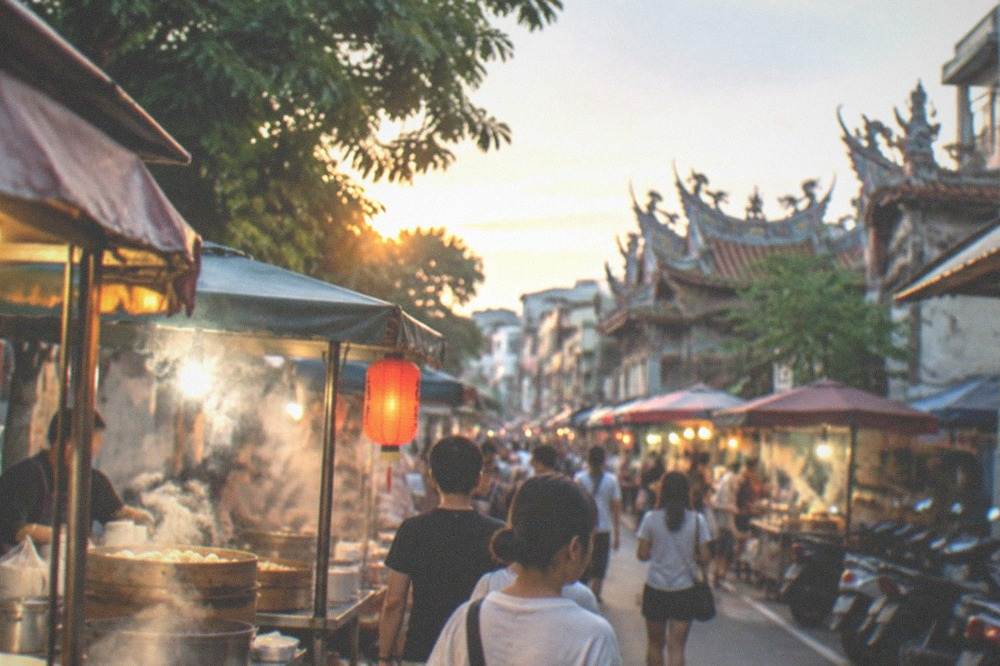
Can You Build an Evening Around Du Hsiao Yueh in Tainan?
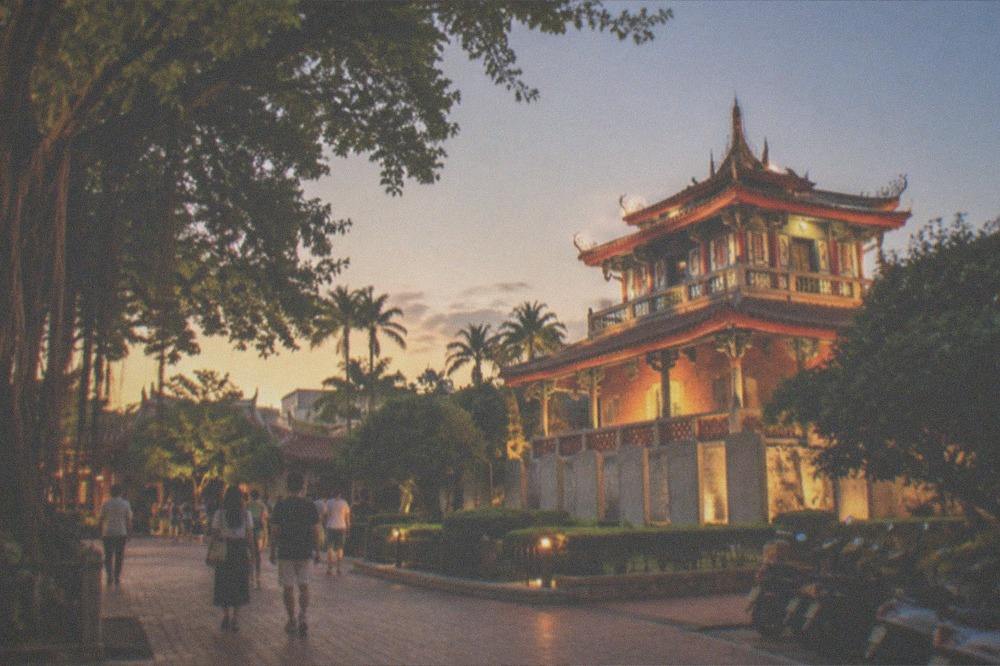
Yes, and the old city's late closing hours make it easy: Chihkan Tower stays open until 21:30 every day, which the city's own page confirms, making it one of the few historic sites in Tainan a visitor can see after dinner. A practical evening pairs a bowl of danzai noodles with a walk through the nearby lanes, then Chihkan Tower's night lighting, then a night market on a night when one is running.
The 21:30 closing at Chihkan Tower is unusual for Tainan and worth building a plan around. Most of the city's heritage sites shut in the late afternoon, Anping Old Fort at 17:10 and the Anping Tree House at 17:30 among them, so a site that welcomes visitors past dinner is a genuine exception. Admission is NT$70 at the gate, with half-price concessions and free entry for Tainan residents with ID, and the on-site notice governs, as the city's own pages say.
| Site near the old city | Admission | Hours | Closed |
|---|---|---|---|
| Chihkan Tower | NT$70 | 08:30 to 21:30 daily | none listed |
| Grand Matsu Temple | Free | 06:00 to 21:00 daily | none |
| Tainan Confucius Temple | Free | 08:30 to 17:30 daily | Lunar New Year's Eve |
| Five Concubines Temple | Free | 08:00 to 17:00 daily | none |
| Kaiyuan Temple | Free | 06:00 to 17:00 daily | none |
The free-entry temples in that table are worth a sentence of their own, because they change the shape of an evening budget entirely. The Grand Matsu Temple keeps the longest hours of the group and sits in the same old-city grid, so a walking loop that costs nothing beyond the noodles and one NT$70 ticket is realistic. Our Tainan temples guide covers the etiquette and the dress expectations before you go in.
When Is the Best Time to Visit Tainan for the Noodles?
October to March is the comfortable half of the year for a food-focused trip: the Central Weather Administration's 1991 to 2020 normals for Tainan show October averaging 30.8C maxima with just 2.8 wet days, against August's 466 mm of rain across 16 wet days. The city's own calendar also puts its biggest food events in the warm months, with mango season in June and July and the Qigu Seafood Festival in July and August.
The climate table drives the advice more than any folk wisdom could. Tainan's rain is almost entirely a summer event, with close to three-quarters of the annual 1,761 mm falling between May and September, and 186 days a year going above 30C. A food crawl in August means eating in heat and planning around downpours; the same crawl in November or December means dry streets and evenings comfortable enough to walk between stops. Our best time to visit Tainan guide and our Tainan weather page carry the full month-by-month numbers.
| Month(s) | Food event, from the city's own festival calendar |
|---|---|
| February | Yanshui Beehive Fireworks, held around the Lantern Festival |
| February to March | Yuejin Lantern Festival |
| March | Taiwan International Orchid Show |
| June | Tainan International Dragon Boat Championship |
| June to July | Taiwan Mango Season and the Tainan International Mango Festival |
| July to August | Qigu Seafood Festival |
| September | Confucius Temple Cultural Festival |
| September to November | Guanziling Hot Spring and Food Festival |
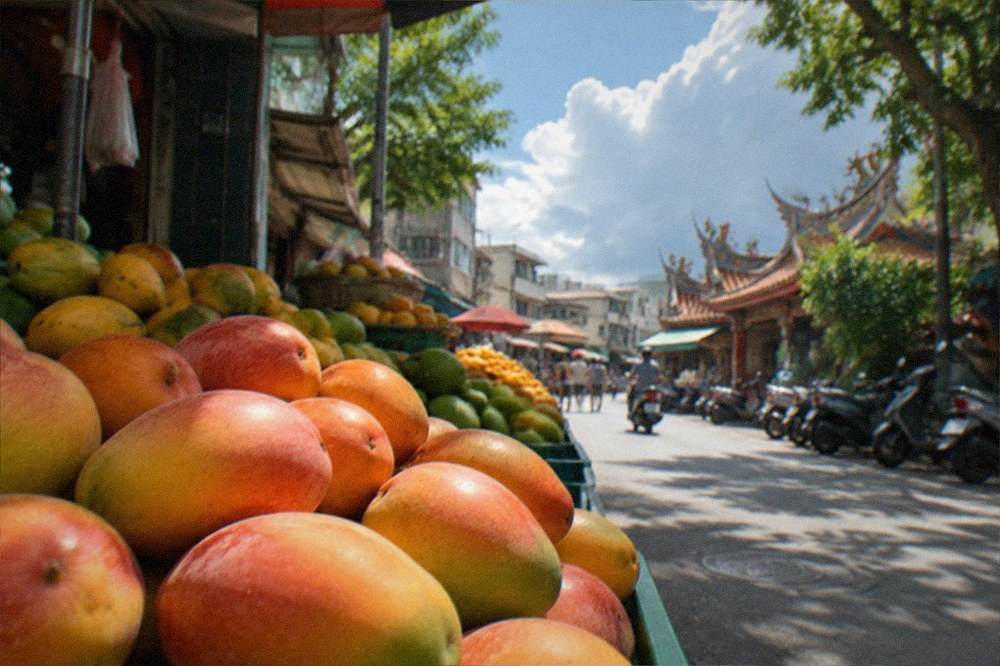
The mango season is the one that intersects most directly with a food trip, since Yujing's mangoes appear in desserts and drinks across the city in June and July, and the seafood festival on the Qigu coast pairs lagoon boat rides with the same coastal food culture that produced danzai noodles in the first place. Typhoon risk concentrates in the late summer months, and our Taiwan typhoon season page explains how the city handles typhoon days and what closes.
How Does Du Hsiao Yueh Fit Into a Longer Tainan Trip?
Treat the shop as one anchor stop in a two or three-day eating itinerary, not as a destination on its own. A sensible pattern is the old city and its food lanes on day one, Anping's historic sites and its old street on day two, and the coastal lagoon district around Qigu and Sicao on day three, with the noodle bowl placed on whichever evening ends nearest the city core.
Two days is the realistic minimum for Tainan, and most first-time visitors who give it three do not regret it. The old city alone, Chihkan Tower, the Confucius Temple, the Grand Matsu Temple, the lanes between them, fills a day at a walking pace with a food stop every few hundred meters. Anping adds the Old Fort, the Tree House and the Eternal Golden Castle, all NT$70 at the gate, plus an old street that is itself a food destination. The coast adds the Sicao Green Tunnel boats, NT$200 for either route, and Qigu Salt Mountain, NT$50 on foot.
Our itineraries cover the sequencing in detail: one day in Tainan, two days and three days, plus a dedicated Tainan food crawl for visitors whose trip is built around eating. If you are arriving from the capital, our Taipei to Tainan page covers the HSR fare, NT$1,350 for a reserved standard seat on the operator's own table, and the transfer from Shalun.
For visitors who want the dishes explained while they eat them rather than researched in advance, a guided food walk solves the problem in a single afternoon, and a longer day trip from either Tainan or Kaohsiung can fold the old city, the coast and the temples into one organized loop.
Common Questions About Du Hsiao Yueh and Danzai Noodles
What is Du Hsiao Yueh?
It is a Tainan restaurant famous for danzai noodles, the city's signature bowl of noodles in soy-seasoned broth with braised pork and shrimp. The shop's own story traces its origins to a fisherman who sold noodles from a carrying pole during the storm months when fishing stopped, and the name translates roughly as tiding over a slow month.
What is danzai noodles?
A small, snack-sized bowl of noodles in a broth built on soy sauce and pork, topped with braised minced pork, shrimp, garlic and often a dash of vinegar. It began as Tainan street food and is now served across Taiwan, with Tainan's old city regarded as its home.
How do I get to Du Hsiao Yueh from the Tainan HSR station?
The HSR station is at Shalun in Guiren District, outside the old city, so reaching the shop requires a transfer. Options include the TRA Shalun Line to Tainan Railway Station and the H31 HSR shuttle bus, which is free for HSR passengers on production of a ticket stub. From the city core, the shop is within walking distance of Chihkan Tower.
How much does a bowl of danzai noodles cost?
No official price list for the dish exists, and this site does not print unverified prices. The bowl began as cheap street food and remains a modestly priced snack by restaurant standards; check the menu at the shop or the current listing for any tour that includes it.
Is Du Hsiao Yueh open in the evening?
The shop operates as a seated restaurant in the old city, and the surrounding district supports evening eating, with Chihkan Tower open until 21:30 daily and the night markets rotating by day of week. Check the shop's current hours before you go, as restaurant hours change more often than attraction hours.
What else should I eat near Du Hsiao Yueh?
The old city's classic pairing is beef soup, served at dawn shops as much as at dinner, plus coffin bread and the rotating night markets. The practical pattern is a crawl of small stops rather than one meal, and the night market schedule, verified from the city's own pages, is the key planning fact for the evening.
A bowl of danzai noodles is a small thing, and that is exactly why it works as the anchor of a Tainan food trip: it leaves room for everything else. Plan the day around the verified facts that actually shape a visit, the free first 8 km on the buses, the 21:30 closing at Chihkan Tower, the night market that matches your day of the week, and the old city takes care of the rest. For more on the city behind the bowl, continue with the Tainan history guide or browse everything else on Tainan Travel Guide.