Tainan Temples Explained
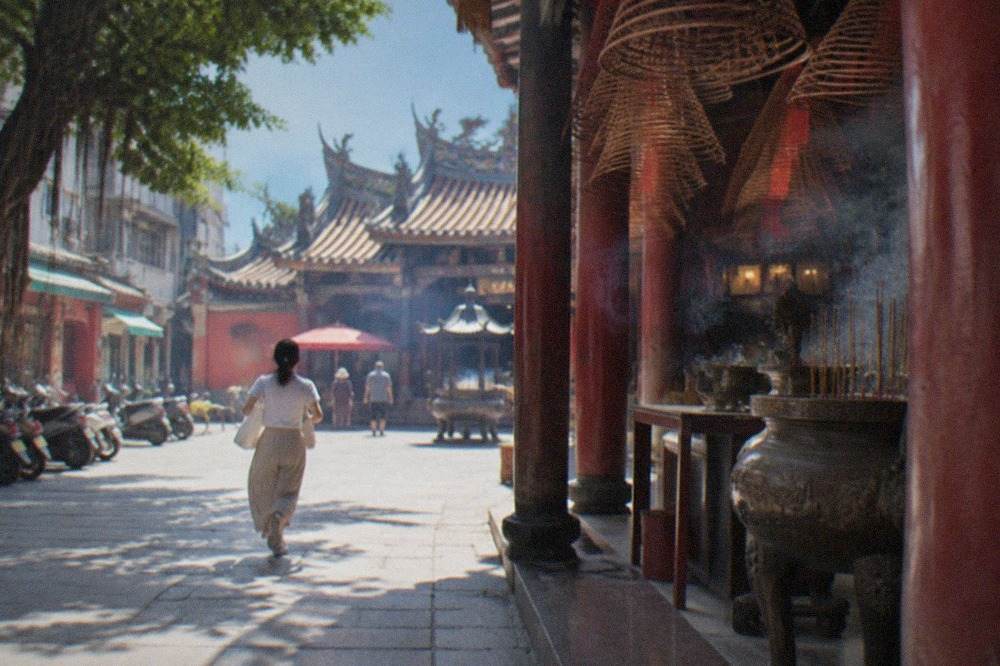
Tainan was Taiwan's capital for more than two centuries, until the late nineteenth century, and the temples are the clearest record of that history. Four of the most important cost nothing to enter.
Short answer
Tainan's major temples are mostly free to enter, including the Confucius Temple, Grand Matsu Temple, Five Concubines Temple and Kaiyuan Temple, while the biggest draw of all, Nankunshen Daitian Temple on the coast, drew 6,583,100 visitors in 2023.
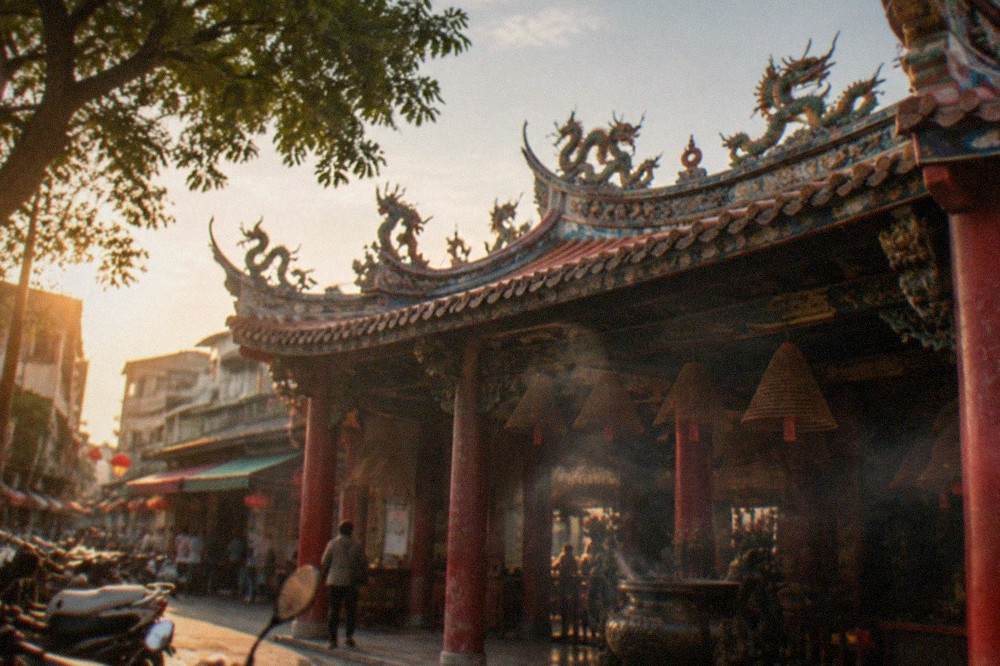
Tainan was Taiwan's capital for more than two centuries, until the late nineteenth century, and the temples are the most visible record of that stretch of history. The city's own tourism pages list dozens of them, from the Confucius Temple in the old centre to coastal pilgrimage sites that outdraw every Dutch-era fort combined. What surprises most first-time visitors is the price. Four of the most historically significant temples in the city cost nothing to enter at all, and the single biggest temple draw in the whole municipality is not in the city centre but on the coast at Beimen.
This page explains the temple landscape the way the sources present it: what the city's own pages say about hours and admission, what the visitor numbers actually show, and how the festival calendar is built around temple life. For the wider historical frame, see Tainan history in depth, and for the events that fill these courtyards, the Tainan festivals guide covers the calendar month by month.
Why Is Tainan Called the City of Temples?
Tainan carries the densest concentration of historic temples in Taiwan because it served as the island's political and cultural capital for over two centuries, until the late nineteenth century, and every wave of administration, from Koxinga's rule onward, built its religious and ceremonial landmarks here first. The city's tourism bureau lists temple after temple in the old central districts, and the numbers back the reputation: temple sites dominate Tainan's visitor statistics far ahead of its forts and museums.
The Dutch built their strongholds at Anping and at what is now Chihkan Tower in the early 1650s, but the temple layer of the city belongs to the periods that followed. After Koxinga took the Dutch fort in 1662, the Zheng administration and then the Qing era filled the growing town with academies, Matsu temples and official cult temples, and the Japanese period and the postwar decades added their own marks without clearing the old ones. The result is a city where a visitor can walk between four free, centuries-old temples in the central district in a single afternoon.
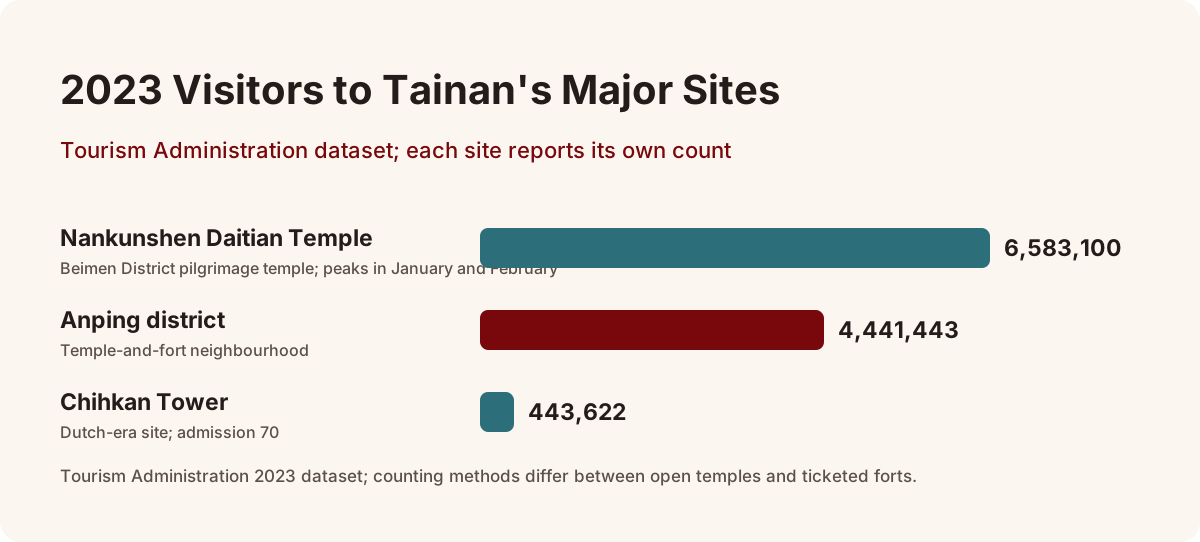
The visitor statistics tell the story in a way no adjectives can. The Tourism Administration's 2023 dataset puts Nankunshen Daitian Temple at 6,583,100 visitors and the Anping district, a whole temple-and-fort neighbourhood, at 4,441,443. Chihkan Tower, the most famous Dutch-era site in the city, drew 443,622. The caveat matters: each site compiles and reports its own count, and an open temple courtyard counts differently from a ticketed museum. But the shape of the ranking is unmistakable. In Tainan, the temples are the main event, and the forts are the supporting cast.
Which Tainan Temples Are Free to Enter?
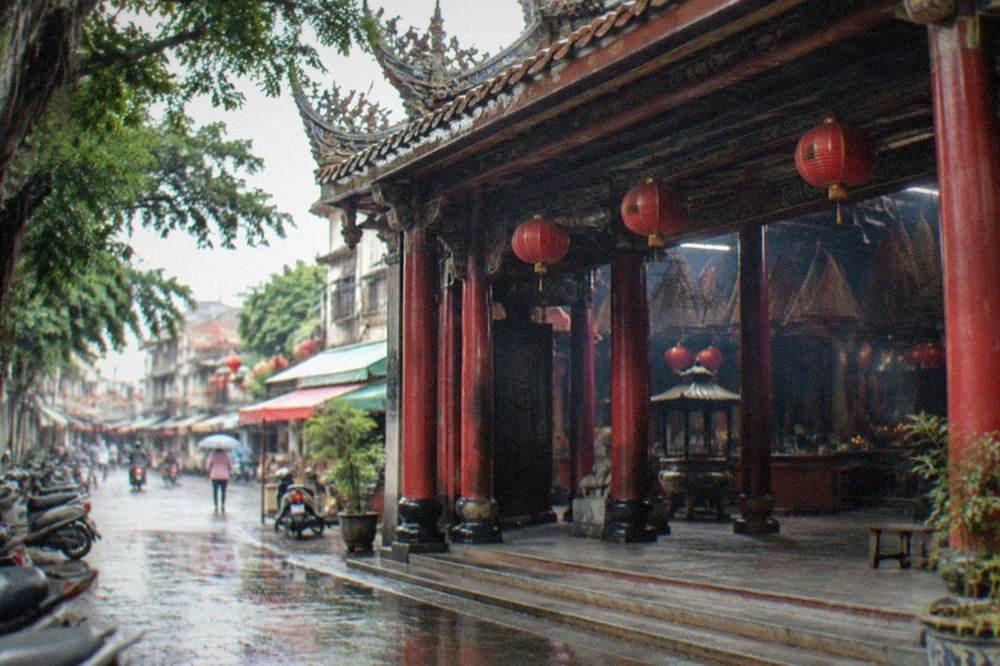
Four major Tainan temples charge no admission at all, according to the city's own tourism pages: the Confucius Temple, open 08:30 to 17:30 every day and closed only on Lunar New Year's Eve; the Grand Matsu Temple, open 06:00 to 21:00 daily; the Five Concubines Temple, open 08:00 to 17:00; and Kaiyuan Temple, open 06:00 to 17:00. No ticket price is listed for any of them by the city.
The Tainan City Government Tourism Bureau's page for the Confucius Temple lists no price at all, only the hours and the single annual closure. The temple carries the title "first academy of Taiwan", a real and documented designation, though its founding year is not stated on a reachable official page, so this guide does not print one. The same pattern holds at the other three. The Grand Matsu Temple's city page gives hours and no ticket, and the Five Concubines Temple and Kaiyuan Temple pages follow suit.
| Temple | Admission | Hours | Closed |
|---|---|---|---|
| Tainan Confucius Temple | Free, no ticket listed | 08:30 to 17:30, Monday to Sunday | Lunar New Year's Eve |
| Grand Matsu Temple | Free, no ticket listed | 06:00 to 21:00 daily | None listed |
| Five Concubines Temple | Free, no ticket listed | 08:00 to 17:00 daily | None listed |
| Kaiyuan Temple | Free, no ticket listed | 06:00 to 17:00 daily | None listed |
One point the sources leave open: whether a separate charge applies at the Confucius Temple's Dacheng Hall. The city page lists no price for it either way, so no claim is made here. The free-entry temples sit mostly in the old central district, which makes them natural stops on any walking route through the historic core, and the Tainan attractions overview places them alongside the ticketed sites so you can plan the mix.
The contrast with the ticketed layer of the city is worth spelling out, because it shapes how a budget divides. Chihkan Tower charges 70 at the gate, Anping Old Fort charges 70, and the Anping Tree House and Eternal Golden Castle charge 70 each, with half-price concessions and free entry for Tainan residents with ID. A visitor is not a resident, so the free temples are the only guaranteed zero-cost historic interiors in the city. Four free temples plus a walking route between them is a full day of sightseeing for the price of lunch.
A temple day and a tea ceremony pair well, because both are slow, ceremonial and rooted in the city's old culture. If you want a structured cultural addition to a day of temple visits:
What Is Nankunshen Daitian Temple and Why Does It Outdraw Everything?
Nankunshen Daitian Temple, in Beimen District on the coast well north of the city centre, is Tainan's single biggest visitor attraction, drawing 6,583,100 people in 2023, roughly fifteen times the number who visited Chihkan Tower. Its pull is pilgrimage: the temple hosts major Wang Ye incense-offering ceremonies on fixed lunar dates each year, and visitation peaks in January and February.
The numbers come from the Tourism Administration's own dataset, and the pattern they show is the opposite of what many visitors expect. Tainan's peak months are January and February, driven by pilgrimage traffic and Lunar New Year, not by the summer holidays. The Central Weather Administration's 1991 to 2020 normals for Tainan explain why: winter is the dry, comfortable half of the year, with December bringing just 16 mm of rain, while August brings 466 mm. The pilgrimage calendar and the climate point the same direction.
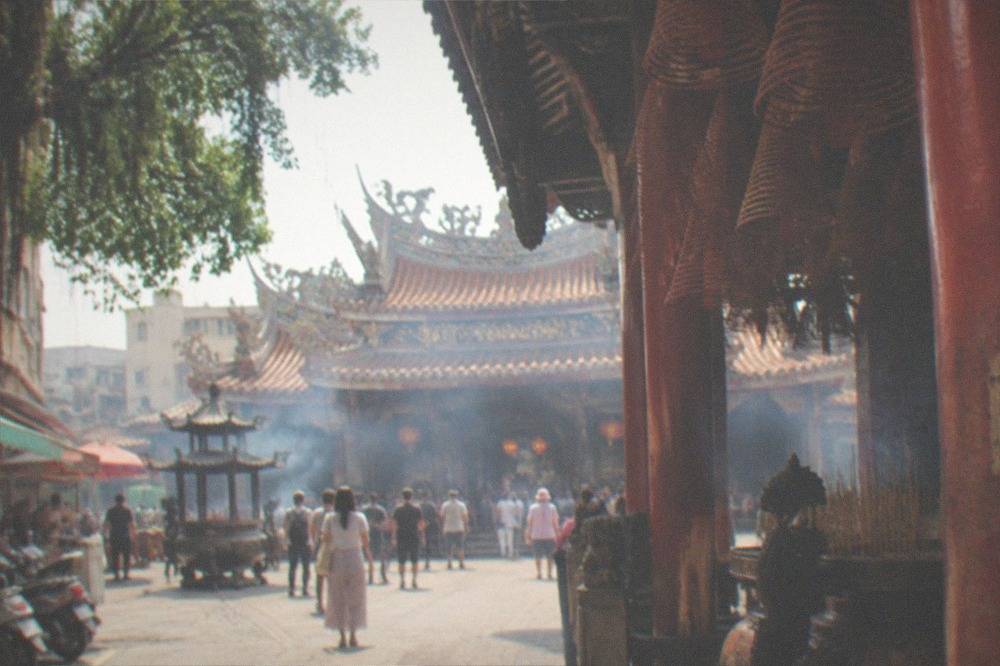
The national temple registry's page for Nankunshen records its recurring pilgrimage dates on the lunar calendar: the end of the fourth lunar month, the middle of the sixth, and the end of the eighth. No specific Gregorian dates for upcoming years have been published, so a visit planned around a pilgrimage needs to be checked against the city calendar closer to the time. The temple is a genuine excursion, not a city-centre stop, and it pairs naturally with the coastal salt-flat sights of Beimen.
It is also worth being honest about what the comparison means. A pilgrimage temple that logs 6.5 million visits is not the same experience as a quiet courtyard with a handful of worshippers, and the counting methods differ between an open temple and a ticketed fort. What the figure establishes is where Tainan's religious life actually concentrates: on the coast, at festival time, in winter. A traveller who wants the atmosphere without the biggest crowds can visit the central temples instead and still see working places of worship, free of charge, at almost any hour of the day.
Do Tainan Temples Have Set Hours and Closure Days?
Yes, and the hours vary widely: the Grand Matsu Temple opens at 06:00 and closes at 21:00, the Confucius Temple runs 08:30 to 17:30 and closes on Lunar New Year's Eve, and Kaiyuan Temple opens at 06:00 and closes at 17:00, all per the city's own pages. The free temples keep longer hours than the ticketed historic sites, so they suit both early mornings and evenings.
The early openings matter for planning. Two of the four free temples open at six in the morning, which fits the local rhythm of temple life and also fits the city's food culture, since Tainan's famous breakfast dishes are an early-morning affair. The Tainan street food guide covers that side of the morning. The one closure to remember is Lunar New Year's Eve at the Confucius Temple, which is also the closure day listed by the city's museums.
| Temple | Opens | Closes | Notes from the city page |
|---|---|---|---|
| Grand Matsu Temple | 06:00 | 21:00 | Free, open daily |
| Kaiyuan Temple | 06:00 | 17:00 | Free, open daily |
| Tainan Confucius Temple | 08:30 | 17:30 | Closed Lunar New Year's Eve |
| Five Concubines Temple | 08:00 | 17:00 | Free, open daily |
The evening end of the scale deserves a note too. The Grand Matsu Temple's 21:00 closing is unusually late for a historic site in this city: Chihkan Tower, at 08:30 to 21:30 daily, is one of the very few ticketed sites that stays open after dinner, and the temple matches it without charging anything. That makes the Grand Matsu Temple the natural last stop of a temple day, or the first stop of an evening walk before the night markets open. The city updates these pages regularly, so treat the hours as current rather than permanent and check before you go. The wider set of guides lives on Tainan Travel Guide.
One honest note on behaviour at these sites: this guide does not publish temple etiquette rules, incense procedures or ritual detail, because none of that is stated in the verified sources behind this site. What the sources do establish is practical: the temples are free, they are working places of worship with real congregations, and the city updates its pages regularly, so hours should be checked before a visit. Beyond that, ordinary restraint at an active religious site is the safe default.
When Do Tainan's Temple Festivals Happen?
Tainan's temple year peaks in February with the Yanshui Beehive Fireworks, held on the Lantern Festival, and the Yuejin Lantern Festival from February to March, followed by the Confucius Temple Cultural Festival in September, according to the city's own festival calendar. The biggest pilgrimage traffic at Nankunshen Daitian Temple follows fixed lunar dates rather than Gregorian ones, so it moves each year.
The city's calendar, published by the tourism bureau, lists the temple-linked events month by month. The Yanshui Beehive Fireworks is the most famous: it falls in February, tied to the Lantern Festival, and its exact Gregorian dates are announced closer to the event, so this guide prints no specific date. The Confucius Temple Cultural Festival in September is the calmer, city-centre counterpart, and the Guanziling Hot Spring and Food Festival runs September to November if you are heading out of town.

| Month(s) | Temple-linked event |
|---|---|
| February | Yanshui Beehive Fireworks, on the Lantern Festival |
| February to March | Yuejin Lantern Festival |
| March | Taiwan International Orchid Show |
| June | Tainan International Dragon Boat Championship |
| September | Confucius Temple Cultural Festival |
| September to November | Guanziling Hot Spring and Food Festival |
The timing advice follows from the climate table rather than from opinion. The best time to visit Tainan is the October to March dry season on pure weather grounds, but the festival calendar adds a reason to consider February: that is when the temple year is at its loudest, and it is also when the pilgrimage crowds are at their thickest. If you want the festivals, accept the crowds. If you want quiet courtyards, come in late autumn.
One distinction the sources insist on: the Yanshui Beehive Fireworks and the Yuejin Lantern Festival are Tainan's own events, while the national Taiwan Lantern Festival is a separate, rotating event, and this site makes no claim about where it is held in any given year. The Taiwan Lantern Festival page covers that event on its own terms. For the city's own calendar, the tourism bureau's festival listing is the authoritative source, and it is where any February visit should be checked.
How Do the Temples Fit Into a Day in Tainan?
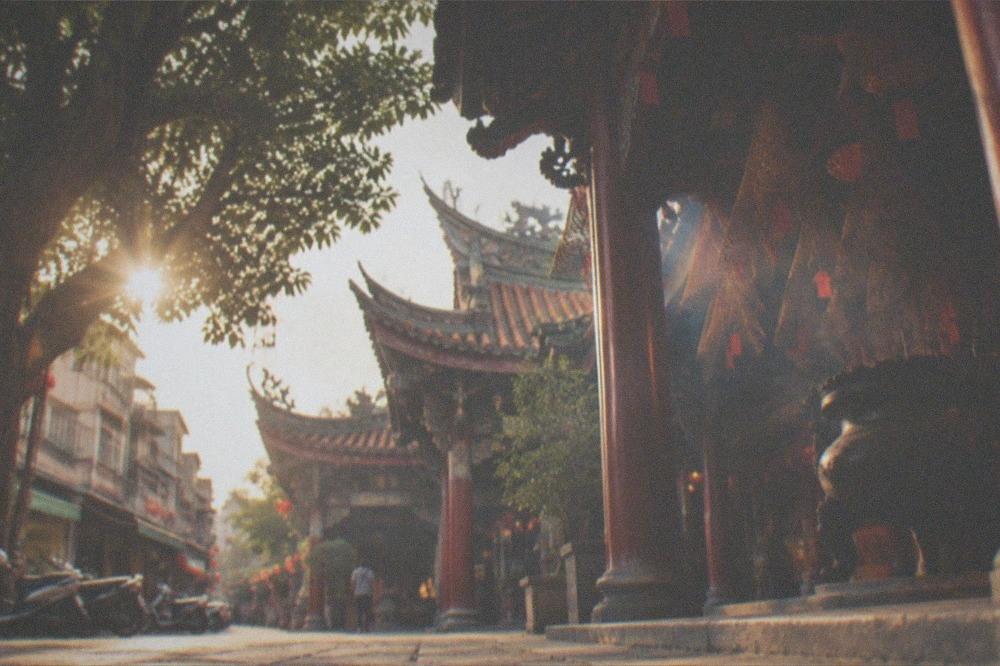
The free central temples cluster within walking distance of each other in the old district, so a realistic day pairs the Confucius Temple, Grand Matsu Temple and Five Concubines Temple with the ticketed historic sites nearby, leaving Kaiyuan Temple for a second loop or a morning start. The coastal pilgrimage temples, Nankunshen above all, are separate excursions and should not be squeezed into a city day.
The city-centre set works as a walking route because the hours overlap in the middle of the day. The Confucius Temple's 08:30 opening is the natural start, the Grand Matsu Temple's 21:00 closing is the natural end, and the Five Concubines Temple sits between them in the day. Kaiyuan Temple also opens at 06:00, which makes it a morning stop for early risers rather than an afternoon one, since it closes at 17:00. For a fuller plan, the one day in Tainan itinerary sequences these against the forts and the food stops.
Getting between the districts is cheap if you use the bus system correctly. City buses are free for the first 8 km with an electronic card, a Citizen Card, iPASS, EasyCard or iCash 2.0, provided you tap on and tap off, and the scheme runs through the 2026 calendar year, so treat it as current policy rather than a permanent one. The cash fare for the same trip is 26. The details, including the tap-off requirement that visitors most often miss, are in getting around Tainan.
Evening is when the temple day hands over to the other Tainan: the night markets. The big outdoor markets rotate by day of the week, with Garden open Thursday to Sunday, Wusheng on Wednesday, Friday and Saturday, and Dadong on Monday, Tuesday and Friday, so check the schedule before you plan a temple-and-market evening. The full day-by-day table is in the Tainan night markets guide.

What Should You Know Before a Temple Trip to Tainan?
Plan around three things: the free temples' hours, which run from 06:00 at the earliest to 21:00 at the Grand Matsu Temple; the festival calendar, which peaks in February; and the coastal location of the biggest draws, which makes Nankunshen Daitian Temple a separate excursion rather than a city stop. Everything in the temple layer of Tainan costs nothing to enter except your time and your transport.
Budget almost nothing for admission and something for getting around. The four central temples are free, the bus network is free for short hops with a card, and the only real costs are food, lodging and the trips out to the coast. If you are arriving by high speed rail, remember that the HSR station is at Shalun in Guiren District, outside the old city, and reaching the centre means a transfer; the Tainan HSR station guide covers the options, and the H31 shuttle is free for HSR passengers on production of a ticket stub.
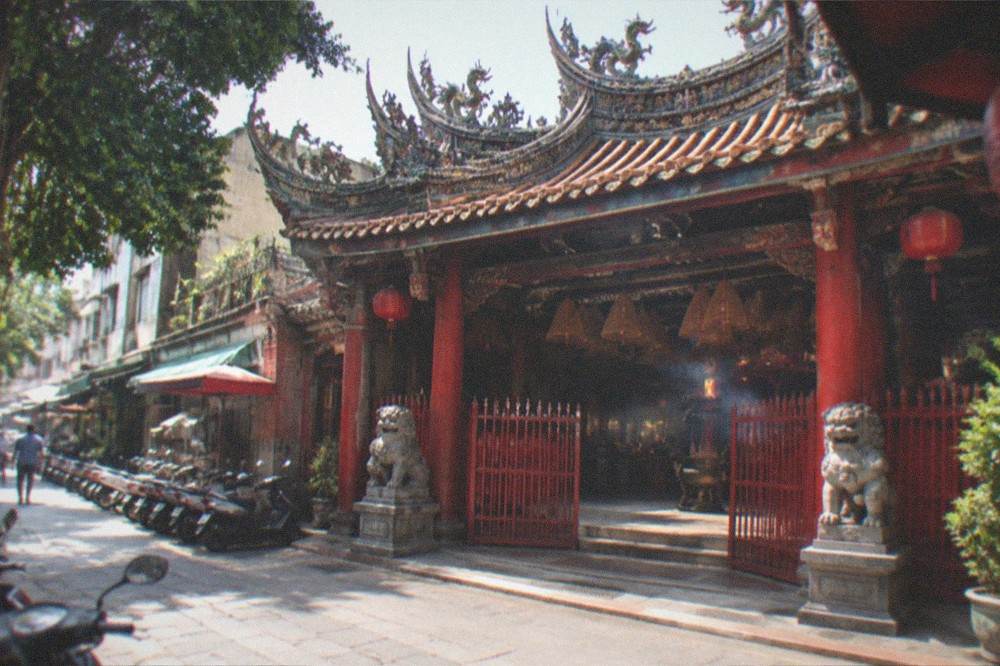
Where you sleep shapes the temple day more than in most cities, because the free temples cluster in the old central district. The where to stay in Tainan guide maps the districts against the sights, and the Tainan weather guide explains why October to March is the comfortable half of the year for long walking days. Between them, the temple layer of Tainan is one of the least expensive major-city sightseeing experiences in East Asia: the buildings are free, the hours are long, and the calendar gives you a reason to come back in February.
Common Questions About Tainan Temples
Are Tainan temples free to enter?
Yes, the four major central temples are free. The city's own pages list no ticket for the Confucius Temple, Grand Matsu Temple, Five Concubines Temple or Kaiyuan Temple. The ticketed historic sites in the city, such as Chihkan Tower at 70 at the gate, are forts and towers rather than temples.
What are the opening hours of the Tainan Confucius Temple?
The city's page lists 08:30 to 17:30, Monday to Sunday, closed on Lunar New Year's Eve. It opens later than the Grand Matsu Temple and Kaiyuan Temple, which both open at 06:00.
Which Tainan temple has the most visitors?
Nankunshen Daitian Temple in Beimen District, with 6,583,100 visitors in 2023 according to the Tourism Administration's dataset, roughly fifteen times Chihkan Tower's count. Its pilgrimage dates follow the lunar calendar.
When is the Yanshui Beehive Fireworks held?
In February, on the Lantern Festival, according to the city's festival calendar. Exact Gregorian dates are announced closer to the event, so check the city calendar before planning around it.
Is the Tainan Confucius Temple the oldest in Taiwan?
It carries the documented title "first academy of Taiwan", but its founding year is not confirmed on a reachable official page, so this site does not print one. The title is real; a specific date is not.
Can you visit Tainan's temples in one day?
The four free central temples can be walked in a single day, since they cluster in the old district and their hours overlap. The coastal pilgrimage temples, including Nankunshen Daitian Temple, are separate excursions and need their own trip.