Walking Tours in Tainan
Tainan is the most walkable big city in Taiwan, and the walks that matter are short: temple to temple, snack to snack, fort to night market. Here is what guided walking tours actually cover, what a self-guided route looks like, and what the city's own pages say about hours, prices and the best season.
Short answer
There are no free or tip-based walking tours in Tainan: the free-walk listing channel was checked and returned zero Tainan tours. Paid guided walks do exist, mostly food and history walks of four to six hours in the old central district, and the rest of the city's walking value is free entry sites and open ground you walk yourself.
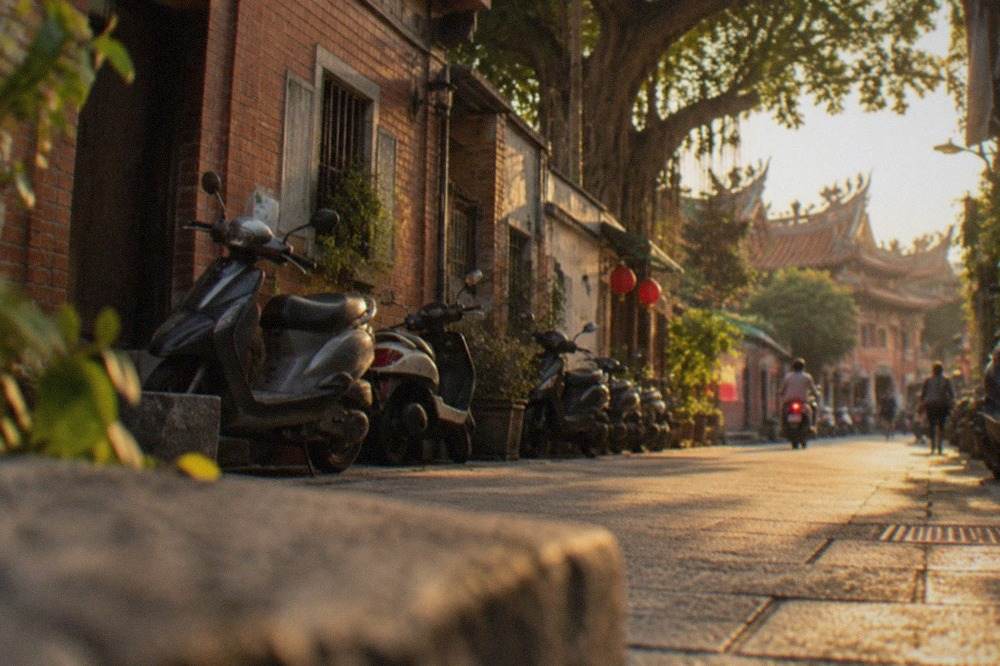
Tainan was Taiwan's capital for more than two centuries, until the late nineteenth century, and almost everything that made it a capital still stands within a compact grid of streets in the West Central District. The Dutch built Fort Provintia in the early 1650s on what is now Chihkan Tower. The Qing, the Japanese and the postwar city each added a layer without ever spreading the old core far from the canal. That is why walking works here in a way it does not in Taipei or Kaohsiung: the temples, the forts, the food streets and two of the big night markets all sit inside a rectangle a fitful walker can cross in under an hour. This page, from the editorial desk at Tainan Travel Guide, sets out what guided walking tours in the city actually cover, what they cannot cover, and how to plan a walking day with the city's own published hours and prices in hand.
Are There Free Walking Tours in Tainan?
No. There are no free or tip-based guided walking tours in Tainan: the free-walk listing channel was checked and it returns zero Tainan tours, so any claim that a free walk leaves from a square or station is false. What is free is the walking itself and a long list of free-entry sites, including the Confucius Temple, the Grand Matsu Temple, Five Concubines Temple and Kaiyuan Temple, all of which the city's tourism pages list with no ticket at all.
That distinction matters, because plenty of travel content blurs it. A visitor who arrives expecting a tip-based walk like the ones in Taipei or Europe will find none, and the honest answer is to walk the free sites alone and put money, if any, into a paid guided product. The free list is genuinely strong. The Tainan City Government Tourism Bureau's page for the Confucius Temple lists free entry with hours of 08:30 to 17:30 and a closure only on Lunar New Year's Eve. The Grand Matsu Temple is free and open 06:00 to 21:00 daily, which makes it one of the few heritage interiors a visitor can see after dinner. Five Concubines Temple, free, 08:00 to 17:00. Kaiyuan Temple, free, 06:00 to 17:00.
The paid sites on a walking route are cheap rather than free. Chihkan Tower charges NT$70 at the gate, with half price for students, seniors over 65 and several other concession groups, and Tainan residents enter free with ID, a benefit that does not extend to visitors. The city's own pages carry the disclaimer that the on-site notice governs, so treat every figure here as the posted rate rather than a guarantee. Our Tainan temples guide covers the free-entry religious sites in more depth, and the Tainan history guide explains why so much of the old core survived in walking range of itself.
What Can You See on Foot in Central Tainan?
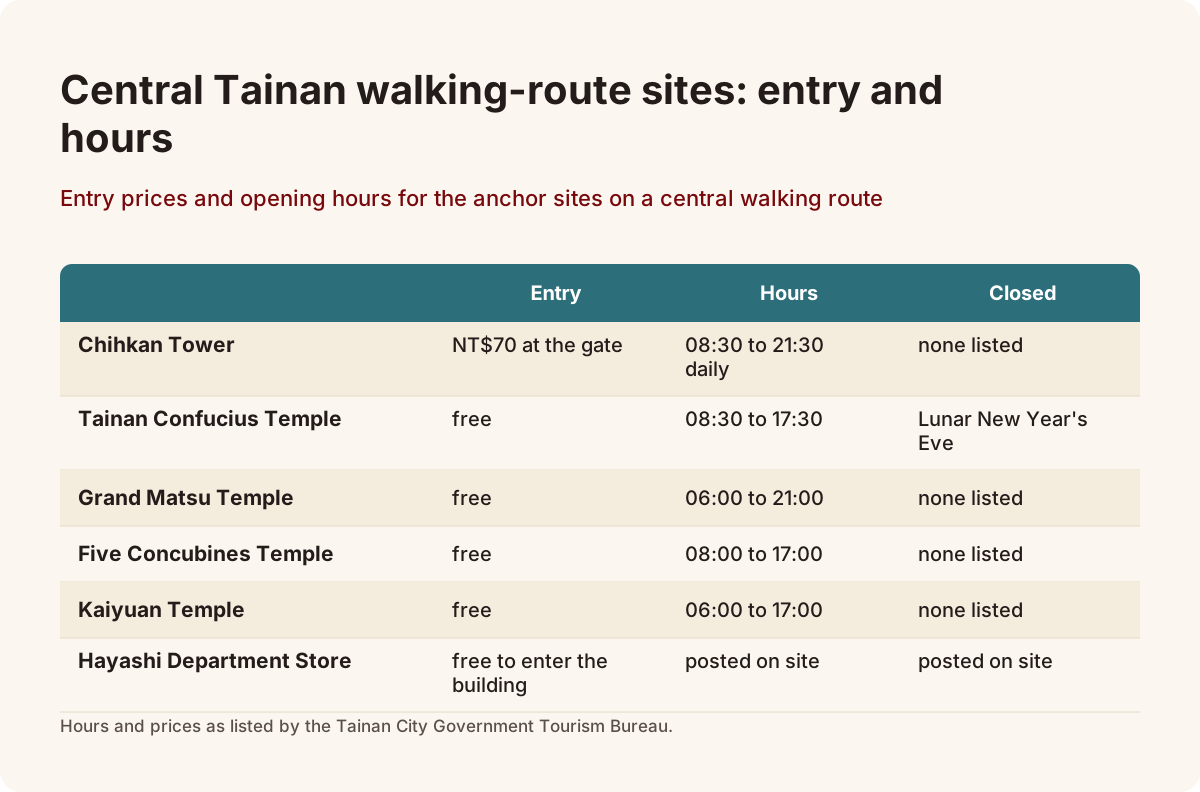
The walkable core runs from Chihkan Tower in the north to the Confucius Temple in the south, and west to the canal, packing a Dutch-era fort, the island's first Confucius academy, three free temples, a Japanese-era department store and two famous food streets into a rectangle roughly a kilometre on each side. Chihkan Tower alone drew 443,622 visitors in 2023, against 195,109 for the Confucius Temple, according to the Tourism Administration's own dataset.
Start with the anchor sites. The Tourism Bureau's page for Chihkan Tower records the Dutch building Fort Provintia here in the early 1650s, hours of 08:30 to 21:30 daily and a NT$70 gate price. That late closing is unusual and worth planning around: it is one of the few historic sites in the city a visitor can see after dinner, which pairs naturally with an evening food walk. The Chihkan Tower guide has the full history, including the sources' disagreement on the exact founding year, which is why this site sticks to "the early 1650s".
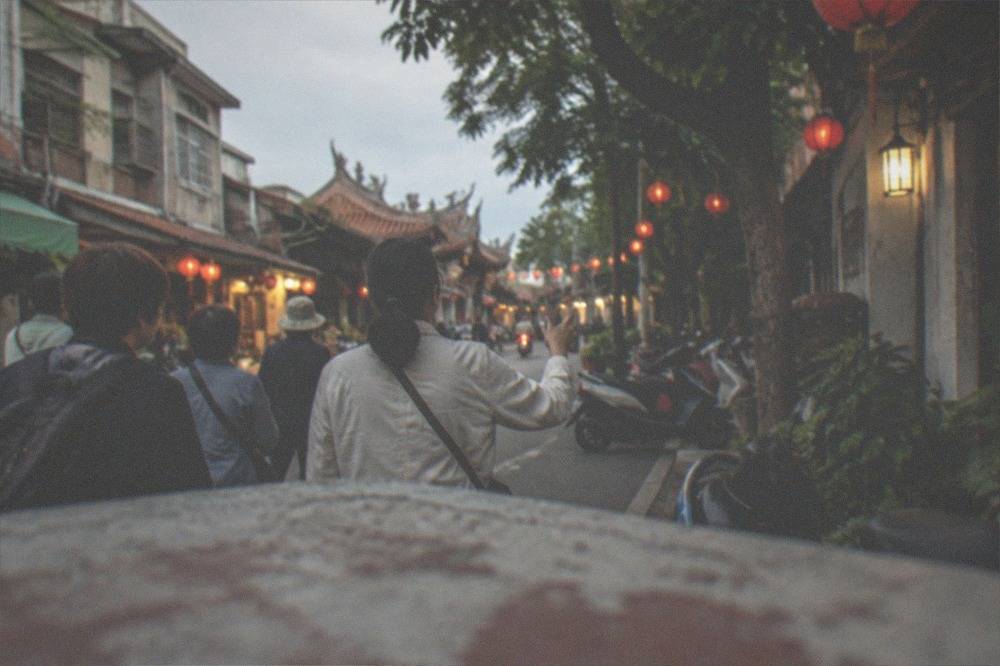
From Chihkan Tower the obvious line south passes the Wu Garden and the Sacrificial Rites Martial Temple before reaching the Confucius Temple, the site of Taiwan's first academy. West of that spine sit Hayashi Department Store, a Japanese-era commercial building reopened as a heritage retail space, and the Great South Gate, one of the surviving city gates. The two food streets, Guohua Street and Shennong Street, sit within the same grid. Shennong Street in particular is a canal-side lane of low shopfronts that the city promotes as an evening stroll, and it connects toward the Anping direction for anyone with a spare half day. The Anping half day itinerary covers that extension.
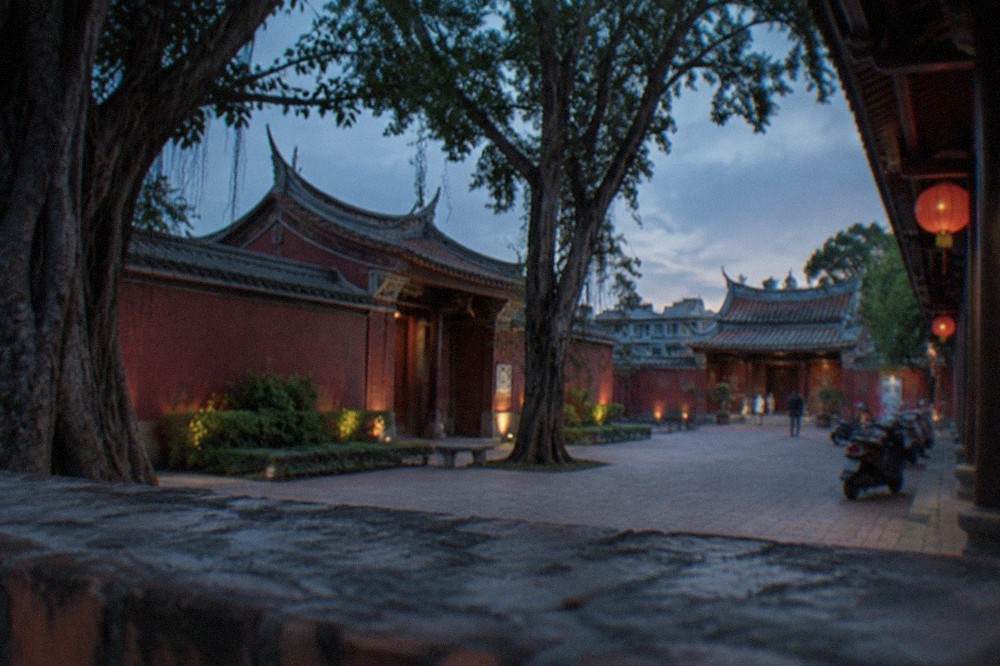
| Site on a central walking route | Entry | Hours | Closed |
|---|---|---|---|
| Chihkan Tower | NT$70 at the gate | 08:30 to 21:30 daily | none listed |
| Tainan Confucius Temple | free | 08:30 to 17:30 | Lunar New Year's Eve |
| Grand Matsu Temple | free | 06:00 to 21:00 | none listed |
| Five Concubines Temple | free | 08:00 to 17:00 | none listed |
| Kaiyuan Temple | free | 06:00 to 17:00 | none listed |
| Hayashi Department Store | free to enter the building | posted on site | posted on site |
A full circuit of the core, with stops, is an afternoon's work rather than a day's, and that is the structural reason guided walks here are built around food as much as heritage. The buildings are close together; the eating is what fills the time between them.
What Does a Guided Walking Tour in Tainan Cover?
The paid walking products in Tainan cluster around two formats: a food-and-culture walk of about four hours through the central district's snack streets and temples, and a longer six-hour city walk that builds a full meal schedule into the route. A separate evening walk of roughly three hours covers the after-dark city, and none of these is free, because no free walking tour exists in Tainan at all.
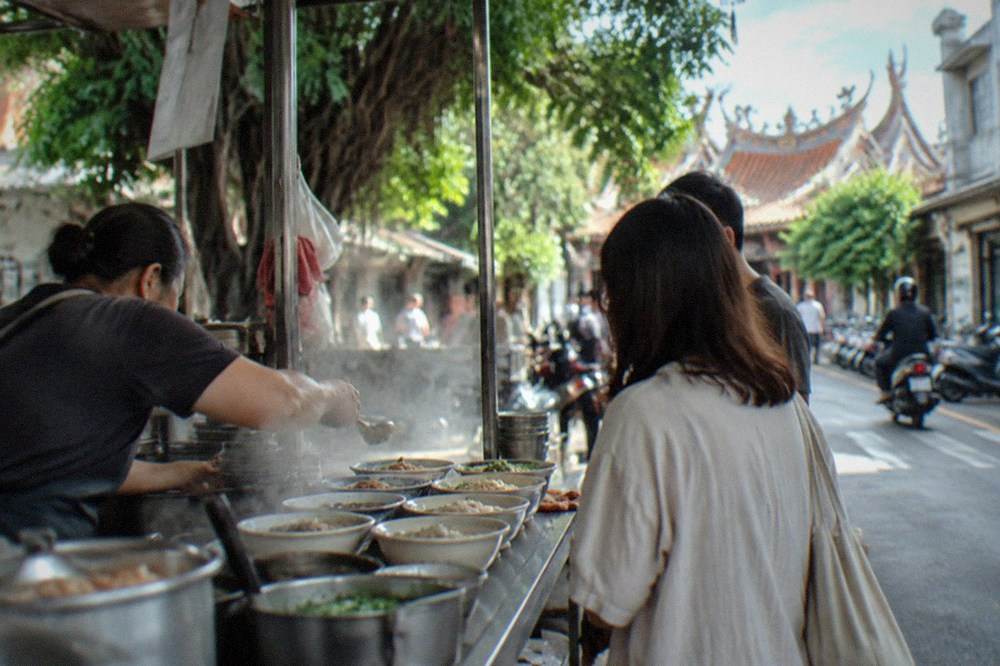
The four-hour food and culture walk is the closest thing the city has to a standard guided product, and it is the one this site rates as the default choice for a first visit. It moves through the old core with a local guide handling the ordering at stalls where English menus do not exist, which is a real service in a city whose most famous dishes are sold from counters with no menu at all. Beef soup is a dawn dish, danzai noodles are a any-time dish, and coffin bread is a Tainan invention, and a guide who knows which counter serves which, and when, saves a visitor the trial and error. Our pages on dan zai noodles, coffin bread and Tainan beef soup explain each dish's background for anyone who would rather walk alone.
The six-hour walk covers the same district at greater length, with snacks and street food included in the product. The evening walk, at around three hours, is the format for anyone whose day is already full: it pairs the after-dark old streets with the late-closing Chihkan Tower window and, on the right night, a night market. Prices, ratings and review counts for all three are rendered on each tour card from the operator's live listing, and this site does not print them in prose, because the listing is what changes and the listing is what governs.
Want a Guide Who Knows the Food Streets?
A guided walk bundles the old city's temples, alleys and snack stalls into one afternoon, with a local guide handling the ordering, and free cancellation means you can lock the date in early and adjust when your plans settle.
Which Walking Tour Format Fits Your Trip?
Pick the four-hour food and culture walk for a first visit of one or two days, the six-hour city walk if food is the whole point of the trip, and the three-hour evening walk if your days are committed elsewhere or you only have one night in the city. Visitors staying a week or arriving from Kaohsiung for the day usually do better with a private guide or a self-guided route, since the walkable core is small enough to learn in one pass.
The honest framing is that a guided walk in Tainan buys three things: language at the counter, curation of a food scene with no official price list, and pacing. It does not buy access to anything closed to the public, and it does not cover the coastal sites, because Sicao, Qigu and the lagoon are boat and bus country, not walking country. A visitor whose priority is the mangrove tunnel should book the boat ride on its own and walk the old city separately. The Sicao Green Tunnel guide covers the boat routes, both of which cost NT$200 at the counter, and the Qigu Salt Mountain guide covers the salt coast.
| Format | Length | Best for | What it does not cover |
|---|---|---|---|
| Food and culture walk | about 4 hours | first visit, food-first travelers | the coastal district |
| City walk with street food | about 6 hours | a full-day food itinerary | Anping and the lagoon coast |
| Evening walking tour | about 3 hours | one-night stays, festival evenings | daytime sites and museums |
| Self-guided route | your pace | repeat visitors, long stays | language help at stalls |
Can You Walk Tainan's Night Markets and Evening Streets?
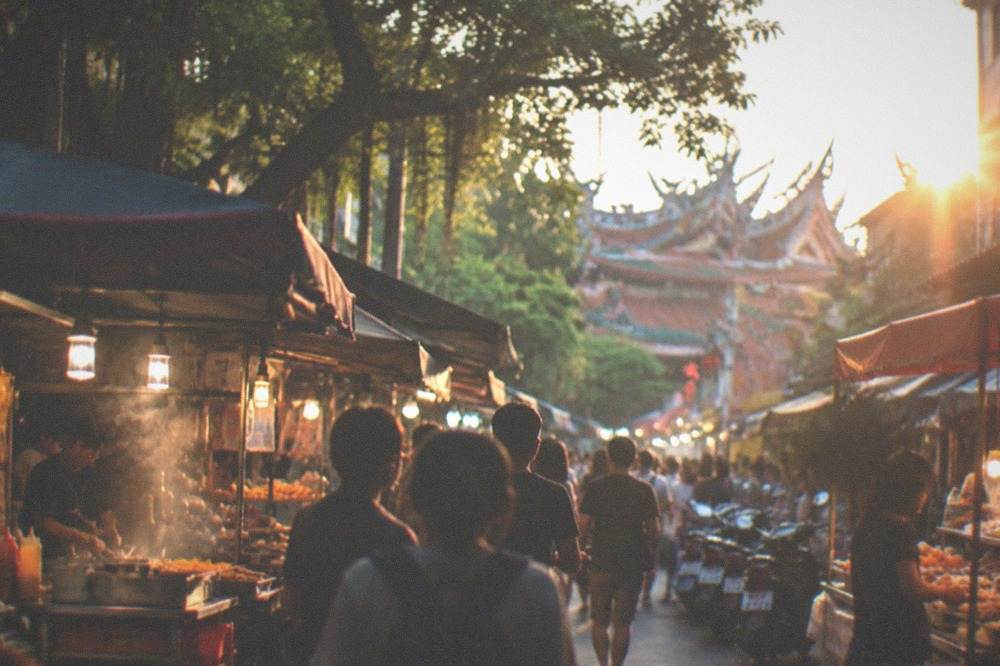
Yes, and the evening is where a Tainan walking day peaks, but the big outdoor night markets rotate by day of the week: Garden opens Thursday to Sunday, Wusheng opens Wednesday, Friday and Saturday, and Dadong opens Monday, Tuesday and Friday, so the night you choose decides which market you walk. Siaobei Night Market is indoors and opens every day from noon to midnight, which makes it the wrong-night and wet-weather answer.
Friday is the only night when all three big outdoor markets run, and Wednesday is the thinnest, with Wusheng alone. Those days come from the Tainan City Government Tourism Bureau's own attraction pages, and the city updates them, so check before you go: the Garden page was updated in mid-2026 to include Friday operations, and some listings still show it closed Fridays. Locals use a seven-character rhyme to map the week onto the markets, but it is shorthand rather than a schedule and it misses that Garden and Wusheng both also open Friday, so treat the table as the truth and the rhyme as a memory aid. The city's Market Administration maintains the official night market roster, which is the page to check against.
| Day | Big outdoor markets open |
|---|---|
| Monday | Dadong |
| Tuesday | Dadong |
| Wednesday | Wusheng |
| Thursday | Garden |
| Friday | Dadong, Wusheng and Garden |
| Saturday | Wusheng, Garden |
| Sunday | Garden |
Siaobei, indoor and daily from 12:00 to 00:00, is the market that never lets a visitor down, and it is the right target for anyone whose stay misses the outdoor nights. The full rotation, with addresses and hours, is in our Tainan night markets guide, and the Garden Night Market page covers the biggest of the three in detail. An evening walking tour is built around exactly this problem: it lands you in the after-dark streets on whichever night you have, and a guide who knows the rotation saves a wasted trip to a dark lot.
How Do You Reach the Walkable Core Without Walking?
The walkable core is central, but the High Speed Rail station is not: it sits at Shalun in Guiren District, well outside the old city, so every HSR arrival needs a transfer, either the H31 shuttle bus, free with an HSR ticket stub, or the Shalun railway branch, which is a paid Taiwan Railway ticket rather than a free connection. City buses are free for the first 8 km with an electronic card, provided you tap on and tap off.
The transfer detail catches out a lot of first-time visitors, and every arrival article on this site repeats it because it is the single most common planning error. The H31 Tainan City Government Line express bus is free for HSR passengers on production of a ticket stub, with no card tap needed; other passengers pay 18 for one section or 36 for two, with the section break at the Chimei Museum, which means the museum sits on the shuttle route. The Tainan HSR station guide and the getting around Tainan guide cover the rest of the arrival mechanics, including the bus network's color-coded trunk routes.
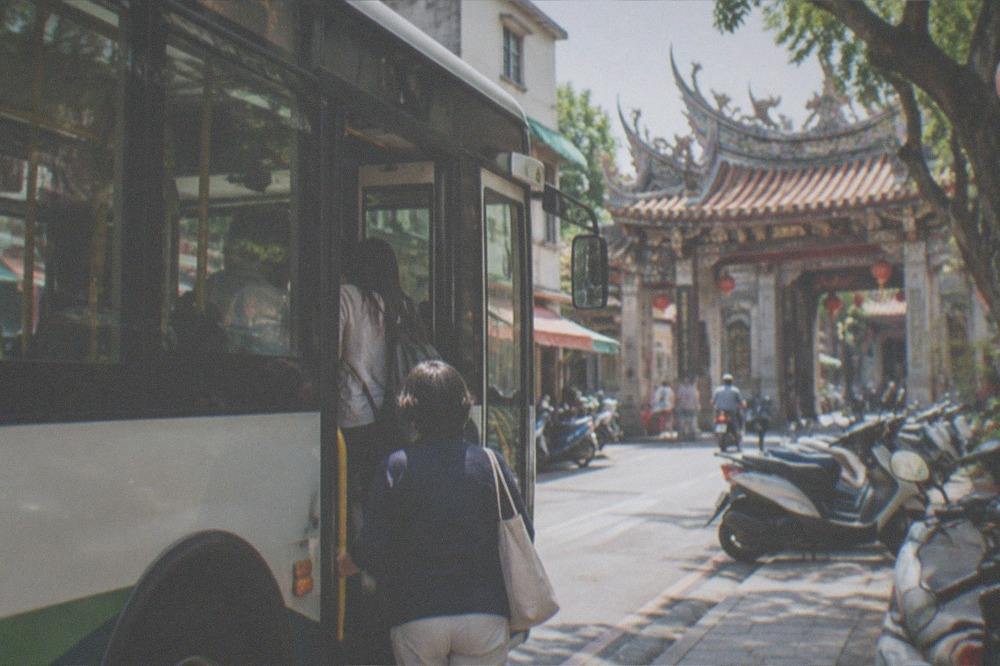
Inside the core, walking beats every other mode. The cash bus fare for a short hop is 26, and the same trip is free within the first 8 km with a stored-value card, but the distances in the old grid are short enough that most visitors never board a bus between sites at all. The one exception is Anping: the old fort district sits west of the canal, far enough from Chihkan Tower that a bus, a taxi or a bicycle is the sensible choice, and the Anping guide covers that extension. Scooter rental carries a licence caveat this site states carefully: an International Driving Permit is not automatically sufficient in Taiwan, the authorities expect it to be registered at a Motor Vehicles Office, and rental shops may refuse without it, so check the official rules before assuming anything.
When Is the Best Season for a Walking Tour in Tainan?
October to March is the walking season: the Central Weather Administration's 1991 to 2020 normals for Tainan show December bringing just 16 mm of rain across 3 wet days while still averaging daytime maxima near 24C, and October recording the fewest wet days of any month, 2.8, on maxima of 30.8C. The summer is the opposite, with August alone delivering 466 mm across 16 wet days, and typhoon risk concentrating in the late-summer months.
The rainfall table is the planning tool. Close to three-quarters of the annual 1,761 mm falls between May and September, and 186 days a year go above 30C, which makes a four-hour outdoor walk in July a different proposition from the same walk in January. Those figures come from the Central Weather Administration's published climate normals for the Tainan station. That is also why Tainan's visitor peak, per the Tourism Administration's dataset, is January and February rather than summer: pilgrimage traffic and Lunar New Year drive the calendar, and the climate table shows exactly why that timing suits walking. Anyone planning around the wet half of the year should read our Tainan weather guide and the rainy season guide, and anyone weighing typhoon timing should start at the Taiwan typhoon season page.
| Month | Mean max C | Rain mm | Wet days | Days over 30C |
|---|---|---|---|---|
| January | 23.0 | 20.7 | 3.8 | 0.0 |
| April | 29.3 | 69.8 | 5.9 | 14.9 |
| July | 33.0 | 374.6 | 13.0 | 28.9 |
| October | 30.8 | 30.8 | 2.8 | 23.6 |
| December | 24.4 | 16.2 | 3.0 | 0.5 |
The counter-intuitive detail worth carrying into a booking decision: the best walking months are the city's busiest, because Lunar New Year and the temple pilgrimage season fill January and February. A visitor who wants the dry streets without the peak crowds should look at late October through early December, which combines the lowest wet-day counts of the year with post-summer prices. The best time to visit Tainan guide develops that argument in full.
What Should You Bring on a Walking Day in Tainan?
Bring cash, a stored-value transport card, water you did not draw from the tap, and shoes for broken pavement: night markets and small food stalls take cash only or prefer it, an EasyCard or iPASS unlocks free short bus hops and works at the Tainan Art Museum ticket desk, and the honest line on tap water is that most locals boil or filter it, so bottled and filtered water are the practical choices.
The cash point is the one that bites. Cards work at hotels, department stores, convenience stores and larger restaurants, but the stalls that make a Tainan food walk worth taking are cash businesses, and ATMs inside convenience stores are the reliable fallback. A stored-value card is the second essential: it is the difference between a 26 cash bus fare and a free ride within the first 8 km, provided you remember to tap off, which is the step visitors miss. English signage is improving in the tourist core under city bilingual initiatives, but it is not universal in the older lanes, and the English in Tainan guide sets realistic expectations.

Clothing is straightforward. The sun is strong and shade in the old streets is patchy, so a hat and sun protection matter more from April to October, when most days cross 30C. Temples require no dress code beyond ordinary respect, though covered shoulders and knees are the safe choice at active religious sites, and the temple etiquette guide details the customs. For a guided walk, the practical additions are an appetite paced across five or six stops and a willingness to eat standing up, because the best counters in this city have no seats at all.
Common Questions About Walking Tours in Tainan
Are there free walking tours in Tainan?
No. The free-walk listing channel was checked and returns zero Tainan tours, so there is no free or tip-based guided walk in the city. The free things are free entry sites, including the Confucius Temple, the Grand Matsu Temple, Five Concubines Temple and Kaiyuan Temple, and the open old streets you walk yourself.
What does a walking tour in Tainan cover?
Most cover the central district: Chihkan Tower, the Confucius Temple area, temple alleys and the food streets, with snacks included on the food-focused formats. Formats run from about three hours for an evening walk to about six hours for a full city walk with street food. None of them covers the coastal sites, which need a bus or a boat.
How walkable is Tainan?
The old central core is highly walkable, with the major heritage sites, two famous food streets and the canal inside a compact grid. Anping sits further west beyond the canal and usually needs a bus or taxi, and the High Speed Rail station is at Shalun in Guiren District, outside the city entirely, so arriving walkers still need a transfer first.
Can you walk to a night market from the old city?
Depends on the night and the market. Garden, Wusheng and Dadong rotate by day of the week, so which market is open is decided by the calendar, and Siaobei is indoors and open daily from noon to midnight. Check the city's current published days before you go, because they do change.
What should you wear on a walking tour in Tainan?
Comfortable shoes for uneven pavement, sun protection from April to October when most days exceed 30C, and ordinary modest clothing for temples. Bring cash for food stalls and a stored-value card such as EasyCard or iPASS for free short bus hops within the first 8 km.
Is a guided walk or a self-guided route better in Tainan?
A guided walk earns its cost at food counters without English menus, where a local guide handles ordering and curation. Repeat visitors, long stays and confident eaters usually do fine self-guiding, since the core is compact and the free-entry sites need no booking at all.
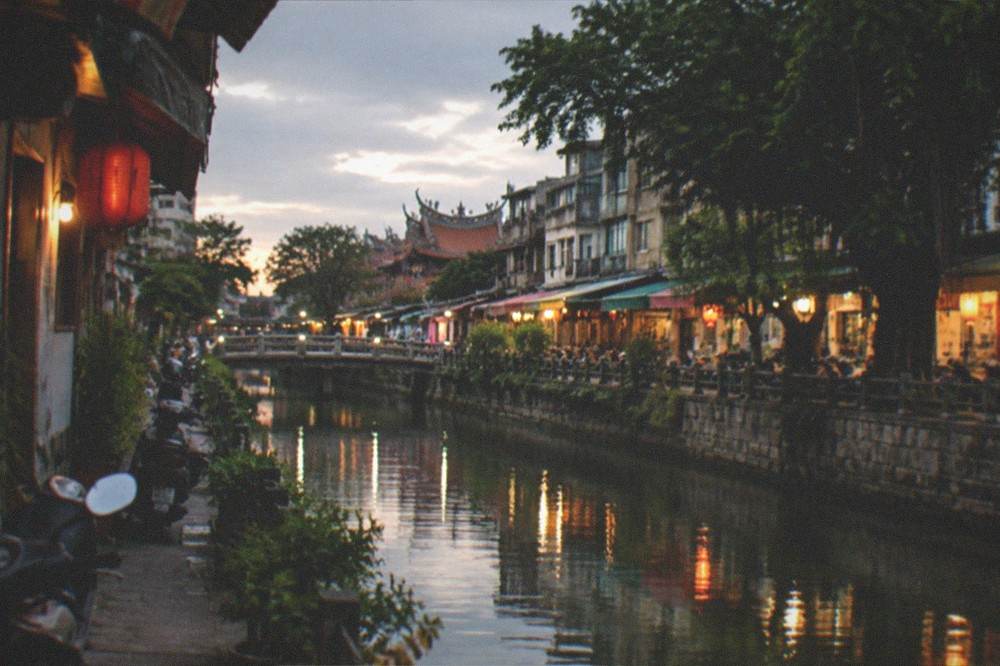
The short version of all of the above: Tainan is a city that rewards being on foot, the free-entry list is generous enough to fill a whole day without a ticket, and the paid walks that exist are food-led, well-reviewed products rather than the tip-based free tours other cities offer. Plan around the night market rotation, arrive knowing the HSR station is one transfer away from the old core, and aim for the dry half of the year if the calendar allows. For where to sleep within walking distance of all of it, start with our where to stay in Tainan guide, and for the dishes a guided walk will stop for, the Tainan food guide is the companion page.