Michelin Stars and Bib Gourmands in Tainan
Tainan's food reputation was built on street stalls, not starred dining rooms, and that shapes what a Michelin-minded visitor should actually plan for.

Short answer
Tainan's food fame rests on street food and night markets rather than a published list of starred restaurants. Michelin's Taiwan selection changes each year and this site's verified research confirmed no current starred list for Tainan, so the honest plan is to eat the dishes the city is known for, on the nights the big markets are open.
Tainan is the city Taiwanese food writers point to when they want to argue about where the island's best eating happens, and almost none of that argument takes place in a formal dining room. It takes place at beef soup counters before dawn, at noodle stalls that have been serving since the city was the capital, and at night markets that only open on certain days of the week. That is the context any conversation about Michelin recognition in Tainan has to start from, and it is also why a page like this one has to be honest about what can and cannot be verified.
This page works from a simple rule: every fact stated here comes from an official or primary source that was checked, and anything that could not be confirmed is either left out or flagged as unconfirmed. That rule matters more on a food page than almost anywhere else on this site, because restaurant rankings are exactly the kind of claim that gets copied from blog to blog until nobody remembers where it started. For the broader question of whether Taiwan has starred restaurants at all, see our companion piece on Michelin recognition in Taiwan.
Does Tainan Have Any Michelin-Starred Restaurants?
No verified list of Michelin-starred restaurants in Tainan exists in this site's confirmed research, and Michelin's Taiwan selection is revised annually, so any specific starred name printed here would be a guess rather than a fact. The honest answer is to check the guide's own current Taiwan selection before you travel, and to plan your eating around the dishes and markets that are independently documented. Tainan's culinary standing does not depend on the guide, and most of what the city is famous for is street food anyway.
The Michelin Guide operates selectively: it covers specific cities and regions, it adds and drops venues every year, and its Taiwan selection has expanded over time rather than covering the whole island at once. Because the list changes annually, a restaurant named in a travel article one year can be quietly absent the next, and a visitor who plans a trip around a two-year-old list is planning around a document that no longer exists.
That is why this page does not name starred venues. What it can do, reliably, is tell you what Tainan's food culture actually consists of, which stalls and dishes the city's own tourism materials point visitors toward, and how to structure an eating day using opening hours and transport facts that have been checked against official sources. The distinction matters: a ranking is a snapshot, but a bowl of danzai noodles is a fact about what Tainan serves, and the Tainan food guide covers those dishes in detail.
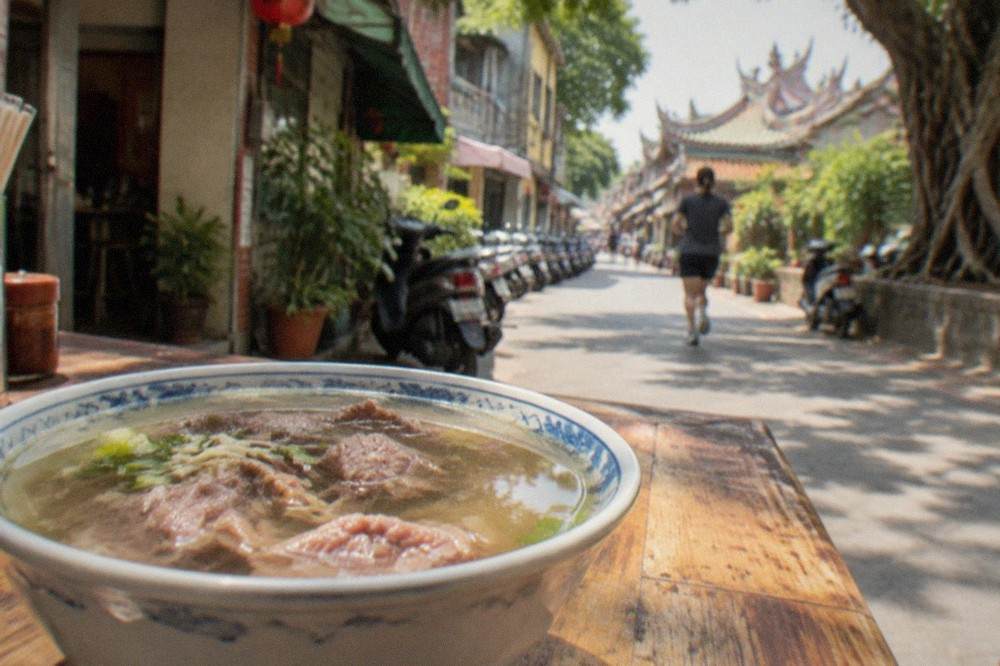
There is also a structural reason Tainan sits oddly beside a fine-dining guide. The city's most celebrated foods are cheap, fast and served at counters: beef soup ladled out in the early morning, milkfish soup, coffin bread, danzai noodles. A recognition system built around restaurant service and consistency can capture some of that, but it cannot capture the thing visitors actually come for, which is the density and variety of the street scene itself.
What Is a Bib Gourmand, and Does It Matter in Tainan?
A Bib Gourmand is Michelin's designation for venues serving good food at moderate prices, sitting below the star tiers in its rating system, and it is in principle a better fit for Tainan than the stars are, because the city's food identity is built on inexpensive street and snack cooking. Whether any specific Tainan venue currently holds one cannot be verified from this site's confirmed sources, so treat the label as a concept for planning rather than a checklist to work through.
The Bib Gourmand category was created precisely for the kind of eating Tainan specializes in: serious cooking, modest prices, no ceremony. In cities where street food dominates, the Bib list is usually where the most useful recommendations concentrate, because that is where the guide's inspectors and the local food culture actually overlap. If you are planning a Tainan trip with the Michelin framework in mind, the Bib concept is the right lens: seek out the cheap, famous, high-turnover stalls rather than looking for a formal dining room.
What you should not do is treat any blog's list of "Tainan Bib Gourmand picks" as settled fact. These lists circulate widely, often without dates, and Michelin revises its selections every year. The reliable approach is to read the guide's own current Taiwan pages if the label matters to you, and otherwise to eat from the documented canon of Tainan dishes, which is stable in a way rankings are not.
The practical takeaway is that Tainan rewards the same behavior the Bib Gourmand rewards: eating where the queue is local, ordering the one thing the stall is known for, and moving on. A street food-focused visit to Tainan built on that logic will get you closer to the city's food reputation than any starred dining room would.
Which Dishes Define Tainan's Food Reputation?
Tainan's canonical dishes are danzai noodles, beef soup, milkfish soup and coffin bread, all snack-scale foods served at counters and stalls rather than restaurants, and all documented on this site's individual dish guides. No stall may be named here as the original or the best, because no such claim is verified, and no dish price may be printed because no official price list exists. What is verified is what each dish is and how it fits into an eating day.
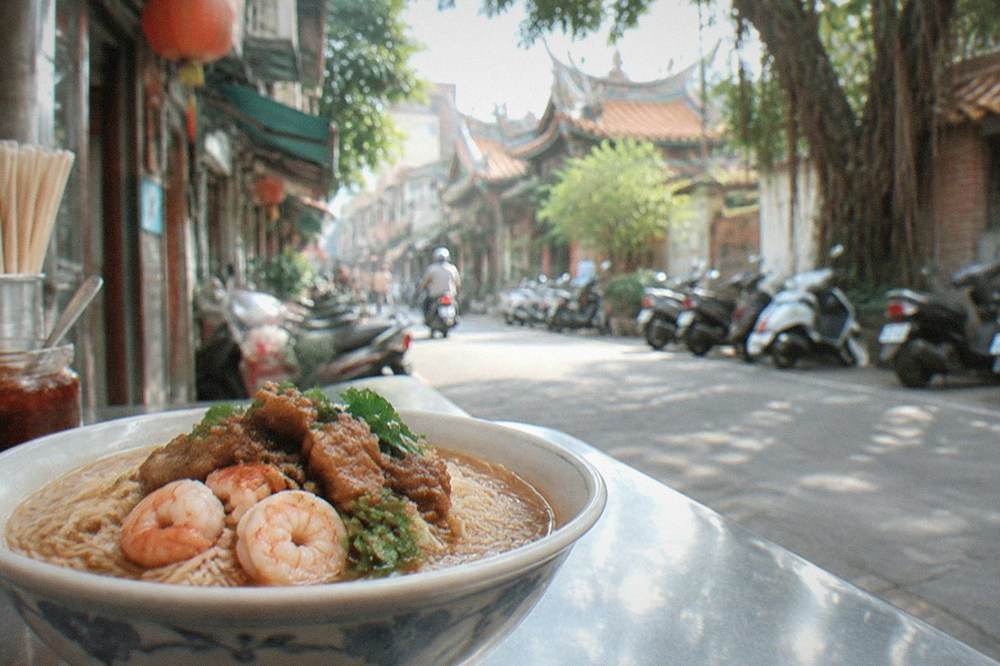
Danzai noodles are the city's most exported dish: a small bowl of noodles in broth with braised pork and shrimp, meant to be eaten quickly and often. Our danzai noodles guide covers the dish's background and where it fits in a food crawl.
Beef soup is the dish Tainan is most possessive about. The defining version uses fresh beef sliced thin and added to a clear broth at the last moment, and it is traditionally a breakfast food, which surprises visitors who expect soup late at night. The Tainan beef soup guide explains the breakfast custom and how to plan around it.
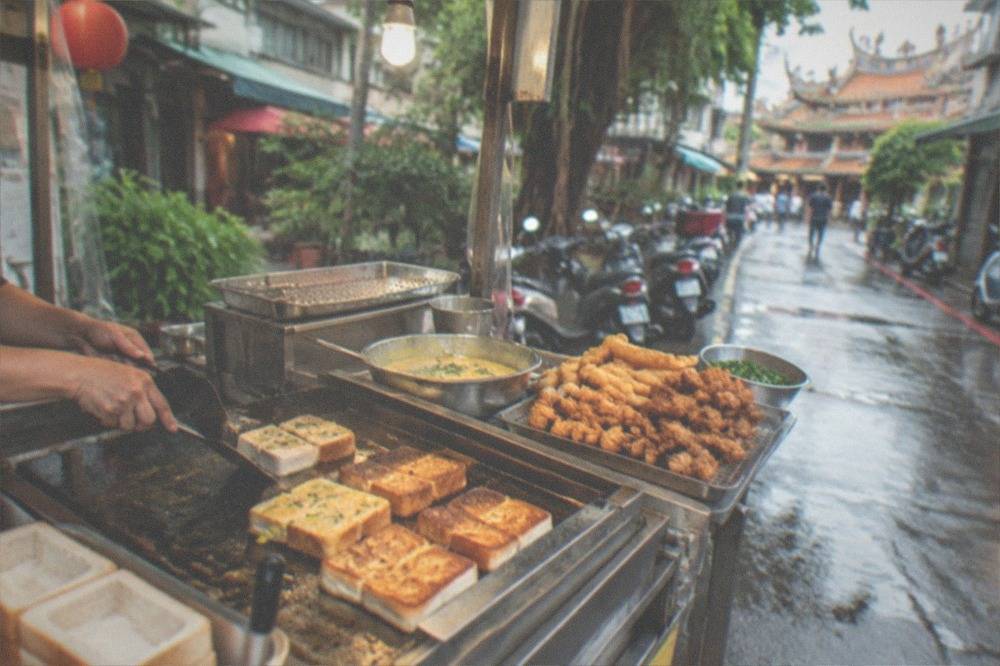
Milkfish, served as soup or congee, is another local staple, and coffin bread, a hollowed fried loaf filled with a savory stew, is the snack most photographed by first-time visitors. The coffin bread guide covers it. The table below summarizes the canon.
| Dish | What it is | When it is typically eaten |
|---|---|---|
| Danzai noodles | Small bowl of noodles in broth with braised pork and shrimp | Any time, a snack between stops |
| Beef soup | Clear broth with fresh thin-sliced beef added at the last moment | Traditionally breakfast, early morning |
| Milkfish soup | Milkfish served in soup or congee, a Tainan specialty | Breakfast and lunch |
| Coffin bread | Fried hollowed bread filled with a thick savory stew | Afternoon and night market snack |
Two rules govern how this site writes about these dishes, and they are worth stating plainly because they are also good advice for reading anyone's Tainan food coverage. First, no price is printed for any dish, stall or restaurant, because no official price list exists and inventing one would be a lie with a number in it. Second, no stall is called the original, the oldest or the best, because those claims circulate without sources. When a dish guide on this site names a place, it does so because of what the place is, not because of a ranking.

Where Should You Eat: Which Night Markets Are Open on Your Night?
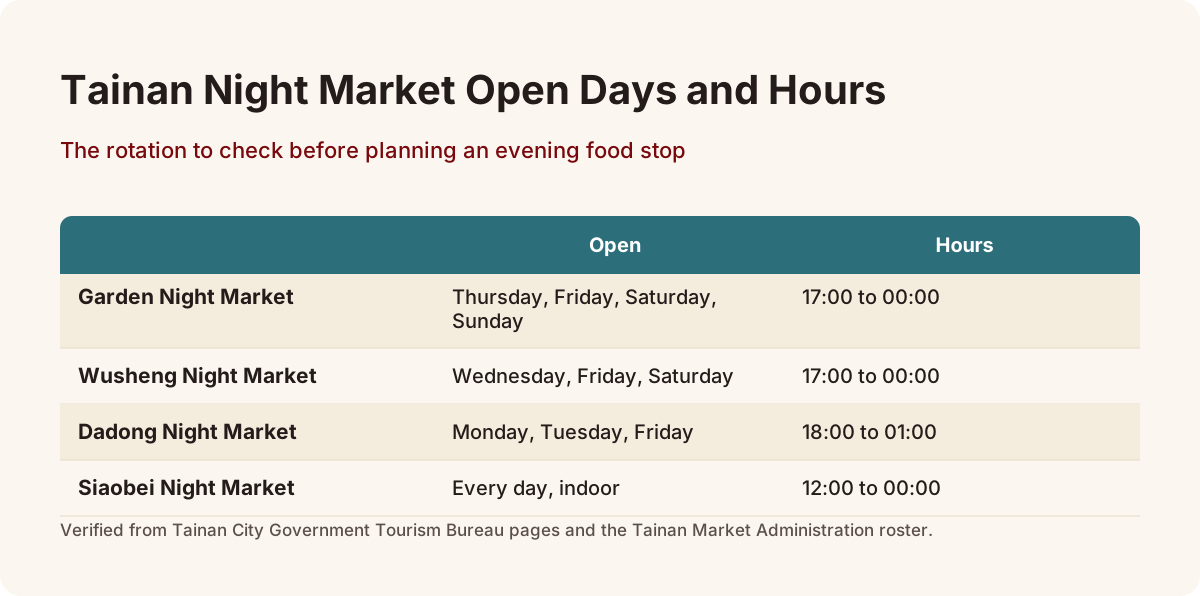
Tainan's three big outdoor night markets rotate by day of the week, and Friday is the only night when Garden, Wusheng and Dadong all run, while Wednesday is the thinnest night with Wusheng alone. Siaobei Night Market is indoors and open every day, which makes it the answer for wet weather and for nights when nothing else is on. The city's own tourism pages publish the current days, and they do change, so check before you go.
This rotation is the single most useful practical fact for a food trip to Tainan, and it is verified market by market from the Tainan City Government Tourism Bureau's own pages. The Tainan night markets guide covers each one in detail, and the Tainan Market Administration maintains the official roster.
| Market | Open | Hours |
|---|---|---|
| Garden Night Market | Thursday, Friday, Saturday, Sunday | 17:00 to 00:00 |
| Wusheng Night Market | Wednesday, Friday, Saturday | 17:00 to 00:00 |
| Dadong Night Market | Monday, Tuesday, Friday | 18:00 to 01:00 |
| Siaobei Night Market | Every day, indoor | 12:00 to 00:00 |

Plan your nights around this table rather than around a mnemonic. Locals use a seven-character rhyme to remember which market runs on which night, and it gets the primary market for each night right, but it is folk shorthand rather than a schedule, and against the city's currently published hours it misses that Garden also opens Friday and Saturday and that Wusheng also opens Friday. Treat the rhyme as a memory aid and the table above as the plan.
Friday is the power night: all three big outdoor markets run, so it is the night to book if your dates are flexible. If your stay lands on a Monday or Tuesday, Dadong is your outdoor option. If it lands on a Wednesday, Wusheng is the only big outdoor market, and Siaobei's indoor stalls are the backup. The caveat about days changing is not boilerplate: the city updates these pages, and a food itinerary built on last year's schedule can collapse on arrival.
How Do You Get Between Food Stops Cheaply?
Tainan city buses are free for the first 8 km on the trunk and branch network if you pay with an electronic card, Citizen Card, iPASS, EasyCard or iCash 2.0, and you must tap on and tap off, with tap off being the step visitors miss. The cash fare for the same trip is NT$26. The scheme runs as a current annual policy rather than a permanent one, so re-verify it before your trip.
For a food crawl spread across the old city, this matters more than any restaurant choice. The stalls worth queuing for are scattered across West Central District, North District and East District, and hopping between them by bus with a stored-value card costs nothing for short hops. The getting around Tainan guide covers the full transport picture.
| Payment method | First 8 km on trunk and branch buses | Notes |
|---|---|---|
| Citizen Card, iPASS, EasyCard, iCash 2.0 | Free | Tap on and tap off both required |
| Cash | NT$26 | Base fare for the same trip |
| Tourist buses and HSR express bus | Excluded from the card discount | H31 shuttle is free with an HSR ticket stub |

The city's own bus ticketing page sets out the free-first-8 km policy and the card types it accepts. Two practical notes from that page shape a food day: the discount applies only to the trunk and branch network, and transferring between Taiwan Railway and a city bus within two hours with the same card adds a further NT$9 discount, as long as you do not insert another mode such as a public bike in between.
Walking is the other honest answer. The densest cluster of famous food streets sits in and around the old city core, and much of a serious eating day can be done on foot between bus hops. Chihkan Tower, one of the few historic sites in the city open until 21:30 daily, sits in the middle of that cluster, which makes it the natural after-dinner landmark for an evening that started at the stalls.
What Should a Food-Focused Tainan Day Actually Look Like?
A realistic eating day starts with beef soup in the early morning, works through snack stops in the old city core through the middle of the day, and ends at whichever big outdoor night market is open that night, with Siaobei as the indoor fallback. Chihkan Tower's 21:30 closing gives the evening a landmark, and the free first 8 km on buses covers the hops between neighborhoods. Build the day around the market schedule first and the dish list second.
Start from the market table, not the dish list. Once you know which night you have, the rest of the day fills in around it. A Friday gives you every outdoor market and the widest choice. A Wednesday pushes you toward Wusheng and Siaobei, which is a smaller but perfectly good evening.

The morning belongs to beef soup, eaten at the counter where it is made. The middle of the day is for the snack canon: danzai noodles, milkfish soup, coffin bread, taken as separate stops rather than one sitting, which is how the city itself eats them. Late afternoon is the window for a historic site, and Chihkan Tower's late closing means it can also be the post-dinner stop. The evening is the market.
Seasonality adds two verified anchors worth timing a trip around. Mango season runs June to July, and the Qigu Seafood Festival runs July to August, both from the city's own festival calendar. A food trip in that window pairs the street canon with fruit at its peak and a lagoon-coast seafood event, and the best time to visit Tainan guide weighs those months against the summer rainfall, which is concentrated almost entirely between May and September.
If you are arriving from outside the south of the island, the Taipei to Tainan guide and the Kaohsiung to Tainan guide cover the rail options, and the Tainan HSR station guide explains the one fact every arrival page on this site repeats: the high speed rail station is at Shalun in Guiren District, outside the old city, so reaching the food streets means a transfer. For where to sleep between eating days, the where to stay in Tainan guide maps the neighborhoods.
Common Questions About Michelin Dining in Tainan
Does Tainan have any Michelin-starred restaurants?
No verified list of Michelin-starred restaurants in Tainan exists in this site's confirmed research, and Michelin revises its Taiwan selection annually. Check the guide's own current Taiwan pages before planning around any specific venue, and read our companion piece on whether there is a Michelin star in Taiwan.
What is a Bib Gourmand?
It is Michelin's designation for venues serving good food at moderate prices, below the star tiers. In principle it fits Tainan's street food culture better than the stars do, but no current Tainan Bib list can be verified from this site's sources, so treat the label as a planning concept rather than a checklist.
Which night markets in Tainan are open on Friday?
Friday is the one night when all three big outdoor markets run: Garden, Wusheng and Dadong. Siaobei is indoors and open every day regardless. Always check the city's current published days before you go, because they do change.
Can I trust blog lists of the best stalls in Tainan?
Only partially. Claims that a stall is the original, the oldest or the best circulate without sources, and no official price list exists for any dish. This site prints no dish prices and no ranking claims, and describes dishes by what they are instead.
How do I get between food stops in Tainan cheaply?
City buses are free for the first 8 km with an electronic card such as EasyCard or iPASS, provided you tap on and tap off. The cash fare for the same trip is NT$26. The scheme is a current annual policy, so re-verify it before your trip.
When is the best season for food in Tainan?
Mango season runs June to July and the Qigu Seafood Festival runs July to August, both from the city's own festival calendar. Those months also carry the summer rainfall peak, so weigh them against the drier October to March window.
Tainan's food reputation was earned at counters and market stalls over centuries, not conferred by a guidebook, and that is the honest frame for any Michelin question about the city. Eat the documented canon, on the nights the verified schedule says the markets are open, moving between stops on a bus system that costs nothing for short hops, and you will have done the thing Tainan is actually famous for. More on planning the full trip, dish by dish and district by district, is on Tainan Travel Guide.