Vegetarian and Vegan in Tainan
Tainan is one of the easiest cities in Taiwan to eat plant-based, because Buddhist vegetarian food is a centuries-old local tradition rather than a modern import. This guide explains the su food culture, which classic Tainan dishes are vegetarian, and how to navigate the night markets without eating pork broth by accident.
Short answer
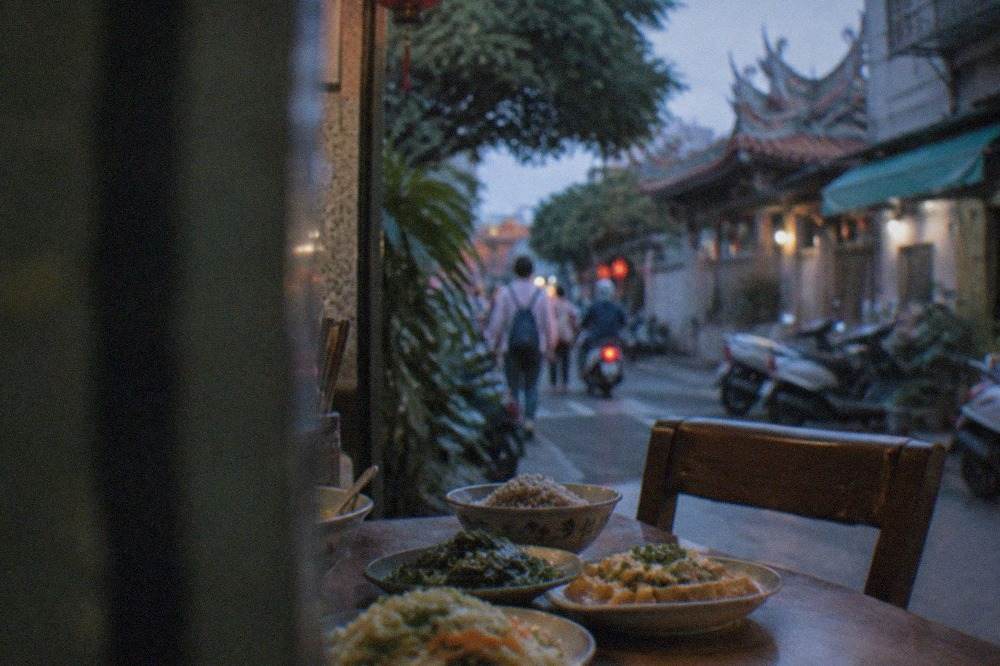
Yes, Tainan is excellent for vegetarians and largely workable for vegans. Buddhist temple culture keeps vegetarian kitchens common across the city, many classic dishes are built on tofu, rice and vegetables, and the night markets have plant-based options. Vegans need to watch for lard, fish sauce, dried shrimp and egg in otherwise vegetable-heavy dishes.
Vegetarian and Vegan in Tainan
Tainan is a city where eating plants is not a compromise. Taiwan's oldest city grew up around temples, and temples keep vegetarian kitchens, so meat-free cooking has been part of the local food culture for longer than most cities have had restaurants at all. The Tainan Travel Guide food coverage treats plant-based eating as a mainstream way to eat here, not a niche, and this page lays out how it works in practice: what the Buddhist su tradition is, which famous local dishes are safe, where to look, and what a vegan should double-check before ordering.
Is Tainan Good for Vegetarian and Vegan Travelers?
Yes, Tainan is one of the best cities in Taiwan for vegetarian and vegan eating. Buddhist temple culture means meat-free kitchens are a long-standing local tradition, vegetarian buffets are common, and many of the city's signature dishes are built on rice, tofu and vegetables. Vegans have it slightly harder, because lard, dried shrimp, fish sauce and egg appear in dishes that look plant-based, but the city is still very workable.
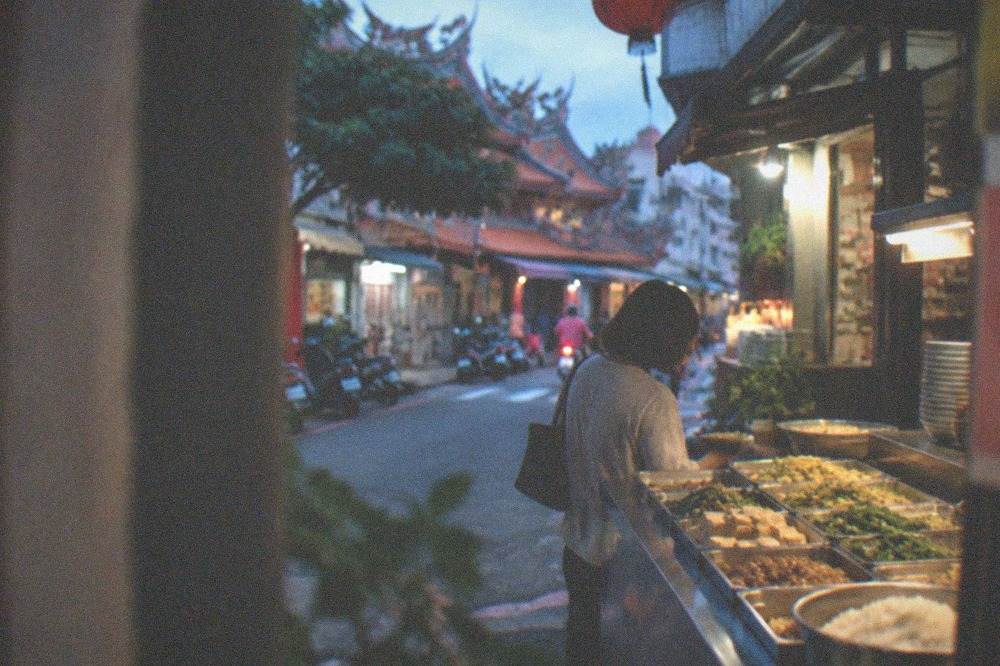
The reason is structural. Tainan is Taiwan's temple city, and Buddhist practice in Taiwan includes eating vegetarian, called su or su cuisine, on religious days and often permanently. Where there are temples, there are vegetarian restaurants, and the Tainan temples are spread across every district rather than clustered in one corner. A visitor standing almost anywhere in the old city is within walking distance of a meat-free kitchen.
That does not mean every stall is safe. Tainan's food fame rests partly on beef soup, pork braises and shrimp rolls, and the Tainan food guide is honest about that. The point is that the plant-based side of the city is deep and old, not a handful of salad shops bolted on for tourists. Vegetarians will eat well everywhere. Vegans will eat well almost everywhere, with a few checks described further down this page.
What Is Su, the Buddhist Vegetarian Tradition in Tainan?
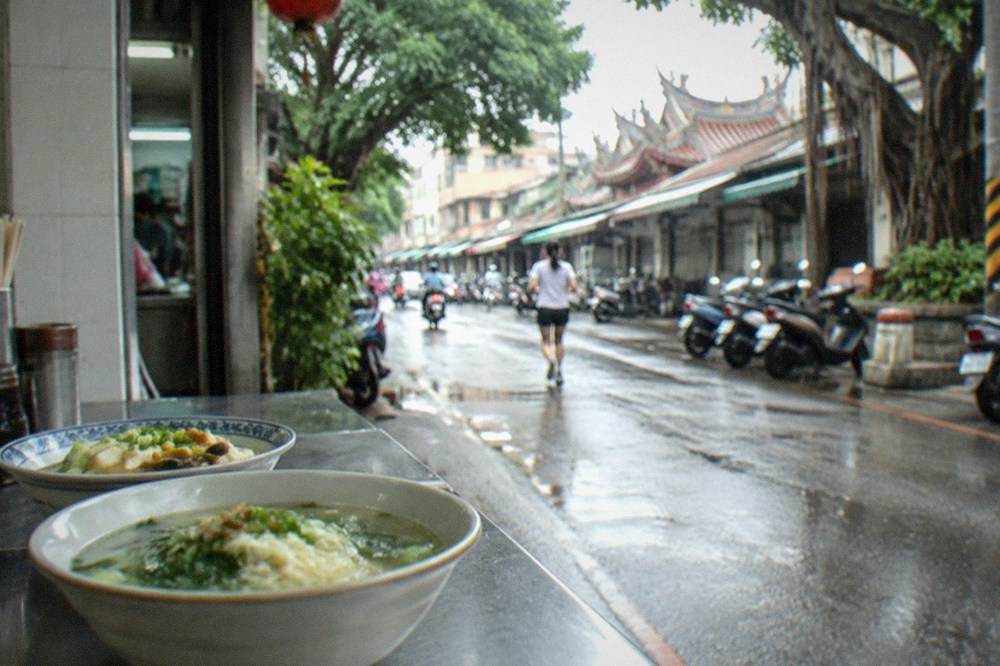
Su is Taiwanese Buddhist vegetarian cooking, and it is stricter than Western vegetarianism: no meat, no fish, and no the five pungent roots, which are onion, garlic, scallion, leek and chive. Many su kitchens are fully vegan, using no egg or dairy either, because the tradition comes from monastic practice. In Tainan, su restaurants and temple kitchens are ordinary parts of the food landscape, not specialty venues.
The five-root rule matters for ordering. A dish can be free of meat and still not be su, because garlic or onion disqualify it under the religious rules. For a traveler the rule cuts both ways: a restaurant advertising su food is telling you the kitchen avoids a longer list of ingredients than a secular vegetarian place would, and many su establishments are effectively vegan kitchens. The catch is that not all of them label dairy or egg clearly, so a vegan should still confirm.
In practice, Tainan's su restaurants often run as buffets: you fill a tray from a spread of tofu, vegetable, mock-meat, rice and soup dishes, and pay by weight or by a flat rate. The mock-meat category deserves a mention, because it confuses first-time visitors. Su kitchens make convincing imitations of duck, fish and pork from gluten, tofu and mushroom, and a tray that looks like a meat feast can be entirely plant-based. Ask before assuming either way: some mock products contain egg.
Temple kitchens are the other half of the tradition. Large temples feed worshippers, and on festival days the Tainan festivals calendar includes events where vegetarian food is served as part of the observance. The city's own festival calendar, maintained by the Tainan City Government Tourism Bureau, lists the Confucius Temple Cultural Festival in September and temple pilgrimage seasons through the winter, and temple food culture runs alongside all of it.
Which Classic Tainan Dishes Are Vegetarian?
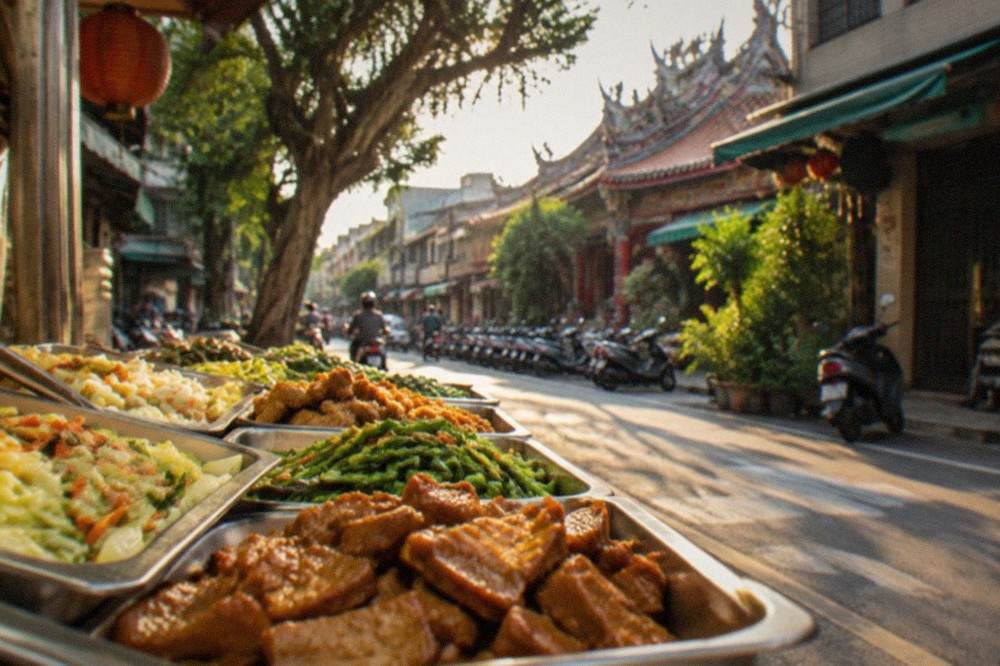
Several of Tainan's most famous dishes are vegetarian or easily made vegetarian: coffin bread can be filled with a creamed vegetable mix, rice cakes and taro-based snacks are plant-based, and the city's tofu and mock-meat tradition supplies the rest. Danzai noodles and beef soup are the meaty exceptions, and neither has a vegetarian version worth pretending about. The safe list is long enough to build whole days on.
Coffin bread is the clearest example. It is a thick slab of fried toast hollowed into a box, and the classic fillings are creamy, but the box itself is bread and the filling is a matter of what the kitchen puts in it. Vegetable and mushroom versions exist, and the coffin bread page covers the dish in detail. A vegan should ask about the cream base and the butter on the bread before ordering.
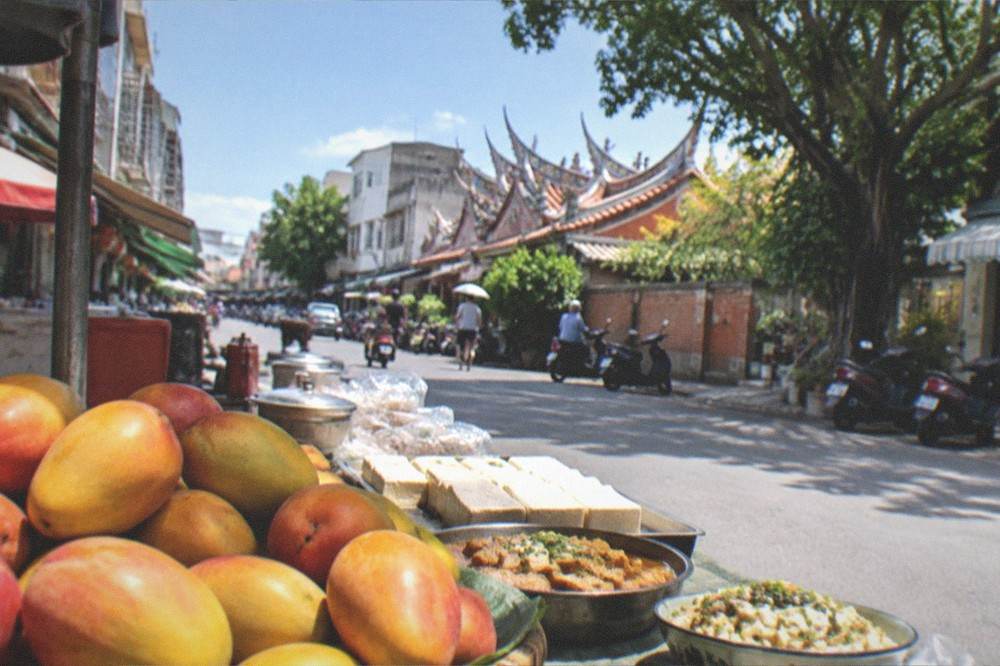
Beyond that, the plant-based backbone of Taiwanese snacking does most of the work. Tofu puddings, taro and sweet potato pastries, sesame and peanut sweets, fresh fruit, and the shaved-ice desserts that Tainan is known for are vegetarian by default. In mango season, June and July per the city's festival calendar, the fruit itself is the dessert, and the Tainan street food landscape leans heavily on these naturally meat-free categories.
| Dish or snack | Vegetarian? | Vegan notes |
|---|---|---|
| Coffin bread, vegetable filling | Yes, if filled with vegetables | Ask about butter and cream in the filling |
| Tofu pudding (douhua) | Yes | Syrup is usually vegan; toppings vary |
| Mango shaved ice | Yes | Confirm no condensed milk topping |
| Taro and sweet potato pastries | Usually | Some pastries use lard in the crust, ask |
| Sesame and peanut sweets | Usually | Check for milk powder in some versions |
| Su buffet mock meats | Yes by definition | Confirm no egg in mock products |
| Danzai noodles | No | Pork broth and minced pork are core to it |
| Tainan beef soup | No | Beef is the entire point of the dish |
The table is deliberately blunt about danzai noodles. The danzai noodles tradition is pork broth with minced pork and shrimp, and a vegan traveler should not order it expecting a plant-based variant. The honest move is to skip it and spend the appetite on the su kitchens instead, where the same noodle-and-soup instincts get applied to mushroom and vegetable stocks.
A guided walk is one way to short-circuit the ordering problem. A four-hour food and culture walk with a local guide covers the old city's eating streets, and telling the guide your diet in advance lets them steer the stops. It is a paid tour, not a free one, and there are no free walking tours in Tainan at all, so plan around that.
How Do You Eat Vegetarian at a Tainan Night Market?
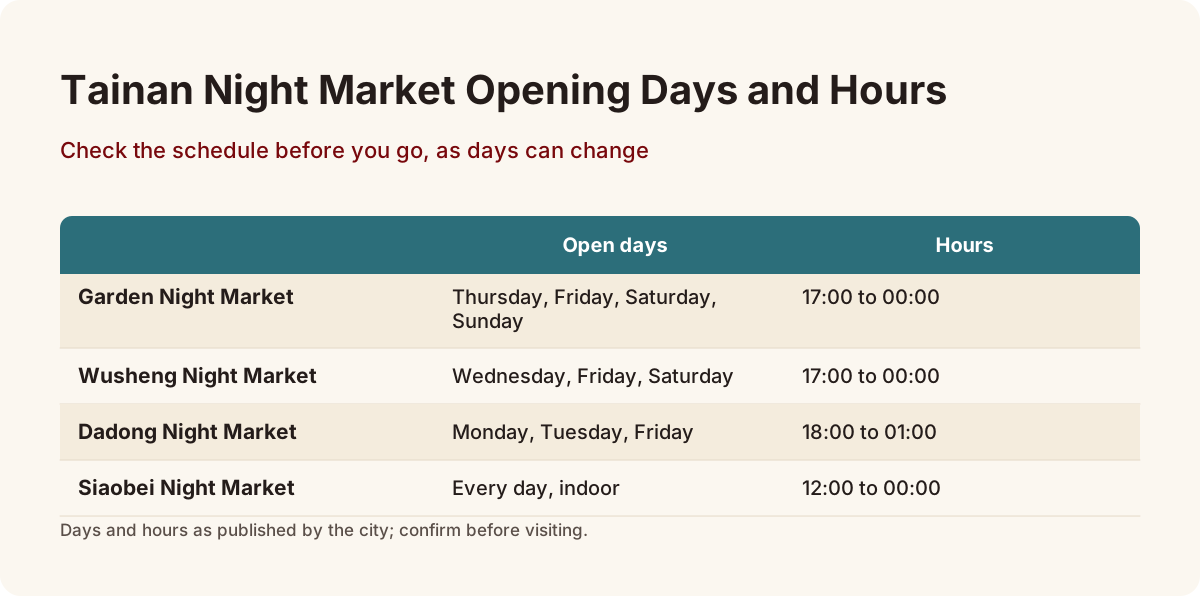
Check the day of the week first, because Tainan's big night markets rotate: Garden runs Thursday to Sunday, Wusheng Wednesday, Friday and Saturday, Dadong Monday, Tuesday and Friday, and Siaobei is indoors and open every day. Friday is the only night all three outdoor markets run. Once there, target vegetable stalls, tofu dishes, fruit and shaved ice, and ask about lard and fish sauce before ordering anything fried or sauced.
The rotation is the single most useful fact about night markets in Tainan, and the Tourism Bureau's own page for the Garden Night Market publishes the current days. The city updates these pages, so treat the table as the schedule and check before you go.
| Market | Open days | Hours |
|---|---|---|
| Garden Night Market | Thursday, Friday, Saturday, Sunday | 17:00 to 00:00 |
| Wusheng Night Market | Wednesday, Friday, Saturday | 17:00 to 00:00 |
| Dadong Night Market | Monday, Tuesday, Friday | 18:00 to 01:00 |
| Siaobei Night Market | Every day, indoor | 12:00 to 00:00 |
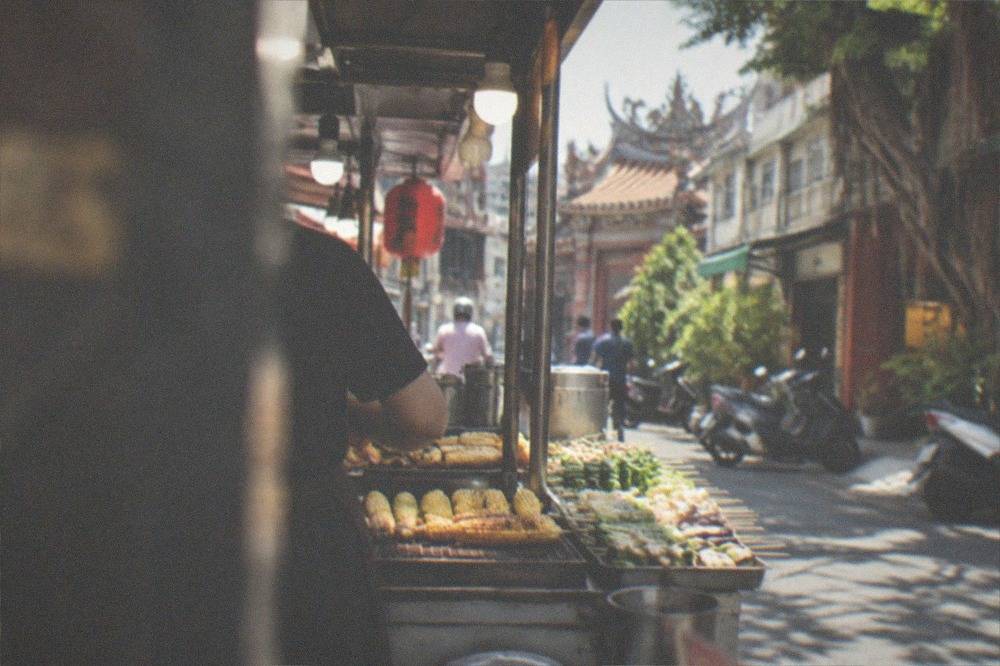
Inside the market, the vegetarian strategy is the same as in the daytime city. Fried vegetable dumplings, tofu dishes, scallion pancakes (ask about egg), grilled corn, fresh fruit cups and shaved ice are all standard night market categories, and none of them require meat. The two questions that matter are whether the frying oil or batter contains lard, and whether a sauce contains dried shrimp or fish sauce. Both are common in Taiwanese street cooking, and neither is visible on a menu board.
Siaobei deserves a special mention for two reasons. It is covered, which makes it the wet-weather answer on a rainy evening, and it runs daily, which makes it the answer on the thin nights, like Wednesday, when only Wusheng is open. The Tainan rainy day logic and the market calendar point the same direction.
What Should Vegans Watch Out for in Tainan?
Vegans in Tainan need to check for four things: lard in pastry and fried food, dried shrimp and fish sauce in sauces, egg in noodles and mock meats, and dairy in desserts and breads. A dish that looks fully plant-based can fail on any of these. The safest route is a Buddhist su kitchen, where the religious rules already exclude most animal products, and then a single confirmation about egg or dairy.
Lard is the quiet one. Traditional Taiwanese pastry, including some flaky taro and sweet potato bakes, is made with lard for texture, and a vegan cannot tell from looking. The same applies to fried street food, where the frying medium may be lard rather than oil. Asking is the only reliable method, and in a city with a large Buddhist vegetarian population, the question is a normal one that kitchens are used to hearing.
The seafood seasonings are the second trap. Dried shrimp, fish sauce and bonito-style flavorings appear in braises, sauces and soup bases, and they are what disqualify many vegetable dishes that a visitor would otherwise assume were safe. Broth is the specific danger: a vegetable noodle soup can be sitting on a pork or seafood stock. Su restaurants are the exception precisely because their stocks are built on mushroom, kelp and vegetable bases by rule.
Egg and dairy are the last pair. Fresh noodle doughs sometimes include egg, mock-meat products sometimes bind with egg, and Western-style cafes, which Tainan has plenty of, use dairy freely. None of this is hidden information, it just is not on the sign. A card or translation app with one sentence, "I do not eat meat, fish, egg, milk or lard," solves most of it, and the English in Tainan page has more on how far English gets you in smaller kitchens.
| Ingredient | Where it hides | How to check |
|---|---|---|
| Lard | Pastries, fried batter, scallion pancakes | Ask if the oil is plant oil |
| Dried shrimp | Sauces, stir-fries, vegetable side dishes | Ask for no shrimp products |
| Fish sauce | Dipping sauces, braises | Ask what the sauce base is |
| Pork or seafood stock | Noodle soups, rice dishes | Ask if the broth is vegetable |
| Egg | Fresh noodles, mock meats, pancakes | Confirm no egg |
| Dairy | Cafe drinks, desserts, some breads | Standard check |
Where Should Vegetarians Eat Around the Old City?
The West Central District around the Confucius Temple and the temple streets is the densest area for Buddhist vegetarian kitchens, Anping has the vegetable-friendly tourist stalls plus the Tree House and old street for sightseeing, and the East District around Dadong Night Market adds buffet-style su restaurants. None of these areas requires a car: city buses are free for the first 8 km with an electronic card.
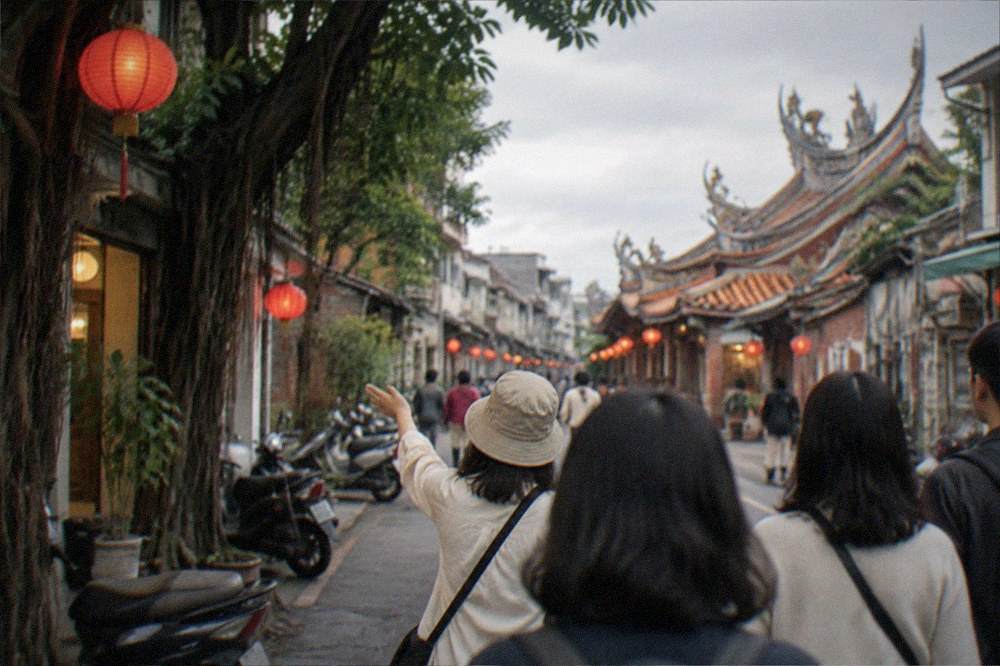
The geography follows the temples. The old city core holds the Confucius Temple, the Grand Matsu Temple and the Sacrificial Rites Martial Temple, and temple-adjacent eating is where the su tradition concentrates. The Confucius Temple itself is free to enter, open 08:30 to 17:30 daily and closed only on Lunar New Year's Eve, so a vegetarian lunch plan can be built around a free visit.
Anping works as the afternoon half of the day. The old street stalls, the Tree House (NT$70 at the gate, 08:30 to 17:30) and the canal-side walking make a circuit that a plant-based eater can do entirely on fruit, tofu and vegetable snacks, plus the shaved ice that the district is known for in mango season. Chihkan Tower, back in the city center, stays open until 21:30 daily, one of the few historic sites a visitor can see after dinner, which pairs well with a night market evening.
For moving between these areas, the bus system is the quiet bargain. City buses are free for the first 8 km of travel with an electronic card, a Citizen Card, iPASS, EasyCard or iCash 2.0, under a policy running through the 2026 calendar year, and the cash fare for the same trip is NT$26. The city's own bus fare page sets out the conditions, including the tap-on and tap-off requirement that visitors most often miss, and the getting around Tainan page covers the practical details.
When Is the Best Season for Vegetarian Food in Tainan?
October to March is the comfortable season for eating your way around the city, with the driest weather and the fewest wet days, while June and July bring the mango season that makes Tainan's fruit desserts exceptional. The peak visitor months are January and February, driven by temple pilgrimage and Lunar New Year, not by summer. Rain concentrates almost entirely in the summer half of the year.
The Central Weather Administration's 1991 to 2020 climate normals for Tainan show the shape clearly: August averages 466 mm of rain across about 16 wet days, December just 16 mm across 3, and close to three-quarters of the annual 1,761 mm falls between May and September. October is the driest month by wet days while still averaging maxima of 30.8C. For a food trip built on walking between stalls and markets, that dry half of the year is the practical choice, and the best time to visit Tainan page expands on it.
The counter-argument is the fruit. The city's festival calendar puts the mango season in June and July, and the Qigu Seafood Festival in July and August, and a visitor who cares about mango shaved ice specifically accepts the rain risk to get it. Temple pilgrimage season is the other winter draw: the Tourism Administration's visitor dataset shows Nankunshen Daitian Temple drew 6,583,100 visitors in 2023, roughly fifteen times Chihkan Tower's 443,622, with the peak months in January and February. That is temple season, and temple season is vegetarian food season.
| Season | Weather | Vegetarian food angle |
|---|---|---|
| October to March | Dry, warm, few wet days | Best for walking food circuits and night markets |
| January and February | Peak pilgrimage and Lunar New Year | Temple kitchens and festival vegetarian food |
| June and July | Hot, wet season begins | Mango season, fruit desserts at their peak |
| July to September | Hottest and wettest, typhoon risk peaks | Indoor Siaobei Night Market as the fallback |
The typhoon caveat belongs here. Typhoon risk in Taiwan concentrates in the late-summer months, and when the Tainan City Government declares a suspension day, attractions and transport can shut down. The Taiwan typhoon season page covers how those days work and how to check warnings before heading out.
Tea culture is the other plant-based thread in the city. A 90-minute oolong tea ceremony session is vegan by nature, nothing on the table comes from an animal, and it sits in the same cultural tradition as the temple kitchens. It is a seated, guided hour and a half rather than a walking tour, which makes it a natural rest stop in a hot afternoon.

Can a Guided Tour Help with Vegetarian Eating in Tainan?
Yes, and for a strict vegan it is one of the most efficient moves available. A food and culture walking tour runs about four hours with a local guide, a tea ceremony session runs 90 minutes, and full-day private tours can cover the lagoon coast and temples in one loop. Telling the operator your dietary requirements when booking lets the stops be chosen around them, which no self-guided plan can do.
The walking tour category is the closest fit. The four-hour food and culture walk is built around the old city's eating streets, and a guide who knows the request in advance can route the group past kitchens that cook without lard or fish sauce. The evening walking tour, about three hours, covers the after-dark city instead, and pairs naturally with a night market visit on a Thursday, Friday, Saturday or Sunday when Garden is running.
Private tours are the other option for travelers who want the itinerary shaped entirely around a diet. A full-day private tour with a car and a local guide covers ground that buses make slow, and the lagoon coast day tours reach Sicao and Qigu, where the boat rides and salt flats are the draw rather than the food. The Sicao Green Tunnel boat fare is NT$200 at the dock for either route, the mangrove tunnel and the longer Taijiang route, and neither involves eating anything.
Common Questions About Vegetarian and Vegan Food in Tainan
Is Tainan vegan friendly?
Largely yes, with checks. Buddhist su kitchens are common and many are effectively vegan, excluding meat, fish and the pungent roots by rule. Vegans should still confirm no egg in mock meats and noodles, no lard in pastry and fried food, and no dairy in desserts, because those are not covered by the Buddhist rules.
What is su food in Taiwan?
Su is Buddhist vegetarian cooking that excludes meat, fish and the five pungent roots: onion, garlic, scallion, leek and chive. It comes from monastic practice, and in Tainan it appears as buffet restaurants, temple kitchens and mock-meat dishes made from gluten, tofu and mushroom.
Can vegans eat at Tainan night markets?
Yes, with the same four checks as anywhere in the city: no lard in the frying, no dried shrimp or fish sauce in sauces, no egg in noodles and pancakes, and no dairy on desserts. Fruit, tofu, grilled corn and shaved ice are the dependable categories. Check the market rotation first, because only Siaobei opens every day.
Which night markets are open on a Wednesday in Tainan?
Wusheng Night Market, 17:00 to 00:00, is the only big outdoor market open on a Wednesday, and Siaobei, which is indoors, opens every day from 12:00 to 00:00. Friday is the one night when Garden, Wusheng and Dadong all run. The city updates these schedules, so check before you go.
Is mock meat in Tainan vegan?
Usually vegetarian, not automatically vegan. Su kitchens make mock duck, fish and pork from gluten, tofu and mushroom, and the tradition excludes meat and seafood by rule, but some products bind with egg. Ask at the counter before assuming a tray is fully plant-based.
Do I need to speak Chinese to order vegetarian food in Tainan?
No, but a prepared sentence helps in smaller kitchens. A translation app or card saying you eat no meat, fish, egg, milk or lard covers nearly every situation, and Buddhist restaurants are already used to dietary questions. Tourist-area signage is increasingly bilingual, though coverage is not universal in older spots.
The short version of all of this: Tainan's vegetarian food is not an accommodation the city makes for visitors, it is one of the oldest parts of its food culture, kept alive by temples and by kitchens that have cooked without meat for generations. A vegetarian can eat anywhere in the city with confidence. A vegan can eat almost anywhere, with four questions in hand and a preference for the su kitchens, where most of those questions have already been answered by the rules of the tradition. Pick the dry months if the plan is a walking food circuit, pick June and July if it is mango, and check which night market is open before the sun goes down.