Photographing Tainan
Tainan gives a photographer two things most cities do not: a rotation of night markets that changes by the day of the week, and a dry, golden winter that keeps the sky workable for months. This guide lays out where to point the camera, when, and what it costs to get in the frame.
Short answer
The best general window for photographing Tainan is October to March, when the Central Weather Administration's normals show roughly 3 wet days a month and daytime maxima still near 30C. Shoot temples and old streets early, Chihkan Tower late, since it stays open until 21:30, and plan night market shoots around the city's published rotation schedule.
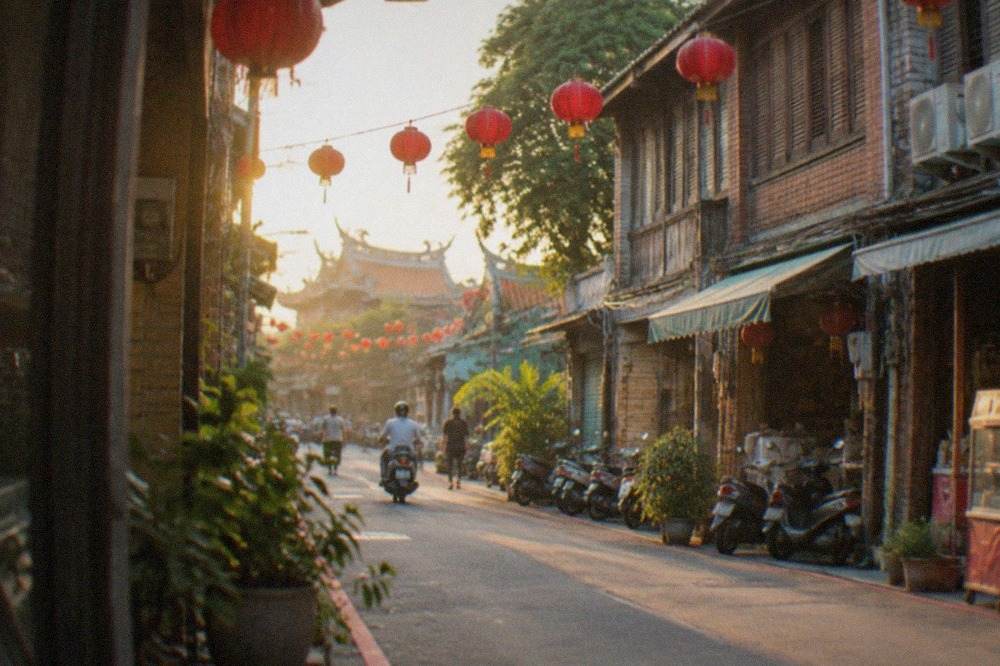
Tainan is Taiwan's oldest city and its most photogenic contradiction: Dutch-era brick under Japanese-era roofs, incense smoke in 300-year-old halls, and a lagoon coast an hour from the old streets. The city's own climate records say the camera weather is better than almost any tropical destination's, with a dry half of the year that runs October to March and an annual 2,185 hours of sunshine. Planning the shoot around the city's schedules matters as much as the light, because Tainan's night markets rotate by day of the week and its biggest historic site stays open until 21:30. This guide, from the editorial desk at Tainan Travel Guide, works through the whole frame: seasons, subjects, timing, entry costs and the honest limits on what a visitor can photograph.
When Is the Best Season for Photographing Tainan?
The best months for photographing Tainan are October through March, when the Central Weather Administration's 1991 to 2020 normals show the city at its driest and its skies at their most workable. October averages just 2.8 rain days a month while still reaching 30.8C maxima, December drops to 16.2 mm of rain across 3 days, and the January and February peak-season crowds that fill the temples actually arrive in the city's most comfortable weather.
The Central Weather Administration's published normals for Tainan station 467410 make the case plainly. The annual total of 1,761 mm of rain is almost a summer story: August alone brings 466 mm across 16 wet days, and close to three-quarters of the year's rain falls between May and September. A photographer who comes in June or July is planning around downpours; one who comes in November is not.
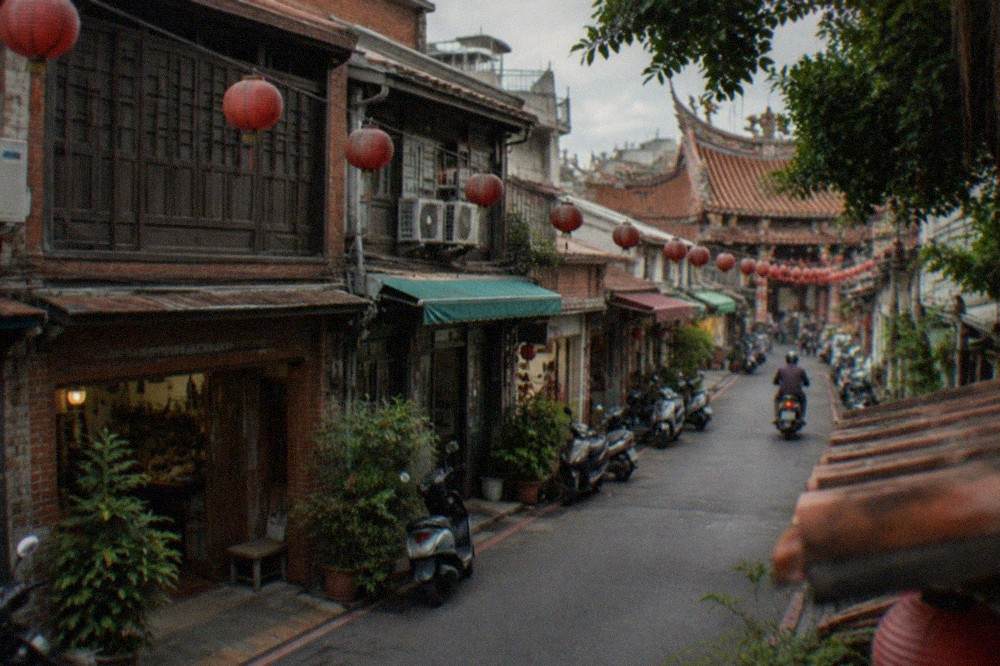
The counter-intuitive part, and the reason winter shoots work so well, is that Tainan's visitor peak is January and February, driven by temple pilgrimage and Lunar New Year, not by summer holidays. The Tourism Administration's own 2023 dataset shows Nankunshen Daitian Temple drawing 6,583,100 visitors against Chihkan Tower's 443,622. Temple crowds mean incense, processions and human energy in the frame, but they also mean people in front of every wide shot. The same dataset carries a caveat worth repeating: each site compiles and reports its own count, so an open old street and a ticketed museum are not measured the same way.
| Month | Mean max (C) | Rain (mm) | Rain days | Notes for the shoot |
|---|---|---|---|---|
| January | 23.0 | 20.7 | 3.8 | Pilgrimage season, crowded temples, gentle light |
| April | 29.3 | 69.8 | 5.9 | Rain rising, 30C on half the days |
| August | 32.6 | 466.1 | 15.8 | Wettest month, typhoon risk peak |
| October | 30.8 | 30.8 | 2.8 | Driest month by rain days, still hot |
| December | 24.4 | 16.2 | 3.0 | Driest by volume, comfortable walking weather |
For planning around storm risk, the Tainan weather and Taiwan typhoon season pages carry the detail. The short version: typhoon risk concentrates in the late-summer months, and the rainfall table above shows exactly that shape without needing a single frequency statistic.
Where Are the Best Photography Locations in Tainan?
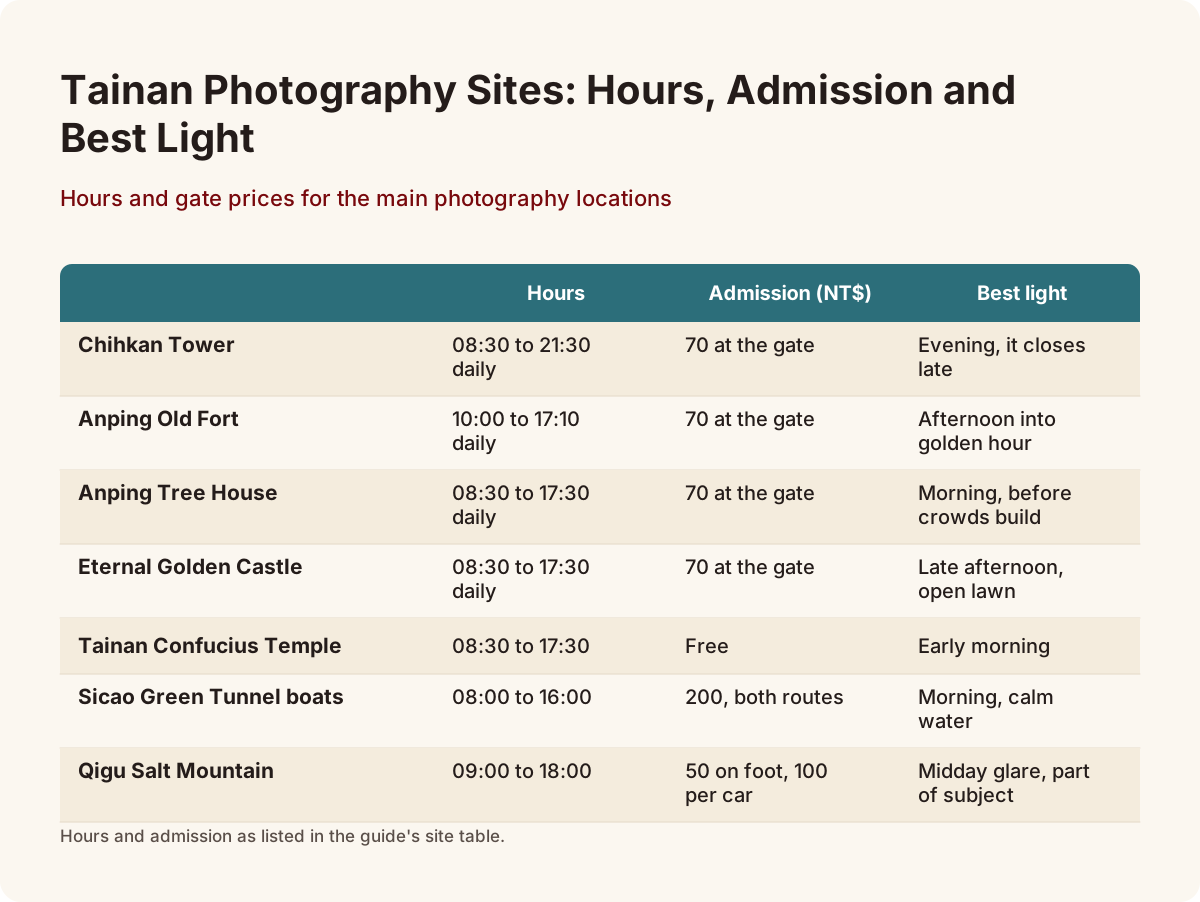
The strongest photography subjects in Tainan cluster in four zones: the Anping district with its Old Fort, Tree House and old street, the West Central district around Chihkan Tower and the Confucius Temple, the lagoon coast at Sicao and Qigu, and the night markets, which rotate by day of week. Each has a different best hour, and the city's published hours and fares set the practical limits on each shoot.
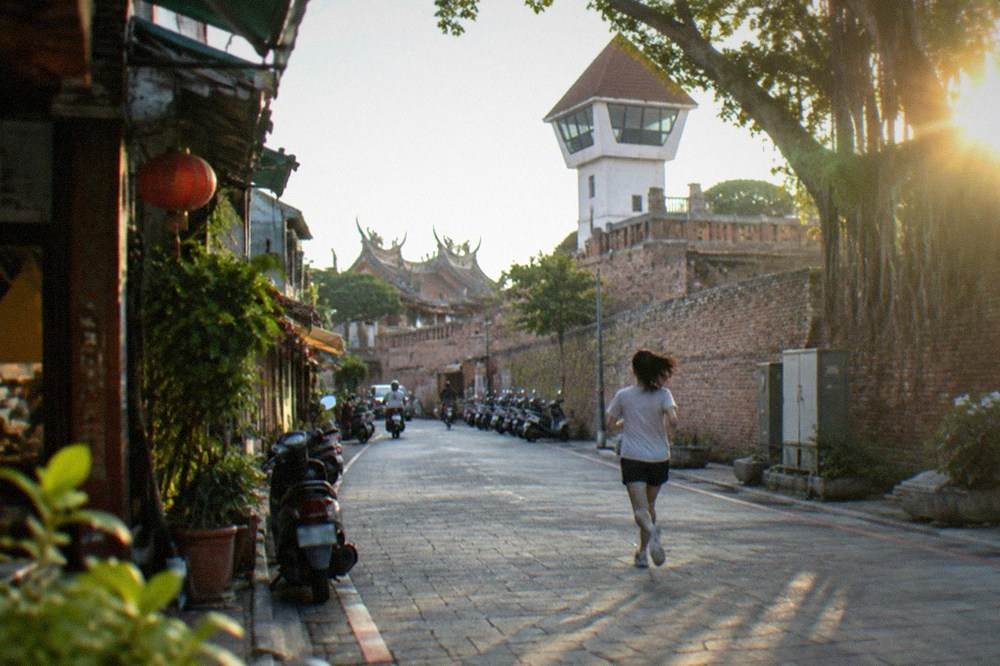
Anping is the historical heart. The Anping Old Fort page covers the site's Dutch origins: the Tainan City Government Tourism Bureau's own account records the Dutch East India Company occupying the area in 1624 and completing Fort Zeelandia in 1634, with Koxinga taking the fort in 1662. What survives from the Dutch period is narrower than most visitors expect: the Bureau's page states the only genuine Dutch-era remains are the brick walls of the south outer rampart. Most of what a photographer frames there today, the pointed-roof lookout tower and the white walls, is the city government's 1975 renovation. That is not a reason to skip it; it is a reason to shoot it as what it is.
The Anping Tree House is the city's single most photographed ruin, banyan roots grown through a former merchant's warehouse, open 08:30 to 17:30 with admission at NT$70 at the gate. The Sicao Green Tunnel gives a completely different palette: a mangrove-lined waterway where the boats run 08:00 to 16:00 and both routes, the Green Tunnel and the longer Taijiang route, cost NT$200, never one cheaper than the other. The Tourism Bureau's page for the tunnel lists the hours and fares directly.
In the old city, Chihkan Tower sits on the site of Fort Provintia, built by the Dutch in the early 1650s, and its hours are the photographer's friend: 08:30 to 21:30 daily, tickets until 21:00. Admission is NT$70 at the gate, concessions half price, and Tainan residents enter free with ID, which does not extend to visitors. The Tainan Confucius Temple charges no ticket at all, opens 08:30 to 17:30, and closes only on Lunar New Year's Eve. The free-entry list also includes the Grand Matsu Temple, 06:00 to 21:00, the Five Concubines Temple, 08:00 to 17:00, and Kaiyuan Temple, 06:00 to 17:00, all confirmed on the Tourism Bureau's own pages.
| Site | Hours | Admission (NT$) | Best light |
|---|---|---|---|
| Chihkan Tower | 08:30 to 21:30 daily | 70 at the gate | Evening, it closes late |
| Anping Old Fort | 10:00 to 17:10 daily | 70 at the gate | Afternoon into golden hour |
| Anping Tree House | 08:30 to 17:30 daily | 70 at the gate | Morning, before crowds build |
| Eternal Golden Castle | 08:30 to 17:30 daily | 70 at the gate | Late afternoon, open lawn |
| Tainan Confucius Temple | 08:30 to 17:30 | Free | Early morning |
| Sicao Green Tunnel boats | 08:00 to 16:00 | 200, both routes | Morning, calm water |
| Qigu Salt Mountain | 09:00 to 18:00 | 50 on foot, 100 per car | Midday glare is part of the subject |
The city's own disclaimer on these pages is that prices are for reference and the on-site notice governs, so treat every figure above as the gate price rather than a guarantee. For a wider sweep of subjects, the Tainan attractions overview lists the full set.
If the goal is pictures with people in them rather than pictures of places, a guided shoot changes the arithmetic entirely.
A two-and-a-half-hour session with a local photographer covers the lanes and light a visitor would spend days finding, and the Anping qipao rental turns the old streets into a costume shoot for a full day at a fraction of a studio sitting's cost.
How Do You Photograph the Tainan Night Markets?
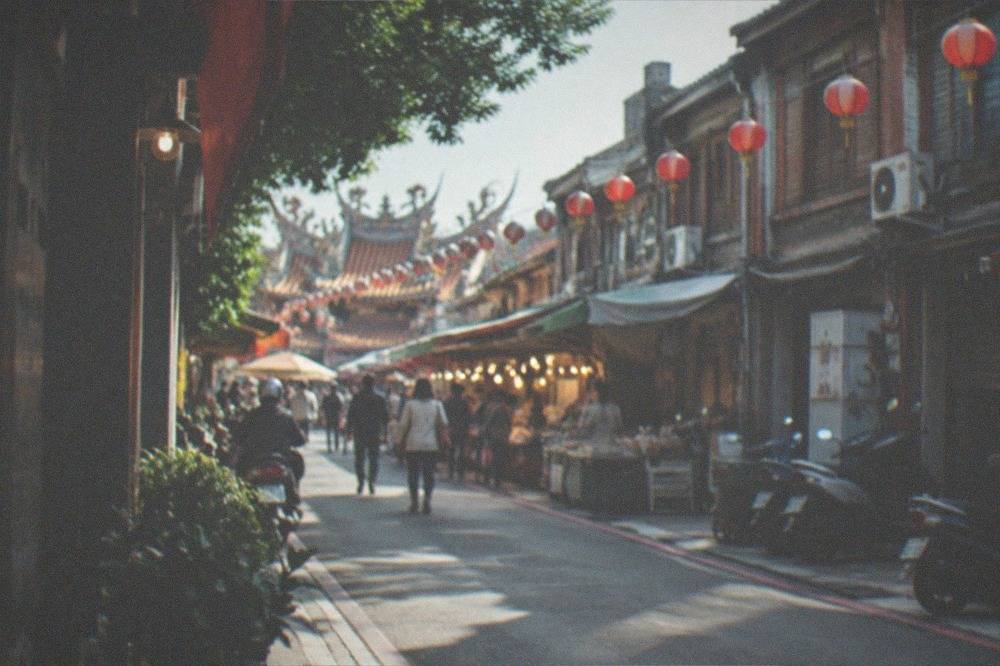
You photograph the Tainan night markets by matching the market to the day of the week, because the three big outdoor markets rotate: Garden runs Thursday to Sunday, Wusheng runs Wednesday, Friday and Saturday, Dadong runs Monday, Tuesday and Friday, and Friday is the only night all three are open at once. Siaobei is indoors and open every day from 12:00 to midnight, which makes it the wrong-night and wet-weather answer.
These days come from the Tainan City Government Tourism Bureau's own attraction pages, not from the folk seven-character rhyme locals use as a memory aid. The rhyme gets the primary market for each night right, but it is shorthand, not a schedule, and the city's pages are the thing to check before going. The Tainan night markets page carries the full breakdown.
| Day | Big outdoor markets open |
|---|---|
| Monday | Dadong |
| Tuesday | Dadong |
| Wednesday | Wusheng |
| Thursday | Garden |
| Friday | Dadong, Wusheng and Garden |
| Saturday | Wusheng, Garden |
| Sunday | Garden |
For a photographer the schedule is a gift. Friday offers a choice of three atmospheres; Wednesday forces a decision between Wusheng and the indoor Siaobei. The Bureau's pages for each market carry the hours, 17:00 to 00:00 for Garden and Wusheng, 18:00 to 01:00 for Dadong, and the city updates these pages, so the days can change and a check before going is part of the plan.
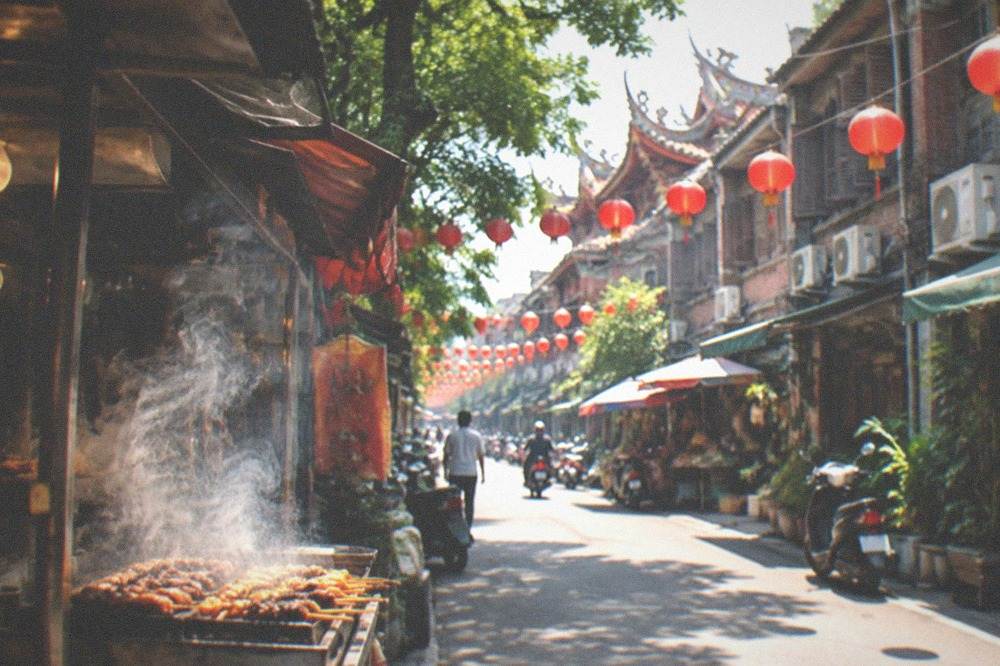
Practically, night market shooting is low-light work: stall lights are warm and uneven, aisles are packed, and the subjects are vendors in constant motion. The honest cost note is that no official price list exists for any market snack, so this site does not print one. What can be said is qualitative: Tainan is the cheapest of Taiwan's big cities to eat in, and the Tainan street food and Tainan food guide pages cover what to point the camera at between frames.
What Are the Rules for Photographing Inside Tainan Museums and Temples?
There is no single citywide photography rule in Tainan: each museum and temple sets its own policy, so the honest answer is to check the venue's own visitor page before bringing a camera inside. What is verified is the practical framework: the Chimei Museum charges NT$200 for the permanent collection and closes every Wednesday, the Tainan Art Museum charges NT$80 and closes Mondays, and temples are active places of worship where the worshippers, not the photographer, set the tone.
The Chimei Museum's own visit page sets its terms: NT$200 full price for the permanent collection, NT$150 for ages 7 to 22 and 65+, free entry for Tainan residents with ID, last admission at 17:00, and closure every Wednesday and on Lunar New Year's Eve. The museum's page is the place to check its photography policy before assuming tripods or flash are welcome. The Chimei Museum guide carries the visiting detail.
The Tainan Art Museum's own hours-and-tickets page is similarly specific: NT$80 general admission, Tuesday to Sunday 10:00 to 18:00 with Saturdays until 21:00, closed Mondays, and the desk takes EasyCard and iPASS alongside cash and cards. The same page records that the museum closes when the Tainan City Government announces a typhoon or earthquake work suspension, a concrete reminder that the late-summer storm season reaches indoors too.
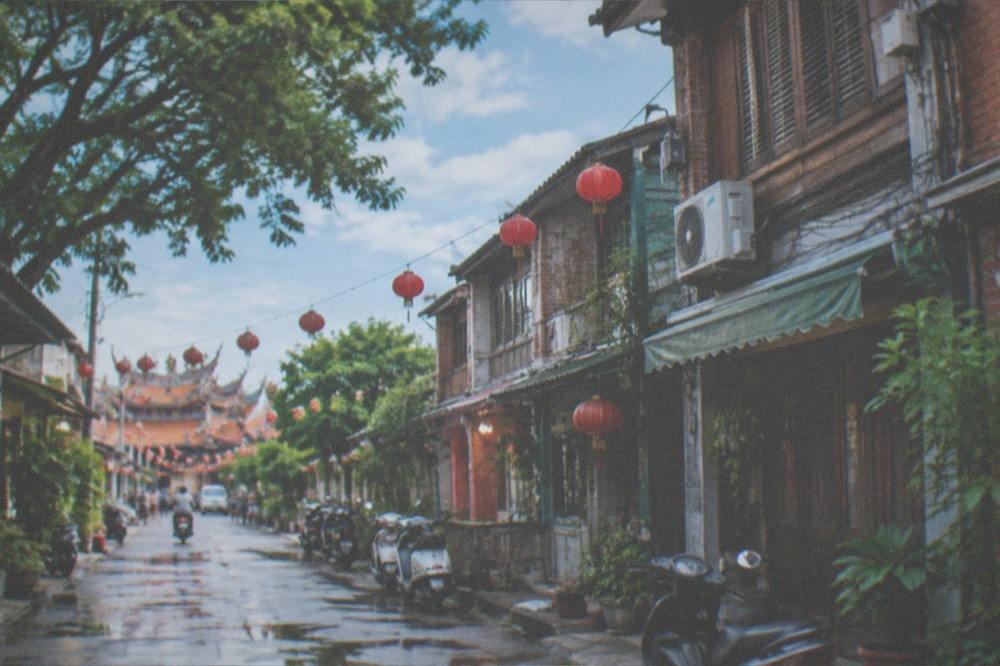
Temples are a different category. The Tainan temples page covers the etiquette in depth, and the Tainan temple etiquette guide exists because the rules are real: incense halls are working religious spaces, ceremonies take precedence over photographs, and asking before shooting a ritual is not optional politeness but the baseline. The Grand Matsu Temple, free and open 06:00 to 21:00, is an active state-temple with worshippers present at almost any hour the doors are open.
For museum tickets bought ahead, the entry listings are the simplest route.
For a photographer who wants to be in the frame instead of behind it, a local who knows the lanes is worth more than any self-timer.
What Time of Day Should You Shoot Each Tainan Subject?
Shoot temples and old streets in the first two hours after opening, shoot Anping and the coastal sites in the late afternoon when the light drops low, and shoot Chihkan Tower after dinner, because its 21:30 closing makes it the one historic site that works as a night subject. The night markets then take over from 17:00 onward, with Dadong starting at 18:00 and running to 01:00.
The logic comes straight from the published hours. Temples that open at 06:00, like the Grand Matsu Temple and Kaiyuan Temple, offer morning light with the incense already burning; the Confucius Temple at 08:30 offers the same with softer crowds. Anping sites that close between 17:10 and 17:30 reward a late-afternoon arrival, and the Sicao boats, which stop at 16:00, are strictly a morning-to-mid-afternoon subject.
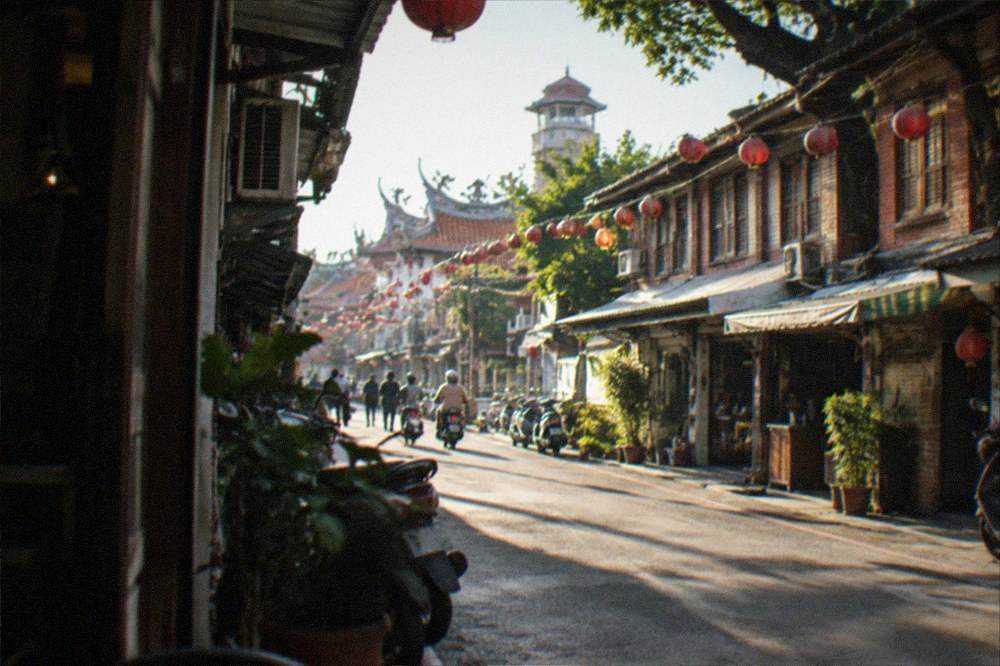
Chihkan Tower is the special case worth building an evening around. The Tourism Bureau's page lists 08:30 to 21:30 daily, and that late closing is unusual in a city where most heritage sites shut at 17:30. A schedule that pairs an Anping afternoon with a Chihkan evening uses the whole photographic day. The lagoon coast needs its own block: the boats, the salt mountain and the spoonbill reserve are a half-day or more, and the Qigu area page lays out the geography.
For the coastal subjects, the boat listing is the one bookable piece of a day that is otherwise free viewpoints and open shoreline.
How Do You Get Around Tainan with Camera Gear?
The practical answer for a photographer is the city bus network, because Tainan city buses are free for the first 8 km with an electronic card, Citizen Card, iPASS, EasyCard or iCash 2.0, on the trunk and branch routes, for the 2026 calendar year. The cash fare for the same trip is NT$26, and the card must be tapped on AND tapped off, with tap-off being the step visitors miss.
The city's own bus ticketing page states the free-first-8 km policy in English and sets the conditions: the scheme covers the green, blue, brown, orange, yellow and red trunk and branch routes, it runs 1 January to 31 December 2026 as a renewed annual policy rather than a permanent one, and tourist buses and the HSR express bus are excluded from the citizen-card discounts. The same card also unlocks a NT$9 transfer discount between Taiwan Railway and a city bus within two hours, though using another mode in between, such as a public bike, voids it.
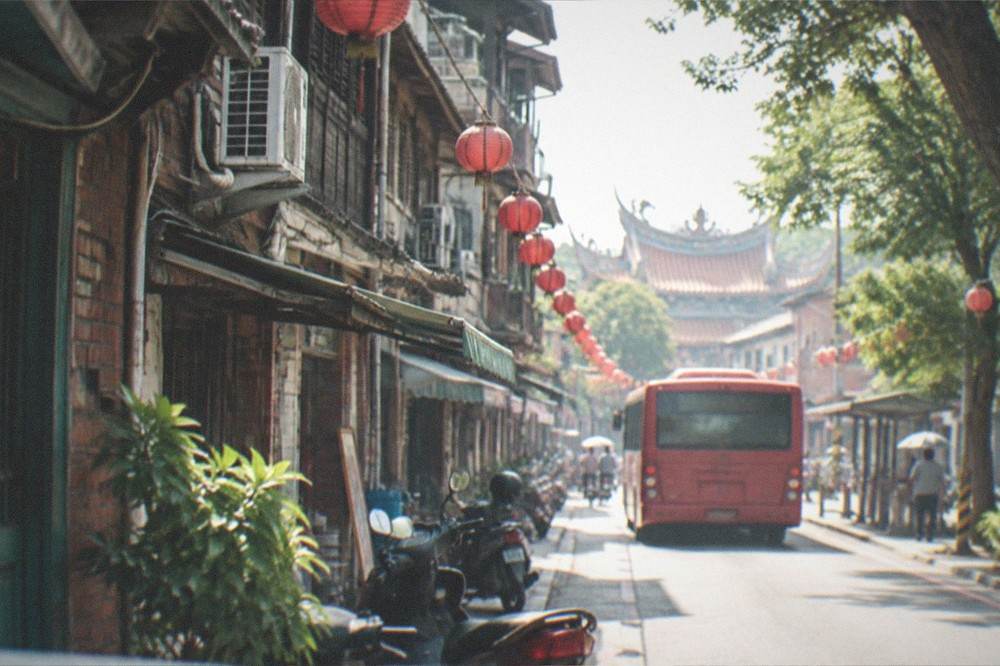
Two cautions from the verified record. First, an International Driving Permit is not automatically sufficient for scooter rental in Taiwan: the country expects an IDP to be registered at a Motor Vehicles Office, and rental shops may refuse without it, so the Tainan scooter rental page's advice is to check the official rules rather than assume. Second, the High Speed Rail station is not in Tainan: it sits at Shalun in Guiren District, outside the old city, and every arrival involves a transfer. The H31 HSR shuttle bus is free for HSR passengers on production of a ticket stub, and its section break sits at the Chimei Museum, which puts the museum on the shuttle route. The getting around Tainan and Tainan HSR station pages carry the full arrival picture.
Should You Book a Photo Tour or Shoot Tainan Yourself?
Shoot Tainan yourself if the goal is places and light, since the city's best subjects are free or NT$70 at the gate and the schedules above do the planning work. Book a photographer or an evening guide when the goal is people in the frame, a costume shoot in the old streets, or night market lanes too dense to read on a first visit. The choice is about what you want in the picture, not about access.
Most of Tainan is not a booking, and a page that pretends otherwise would be selling something the city gives away. The Confucius Temple, the Grand Matsu Temple, the Five Concubines Temple, Kaiyuan Temple, the old streets, the canal and the salt flat viewpoints all cost nothing and need no ticket. What a booking buys is a person: a guide who knows which lane the light hits at 17:00, or a photographer who puts you in the frame instead of behind it.
The trio above is the shortlist for exactly that: a photoshoot with a local behind the camera, an evening walk built for the after-dark city, and a full-day qipao rental that turns Anping into a set. For the wider field of guided days, the lagoon and temple day tours cover the coastal subjects with transport handled.
Common Questions About Photographing Tainan
Is Tainan good for photography?
Yes. Tainan combines Dutch-era and Japanese-era architecture, working temples, a lagoon coast and three rotating night markets, under a climate that averages 2,185 sunshine hours a year and a dry October-to-March half that keeps outdoor shooting workable for months.
What is the best month to photograph Tainan?
October is the strongest single month: the Central Weather Administration's normals show it as the driest month by rain days, 2.8, while daytime maxima still average 30.8C. January and February add temple festival energy but also the year's biggest crowds.
Can you photograph inside Chihkan Tower?
The site is open 08:30 to 21:30 daily with admission at NT$70 at the gate, which makes it one of the few historic sites that can be photographed after dark. As with any heritage site, the on-site notice governs current rules on tripods and flash.
Which Tainan night market is best for photos?
Garden Night Market, open Thursday to Sunday, 17:00 to 00:00, is the largest and the most photographed. Friday is the only night when Garden, Wusheng and Dadong all run, so it offers the widest choice of atmospheres in one evening.
Do you need a permit to photograph in Tainan temples?
No permit system is published by the city, but temples are active places of worship. The working rule is to ask before photographing ceremonies, avoid disrupting worshippers, and treat the temple's own notices as the authority inside its halls.
Is photography allowed in the Chimei Museum?
The museum's own visit page sets hours and admission, NT$200 for the permanent collection, closed Wednesdays, but its photography policy should be checked on that page before a visit, since exhibition-specific restrictions are common and this site does not state rules it has not verified.
The honest summary: Tainan rewards planning more than gear. The city's published schedules, market rotation days, a 21:30 closing at Chihkan Tower, boat hours that end at 16:00, a free first-8 km bus policy, do more for a shoot than any lens upgrade, and the dry half of the year gives a photographer months of usable sky. Pick the month, match the market to the night, front-load the temples into the morning, and the frames assemble themselves.