Tainan at Night
Tainan changes character after sunset. The heat drops, the night markets rotate into action, and a handful of historic sites stay open late enough to see after dinner. This guide lays out what is actually open, on which night, and at what price.
Short answer
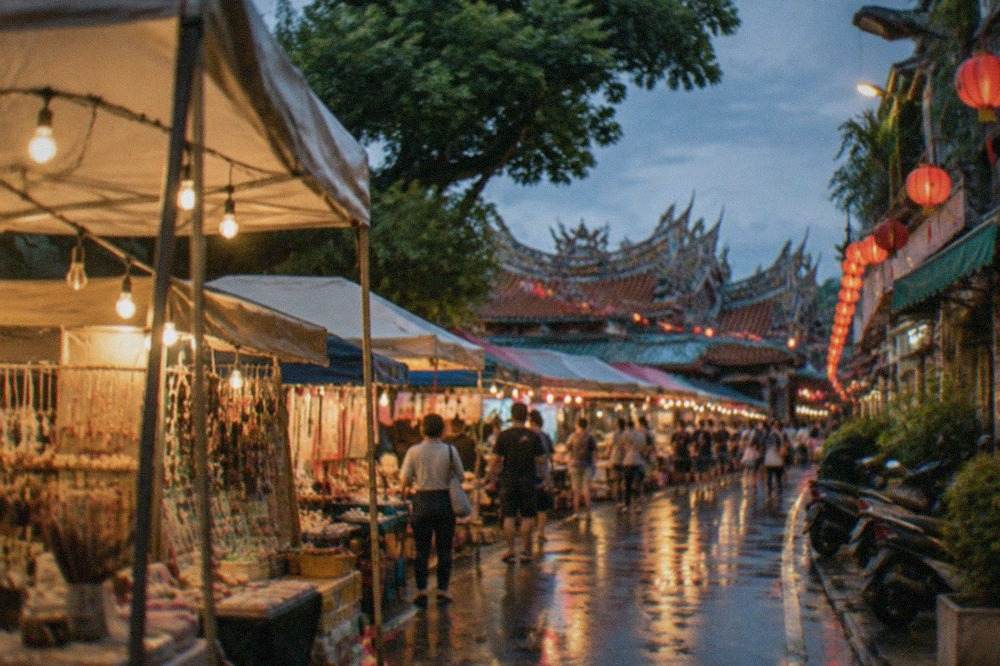
Tainan at night means rotating night markets, Chihkan Tower open until 21:30, the lantern-lit lanes around Shennong Street, and beef soup served before dawn. Friday is the only night all three big outdoor night markets run; Siaobei is indoors and open every day.
Tainan's evenings are the part of the day the city was built for. The Central Weather Administration's 1991 to 2020 normals for Tainan show 186 days a year above 30C, which means the comfortable hours to walk the old streets are, for most of the year, the hours after sunset. The city obliges: three large outdoor night markets rotate across the week, one indoor market opens every single day, and Chihkan Tower keeps its gates open until 21:30, later than almost any other historic site in Taiwan.
The single most useful fact about Tainan at night is also the one most visitors get wrong: the big night markets are not open every night, and they do not all share a schedule. Garden, Wusheng and Dadong each open on their own days, and a traveler who shows up on Wednesday expecting Garden will find it dark. Everything on this page is drawn from the Tainan City Government Tourism Bureau's own attraction pages and the city's published fare and hours notices, so the days and prices here are the city's own, not a guidebook's guess.
Which Night Markets Are Open on Which Night in Tainan?
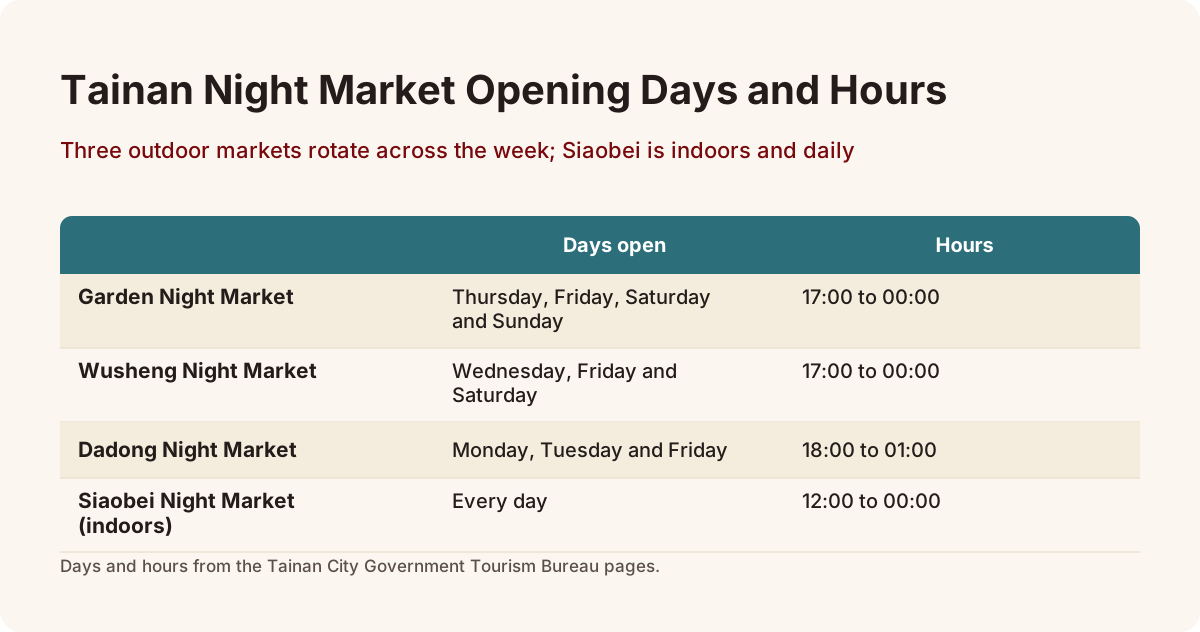
Three big outdoor night markets rotate across the week: Garden Night Market opens Thursday, Friday, Saturday and Sunday from 17:00 to 00:00; Wusheng Night Market opens Wednesday, Friday and Saturday from 17:00 to 00:00; Dadong Night Market opens Monday, Tuesday and Friday from 18:00 to 01:00. Siaobei Night Market is indoors and opens every day, 12:00 to 00:00. Friday is the only night all three outdoor markets run at once.
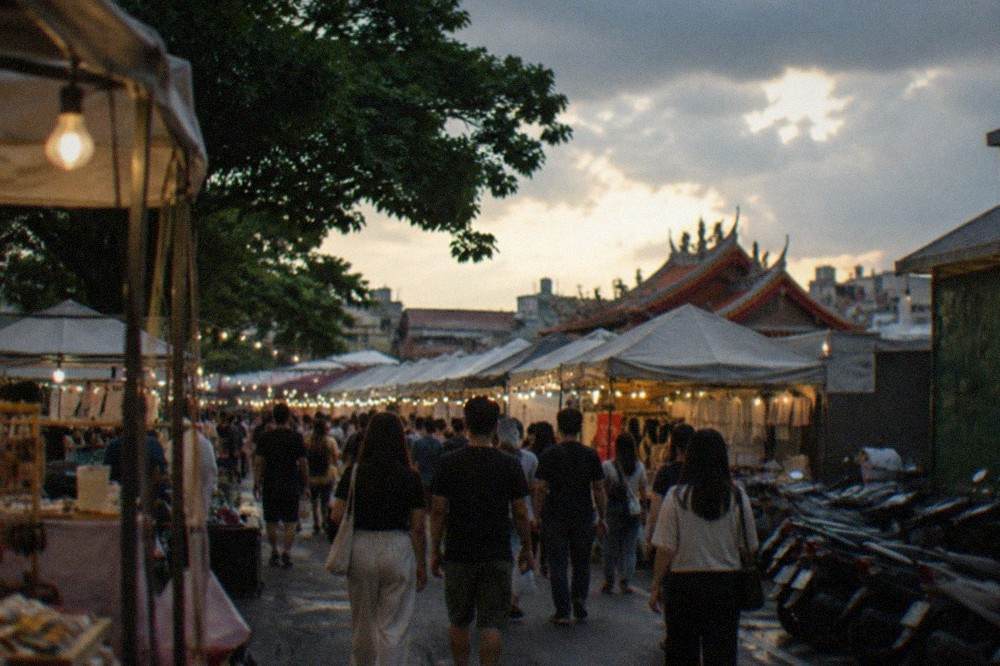
Those days come straight from the Tainan City Government Tourism Bureau's own page for Garden Night Market, and the city updates these pages, so a check-before-you-go habit is worth building. The Bureau's pages for Garden Night Market, Wusheng, Dadong and Siaobei each carry the current published hours, and the Tainan City Market Administration maintains the official night market roster for the whole city.
Here is the week laid out as a planning table:
| Day | Big outdoor markets open | Notes |
|---|---|---|
| Monday | Dadong | Siaobei also open, indoors |
| Tuesday | Dadong | Siaobei also open |
| Wednesday | Wusheng only | Thinnest night of the week |
| Thursday | Garden | Siaobei also open |
| Friday | Dadong, Wusheng and Garden | The only night all three run |
| Saturday | Wusheng, Garden | Siaobei also open |
| Sunday | Garden | Siaobei also open |
Two practical readings of that table matter more than the table itself. If your trip is short, aim for a Friday or Saturday, because you get a choice of markets rather than a single option. If the weather turns wet, or you arrive on a Wednesday, Siaobei is the answer: it is covered, it opens at midday, and it runs to midnight every day of the week.
Locals compress all of this into a seven-character rhyme that maps the primary market onto each night of the week. It is a genuine memory aid and it gets the primary market right, but it is folk shorthand rather than an official schedule: against the city's current published hours it misses that Garden also opens Friday, and that Wusheng also opens Friday. Trust the table, use the rhyme as a mnemonic if you find it useful, and re-check the Bureau's pages before you go, because the days do change.
What Can You See After Dark in Tainan?
Chihkan Tower is the standout: the city's own page lists it open 08:30 to 21:30 daily, with admission at NT$70 at the gate, making it one of the few historic sites in Taiwan a visitor can see after dinner. Most other sites close between 17:10 and 17:30, so the illuminated-temple-and-old-street circuit is the rest of the after-dark map.
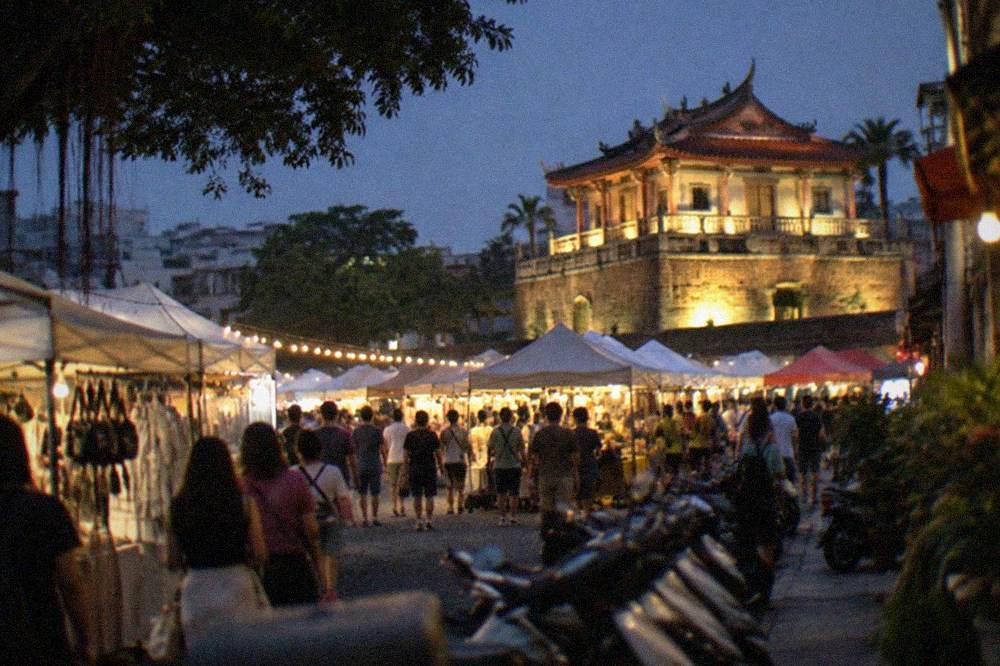
The late closing at Chihkan Tower is unusual enough to plan around. The Dutch built Fort Provintia on the site in the early 1650s, and the Tainan City Government Tourism Bureau's page for the site states its daily hours run to 21:30 with ticket sales to 21:00. Concessions are half price, and Tainan residents enter free with ID, but a visitor is not a resident, so plan on the NT$70 gate price. The city's own pages carry the disclaimer that the on-site notice governs, so treat every price here as the current gate price rather than a guarantee.
Almost everything else in the historic core closes at the conventional hour. Anping Old Fort closes at 17:10, the Anping Tree House and Eternal Golden Castle at 17:30, and the Tainan Art Museum at 18:00, except Saturdays, when its own hours page lists opening until 21:00. That Saturday extension is a genuinely useful detail: the museum's visitor page sets out the weekend hours, and Saturday evening becomes the one reliable slot for art after dark.
| Site | Evening hours | Admission (at the gate) |
|---|---|---|
| Chihkan Tower | Daily to 21:30 | NT$70, half price concessions |
| Tainan Art Museum | Saturdays to 21:00, otherwise to 18:00 | NT$80 |
| Grand Matsu Temple | Daily to 21:00 | Free |
| Garden Night Market | Thu to Sun, 17:00 to 00:00 | Free entry, pay per stall |
| Siaobei Night Market | Daily, 12:00 to 00:00, indoors | Free entry |
Beyond the ticketed sites, the free after-dark circuit is strong. The Grand Matsu Temple keeps its doors open to 21:00 and charges nothing. Shennong Street, the old Qing-era merchant lane, is at its most photographed after the lanterns go up. None of these need a ticket, which is the honest truth about most of Tainan: the city's core after-dark experience costs nothing to enter.
Where Should You Eat in Tainan at Night?
The night markets are the default answer, and the right one on the nights they run, but the old city's sit-down bowls matter just as much: danzai noodles, coffin bread, milkfish soup and beef soup are Tainan's signature dishes, and the beef soup shops traditionally start serving before dawn rather than after dark. No official price list exists for any of them, so budget loosely rather than to a number.
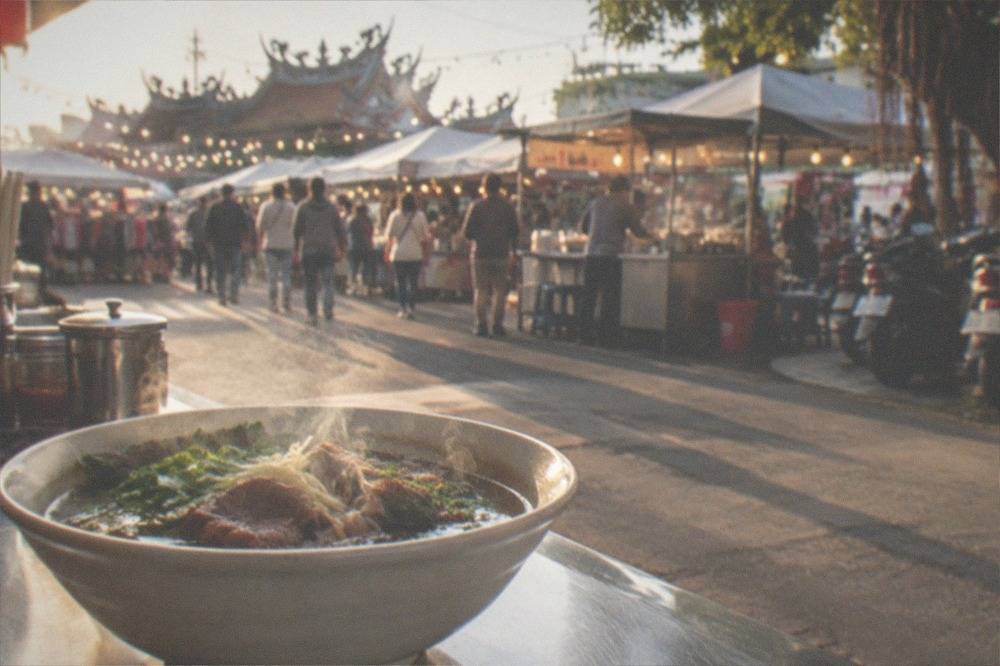
Start with the dishes that only really exist here. Danzai noodles began as a shoulder-pole street trade and are now served everywhere from night market stalls to heritage restaurants. Coffin bread, a thick hollowed toast filled with a creamy stew, is a Tainan invention with a name that needs no explanation once you see it. Milkfish is prepared a dozen ways, and beef soup made from freshly slaughtered, never-refrigerated meat is the dish people set alarms for, because the famous shops open in the small hours.
The honest cost answer is that nobody publishes one. The city does not publish a snack price list, and no verified source states what a bowl costs tonight. What can be said is qualitative: Tainan is widely regarded as the cheapest of Taiwan's big cities to eat in, and a night market crawl is a handful of small purchases rather than one large one. Bring cash, because cards are unreliable at stalls and small eateries, and the convenience-store ATM is the standard backup.
If you would rather have the snack stalls chosen for you, a guided food walk solves the ordering problem in a city where English signage is improving but not universal. The city's own tourism information notes bilingual signage programs at major markets including Garden, but plenty of smaller stalls remain Chinese-menu only, and a guide bridges that gap.
What About Tea, Music and Evening Culture in Tainan?
Tainan's evening culture runs from a formal oolong tea ceremony to drum performances at a converted sugar refinery, and the city's calendar adds festivals through the year: the Yuejin Lantern Festival in February to March, the Qixi Carnival in August to September, and Christmas and New Year events in December. A tea ceremony is the most bookable of these, and the most distinctive.
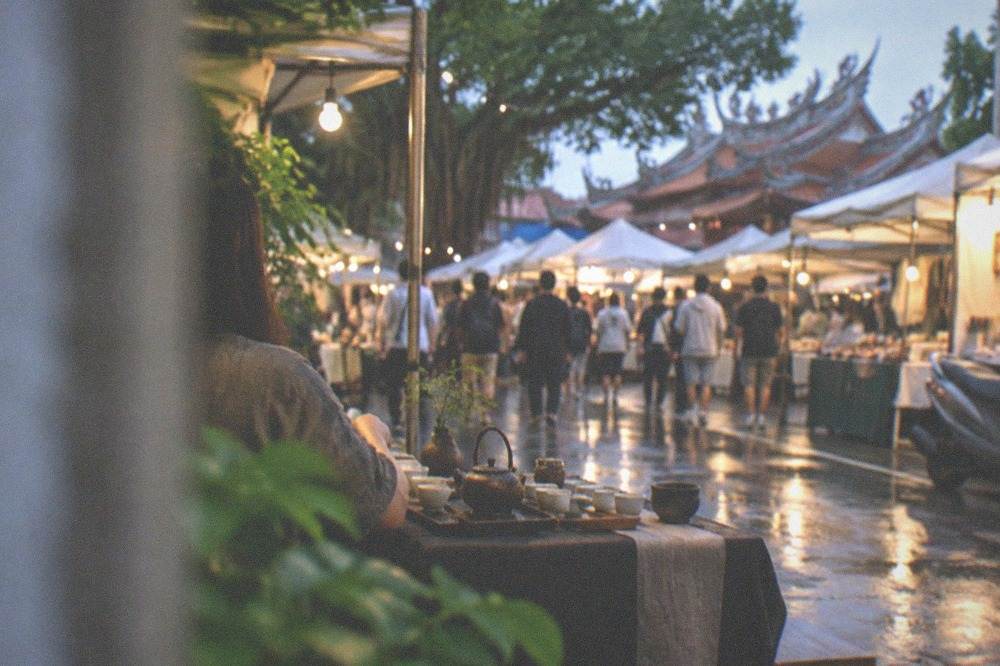
The tea ceremony is worth singling out because it is an evening-shaped activity: an hour and a half of poured oolong in a room that slows down, which is exactly the tempo a hot Tainan day argues for. It also fits the city's history, because Taiwan's tea culture and Tainan's merchant past are intertwined, and a ceremony run by a local host explains what you are drinking rather than just serving it.
The city's own festival calendar, published by the Tainan City Government Tourism Bureau, fills the year's evenings: the Yanshui Beehive Fireworks in February, on the Lantern Festival, the Taiwan International Orchid Show in March, the Qigu Seafood Festival from July to August, and Guanziling Hot Spring and Food events from September to November. The calendar gives months rather than exact dates for the lunar-based events, and the official Gregorian dates for the fireworks are published closer to the event, so check the city calendar rather than a fixed date.
One distinction worth knowing: the national Taiwan Lantern Festival is a rotating event run by the Tourism Administration, and Tainan's own Yuejin Lantern Festival is a separate, local, February-to-March event in Yanshui. A traveler who assumes the national festival is in Tainan in a given year may be in the wrong city.
How Do You Get Around Tainan at Night?
City buses are free for the first 8 km with an electronic card, on the trunk and branch network, for the 2026 calendar year, provided you tap on and tap off; the cash fare for the same trip is NT$26. The High Speed Rail station is not in central Tainan, it is at Shalun in Guiren District, so late arrivals from Taipei or Kaohsiung need a transfer to reach the old city.
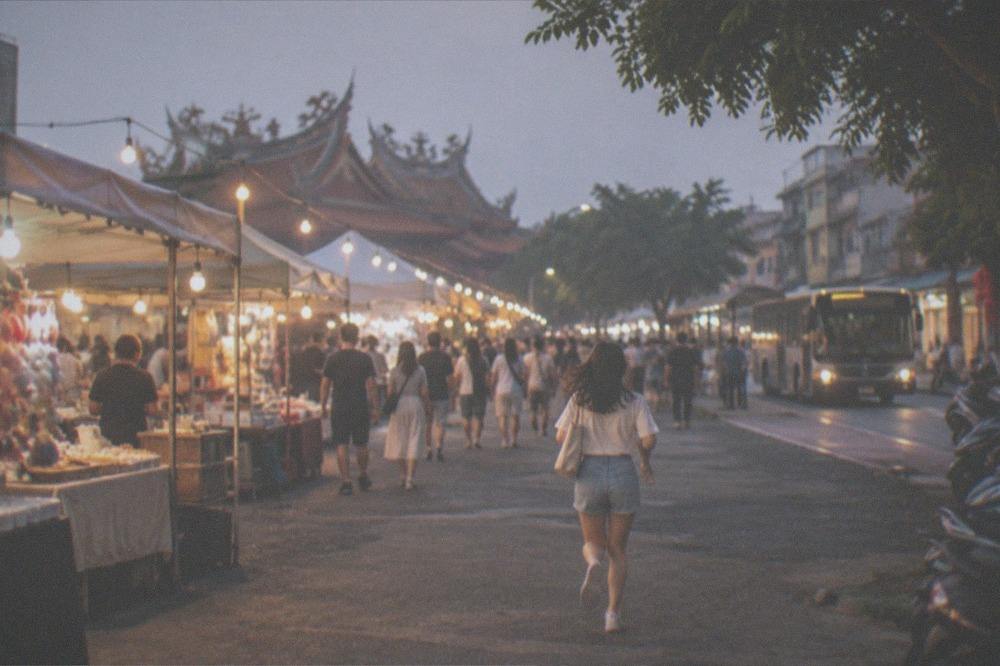
The bus deal is the city's own, published on the city bus ticketing page, and the tap-off half is the part visitors miss: forget to tap off and the free first 8 km does not apply as intended. An EasyCard or iPASS is the standard card for a visitor, and both also work at the Tainan Art Museum ticket desk. Do not assume either works on the High Speed Rail, because it does not; the HSR sells its own tickets. The scheme runs through 31 December 2026, so treat it as a current policy rather than a permanent one.
For late arrivals, the geography matters more than the fare. Taiwan High Speed Rail's own fare table lists Taipei to Tainan at NT$1,350 for a reserved standard seat and NT$1,305 non-reserved, and Zuoying, the Kaohsiung HSR station, to Tainan at NT$140 standard. But the Tainan HSR station sits at Shalun, outside the old city, and the HSR station guide covers the transfer options. The H31 HSR express bus is free for HSR passengers on production of a ticket stub, and its section break sits at the Chimei Museum, which puts the museum on the shuttle route. Other passengers pay NT$18 for one section or NT$36 for two.
| Route | Fare | Source basis |
|---|---|---|
| City bus, first 8 km, with card | Free (2026 policy) | City bus ticketing page |
| City bus, cash | NT$26 | Same page |
| H31 HSR shuttle, with HSR ticket stub | Free | Same page |
| H31 HSR shuttle, other passengers | NT$18 one section, NT$36 two | Same page |
| HSR Taipei to Tainan, standard reserved | NT$1,350 | HSR fare table |
| HSR Zuoying to Tainan, standard | NT$140 | HSR fare table |
Taxis fill the gaps, and the evening is when they matter most, since the last buses run earlier than the last night market stalls. No published Tainan taxi fare schedule was found on a city government page, so no flagfall figure appears here; agree the fare or use a meter, and carry cash, because card acceptance in taxis is not universal. The getting around guide covers the daytime picture in more detail.
When Is the Best Season for Tainan Nights?
October to March is the dry, comfortable half of the year for evening activity: October averages just 2.8 wet days while still reaching 30.8C maxima, and December brings only 16 mm of rain across about 3 wet days. Summer evenings are warmer but dramatically wetter, with August alone averaging 466 mm across 16 wet days.
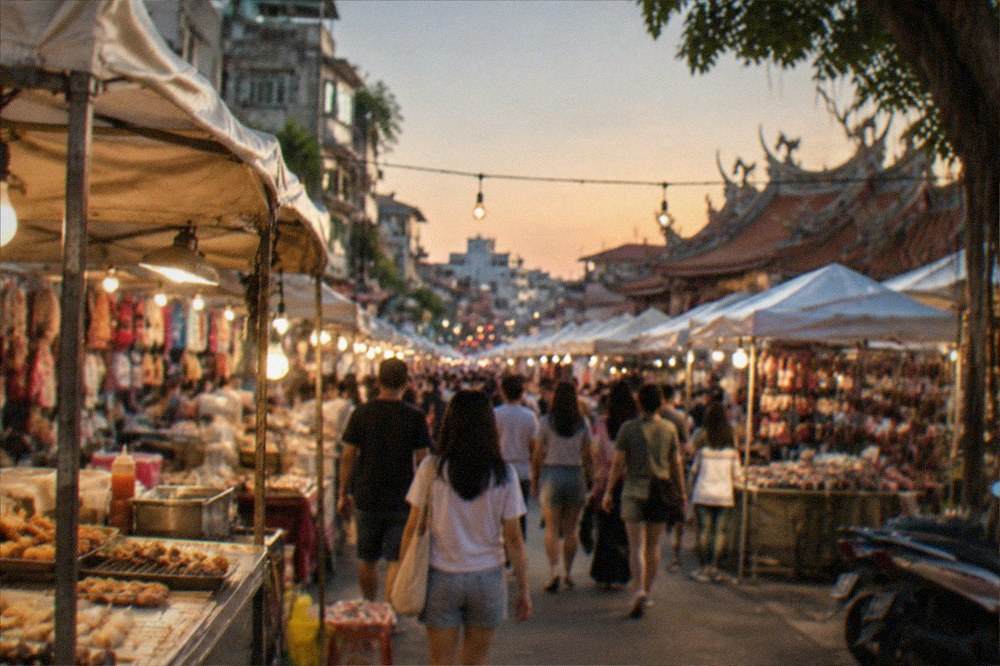
Those numbers come from the Central Weather Administration's 1991 to 2020 climate normals for the Tainan station. The shape of the year is lopsided: close to three-quarters of the annual 1,761 mm of rain falls between May and September, and typhoon risk concentrates in the late-summer months, which the rainfall table independently confirms. A winter visitor gets the lantern-lit streets without the umbrella.
| Month | Mean max (C) | Rain (mm) | Wet days |
|---|---|---|---|
| January | 23.0 | 20.7 | 3.8 |
| April | 29.3 | 69.8 | 5.9 |
| July | 33.0 | 374.6 | 13.0 |
| August | 32.6 | 466.1 | 15.8 |
| October | 30.8 | 30.8 | 2.8 |
| December | 24.4 | 16.2 | 3.0 |
There is a counter-intuitive wrinkle in the visitor data, and it argues for winter for a different reason. The Tourism Administration's own attraction dataset shows Tainan's peak visitor months are January and February, driven by temple pilgrimage and Lunar New Year, with Nankunshen Daitian Temple drawing 6,583,100 visitors in 2023 against Chihkan Tower's 443,622. Winter is both the driest season and the busiest, so book rooms early if your trip falls over Lunar New Year, and expect crowds at the temples rather than at the forts. The weather guide carries the full picture.
One safety note for summer evenings: typhoon days are declared by the city government, not nationally, and when Tainan declares one, attractions and transport may suspend. The Tainan Art Museum states on its own hours page that it closes when the city government announces a work suspension for a typhoon or earthquake, which is a concrete example of the general rule.
Where Should You Stay for Tainan's Nights?
The West Central District puts you walking distance from Chihkan Tower's late hours, Shennong Street and the Confucius Temple, while Anping trades that convenience for evening access to the old fort quarter and the canal, and the East District sits closest to Dadong Night Market. All three are workable; the choice is which night you want on foot.
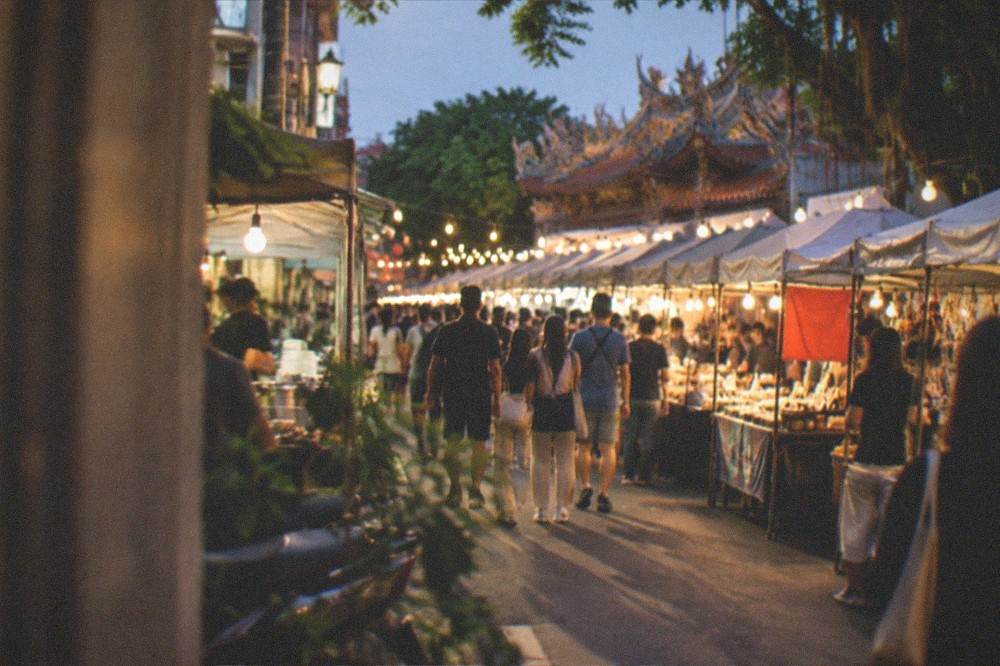
The honest framing is that Tainan's night geography is compact. The old core is walkable, the night markets sit a short bus or taxi ride from it, and the free first 8 km bus policy makes the cross-town hops effectively free with a card. A base in the West Central District means Chihkan Tower at 21:00 and the lantern streets after it are a stroll rather than a ride, which is the pattern most evening-focused travelers end up wanting. The hotels guide breaks the districts down in detail.
For travelers arriving late, the Shalun transfer is the one cost to plan around. Whether you come by High Speed Rail from Taipei or Kaohsiung, or into Tainan Airport, the old city is not where the platforms are, so an arrival after 21:00 means budgeting for a taxi from the HSR station or timing the last shuttle. This site, Tainan Travel Guide, exists to make that kind of planning legible: verified hours, verified fares, and no invented numbers.
Common Questions About Tainan at Night
Which night market should I go to in Tainan?
Match the market to your day of the week rather than to a ranking. Garden Night Market is the largest and opens Thursday to Sunday; Wusheng opens Wednesday, Friday and Saturday; Dadong opens Monday, Tuesday and Friday. On Friday all three run, and on Wednesday Wusheng is the only outdoor option, with the indoor Siaobei market open daily as the fallback.
Is Tainan safe at night?
Taiwan carries a standard, low-level travel advisory from major foreign ministries, and Tainan's old core is a busy, well-lit evening district. The practical risks are heat, traffic and typhoon-day closures rather than crime. The US State Department lists Taiwan at its lowest advisory level, and the routine precautions are the ordinary ones.
What time do Tainan night markets open?
Garden and Wusheng open at 17:00 and run to midnight. Dadong opens at 18:00 and runs to 01:00. Siaobei, which is indoors, opens at 12:00 and closes at midnight. The city updates these hours, so check the Tourism Bureau's pages before you go.
Is anything historic open late in Tainan?
Chihkan Tower is the outlier: the city's page lists it open to 21:30 daily, with admission at NT$70 at the gate. The Grand Matsu Temple is free and open to 21:00. The Tainan Art Museum extends to 21:00 on Saturdays. Most other heritage sites close between 17:10 and 17:30.
Do I need cash for Tainan at night?
Yes. Night market stalls, small eateries and many taxis work in cash, and no official price list exists for the snacks, so carry notes rather than planning to a budget figure. Convenience-store ATMs are the standard withdrawal point, and cards are reliable at hotels and larger shops but not at stalls.
What is the best month for evenings in Tainan?
October is the statistical sweet spot: the driest month by wet days, 2.8 on average, with daytime maxima still around 30.8C. December and January are cooler and nearly as dry. August is the wettest month, averaging 466 mm across 16 wet days, and typhoon risk concentrates in the late summer.
The pattern to take away is simple. Pick your nights by the market schedule, keep Friday or Saturday free for the full set, use Chihkan Tower's 21:30 closing for your after-dinner heritage hour, and carry an EasyCard for the free bus hops. Tainan's evenings are the city at its most itself, and they cost less to enjoy than almost anywhere else in Taiwan.