Tainan Hotels by Area
Tainan's hotel map is really two clusters and two outliers: the old city around Chihkan Tower, the historic waterfront at Anping, the night market belt to the east, and the High Speed Rail station out at Shalun, which is not in the city at all.
Short answer
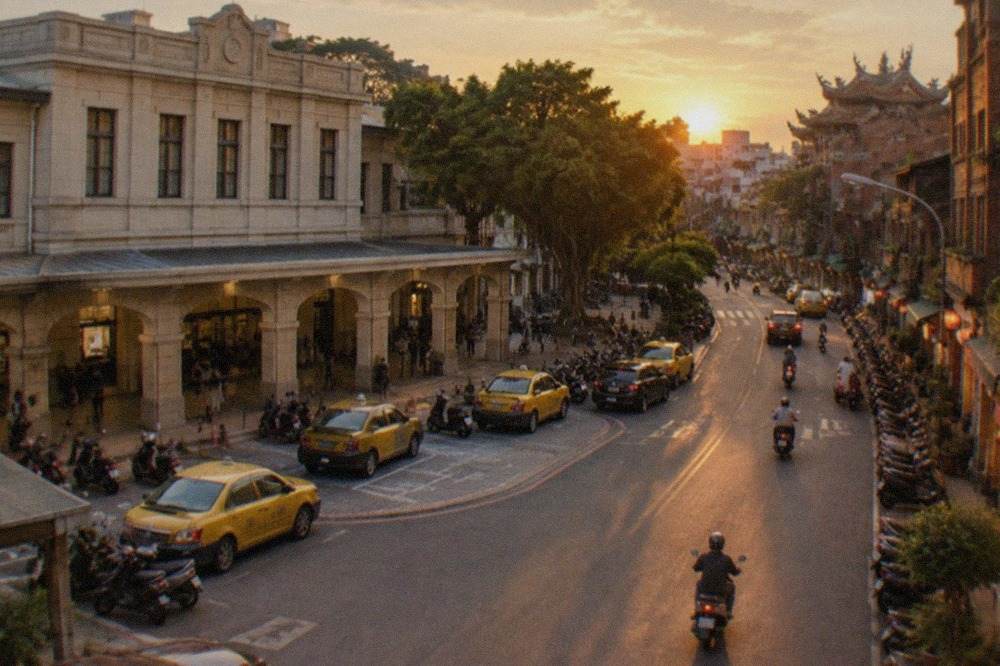
Stay in the old city around Chihkan Tower for a first visit: it is walkable, open late, and sits between the temples and the food streets. Anping suits a slower, history-focused stay. The East District puts you beside Dadong Night Market. The HSR station at Shalun is convenient only for a departure, not for sightseeing.
Tainan rewards the visitor who sleeps in the right place, because the city's appeal is scattered across a handful of districts and the distances between them are real. The old city holds the temples, the Dutch-era sites and the famous food streets. Anping, on the old waterfront, holds the fort history and the tree house. The East District holds one of the big rotating night markets. And the High Speed Rail station sits at Shalun in Guiren District, well outside all of it, which is the single fact most first-time visitors get wrong when they book a "station" hotel. This guide walks through each area, what it is good for, and the verified transport and scheduling facts that should shape the booking.
Which Area of Tainan Should You Stay In?
For a first visit, the old city around Chihkan Tower is the strongest base: it is the densest cluster of temples, historic sites and food streets in Tainan, it stays lively late because Chihkan Tower itself is open until 21:30, and the main bus corridors run through it. Anping suits a second stay or a history-focused trip. The East District works if night markets are the priority. Shalun, where the High Speed Rail station actually is, suits nobody except an early-morning departee.
The honest starting point is that hotel rates are live data, and this site does not publish them: nightly prices move with the season and the booking channel, so any number printed here would be stale by the time you read it. What does not move is geography, and geography is what a hotel decision in Tainan is really about. The city's attractions fall into two clusters, the old city and Anping, with the night markets strung along the eastern side, and the Tainan Travel Guide area pages cover exactly those clusters.
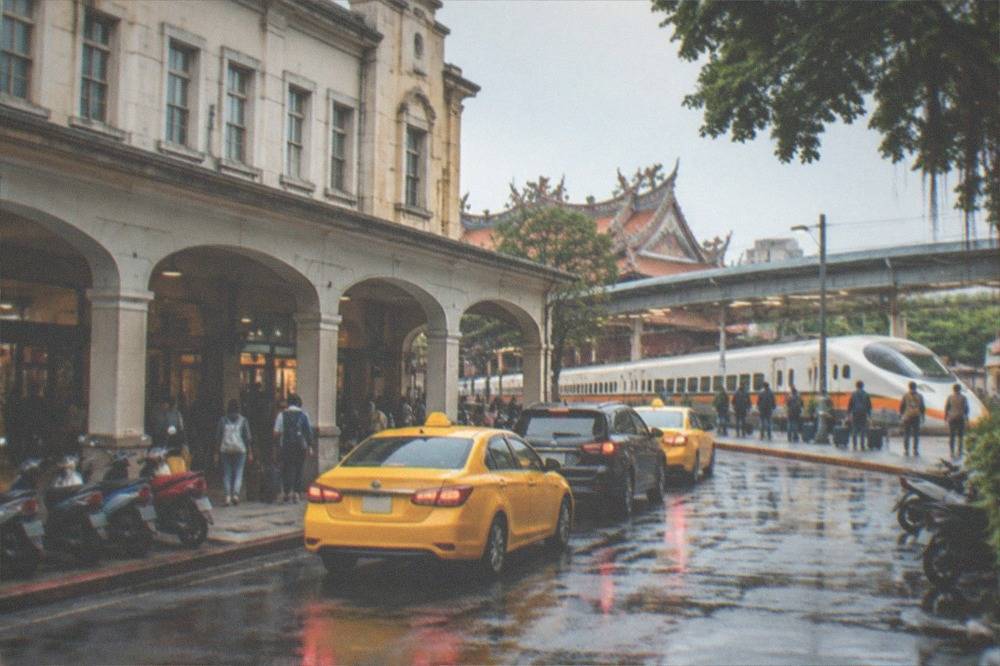
One structural fact should anchor the whole decision: the Tainan High Speed Rail station is at Shalun in Guiren District, outside the old city. A hotel "near the station" is a hotel a long way from Chihkan Tower, the Confucius Temple and Garden Night Market. Our guide to the HSR station covers the transfer options in detail.
A second fact matters just as much: the night markets rotate by day of the week, so no single hotel puts you beside a big market every night. Where you sleep decides which market is walkable on which night, not whether one is nearby.
| Area | Best for | Walkable highlights | The catch |
|---|---|---|---|
| Old city (West Central District) | First visits, food, temples | Chihkan Tower, Confucius Temple, Grand Matsu Temple, Guohua Street | Busiest, thinnest streets |
| Anping | Fort history, waterfront, slower pace | Anping Old Fort, Anping Tree House, Anping Old Street | Quieter at night, away from the food core |
| East District | Night market access | Dadong Night Market on its open nights | Fewer daytime sights |
| Shalun / Guiren | Early HSR departures only | The station itself | Far from every attraction |
Where to Stay in the Old City Around Chihkan Tower?
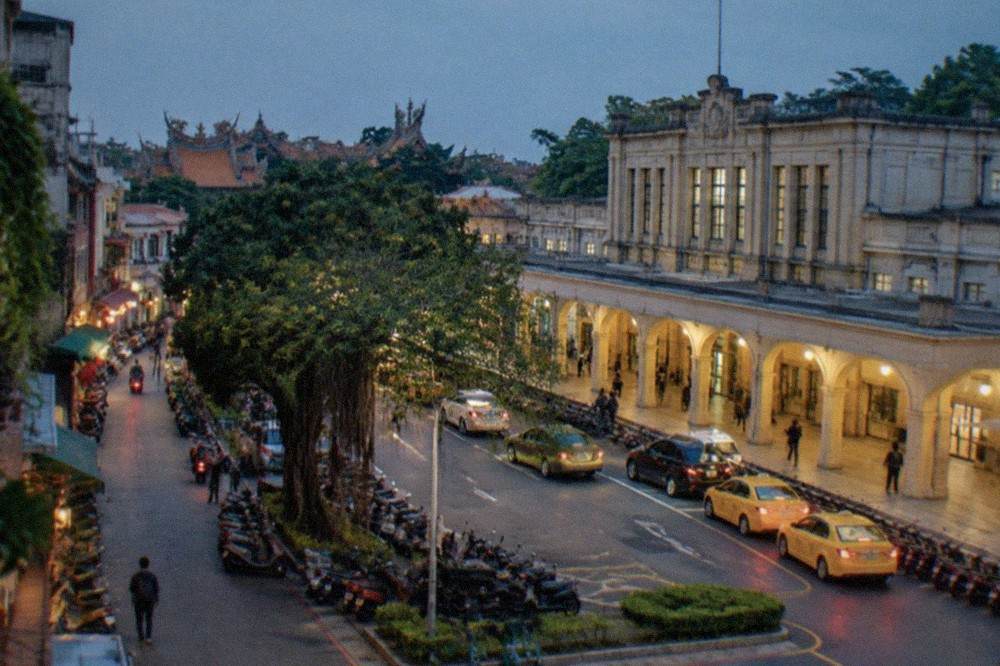
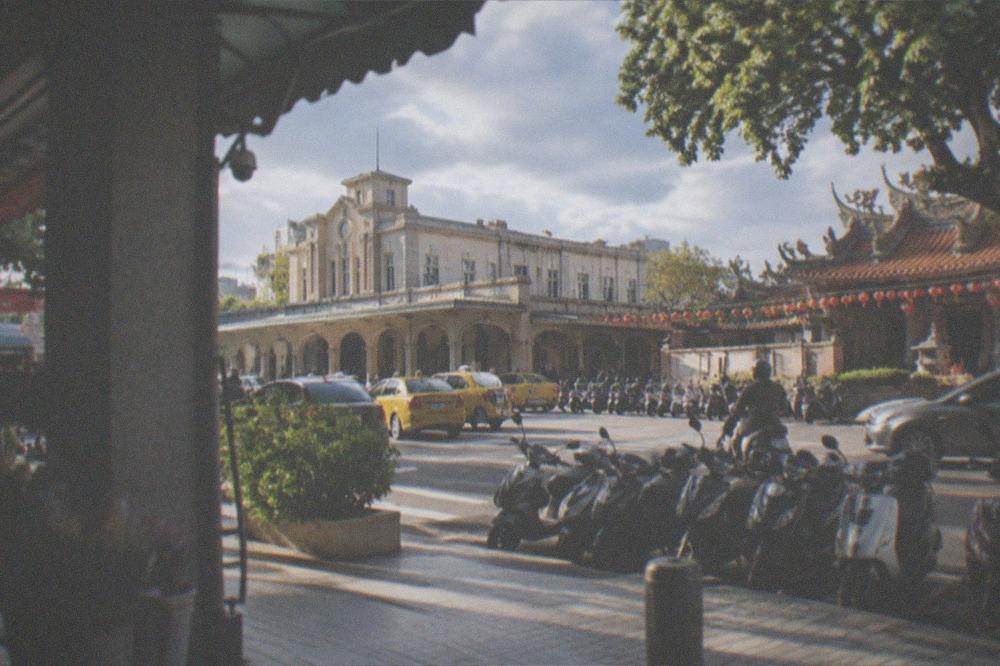
The old city, roughly the West Central District around Chihkan Tower, is where most visitors should book, because the densest run of Tainan's sights sits within a walkable grid: Chihkan Tower, the Confucius Temple, the Grand Matsu Temple, the Official God of War Temple and the Guohua Street food lanes. Chihkan Tower's own hours, 08:30 to 21:30 daily, mean the neighborhood stays active after dinner, which is rare among Tainan's historic sites.
The Tourism Bureau's page for Chihkan Tower lists admission at NT$70 at the gate, with half-price concessions and free entry for Tainan residents with ID, and the late closing time is the detail worth noticing. Most of the city's heritage sites shut between 17:00 and 17:30. Chihkan Tower is the exception, so an old-city hotel buys you an evening sight, not just a daytime one. The Chihkan Tower guide covers the site's Dutch history, which the Tourism Bureau's own Chihkan Tower page dates to the early 1650s under the name Fort Provintia.
The food argument for the old city is even stronger than the sightseeing argument. Danzai noodles, coffin bread and beef soup all cluster in and around this grid, and the Tainan food guide maps the streets that matter. Guohua Street, a few minutes on foot from Chihkan Tower, is the single densest snack corridor the city has.
Practically, the old city is also where the bus network is thickest. City buses are free for the first 8 km with an electronic card, Citizen Card, iPASS, EasyCard or iCash 2.0, on the trunk and branch routes, and you must tap on and tap off. The getting around Tainan guide explains the scheme, which the city's own bus site says runs through the 2026 calendar year. The cash fare for the same trip is NT$26, so a card is worth sorting on arrival day.
Where to Stay in Anping?
Anping, the old waterfront district, suits a slower, history-focused stay: Anping Old Fort, the Anping Tree House and Anping Old Street form a compact cluster of the city's oldest European-era sites, and the Tourism Bureau's pages list all three at NT$70 admission with daily hours from 08:30 or 10:00. The trade is that Anping is quieter at night and sits apart from the old city's food lanes, so it rewards a visitor who plans to eat in the old city and sleep by the water.
Anping is where the Dutch East India Company landed in 1624 and began Fort Zeelandia, according to the Tourism Bureau's own page for the site, and the fort was completed in 1634. After Koxinga took it in 1662 the place was renamed Anping. The Bureau is also candid about what survives: the only genuine Dutch-period remains at the fort are the brick walls of the south outer rampart, and most of what visitors photograph is Japanese-era rebuilding plus a 1975 city renovation. The Anping Old Fort guide tells that story in full.
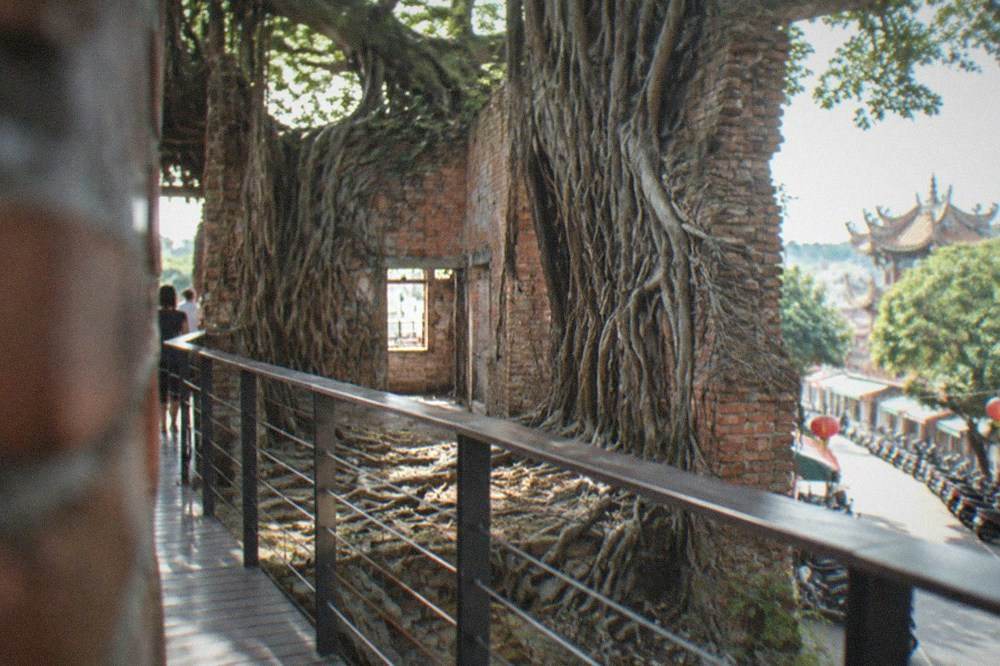
The Anping Tree House, a former warehouse swallowed by banyan roots, is the district's most photographed sight, open 08:30 to 17:30 with the same NT$70 gate price. The Anping Tree House page covers it. Whether one ticket covers the adjacent Former Tait & Co. Merchant House is not confirmed by the city's pages, so treat them as separate until the on-site notice says otherwise.
For the practical side, Anping sits on the canal and the bus routes that link it to the old city, and the Anping district guide covers the fuller picture. The visitor numbers are worth knowing too: the Tourism Administration's 2023 dataset shows Anping as a district drew 4,441,443 visitors against Chihkan Tower's 443,622, so the district is popular, but the crowds are daytime crowds that thin after the sites close at 17:30.
The Anping qipao rental experience above is a natural fit for this district: full-day rental means the photos happen on the old streets and around the fort, not in a studio, and Anping's historic backdrops are the reason travelers rent the dress at all.
Should You Stay Near the Tainan HSR Station?
No, unless your only requirement is an early High Speed Rail departure: the station is at Shalun in Guiren District, well outside the old city, and reaching central Tainan from it means a transfer, by shuttle bus, by the Shalun railway line or by taxi. A hotel there saves you a morning ride once and costs you a ride every evening for the length of your stay, which is a bad trade for anyone whose trip is about the old city.
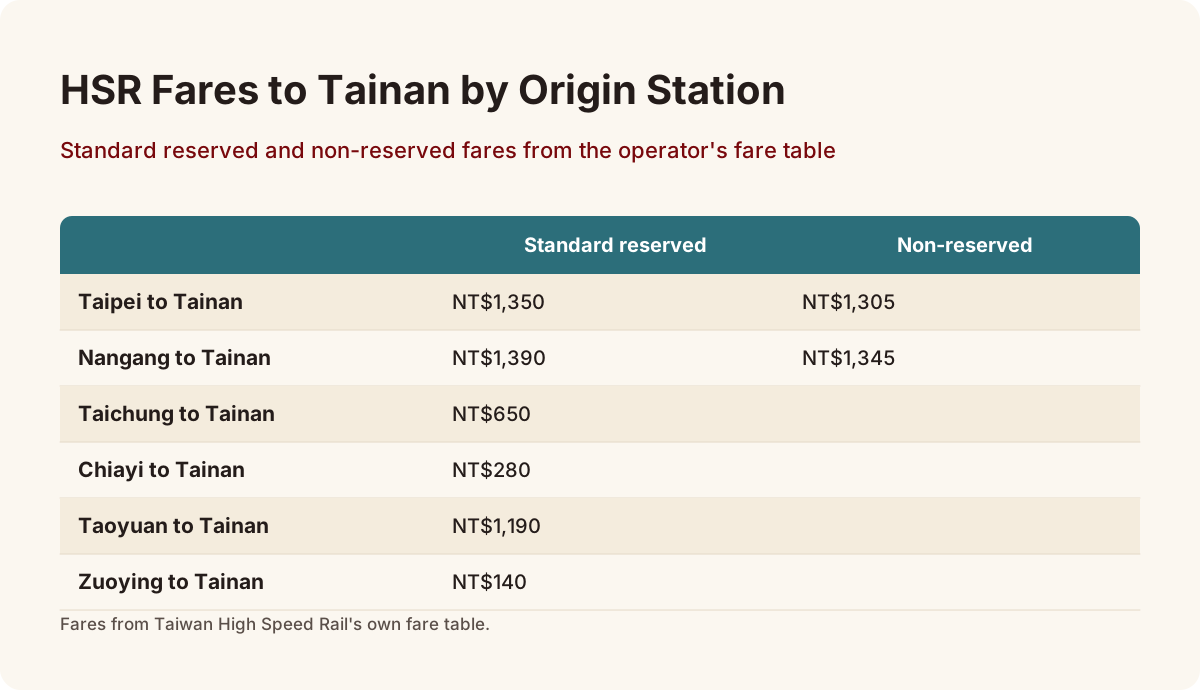
The fare facts are verified and worth carrying. Taiwan High Speed Rail's own fare table lists Taipei to Tainan at NT$1,350 for a reserved standard seat, NT$1,305 non-reserved, and Zuoying, the Kaohsiung HSR station, to Tainan at NT$140 standard. Taichung is NT$650, Chiayi NT$280, Taoyuan NT$1,190 and Nangang NT$1,390. Those numbers come from the operator's grid, and the grid has a trap: the upper-right triangle is Business Car pricing, and Taipei to Tainan in Business Car is NT$2,230, so a careless read overstates the fare by 65 percent. The Taiwan High Speed Rail guide and the Taipei to Tainan page unpack all of this.
The one genuinely useful transfer fact is the H31 shuttle. The city's bus site confirms the H31 Tainan City Government Line express bus is free for HSR passengers on production of a ticket stub, with no card tap needed, while other passengers pay NT$18 for one section or NT$36 for two, with the section break at the Chimei Museum. That last detail matters for hotel planning in an unexpected way: the Chimei Museum sits on the shuttle route, so a museum day and an HSR day can share the same corridor. The Chimei Museum guide covers the museum, which charges NT$200 for the permanent collection, last entry 17:00, and is closed every Wednesday.
| HSR route | Standard reserved | Non-reserved |
|---|---|---|
| Taipei to Tainan | NT$1,350 | NT$1,305 |
| Nangang to Tainan | NT$1,390 | NT$1,345 |
| Taoyuan to Tainan | NT$1,190 | NT$1,150 |
| Taichung to Tainan | NT$650 | NT$630 |
| Chiayi to Tainan | NT$280 | NT$270 |
| Zuoying to Tainan | NT$140 | see operator |
Where Should Night Market Fans Stay in Tainan?
Stay in the East District if the rotating night markets are your priority, because Dadong Night Market, open Monday, Tuesday and Friday from 18:00 to 01:00, is the big market you can walk to from there, and the indoor Siaobei Night Market runs every day from 12:00 to 00:00 as the wrong-night backup. No hotel in Tainan sits beside a big outdoor market that opens nightly, because none of them does: the schedule, not the address, decides your market night.
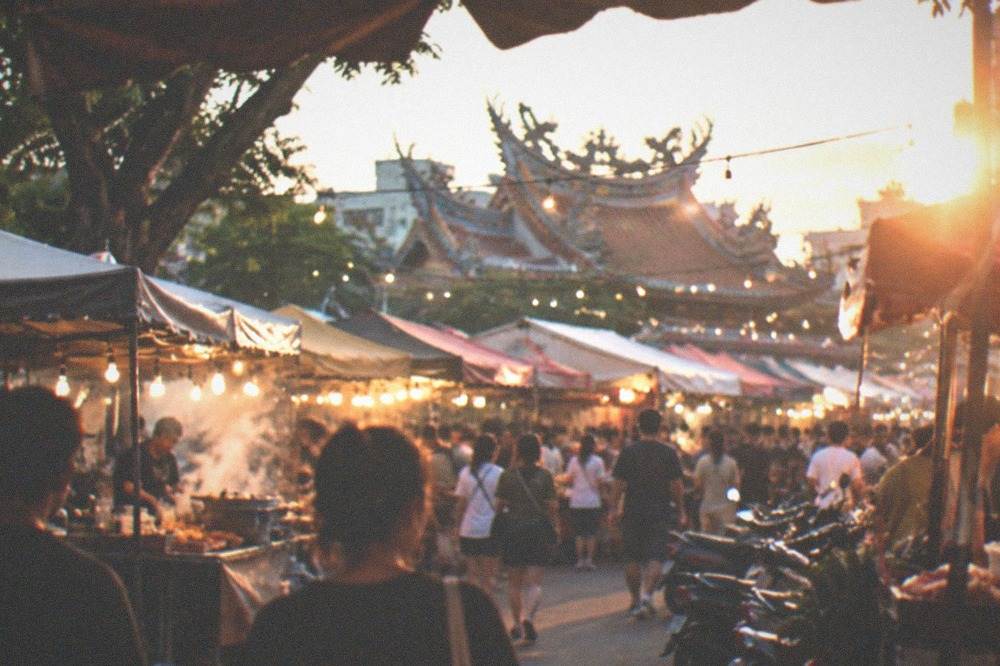
The rotation is the single most useful practical fact in this city, and it is verified market by market from the Tourism Bureau's own pages. Garden Night Market opens Thursday, Friday, Saturday and Sunday, 17:00 to 00:00. Wusheng opens Wednesday, Friday and Saturday, 17:00 to 00:00. Dadong opens Monday, Tuesday and Friday, 18:00 to 01:00. Siaobei is indoors and daily, 12:00 to 00:00. Friday is the only night when all three big outdoor markets run at once, and Wednesday is the thinnest, with Wusheng alone. Always check before you go, because the city updates these pages and the days do change.
| Night | Big outdoor markets open |
|---|---|
| Monday | Dadong |
| Tuesday | Dadong |
| Wednesday | Wusheng |
| Thursday | Garden |
| Friday | Dadong, Wusheng and Garden |
| Saturday | Wusheng, Garden |
| Sunday | Garden |
Siaobei, being indoors and daily, is the wet-weather answer, and it pairs with the advice in our Tainan rainy day guide. The Tainan night markets guide carries the full breakdown, and the Garden Night Market page covers the biggest of the three.
For an old-city hotel guest, the practical read is this: Garden Night Market is a bus or taxi ride north, Wusheng is close to the west, and Dadong is east, so plan the market night into the day's route rather than treating it as a doorstep option. The Tainan after dark guide does that routing for you.
When Is the Best Time of Year to Book a Tainan Hotel?
October to March is the comfortable window: the Central Weather Administration's 1991 to 2020 normals for Tainan show October averaging just 2.8 wet days while still reaching 30.8C maxima, and December dropping to 16 mm of rain across 3 wet days, against August's 466 mm across 16. Visitor demand peaks in January and February, driven by temple pilgrimage and Lunar New Year, so the best weather and the busiest hotels overlap, and booking early for that window matters.
The climate table is worth reading twice, because it inverts the European instinct. Tainan's rain is almost entirely a summer event: close to three-quarters of the annual 1,761 mm falls between May and September, and August alone carries 466 mm. Meanwhile the city records 186 days a year above 30C, so the winter half of the year is dry but still warm, with January averaging a 23.0C maximum. The Tainan weather guide carries the full month-by-month table, and the best time to visit guide turns it into a booking calendar.
| Month | Mean max | Rain mm | Wet days |
|---|---|---|---|
| January | 23.0C | 20.7 | 3.8 |
| April | 29.3C | 69.8 | 5.9 |
| July | 33.0C | 374.6 | 13.0 |
| August | 32.6C | 466.1 | 15.8 |
| October | 30.8C | 30.8 | 2.8 |
| December | 24.4C | 16.2 | 3.0 |
The visitor numbers tell the same story from the demand side. The Tourism Administration's 2023 dataset shows Nankunshen Daitian Temple drawing 6,583,100 visitors with January as its peak month, and Anping district peaking in February. Tainan's high season is the temple and Lunar New Year season, not the summer. One caveat belongs here: those counts are compiled by each operator, methods differ between a ticketed museum and an open old street, and the 2020 to 2022 years are COVID-depressed.
Typhoon risk concentrates in the late summer months, and the Taiwan typhoon season guide explains what a declared typhoon day means: the city government, not a national body, announces the suspension, and attractions follow suit. The Tainan Art Museum, for instance, states on its own hours page that it closes when the city announces a work suspension for a typhoon or earthquake.
How Do You Get Around Tainan from Your Hotel?
City buses are free for the first 8 km with an electronic card on the trunk and branch routes, the cash fare for the same trip is NT$26, and you must tap on and tap off, with tap off being the step visitors miss. An EasyCard or iPASS works on the city buses and at the Tainan Art Museum ticket desk, but not on the High Speed Rail, so the card solves the city and the train remains a separate ticket.
The bus scheme is the reason a central hotel matters less than you might fear: the old city, Anping and the East District are all stitched together by the colored trunk routes, and the city's own bus site states the free-first-8 km policy in English for the 2026 calendar year. It is a renewed annual policy, not a permanent one, so re-check it before each January trip. The Tainan bus guide and the EasyCard in Tainan page cover the mechanics.
Scooter rental deserves a careful sentence, because the honest answer is conditional. An International Driving Permit is not automatically sufficient in Taiwan: the country expects an IDP to be registered at a Motor Vehicles Office, and rental shops may refuse without it. Do not assume you can simply turn up with an IDP, and do not assume you cannot: the official Motor Vehicles Office page is the place to check before you ride. The Tainan scooter rental guide carries the full picture.
Taxis and public bikes both exist, but no verified Tainan taxi fare schedule or public bike fare was available to this site at writing, so we print no numbers for either. What is verified: the bus transfer discount page names public bicycles as a mode that breaks the bus transfer discount, so a bike leg between a train and a bus costs you the NT$9 transfer reduction. The Tainan YouBike guide and the Tainan taxi page explain what is and is not confirmed.
What Should You Do Near Your Hotel on the First Evening?
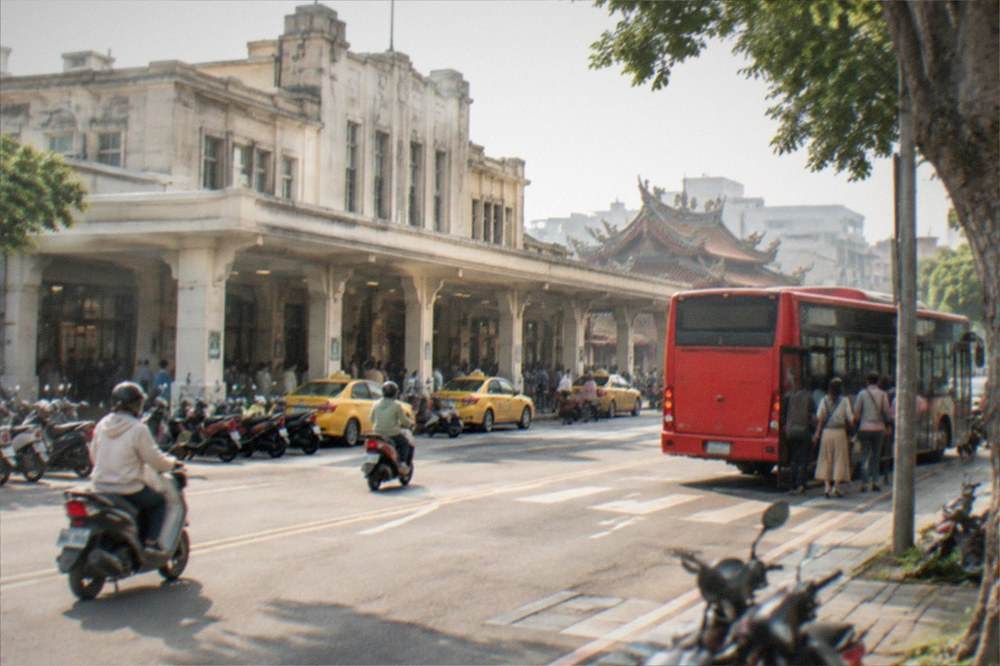
Start with food, then Chihkan Tower: the old city's snack lanes run late, and Chihkan Tower's 08:30 to 21:30 daily hours make it the one heritage site you can see after dinner, at NT$70 at the gate. In Anping, the equivalent evening is the old street and the canal, since the fort and tree house close at 17:10 and 17:30, so plan those for the morning and save the waterfront for dusk.
The old city's evening strengths are the reason this guide keeps recommending it. Beef soup is a dawn dish in Tainan, and the Tainan beef soup guide explains the breakfast tradition, but danzai noodles and coffin bread are evening foods, and both cluster within the old-city grid, covered in their own pages on danzai noodles and coffin bread. A first evening that walks the Guohua Street lanes and ends under Chihkan Tower's floodlights uses the neighborhood's hours exactly as they are designed.
Anping works the other way around. Its sights are morning sights, its old street is an afternoon stroll, and its evening is quiet, which is precisely why some travelers choose it: the district empties after the day-trippers leave. The Anping old street guide and the Anping canal page cover the waterfront walk.
If your first evening lands on a Friday, you have a choice no other night offers: all three big outdoor markets run. If it lands on a Wednesday, Wusheng is your only big outdoor option, and Siaobei's indoor daily schedule is the fallback.
A guided evening walk is a sensible first-night move for exactly this reason: the old city's food lanes are dense enough that a local route saves you a night of guessing, and the six-hour version above includes the snacks themselves.
Common Questions About Tainan Hotels and Areas
What is the best area to stay in Tainan?
The old city around Chihkan Tower is the best base for a first visit: it is the densest cluster of temples, food streets and historic sites, and Chihkan Tower stays open until 21:30, so the neighborhood stays lively after dark. Anping suits a slower, history-focused stay, and the East District suits night market fans.
Is it better to stay near the Tainan HSR station?
Only for an early departure. The HSR station is at Shalun in Guiren District, outside the old city, and reaching central Tainan requires a transfer by the H31 shuttle, the Shalun railway line or a taxi. The H31 shuttle is free with an HSR ticket stub, but that saves you one ride, not the nightly rides back from the sights.
Can you walk from Tainan hotels to the night markets?
It depends on the night, because Tainan's big outdoor markets rotate by day of the week. Garden opens Thursday to Sunday, Wusheng Wednesday, Friday and Saturday, Dadong Monday, Tuesday and Friday. Friday is the only night all three run. Siaobei Night Market is indoors and open every day, noon to midnight, and is the wrong-night and wet-weather answer.
Are Tainan city buses free for hotel guests?
City buses are free for the first 8 km with an electronic card, EasyCard, iPASS, iCash 2.0 or a Citizen Card, on the trunk and branch routes, and you must tap on and tap off. The cash fare for the same trip is NT$26. The city lists the scheme as running through the 2026 calendar year, so treat it as a current policy rather than a permanent one.
When is hotel demand highest in Tainan?
January and February, driven by temple pilgrimage and Lunar New Year, which is also the dry, comfortable half of the year. The Central Weather Administration's normals show October to March as Tainan's driest period, so the best weather and the busiest hotels overlap, and early booking for that window pays off.
Is Anping too far from the old city for a first stay?
Not too far, but different in character. Anping's sights, the Old Fort and the Tree House, close between 17:10 and 17:30, and the district quiets down after dark, while the old city's food lanes run late. Anping rewards a visitor who plans waterfront mornings and old-city evenings, with the bus corridors linking the two.
A day tour is the one booking that makes a Shalun or East District hotel work harder: the Ten Drum, Salt Mountain and Jingzaijiao salt fields trip above collects the coastal sights that sit well beyond walking range of any hotel, so a distant base costs you less when the coast comes to you by coach.
The pattern that emerges from all of this is simple enough to plan around. Tainan's hotel decision is a decision about evenings: the old city gives you late food and a late heritage site, Anping gives you quiet mornings by the water, the East District gives you a walkable market on its open nights, and Shalun gives you a train and not much else. Pick the evenings you want, check the market rotation for your dates, carry an EasyCard for the free first 8 km, and the rest of the city is within reach from wherever you sleep.