Tainan Airport
Tainan has its own airport, and that surprises a lot of travelers planning a trip to Taiwan's old capital. Here is what the airport actually is, what it does not offer, and how the arrival math works against Taoyuan and Kaohsiung.
Short answer
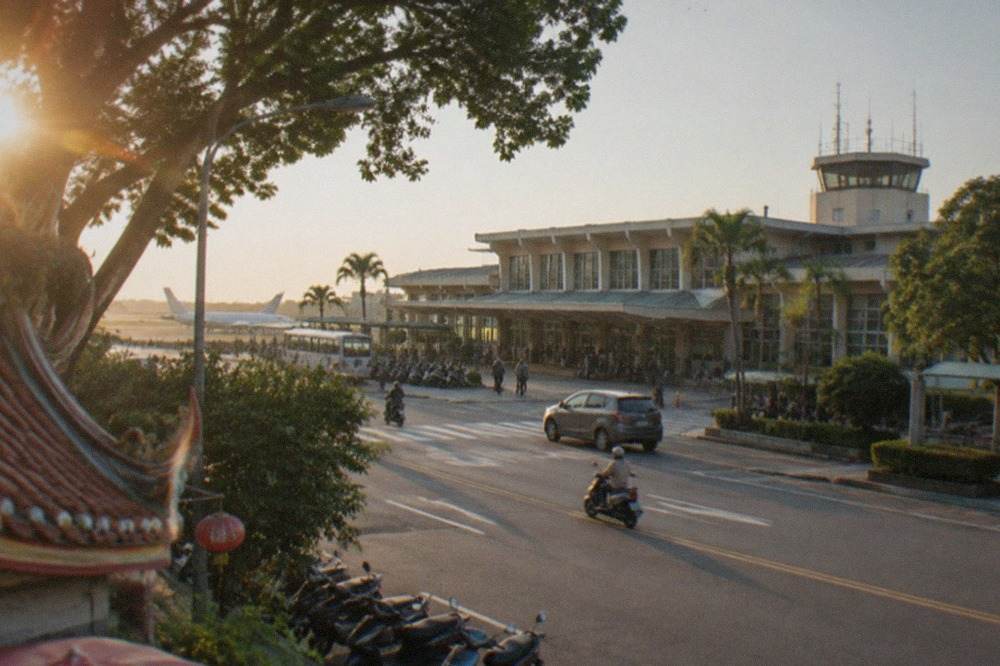
Tainan Airport is a small airport in the city's South District handling a handful of domestic and short-haul routes. Most international visitors do not fly into it: they arrive at Taoyuan or Kaohsiung and continue to Tainan by High Speed Rail.
Tainan Airport sits inside the city itself, in the South District, which is a rarer thing than it sounds: most visitors to Taiwan's old capital never touch it at all. The airport is small, its route list is short, and the overwhelming majority of international arrivals reach Tainan through Taoyuan (TPE) near Taipei or Kaohsiung (KHH) in the south, then finish the journey on the High Speed Rail. That does not make the airport useless. For anyone already inside Taiwan, or arriving on one of the few short-haul international services, it is the only arrival point that puts you in the city rather than an hour of transfers away from it.
This page lays out what the airport is, what you can and cannot fly there, how the transfer into the city center works, and the honest arithmetic of choosing between Tainan Airport and the big hubs. The short version: the airport is a convenience for domestic hops, and for everyone else the Taiwan High Speed Rail does the heavy lifting.
What Kind of Airport Is Tainan Airport?
Tainan Airport, coded TNN, is a small airport in the city's South District, a short distance from the historic center, handling a handful of domestic services and a small number of short-haul international routes. It is not a hub, it has no long-haul services, and most international visitors to Tainan never pass through it, arriving instead at Taoyuan or Kaohsiung and continuing by High Speed Rail.
That structural picture is the safe, honest summary, and it is the one this site reports. The airport's own schedule pages are the authority on which carriers and destinations are current on any given day, and the list is short enough that it changes the shape of a trip plan rather than a detail in one. The airport sits close enough to the city center that ground transfer is a minor part of the journey compared with the HSR station, which is not in Tainan at all but at Shalun in Guiren District, well outside the old city.
For orientation, the contrast between the two arrival points is worth fixing in your head early:
| Arrival point | Where it actually is | Distance from the historic center | Who it suits |
|---|---|---|---|
| Tainan Airport (TNN) | South District, inside the city | Short ground transfer | Domestic travelers, some short-haul arrivals |
| Tainan HSR station | Shalun, Guiren District, outside the old city | Requires a transfer to reach the center | Almost everyone arriving by High Speed Rail |
The practical consequence is simple and slightly counterintuitive. Flying into Tainan Airport, when a suitable route exists, can put you closer to your hotel than the bullet train does. The trade is that the route list is thin, and a thin route list means fewer flights, fewer fallbacks when a cancellation happens, and prices set by whatever limited competition exists on each route.
Which Airlines and Routes Serve Tainan Airport?
Tainan Airport operates a small number of domestic services within Taiwan plus a few short-haul international routes to nearby destinations in the region. The exact carrier list, destinations and frequencies change often enough that no static list should be trusted: the airport's own flight schedule pages publish the current routes, and that is where the live answer lives. This site does not print a route list, because a route that is current when an article is written may not be current when you book.
The airport publishes its own arrivals and departures information, and the honest instruction is to read it directly rather than rely on any secondhand summary: the airport's own flight schedule is the primary source for what flies where on the day you are planning.
What can be said structurally, and what matters for planning, is this. The domestic side of the airport connects Tainan to Taiwan's outlying islands, which is the part of the network with real everyday utility: island-hopping to Penghu or Kinmen from Tainan is far more sensible than backtracking through Taipei. The international side is limited to short-haul regional services, a few days a week at most, which makes the airport a niche entry point rather than a general one.
If your itinerary is Taiwan-only, the domestic routes are worth a look. If your itinerary starts outside Taiwan, the realistic advice is to plan around Taoyuan or Kaohsiung and treat a Tainan Airport arrival as a lucky bonus if a route happens to fit. Our getting around Tainan guide covers what happens after you land, whichever airport that is.
For travelers building a first visit around the city's sights rather than its transport, a pass that bundles the city's sightseeing bus line with an attraction ticket removes most of the arrival-day friction:
How Do You Get from Tainan Airport Into the City Center?
Tainan Airport's location inside the South District puts it among the closest airports in Taiwan to the city it serves, so the transfer into the historic center is short by taxi and covered by the city's bus network. City buses are free for the first 8 km with an electronic card, Citizen Card, iPASS, EasyCard or iCash 2.0, provided you tap on and tap off; the cash fare for the same trip is NT$26. That free-first-8-km policy runs through the 2026 calendar year.
The bus detail is the one worth memorizing, because it applies to the whole city and not just the airport run. The free first 8 km applies on the trunk and branch route network, the green, blue, brown, orange, yellow and red routes, and the condition that trips up visitors is the tap off: forget it and the discount does not apply. The scheme is an annual policy, renewed for 2026, so treat it as current rather than permanent and re-check before a later trip. The city's own bus ticketing page sets out the full conditions.
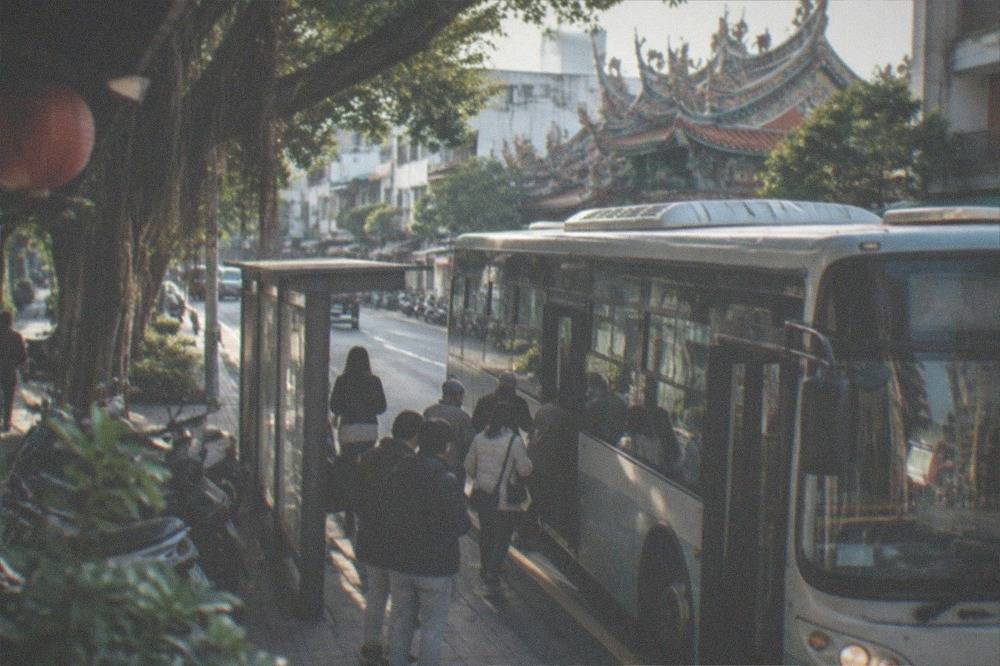
Taxis complete the picture for door-to-door arrivals, and this site does not publish a fare for them, because no verified Tainan taxi fare schedule exists to publish. What can be said is that the airport-to-center distance is short by the standards of airport transfers generally, and that a visitor with luggage late at night will find a taxi the simple option even without a published price. For everything after the first day, the Tainan bus network and an EasyCard cover most of what a visitor needs.
If you are landing with a day of sightseeing already in mind, the sightseeing bus line that loops the city's major sites can be bundled with an attraction ticket in one purchase:
Should You Book Anything Before You Land?
Most of Tainan is not a booking, and that is worth saying plainly before any product gets mentioned. Temples, old streets, the canal and the free-entry sites cost nothing and need no ticket. The one thing worth arranging ahead is the handful of timed or distance-heavy experiences: a boat ride on the lagoon coast, a day tour out to the salt country, or a private guide if your days are short. Everything else can be decided on the ground, and deciding it on the ground is half the pleasure of a city whose famous food is spread across night markets that rotate by day of the week.
Should You Fly Into Tainan or Arrive via Taoyuan or Kaohsiung?
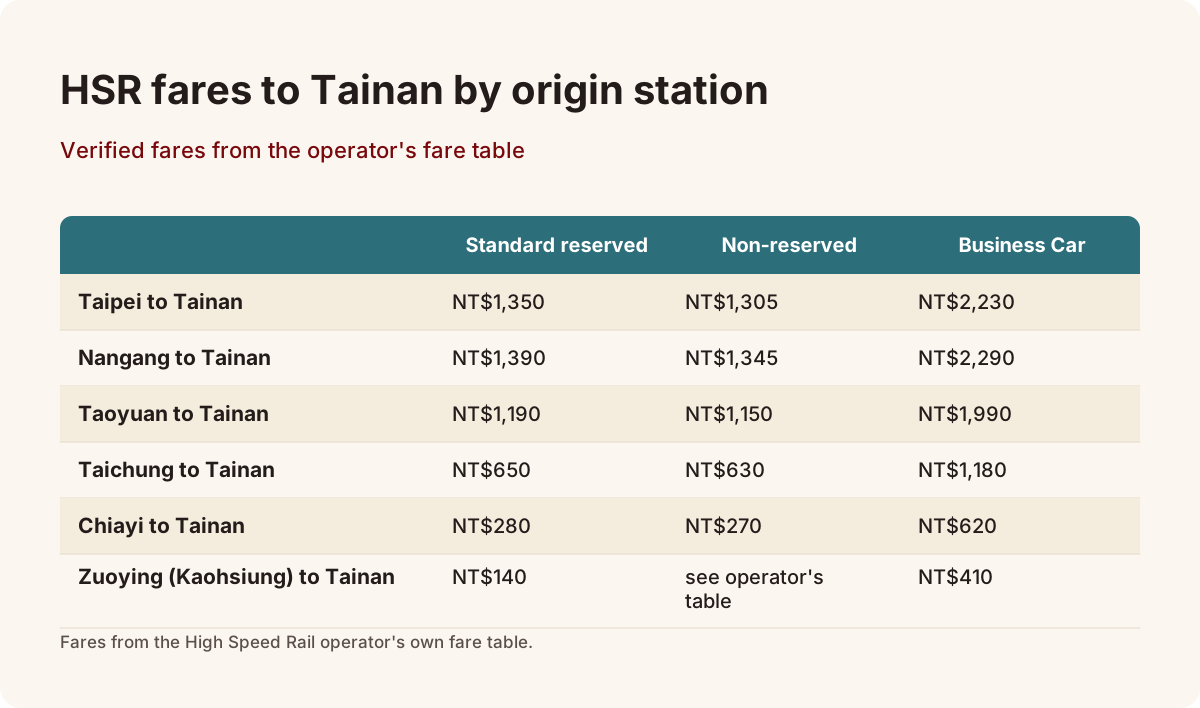
For most international visitors, arriving through Taoyuan or Kaohsiung and continuing by High Speed Rail beats flying into Tainan Airport, because the HSR runs at high frequency on a verified fare of NT$1,350 standard reserved from Taipei and NT$140 from Zuoying near Kaohsiung, while Tainan Airport offers only a handful of short-haul routes. The exception is the domestic island-hopper: if your trip includes Penghu or Kinmen, Tainan Airport is the natural gateway.
The High Speed Rail fares come from the operator's own fare table, and they are worth reading carefully because the table is a single grid where the lower-left triangle holds Standard Car fares and the upper-right holds Business Car: a careless read of that grid reports the NT$2,230 business fare as the Taipei to Tainan price and overstates the real standard fare by roughly 65 percent. The verified numbers:
| Route | Standard Car, reserved | Non-reserved | Business Car |
|---|---|---|---|
| Taipei to Tainan | NT$1,350 | NT$1,305 | NT$2,230 |
| Nangang to Tainan | NT$1,390 | NT$1,345 | NT$2,290 |
| Taoyuan to Tainan | NT$1,190 | NT$1,150 | NT$1,990 |
| Taichung to Tainan | NT$650 | NT$630 | NT$1,180 |
| Chiayi to Tainan | NT$280 | NT$270 | NT$620 |
| Zuoying (Kaohsiung) to Tainan | NT$140 | see operator's table | NT$410 |
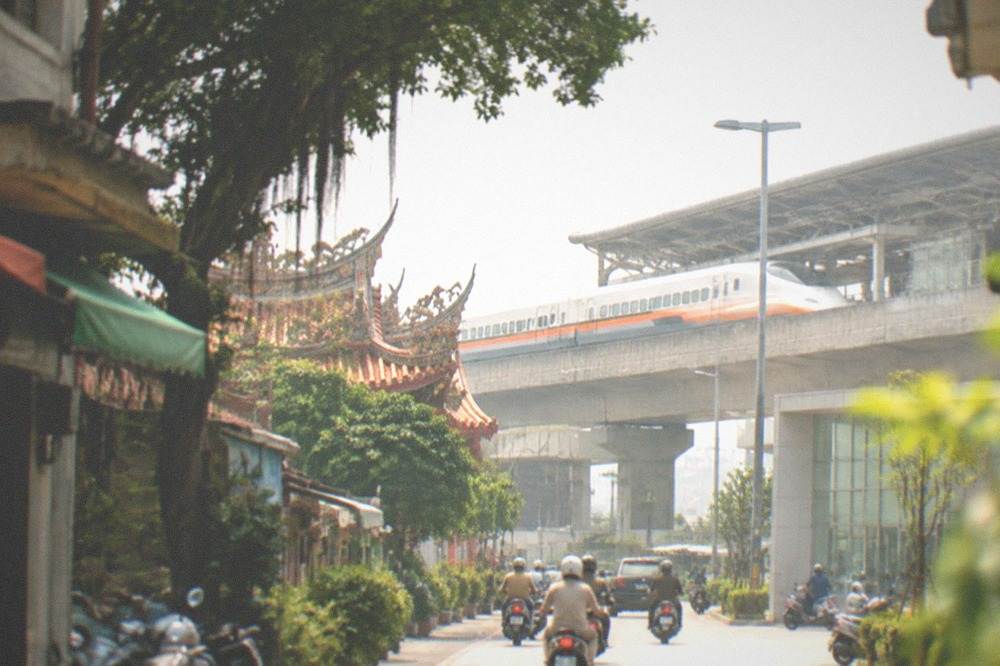
The Kaohsiung route deserves special attention, because it changes the whole arrival calculation. At NT$140 from Zuoying, the hop up from Kaohsiung to Tainan costs less than a sandwich and a coffee at a European airport, and Kaohsiung's airport is a full international one. A traveler landing at KHH can be in Tainan's old city shortly after, for a total outlay that undercuts most intra-Taiwan flights. Our Kaohsiung to Tainan page walks that route in detail.
The Taipei comparison is less one-sided, and the Taipei to Tainan page covers it fully. The fare is NT$1,350 standard reserved, and this site does not publish a journey time, because no official timing was captured from the operator: the operator's own timetable search is the source for that, and the honest instruction is to read it there rather than trust a secondhand number. What the fare table does establish is that the HSR is the spine of Taiwan travel, and Tainan Airport is a branch line off that spine, useful to a minority of itineraries.
What About the HSR Station Instead of the Airport?
Tainan's High Speed Rail station is not in Tainan's historic center: it sits at Shalun in Guiren District, outside the old city, so every HSR arrival involves a transfer to reach the sights. The H31 HSR express bus is free for High Speed Rail passengers on production of a ticket stub, with no card tap needed; other passengers pay NT$18 for one section or NT$36 for two, with the section break at the Chimei Museum.
That free shuttle is one of the most under-published practical facts in Taiwanese travel, and it comes with a bonus: the section break at the Chimei Museum means the museum sits on the shuttle route, so a visitor with a half day can stop there en route from the HSR station into the city without any detour at all. The Chimei Museum's permanent collection is NT$200, closed every Wednesday, last entry 17:00, facts verified from the museum's own visitor page.
The alternative rail link from the HSR station is the Shalun Line, a Taiwan Railway branch that connects Shalun to the main Tainan Railway Station in the city center. It is a paid TRA ticket, not a free transfer, and this site does not publish its fare, frequency or journey time, because none of those were confirmed on an official page: the TRA's own fare query tool is where the live answer lives. The Tainan HSR station page covers the full transfer picture, and the Tainan railway station page covers the city-center end of it.
Put the three arrival paths side by side and the planning logic writes itself:
| Arrival path | Ends where | Transfer needed to the center | Verified cost |
|---|---|---|---|
| Fly into TNN | South District, inside the city | Minimal: short taxi or bus | No published fare data |
| HSR to Tainan | Shalun, Guiren District | Yes: H31 shuttle, Shalun Line or taxi | Fare verified; shuttle free with HSR ticket |
| Fly into KHH, then HSR | Zuoying, then Shalun | Yes, after the HSR leg | NT$140 HSR from Zuoying |
When Is the Best Time of Year to Arrive in Tainan?
The best months to arrive in Tainan are October through March, the dry half of the year: October averages just 2.8 wet days while still reaching 30.8C maxima, and December brings only 16 mm of rain across about 3 days. The rain is almost entirely a summer event, with August alone delivering 466 mm across 16 wet days, and close to three-quarters of the annual 1,761 mm falling between May and September.
Those figures come from the Central Weather Administration's own published climate normals for the Tainan station, covering 1991 to 2020, and they line up with the city's visitor pattern in a way that surprises visitors trained on European seasonality. Tainan's peak visitor months are January and February, driven by temple pilgrimage and Lunar New Year, not summer. The city's biggest draw by visitor count is not a Dutch fort but Nankunshen Daitian Temple, which recorded 6.58 million visitors in 2023 against Chihkan Tower's 443,622, with the caveat that operators compile their own counts and the 2020 to 2022 years were COVID-depressed.
| Month | Mean max (C) | Rain (mm) | Wet days |
|---|---|---|---|
| January | 23.0 | 20.7 | 3.8 |
| April | 29.3 | 69.8 | 5.9 |
| July | 33.0 | 374.6 | 13.0 |
| August | 32.6 | 466.1 | 15.8 |
| October | 30.8 | 30.8 | 2.8 |
| December | 24.4 | 16.2 | 3.0 |
Typhoon risk concentrates in the late summer months, and when Tainan's city government declares a typhoon day, attractions and transport can suspend, a rule the Tainan Art Museum states explicitly on its own hours page. The Tainan weather and best time to visit Tainan pages carry the full picture, and the Taiwan typhoon season page covers the storm calendar.
Whenever you land, the evening plan should account for the fact that Tainan's big night markets rotate by day of the week: Garden runs Thursday to Sunday, Wusheng on Wednesday, Friday and Saturday, Dadong on Monday, Tuesday and Friday, and Siaobei is indoors and open every day. Friday is the one night all three big outdoor markets run. Check the city's pages before you go, because the days do change.
Where Should You Stay After You Land?
Most first-time visitors stay in the West Central District around Chihkan Tower and the Confucius Temple, where the densest cluster of historic sites, street food and night activity sits within walking distance, or in Anping for the fort, the tree house and the old street. The city's bus network, free for the first 8 km with an electronic card, ties the two areas together, so the choice is about atmosphere rather than access.
The where to stay in Tainan page compares the districts properly, and the Tainan hotels page covers the lodging layers. The one arrival-specific note worth adding here: if you land at TNN late, the South District is itself a reasonable place to sleep for a night before moving to the historic center in the morning, and if you arrive at the HSR station, Shalun is not, so plan the last leg before you land rather than after.
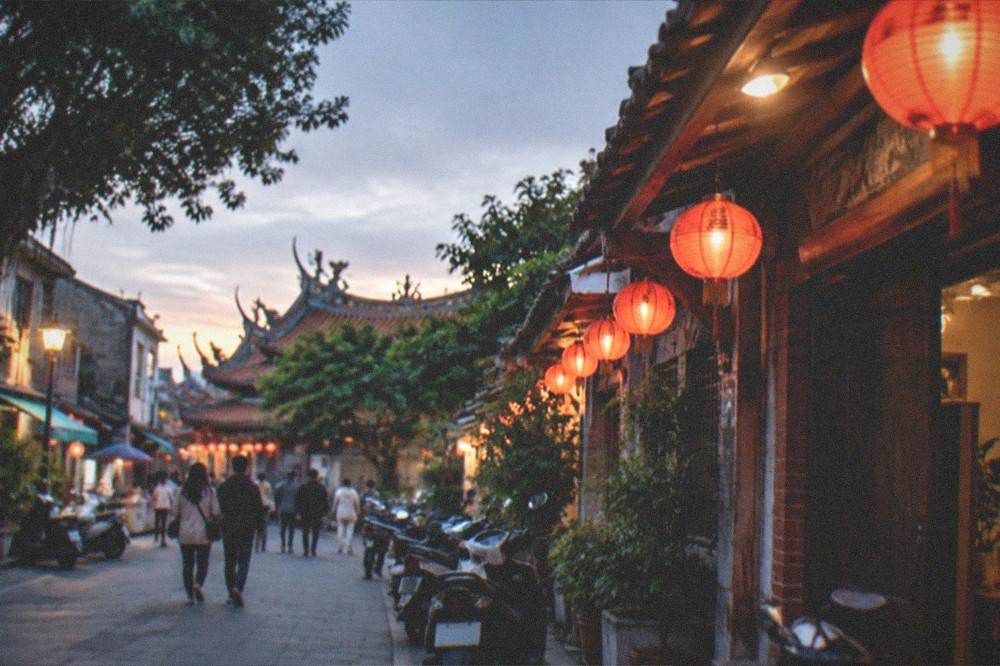
Once you are in the center, the arrival-day question becomes what to do with the evening, and the answer is almost always food. The Tainan food guide is the map: beef soup at dawn, danzai noodles and coffin bread through the day, and whichever night market matches your day of the week. If your days in the city are short and you would rather someone else handle the sequence, a guided food walk compresses the learning curve:
And for visitors whose time in the south of Taiwan extends beyond the one city, the coast and salt country north of Tainan make the strongest single-day extension, and a structured day tour handles the logistics that a rental car or a sequence of buses otherwise would:
Common Questions About Tainan Airport
Does Tainan have its own airport?
Yes. Tainan Airport, coded TNN, is a small airport in the city's South District with a handful of domestic and short-haul international routes. Most international visitors still arrive through Taoyuan or Kaohsiung and continue by High Speed Rail.
Can you fly internationally into Tainan?
Only on a small number of short-haul regional routes, and the list changes often enough that no static answer is reliable. The airport's own flight schedule pages publish the current carriers and destinations, and that is the source to check when planning.
Is Tainan Airport close to the city center?
Yes, relative to most airports. It sits inside the South District, a short ground transfer from the historic center, which makes it closer to the sights than the HSR station at Shalun in Guiren District, outside the old city.
Which airport should I fly into for Tainan?
For most international travelers, Taoyuan (TPE) or Kaohsiung (KHH), followed by the High Speed Rail. The Zuoying to Tainan HSR fare is NT$140 standard reserved, verified from the operator's own fare table, which makes the Kaohsiung route especially cheap.
How do I get from Tainan Airport to downtown?
By taxi for door-to-door service, or by city bus: buses are free for the first 8 km with an electronic card such as EasyCard or iPASS, provided you tap on and tap off, with the cash fare at NT$26 for the same trip. The free-first-8-km policy runs through the 2026 calendar year.
Is the High Speed Rail station in Tainan city?
No. Tainan's HSR station is at Shalun in Guiren District, outside the old city, so every HSR arrival involves a transfer. The H31 HSR express bus is free for High Speed Rail passengers with a ticket stub, and the section break on the paid route falls at the Chimei Museum.
The honest summary on Tainan Airport is that it is a real convenience with a narrow role. If a route fits your itinerary, it drops you inside the city with a transfer measured in minutes. If one does not, the High Speed Rail spine, with its verified fares and its free HSR shuttle bus, does the job just as well, and the old capital is close enough to Kaohsiung that the NT$140 hop from Zuoying makes the south's biggest airport a genuinely cheap gateway. Plan the last leg before you land, and whichever way you arrive, the city's buses, its rotating night markets and its walkable historic core take over from there. This guide is part of Tainan Travel Guide's transport coverage, alongside the attraction and itinerary pages that pick up where the arrival ends.