Tainan City Buses
Tainan's city buses are free for the first 8 km if you carry an electronic card and remember to tap off, and that single fact changes how cheaply a visitor can move around Taiwan's old capital.
Short answer
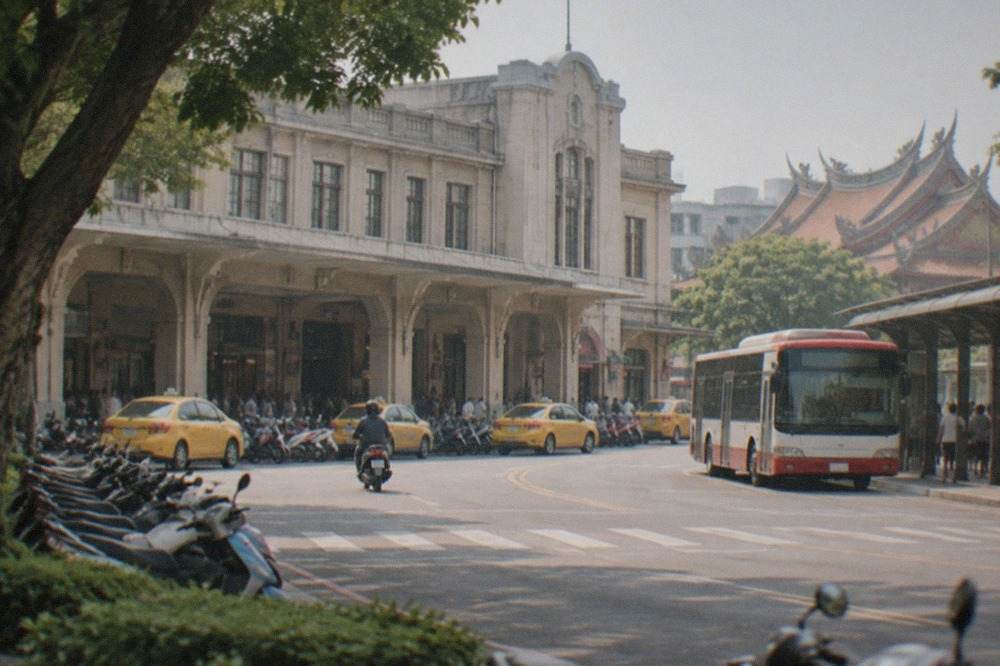
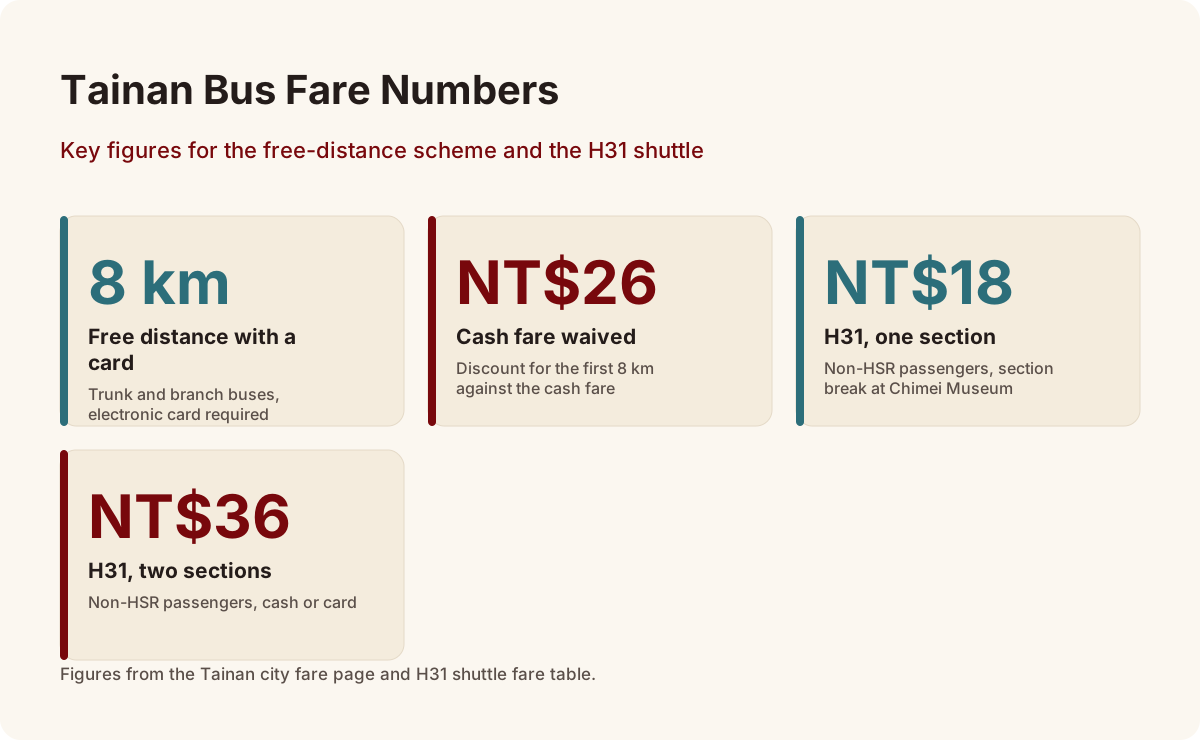
Tainan city buses are free for the first 8 km on the trunk and branch network when you pay with a Citizen Card, iPASS, EasyCard or iCash 2.0 and tap on AND tap off. The same trip in cash costs NT$26. The policy runs through 31 December 2026.
Tainan's city bus network is the quiet bargain of Taiwanese travel. The city's own fare page states, in English, that trunk and branch buses are free of charge for the first 8 km of traveling distance when you pay with an electronic card, a discount worth NT$26 against the cash fare. That is not a tourist promotion or a rumor from a forum: it is printed on the city's official bus fare page, and it applies to visitors holding an EasyCard or iPASS exactly as it applies to residents. This guide sets out how the scheme works, which cards qualify, where the tap-off step trips people up, how the separate H31 shuttle connects the High Speed Rail station to the centre, and which buses reach the sights most visitors come for.
One honest framing before the details: Tainan is compact, walkable in its historic core, and warm most of the year, so many visitors end up on foot more than they expect. The bus is the tool for the longer legs, the run out to Anping, the climb to the museums, the evening trip to a night market that happens to be open on the night you are there. For the full picture of every way to move around the city, including bikes and cars, read our guide to getting around Tainan.
Are Tainan City Buses Really Free for the First 8 Km?
Yes, on the trunk and branch network, for anyone holding a Citizen Card, iPASS, EasyCard or iCash 2.0, for journeys of up to 8 km. The city's fare page states the first 8 km of traveling distance is free of charge, a discount of NT$26 against the cash fare for the same trip. The scheme is a current annual policy running from 1 January to 31 December 2026, so it should be re-checked rather than assumed permanent.
The wording matters. The free distance applies to what the city calls the Main and Branch Bus network, the routes color-coded green, blue, brown, orange, yellow and red. Tourist buses are excluded from the citizen-card discounts, and so is the HSR express bus, which has its own separate arrangement covered further down this page. If you board a sightseeing bus rather than a regular city route, do not expect the card discount to apply.
The size of the benefit is easy to state precisely because the city does: the base fare being waived is NT$26, and that is what the same trip costs in cash. An 8 km radius from where you board covers a large share of the journeys a visitor makes. The run from the railway station area toward Anping, the trip out to the museum quarter, a hop between the old streets and a night market: most of these sit inside the free distance, which means a full day of bus rides can cost nothing at all beyond the value loaded on the card.
Two conditions come with it. First, you must hold one of the four accepted cards, and a foreign visitor can buy and top up an EasyCard or iPASS at convenience stores and transit service counters without any residency requirement. Second, and this is the part that catches people, you must tap when you board and tap again when you get off.
Which Cards Work on Tainan Buses?
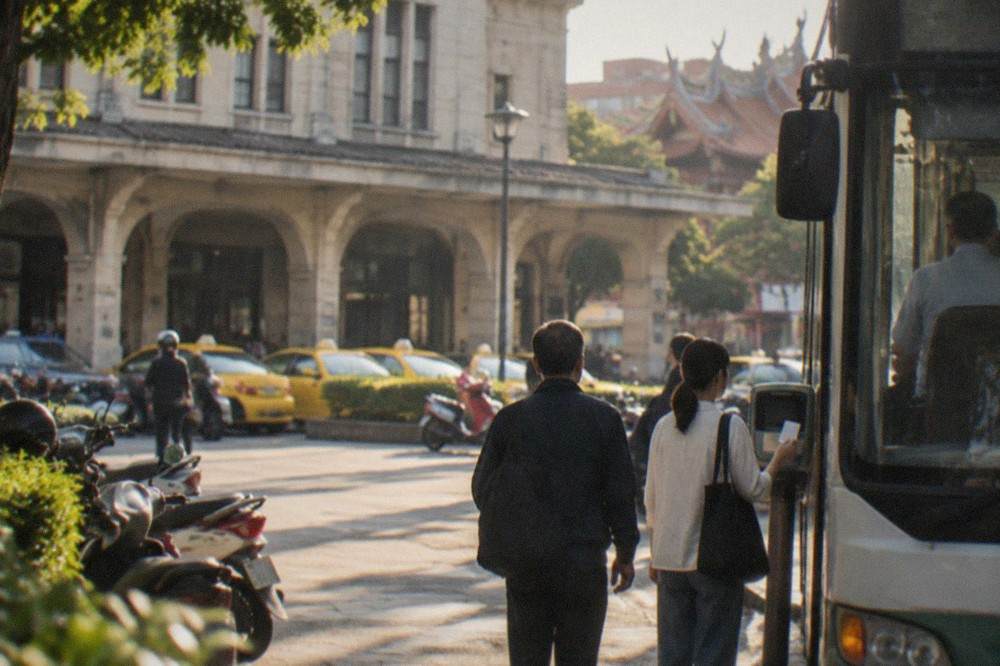
Four cards qualify for the free first 8 km: the Tainan Citizen Card, iPASS, EasyCard and iCash 2.0. For a visitor, EasyCard and iPASS are the practical choices, both sold and topped up at convenience stores and transit counters with no residency requirement. The same cards also unlock the transfer discount and work at the Tainan Art Museum ticket desk, which makes one card useful across a whole day.
The Citizen Card is a resident product, so a short-stay visitor will not have one and does not need one. The other three are stored-value cards, and the difference between them matters less in Tainan than the fact of carrying one at all. The city's fare page names all four as the qualifying instruments for the free-distance scheme, and the same page extends a transfer discount to the same cards: change between Taiwan Railway and a Tainan bus within two hours and you get NT$9 off a city bus, or the free basic distance plus a further NT$9 off on a trunk or branch bus.
| Card | Works on Tainan buses | Free first 8 km | Where a visitor gets one | Also works at |
|---|---|---|---|---|
| EasyCard | Yes | Yes | Convenience stores, transit counters | Tainan Art Museum ticket desk |
| iPASS | Yes | Yes | Convenience stores, transit counters | Tainan Art Museum ticket desk |
| iCash 2.0 | Yes | Yes | Convenience stores | Retail payment |
| Citizen Card | Yes | Yes | Tainan residents only | Resident benefits |
One trap worth naming: using a public bicycle between the train and the bus voids the transfer discount, because the discount is for a direct change between the two rail-and-bus modes. The city's fare page spells this out. If you are planning a day that mixes bikes and buses, treat them as separate fares rather than a chain.
What the card does not do is ride the High Speed Rail. EasyCard and iPASS are accepted on Tainan's city buses and at the art museum's desk, but there is no verified basis for claiming they work on the HSR, so buy High Speed Rail tickets at the counter, the machine or online. Our guide to Taiwan High Speed Rail covers those tickets and fares in full.
If riding buses with route numbers and Chinese stop announcements feels like friction, a different kind of day is available: tours that bundle the moving and the seeing. The picks below are bookable experiences that remove the timetable from the equation.
How Do You Tap on and Tap Off?
Tap the card on the reader when you board, and tap it again on the reader when you exit, every time, even when the first 8 km is free. Tap-off is the step visitors miss, and skipping it can mean the system charges the fare to the end of the route. The free distance is calculated from your tap-on to your tap-off, so the second tap is what proves the trip was short.
The mechanics are simple once you know they exist. Board at the front, tap the card flat on the reader, wait for the beep, take a seat. When your stop comes, tap again on exit and step off. On trunk and branch routes the fare is distance-based, which is exactly why the exit tap exists: the system needs to know how far you rode. A rider who boards, rides 2 km and walks off without tapping has, from the system's point of view, ridden an unknown distance, and unknown distances do not get the free treatment.
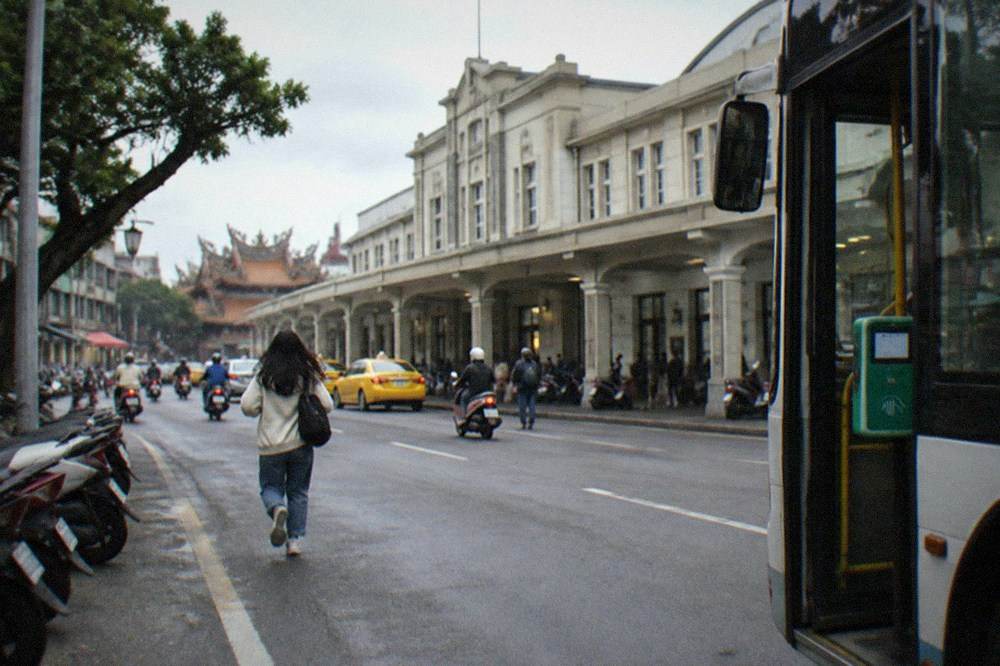
Keep the card somewhere reachable, a pocket, a phone wallet, the outer slot of a day bag, because hunting for it at the door slows everyone down. If the reader rejects a card, the usual cause is insufficient balance rather than the card being invalid, and topping up at any convenience store fixes it in a minute.
There is a small amount of route literacy that helps. Stops are announced in Mandarin and, on main corridors, often in English as well, and our page on English in Tainan gives an honest picture of how far the bilingual signage actually reaches. The city has been expanding English-friendly emblems on buses and at major stops, but a visitor should not assume every stop sign on a branch route is bilingual.
What Is the H31 HSR Shuttle Bus?
The H31 Tainan City Government Line is an express bus between the High Speed Rail station and the city centre, and it is free for High Speed Rail passengers who show an HSR ticket stub when boarding, with no card tap needed. Other passengers pay NT$18 for one section or NT$36 for two, with the section break at the Chimei Museum.
This is the single most useful bus fact for anyone arriving by High Speed Rail, and it exists because of a geographical quirk worth understanding first: the Tainan HSR station is not in Tainan's centre. It sits at Shalun in Guiren District, well outside the old city, and every arrival involves a transfer of some kind. Our guide to the Tainan HSR station covers all the onward options; the H31 is the one that costs nothing for rail passengers.
The free ride is conditional on proof. Board the H31, show the driver your HSR ticket stub, and the fare is waived. No tap, no card, no cash. Passengers who are not HSR riders pay by section, and the section boundary is the Chimei Museum, which has the pleasant side effect of putting one of Tainan's major museums directly on the shuttle route. A visitor could ride the shuttle to the museum, spend the afternoon there, and continue into the centre afterwards.
| H31 passenger | Fare | What is needed |
|---|---|---|
| HSR passenger | Free | HSR ticket stub shown at boarding |
| Other passenger, one section | NT$18 | Cash or card |
| Other passenger, two sections | NT$36 | Cash or card |
The H31 is excluded from the citizen-card discounts, so do not expect the free-8 km scheme to stack on top of the stub waiver. It is its own arrangement, and a generous one. If you are still deciding whether the train-plus-bus combination beats flying or driving, our comparison of Tainan versus Kaohsiung as bases may help, as may the fare breakdowns in Taipei to Tainan and Kaohsiung to Tainan.
Which Buses Reach the Main Sights?
The trunk network's color-coded routes reach nearly everything a visitor comes to see: the 88 and 99 tourist-oriented services link the railway station, Chihkan Tower and the Anping sites, while regular trunk routes serve the museums, the night markets and the temple quarter. Every fare on these routes follows the same card rules, so the practical question is which stop, not which price.
The historic core clusters tightly around the railway station, Chihkan Tower and the Confucius Temple, and much of it is best reached on foot once you are inside it. The bus earns its keep on the longer legs. Anping, with the Old Fort, the Tree House and the old street, sits far enough west that walking it in summer heat is a poor plan, and the tourist buses and trunk routes that run there are the standard answer. The Chimei Museum, out toward the HSR corridor, is on the H31 shuttle route as well as regular services.
| Destination | Bus approach | Notes |
|---|---|---|
| Anping Old Fort and Tree House | Tourist bus 88, trunk routes toward Anping | Two NT$70 sites, both 08:30 opens |
| Chihkan Tower | Tourist buses, most central routes | Open until 21:30, unusual for a historic site |
| Chimei Museum | H31 shuttle, regular services | Closed Wednesdays, last entry 17:00 |
| Tainan Art Museum | Central routes, short walk from Chihkan Tower | Closed Mondays, Saturdays until 21:00 |
| Garden Night Market | Routes along Hai'an Road on open nights | Thursday to Sunday, 17:00 to 00:00 |
| Siaobei Night Market | Central routes near Ximen Road | Indoor, open daily 12:00 to 00:00 |
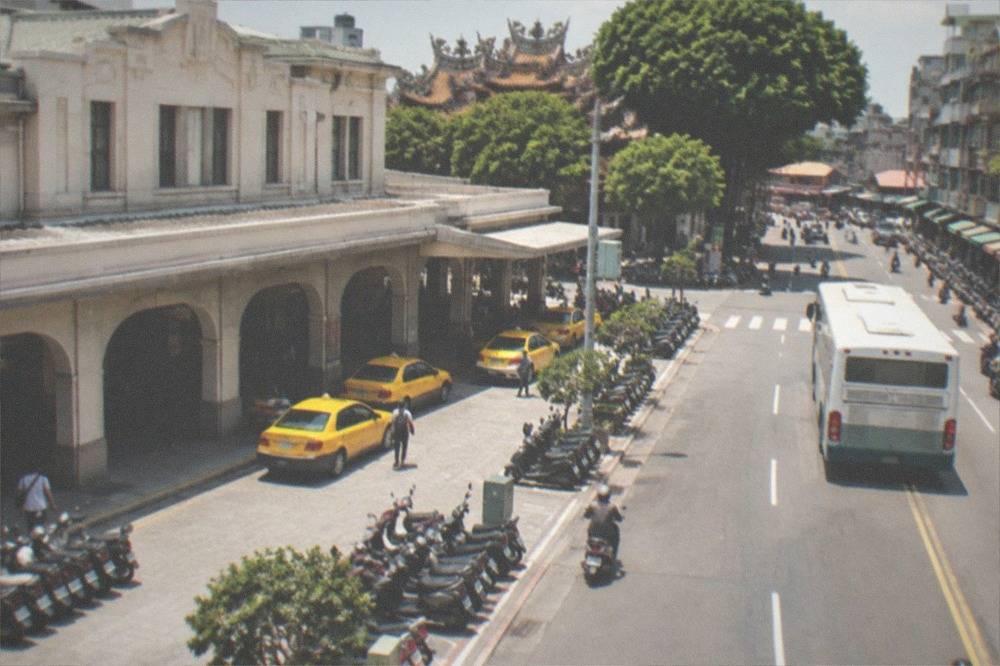
The night market row in that table is not decoration. Tainan's big outdoor markets rotate by day of the week, which means the right bus destination on a Monday is different from the right destination on a Thursday, and our Tainan night markets page carries the full day-by-day schedule. Siaobei is the failsafe: indoors, open every day, and the correct answer whenever the weather or the calendar turns against you.
For visitors who would rather not decode route maps at all, the boat ride below is the one lagoon experience that needs no bus at all once you are at the departure point, and the operator's live listing carries the current times.
What Happens on a Typhoon Day?
When the Tainan City Government declares a typhoon day, city buses suspend or reduce service, attractions close and schools and many offices shut, and the decision is made locally by the city, not nationally. The Tainan Art Museum states on its own hours page that it closes when the city announces a work suspension for a typhoon or earthquake, which is a concrete example of the general rule.
Typhoon risk in Taiwan concentrates in the late summer months, and Tainan's own rainfall numbers show why: the Central Weather Administration's 1991 to 2020 normals for the city show August alone averaging 466 mm of rain across roughly 16 wet days, while December brings just 16 mm across 3. Close to three-quarters of the annual 1,761 mm falls between May and September. A visitor in October to March faces a completely different weather regime, dry and warm, with October the driest month by wet days while still averaging 30.8C maxima.
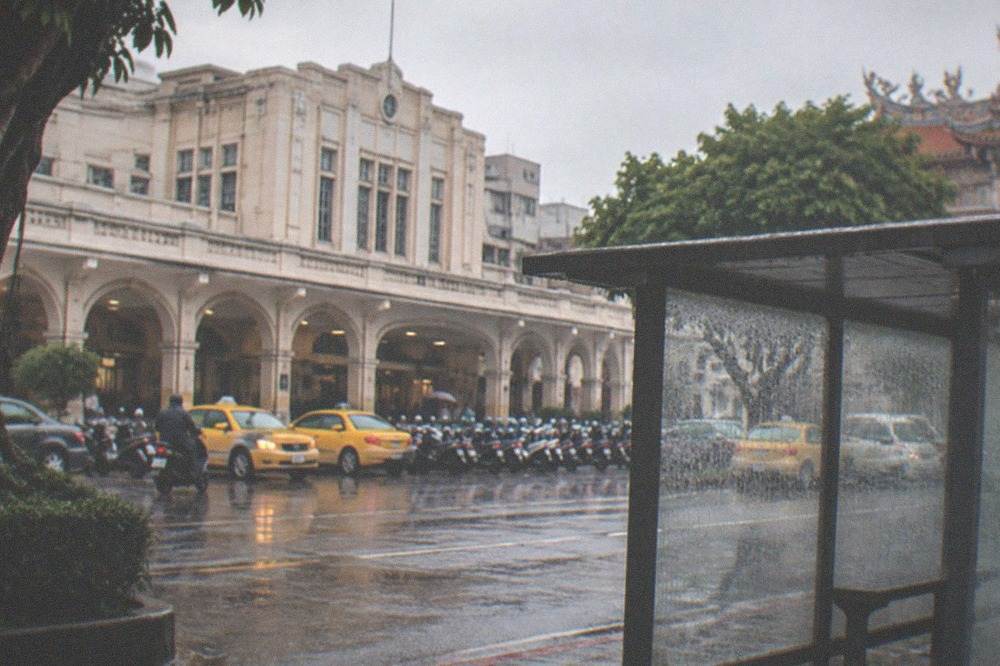
The practical bus advice for storm season is simple: on a morning when a typhoon is approaching, check whether the city has declared a suspension before planning any travel, because a free bus that is not running is not a bus at all. Our pages on Tainan weather and the broader Taiwan typhoon season carry the seasonal picture in detail.
The rest of the year, the rain question barely arises. Tainan records 186 days a year above 30C and 2,185 hours of sunshine, so the more common bus-adjacent problem is heat, not water: plan the outdoor legs for morning, use the bus for the midday spans, and treat the evening markets as the day's finale.
Is a Bus Pass or a Tour the Better Buy?
For most visitors the card in your pocket already is the pass: the free first 8 km means a day of short bus hops costs nothing beyond the card balance, so a separate pass only makes sense when it bundles something else. The passes and tickets worth comparing are the ones that combine transport with attraction entry, because the attraction half is where the value concentrates, and the city's historic sites charge NT$70 at the gate.
Tainan's admission prices are low and its free sites are genuinely free, so the arithmetic usually favors paying as you go. Chihkan Tower, Anping Old Fort, the Anping Tree House and the Eternal Golden Castle each charge NT$70 at the gate, with half-price concessions and free entry for Tainan residents with ID, a category that does not extend to visitors. The Confucius Temple, the Grand Matsu Temple, the Five Concubines Temple and Kaiyuan Temple cost nothing and need no ticket at all, and our free things to do in Tainan page is built on exactly that verified list.
Where a bundled product earns its price is when it removes decisions rather than just fares. The bus-and-ticket combination below pairs a transit pass with attraction entry, and the day tours pair transport with a route someone has already worked out. The tea ceremony, meanwhile, is the kind of sitting-down interlude that fits neatly between two bus legs of a hot afternoon.
Common Questions About Tainan City Buses
Are Tainan city buses free for tourists?
Yes, for the first 8 km on the trunk and branch network, and the city's fare page makes no distinction between residents and visitors. Any holder of a Citizen Card, iPASS, EasyCard or iCash 2.0 gets the free distance, and a tourist with an EasyCard qualifies. The conditions are the same for everyone: tap on and tap off, and remember the policy is annual, running through 31 December 2026.
What happens if I forget to tap off the bus in Tainan?
The system cannot calculate your distance, and the trip may be charged to the end of the route instead of receiving the free-distance treatment. Tap-off is the step that proves the journey was under 8 km. If you notice the miss immediately, speak to the driver; otherwise treat it as a lesson for the next ride and keep the card somewhere reachable for the exit.
Can I use an EasyCard on the Tainan HSR shuttle?
You can use an EasyCard or iPASS on the H31 shuttle as a paying passenger, at NT$18 for one section or NT$36 for two, but the better move is to show your HSR ticket stub, which makes the ride free with no tap at all. The citizen-card discounts do not apply to the H31, so there is no free-8 km stacking on the shuttle.
Do Tainan buses take cash?
Yes, the cash fare for a short trip is NT$26, which is the base fare the card scheme waives. Exact change is the safe assumption on local routes. Over a multi-day visit, the arithmetic strongly favors a stored-value card, since the same trips cost nothing by card.
Do buses run to the night markets?
Yes, and the night market you want depends on the day of the week. Garden runs Thursday to Sunday, Wusheng Wednesday, Friday and Saturday, Dadong Monday, Tuesday and Friday, and Siaobei is indoors and open daily from noon. Friday is the one night all three big outdoor markets run. Check the city's current pages before you go, because the days are updated periodically.
Are Tainan buses reliable for getting to Anping?
Anping is one of the best-served corridors in the city, with tourist-oriented buses and regular trunk routes running there from the railway station area. The trip sits within the free 8 km from central boarding points, so the card cost is zero. Allow more time on weekends and festival periods, when Anping's visitor volumes rise sharply, and pair the trip with an early start in the hotter months.
The summary that fits on a bookmark: buy an EasyCard or iPASS on arrival, tap on, tap off, and the first 8 km of every trunk or branch ride is free through the end of 2026. Show an HSR stub on the H31 and the shuttle from the rail station costs nothing either. The rest, routes to Anping, the museum corridor, the night market that matches your day of the week, is reading a timetable, and the money you save on the bus is better spent on the food Tainan actually came for, which our Tainan food guide maps street by street. More route-by-route detail, including the airports and the long-distance options, sits in the getting around Tainan guide on Tainan Travel Guide.