Tainan's Rainy Season and the Plum Rains
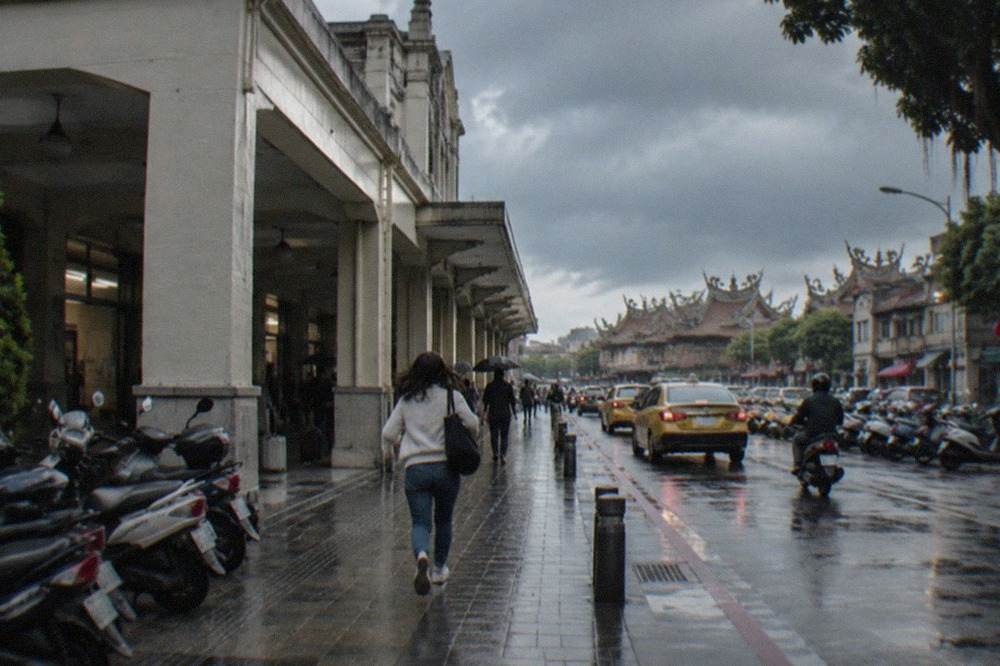
Tainan's rain is almost entirely a summer event. The Central Weather Administration's 1991 to 2020 normals for the city show August bringing 466 mm of rain while December brings just 16, which reshapes how a trip should be planned.
Short answer
Tainan's rainy season runs from May to September, with the heaviest rain in June, July and August. The plum-rain jump happens between April and May, when monthly rainfall nearly triples. October to March is the dry, comfortable half of the year, and October is the driest month by wet days.
Tainan is one of the driest big cities in Taiwan for most of the year, and one of the wettest for three months of it. The Central Weather Administration's 1991 to 2020 climate normals for station 467410, the official measuring point for the city, record an annual total of 1,760.6 mm of rain, and close to three-quarters of that falls between May and September. December, by contrast, brings 16.2 mm across roughly three wet days. That single contrast does more to shape a good Tainan itinerary than any list of attractions, and it is the reason the city's visitor peak is January and February rather than the northern-hemisphere summer.
This page lays out what the official climate record actually says, month by month, and what it means in practice: when the plum rains arrive, what typhoon risk looks like without a single invented statistic, and what to do in a city whose biggest draws are partly outdoors when the sky does open. If you are still choosing dates, the companion page on Tainan weather covers temperature and sunshine; this one is about rain.
When Is the Rainy Season in Tainan?
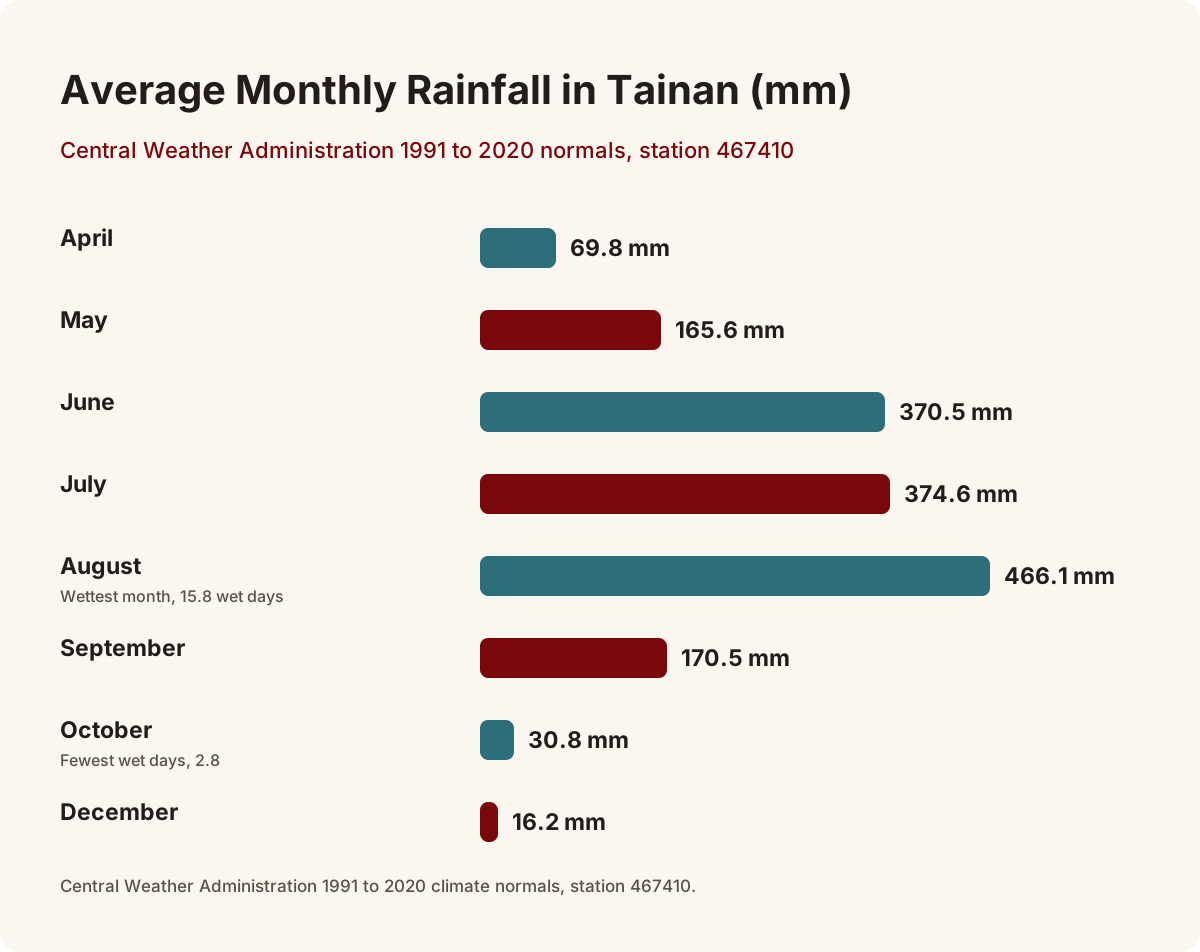
Tainan's rainy season runs from May to September, with the heaviest rain in June, July and August. The Central Weather Administration's 1991 to 2020 normals show monthly rainfall jumping from 69.8 mm in April to 165.6 mm in May and 370.5 mm in June, peaking at 466.1 mm in August. From October the numbers collapse: October averages 30.8 mm and December just 16.2 mm.
That April-to-May-to-June staircase is the local signature of the plum rain period, the late-spring wet phase that affects much of Taiwan and southern China. The Central Weather Administration has not, in the sources compiled for this site, published a formal plum-rain season statement for Tainan, so the honest way to describe it is through the verified numbers: rainfall more than doubles between April and May, then doubles again by June. Whatever name you give the phenomenon, the pattern is unambiguous in the official record.
The table below is the full monthly picture from the normals for station 467410. Every figure is from the Central Weather Administration's own published data.
| Month | Mean temp C | Mean max C | Rain mm | Wet days | Days over 30C |
|---|---|---|---|---|---|
| Jan | 17.9 | 23.0 | 20.7 | 3.8 | 0.0 |
| Feb | 18.9 | 24.0 | 21.6 | 4.1 | 0.9 |
| Mar | 21.6 | 26.6 | 30.4 | 4.2 | 4.1 |
| Apr | 24.9 | 29.3 | 69.8 | 5.9 | 14.9 |
| May | 27.4 | 31.4 | 165.6 | 9.0 | 25.2 |
| Jun | 28.8 | 32.4 | 370.5 | 12.1 | 26.2 |
| Jul | 29.3 | 33.0 | 374.6 | 13.0 | 28.9 |
| Aug | 28.9 | 32.6 | 466.1 | 15.8 | 27.6 |
| Sep | 28.5 | 32.4 | 170.5 | 8.5 | 27.8 |
| Oct | 26.3 | 30.8 | 30.8 | 2.8 | 23.6 |
| Nov | 23.4 | 28.1 | 23.8 | 2.4 | 6.1 |
| Dec | 19.6 | 24.4 | 16.2 | 3.0 | 0.5 |
Two things jump out of that grid. First, the wet days column matters more than the millimetre column for a visitor: 15.8 wet days in August means rain on about every other day, not constant rain. Second, the heat and the rain overlap. June, July and August are both the wettest months and the hottest, with mean maxima of 32.4C, 33.0C and 32.6C respectively. October, by contrast, has fewer wet days than any other month, 2.8, while still averaging 30.8C maxima. It is the sweet spot the climate table hands you for free.
What Are the Plum Rains, and Do They Affect Tainan?
The plum rains, or Meiyu, are a late-spring wet period that brings prolonged grey and drizzly rain to Taiwan and neighbouring regions, typically around May and June. In Tainan the official record shows the effect clearly: monthly rainfall rises from 69.8 mm in April to 165.6 mm in May and 370.5 mm in June, before falling back to 170.5 mm in September.
The name comes from the ripening of plum fruit in East Asia at the same time of year. The meteorology is a stationary front sitting over the island for days at a stretch, which produces a different kind of rain from the violent afternoon downpours of high summer. Plum-rain days are long, grey and damp rather than dramatic, and in Tainan they mark the transition from the dry half of the year into the wet one.
What the plum rains mean for a trip is mostly a matter of expectations. A May or early June visit will not be washed out, but it will not be the cloudless Tainan of the tourism photographs either. The city's average sunshine across the whole year is 2,185 hours, which is generous, but a larger share of the overcast days is concentrated in this late-spring window. Wet days run at 9.0 in May and 12.1 in June against 3.8 in January.
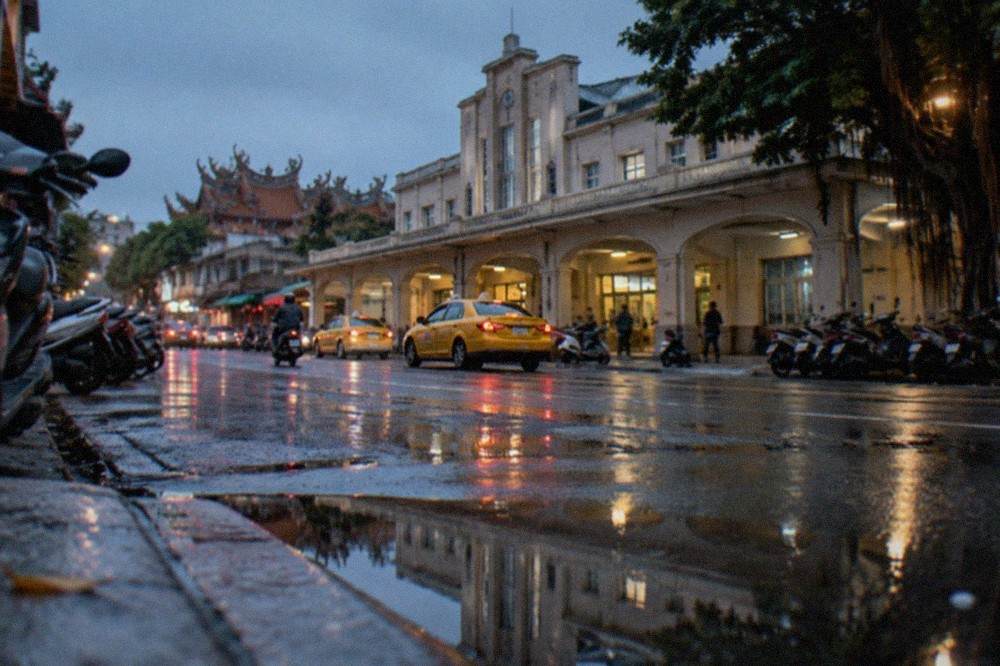
The practical counterweight is that Tainan's indoor and covered options are strong, and the rainy-day infrastructure is real. Siaobei Night Market is indoors and opens every day from 12:00 to 00:00, which makes it the wrong-weather answer when the outdoor markets are either closed or miserable. The full rotation of the big outdoor markets is laid out on the Tainan night markets page, and the day-by-day schedule below is the one fact that saves more Tainan evenings than any other.
| Night market | Open | Hours | Notes |
|---|---|---|---|
| Garden | Thu, Fri, Sat, Sun | 17:00 to 00:00 | The biggest of the three outdoor markets |
| Wusheng | Wed, Fri, Sat | 17:00 to 00:00 | The only big outdoor market on Wednesday |
| Dadong | Mon, Tue, Fri | 18:00 to 01:00 | The only big outdoor market on Monday and Tuesday |
| Siaobei | Every day | 12:00 to 00:00 | Indoor, the wet-weather answer |
Friday is the one night all three big outdoor markets run, and the city updates these pages, so check before you go. The Tainan City Government Tourism Bureau's own attraction pages are the source for these days, and they carry the caveat that the on-site notice governs.
How Bad Is Typhoon Season in Tainan?
Typhoon risk in Taiwan concentrates in the late summer months, and Tainan's official rainfall record shows the same shape independently: the three wettest months are June, July and August, with August alone bringing 466.1 mm across 15.8 wet days. No specific frequency statistic is published on the sources verified for this site, so the honest answer is timing, not numbers: late summer carries the risk, and the rest of the year carries almost none.
A typhoon day in Taiwan is a local government decision. When a city or county announces a suspension of work and classes, schools close, many offices close, and attractions and transport may suspend. The Tainan Art Museum states on its own hours page that it closes when the Tainan City Government announces a work suspension for a typhoon or earthquake, which is a concrete, verified example of how the system works in this city. The decision is made city by city, not nationally.
The companion page on the Taiwan typhoon season covers the mechanics in more depth, and the live question, whether anything is happening right now, is answered on the is it rainy season in Taiwan now page. What belongs here is the planning consequence: a July or August trip to Tainan carries a real, if not quantifiable, chance of losing a day to a storm, and the same months are the city's hottest and wettest anyway.
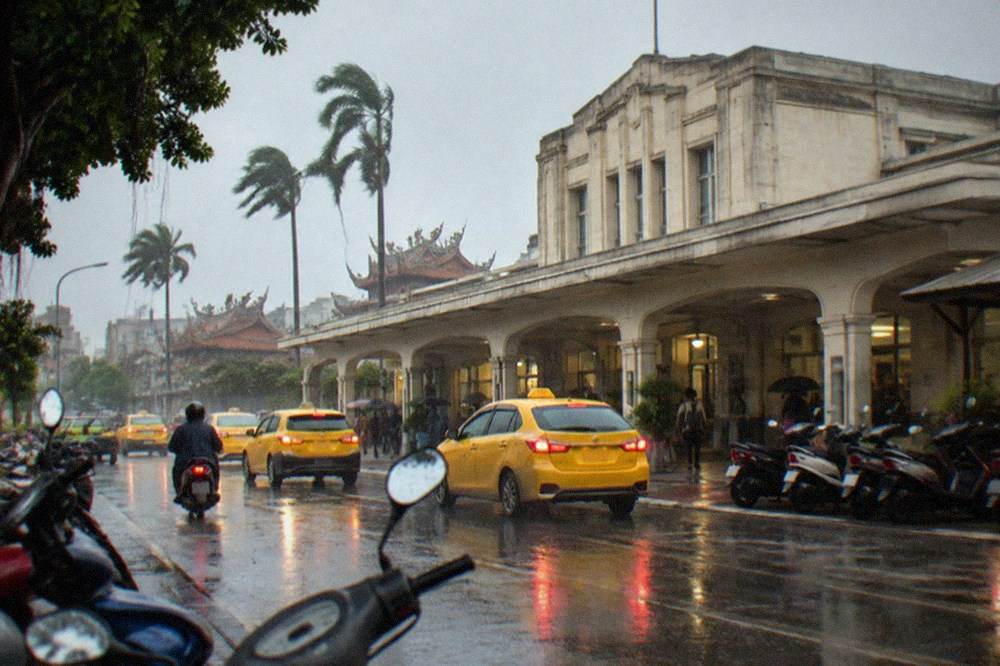
That is the arithmetic that makes October to March the recommended window. You are not trading away warmth: October still averages 30.8C maxima, and even January's mean maximum is 23.0C. You are trading away rain. The wet-day count falls from 15.8 in August to 2.8 in October, and the monthly rainfall total falls from 466.1 mm to 30.8 mm between the same two months.
What Is the Best Month to Visit Tainan?
October is the best month to visit Tainan by the official numbers: it has fewer wet days than any other month, 2.8, while still averaging 30.8C maxima. November is close behind, with 23.8 mm of rain and mean maxima of 28.1C. January and February are the coolest and nearly as dry, and they are also the city's busiest visitor months, driven by temple pilgrimage and Lunar New Year.
That last point is the counter-intuitive one. The Tourism Administration's own visitor dataset shows Tainan's peak months are January and February, not summer. Nankunshen Daitian Temple drew 6,583,100 visitors in 2023, roughly fifteen times Chihkan Tower's 443,622, and temple pilgrimage peaks with the Lunar New Year period. The climate table explains why that works: winter in Tainan is dry, sunny and warm by almost anyone's standard.
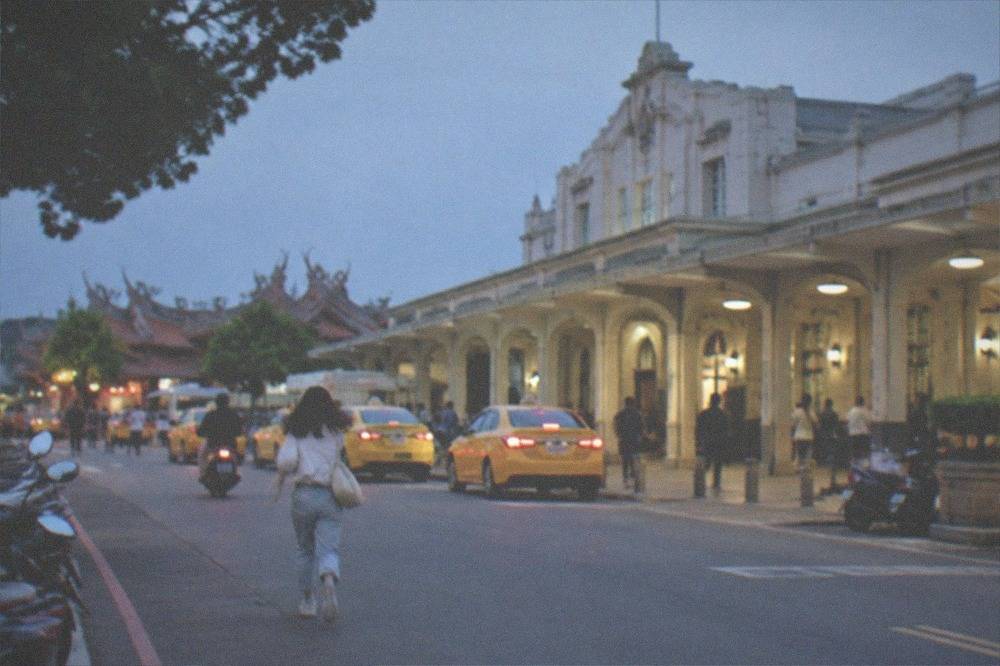
The trade-off in January and February is crowds rather than weather. An October or November visit gets you the same dryness with thinner crowds at the major attractions. April is the last comfortable month before the rains build, though its 14.9 days above 30C are a warning that the heat is already arriving.
What to Do in Tainan When It Rains
Tainan has a deep bench of indoor and covered options: the Chimei Museum, the Tainan Art Museum, the National Museum of Taiwan History, the indoor Siaobei Night Market, and the city's temple halls, several of which are free. Chihkan Tower is open until 21:30 daily, which makes it one of the few historic sites in the city that can be seen after dinner, wet or not.
The museums carry the day. The Chimei Museum charges NT$200 for the permanent collection, with last entry at 17:00, and it is closed every Wednesday. The Tainan Art Museum charges NT$80, is open Tuesday to Sunday from 10:00 to 18:00, stays open until 21:00 on Saturdays, and is closed Mondays; it accepts EasyCard and iPASS at the ticket desk. The National Museum of Taiwan History is another indoor option, and the rainy day itinerary strings these together hour by hour.
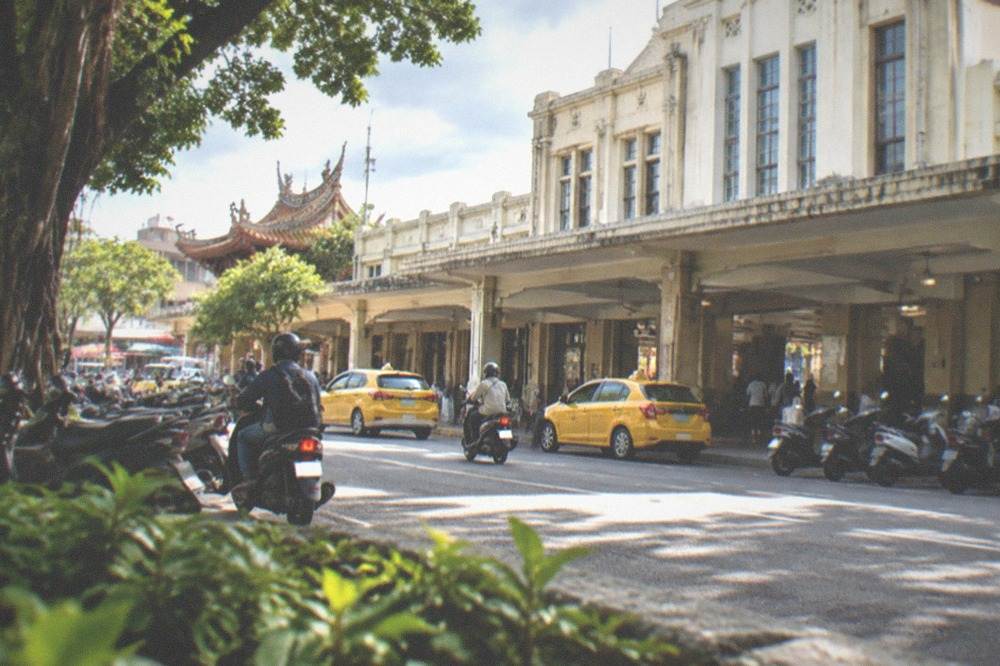
The temples are the underrated wet-weather answer, because they are roofed, free at several of the major ones, and open long hours. The Grand Matsu Temple is open 06:00 to 21:00 with no ticket, the Five Concubines Temple runs 08:00 to 17:00, and Kaiyuan Temple 06:00 to 17:00. The Confucius Temple is also free, 08:30 to 17:30, closing only on Lunar New Year's Eve. Temple etiquette and what to wear are covered on the Tainan temples pages elsewhere on this site, and the dress-code question at the Confucius Temple has its own page.
| Rainy day option | Entry | Hours | Closed |
|---|---|---|---|
| Chimei Museum | NT$200 permanent collection | last entry 17:00 | Wednesdays, Lunar New Year's Eve |
| Tainan Art Museum | NT$80 | Tue to Sun 10:00 to 18:00, Sat to 21:00 | Mondays |
| Chihkan Tower | NT$70 | 08:30 to 21:30 daily | none listed |
| Grand Matsu Temple | free | 06:00 to 21:00 daily | none listed |
| Siaobei Night Market | free entry | 12:00 to 00:00 daily, indoor | none |
Prices are listed by the city and the venues as reference figures; the on-site notice governs, so treat every number as "at the gate" rather than guaranteed. Concessions are half price at the city sites, and Tainan residents enter free with ID, but a visitor is not a resident and should not plan on that.
The food pages are the other wet-day asset. Tainan's famous dishes, from danzai noodles to coffin bread to beef soup, are eaten under roofs and awnings, and a rain shower is as good an excuse as any to work through the street food list. The city's food guide is the master index.
Does Rain Disrupt Transport in and Out of Tainan?
Heavy rain and typhoon warnings can suspend trains, buses and flights in Taiwan, and attractions close when the city government announces a work suspension. The verified structural facts still stand: Tainan's High Speed Rail station is at Shalun in Guiren District, outside the old city, so every arrival involves a transfer, and city buses are free for the first 8 km with an electronic card under the current 2026 policy.
The transport geography does not change with the weather, so it is worth knowing in advance. The Tainan HSR station page covers the transfer options, including the H31 shuttle bus that is free for High Speed Rail passengers on production of a ticket stub. The getting around Tainan page covers the bus card rules, and the arrival routes from Taipei and Kaohsiung each have their own.
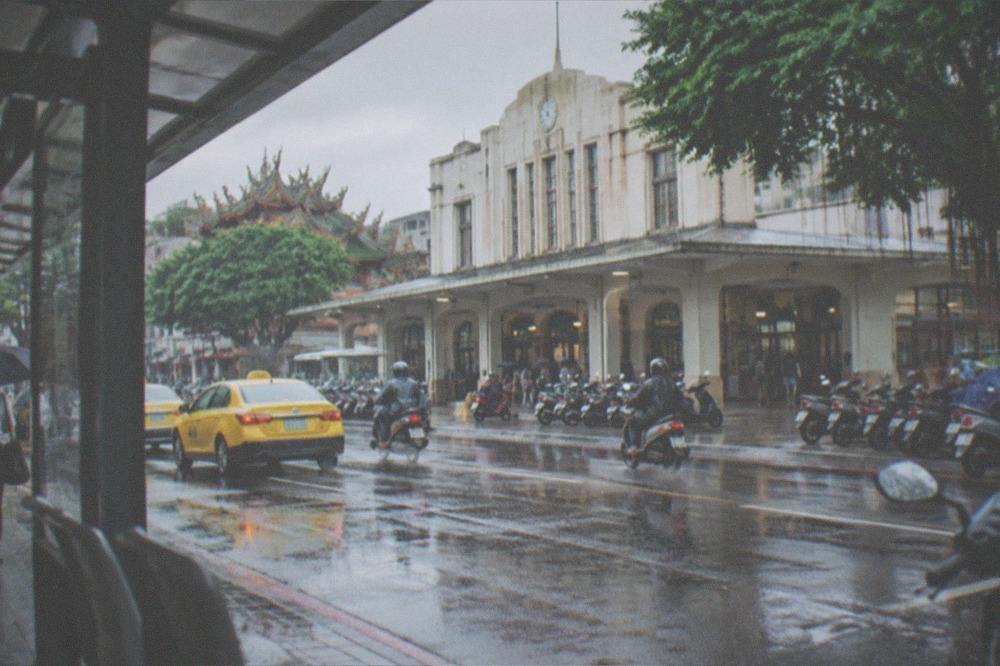
On the bus fare policy, the city's own bus site states that trunk and branch routes are free for the first 8 km of travel with an electronic card, a Citizen Card, iPASS, EasyCard or iCash 2.0, and that you must tap on and tap off. The scheme runs for the 2026 calendar year, so it is a current policy rather than a permanent one. The cash fare for the same trip is NT$26.
What Should You Pack for Tainan's Wet Months?
For May to September, pack for heat first and rain second: an umbrella or light rain shell, quick-drying clothes, and nothing heavy, because June, July and August average mean maxima of 32.4C, 33.0C and 32.6C with 12.1 to 15.8 wet days a month. For October to March, rain gear is barely needed and a light layer suffices for January evenings, when the mean temperature is 17.9C.
The umbrella is the local answer rather than the raincoat, and convenience stores across Taiwan sell them cheaply, so forgetting one is a small problem. What matters more is footwear: summer rain in Tainan comes in heavy bursts, and streets drain fast, but sandals or quick-drying shoes beat suede. The best time to visit Tainan page connects this packing logic to the date choice.
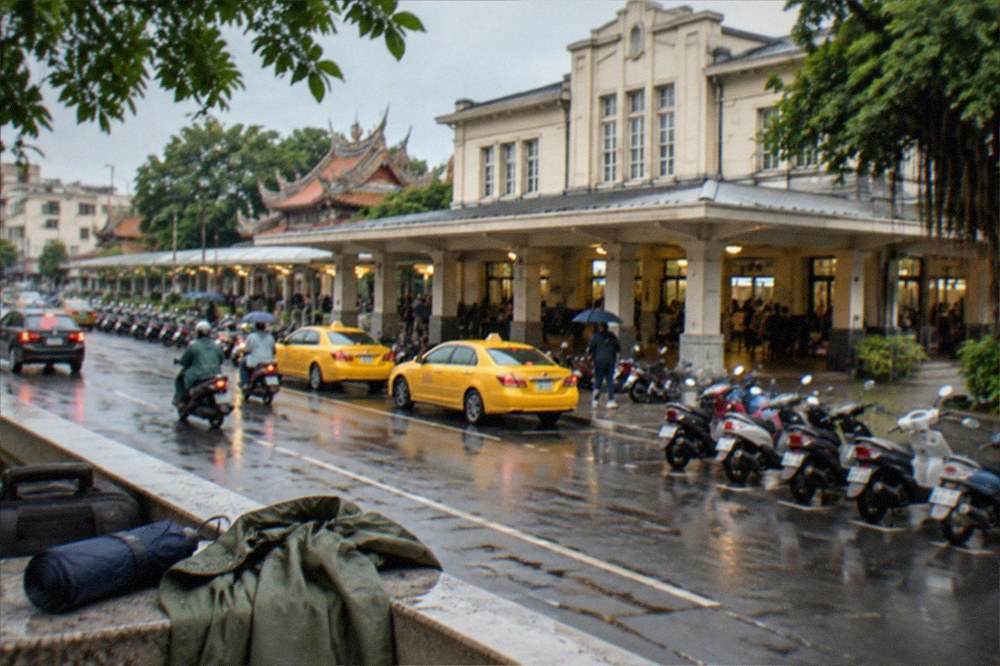
One health note that the rain makes topical: do not plan on drinking tap water. The verified position is that bottled and filtered water are everywhere, convenience stores are on every corner, and most locals boil or filter. Humidity in the wet months runs at 75.9 to 78.4 percent in the official normals, from May through August, which adds to the sense of heaviness on a hot afternoon, and staying hydrated matters more in June than in January.
How the Rainy Season Shaped Tainan's Calendar
Tainan's festival calendar is built around the dry half of the year: the Yanshui Beehive Fireworks and the Yuejin Lantern Festival fall in February, the orchid show in March, and the major outdoor food and hot-spring festivals run from September to November. The city's own festival calendar places almost nothing outdoors in June, July or August, the three wettest months.
The pattern is not a coincidence. The city's calendar, published by the Tainan City Government Tourism Bureau, lists the Yanshui Beehive Fireworks in February, on the Lantern Festival, and the Yuejin Lantern Festival from February to March. The Qigu Seafood Festival runs July to August, the one big summer exception, and the Guanziling Hot Spring and Food Festival runs September to November, once the rain has cleared. The Confucius Temple Cultural Festival is in September.
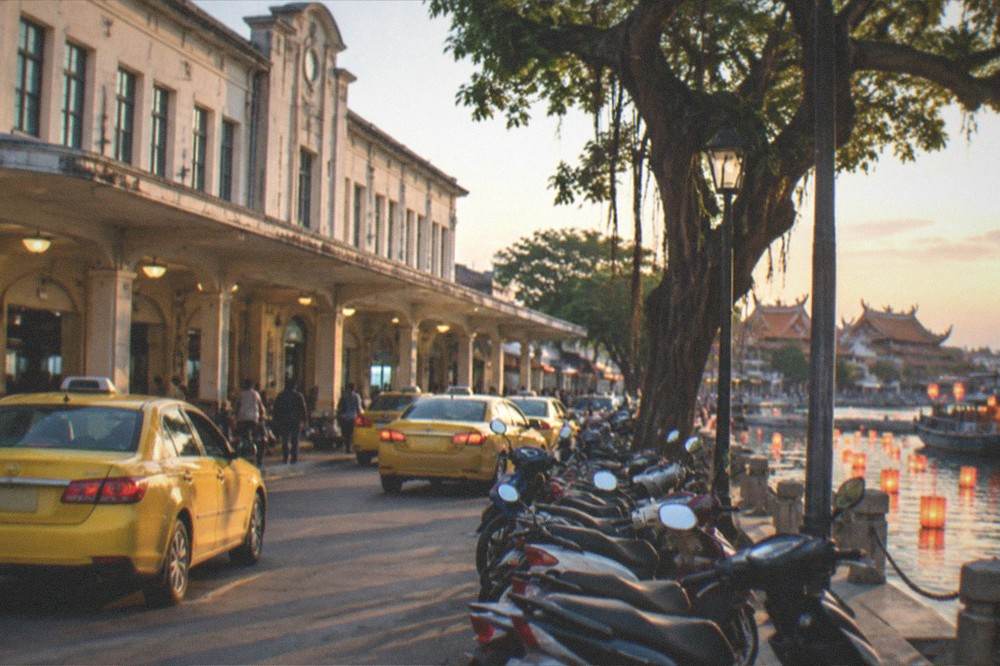
The deeper history connection is that Tainan's whole story, from the Dutch East India Company's arrival in 1624 to its two centuries as Taiwan's capital until the late nineteenth century, is a story of a harbour and an inner sea that silted up. The Tainan history page tells that story, and the rain that fills the lagoon coast today is the same water that reshaped the city four hundred years ago. For more on the city's past, Tainan Travel Guide covers the forts, temples and old streets in depth.
Common Questions About the Tainan Rainy Season
What is the rainiest month in Tainan?
August, by the Central Weather Administration's 1991 to 2020 normals for the city: 466.1 mm of rain across 15.8 wet days. July and June are close behind at 374.6 mm and 370.5 mm.
When do the plum rains hit Tainan?
Around May and June. The official record shows monthly rainfall rising from 69.8 mm in April to 165.6 mm in May and 370.5 mm in June, which is the plum-rain jump in Tainan's numbers.
Is October a good month to visit Tainan?
Yes. October has fewer wet days than any other month, 2.8, while still averaging 30.8C maxima, and the big summer crowds and rain have both gone.
Does it rain all day in Tainan in summer?
Not usually. Summer rain comes in heavy bursts: August averages 15.8 wet days a month, roughly every other day, but the annual sunshine total of 2,185 hours means the sun is out plenty even in the wet season.
What closes in Tainan during a typhoon?
When the Tainan City Government announces a work suspension, schools and many offices close and attractions may suspend. The Tainan Art Museum states on its own hours page that it closes on such announcements. The decision is local, not national.
Is Tainan dry in winter?
Very. December brings 16.2 mm of rain across about three wet days, and January 20.7 mm across 3.8, while daytime maxima still average 23.0 to 24.4C.
The short version of all of this: Tainan's rain is a summer problem with a calendar solution. Move the trip to October through March and the problem mostly disappears, and if the dates are fixed in summer, the museums, temples, indoor night market and food stalls are more than enough to fill a wet afternoon. The climate record, not folklore, is what says so, and it is the most reliable planning tool a visitor to this city has.