Renting a Car in Tainan
Tainan's old core is compact and walkable, but the lagoon coast, salt flats and hot spring towns are not. This guide sets out when a car earns its keep in Tainan, where the pickup points actually are, and what the verified numbers say about driving there.
Short answer
You do not need a car for central Tainan, but you do for the coastal and inland day trips. The HSR station at Shalun, the city centre and Tainan Airport are the main pickup points, and the license rules for foreign visitors deserve checking before you book.
Tainan is a city of two scales. The historic core between Chihkan Tower and Anping is a lattice of narrow streets, temples and food stalls that rewards walking and punishes parking. The other Tainan, the one that spreads across lagoons, salt flats, reservoir hills and hot spring valleys, is spread over a district list that runs from Qigu on the coast to Guanziling in the east, and it does not reward walking at all. Renting a car in Tainan is really a question about which of those two cities you came for.
This guide works through the decision honestly: when a car pays for itself, where the pickup points actually sit, what the license situation is for foreign visitors, and what the verified numbers say about parking, tolls of a different kind, namely admission fees at the drive-to sites. Where a figure is not published on an official page, this guide says so rather than guessing.
Do You Actually Need a Car in Tainan?
For the old city between Chihkan Tower, the Confucius Temple and Anping, a car is a liability, not an asset: the streets are narrow, parking is scarce, and the distances are short enough to walk. For the lagoon coast at Qigu and Sicao, the salt flats, Beimen, Yanshui and Guanziling, a car is the most efficient way to see more than one in a day, and public transport out there is thin.
The honest split is geographic. Central Tainan, the West Central District and the Anping peninsula, holds most of the sites a first-time visitor comes for, and the city's buses cover it well. The city's own bus site states that trunk and branch routes are free for the first 8 km with an electronic card, a Citizen Card, iPASS, EasyCard or iCash 2.0, provided you tap on and tap off. The cash fare for the same trip is NT$26. That policy runs for the 2026 calendar year, so treat it as current rather than permanent, and re-check it if you travel later.
The coast is a different matter. Qigu Salt Mountain sits roughly an hour's drive from the centre, and the black-faced spoonbill reserve, the Sicao Green Tunnel boat docks and the Taijiang mangroves cluster around the same lagoon system. Beimen and Jingliao are further out still. Buses reach some of these places, but the frequency is low and the connections between them are poor, which is exactly the gap a car fills. The getting around Tainan guide covers the bus and rail network in detail if you want to test the no-car plan first.
There is also a middle option worth naming: the guided day tour. A day tour to Qigu Salt Mountain, Chikan Tower and Anping Castle covers the three biggest drive-to highlights in eight to nine hours without you holding a wheel, and it is worth comparing against a one-day rental before you commit.
Where Do You Pick Up a Rental Car in Tainan?
The three realistic pickup points are the HSR station at Shalun in Guiren District, the Tainan Railway Station area in the city centre, and Tainan Airport, and the choice matters because the HSR station is not in Tainan at all: it sits outside the old city, so a car picked up there saves you the transfer into town.
The Shalun point deserves its own paragraph because it catches almost every visitor arriving by High Speed Rail. The fare table on Taiwan High Speed Rail's own site lists Taipei to Tainan at NT$1,350 for a reserved standard seat and NT$1,305 non-reserved, with Zuoying, the Kaohsiung HSR station, at NT$140 standard. A naive read of that same grid returns NT$2,230, which is the Business Car fare in the upper-right triangle, so if you see that number quoted anywhere, treat it as a misreading. The Tainan HSR station guide covers the transfer options in full.
If you are not driving from Shalun, the free alternative is worth knowing. The H31 Tainan City Government Line, an HSR express bus, is free for HSR passengers on production of a ticket stub, with no card tap needed. Other passengers pay NT$18 for one section or NT$36 for two, and the section break falls at the Chimei Museum, which means the museum sits directly on the shuttle route. That is verified on the city's own bus ticketing page, and it is the sort of detail that changes an arrival plan.
Tainan Airport is small, mostly domestic and short-haul, and most international visitors arrive through Taoyuan or Kaohsiung and continue by rail. If your flight does land at Tainan Airport, the Tainan Airport guide covers the transfer picture, and a pickup there puts you minutes from the city centre rather than a district away.
For anyone weighing the rail arrival against driving the whole way from Taipei, the Taipei to Tainan guide compares the options, and the Taiwan High Speed Rail guide covers the fares station by station.
What Are the License Requirements for Foreign Visitors?
Taiwan does not treat a foreign driving license as automatically valid, and an International Driving Permit is not simply accepted on arrival: Taiwan expects an IDP to be registered with a Motor Vehicles Office, and rental companies may refuse a driver whose paperwork has not been sorted. Check the official requirements before booking a car, because the rules are enforced and the details matter.
That is the verified position, and this guide will not go further than it, because the exact mechanics of the registration requirement are not published in a form this site could confirm. What is safe to write is the shape of it: Taiwan recognises foreign licences on a country-by-country basis, the IDP route exists, and the Directorate General of Highways operates the registration process through Motor Vehicles Office branches. A traveler who turns up with only a home-country license and an assumption should expect friction.
The practical consequences are worth spelling out. Book a car only after confirming your license situation, not before. If your paperwork is short, the alternatives are strong in Tainan: the bus network with its first-8-km-free policy, the H31 shuttle, and the guided tours that remove the driving question entirely. The scooter route has its own, stricter version of the same problem, and the Tainan scooter rental guide covers it separately.
One more planning note that belongs here rather than anywhere else: Tainan's visitor peak is not summer. The Tourism Administration's own dataset shows Nankunshen Daitian Temple drawing 6,583,100 visitors in 2023 against Chihkan Tower's 443,622, with the peak months being January and February, driven by pilgrimage and Lunar New Year. Rental cars are scarcest in that window, so book further ahead than the weather alone would suggest. The best time to visit Tainan guide pairs that with the climate table.
What Does Parking Look Like in Central Tainan?
Parking in central Tainan is the real cost of a car there: street spaces are limited around the temple and night market districts, private lots fill the gaps, and the one published parking figure this site could verify is the Tainan Art Museum's, at NT$40 per hour on Saturdays, Sundays and public holidays with no daily cap. Expect to pay by the hour and expect to walk from the lot.
The museum's own hours and tickets page is the source for that NT$40 figure, and it is a useful anchor because it tells you the shape of weekend parking pricing in the city: hourly, uncapped, and not trivial over a full day. The same page notes the museum closes when the Tainan City Government announces a typhoon-day suspension of work, which is a reminder that the driving plan itself is weather-dependent in the late summer months.
The night market districts are the other parking pressure point. Garden Night Market operates Thursday to Sunday from 17:00 to midnight, Wusheng runs Wednesday, Friday and Saturday, and Dadong runs Monday, Tuesday and Friday from 18:00 to 01:00, all verified on the Tainan City Government Tourism Bureau's own pages. On a Friday night, when all three big outdoor markets run, the streets around them are at their fullest. The Tainan night markets guide carries the full day-by-day table, and the standing advice applies to drivers doubly: check before you go, because the city updates these pages and the days do change.
The honest recommendation is to park once and walk. Central Tainan's attractions cluster: Chihkan Tower, the Grand Matsu Temple, the Confucius Temple and Shennong Street sit within a walkable band, and Chihkan Tower's hours, 08:30 to 21:30 daily with admission at NT$70 at the gate, make it one of the few historic sites a visitor can see after dinner. A car that shuttles between them adds cost and stress without saving meaningful time.
| Night market | Open days | Hours |
|---|---|---|
| Garden | Thursday, Friday, Saturday, Sunday | 17:00 to 00:00 |
| Wusheng | Wednesday, Friday, Saturday | 17:00 to 00:00 |
| Dadong | Monday, Tuesday, Friday | 18:00 to 01:00 |
| Siaobei | every day, indoor | 12:00 to 00:00 |
Siaobei Night Market, indoors and open daily, is the wrong-night and wet-weather answer, and a driver arriving on a Wednesday, when Wusheng alone runs, will find it the easiest parking of the week.
Which Drives Justify a Rental Car in Tainan?
The drives that justify a car are the lagoon coast loop through Sicao, Qigu and the spoonbill reserve, the salt country run to Qigu Salt Mountain and the Jingzijiao tile-paved salt fields, the pilgrimage towns of Beimen and Yanshui, and the hot spring valley at Guanziling, all of which sit beyond the comfortable reach of the city bus network and pair badly with each other by public transport.
Start with the coast, because it is the strongest case. The Sicao Green Tunnel boat ride costs NT$200 at the dock, and the Tourism Bureau's page for the site confirms that both boat routes, the Green Tunnel and the longer Taijiang route, cost the same, so there is no cheaper option to hunt for. The Sicao Green Tunnel guide covers the boats, and the Qigu Salt Mountain guide covers the fee structure there: NT$50 per person arriving on foot or by scooter, NT$100 per car, with the site open 09:00 to 18:00.
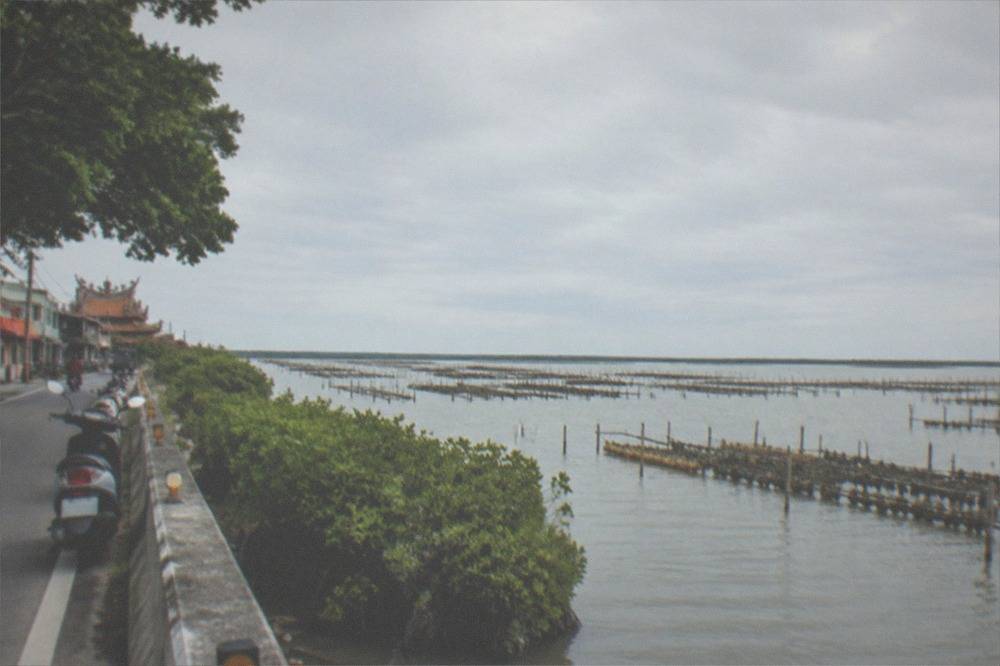
The salt country pairs naturally with the lagoon because they share a coastline. The Taiwan Salt Museum and the Jingzijiao tile-paved salt fields sit in the same district, and a car turns them from a half-day bus expedition into a comfortable loop. Further down the coast, Beimen's salt industry recreation area and the Crystal Church, and inland, Yanshui's old street and Wu Temple, are the kind of places where a timetable-bound visit costs more in waiting than a rental costs in cash.
Guanziling, in the hills on the eastern edge of the municipality, is the other headline drive. The hot spring town hosts its Hot Spring and Food Festival between September and November according to the city's own festival calendar, and the Guanziling hot spring guide covers the soak itself. A car makes Guanziling a half-day add-on rather than a full-day commitment.
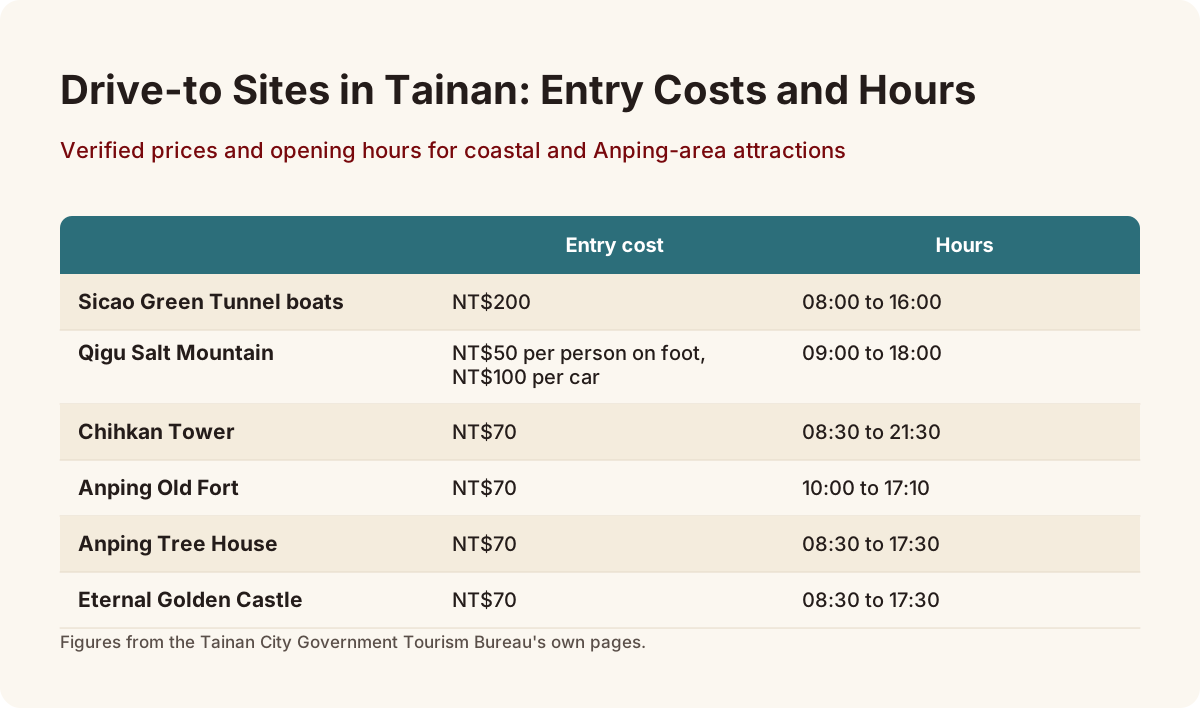
| Drive-to site | Entry cost | Hours |
|---|---|---|
| Sicao Green Tunnel boats | NT$200 | 08:00 to 16:00 |
| Qigu Salt Mountain | NT$50 per person on foot, NT$100 per car | 09:00 to 18:00 |
| Chihkan Tower | NT$70 | 08:30 to 21:30 |
| Anping Old Fort | NT$70 | 10:00 to 17:10 |
| Anping Tree House | NT$70 | 08:30 to 17:30 |
| Eternal Golden Castle | NT$70 | 08:30 to 17:30 |
The city's own pages carry the disclaimer that prices are for reference and the on-site notice governs, so read every figure above as the gate price rather than a guarantee. Concessions are half price at the city sites, and Tainan residents enter free with ID, which is a resident's benefit and not a visitor's.
Car, Scooter, Bus or Train: Which Fits Tainan?
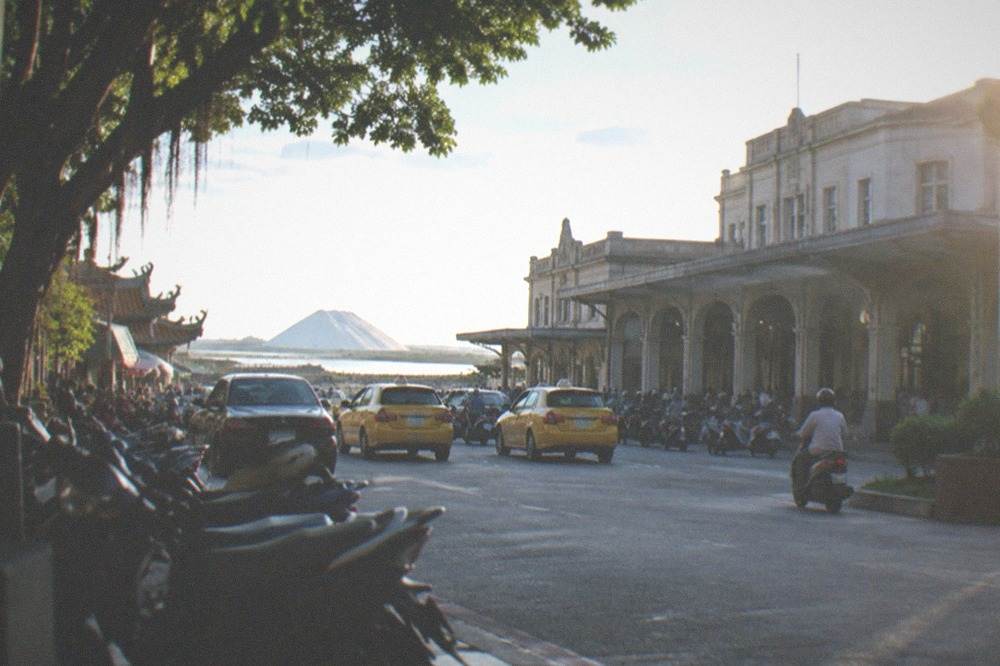
A car fits the coast and the hills, a scooter fits the old city and short hops, the bus fits the urban core where the first 8 km are free with an electronic card, and the train fits the inter-city legs, so the honest answer is that most visitors use a combination rather than one mode, and the car earns its keep only on the days it goes beyond the city.
The scooter question comes up constantly, and the Tainan scooter rental guide covers it in full. The short version carries the same warning as the car section above: an International Driving Permit is not automatically sufficient in Taiwan, Taiwan expects it to be registered at a Motor Vehicles Office, and rental shops may refuse without it. Do not build a Tainan plan on the assumption that an IDP alone unlocks a scooter, and do not assume it cannot: check the official page first.
The bus, for the city itself, is close to free. Tap a Citizen Card, iPASS, EasyCard or iCash 2.0 on and off, and the first 8 km on the trunk and branch network cost nothing for the 2026 calendar year, with the cash alternative at NT$26. The transfer discount adds NT$9 off a bus fare when you switch from Taiwan Railway within two hours, though inserting a public bike ride in between voids it. EasyCard and iPASS also work at the Tainan Art Museum ticket desk, where admission is NT$80, but this site makes no claim that they work on the High Speed Rail, because that is not verified.
| Mode | Best for | Verified cost |
|---|---|---|
| City bus | the urban core | free first 8 km with a card, NT$26 cash |
| H31 HSR shuttle | Shalun to city | free with an HSR ticket stub, otherwise NT$18 or NT$36 |
| High Speed Rail | inter-city arrival | NT$1,350 Taipei to Tainan, standard reserved |
| Rental car | coast, salt country, Guanziling | rental rates vary by operator |
| Scooter | short hops, with license caveats | see the scooter rental guide |
Rental rates themselves are deliberately absent from that table. No official price list for Tainan car rentals exists in this site's verified research, and a number invented here would be worse than the blank. Treat rental pricing the way this site treats food prices: as something the operator publishes and the reader checks, not something a guide asserts.
When Should You Not Drive in Tainan?
Do not drive in Tainan in the late summer wet season if your itinerary is flexible, because the verified climate record shows August alone bringing 466 mm of rain across 16 wet days, with typhoon risk concentrated in the same July to September window, and October to March is the dry, comfortable half of the year that suits driving far better.
Those rainfall figures come from the Central Weather Administration's published climate normals for the Tainan station, covering 1991 to 2020. The same record shows the annual total at 1,761 mm, with close to three-quarters of it falling between May and September, and December at just 16 mm across 3 wet days. October is the quietest month for rain, 2.8 wet days on average, while still averaging maxima of 30.8C, which is about as good as coastal driving weather gets anywhere.
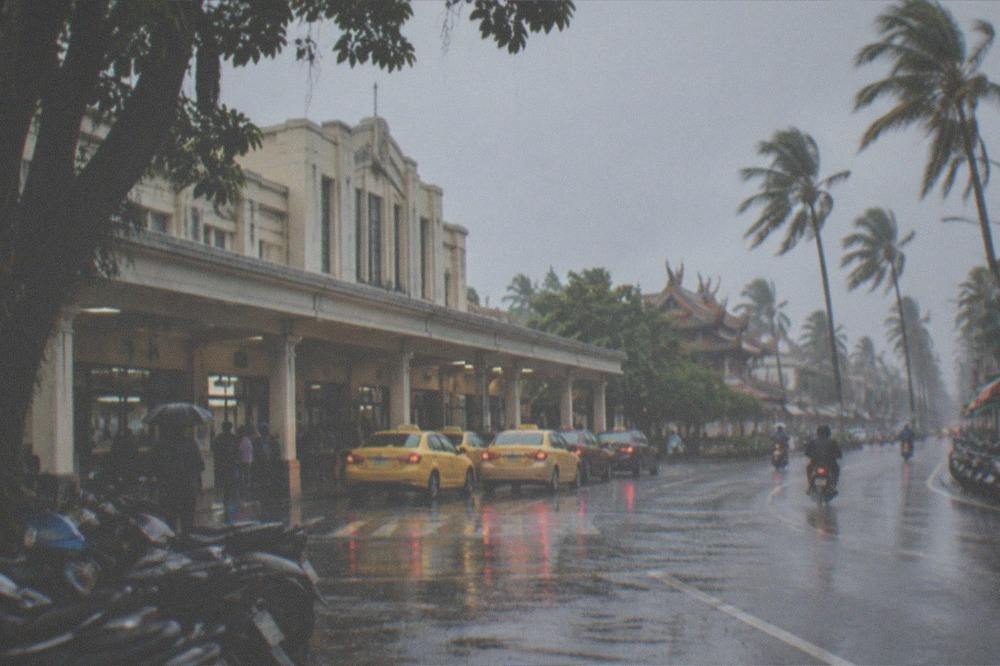
Typhoon days deserve a specific mention because of how they work. A typhoon day is declared locally, by the city government, not nationally, and when Tainan declares one, schools and many offices close and attractions and transport may suspend. The Tainan Art Museum states on its own hours page that it closes on such announcements, and other venues follow the same pattern. A driver mid-loop on the coast when a declaration lands should expect closures, not just rain. The Tainan weather guide and the Taiwan typhoon season guide carry the detail.
The other not-drive window is Lunar New Year, but for the opposite reason: it is dry and it is packed. The visitor dataset's January and February peaks reflect pilgrimage traffic to temples like Nankunshen Daitian Temple, and the roads around the major temple complexes are at their fullest precisely when the weather is at its best. If your trip lands in that window, book the car early and build patience into every drive.
| Month | Rainfall (mm) | Wet days | Mean max (C) |
|---|---|---|---|
| January | 20.7 | 3.8 | 23.0 |
| April | 69.8 | 5.9 | 29.3 |
| July | 374.6 | 13.0 | 33.0 |
| August | 466.1 | 15.8 | 32.6 |
| October | 30.8 | 2.8 | 30.8 |
| December | 16.2 | 3.0 | 24.4 |
What Should a One-Day Driving Itinerary Look Like?
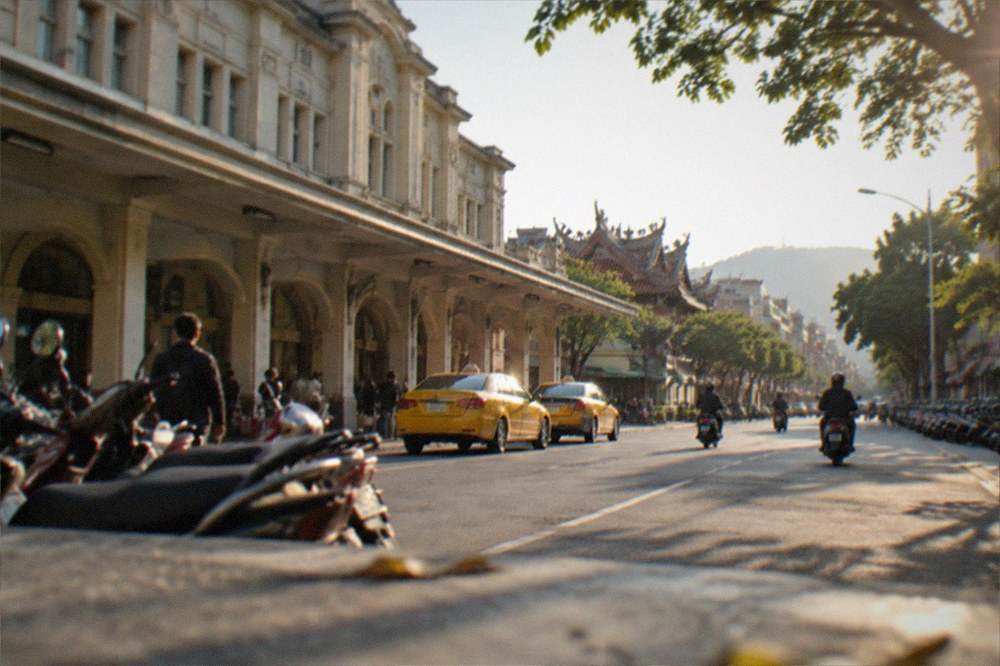
A realistic one-day loop runs west from the city to the Sicao boat docks, out along the lagoon to Qigu Salt Mountain and the salt fields, and back through Anping for the evening, and it works because every stop on it is open into the afternoon and the Anping sites, including Chihkan Tower in the city, stay open late enough to close the day with.
The shape matters more than the stopwatch, and this site publishes no journey times because none were verified on an official page. What is verified is the opening picture: the Sicao boats run 08:00 to 16:00, Qigu Salt Mountain is open 09:00 to 18:00, Anping Old Fort takes its last entries before its 17:10 close, and Chihkan Tower stays open to 21:30. That final fact is the itinerary's hinge, because it means the day can end in the old city after dinner rather than racing a 17:00 gate.
Anping rewards the evening slot in other ways too. The Tree House closes at 17:30 and the Old Street keeps going after dark, and the Anping guide and the Anping Old Street guide cover the district's walking side. A car that sits in a lot from late afternoon while everyone walks Anping is a car being used correctly.
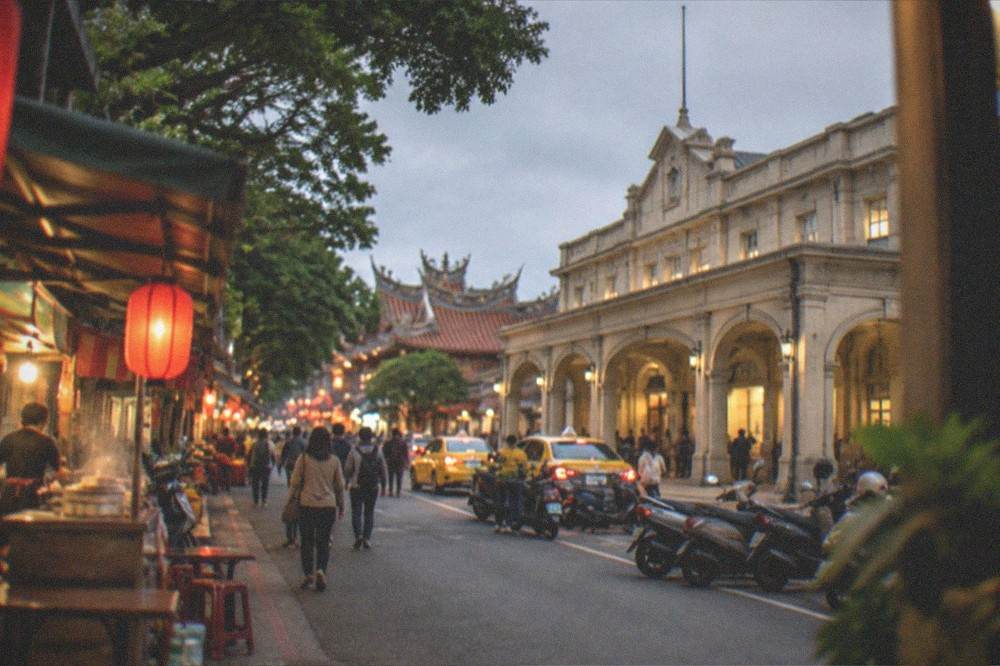
For the day itself, a note on how this site sees the whole question. A car is a tool for the wide Tainan, and the wide Tainan is genuinely worth the tool. But the deep Tainan, the beef soup before dawn, the temple courtyards, the night market rotation, is a walking city, and no vehicle improves it. The travelers who get the city right tend to drive out and walk back in, and the Tainan street food guide plus the Tainan food guide are the maps for the walking half. This site, Tainan Travel Guide, was built to keep both halves honest.
Common Questions About Renting a Car in Tainan
Do I need a car in Tainan?
Not for the historic core. The city's buses are free for the first 8 km with an electronic card, and the main sites between Chihkan Tower and Anping are walkable. A car pays for itself on the coastal and inland day trips: Qigu, Sicao, Beimen, Yanshui and Guanziling.
Can I rent a car in Tainan with a foreign license?
Not automatically. Taiwan expects an International Driving Permit to be registered with a Motor Vehicles Office, and rental companies may refuse a driver whose paperwork is not in order. Check the official requirements before booking rather than assuming an IDP alone is sufficient.
Where is the best place to pick up a rental car in Tainan?
The HSR station at Shalun in Guiren District suits rail arrivals, since it sits outside the old city and a car there saves the transfer in. The railway station area and Tainan Airport are the other main pickup points, with the airport being the closest to the centre.
Is parking difficult in central Tainan?
Yes, around the temple and night market districts. The one published figure this site verified is the Tainan Art Museum's car park at NT$40 per hour on Saturdays, Sundays and public holidays, with no daily cap. The practical answer is to park once and walk.
When is the worst time to drive in Tainan?
The late summer wet season. The Central Weather Administration's 1991 to 2020 normals show August bringing 466 mm of rain across 16 wet days, and typhoon risk concentrates in the same July to September window. October to March is the dry, comfortable half of the year for driving.
Is a car better than a scooter in Tainan?
They solve different problems. A car fits the coast and the hills with luggage and passengers; a scooter fits short hops in the old city, but carries the same license caveat in stricter form, since rental shops may refuse without a registered IDP. Neither is a substitute for walking the historic core.