Tainan City God Temple
Tainan's City God Temple sits in the dense temple belt of the old city, a short walk from the Confucius Temple and the Grand Matsu Temple. This guide explains what a city god temple actually is, how it fits the city's verified history, and how to plan a visit around it.
Short answer
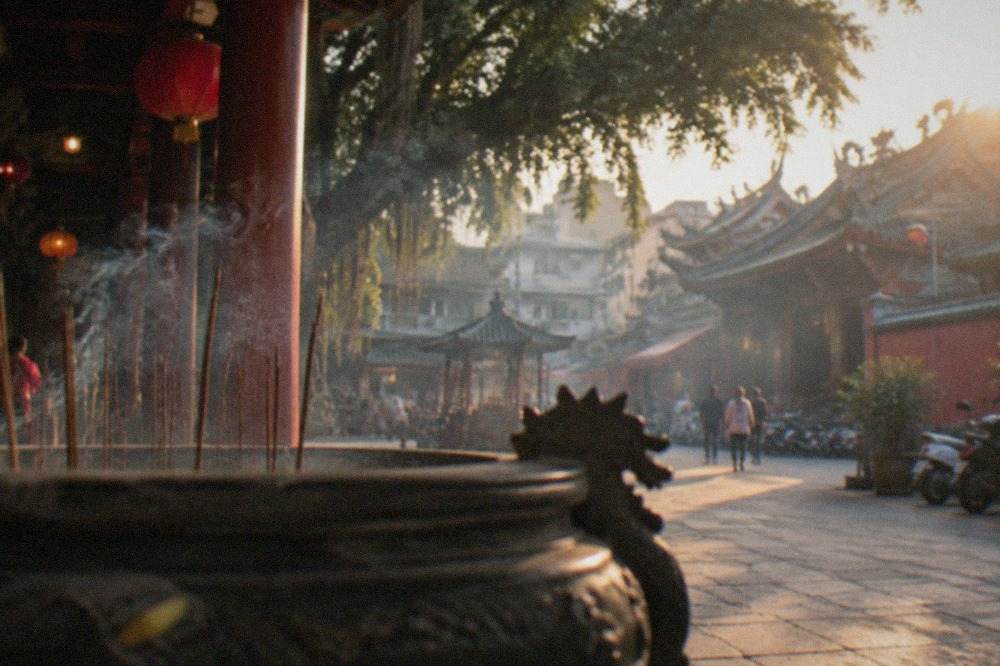
The Tainan City God Temple is a historic Chenghuangye temple in Tainan's West Central District, dedicated to the deity who, in Chinese folk religion, administers the spirits of a city. It sits in the middle of the city's densest belt of temples and old streets, and it pairs naturally with the Confucius Temple, the Grand Matsu Temple and Shennong Street in a single walk.
Every old Chinese city once kept two governments: a living magistrate who handled the daylight world, and a City God, the Chenghuangye, who handled everything else. Tainan, which served as Taiwan's capital for more than two centuries until the late nineteenth century, grew up with that double administration built into its streets, and the Tainan City God Temple is one of the places where the spiritual half of the city's civic machinery still runs. It stands in the West Central District, inside the knot of lanes where Tainan keeps its oldest layer: the Confucius Temple a few minutes one way, the Grand Matsu Temple the other, and the old commercial streets threading between them.
This page is a planning guide, not a shrine inventory. Nobody writing for this site has stood in the temple, so every figure below comes from verified official sources, and where no verified figure exists, the honest answer is printed instead of an invented one. That policy shapes several sections here, especially the ones about opening hours and admission, where the city publishes no ticketed price for this temple and this desk declines to guess. What the page does give you is the context that makes a visit mean something: what a City God actually does in Chinese folk religion, how Tainan's verified historical spine frames the temple district, and how the free bus network, the temple trail and the night market calendar fit around a half day here.
What Is the Tainan City God Temple?
The Tainan City God Temple is a temple to the Chenghuangye, the City God of Chinese folk religion, the deity who in traditional belief administers the spirits, ghosts and moral accounts of a city and its people. In the classical Chinese civic imagination, a city had a magistrate for the living and a City God for the dead, and the two mirrored each other in rank and duty. The City God held a celestial court, kept ledgers of good and bad conduct, and dispatched spirits to reward or correct, so worshipping him was the spiritual counterpart of visiting city hall. Tainan's temple belongs to that tradition, and its presence in the old capital is part of why the city's temple culture runs so deep.
The practical point for a visitor is that this is a working religious site, not a museum piece. Incense is offered, prayers are made, and the halls function as an active neighbourhood temple. That gives it a different texture from the ticketed historic sites a few streets over, where Chihkan Tower charges NT$70 at the gate and keeps a fixed daily schedule. Here the appeal is atmosphere and continuity: a cult of civic justice that has been renewed, rebuilt and re-used across generations of the same city.
It also gives the temple a specific place in Tainan's religious geography. The city's temple belt in the West Central District packs the Confucius Temple, the Grand Matsu Temple, the Sacrificial Rites Martial Temple, the Official God of War Temple and the City God Temple into a walkable grid, each deity with a distinct portfolio. The Confucius Temple handles learning and the state cult of Confucius. The Grand Matsu Temple handles the sea and seafarers. The City God handles the city itself, its dead and its moral order. Walking the belt is effectively a tour of a complete spiritual bureaucracy, and our Tainan temple trail itinerary strings them together in one day.
How Does the Tainan City God Temple Fit Tainan's History?
Tainan was Taiwan's capital for more than two centuries, until the late nineteenth century, and the temple belongs to the layer of civic and religious institutions that grew up around that status in the administrative heart of the old city. The verified spine of the city's history runs from 1624, when the Dutch East India Company occupied what is now Anping and began Fort Zeelandia, completed in 1634, through 1662, when Koxinga took the Dutch fort and renamed the place Anping. The Tourism Bureau's own Anping Old Fort page records the fort's later life under Qing dismantling, Japanese-era rebuilding and the 1975 city renovation that gave the site the look visitors photograph today. The City God Temple sits inside the city that grew from that story, in the district where the capital's administrative and religious life was concentrated.
The founding date of this specific temple is not something this site can print. No verified official source for it appears in the research file behind this page, and the same file flags several neighbouring dates as unverified too, including the Confucius Temple's founding year and the exact year the capital status ended. That is not a dodge; it is the difference between a guide that checks and one that copies. Where a date is verified, this page states it. Where it is not, the page says so and moves on, because a wrong founding year repeated across the internet is exactly how a city's history gets scrambled.
What can be said with confidence is the temple's institutional logic. A City God temple is, by definition, an artifact of a city that considered itself a city, with a magistrate's yamen and a spiritual counterpart. Tainan's claim to be Taiwan's oldest urban settlement is examined on our page asking is Tainan the oldest city in Taiwan, and the short version is that the city's documented European colonial layer starts in 1624, earlier than any other Taiwanese city's. A Chenghuangye temple in the administrative heart of that city is a marker of civic maturity, and that framing is safer and more interesting than a guessed date.
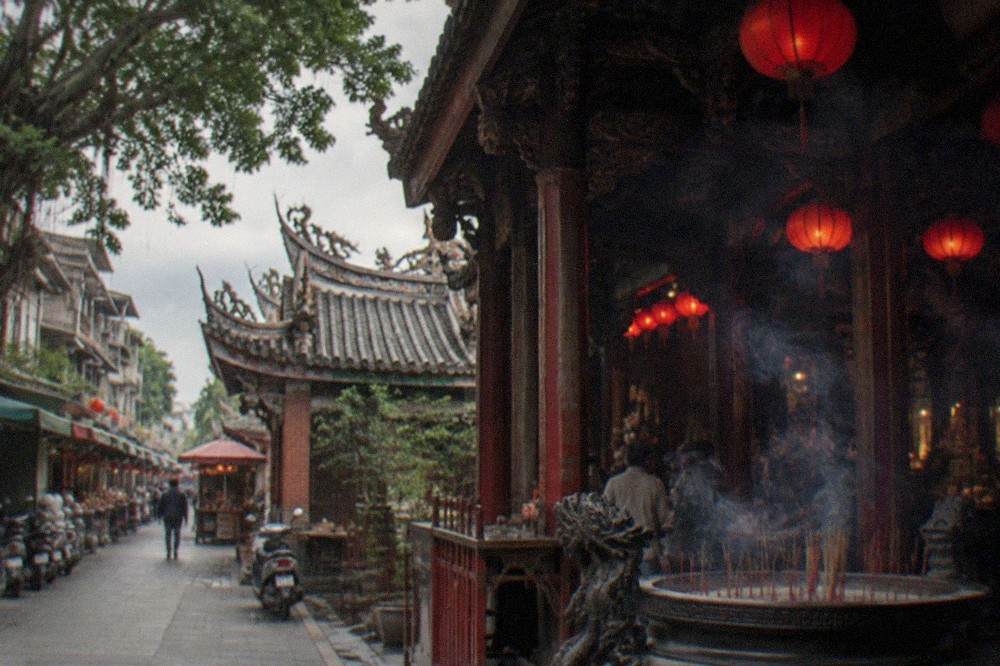
One more piece of context worth carrying: Tainan's temple culture is not a heritage performance, it is a live economy of pilgrimage. The verified visitor counts from the Tourism Administration's dataset show that Tainan's biggest temple draw is not in the city centre at all. Nankunshen Daitian Temple in Beimen drew 6,583,100 visitors in 2023, roughly fifteen times Chihkan Tower's 443,622, and the peak months for temple visitation across the city are January and February, driven by pilgrimage and Lunar New Year. A City God temple in the old district is a small room in a very large, very active religious house.
Is the Tainan City God Temple Free to Visit?
No verified ticket price or published admission fee for the Tainan City God Temple exists in the official sources this site is allowed to use, so this page prints none, and the honest instruction is to check the on-site notice when you arrive. What the city's own pages do verify is that Tainan's historic temple culture is overwhelmingly free at the point of entry: the Tainan Confucius Temple lists no ticket at all, the Grand Matsu Temple is free and open 06:00 to 21:00, the Five Concubines Temple is free 08:00 to 17:00, and Kaiyuan Temple is free 06:00 to 17:00. The city's pattern is that temples cost nothing and colonial-era forts and museums charge, and there is no verified exception to that pattern here.
The city frames every price it publishes the same way. The Tourism Bureau's attraction pages carry the disclaimer that fees are for reference and the on-site notice governs, and this site applies the same rule to hours as well. Temples open early and close at dusk or later, but a specific daily schedule for this one is not in the verified file, so plan around the neighbourhood rather than a printed timetable: the surrounding temple belt is compact, and the nearby Confucius Temple's verified hours, 08:30 to 17:30 daily except Lunar New Year's Eve, make a sensible anchor for the walk.
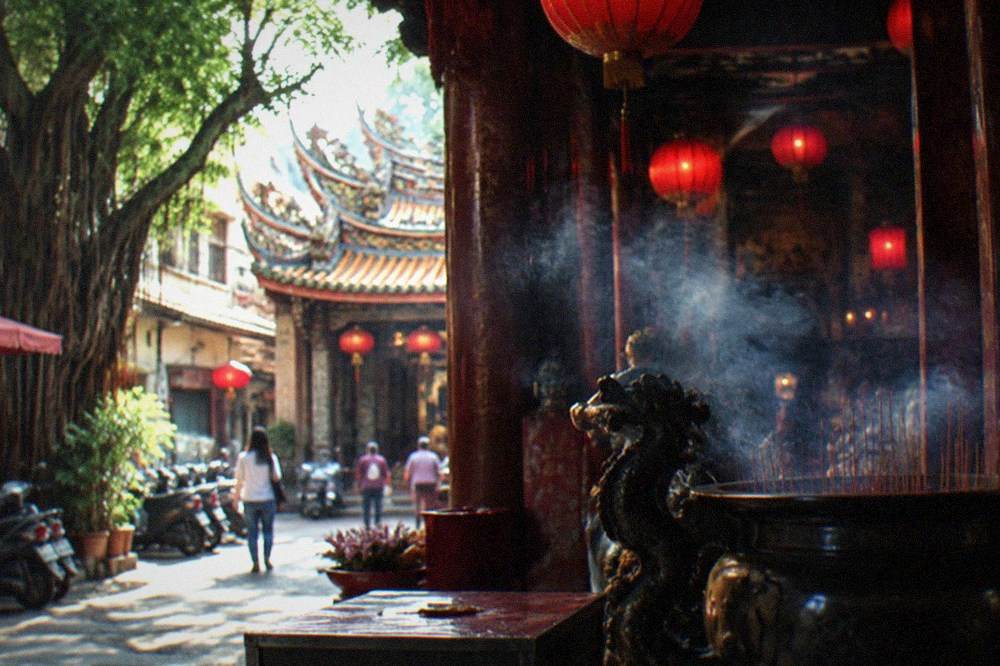
Here is the verified free-entry list for the temples most likely to share your route:
| Temple | Entry | Verified hours | Closed |
|---|---|---|---|
| Tainan Confucius Temple | Free, no ticket listed by the city | 08:30 to 17:30, Monday to Sunday | Lunar New Year's Eve |
| Grand Matsu Temple | Free | 06:00 to 21:00 daily | none listed |
| Five Concubines Temple | Free | 08:00 to 17:00 daily | none listed |
| Kaiyuan Temple | Free | 06:00 to 17:00 daily | none listed |
The contrast with the ticketed sites is sharp and worth planning around. Chihkan Tower, the Dutch-era Fort Provintia site built in the early 1650s, charges NT$70 at the gate but stays open until 21:30 daily, which makes it one of the few historic sites in the city a visitor can see after dinner. Anping Old Fort, Anping Tree House and the Eternal Golden Castle all charge NT$70 and close in the late afternoon. A temple-first day is a cheap day; a fort-and-museum day is a ticketed one, and the smart itinerary mixes them.
What Will You See Inside a City God Temple?
A city god temple is built around its divine magistrate: a seated Chenghuangye image in the main hall, often flanked by civil and martial judge figures who read the ledgers of conduct, with plaques and couplets that stress justice, warning and moral accounting. The iconography is deliberately judicial. Where a Matsu temple leans toward the sea and a Guanyin hall toward mercy, a Chenghuangye temple leans toward the courtroom: tablets, official regalia and inscriptions that address the visitor as a subject of record. The visual language is common to the tradition across the Chinese world, and it is what distinguishes this temple from its neighbours in the district.
Two practical notes follow from that character. First, this is an active place of worship, so behaviour matters more than at a fort or a museum: keep your voice low, do not photograph worshippers mid-prayer, and do not touch the altar furniture. Our Tainan temple etiquette guide covers the conventions in detail, and the short version is that modest dress, quiet movement and asking before photographing people will carry you through any temple in the city. Second, incense is sold or provided at most active temples, and the procedure varies by site; this site does not publish ritual instructions it cannot verify, so watch what local worshippers do and follow at your own comfort level.
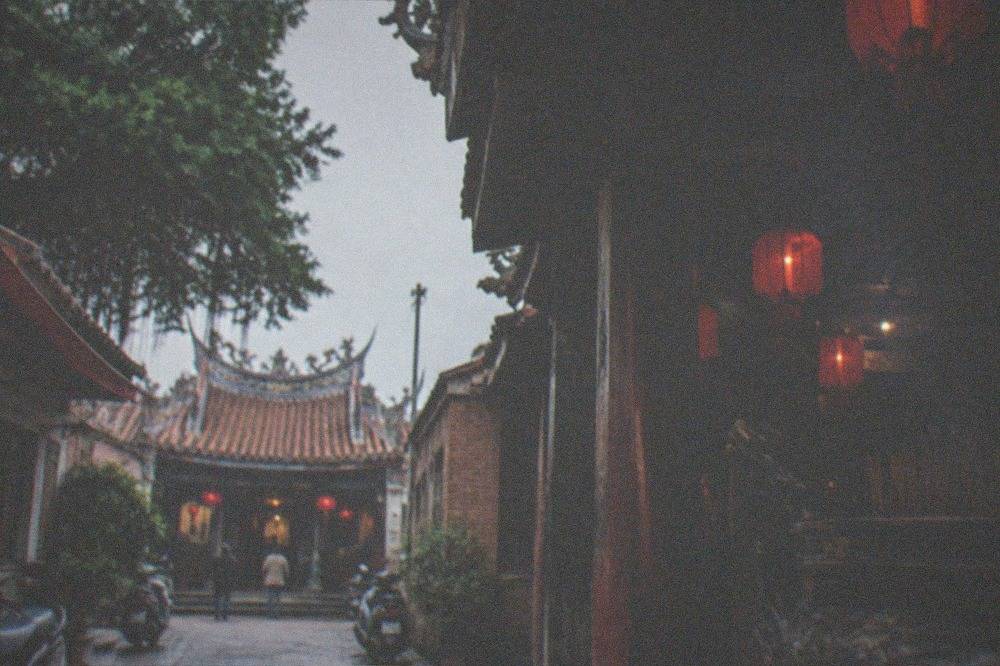
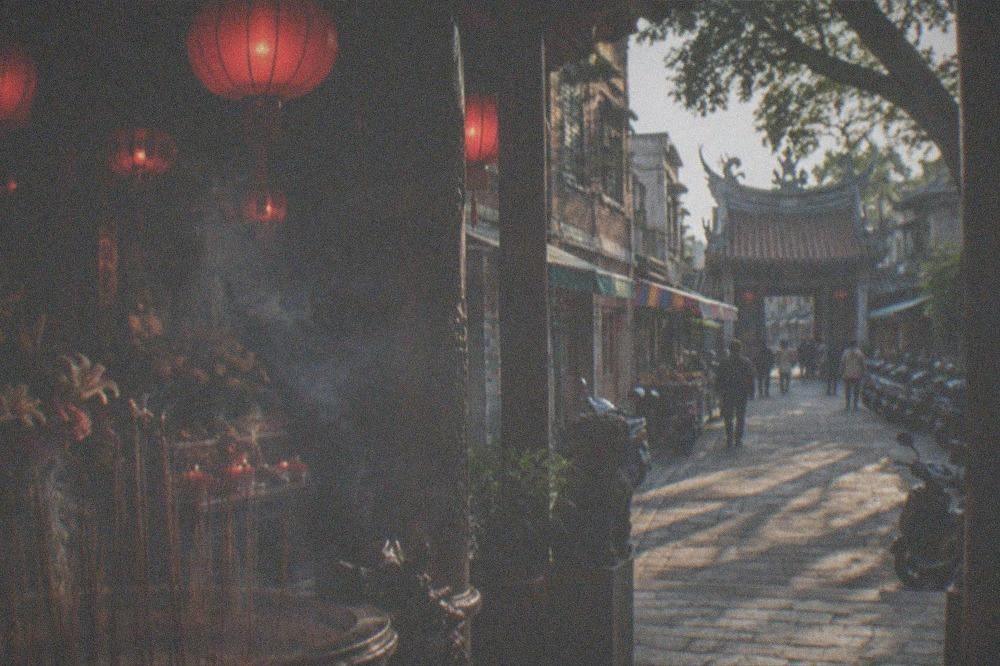
The temple's setting does half the work of the visit. The West Central District's temple belt is a grid of lanes where one temple's back wall is the next one's approach, and the walk between them passes old shopfronts, incense shops and the low brick walls of the city's Qing-era commercial layer. Shennong Street, the preserved old-street lane a short distance away, is the best-known fragment of that layer, and our Shennong Street guide makes a natural next stop after the temple belt.
How Do You Get to the Tainan City God Temple?
The temple sits in the West Central District of the old city, and the cheapest verified way to reach the area is a Tainan city bus: the first 8 km of any trunk or branch route is free with an electronic card, against a cash fare of NT$26 for the same trip, a policy that runs through the 2026 calendar year. The city's own bus site states the free first 8 km policy for the green, blue, brown, orange, yellow and red route networks, with a Citizen Card, iPASS, EasyCard or iCash 2.0, so treat it as a current policy rather than a permanent one. The catch visitors miss is the tap: you must tap on and tap off, and a missing tap off can cost you the discount.
| Payment method | Verified cost for a trunk or branch bus trip |
|---|---|
| EasyCard, iPASS, iCash 2.0 or Citizen Card, tapping on and off | Free for the first 8 km |
| Cash | NT$26 |
| Transfer from Taiwan Railway to a city bus within 2 hours, same card | NT$9 discount, or free basic distance plus NT$9 off |
The card rule has a second use in the same district. EasyCard and iPASS are also accepted at the Tainan Art Museum's ticket desk, the museum's own hours page confirms, so one card covers the bus in and the museum after. Do not extend that assumption to the High Speed Rail: no verified source supports EasyCard use on THSR, and the site's rule is not to claim it.
If you are arriving from the HSR station, remember the structural fact that shapes every Tainan arrival: the HSR station is not in Tainan. It sits at Shalun in Guiren District, well outside the old city, and reaching the centre means a transfer. The verified free option is the H31 HSR express bus, free for HSR passengers on production of a ticket stub, with other passengers paying NT$18 for one section or NT$36 for two, the section break falling at the Chimei Museum. Our Tainan bus guide covers the whole network in more depth.
What Is Near the Tainan City God Temple?
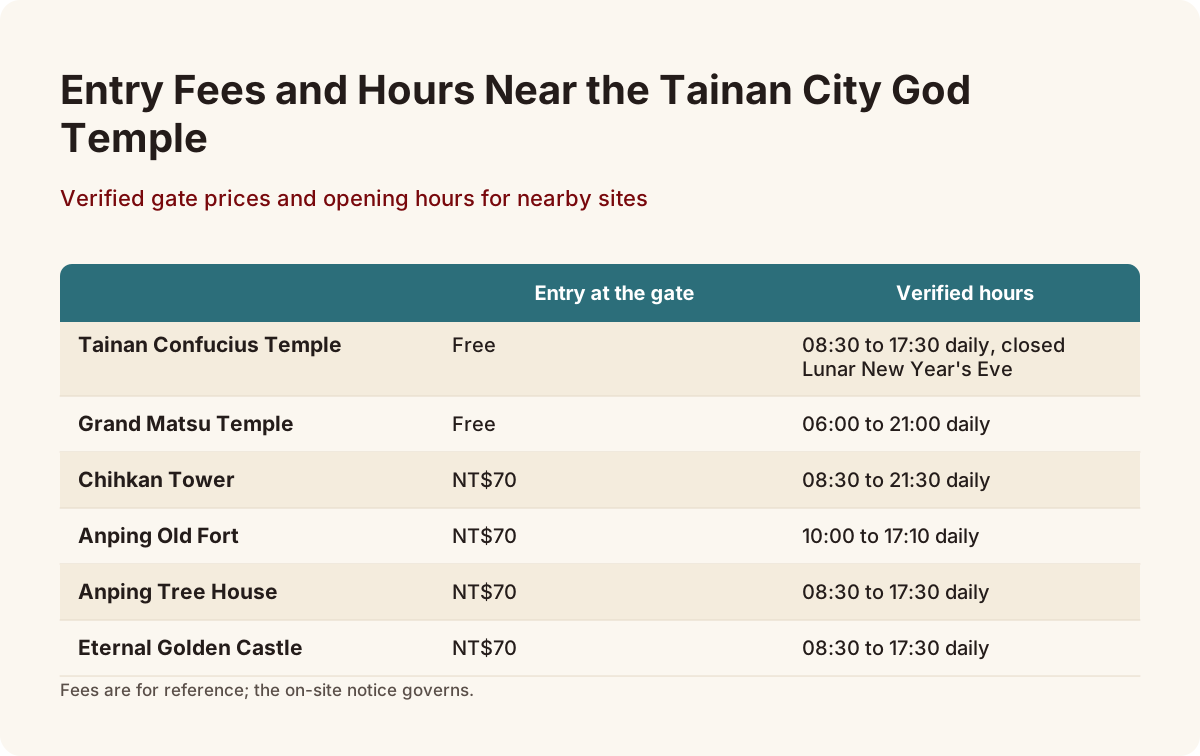
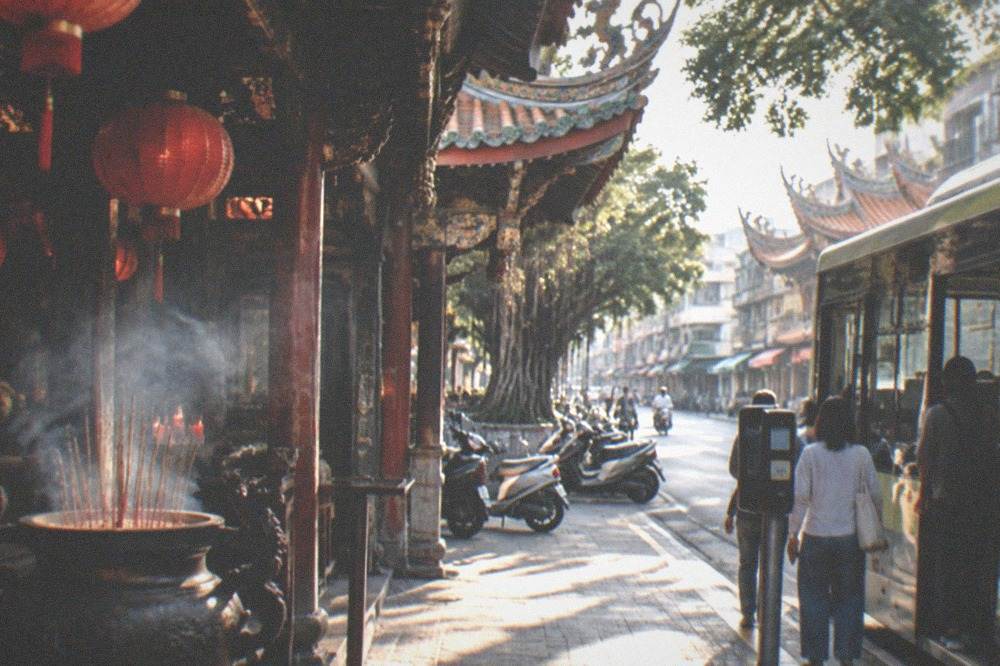
The temple's immediate neighbourhood is the densest concentration of historic sites in Tainan: the Confucius Temple, the Grand Matsu Temple, the Sacrificial Rites Martial Temple, Chihkan Tower and Shennong Street all sit within the old city grid, and all of them can be walked in a single loop. That is the real argument for building a day here rather than treating the temple as a drive-by. The verified anchors of the loop are listed below with their entry fees and hours, and the whole set fits a morning and an afternoon.
| Site | Entry at the gate | Verified hours |
|---|---|---|
| Tainan Confucius Temple | Free | 08:30 to 17:30 daily, closed Lunar New Year's Eve |
| Grand Matsu Temple | Free | 06:00 to 21:00 daily |
| Chihkan Tower | NT$70 | 08:30 to 21:30 daily |
| Anping Old Fort | NT$70 | 10:00 to 17:10 daily |
| Anping Tree House | NT$70 | 08:30 to 17:30 daily |
| Eternal Golden Castle | NT$70 | 08:30 to 17:30 daily |
The loop extends naturally into the evening. Chihkan Tower's late 21:30 closing is the one ticketed site that survives past dinner, and the night market calendar takes over from there. The verified schedule, read off the Tainan City Government Tourism Bureau's own pages, rotates by day of week: Garden Night Market opens Thursday to Sunday, Wusheng opens Wednesday, Friday and Saturday, Dadong opens Monday, Tuesday and Friday, and Siaobei is indoors and open every day. Friday is the only night all three big outdoor markets run. Check before you go, because the city updates these pages and the days do change.
| Day | Big outdoor markets open |
|---|---|
| Monday | Dadong |
| Tuesday | Dadong |
| Wednesday | Wusheng |
| Thursday | Garden |
| Friday | Dadong, Wusheng and Garden |
| Saturday | Wusheng, Garden |
| Sunday | Garden |
Siaobei, indoor and daily from 12:00 to 00:00, is the wet-weather and wrong-night answer, and our Garden Night Market page covers the biggest of the outdoor options. If the evening is free and the weather holds, an evening walking tour is the bookable way to cover the after-dark layer without planning it yourself.
When Is the Best Time to Visit Tainan's Temples?
October to March is the verified sweet spot: the Central Weather Administration's 1991 to 2020 normals for Tainan show October averaging just 2.8 wet days while still reaching 30.8C maxima, and December dropping to 16 mm of rain across 3 wet days, against August's 466 mm across 16. Nearly three-quarters of the annual 1,761 mm falls between May and September, and typhoon risk concentrates in the late-summer months, so the dry half of the year is when the temple belt's unshaded lanes and courtyard stops are comfortable rather than punishing. The Central Weather Administration's published normals are the source for every figure in this section.
The temple calendar cuts the other way. The verified visitor data shows January and February as the peak months for Tainan's temple sites, driven by pilgrimage and Lunar New Year, and the city's own festival calendar places the Yanshui Beehive Fireworks in February, on the Lantern Festival, alongside the Yuejin Lantern Festival from February to March. A winter visit therefore trades cooler lanes for bigger crowds at the major temples. Spring and late autumn split the difference: the Taiwan International Orchid Show falls in March, the Confucius Temple Cultural Festival in September, and the Guanziling Hot Spring and Food Festival runs September to November.
| Period | Rain | Temperatures | Temple season |
|---|---|---|---|
| January to February | 20.7 to 21.6 mm per month | mean maxima 23.0 to 24.0C | Peak pilgrimage and Lunar New Year crowds |
| May to September | 165.6 to 466.1 mm per month | mean maxima 31.4 to 33.0C | Hot, wet, typhoon-risk months |
| October | 30.8 mm, 2.8 wet days | mean maximum 30.8C | Dry, warm, quieter temples |
| December | 16.2 mm, 3 wet days | mean maximum 24.4C | Dry and mild, thin crowds |
Should You Book a Tour Around the Tainan City God Temple?
Most of the temple belt costs nothing and needs no ticket, so a booking is optional here, but two kinds add real value: a guided walk that explains the deities and the iconography, and a cultural session such as a tea ceremony that gives the temple day a structured, seated hour. The honest framing is that Tainan is not a booking-heavy city. Temples, old streets and the canal cost nothing and need no ticket, and a visitor who walks the belt with this site's pages open loses very little. What a paid product adds is interpretation, the thing a self-guided walk cannot supply, and transport out to the lagoon coast.
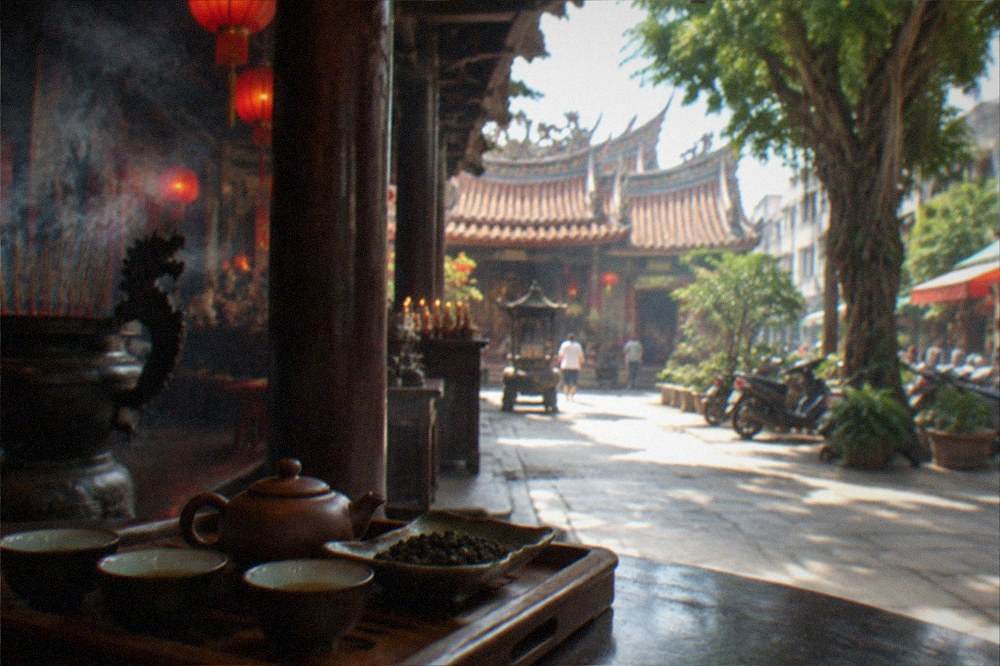
The tea ceremony is the natural pairing for a temple day. The temple belt is a morning of standing and reading plaques; a 90-minute oolong ceremony is its counterweight, a seated, guided hour of the same traditional culture in a calmer register, and the operator's live listing carries free cancellation. If your day stretches toward evening, the night walk covers the after-dark layer of the same district, and if the weather turns, the Chimei Museum ticket is the verified wet-day anchor, NT$200 for the permanent collection at the gate, closed every Wednesday, last entry 17:00.
For a fuller food-and-culture loop around the same streets, a guided walk that includes street snacks is the other strong option, and it converts the temple belt's lanes into a lunch plan without any guesswork on which stall to trust. The three options below are the ones this site rates for a temple-centred day: the ceremony for calm, the night walk for the after-dark layer, and the museum ticket for the wet-day fallback.
A private guide with a car is the fourth option, and it earns its price when the day stretches beyond the old city, out to the lagoon coast at Qigu or the hot springs at Guanziling, where public transport thins out. For a temple-only day inside the district, the walks and the ceremony cover it.
Common Questions About the Tainan City God Temple
Is the Tainan City God Temple free to enter?
No verified official source publishes a ticket price for this temple, so this site prints none. The city's verified pattern is that Tainan's temples are free at entry, including the Confucius Temple, the Grand Matsu Temple, the Five Concubines Temple and Kaiyuan Temple, while the Dutch-era forts and museums charge. Check the on-site notice when you arrive, which is the rule the city itself applies to every price it publishes.
What are the Tainan City God Temple's opening hours?
No verified daily schedule for this temple appears in the official sources this site uses, so none is printed. Active Taiwanese neighbourhood temples typically open early and stay open into the evening; the Grand Matsu Temple's verified hours, 06:00 to 21:00 daily, give a reasonable expectation for the district. Plan the walk around the verified anchors nearby, such as the Confucius Temple's 08:30 to 17:30.
Who is the City God, or Chenghuangye?
In Chinese folk religion the Chenghuangye is the divine magistrate of a city, the deity who administers the spirits of the dead and keeps the moral ledgers of the living. His temple functioned as the spiritual counterpart of the magistrate's yamen, and its iconography is judicial: judge figures, ledgers and inscriptions about justice and conduct rather than mercy or the sea.
How do I get to the Tainan City God Temple by bus?
Take any trunk or branch city bus into the West Central District: the first 8 km is free with an EasyCard, iPASS, iCash 2.0 or Citizen Card, provided you tap on and tap off, against a cash fare of NT$26. The policy runs through the 2026 calendar year, so re-check it before you travel.
What should I combine with the Tainan City God Temple?
The Confucius Temple, the Grand Matsu Temple, the Sacrificial Rites Martial Temple and Shennong Street all sit in the same walkable grid, and Chihkan Tower's late 21:30 closing makes it the one ticketed site that survives past dinner. Follow the temple trail itinerary for a full day, and check the night market schedule for the evening.
Is the Tainan City God Temple suitable for children?
As an active place of worship it rewards quiet behaviour, but a short visit works well with children, and the surrounding belt adds variety: the free Confucius Temple grounds, the old lanes toward Shennong Street and, on the right night, a rotating night market. Keep the stop short, move on to the lanes, and the day carries itself.
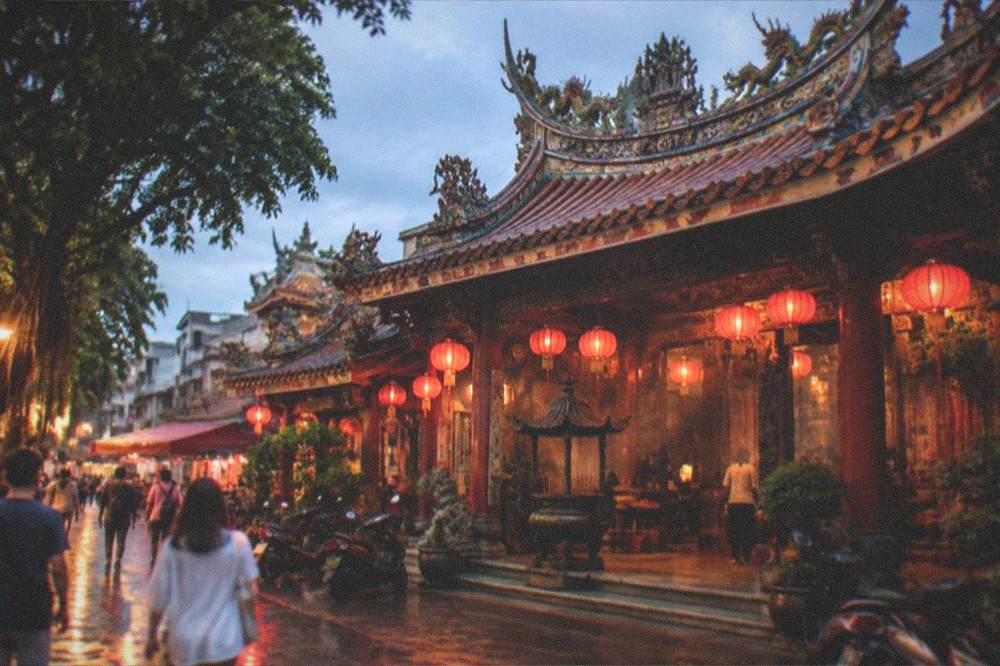
The Tainan City God Temple is a small stop with a large idea behind it: a city that kept a spiritual magistrate alongside the living one, in the district where that city governed an island for two centuries. Walk it with the free bus fare in your pocket, the temple belt's free entry list in mind and the night market calendar checked for your day of the week, and it slots into a day that costs almost nothing until you decide it should. For the wider question of how Tainan stacks up against the island's other cities, see our comparison of Tainan versus Kaohsiung, and for everything else in the old capital, start with Tainan Travel Guide.