Is Tainan the Oldest City in Taiwan?
Tainan is the oldest city in Taiwan in the sense that matters to a traveler: the Dutch built Fort Zeelandia there in 1624, it served as the island's capital for over two centuries, and its temples, forts and old streets are the oldest things a visitor can walk through in the country.
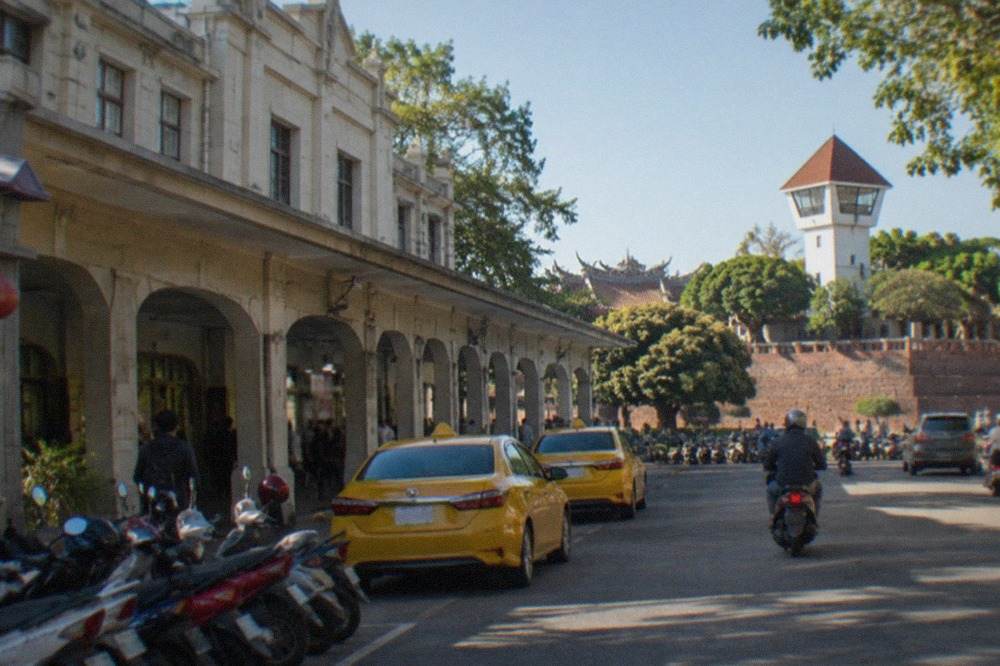
Is Tainan the Oldest City in Taiwan?
Tainan is where written, verifiable urban history in Taiwan begins. The Tainan City Government Tourism Bureau's own page for Anping Old Fort records that the Dutch East India Company occupied what is now Anping in 1624 and completed Fort Zeelandia in 1634, and that after Koxinga took the fort in 1662 the settlement became the seat of his rule. Every other Taiwanese city grew up later than that. The caveat is that indigenous peoples lived across Taiwan for millennia before any European arrived, so "oldest city" means the oldest continuously documented urban settlement, not the oldest human presence. That distinction matters, and this page keeps it.
Is Tainan the Oldest City in Taiwan?
Yes, Tainan is the oldest city in Taiwan in the sense every historian and every official source uses: it is the island's earliest continuously documented urban settlement. The Dutch East India Company occupied what is now Anping in 1624 and completed Fort Zeelandia in 1634, and the city then served as Taiwan's capital for more than two centuries, until the late nineteenth century. No other Taiwanese city can trace an unbroken recorded history that far back.
The claim rests on documents, not on civic pride. The Tourism Bureau's attraction page for Anping Old Fort carries the dates themselves: 1624 for the Dutch occupation of Anping, 1634 for the completion of Fort Zeelandia, and the early 1650s for the Dutch construction of Fort Provintia at what is now Chihkan Tower. The Bureau's pages are written by the city government and carry visible last-updated dates, which is why this site treats them as the spine of the historical record rather than repeating figures found on third-party pages.
One thing this site will not do is hand you a single tidy year for when Tainan stopped being the capital. Two readings exist, 1887 for the establishment of Taiwan Province with a new central capital designated, and 1894 for the capital's formal move to Taipei, and the sources disagree. The defensible sentence is the one used above: capital for more than two centuries, until the late nineteenth century.
What Did Tainan's Centuries as Capital Leave Behind?
Tainan's time as the island's capital left the densest concentration of historic buildings open to the public anywhere in Taiwan: Fort Zeelandia's surviving Dutch brick ramparts at Anping Old Fort, the early 1650s foundations of Fort Provintia under Chihkan Tower, the Grand Matsu Temple, the Five Concubines Temple, Kaiyuan Temple, and the Confucius Temple that carries the real, documented title of the first academy of Taiwan.
Not all of what a visitor photographs is as old as it looks, and the Tourism Bureau is unusually frank about this. The Bureau's Anping Old Fort page states that the only genuine Dutch-period remains on the site are the brick walls of the south outer rampart in front of the fort. Most of the rest is later: the fort was rebuilt under Japanese rule, and in 1975 the Tainan City Government added the pointed roof to the lookout tower and painted the walls white, producing the structure visitors see today. Chihkan Tower similarly layers Dutch foundations, Qing-era pavilions and later restoration work into one site.
The honest framing is that Tainan is a city of surviving fragments rather than intact ancient streetscapes, and the fragments are genuinely old by Taiwanese standards. A visitor can stand in front of rampart brick laid in the Dutch period, then walk fifteen minutes to temples founded in the Qing era, all within one district. That density, more than any single building, is what the capital centuries left behind.
| Year or period | What happened | Where to see it today |
|---|---|---|
| 1624 | The Dutch East India Company occupies what is now Anping | Anping Old Fort site |
| 1634 | Fort Zeelandia completed | South outer rampart brick walls, Anping Old Fort |
| Early 1650s | The Dutch build Fort Provintia | Foundations at Chihkan Tower |
| 1662 | Koxinga takes the Dutch fort and renames the place Anping | Anping district, Koxinga Shrine |
| Qing period | Taijiang inner sea silts up; parts of Fort Zeelandia dismantled to build the Eternal Golden Castle | Eternal Golden Castle |
| Late 19th century | Tainan's centuries as capital end | City-wide historic core |
| 1975 | City renovates Anping Old Fort into its present form | Anping Old Fort |
The table above is the whole reason the question has a clean answer. Other Taiwanese cities have old temples and colonial-era streets, but none can fill a single timeline from the Dutch period to the present with sites a visitor can enter, several of them free. The Confucius Temple charges no admission, opens 08:30 to 17:30 daily, and closes only on Lunar New Year's Eve, according to the Tourism Bureau's page for it. The Grand Matsu Temple is free and open 06:00 to 21:00 every day. The Five Concubines Temple and Kaiyuan Temple are free as well. For more on what the city is known for beyond its age, see what Tainan city is known for.
Which of Tainan's Oldest Sites Can You Actually Visit Today?
Every major site in Tainan's founding story is open to the public: Anping Old Fort charges NT$70 at the gate and opens 10:00 to 17:10 daily, Chihkan Tower charges NT$70 and is unusual in staying open until 21:30 every evening, and the Eternal Golden Castle and Anping Tree House each charge NT$70 with 08:30 to 17:30 hours. Concessions are half price, and Tainan residents enter free with ID.
The late closing at Chihkan Tower deserves emphasis, because it is one of the few historic sites in the city a visitor can see after dinner. The Tourism Bureau's page for Chihkan Tower lists 08:30 to 21:30 daily, with no closure day, which makes it the practical evening option when the day has run long. Anping Old Fort closes much earlier, at 17:10, so it belongs in the morning or midday half of a plan. The city's own pages carry the disclaimer that prices are for reference and the on-site notice governs, so treat every figure here as the posted rate rather than a guarantee.
The Bureau's page for Anping Old Fort records the site's full arc, from the 1624 Dutch occupation through Koxinga's 1662 takeover, the Qing dismantling of fort stonework for the Eternal Golden Castle, the Japanese-era rebuild, and the 1975 renovation. Reading that arc before visiting changes what a walk around the site means: the rampart brick is the seventeenth century, and the white tower above it is a twentieth-century interpretation of it.
| Site | Gate price (NT$) | Hours | Closed |
|---|---|---|---|
| Anping Old Fort | 70 | 10:00 to 17:10 daily | no listed closure |
| Chihkan Tower | 70 | 08:30 to 21:30 daily | no listed closure |
| Anping Tree House | 70 | 08:30 to 17:30 daily | no listed closure |
| Eternal Golden Castle | 70 | 08:30 to 17:30 daily | no listed closure |
| Tainan Confucius Temple | free | 08:30 to 17:30 daily | Lunar New Year's Eve |
| Grand Matsu Temple | free | 06:00 to 21:00 daily | none |
| Five Concubines Temple | free | 08:00 to 17:00 daily | none |
| Kaiyuan Temple | free | 06:00 to 17:00 daily | none |
Should You Book Anything for Anping's Historic Quarter?
Most of Tainan's oldest sites cost nothing or cost NT$70 at the gate, so booking is not really what this district is about. The one purchase that pairs naturally with the old streets is a day in period costume: a qipao rental lets you walk Anping's historic lanes dressed for the setting, and the photography that comes out of it is the reason the rental category exists at all. The Chimei Museum, which sits on the free H31 shuttle route from the high speed rail station, is the other ticket worth sorting before you arrive, especially since it closes every Wednesday.
Between the museum ticket and the costume rental, the costume rental is the one that belongs to this page's story. Anping is where the city began, and a full-day qipao rental turns a walk through its oldest lanes into something you can photograph and keep.
How Does Tainan Compare with Taiwan's Other Historic Cities?
Tainan is older than every other Taiwanese city by any documentary measure, and the gap is wide. Taipei grew from a Qing-era settlement into a city under the Japanese colonial period, Kaohsiung developed as a modern industrial port, and neither can point to a 1624 founding, a 1634 fortress, or two centuries as the island's capital. Among Taiwan's cities, only Tainan was the capital at all.
The comparison is not a slight against the others. Kaohsiung has a harbor energy and a mountain temple landscape at Fo Guang Shan that Tainan cannot match, and the two cities are close enough that the high speed rail fare between them is NT$140 standard class, per Taiwan High Speed Rail's own fare table. If you are weighing the two against each other, the honest question is not which is older but which suits your trip, and which city is better to visit, Tainan or Kaohsiung covers that directly. On the broader ranking question, what is the nicest city in Taiwan looks at the whole island.
What Tainan's age buys a visitor is depth of field. The City God Temple sits in the old core alongside the Grand Matsu Temple and the Sacrificial Rites Martial Temple, a cluster of Qing-period religious buildings that exists because the capital's institutions were all here. When the capital moved north in the late nineteenth century, the temples stayed, which is why the modern city has a historic core denser than anything Taipei or Taichung can offer.
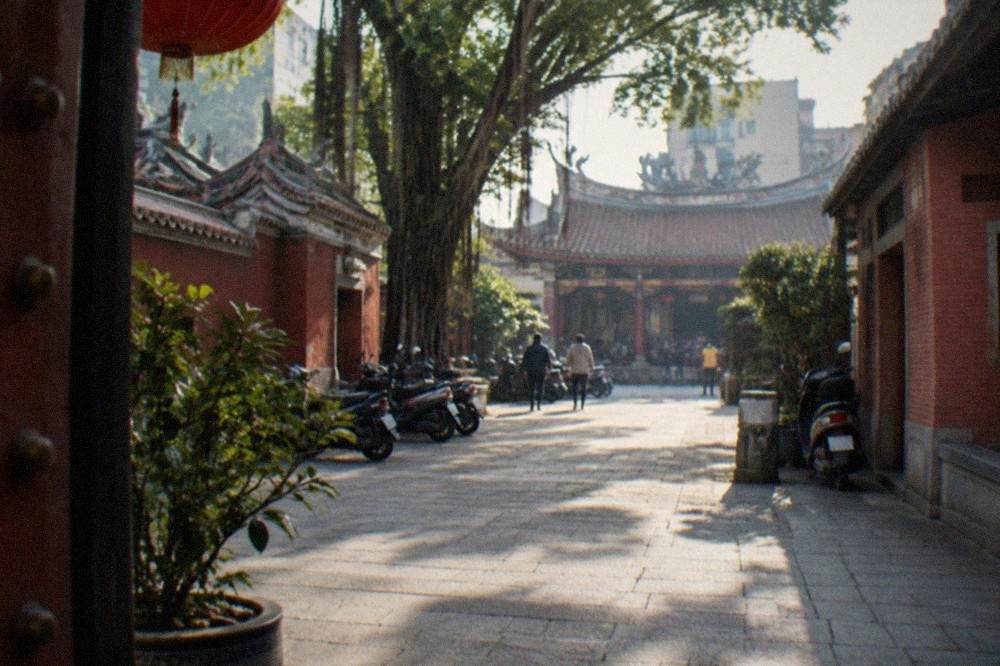
Is Tainan Worth Visiting for Its History Alone?
Yes, and the visitor numbers say history is exactly what people come for, though not in the shape most guidebooks assume. The Tourism Administration's 2023 dataset shows Anping as a district drew 4,441,443 visitors against Chihkan Tower's 443,622, and the peak months are January and February, driven by temple pilgrimage and Lunar New Year rather than by summer holidays.
That January and February peak is the counter-intuitive finding worth carrying into your planning. It lines up exactly with the Central Weather Administration's 1991 to 2020 climate normals for Tainan: December brings just 16 mm of rain across about 3 wet days, while August brings 466 mm across 16, and close to three-quarters of the annual 1,761 mm falls between May and September. Tainan's dry, comfortable season is its festival and pilgrimage season, which is the opposite of the northern-hemisphere instinct to travel in summer.
The dataset carries a caveat this site repeats whenever it cites it: counts are compiled by each operator, methods differ between a ticketed museum and an open old street, and the 2020 to 2022 years are COVID-depressed. Even with that caveat, the shape of the data is clear. People come to Tainan in numbers that dwarf the ticketed forts, and they come in winter, for the temples and the old city.
If history is your reason for coming, the practical pages that follow from it are where to go in Tainan for the first time and how many days you need in Tainan. For the broader verdict, is Tainan worth visiting weighs the whole case, and this site's own Tainan Travel Guide homepage gathers everything in one place.
Common Questions About Tainan's Age
Is Tainan The Oldest City In Taiwan?
Yes. Tainan is Taiwan's oldest continuously documented urban settlement, founded with the Dutch occupation of Anping in 1624 and the completion of Fort Zeelandia in 1634, and it served as the island's capital for more than two centuries until the late nineteenth century.
When was Tainan founded?
The documented founding dates to 1624, when the Dutch East India Company occupied what is now Anping, with Fort Zeelandia completed in 1634. Fort Provintia, at what is now Chihkan Tower, followed in the early 1650s.
How long was Tainan the capital of Taiwan?
More than two centuries, ending in the late nineteenth century. The sources disagree on the exact year, so this site does not print one: 1887 marks the establishment of Taiwan Province and 1894 the formal move of the capital to Taipei, and both readings describe a two-stage change.
Is anything from the Dutch period still visible in Tainan?
Yes. The Tourism Bureau's page for Anping Old Fort states that the brick walls of the south outer rampart in front of the fort are the only genuine Dutch-period remains at the site. Most of the rest of the fort dates from the Japanese-era rebuild and a 1975 city renovation.
Is Tainan older than Taipei?
Yes, by any documentary measure. Taipei grew into a major city under the Japanese colonial period and became the capital in the late nineteenth century, while Tainan had already been the island's capital for over two hundred years by then.
Are Tainan's oldest sites free to visit?
Several are. The Confucius Temple, Grand Matsu Temple, Five Concubines Temple and Kaiyuan Temple charge no admission. The four big ticketed historic sites, Anping Old Fort, Chihkan Tower, Anping Tree House and the Eternal Golden Castle, each charge NT$70 at the gate, with half-price concessions.
The verdict stands on the record: 1624 at Anping, 1634 at Fort Zeelandia, the early 1650s at Chihkan Tower, and more than two centuries as the capital of Taiwan. No other city on the island can match that sequence, and every site in it is open to a visitor this week. Check the posted hours at each gate before you go, because the city updates its own pages and the on-site notice always governs.