What Is Tainan City Known For?
Tainan is known as Taiwan's ancient capital: Dutch-era forts, temple culture, the island's most celebrated street food, and night markets that rotate by day of the week. Here is what defines the city.
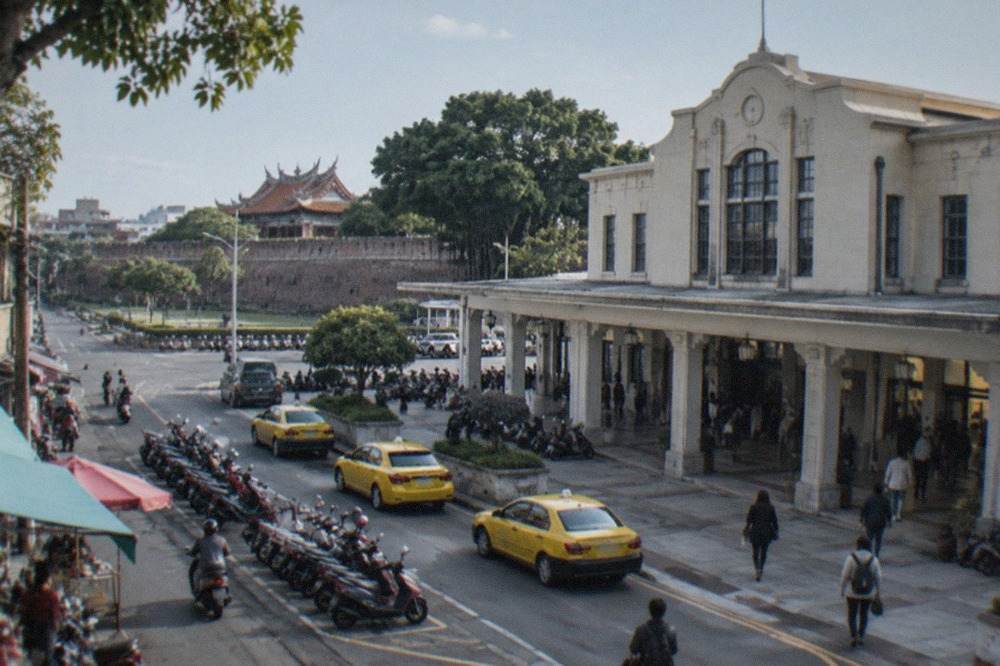
What Is Tainan City Known For?
Tainan is known as Taiwan's ancient capital: the island's oldest city, the seat of Dutch, Koxinga and Qing power for more than two centuries, and the place Taiwanese travelers themselves rank first for temples, historic streets and street food. The Tourism Bureau's own pages frame the city around Fort Zeelandia at Anping, Chihkan Tower in the old center, and a food culture that runs from beef soup at dawn to night markets that rotate by day of the week. It is a compact, flat, low-rise city where almost everything worth seeing is Dutch brick, Qing temple or snack stall.
That is the short version. The longer version explains why a city most international visitors cannot place on a map draws millions of domestic travelers a year, and why its peak season is winter, not summer. The rest of this page breaks the answer into the four things Tainan is genuinely famous for, with the verified prices, hours and schedules that make the reputation usable.
Why Is Tainan Called Taiwan's Ancient Capital?
Because it was the political center of Taiwan for more than two centuries, until the late nineteenth century. The Dutch East India Company occupied the Anping area in 1624 and completed Fort Zeelandia in 1634, and after Koxinga expelled them in 1662 the city remained the island's administrative heart through the Qing period. No other Taiwanese city has that depth of layered history, and the buildings still stand where the history happened.
The Tainan City Government Tourism Bureau's page for Anping Old Fort records the sequence: the Dutch built Fort Zeelandia as their defensive stronghold, Koxinga took it in 1662 and renamed the place Anping, and the Qing later dismantled parts of it to build the Eternal Golden Castle downstream. The city government renovated the site in 1975, adding the pointed roof visitors photograph today. An honest detail the Bureau's page also records: the only genuine Dutch-period remains at the fort are the brick walls of the south outer rampart. Most of what stands is later work, which is itself the story of Tainan, every era building on the last one.
Chihkan Tower tells the same layered story in the city center. The Dutch built Fort Provintia there in the early 1650s, the structure later became a Qing temple-and-pavilion compound, and today it is a single site where Dutch foundation walls sit under Chinese roofs. Admission is NT$70 at the gate, and its hours, 08:30 to 21:30 daily, make it one of the few historic sites in the city a visitor can see after dinner.
For the deeper version of this question, see our page on whether Tainan is the oldest city in Taiwan, and for the practical side, where to go in Tainan for the first time.
What Food Is Tainan Known For?
Tainan is known as Taiwan's food capital: the birthplace of dishes like danzai noodles, coffin bread and milkfish soup, and a city where eating is organized around snacks rather than formal meals. The reputation is domestic first, since Taiwanese travelers consistently rank Tainan's street food above the capital's, and the dawn beef soup ritual is something visitors set alarms for. No official price list exists for any of it, and none is needed: the food is cheap by any big-city standard and eaten standing up.
The dishes that carry the name are specific. Danzai noodles, a small bowl of noodles in shrimp-and-meat broth, originated in Tainan and is served everywhere from the historic Du Hsiao Yueh restaurant to night market stalls. Coffin bread, a hollowed thick slice of toast filled with a creamy stew, is a Tainan invention. Milkfish, prepared as soup, porridge or pan-fried belly, is the city's signature fish. Beef soup, made from freshly slaughtered local beef and served from before sunrise, is the one dish people plan whole mornings around.
The eating is also mapped. Guohua Street in the west of the old city is the densest snack street, and the night markets rotate: Garden on Thursday to Sunday, Wusheng on Wednesday, Friday and Saturday, Dadong on Monday, Tuesday and Friday, and Siaobei indoors every day. A walking tour is the efficient way to sample across neighborhoods, and the food-focused options below cover the classics with a guide who knows which stalls matter.
Which Landmarks Define Tainan?
Anping Old Fort, Chihkan Tower, the Tainan Confucius Temple and the working temple network define the city. Anping Old Fort and Chihkan Tower are the Dutch-era anchors at NT$70 each, the Confucius Temple is free, and the Grand Matsu Temple, Five Concubines Temple and Kaiyuan Temple charge nothing at all. The temples matter as much as the forts: this is a living religious city, not an open-air museum.
The visitor numbers say so plainly. The Tourism Administration's 2023 dataset shows Nankunshen Daitian Temple in Beimen drew 6,583,100 visitors against Chihkan Tower's 443,622, roughly fifteen times more, and the Anping district as a whole drew 4,441,443. Tainan's biggest draws are pilgrimage temples, not colonial forts, and the peak months are January and February, driven by temple pilgrimage and Lunar New Year. Winter, not summer, is this city's high season.
The museum layer is stronger than most visitors expect. The Chimei Museum, a purpose-built classical building on the far side of the city, charges NT$200 for its permanent collection and is closed every Wednesday. The Tainan Art Museum, at NT$80, stays open until 21:00 on Saturdays and takes EasyCard and iPASS at the desk. Our page on whether the Chimei Museum is worth it covers that decision in detail.
One experience sits exactly at the join between the landmarks and the photographs: renting a qipao for the day in Anping and walking the old streets in it. The rental below includes the dress for a full day, which is long enough for the fort, the tree house and the canal.
What Are the Night Markets Like in Tainan?
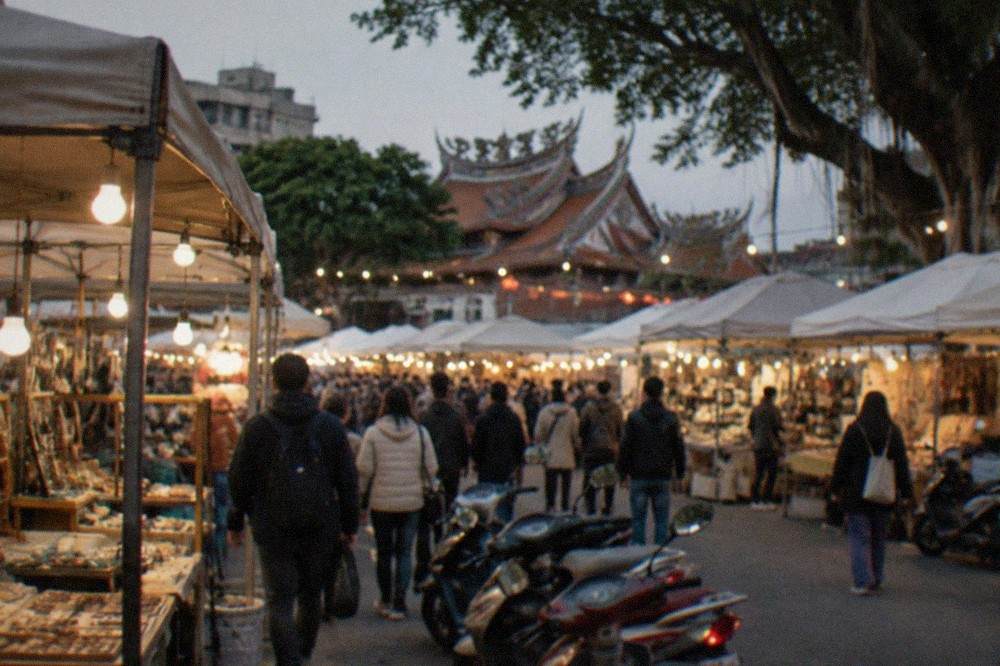
Tainan's night markets rotate by day of the week, which is the single most useful practical fact about the city. Garden Night Market opens Thursday to Sunday, Wusheng on Wednesday, Friday and Saturday, Dadong on Monday, Tuesday and Friday, and Siaobei is indoors and open every day. Friday is the only night all three big outdoor markets run; Wednesday is the thinnest, with Wusheng alone.
The verified schedule, from the Tourism Bureau's own pages:
| Market | Open | Hours |
|---|---|---|
| Garden Night Market | Thu, Fri, Sat, Sun | 17:00 to 00:00 |
| Wusheng Night Market | Wed, Fri, Sat | 17:00 to 00:00 |
| Dadong Night Market | Mon, Tue, Fri | 18:00 to 01:00 |
| Siaobei Night Market | every day, indoor | 12:00 to 00:00 |
Locals compress this into a seven-character rhyme mapping the week onto Dadong, Dadong, Wusheng, Garden, Dadong, Wusheng, Garden. It is a memory aid, not a schedule: against the city's current published hours it misses that Garden also opens Friday and Saturday and that Wusheng also opens Friday. Trust the table, and check before you go, because the city updates these pages and the days do change. Siaobei, indoors and daily, is the wrong-night and wet-weather answer.
When Is the Best Time to Visit Tainan?
October to March is the best time to visit Tainan. The Central Weather Administration's 1991 to 2020 normals for the city show December brings just 16 mm of rain across three wet days while August brings 466 mm across sixteen, and October is the driest month by wet days, 2.8, while still averaging 30.8C maxima. Tainan's rain is almost entirely a summer event, and close to three-quarters of the annual 1,761 mm falls between May and September.
That is the opposite of the pattern most visitors assume for a subtropical city, and it explains the visitor data: the peak months are January and February, when the weather is dry, warm by day and comfortable at night. Summer is not unvisitably bad, but it is a different trip. Tainan records 186 days a year above 30C, and from April to October it is above 30C on most days. Typhoon risk concentrates in the late-summer months, and when the Tainan City Government declares a typhoon day, attractions and transport suspend, as the Tainan Art Museum states explicitly on its own hours page.
The festival calendar follows the same winter-heavy rhythm. The Yanshui Beehive Fireworks are held in February, on the Lantern Festival, and the Yuejin Lantern Festival runs February to March. The Taiwan International Orchid Show falls in March, mango season runs June to July, the Qigu Seafood Festival July to August, and the Guanziling Hot Spring and Food Festival September to November. Months only: exact dates are published closer to each event, and the city calendar is the source to check.
For a fuller treatment of the seasons, see whether Tainan is worth visiting and our answer on what Tainan is best known for, which goes deeper on the food reputation.
If the four reputations above have settled the trip, the practical bookings are few and cheap. A museum ticket, a food walk and a day in a qipao cover most of what Tainan does best, and the three options below are the ones worth reserving ahead.
Common Questions About What Tainan Is Known For
What is Tainan city known for?
Tainan is known as Taiwan's ancient capital and its food capital: Dutch-era forts at Anping and Chihkan Tower, a dense working temple network, and a street food culture that includes danzai noodles, coffin bread, milkfish soup and dawn beef soup.
Is Tainan the oldest city in Taiwan?
Yes, in the sense that matters: the Dutch occupied the Anping area in 1624, and the city served as the island's political center for more than two centuries, until the late nineteenth century. No other Taiwanese city has a longer continuous urban history.
What food is Tainan most famous for?
Danzai noodles, coffin bread, milkfish dishes and beef soup served at dawn. There is no official price list for any of them, but the city is widely regarded as the cheapest of Taiwan's big cities to eat in.
Which night market should I visit in Tainan?
It depends on the day of the week. Garden Night Market, the biggest, opens Thursday to Sunday; Wusheng opens Wednesday, Friday and Saturday; Dadong opens Monday, Tuesday and Friday. Siaobei is indoors and open daily. Check the city's pages before you go, because the days change.
How many days do you need in Tainan?
Two to three days covers the old center, Anping and one night market comfortably. Our answer on how many days you need in Tainan breaks the trade-offs down.
Is Tainan worth visiting over Kaohsiung?
They are different trips: Tainan for history, temples and food, Kaohsiung for a big modern harbor city. Many visitors do both, since the high speed rail fare between them is NT$140. Our comparison of [Tainan versus Kaohsiung](/answers/which-city-is-better-to-visit-tainan-or-kaohsiung/) covers the choice.
Tainan's reputation, in one sentence, is the oldest city on the island with the youngest food culture worth arguing about. The forts are the reason the history books mention it, the temples are the reason millions of Taiwanese visitors come, and the snack stalls are the reason they stay for the weekend. Plan around the night market schedule, aim for the dry half of the year, and the city's four reputations line up neatly in two or three days of walking, as this Tainan Travel Guide lays out across the rest of the site.