Yanshui District
Yanshui is a small former port town in Tainan's northern coastal plain, and for a few nights each February it hosts one of the most famous fireworks events in the Chinese-speaking world.
Short answer
Yanshui District is a small historic town in northern Tainan, best known for the Yanshui Beehive Fireworks held each February on the Lantern Festival and for the Yuejin Lantern Festival that runs February to March.
Yanshui District
Yanshui is one of Taiwan's oldest towns, older than most of the cities around it, and for eleven months of the year it behaves like exactly what it is: a quiet district of about forty thousand people on Tainan's northern coastal plain, where the streets go quiet after dark and the pace is set by temple calendars rather than retail ones. Then February arrives. The town's own history pages record that Yanshui was already a busy trading port in the early seventeenth century, before the harbor silted up and the sea retreated, leaving the town a few kilometres inland with its old street, its temples and its festivals intact. Today the district is a pilgrimage stop, a lantern festival venue and, once a year, the site of the most famous fireworks ritual on the island.
The Tainan City Government Tourism Bureau's own calendar lists the Yanshui Beehive Fireworks in February and the Yuejin Lantern Festival from February to March, which makes this the one district in Tainan whose high season is midwinter rather than the summer holidays. That inversion matters for planning. The Central Weather Administration's 1991 to 2020 normals for Tainan show February averaging 18.9C with about 22 mm of rain across four wet days, which is to say: cool, dry and comfortable, ideal for standing outside at night watching rockets fly.
This guide covers what the district is, what happens at its two famous festivals, how to reach it, what else there is to see once you are there, and how the town fits into a wider northern Tainan loop. Everything practical, from festival months to bus fares, comes from official sources, and where a number was never confirmed on an official page, this article says so rather than guessing.
What Is Yanshui District Known For?
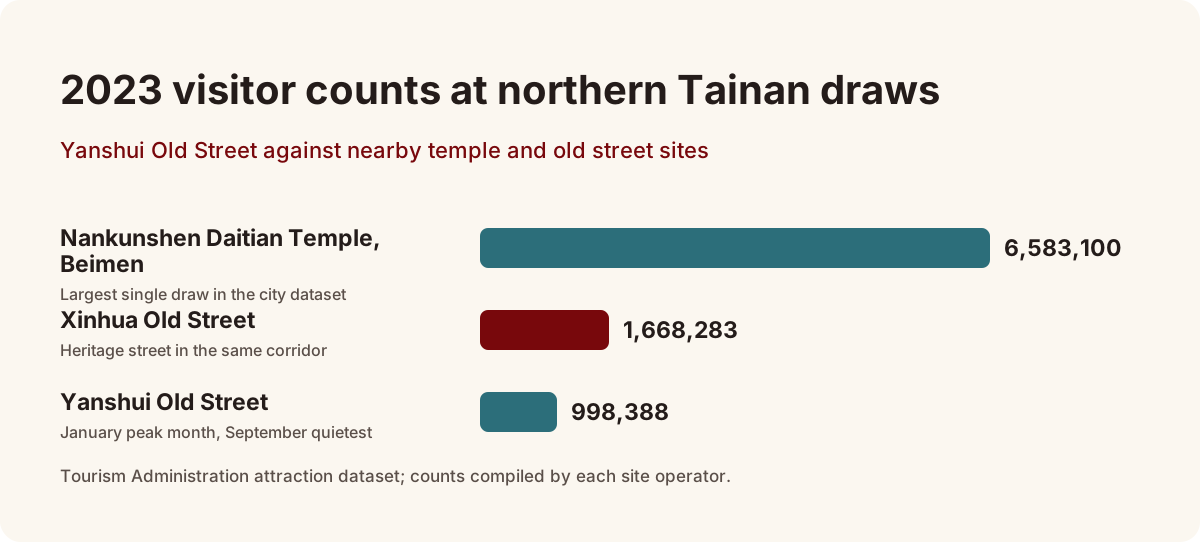
Yanshui District is known for three things: the Yanshui Beehive Fireworks, one of the most famous folk fireworks events in the Chinese-speaking world, held each February on the Lantern Festival; the Yuejin Lantern Festival, an art-lantern exhibition running February to March around the old harbor; and Yanshui Old Street, a historic street that drew 998,388 visitors in 2023. The town was a major port from the seventeenth century until its harbor silted up, and its temples date from that trading era.
That visitor figure deserves a pause, because it is the kind of number that reframes a place. The Tourism Administration's own attraction dataset recorded 998,388 visitors to Yanshui Old Street in 2023, with January the peak month and September the quietest. That puts a street in a district of forty thousand people ahead of the Tainan Art Museum, ahead of the Grand Matsu Temple, and more than double the Chihkan Tower's 443,622. The crowds are not evenly spread. They concentrate around the Lunar New Year window, when the festivals run and when temple pilgrimage season across Tainan is at its height, which is exactly the pattern the city-wide data shows: Tainan's peak months are January and February, driven by pilgrimage and the New Year, not by summer tourism.
The comparison with the Dutch-era fort sites is worth making explicitly, because almost every first-time visitor to Tainan assumes the colonial ruins are the main draw. They are not. Nankunshen Daitian Temple in Beimen drew 6,583,100 visitors in 2023, roughly fifteen times Chihkan Tower's count, and Anping as a district drew 4,441,443. Yanshui sits in that same temple-and-festival economy. People come for the ritual, the lanterns and the food, and the old street is the venue rather than the attraction itself.
One caveat belongs with every number in that dataset: the counts are compiled by each site operator and reported to the Tourism Administration, so a ticketed museum and an open old street are counted by different methods, and the 2020 to 2022 years are depressed by COVID. Treat the figures as scale, not precision.
What Happens at the Yanshui Beehive Fireworks?
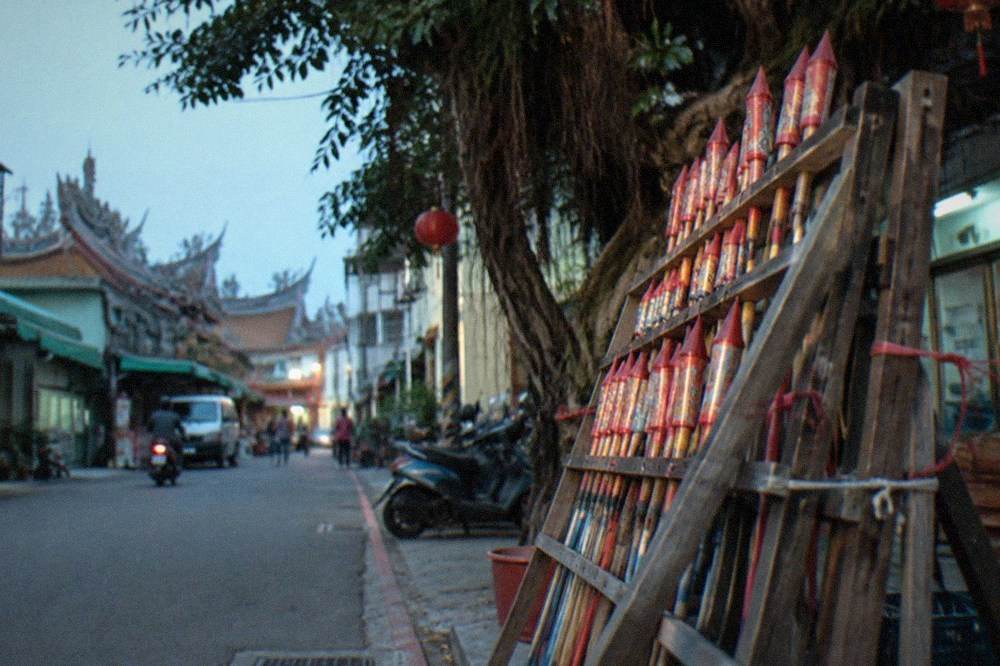
The Yanshui Beehive Fireworks is a ritual in which fireworks are fired horizontally out of wooden "beehive" rocket racks directly into the crowd, held in Yanshui District each February, on the Lantern Festival. Participants wear motorcycle helmets, thick jackets and gloves, and the event is framed locally as a purification rite tied to a historic plague outbreak. The city's official calendar places it in February; the specific Gregorian date shifts with the lunar calendar and is confirmed closer to the event.
The event's own origin story, as the district tells it, is a cholera outbreak in the nineteenth century, when the town's residents paraded its temple gods through the streets and set off fireworks to drive out the plague. The custom survived the plague and became an annual rite. In its modern form, the wooden racks are loaded with thousands of small rockets that fly outward rather than upward, and standing inside the firing zone in protective gear is considered the point, not a hazard to be avoided. The local framing is that being hit by the fireworks brings good fortune for the year.
What a visitor should take from this, practically: the event is loud, physical and genuinely risky for anyone without proper protection, and the protection is not optional. Helmets, full-coverage clothing and closed shoes are the standard advice from every official and semi-official description of the event. Anyone who wants to watch without participating can do so from outside the firing lanes. The event runs across two nights in the town center, with the god's procession moving through the streets and the racks fired at stops along the route, so there is no single fixed vantage point that works for the whole thing.
The exact dates are the one thing this article will not print. The festival falls on the Lantern Festival, the fifteenth day of the first lunar month, so the Gregorian date moves every year, and the city publishes confirmed dates closer to the event. The Tainan City Government Tourism Bureau's festival calendar is the authoritative listing, and it is where the February placement comes from. If you are planning a trip around the event, plan for the February window and confirm the date on that calendar before booking anything non-refundable. Our full event guide, with more on the ritual and the practicalities, is at Yanshui Beehive Fireworks.
The Beehive Fireworks is not the kind of thing you organize yourself in an afternoon, and it is not the only reason to be in northern Tainan in winter. A structured day tour covers the old capital's highlights and the reservoir country to the east, which pairs well with a festival trip:
The three options above suit different trips. The reservoir and ancient-capital day tour is the natural fit for a Tainan-based stay, the three-day southern loop works if Tainan is one stop on a wider circuit, and the private historical highlights tour suits travelers arriving from Kaohsiung who want the city's story told in one day.
What Is the Yuejin Lantern Festival?
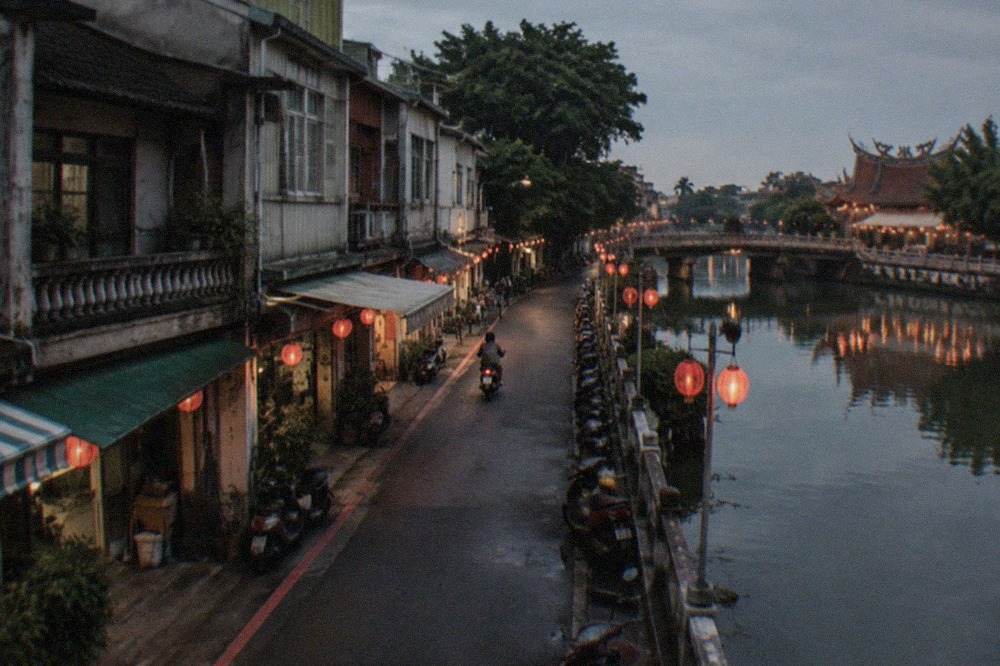
The Yuejin Lantern Festival is an art-lantern exhibition held around Yanshui's old harbor, the Yuejin Harbor, running from February to March each year. Unlike the Beehive Fireworks, it is a quiet, walkable light art show: lantern installations are set along and over the water, and the atmosphere is closer to a gallery opening than a riot. The city's calendar lists it February to March, overlapping the Beehive Fireworks window.
The festival's setting is the reason it works. Yuejin Harbor is the old anchorage that made Yanshui a trading port before the silt took the sea away, and the water that remains is still, reflective and enclosed by old streetscapes, which is close to ideal for light installations. The organizers use the reflection deliberately: the standard images from the festival are lanterns doubled in still water, and the event has built a reputation as the most photogenic of Tainan's winter festivals.
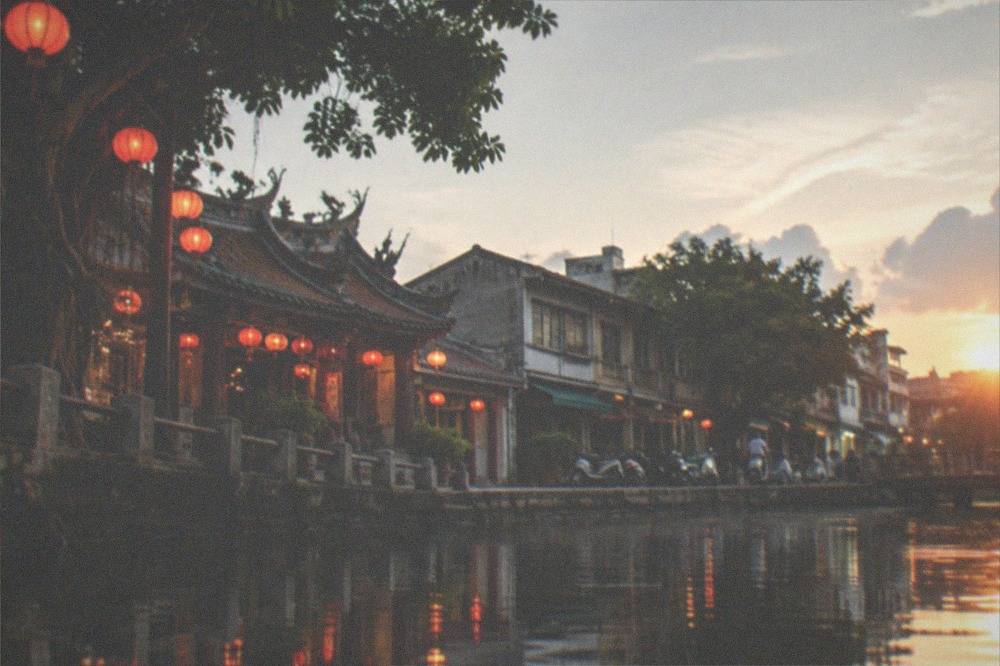
Two practical points follow from the calendar. First, the two festivals overlap, so a February visit can catch both: the lanterns are on display every evening of the run, while the fireworks happen on the Lantern Festival nights themselves. Second, the lantern festival is the better choice for families and for anyone who wants the atmosphere without the projectiles, and the fireworks are the better choice for anyone who wants the spectacle at full volume. They are different events with different audiences, and the town treats them that way.
A note on names, because they cause real confusion. The Yuejin Lantern Festival is Tainan's own event, held in Yanshui every year. The Taiwan Lantern Festival is a separate national event that rotates between cities, and this article makes no claim about where it will be held in any given year, because the rotation is decided by the Tourism Administration and announced well in advance. If you see a headline saying the "Taiwan Lantern Festival" is in some other county, that does not mean Yanshui's festival has moved. It means it is a different festival.
How Do You Get to Yanshui District?
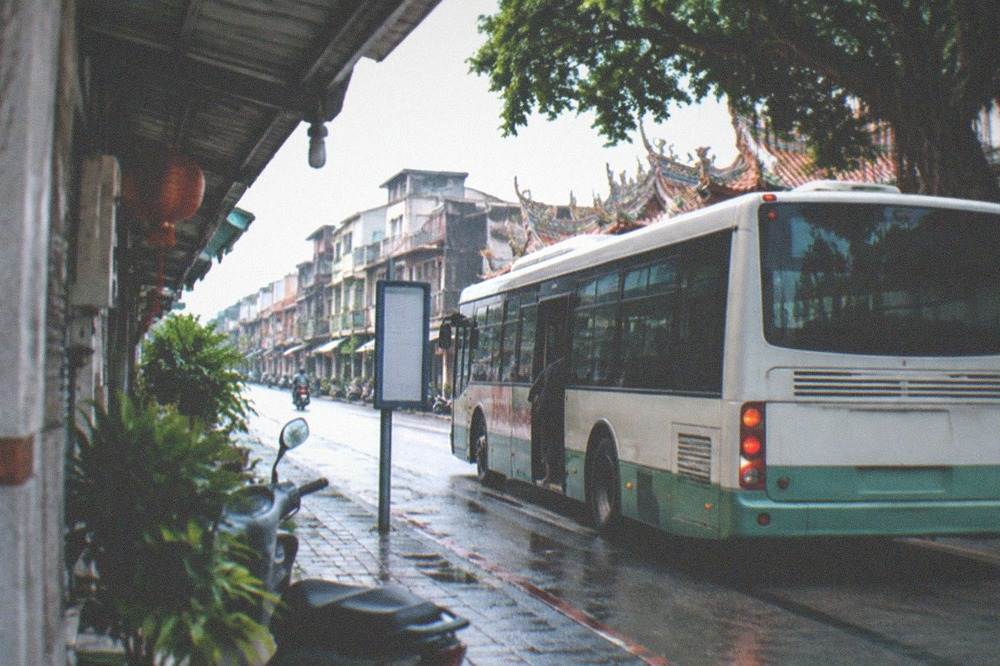
Yanshui District sits in northern Tainan, connected to the city center by local bus routes on the trunk and branch network, where the first 8 km of any journey is free with an electronic card in 2026, the cash fare being 26 for the same trip. The district also has a railway station on the western trunk line. No verified journey time or fare for the rail trip can be stated here, because none was confirmed on an official operator page.
That bus fact is the most useful transport number in this article, and it is worth understanding properly. The city's own bus site states that trunk and branch routes (the green, blue, brown, orange, yellow and red networks) are free for the first 8 km of travel distance when you pay with a Citizen Card, iPASS, EasyCard or iCash 2.0. Two conditions trip visitors up. You must tap on and tap off, and the tap off is the part people miss, which leaves the card in an unresolved state and can eat the discount. And the scheme is a calendar-year policy, running through 2026, not a permanent entitlement, so it is worth re-checking on the city's bus ticketing page before you travel.
The rail option needs honest framing. Yanshui has a station on the conventional western line, which is the network that serves Tainan's main station, but this article will not print a journey time or a fare for it, because the verified facts behind this site did not capture one from an official Taiwan Railway page. The operator's own fare query tool is the place to get the current number. What can be said structurally: the conventional rail network reaches the district, the station is walkable to the old street area, and rail is generally the more reliable option than buses for a town this far out, because the bus journey is long and the routes are not frequent. Other pages covering the same trip are gathered on Tainan Travel Guide.
| Transport fact | Detail | Source status |
|---|---|---|
| City bus, first 8 km | Free with Citizen Card, iPASS, EasyCard or iCash 2.0, tap on and tap off | Verified, city bus site, policy runs through 2026 |
| City bus, cash fare | 26 for the same trip | Verified, city bus site |
| Rail to Yanshui | Station exists on the western trunk line; fare and journey time not published here | Not verified on an official page |
| High Speed Rail | Nearest HSR station is at Shalun in Guiren District, far from Yanshui; a transfer is required | Verified, operator fare table |
| Driving | The district is reached by provincial highway from central Tainan | Structural, no verified distance or time |
The High Speed Rail point matters more for Yanshui than for central Tainan, because the HSR station is not in the city at all. It sits at Shalun in Guiren District, on Tainan's eastern edge, which is the wrong side of the city for a trip to the northern plain. An HSR arrival followed by a cross-city transfer to a northbound bus or train is a long way around. Travelers coming from Taipei or Taichung for the February festivals should read our Tainan HSR Station guide before assuming the fast train is the fast way in.
What Else Is There to Do in Yanshui?
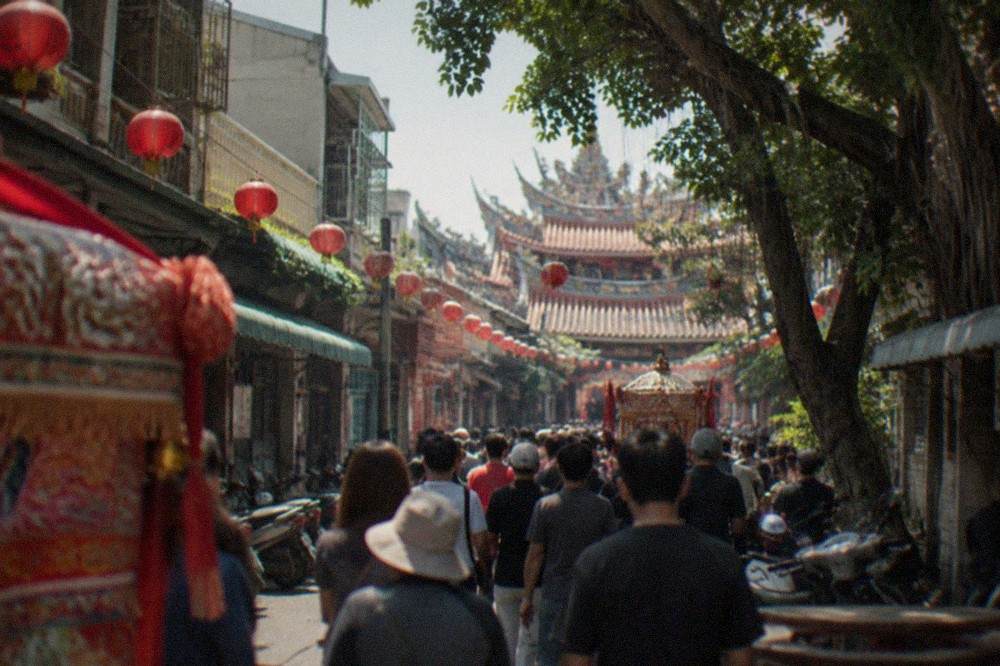
Beyond the two festivals, Yanshui District's attractions are its old street, its temples and its food culture, all of which are free to walk and need no ticket. Yanshui Old Street is the main draw, and the district's temples, including the Wu Temple, anchor the town's ritual calendar through the rest of the year. None of the district's core sights charge admission.
The old street is the district's year-round asset. The 2023 visitor count of 998,388 was not all festival traffic; the street functions as a heritage destination in its own right, with traditional shophouse fronts, snack stalls and the kind of small family businesses that survive in towns too small for chain retail. The Tourism Administration's numbers show January as the peak month and September as the quietest, which maps to the festival season on one end and the late-summer heat on the other.
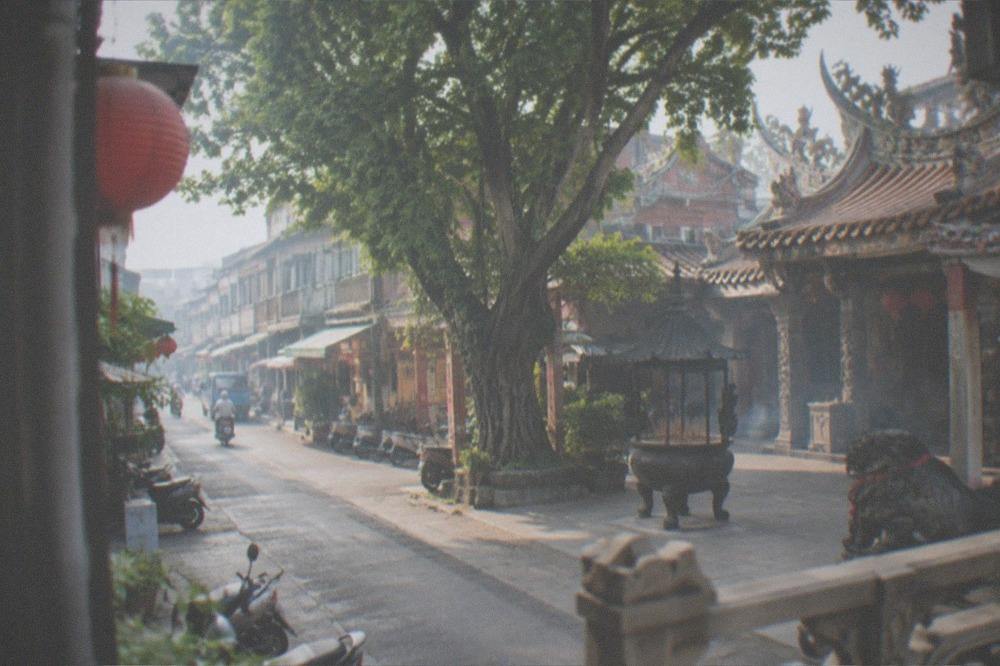
The temples are the reason the festivals exist at all. The Yanshui Wu Temple is the ritual center of the Beehive Fireworks: the god's procession leaves from the temple and the fireworks follow the route. Outside February the temple is a working place of worship, and like Tainan's major temples, it charges nothing and expects only ordinary visitor courtesy. Our Tainan temple etiquette guide covers the basics if temple visiting is new to you.
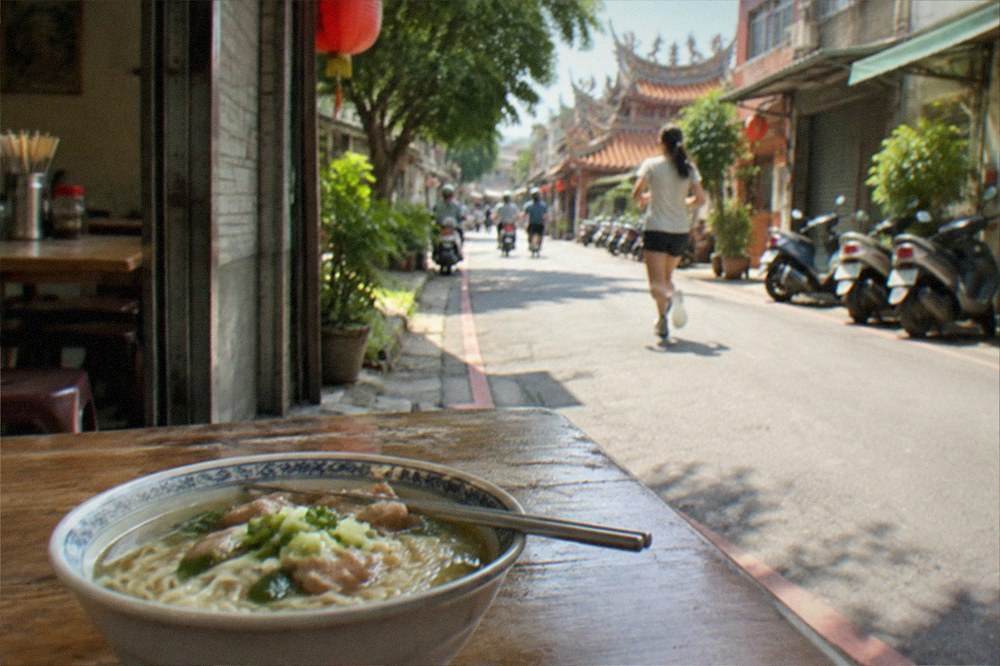
Food in Yanshui belongs to the town's own tradition rather than to central Tainan's famous snack streets. The district is known locally for its noodle dishes and its old confectionery shops, products of a trading town that had money and merchants two centuries before the cities around it grew. No verified price list exists for any individual dish, on any stall in any Tainan night market or old street, so this article prints none. What can be said is structural: eating in a small-town old street is generally cheaper than eating in the metropolitan center, and Yanshui's stalls are geared to local custom rather than tourist pricing.
For a fuller eating plan, the district sits close enough to Tainan's food capital that a Tainan food crawl in the central district before or after a Yanshui trip is the standard combination. The two are different experiences: central Tainan is dense, famous and crowded, Yanshui is slow, local and mostly undiscovered outside festival season.
How Much Time Should You Spend in Yanshui?
A half-day is enough to walk Yanshui Old Street and visit the Wu Temple outside festival season; a full day is the right budget during the February festivals, when the Yuejin Lantern Festival's evening displays and the Beehive Fireworks' night ritual both reward staying until late. Travelers combining Yanshui with neighboring districts should plan a full day for the loop.
The half-day answer assumes you are starting from central Tainan and treating Yanshui as an excursion. The old street, the temple and a meal fit comfortably into an afternoon. The full-day answer applies in February, when the lantern installations are best after dark and the fireworks ritual runs late into the night, and it applies year-round to travelers pairing Yanshui with the districts around it.
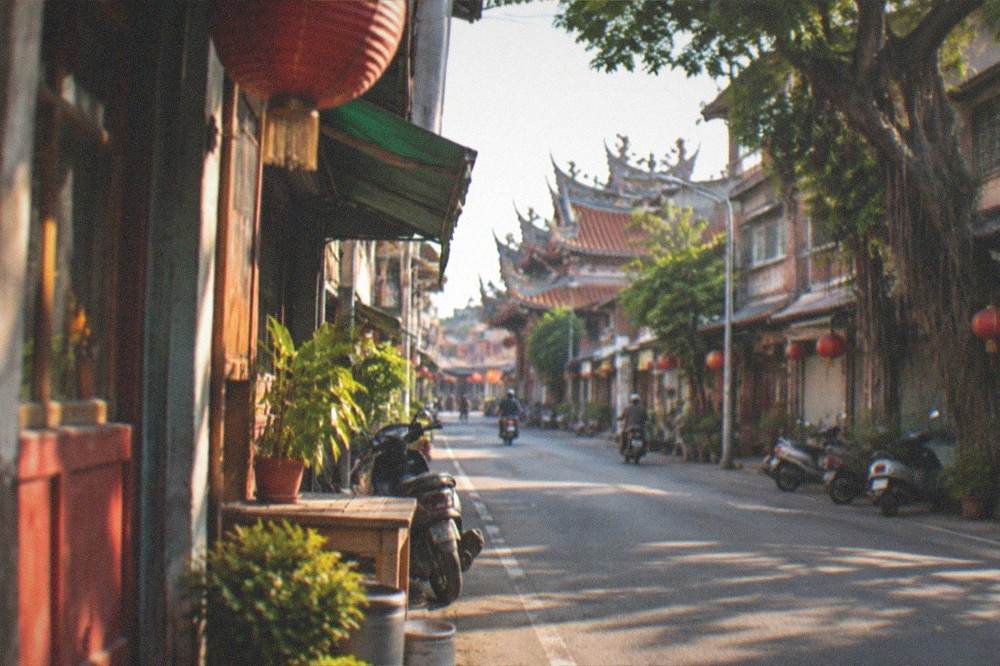
Yanshui works best as part of a northern Tainan circuit, and the neighbors are genuinely different from each other. Beimen is coastal, flat and home to the Nankunshen Daitian Temple complex that drew 6,583,100 visitors in 2023, the largest single draw in the whole city dataset. Xinhua has its own old street, which recorded 1,668,283 visitors in the same year. Houbi is rural rice country to the east. A car or a guided day is the practical way to string them together, because the bus network between small-town districts is thin.
| Northern Tainan stop | What it is | 2023 visitors | Best paired with |
|---|---|---|---|
| Yanshui Old Street | Historic trading street, festivals venue | 998,388 | Any north Tainan loop |
| Nankunshen Daitian Temple, Beimen | Major pilgrimage temple, city's biggest draw | 6,583,100 | Beimen coast |
| Xinhua Old Street | Heritage street, quieter than Yanshui | 1,668,283 | Yanshui, same corridor |
| Jingliao Old Street | Small restored rural old street | Count not separately published | Yanshui, via day trip |
The Yanshui and Jingliao day trip guide covers that pairing in detail. For travelers who prefer a structured day with the driving handled, the guided options below cover the region and the old capital:
The reservoir and ancient-capital day tour is an eight-hour circuit that suits a Tainan-based traveler with a free day before or after the February festivals, since it covers ground that would otherwise need a rental car or a patient sequence of rural buses.
If your trip is bigger than Tainan itself, that three-day southern Taiwan loop is the efficient way to see Yanshui's district, Kaohsiung and the Kenting coast without backtracking, and it suits visitors flying into Kaohsiung and out of Taipei.
For travelers based in Kaohsiung who want Tainan's historic core in one long day, the private historical highlights tour above is the fit: eight hours with a private guide, aimed at the temples and the Dutch-era sites rather than the coastal districts.
When Is the Best Time to Visit Yanshui District?
February is the best time to visit Yanshui District, because the Beehive Fireworks and the Yuejin Lantern Festival both fall in that month, and the weather is at its most cooperative: the Central Weather Administration's 1991 to 2020 normals show Tainan averaging 18.9C in February with about 22 mm of rain across roughly four wet days. October to March is the dry, comfortable half of the year in Tainan generally.
The climate table behind that claim is worth reading closely, because it explains the town's whole calendar. Tainan's rain is almost entirely a summer event: August brings 466 mm across about 16 wet days, while December brings 16 mm across three. Nearly three-quarters of the annual 1,761 mm falls between May and September. The festivals were not scheduled in February by accident; the dry, mild winter is when standing outside all night is pleasant rather than endurance.
| Month | Mean temp | Rain mm | Wet days | Festival reason to visit |
|---|---|---|---|---|
| January | 17.9C | 20.7 | 3.8 | New Year events, pilgrimage peak begins |
| February | 18.9C | 21.6 | 4.1 | Beehive Fireworks, Yuejin Lantern Festival |
| March | 21.6C | 30.4 | 4.2 | Yuejin Lantern Festival tail, orchid show |
| July | 29.3C | 374.6 | 13.0 | Mango season, but hot and wet |
| October | 26.3C | 30.8 | 2.8 | Driest month by wet days, no festivals |
The summer months are the ones to treat with respect. Typhoon risk across Taiwan concentrates in the late summer, and the rainfall table shows the same shape independently: June through August each bring well over 300 mm to Tainan. When a typhoon day is declared by the city government, attractions and transport can suspend, and the Tainan Art Museum's own hours page states plainly that it closes when the city announces a work suspension for a typhoon or earthquake, which is a verified example of how the whole city's institutions behave. In Yanshui, a summer visit means heat, humidity and a real chance of a washed-out afternoon, in exchange for mango season and far smaller crowds.
For a wider look at how the whole city's calendar and climate interact, our best time to visit Tainan guide carries the full month-by-month picture.
Common Questions About Yanshui District
When Is the Yanshui Beehive Fireworks Held?
The event is held in February, on the Lantern Festival, the fifteenth day of the first lunar month, so the Gregorian date moves each year. The city's tourism calendar confirms February and publishes confirmed dates closer to the event.
Is the Yanshui Beehive Fireworks Dangerous?
It is a real physical event, not a spectator show with a safety margin. Rockets fire horizontally into the crowd from wooden racks, and standard advice is a motorcycle helmet, thick jacket, gloves and closed shoes. Watching from outside the firing lanes is possible and common.
What Is the Difference Between the Yuejin Lantern Festival and the Taiwan Lantern Festival?
The Yuejin Lantern Festival is Tainan's own event, held at Yuejin Harbor in Yanshui every February to March. The Taiwan Lantern Festival is a separate national event that rotates between host cities, and no claim is made here about its host in any given year.
How Do You Get to Yanshui from Central Tainan?
Local buses on the trunk and branch network reach the district, free for the first 8 km with an electronic card through 2026, cash fare 26 for the same trip, with tap on and tap off required. The district also has a railway station on the western line; no verified fare or journey time is published here.
Do You Need a Ticket for Yanshui Old Street?
No. The old street, the temples and the lantern festival's outdoor displays are public space with no admission charge. The only costs on a Yanshui visit are transport, food and any protective gear you buy for the fireworks.
Can You Visit Yanshui as a Day Trip from Tainan?
Yes, and that is the standard pattern. A half-day covers the old street and temple outside festival season; February visits justify a full day because the lantern displays and the fireworks ritual both run late into the evening.
Yanshui rewards the traveler who times the visit. For most of the year it is a quiet heritage town an hour from the city's center, cheap to reach, free to walk and largely free of crowds. For a few nights each February it becomes the most intense street festival in Taiwan, and the same streets that hold a few thousand weekend strollers hold a helmeted crowd running through rocket fire. Either version is worth the trip, and the district's calendar, its climate and its visitor numbers all say the same thing: come in winter, come for the festivals, and check the official dates before you book.