Houbi and the Rice Fields
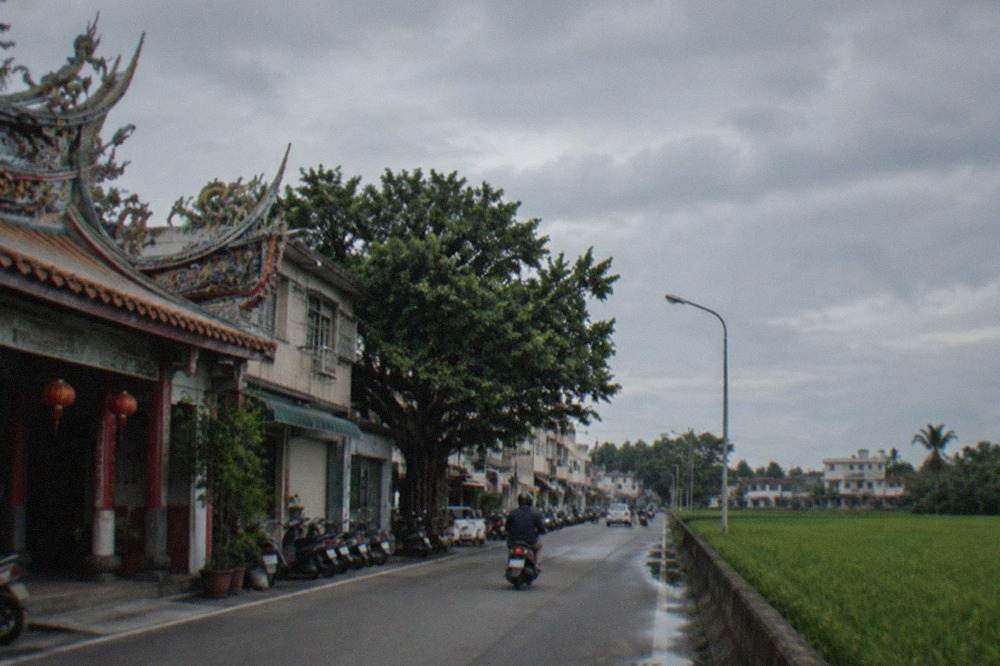
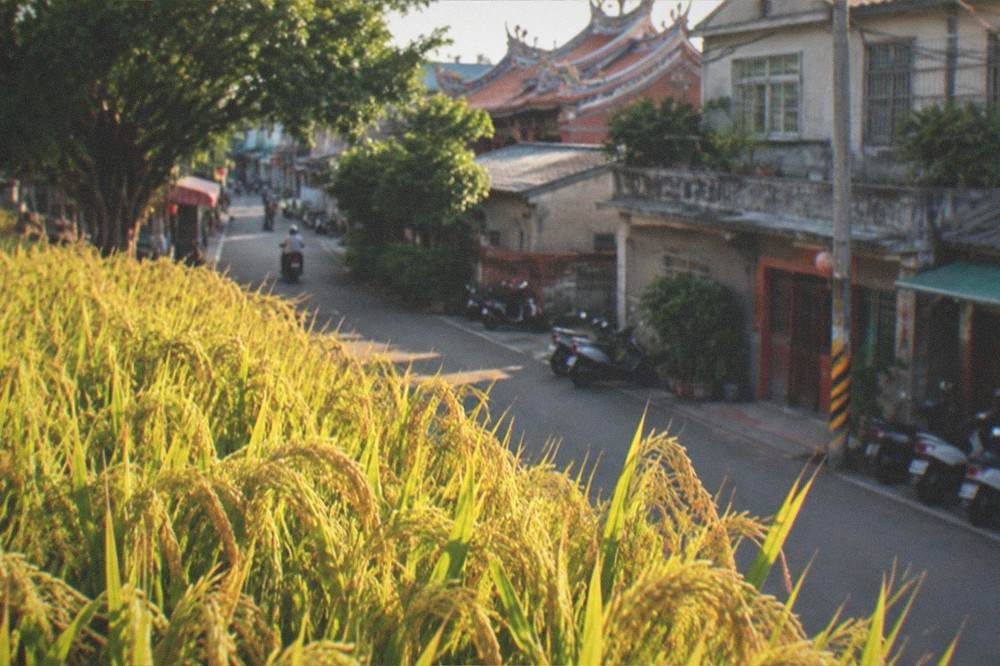
Houbi is Tainan's rice-growing lowland, a flat rural district in the city's northeast where the scenery is paddy fields, small villages and reservoir country rather than temples and forts.
Short answer
Houbi is a rural district in northeastern Tainan known for its rice fields and reservoir-side scenery. There is no single ticketed attraction at its center; the appeal is the landscape itself, best reached with a car or a guided day tour, and usually combined with Baihe's lotus fields or the Guanziling hot springs nearby.
Houbi and the Rice Fields
Houbi District sits in the flat northeastern corner of Tainan, and its identity is written on the land: paddy fields, irrigation channels, small villages and the wide skies of the Jianan Plain. This is the agricultural half of a city most visitors meet only through its temples, forts and night markets. Tainan is a special municipality of Taiwan and one of its largest cities, but it also contains some of the country's quietest countryside, and Houbi is where that countryside is most complete.
The district's name is romanised as one word, Houbi, and it stays that way on every official page. What follows is a planning guide built from published sources: the Central Weather Administration's climate normals for the Tainan station, the city's own bus fare rules, Taiwan High Speed Rail's fare table, and the Tourism Administration's visitor counts. Where a figure could not be confirmed, it does not appear.
Where Is Houbi and What Kind of Place Is It?
Houbi is a rural district in northeastern Tainan, on the upper reaches of the plains that slope toward the city's reservoirs and hot-spring country. It has no Dutch-era fort, no famous temple gate and no ticket desk; its draw is open rice country, best experienced by road, usually as a half or full day combined with Baihe's lotus fields or the Guanziling hot springs.
Tainan's 37 districts range from dense urban cores to farmland, and Houbi belongs firmly to the second category. The city's tourism material frames the northeast as a belt of scenic and agricultural districts: Xinhua with its old street, Baihe with its lotus fields, Guanziling with its hot springs, and Houbi as the rice-growing lowland connecting them. A visitor planning time in this corner of the city is really planning a loop, not a single sight.
The scale of the contrast is worth stating plainly. The Tourism Administration's own dataset records Nankunshen Daitian Temple drawing 6,583,100 visitors in 2023 and the Anping district drawing 4,441,443, while rural reservoir and scenic sites in this same northeast belt, such as Wushantou Reservoir at 264,435 and Hutoupi Scenic Area at 413,788, run an order of magnitude smaller. Houbi country is where Tainan's crowds thin out. Those counts carry a caveat worth repeating: each site compiles and reports its own numbers, methods differ between a ticketed site and open countryside, and the 2020 to 2022 figures in the same dataset are COVID-depressed.
For a first-time visitor the practical question is not "is Houbi worth it" but "how much Tainan do I already have". If your list is still Chihkan Tower, Anping and the night markets, do those first. If you have three or more days and a second or third day to give to the countryside, Houbi and its neighbors repay the trip.
What Makes the Rice Fields Around Houbi Worth Seeing?
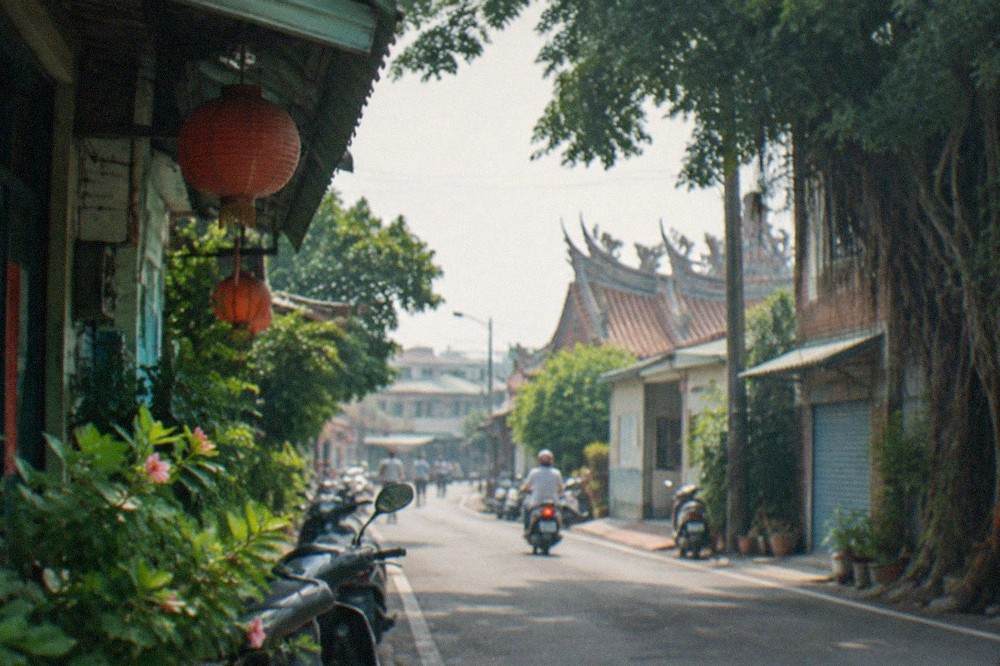
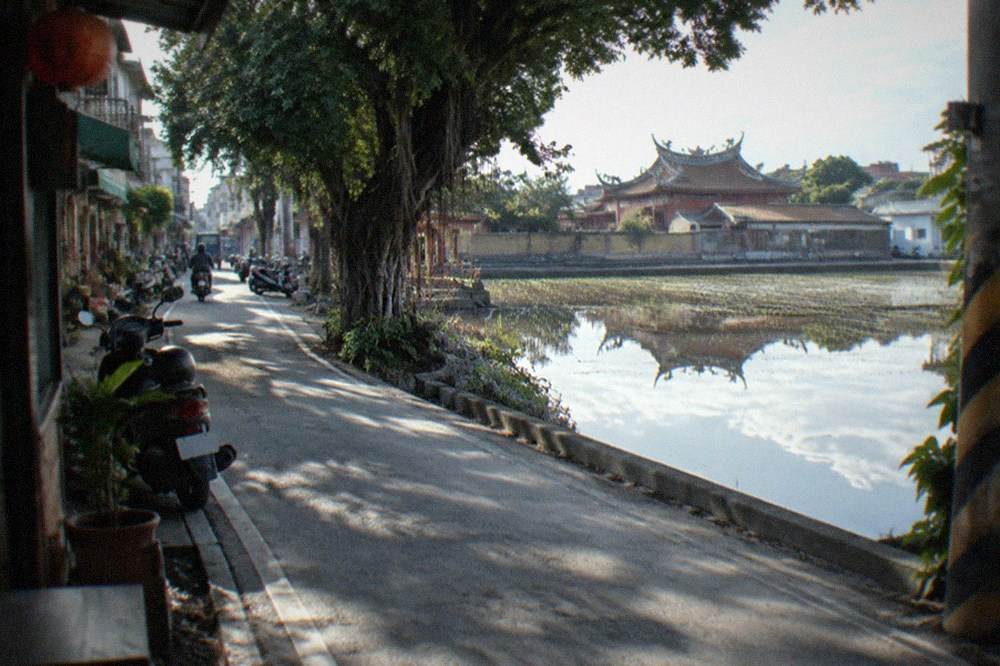
The rice paddies around Houbi are working farmland on the Jianan Plain, green through the growing season and gold before harvest, threaded with irrigation channels and crossed by quiet roads. There is no entrance fee, no gate and no schedule; the experience is the drive or ride between villages, and it pairs naturally with Baihe's lotus fields, which bloom mainly June through August.
Rice growing follows water, and water is the story of this whole corner of Tainan. The reservoirs at Wushantou and Hutoupi, both verified in the Tourism Administration's visitor dataset, sit in the hills above these plains, and the irrigation network they feed is what makes the paddies possible. The Tourism Administration's records list Wushantou Reservoir as a registered attraction in its own right, which tells you the reservoir country is treated as scenery, not just infrastructure.
What the fields look like depends entirely on when you come, and the Central Weather Administration's normals explain the calendar better than any brochure. Tainan's rain is almost entirely a summer event: August averages 466 mm across about 16 wet days, while December averages just 16 mm across 3. Close to three-quarters of the annual 1,761 mm falls between May and September. The paddies are at their greenest and fullest in that wet half of the year, and the landscape is at its most photogenic under the summer sky, but the summer is also when 30C-plus days dominate: Tainan records 186 days a year above 30C, and from April to October it is above 30C on most days.
The honest planning advice is therefore seasonal. Come between June and August and you get the deep green paddies plus Baihe's lotus bloom in the same loop, with the lotus fields best viewed in the morning, but you also get heat and the possibility of afternoon rain. Come between October and March and you get the dry, comfortable half of the year, when October averages fewer wet days than any other month, 2.8, while still averaging 30.8C maxima, but the fields are in their post-harvest cycle rather than peak green. There is no month that gives you everything; there is a month that gives you what you prioritize.
| Month | Mean max (C) | Rain (mm) | Wet days | Days over 30C |
|---|---|---|---|---|
| January | 23.0 | 20.7 | 3.8 | 0.0 |
| April | 29.3 | 69.8 | 5.9 | 14.9 |
| June | 32.4 | 370.5 | 12.1 | 26.2 |
| August | 32.6 | 466.1 | 15.8 | 27.6 |
| October | 30.8 | 30.8 | 2.8 | 23.6 |
| December | 24.4 | 16.2 | 3.0 | 0.5 |
All figures are from the Central Weather Administration's 1991 to 2020 climate normals for the Tainan station, published at the Central Weather Administration's statistics pages. Typhoon risk in Taiwan concentrates in the late-summer months, and a rural day in July or August should be planned with a wet-weather alternative in mind.
If you would rather have the rural northeast organized for you, a guided loop that includes the reservoir country is the low-friction option.
One further note on timing, because it shapes the whole region's rhythm: Tainan's visitor peak is January and February, driven by temple pilgrimage and Lunar New Year, not summer. That is the opposite of what many travelers assume, and it matches the climate table exactly, since winter is the dry, comfortable season here. Rural Houbi is quieter than the temple circuits either way, but a Lunar New Year visit to this district means sharing the roads with the year's heaviest domestic travel.
How Do You Get to Houbi from Central Tainan?
There is no rail station in Houbi; the district is reached by road from central Tainan, roughly an hour's drive depending on traffic, and the practical options are a rental car, a guided day tour with transport included, or city buses with a transfer. Taiwan High Speed Rail does not serve it either: Tainan's HSR station is at Shalun in Guiren District, well outside the old city and far from the rice country.
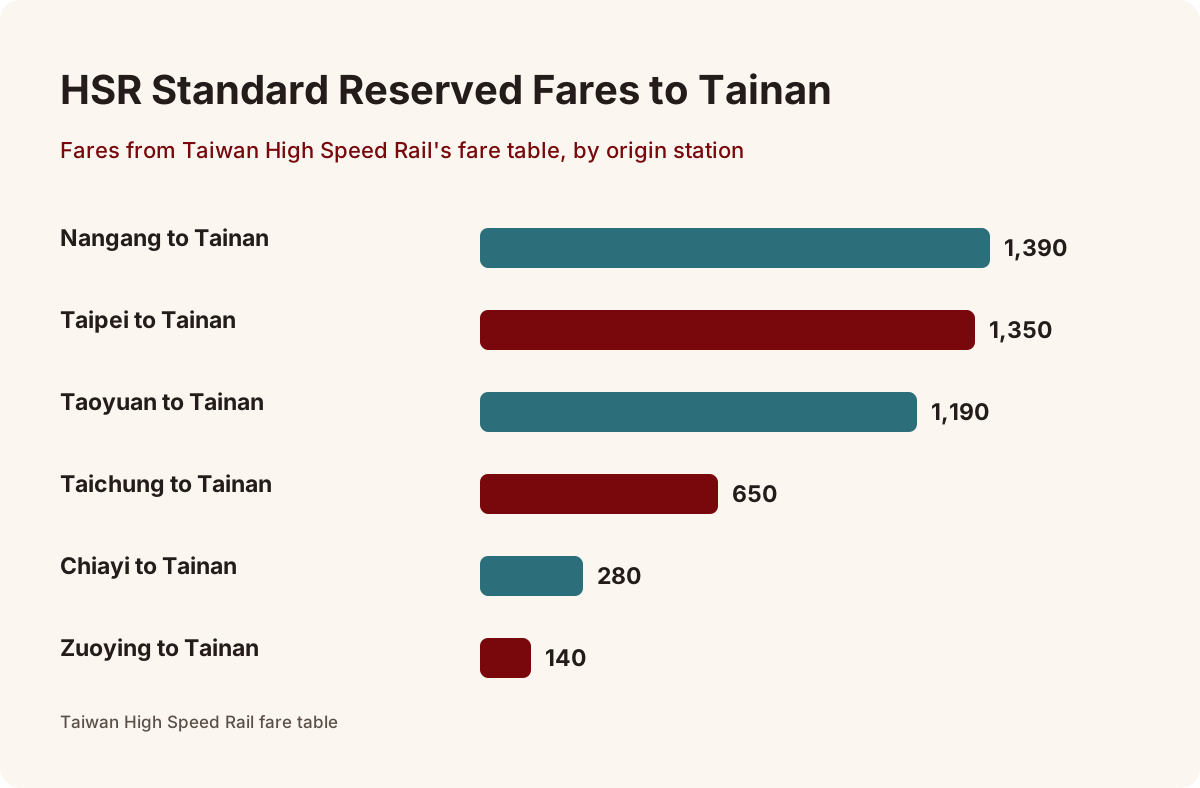
Start with the geography that trips people up. The HSR station that carries Tainan's name is not in the city center, and it is certainly not in the northeast. It sits at Shalun, in Guiren District, and every arrival into it needs onward transport. Taiwan High Speed Rail's own fare table lists Taipei to Tainan at NT$1,350 for a reserved standard seat, NT$1,305 non-reserved, with Zuoying (Kaohsiung) to Tainan at NT$140, Taichung at NT$650, Chiayi at NT$280 and Taoyuan at NT$1,190. Those fares are verified; journey times in minutes are not published in the material this site works from, so check the operator's timetable search for the schedule.
| HSR route | Standard reserved fare (NT$) |
|---|---|
| Taipei to Tainan | 1,350 |
| Nangang to Tainan | 1,390 |
| Taoyuan to Tainan | 1,190 |
| Taichung to Tainan | 650 |
| Chiayi to Tainan | 280 |
| Zuoying to Tainan | 140 |
For movement within Tainan, the city's bus network has a genuinely useful policy, stated on the city's own bus site at the Tainan bus ticketing pages: trunk and branch routes are free for the first 8 km with an electronic card, a Citizen Card, iPASS, EasyCard or iCash 2.0, and you must tap on and tap off. Tap off is the part visitors miss. The cash fare for the same trip is NT$26. The scheme runs for the 2026 calendar year, so treat it as a current policy rather than a permanent one, and re-check before relying on it in a later year.
The bus is a real option for reaching the northeast, but it is a slow one, and frequency in rural districts is thinner than in the urban core. The H31 HSR express bus is worth knowing about for a different reason: it is free for HSR passengers on production of a ticket stub, with no card tap needed, and other passengers pay NT$18 for one section or NT$36 for two. It runs between the HSR station and the city government area, with the section break at the Chimei Museum, so it is a city-center tool rather than a rural one.
A rental car is the flexible answer for Houbi, and this site's car rental guide covers the urban pickup points. Scooters are a different matter, and the rule deserves care: an International Driving Permit is not automatically sufficient in Taiwan, Taiwan expects it to be registered at a Motor Vehicles Office, and rental shops may refuse without it. Do not assume you can simply turn up with an IDP, and do not assume you cannot; check the official Motor Vehicles Office page before planning a scooter day.
If none of that appeals, the guided day tour is the honest recommendation for this district. Houbi's sights are dispersed, the buses are infrequent, and a loop that takes in the reservoir, the rice country and Baihe's lotus fields is far easier with someone else driving.
What Else Is There to Do Near Houbi?
The districts around Houbi carry most of the northeast's reasons to visit: Baihe's lotus fields bloom June through August, Guanziling offers hot springs with a food festival running September to November, Yanshui holds its famous beehive fireworks in February, and Xinhua keeps one of the region's old streets. Houbi is the quiet rice-growing center of that loop rather than its loudest stop.
Baihe is the closest headline neighbor. Its lotus fields bloom mainly from June to August, with viewing best in the mornings during the peak summer months, and the district's festival has run in late spring and summer in recent years. Guanziling, a little further into the hills, is one of Taiwan's known hot-spring towns, and the city's own festival calendar places the Guanziling Hot Spring and Food Festival across September to November, which makes autumn the season when the hot-spring half of this loop is at its most active. More of these guides are collected on Tainan Travel Guide.
Yanshui, to the west, is famous for the Beehive Fireworks, held in February on the Lantern Festival; the city's official calendar confirms the month, and exact dates are published closer to the event, so plan around February but confirm before you travel. Beimen and Qigu push the loop toward the coast, where the salt industry sites and the lagoon sit; Qigu Salt Mountain charges a NT$50 cleaning fee per person on foot or NT$100 per car, open 09:00 to 18:00, all verified on the city's own pages.
| Nearby place | What it is | Best season | Verified note |
|---|---|---|---|
| Baihe lotus fields | Lotus ponds and farmland | June to August bloom | Morning viewing is best in peak months |
| Guanziling | Hot-spring town in the hills | September to November festival | Festival runs Sep to Nov on the city calendar |
| Yanshui | Old street and fireworks town | February | Beehive Fireworks held on the Lantern Festival |
| Wushantou Reservoir | Reservoir scenery | Year-round | 264,435 visitors in 2023 |
| Hutoupi Scenic Area | Lake and parkland | Year-round | 413,788 visitors in 2023 |
For travelers coming from the coast or the old city, the contrast is the point. Anping and West Central District are where Tainan keeps its forts, temples and street food; the northeast is where it keeps its water, its fields and its silence. A well-built trip uses both. The three days in Tainan itinerary pattern that many travelers follow usually gives the countryside its own day, and Houbi sits naturally inside that day alongside Baihe and Guanziling.
Where Should You Stay and Eat Around Houbi?
Most visitors do not stay in Houbi; they day-trip in from central Tainan, where the hotels and the night markets are, and eat locally at small rural eateries whose prices no official source publishes. If you do want to stay in the northeast, the hot-spring accommodation at Guanziling is the established option, and the honest advice on rural food costs is that no verified price list exists, so budget by feel and carry cash.
Accommodation pricing is not something this site can quote: no official rate exists for hotels in this district, and inventing a range would be worse than saying nothing. What can be said is structural. Central Tainan, in districts like North District and around the railway station, holds the bulk of the city's hotels and puts the night markets within reach, and the night markets rotate: Garden Night Market opens Thursday through Sunday, Wusheng on Wednesday, Friday and Saturday, Dadong on Monday, Tuesday and Friday, and Siaobei is indoors and open every day. The city updates these pages, so check before you go.
Food in the rice country is a cash matter. Cards work at hotels, department stores and chain stores across Taiwan, but cash remains essential at night markets, street-food stalls, small local eateries and many rural shops, and convenience-store ATMs are the reliable fallback. As for tap water, the honest line is that bottled and filtered water are everywhere, convenience stores are on every corner, and most locals boil or filter; this site does not tell readers that tap water is safe to drink straight.
On the question of what a rural day costs, the only fares this site can verify are the transport ones already tabled above: NT$26 cash on a city bus, free for the first 8 km with a card, and the HSR fares by route. Everything else about rural Tainan's costs is qualitative: it is cheaper than the urban tourist core, and the cheapest of the big-city experiences in Taiwan, but no official price list for a bowl of noodles in a village exists and none will be invented here.
How Does Houbi Fit Into a Longer Tainan Trip?
Houbi earns its place on trips of three days or more, as the rural counterweight to the old city's forts and temples. Give day one to Chihkan Tower, Anping and a night market, day two to the northeast loop with Houbi, Baihe and Guanziling, and day three to the coast or a return to the food streets. Travelers with only one or two days should stay in central Tainan and save the rice fields for a longer visit.
The reason is arithmetic. Tainan's headline sites are concentrated and walkable in the old city: Chihkan Tower is open 08:30 to 21:30 daily, which is unusual, since it is one of the few historic sites a visitor can see after dinner, and the Confucius Temple, Grand Matsu Temple, Five Concubines Temple and Kaiyuan Temple all charge no admission at all. A short trip can absorb those comfortably. Houbi cannot be absorbed; it is a drive, a loop and a half day minimum, and squeezing it into a rushed schedule converts scenery into mileage.
For the evening you return to the city, the night-side of Tainan is worth planning rather than improvising. An evening walk through the old streets is one of the reliable pleasures the listings support, and it pairs with a night market on the right night of the week.
And for the morning after, if the trip has room for one more organized block, the food-and-culture walks of the old city are the standard recommendation on this site's street food pages, where Guohua Street's snack stalls anchor the daytime food crawl.
The longer version of the trip stretches into a full southern Taiwan circuit, and travelers with a week sometimes fold Yujing's mango country or the coastal salt flats into the same drive. Houbi's role never changes in any of these plans: it is the quiet hour between the louder ones, the stretch of green that makes the rest of Tainan make sense.
Common Questions About Houbi and the Rice Fields
Is Houbi worth visiting on a short Tainan trip?
Not usually. On trips of one or two days, central Tainan's forts, temples and night markets are a better use of the time. Houbi rewards trips of three days or more, when a rural day alongside Baihe and Guanziling fits without cutting the old city short.
When are the rice fields around Houbi at their greenest?
In the wet summer half of the year. Close to three-quarters of Tainan's annual 1,761 mm of rain falls between May and September, and the paddies are greenest and fullest then. The trade-off is heat: Tainan records 186 days a year above 30C, and from April to October it is above 30C on most days.
Can you reach Houbi by public transport?
Partly. There is no rail station in the district, and rural buses run less frequently than the urban routes. City buses are free for the first 8 km with an EasyCard, iPASS, Citizen Card or iCash 2.0, provided you tap on and tap off, with the cash fare at NT$26. For a full rural loop, a rental car or a guided day tour is the practical choice.
What should you combine with Houbi in one day?
The standard loop takes in Baihe's lotus fields, which bloom mainly June through August, and the Guanziling hot springs, whose food festival runs September to November on the city's calendar. Wushantou Reservoir, with 264,435 recorded visitors in 2023, sits in the same belt and adds lake scenery.
Is there an entrance fee for the rice fields?
No. The paddies are working farmland with no gate, ticket or schedule. The only verified fees in this corner of Tainan are at sites such as Qigu Salt Mountain, NT$50 per person on foot, and the paid attractions listed on the city's own tourism pages.
Houbi will never top a list of Tainan's famous sights, and that is exactly its value. The city's temples drew millions in 2023 while the reservoir country counted its visitors in the hundreds of thousands, and the difference is the whole point: this is the district where Taiwan's oldest city stops performing and starts farming. Plan it as the quiet day, reach it by car or tour, time it to the season you care about, and the rice fields will do the rest.