Baihe Lotus Fields
Baihe, in Tainan's rural northeast, is Taiwan's best-known lotus growing district. The fields bloom from June into late summer, and the town builds a festival around them. This guide covers the season, the viewing hours, the transport, and what else is worth seeing nearby.
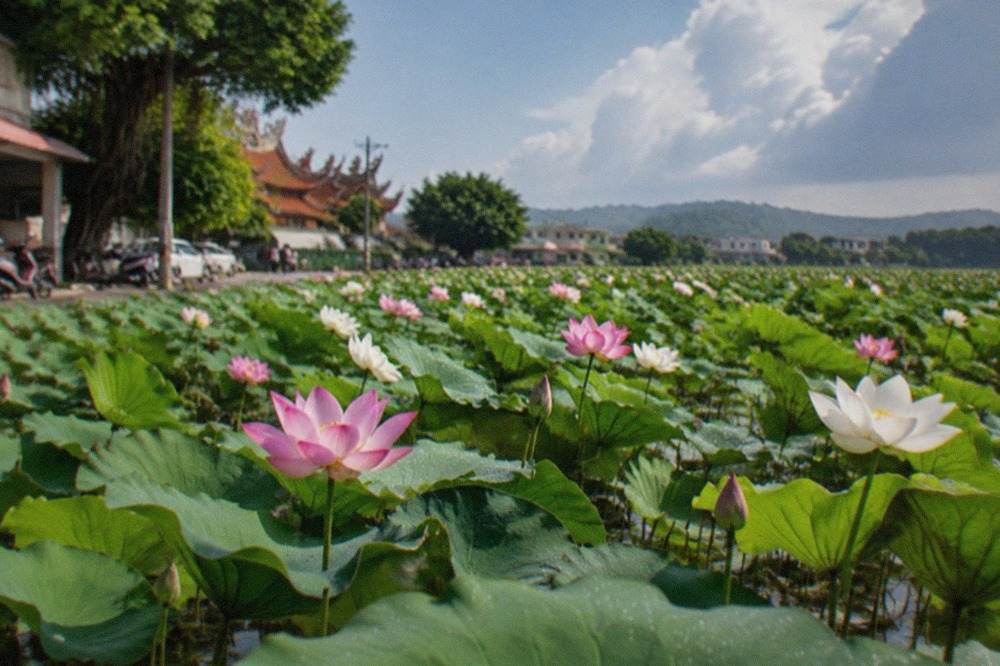
Short answer
The Baihe Lotus Fields bloom mainly from June to August, with the best viewing in the early morning. Baihe District is about an hour from central Tainan by road, and entry to the fields is free.
Baihe District, in the northeast corner of Tainan, is the lotus capital of Taiwan. The district's agricultural office describes lotus fields that bloom mainly from June to August and into September, with viewing at its best in the mornings during the peak summer months. A lotus festival has run in the district in late spring and summer, and the whole local economy, from the farms to the roadside stalls selling lotus tea and lotus seeds, runs on the flower's calendar. This guide sets out what the official sources say about the season, the fields, the transport, and the surrounding area, so a visitor can plan a day around them.
What Are the Baihe Lotus Fields?
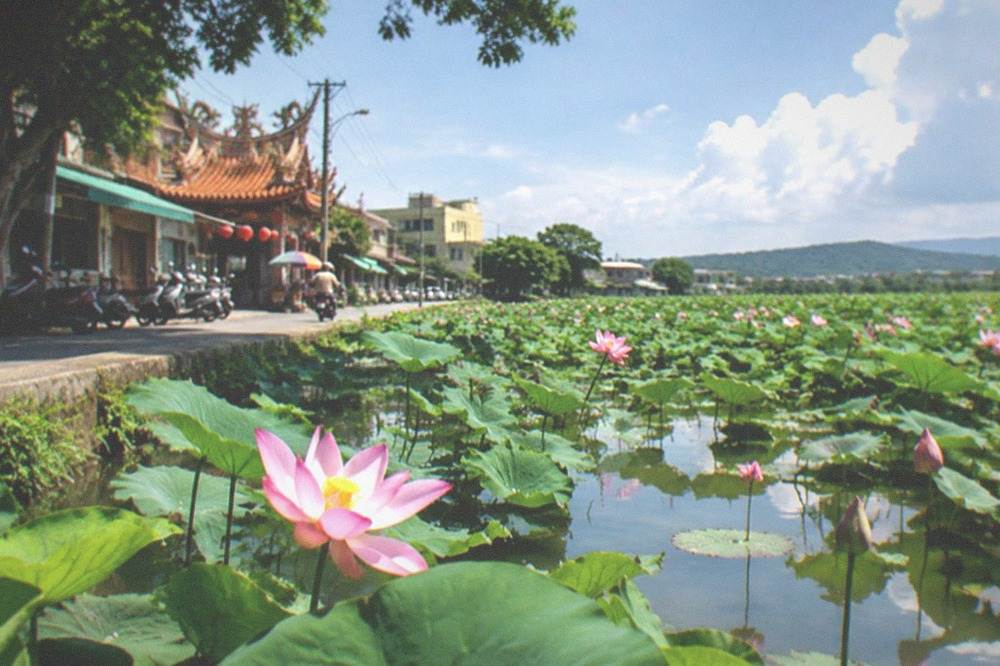
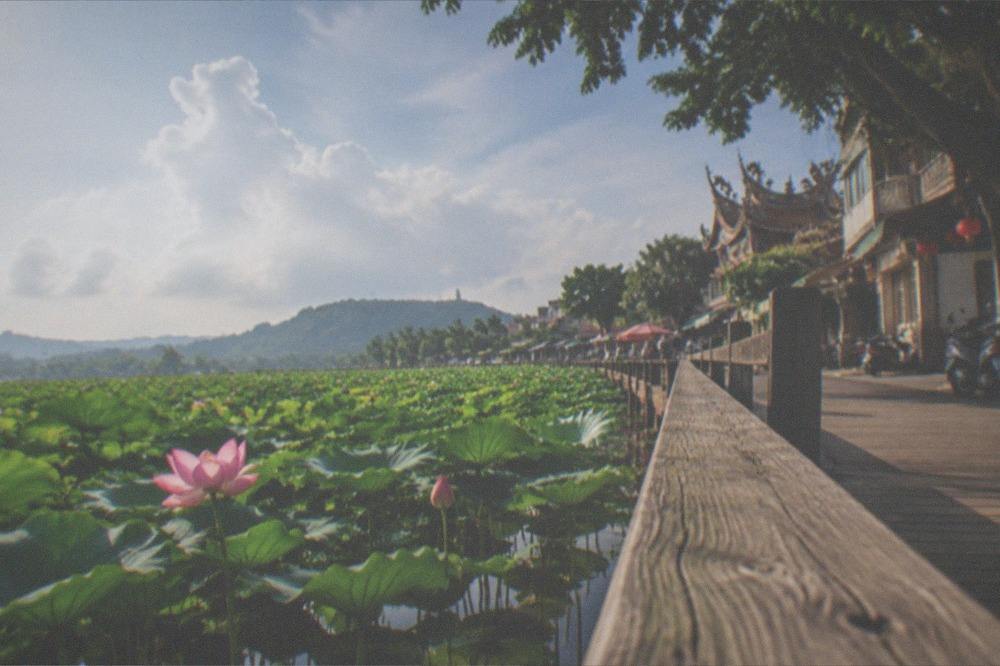
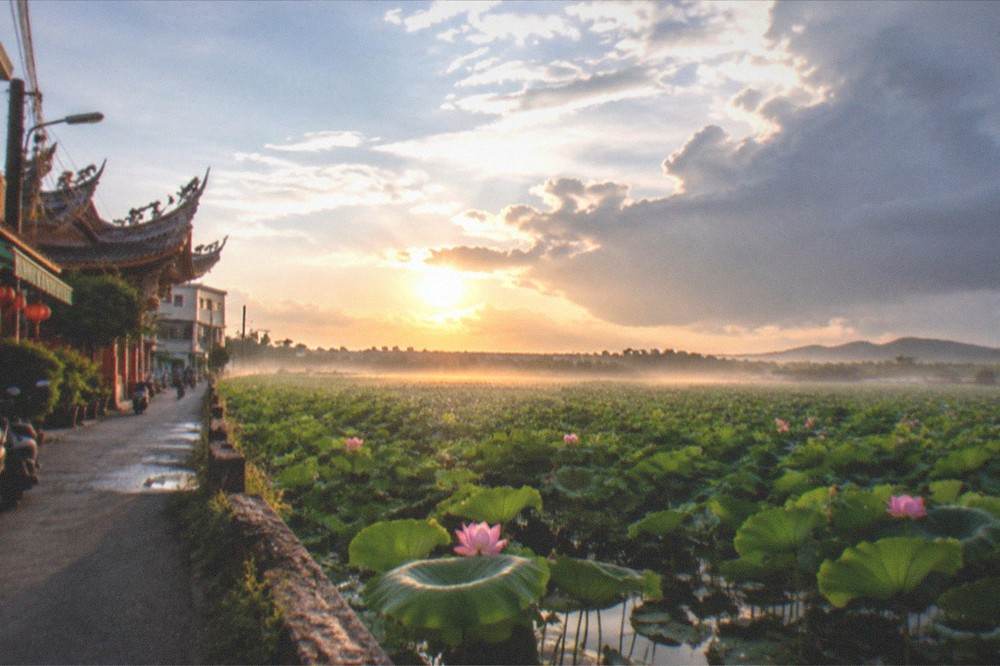
The Baihe Lotus Fields are a working agricultural landscape of flooded lotus ponds in Baihe District, northeastern Tainan, spread across several village roads rather than one single gated site. There is no entrance gate and no ticket for the fields themselves, because they are farmland, not a park. The district is Taiwan's most famous lotus growing area, and the bloom turns a quiet rice and orchard countryside into one of the country's most photographed rural scenes for roughly three months a year.
Baihe grows lotus at commercial scale, which is the reason the display is so extensive. The plant is farmed here for its seeds, its roots and its leaves, not only for its looks, and the fields that visitors photograph are working ponds. That matters for planning: the flowers open in the early morning and close by midday in high summer, so the fields reward an early start far more than an afternoon arrival. The district's own tourism material recommends morning viewing in the peak months, and that advice tracks the biology of the plant rather than any marketing schedule.
The second thing worth knowing is that there is no single "field" to navigate to. The lotus ponds sit along rural roads in and around Baihe, with clusters near the township itself and along the routes toward neighboring Houbi. A visitor drives, rides or is driven between viewpoints. This is a car, scooter or tour territory, and the Tainan Travel Guide pages on getting around Tainan cover the options in detail.
The festival wraps the season in a program of events. The 2026 Baihe Lotus Festival ran from late May to late July, according to the council's agricultural events listing, which places the festival slightly ahead of the natural peak bloom. The district office's own page on the lotus season is the primary source for the bloom window, and it is worth checking before travel because seasonal events in Baihe are announced per year rather than on a fixed permanent schedule.
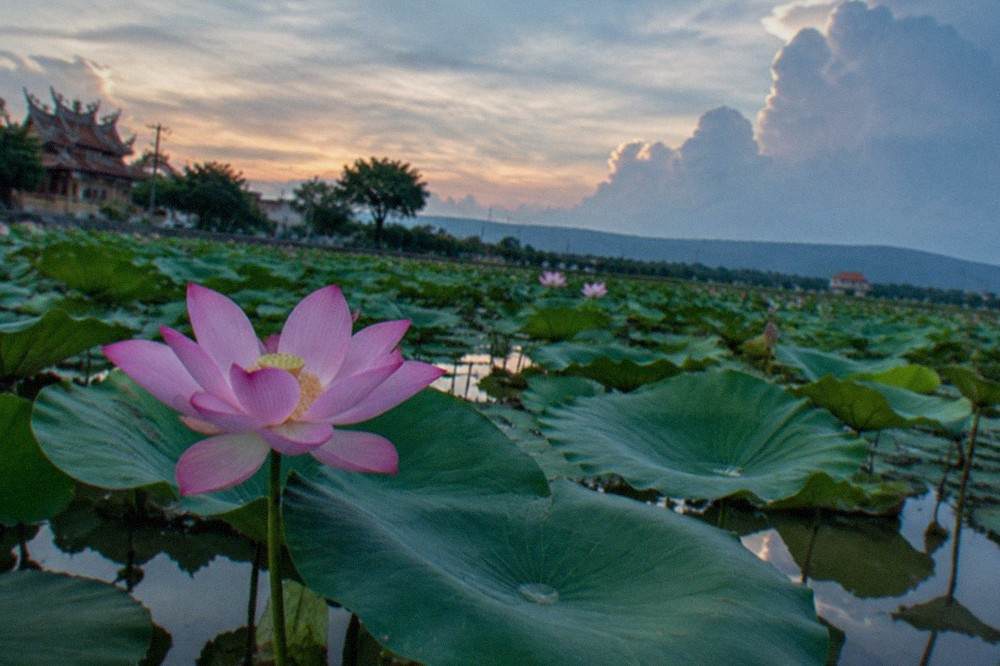
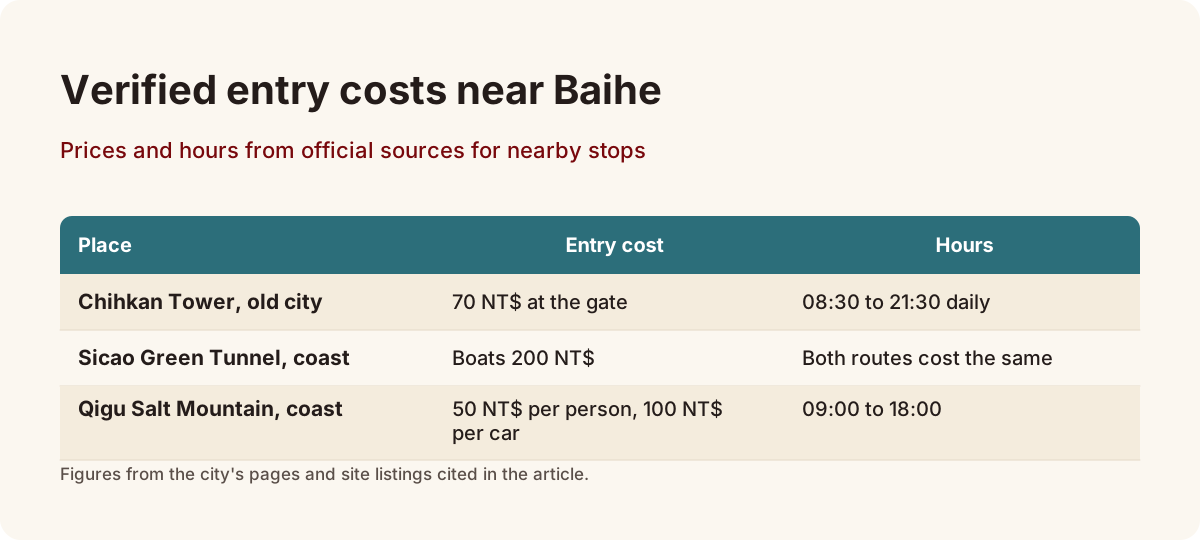
When Is Lotus Season in Baihe?
Lotus season in Baihe runs mainly from June to August, with some bloom stretching into September, and the flowers are at their best in the early morning. The Baihe Lotus Festival, when it runs, opens in late May and continues into July, so late June is the overlap where both the festival program and the natural bloom are in full swing. Rainfall is high in these months, so a clear morning is worth planning around.
The district's agricultural office publishes the bloom window as June to August and into September, with morning viewing recommended through the peak summer months. The reason is simple botany: lotus flowers open with the sun's first heat and fold again by early afternoon on the hottest days. A visitor who arrives at noon in July will find green fields and closed buds. The same visitor on the road by 6:30 in the morning gets the display the photographs promise.
The festival calendar is separate from the bloom. The council's agricultural events listing recorded the 2026 Baihe Lotus Festival running from May 23 to July 25, which means the festival opens before the fields are at their fullest and closes while plenty of bloom remains. No dates for a following year had been announced at the time of the sources used here, and the festival is seasonal and weather-dependent, so the honest planning advice is to aim for late June to mid-July and check the district's announcements before committing.
| Period | What to expect in Baihe |
|---|---|
| Late May | Festival opens in some years; early bloom only, fields mostly green |
| June | Peak season begins; flowers open early morning, close by midday |
| July | Full bloom and usually the festival's final weeks; hot, humid, high rainfall |
| August | Bloom continues; festival has typically ended; typhoon risk at its annual peak |
| September | Late bloom tapering off; mornings cooler, fields quieter |
Rain is the planning variable most visitors underestimate. The Central Weather Administration's 1991 to 2020 normals for Tainan show June averaging 370.5 mm of rain and August 466.1 mm, against December's 16.2 mm. Close to three-quarters of the annual 1,761 mm falls between May and September, and typhoon risk concentrates in the late summer months. A lotus trip in season is a morning trip with a weather forecast, not an all-day certainty.
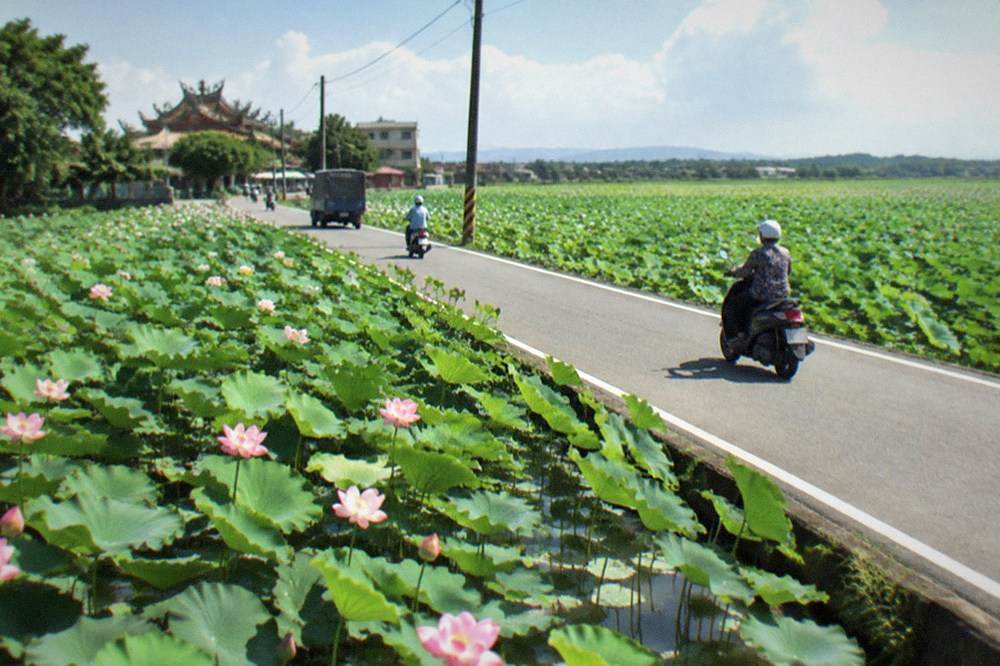
How Do You Get to Baihe from Central Tainan?
Baihe sits in Tainan's northeastern corner, roughly an hour from the old city by road, and there is no rail line into the district. Visitors arrive by bus, by car, by scooter or on a organized day tour, and the fields themselves are spread along rural roads, so some form of wheels between viewpoints is close to essential. The High Speed Rail station, at Shalun in Guiren District, is on the far side of the city from Baihe and adds transfer time.
The structural fact first: Baihe is rural, and Taiwan's rail network does not serve it. The visitor coming from Taipei by High Speed Rail arrives at the HSR station at Shalun in Guiren District, which is not in Tainan's old city, and then faces a cross-city journey on top of the trip northeast. The verified HSR fares are 1,350 NT$ for a reserved standard seat from Taipei and 650 NT$ from Taichung, from Taiwan High Speed Rail's own fare table; the operator's timetable, not this page, is the place to check times.
Within Tainan, city buses run the trunk and branch network, and the city's bus site states that the first 8 km are free with an electronic card, a Citizen Card, iPASS, EasyCard or iCash 2.0, with tap on and tap off both required. The cash fare for the same trip is 26 NT$. That policy covers the 2026 calendar year, so treat it as current rather than permanent. Baihe is beyond a short hop, so a visitor relying on buses should expect a fare beyond the free distance and should check the route planner before setting out.
Driving is the straightforward option, and scooter rental carries a caveat this site does not soften. Taiwan treats an International Driving Permit as something to be registered at a Motor Vehicles Office, not something that is simply valid on arrival, and rental shops may refuse without it. Do not assume an IDP alone is enough, and do not assume it is hopeless either: read the official page before planning a scooter day in the countryside.
| Option | What the verified sources support |
|---|---|
| City bus | First 8 km free with an electronic card in 2026; tap on and tap off; cash fare 26 NT$ |
| Rental car | Practical for the rural road network between viewpoints; no verified parking fee for the fields |
| Scooter | IDP registration rules apply; shops may refuse without it; check the official Motor Vehicles Office page |
| Organized day tour | Door-to-door from the city; the coast and countryside tours in this guide's listings cover the region |
| High Speed Rail | Arrives at Shalun, Guiren District, not the old city; reserved standard seat from Taipei 1,350 NT$ |
For a visitor without a car, a guided day tour is the option that removes the transfer problem entirely. The listings below include countryside and reservoir itineraries that reach Tainan's rural northeast.
If the lotus morning is the anchor of the trip, it is worth locking in the countryside and coastal legs early, because the small-group options fill fastest in the June to July window. Free cancellation up to 24 hours before departure is standard on these listings, and pay-later booking is available, so nothing has to be paid in full today.
What Does a Visit to the Baihe Lotus Fields Involve?
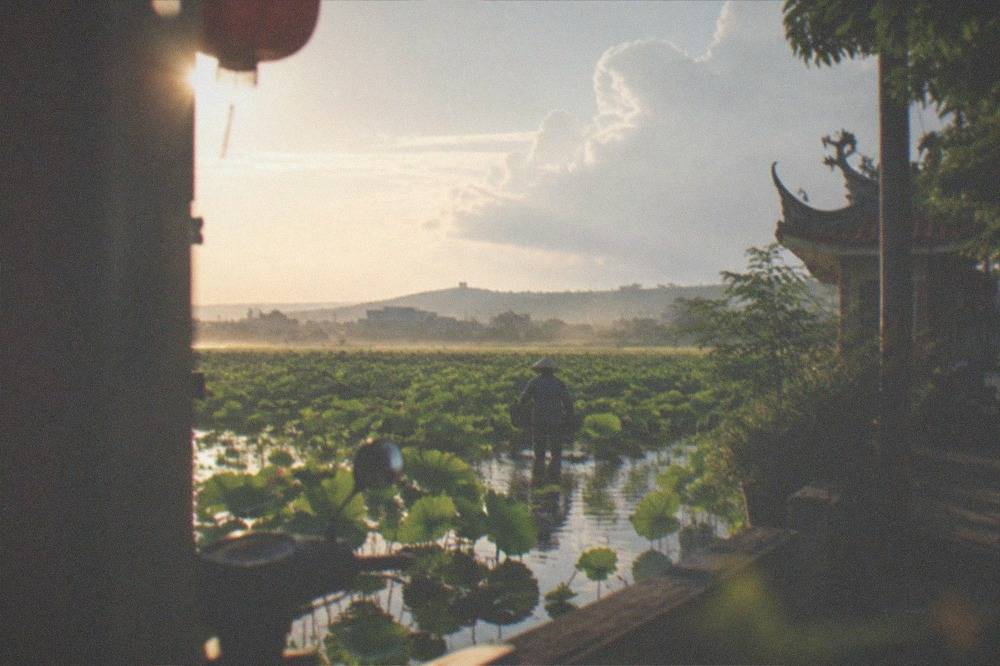
A visit to the Baihe Lotus Fields means an early start, a slow circuit of rural roads between ponds, and free access to farmland viewpoints with no gate, ticket or fixed hours. The flowers open in the morning and close by midday in summer, so the practical visit is two or three hours from first light, followed by breakfast or lotus-themed snacks from roadside stalls. There is no visitor center schedule to work around, because the fields are a working agricultural landscape.
The early start is the whole game. The district's guidance points to morning viewing in the peak months, and the reason is the flower's own daily cycle: open at dawn, folded by early afternoon. A visitor who reverses the day, sleeping in and arriving after lunch, sees green ponds. The photographs that draw people to Baihe are all morning photographs, and the sources are consistent on this.
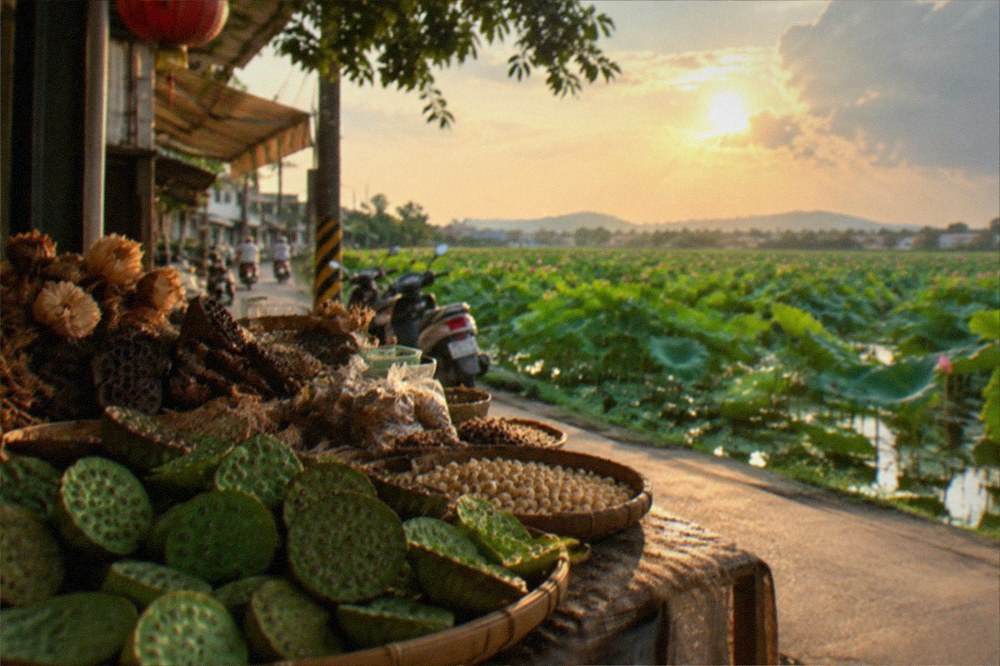
The circuit itself is informal. Ponds cluster along the district's rural roads, and the festival in past years has concentrated activity at particular viewpoints, with stalls selling lotus products, lotus seed drinks and local food. None of this has a verified price list, and this site does not invent one: bring cash, expect market-stall prices, and treat anything bought at a roadside stand as part of the experience rather than a budget line item. Cash is the norm at rural stalls; cards are reliable in hotels and chain stores but not at a farm gate.
Photography is the third layer of a visit. The light at dawn, the mist on the water in the cooler hours, and the scale of the fields make Baihe one of the most photographed rural landscapes in Taiwan. Visitors who want the photographs without the logistics can book a photographer-led shoot, and the listing below is one option that covers the region.
What Else Can You See Near Baihe?
Baihe sits in a cluster of rural districts in northeastern Tainan that includes Houbi, Guanziling and Yanshui, and each adds a different reason to extend the day. Guanziling is a hot spring town within the same broad area, Houbi holds some of the region's quietest old-street scenery, and the whole northeast corner is a low-traffic, agricultural counterweight to the temples and forts of the old city. A lotus morning pairs naturally with a hot spring afternoon.
Guanziling is the most natural pairing. The hot spring town lies in Tainan's hill country, and the city's own festival calendar places the Guanziling Hot Spring and Food Festival in the September to November window, which means the springs themselves are a year-round attraction while the festival adds a reason to come in autumn. The Guanziling Hot Spring page on this site covers the town in detail.
Houbi, immediately south of Baihe, is flat farmland and quiet village streets, and the Houbi area page gathers what the district offers. The wider region rewards a car: the distances are short but the public transport is thin, and the same rural-road logic that governs the lotus fields governs the whole corner of the city.
For visitors building a full itinerary, the contrast is the point. A morning in Baihe's fields, an afternoon at Guanziling's springs, and an evening back in the old city around Chihkan Tower, which the city's pages record as open 08:30 to 21:30 daily, one of the few historic sites a visitor can see after dinner. The Sicao Green Tunnel on the coast is the natural second-nature stop if the day runs long enough.
| Nearby place | Character | Verified practical detail |
|---|---|---|
| Guanziling | Hill-country hot spring town | Hot Spring and Food Festival runs September to November per the city calendar |
| Houbi | Flat farmland, village streets | Adjacent district; pairs with Baihe on the same rural circuit |
| Chihkan Tower, old city | Dutch-era site, evening hours | 70 NT$ at the gate; open 08:30 to 21:30 daily |
| Sicao Green Tunnel, coast | Mangrove boat ride | Boats 200 NT$; both routes cost the same |
| Qigu Salt Mountain, coast | Salt landscape, lagoon region | 50 NT$ per person on foot, 100 NT$ per car; 09:00 to 18:00 |
The coast and the countryside make a coherent pair for a longer trip. The listing below is the boat ride that anchors the coastal half of that pairing.
Is the Baihe Lotus Festival Worth Planning a Trip Around?
The Baihe Lotus Festival is a real, district-level agricultural festival that has run in late May through July, and it adds stalls, viewing points and local programming to a bloom that happens regardless. The festival is worth planning around if the dates align, but the fields themselves are the main event, and a visitor who misses the festival by a week or two still gets the flowers. Treat the festival as a bonus layered on a natural season, not as the season itself.
The festival's 2026 edition ran May 23 to July 25 in the district's production areas, per the agricultural council's events listing. The listing is the source for that specific year, and no following-year dates had been announced in the material used here, so a reader planning ahead should check the district's announcements rather than assume the same window. The Baihe District office's own lotus page is the primary source for both the bloom and the local program.
What the festival adds, based on how district lotus festivals in Taiwan operate, is concentration: named viewpoints, food and product stalls, and organized activity on specific weekends. What it does not add is a gate or a ticket. The bloom is farmland, and the festival is a program laid over it. A visitor arriving outside festival weekends in June or July finds the same flowers with fewer stalls.
The planning conclusion is straightforward. Aim for late June to mid-July, go early, check the district page a week or two before travel, and treat the festival dates as a bonus rather than a requirement. The one thing not to do is arrive in the afternoon and expect the postcard.
What Should You Bring for a Lotus Morning in Baihe?
A lotus morning in Baihe needs an early alarm, cash for roadside stalls, sun protection for open farmland, and a plan for the midday heat rather than a plan to fight it. The fields offer little shade, the summer sun in Tainan is intense, with 186 days a year above 30C, and the stalls that sell drinks and lotus products are cash operations. Mosquito repellent is the item most visitors wish they had brought.
The climate numbers explain the packing list. The Central Weather Administration's normals for Tainan show June averaging a mean maximum of 32.4C and July 33.0C, with humidity in the high seventies, and the sun hours are high in early summer. Open farmland with no shade means a hat and sunscreen are not optional. The same normals show why the morning matters: the comfortable hours are the first ones.
The cash point matters more in Baihe than in the city. Cards work at hotels, department stores and chain convenience stores, but rural stalls, festival vendors and farm-gate sellers are cash territory. ATMs at convenience stores are the reliable fallback, and there are convenience stores on the main roads into the district.
Water is the last item. The honest line on tap water in Taiwan is that bottled and filtered water are everywhere, convenience stores are on every corner, and most locals boil or filter rather than drink straight from the tap. On a hot morning in open fields, buy more water than seems necessary.
| Item | Why |
|---|---|
| Early alarm | Flowers open at dawn and close by midday in peak season |
| Cash | Roadside and festival stalls do not reliably take cards |
| Hat and sunscreen | Open farmland, no shade, summer maxima in the low thirties Celsius |
| Mosquito repellent | Standing water is the lotus field's defining feature |
| Water | High heat and humidity; convenience stores on approach roads sell it |
Can You Visit Baihe as a Day Trip from Tainan City?
Yes, Baihe works as a day trip from central Tainan, with roughly an hour of road travel each way and a morning-first itinerary, and a single day covers the lotus fields plus one nearby stop such as Guanziling. What a day trip does not comfortably cover is Baihe plus the coastal lagoon region in opposite corners of the city, which is a two-day shape. The realistic day is lotus at dawn, springs or old streets at midday, back to the city by evening.
The geography sets the constraint. Baihe is in the northeast; the Sicao Green Tunnel, Qigu Salt Mountain and the lagoon coast are in the northwest. The two regions are not on the same road, and a day that tries both spends its hours in transit. A visitor with one day should pick a corner. The countryside corner is Baihe, Houbi and Guanziling; the coast corner is Sicao, Qigu and Taijiang National Park.
For a two-day shape, the pairing writes itself. Day one in the old city, around Anping Old Fort, the Anping Tree House and an evening market, with the night market schedule checked first because the big outdoor markets rotate by day of week. Day two out to Baihe for a lotus morning and a hot spring afternoon. The one day in Tainan and two days in Tainan itineraries on this site lay out both shapes hour by hour.
The night market rotation is worth flagging here because it bites on countryside days. Garden Night Market opens Thursday to Sunday, Wusheng Wednesday, Friday and Saturday, Dadong Monday, Tuesday and Friday, and Siaobei is indoors and open every day. Friday is the only night all three big outdoor markets run. A visitor ending a Baihe day back in the city should check the Garden Night Market page and the city's own listings before committing to a market night, because the city updates these pages and the days do change.
For visitors who would rather not drive the rural roads themselves, a guided day tour covering the ancient capital and the reservoir country reaches the same region with the logistics handled.
Where Does Baihe Fit in a Longer Tainan Itinerary?
Baihe fits a Tainan itinerary as the rural morning of day two or three, after the old city's temples and forts have filled the first day, and it pairs best with Guanziling on the same day trip. Visitors with three or more days can add the coastal lagoon region on a separate day, and the lotus season's June to July window overlaps with mango season at Yujing, which puts two of Tainan's agricultural seasons in one trip.
Three days is the comfortable frame. The city's dense core, Chihkan Tower, the Tainan Confucius Temple, Shennong Street and the Anping quarter, fills a full day on its own. A second day goes northeast to Baihe and Guanziling. A third goes to the coast, the Sicao Green Tunnel boats at 200 NT$ and the salt country at Qigu. The three days in Tainan itinerary on this site sequences exactly this.
The seasonal overlap is the information gain most first-time visitors miss. The city's festival calendar places mango season at June to July, centered on Yujing, and the lotus bloom at June to August, centered on Baihe, in the same window. A visitor in late June can do a lotus morning in Baihe and a mango stop in the hill country on the same rural loop, because the districts sit in the same broad northeastern quadrant of Tainan.
Timing against the crowds is the final consideration, and the data runs against the usual instinct. The Tourism Administration's 2023 counts show Tainan's peak visitor months are January and February, driven by temple pilgrimage and Lunar New Year, not summer, and the biggest draws by far are temples such as Nankunshen Daitian Temple rather than the Dutch-era forts. A summer lotus trip lands in the hot, wet, locally quieter half of the year, which suits a rural morning-and-springs day better than a temple-crawl day anyway.
Common Questions About the Baihe Lotus Fields
When do the Baihe Lotus Fields bloom?
The bloom runs mainly from June to August, with some flowers into September. The district's agricultural office recommends morning viewing in the peak summer months, because the flowers open at dawn and close by midday.
Is there an entrance fee for the Baihe Lotus Fields?
No. The fields are working farmland spread along rural roads, with no gate and no ticket. The festival that runs in some years adds stalls and programming, but the fields themselves are free to view.
How far is Baihe from Tainan city center?
Roughly an hour by road, in Tainan's northeastern corner. There is no rail line into the district, so visitors arrive by bus, car, scooter or organized tour, and wheels between viewpoints are close to essential.
What time of day is best for seeing the lotus?
Early morning, from first light through mid-morning. Lotus flowers open with the early sun and fold by early afternoon in high summer, so an afternoon visit finds green fields and closed buds.
When does the Baihe Lotus Festival take place?
The 2026 edition ran from late May to late July in the district's production areas. Dates are announced per year and are seasonal and weather-dependent, so check the district office's announcements before planning a trip around the festival.
Can you combine Baihe with other places in one day?
Yes. Guanziling's hot springs and Houbi's rural roads pair naturally with a lotus morning on the same northeastern loop. The coastal lagoon region sits in the opposite corner of the city and works better as a separate day.
Baihe rewards the visitor who plans around the flower's own schedule rather than a conventional sightseeing day: an early start, a rural circuit, cash for the stalls, and a hot spring or old street to fill the afternoon. Pair it with the old city's evening hours, check the district's page before travel, and the lotus season becomes the highlight of a Tainan summer itinerary.