Three Days in Tainan
Three days is enough to see Tainan's Dutch-era forts, the Anping old streets, the mangrove lagoon and at least two night markets, without rushing. This itinerary uses the city's own published hours and fares so every day is planned around what is actually open.
Short answer
Three days in Tainan covers the old city core, Anping, and the Qigu lagoon coast, with time for two or three rotating night markets. Plan Day One around Chihkan Tower and the West Central District, Day Two around Anping, and Day Three around the coast, and check market days before you go.
Three days is the amount of time Tainan rewards best. One day covers the old city core, and a second adds Anping, but the third is what lets you reach the lagoon coast at Qigu, where the salt mountains, the mangrove tunnel and the black-faced spoonbill wetlands sit, and still get back for a night market. This itinerary is built from the Tainan City Government Tourism Bureau's own published hours and fares, so each day is planned around what is genuinely open, and around the fact that Tainan's night markets rotate by day of week rather than running nightly.
Tainan was Taiwan's capital for more than two centuries, until the late nineteenth century, and the city's biggest draws are not the Dutch forts most guidebooks lead with. The Tourism Administration's 2023 dataset puts Nankunshen Daitian Temple at 6,583,100 visitors and the Anping district at 4,441,443, against Chihkan Tower's 443,622. The peak months are January and February, driven by pilgrimage and Lunar New Year, which matches the climate table exactly: October to March is Tainan's dry, comfortable half of the year, while August alone averages 466 mm of rain across 16 wet days.
Why Three Days Is the Right Amount for Tainan
Three days lets you see the old city, Anping and the lagoon coast without rushing, and it lines up with the night market rotation so you can hit two or three of them. One day forces you to choose between the historic core and the coast, two days covers the city and Anping, and only the third day frees up the Qigu lagoon, the salt mountains and the wetlands, which sit roughly an hour's bus ride from the centre.
The practical case for three days comes down to geography. The Dutch-era sites split into two clusters: Chihkan Tower in the West Central District, and the Anping group, the Old Fort, the Tree House and the Eternal Golden Castle, out on the old sandbar. The lagoon coast is a third zone entirely, and buses to Qigu run out along the coast road. Squeezing all three zones into two days means choosing between an early evening at Chihkan Tower, which is open until 21:30 daily and is one of the few historic sites a visitor can see after dinner, and the night markets.
The night market calendar is the other reason three days works. Garden Night Market opens Thursday, Friday, Saturday and Sunday; Wusheng opens Wednesday, Friday and Saturday; Dadong opens Monday, Tuesday and Friday; and Siaobei is indoors and open every day. A three-day trip that spans a Friday gives you the one night all three big outdoor markets run. Arrive Thursday and you get Garden on Thursday, everything on Friday, and Wusheng or Garden on Saturday. Check before you go, because the city updates these pages and the days do change.
If you are still deciding between two and three days, the two days in Tainan plan drops the coast, and the four days in Tainan plan adds Guanziling and the reservoir country to the north. The question of how many days you need in Tainan has a longer answer in how many days do you need in Tainan, but three is the point where the city stops feeling compressed.
Day One: The Old City Core and the West Central District
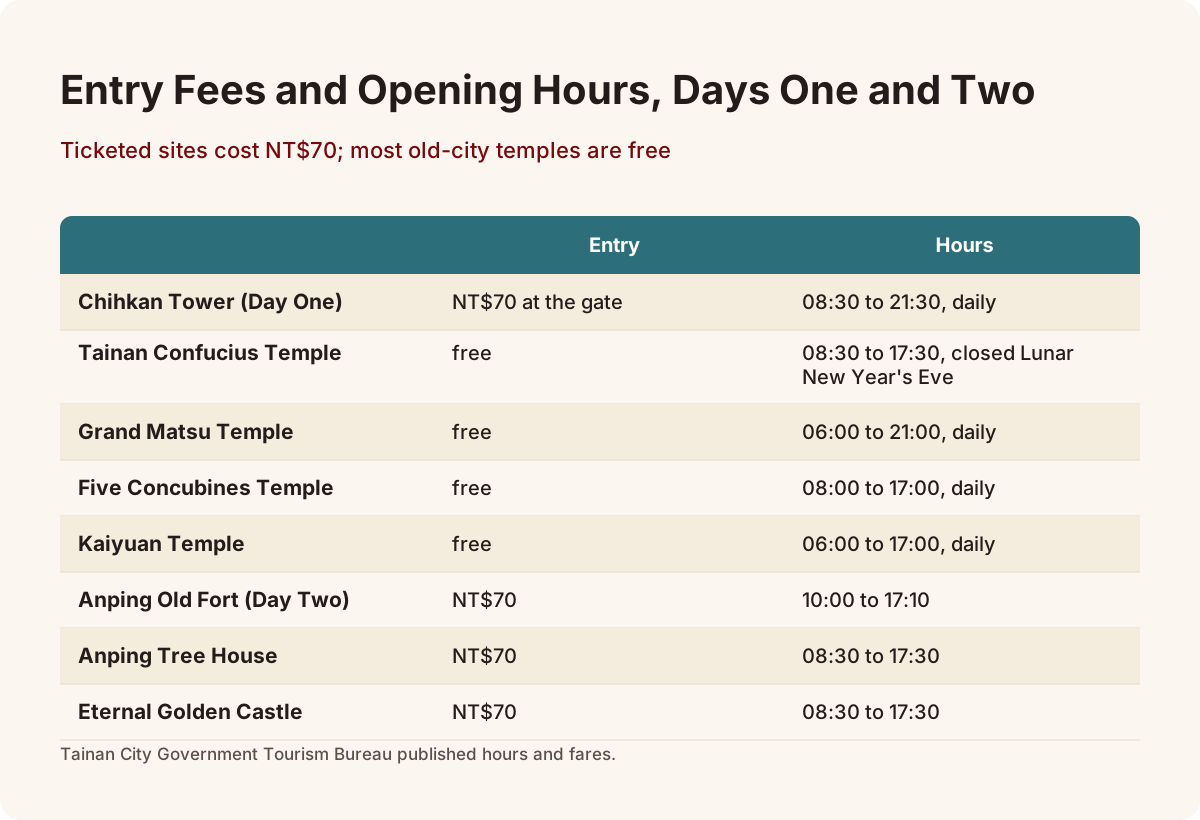
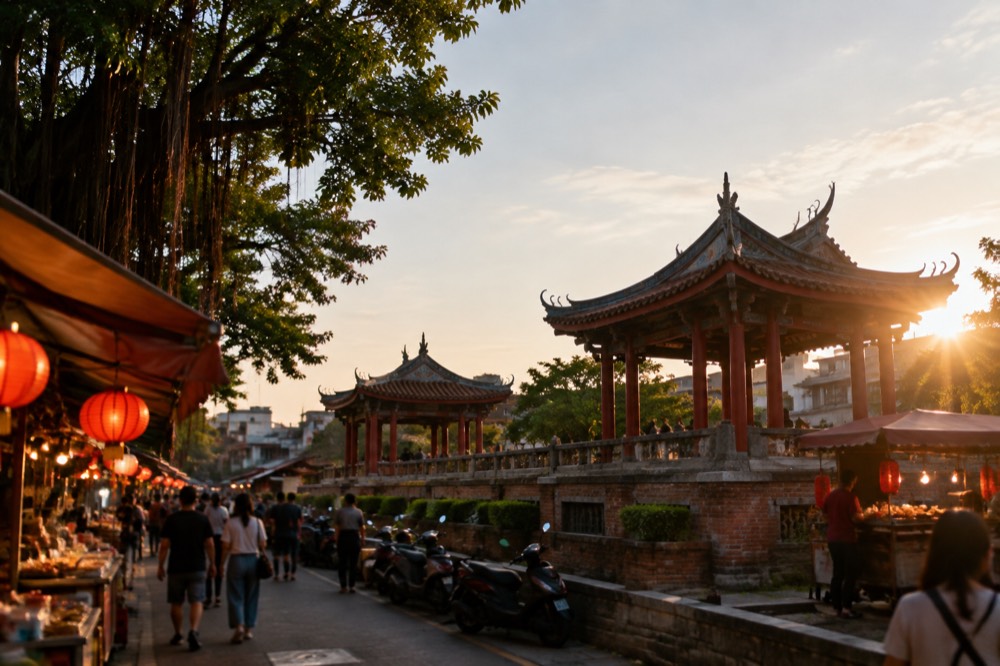
Start Day One at Chihkan Tower, the early-1650s Fort Provintia site, then walk the West Central District's temples and old streets and finish at a night market. Chihkan Tower costs NT$70 at the gate and is open 08:30 to 21:30 daily, the Confucius Temple is free and open 08:30 to 17:30, and the Grand Matsu Temple is free and open 06:00 to 21:00, so the whole day can be done on foot for one admission fee.
Chihkan Tower is the anchor. The Tourism Bureau's page for the site records that the Dutch built Fort Provintia here in the early 1650s, that Koxinga took it in 1662, and that the site now mixes Qing-era pavilions with the surviving Dutch foundation walls. The 70 admission is half price for students, seniors over 65 and several other groups, and Tainan residents enter free with ID, which does not extend to visitors. The late closing, 21:30, means you do not have to see it first thing, but the morning light on the red brick is the reason most people do.
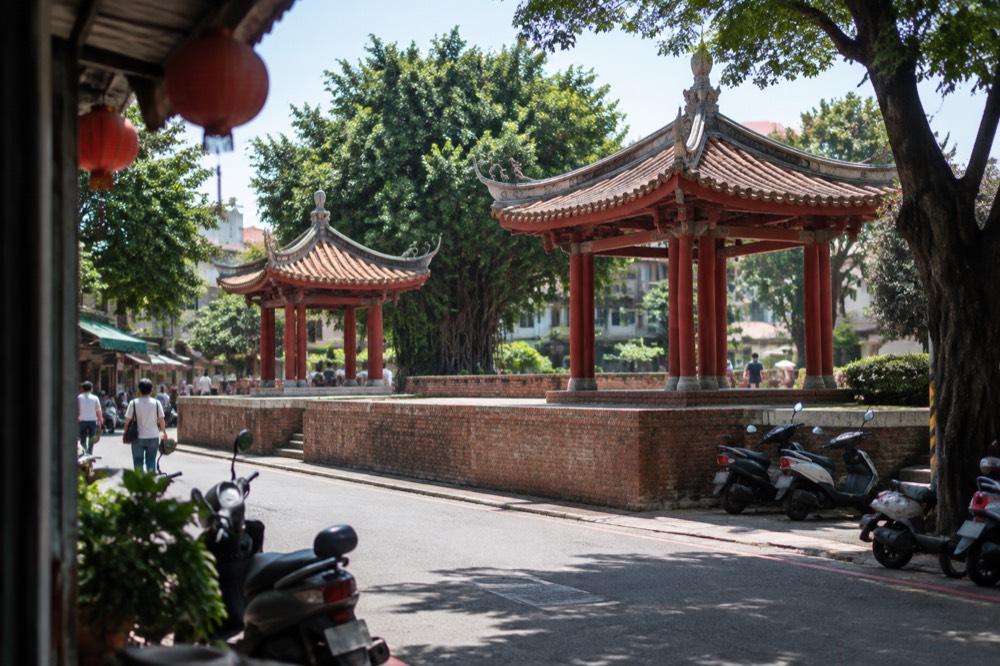
From Chihkan Tower the old city unrolls southward. The Tainan Confucius Temple sits a short walk away, free to enter and closed only on Lunar New Year's Eve, and the Grand Matsu Temple, also free, is a former royal residence converted into one of the city's most important temples. The West Central District packs the Official God of War Temple, the Sacrificial Rites Martial Temple and the Great South Gate into walkable range, and the Tourism Bureau's own visitor counts show the Grand Matsu Temple drew 354,897 people in 2023, more than most of the ticketed sites.
The afternoon belongs to the streets. Shennong Street, a restored Qing-era merchant street, is the one most photographs come from, and the Shennong Street guide covers it in detail. Guohua Street is the food street, and the Tainan food crawl itinerary routes it stop by stop. Neither costs anything to walk.
Evening is where the day of the week matters. If it is Monday or Tuesday, Dadong Night Market is the big outdoor option, open 18:00 to 01:00. Wednesday is the thinnest night in the city, with Wusheng alone among the outdoor markets, though Siaobei, indoors and open daily from noon to midnight, is always there as the wrong-night answer.
| Site, Day One | Entry | Hours |
|---|---|---|
| Chihkan Tower | NT$70 at the gate | 08:30 to 21:30, daily |
| Tainan Confucius Temple | free | 08:30 to 17:30, closed Lunar New Year's Eve |
| Grand Matsu Temple | free | 06:00 to 21:00, daily |
| Five Concubines Temple | free | 08:00 to 17:00, daily |
| Kaiyuan Temple | free | 06:00 to 17:00, daily |
An evening walking tour is the one part of Day One worth booking rather than improvising, especially if your night falls on a Wednesday when the outdoor market pickings are thin. A guided evening walk handles the routing between the old streets and the market, and the food stops are chosen for you.
Whether you book that or navigate the evening yourself, the same rule applies to every night of a three-day trip: check which markets are open before you set out, because the rotation means the city's character changes completely depending on the day of the week.
Day Two: Anping, the Forts and the Tree House
Day Two goes to Anping: Anping Old Fort at NT$70, open 10:00 to 17:10, the Anping Tree House at NT$70, open 08:30 to 17:30, and the Eternal Golden Castle at NT$70, open 08:30 to 17:30, plus the free old street and canal. The Tourism Bureau's page records that the Dutch began Fort Zeelandia in 1624 and completed it in 1634, that Koxinga took it in 1662, and that the city's 1975 renovation is what visitors see today.
Anping is where Tainan's Dutch history actually stands, and the honest version of that history is worth knowing before you go. The only genuine Dutch-period remains at the Old Fort are the brick walls of the south outer rampart in front of the fort. Most of what visitors photograph, including the white-walled lookout tower with its pointed roof, is Japanese-era rebuilding and the 1975 city renovation. The Tainan City Government Tourism Bureau says so plainly on its own page for the site, and it makes the place more interesting, not less.
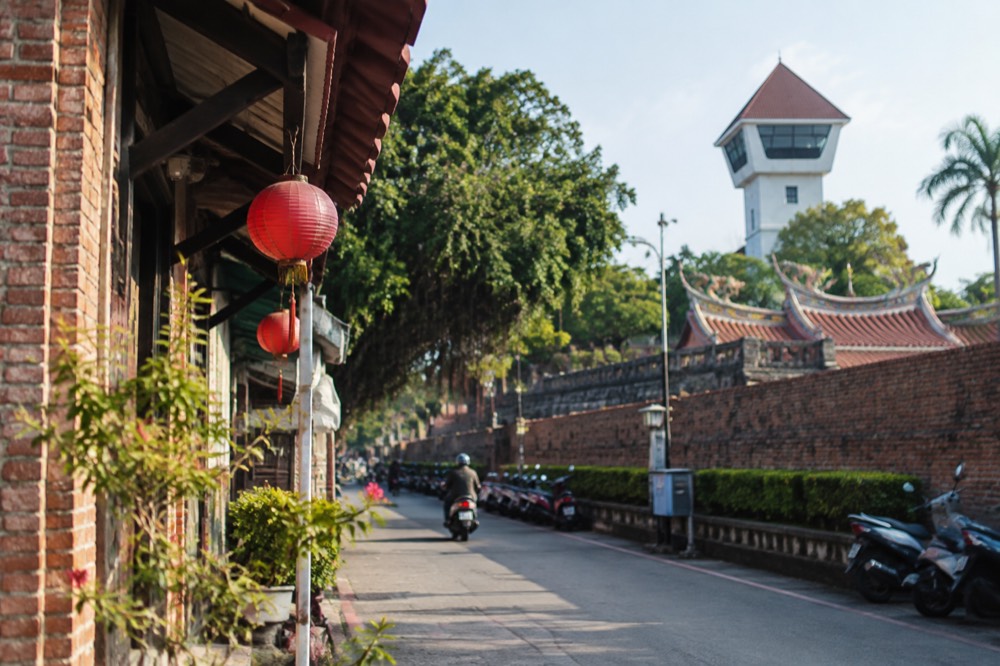
The Tree House is the other essential stop. A former merchant warehouse swallowed by banyan roots, it is the single most photographed structure in the district, and the Anping Tree House guide covers its history. The Eternal Golden Castle, a Qing-era artillery fort built partly with masonry taken from Fort Zeelandia, sits further south along the coast and closes at 17:30, so do the Old Fort and Tree House first if you want all three. The Anping Old Fort guide has the full rundown.
Between the ticketed sites, Anping Old Street and the canal cost nothing. The street is a dense strip of old-shopfront snack stalls and sword-lion carvings, and the Anping district as a whole drew 4,441,443 visitors in 2023, roughly ten times Chihkan Tower's count, which tells you the street itself, not the fort, is what most people come for.
Getting to Anping takes under half an hour by city bus from the West Central District, and the bus is the cheapest transport in Taiwan when it works for you: the city's own bus site states that trunk and branch routes are free for the first 8 km with an electronic card, a Citizen Card, iPASS, EasyCard or iCash 2.0, with the tap-off being the part visitors miss. The same trip in cash costs NT$26. The scheme runs through the 2026 calendar year, so treat it as current policy, not a permanent one.
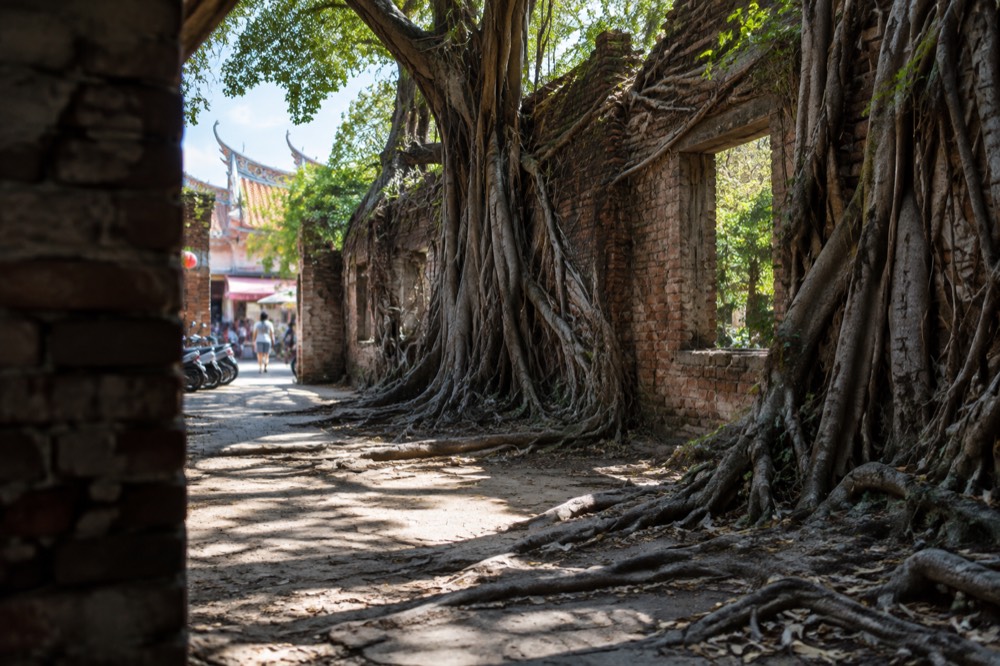
If your three days start on a Friday, Day Two lands on a Saturday, which is the best night market night of the week after Friday: both Wusheng and Garden run. Garden is the biggest of the three, at No. 533 Section 3 Hai'an Road in the North District, open 17:00 to midnight. The Tainan after dark itinerary builds a full evening around it.
If you would rather keep the evening self-guided, the same logic holds: pick the market by the calendar, eat your way down the stalls, and save Chihkan Tower's late 21:30 closing for the walk home, since it is one of the only historic sites still lit up after dinner.
Day Three: The Qigu Lagoon, Salt Mountain and the Wetlands
Day Three heads up the coast to Qigu: the Salt Mountain costs NT$50 per person on foot or NT$100 per car and is open 09:00 to 18:00, and the Sicao Green Tunnel boat costs NT$200 for either route, the short mangrove tunnel or the longer Taijiang route, both the same price. The black-faced spoonbill wetlands sit in the same lagoon system, with the birds present roughly from September or October to March or May.
The lagoon coast is the part of Tainan most short trips miss, and it is the reason to stay a third day. Sicao, closer to the city, runs the mangrove boats: the Green Tunnel route through the narrow mangrove canopy and the longer Taijiang route across the open lagoon, both NT$200 full fare, with concessions at 100 and a 30 spoonbill-themed ticket for young children and visitors over 80. Do not let anyone tell you one route is cheaper than the other; the city's own page prices them identically.
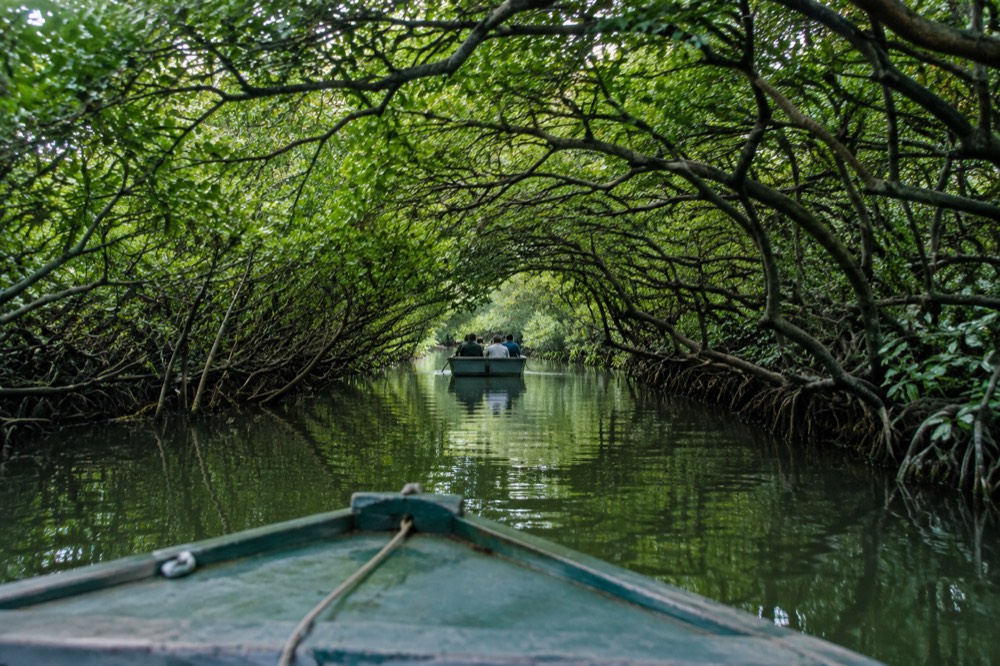
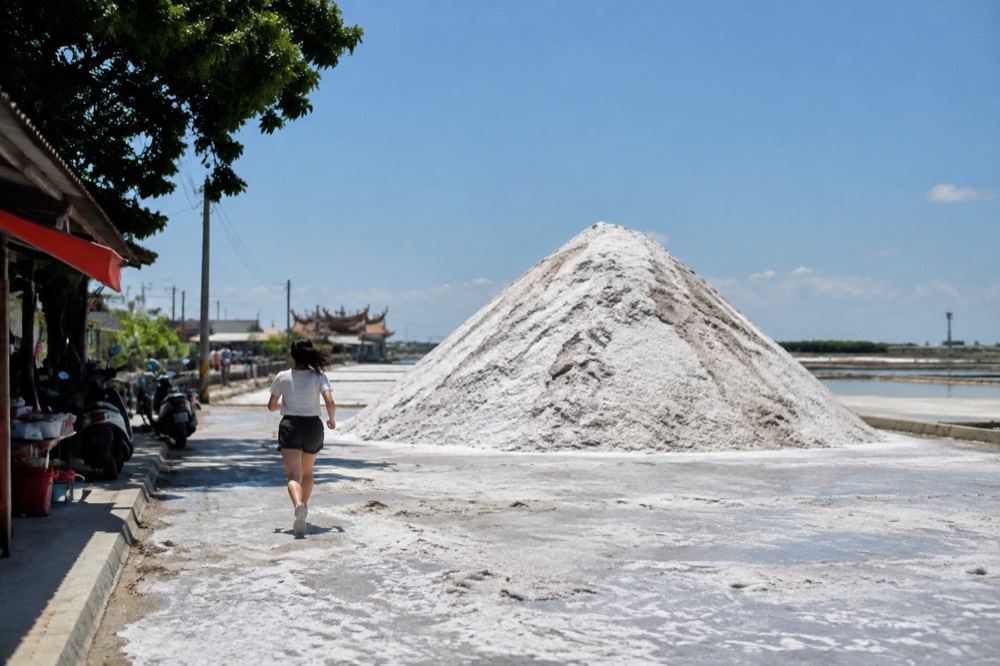
Qigu Salt Mountain is the visual headline further up the coast, a two-storey heap of salt from the old evaporation fields, with a cleaning fee of 50 per person on foot or 100 per car rather than a traditional admission ticket. The Taiwan Salt Museum and the Jingzijiao tile-paved salt fields, which drew 636,193 visitors in 2023, sit in the same area, so the coast fills a full day easily. The Qigu Salt Industry Recreation Area as a whole drew 690,750.
The wetlands are the quiet third act. The black-faced spoonbill, a large white wading bird with a spatula-shaped bill, winters in the Qigu wetlands and the Zengwen River estuary, arriving around September or October and leaving by March to May, with the core viewing season in winter. Winter is also Tainan's dry season: the Central Weather Administration's 1991 to 2020 normals for Tainan show December averaging 16 mm of rain across 3 wet days, against August's 466 mm across 16, so a winter Day Three is the statistically safe bet for a boat and a salt mountain in the same day.
A scenic boat ride is the one booking that saves real time on Day Three, since the boats depart on a fill-and-go basis at the Sicao dock.
Book the first departure of the day if your plan includes both the boat and the Salt Mountain, because the two sit at opposite ends of the same coastal strip and the 09:00 opening at Qigu pairs naturally with a morning on the water.
| Day | Big outdoor markets open | Hours |
|---|---|---|
| Monday | Dadong | 18:00 to 01:00 |
| Tuesday | Dadong | 18:00 to 01:00 |
| Wednesday | Wusheng | 17:00 to 00:00 |
| Thursday | Garden | 17:00 to 00:00 |
| Friday | Dadong, Wusheng and Garden | 17:00 to 00:00, Dadong to 01:00 |
| Saturday | Wusheng and Garden | 17:00 to 00:00 |
| Sunday | Garden | 17:00 to 00:00 |
Siaobei Night Market, indoors and open every day from noon to midnight, is the fallback on any night, which is why this itinerary does not panic when a Wednesday lands mid-trip. Always check the city's pages before you go, because the days do change.
Where to Eat Across Three Days in Tainan
Tainan's food identity is breakfast and street food rather than dinner restaurants: beef soup served at dawn, danzai noodles, coffin bread, milkfish dishes and shrimp rolls, with the night markets as the evening layer. No official price list exists for any of these, so budget qualitatively, carry cash, and treat the night market stalls as cash-only by default.
Tainan is the city Taiwan's food writers treat as the island's kitchen, and the eating day starts early. Beef soup made from freshly slaughtered beef in a clear broth is a Tainan breakfast institution, and the stalls that serve it open before dawn. Danzai noodles, coffin bread and milkfish soup are the other signature dishes, and the Tainan street food guide routes them by neighborhood. Card acceptance is improving in the tourist zones, but cash remains essential at night markets and small stalls, and convenience-store ATMs are the reliable fallback.
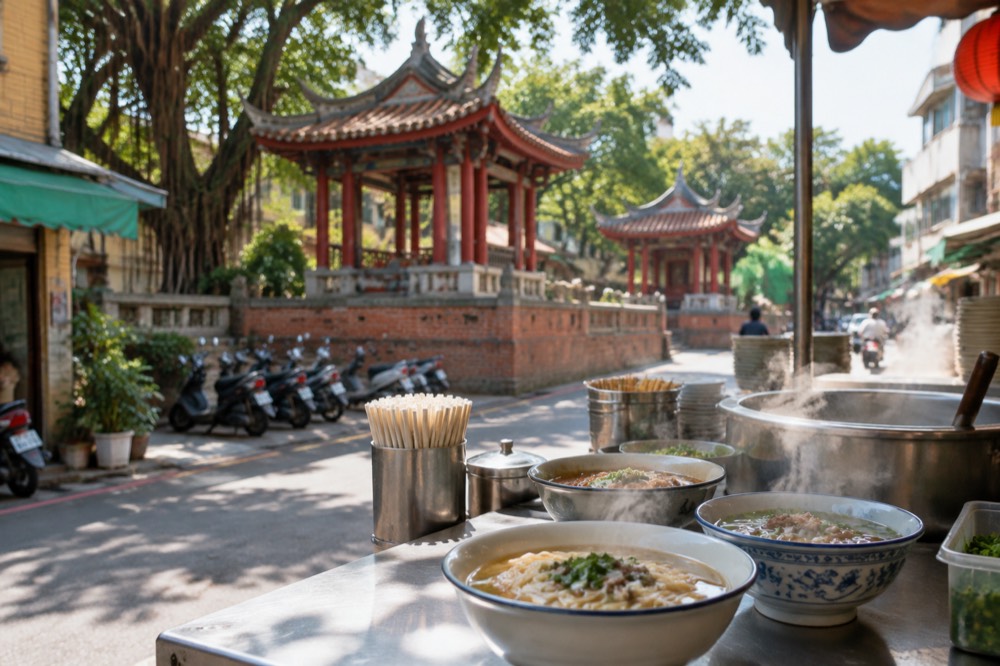
The temple trail doubles as a food trail, because the big temples sit in the oldest food districts. The Tainan temple trail itinerary pairs the Confucius Temple, the Grand Matsu Temple and the Official God of War Temple with the streets around them, and the free-entry temples mean the walking costs nothing between meals.
One cultural stop sits naturally inside the food day: a tea ceremony. Oolong tea is the island's signature, and a guided ceremony explains the gongfu brewing method, the leaf grades and the tasting sequence in a way a shop visit does not.
A ceremony fits best in the afternoon gap between the temple circuit and the night market opening, and it is the one seated, air-conditioned hour in an itinerary that is otherwise entirely on foot.
What Three Days in Tainan Costs
The verified fixed costs for this itinerary are NT$210 in admissions across the three ticketed historic sites, NT$200 for a lagoon boat, NT$50 for the Salt Mountain on foot, and NT$200 for the Chimei Museum if you add it, with buses free for the first 8 km on an electronic card. Food, hotels and any tours are the variable layer, and no official price list exists for street food, so plan that part as a daily range rather than a fixed figure.
The fixed layer is genuinely cheap. Three days of admissions, Chihkan Tower, Anping Old Fort and the Tree House, total 210, and the Eternal Golden Castle adds 70 more if you include it. The free-entry sites, the Confucius Temple, the Grand Matsu Temple, the Five Concubines Temple and Kaiyuan Temple, cost nothing. The Chimei Museum's permanent collection is 200, closed every Wednesday, and the Tainan Art Museum is 80, closed Mondays and open Saturdays until 21:00, so both can slot into the itinerary on their open days.
| Item | Verified price | Notes |
|---|---|---|
| Chihkan Tower | NT$70 | half price for concessions, residents free with ID |
| Anping Old Fort | NT$70 | open 10:00 to 17:10 |
| Anping Tree House | NT$70 | open 08:30 to 17:30 |
| Eternal Golden Castle | NT$70 | open 08:30 to 17:30 |
| Sicao boat, either route | NT$200 | concessions 100, 30 for young children and over-80s |
| Qigu Salt Mountain | NT$50 on foot | NT$100 per car, open 09:00 to 18:00 |
| Chimei Museum | NT$200 | closed every Wednesday, last entry 17:00 |
| City bus | free first 8 km with card | NT$26 cash, tap on and tap off |
The city's own pages carry the disclaimer that prices are for reference and the on-site notice governs, so treat every figure above as the gate price rather than a guarantee. Concessions are half price at the city sites, and Tainan residents enter free with ID; a visitor is not a resident, and the resident free entry does not extend to you.
Transport is the smallest line in the budget. The city's bus site, at the Tainan bus ticketing page, sets out the free-first-8-km policy and the card conditions. If you arrive by High Speed Rail, remember the HSR station is not in Tainan: it sits at Shalun in Guiren District, outside the old city, and the H31 shuttle is free for HSR passengers on production of a ticket stub, with its route breaking at the Chimei Museum. The fare from Taipei is NT$1,350 for a reserved standard seat on the operator's own table, and from Zuoying, the Kaohsiung HSR station, it is 140.
Common Questions About Three Days in Tainan
Is three days in Tainan enough?
Three days is enough to cover the old city core, Anping and the Qigu lagoon coast, and to catch two or three night markets if your dates span a Friday. It is the shortest trip length that reaches the coast without dropping the historic centre. Two days covers the city and Anping but leaves no time for Qigu.
What is the best month for a three-day trip to Tainan?
October to March is the dry, comfortable half of the year, with October averaging fewer wet days than any other month while still reaching 30.8C maxima. January and February are the peak visitor months, driven by pilgrimage and Lunar New Year. Summer, June to August, is the wettest period, with August averaging 466 mm of rain.
Which night markets should I plan around?
Plan around the rotation: Garden opens Thursday to Sunday, Wusheng opens Wednesday, Friday and Saturday, and Dadong opens Monday, Tuesday and Friday. Friday is the only night all three big outdoor markets run. Siaobei is indoors and open every day from noon to midnight, which makes it the wet-weather and wrong-night answer.
Do I need a tour for three days in Tainan?
You do not need one for the core itinerary, since the historic sites, temples and night markets need no booking. The two bookings that save real time are an evening walking tour, which handles the night market routing and food stops, and a lagoon boat or coastal day tour, which solves the transport to Qigu. Everything else can be done independently with a transit card.
Can I do this itinerary without a car?
Yes. City buses are free for the first 8 km with an electronic card through the 2026 calendar year, provided you tap on and tap off, and the same trip in cash costs NT$26. The Anping sites and the Sicao dock are reachable by bus. Qigu is the one stretch where a day tour or a car saves meaningful time.
Three days, planned against the published hours and the market rotation, is the version of Tainan that leaves nothing important unseen: the Dutch foundations in the morning, Anping's banyan ruins in the afternoon, a rotating night market after dark, and a full day for the salt and mangrove coast. Check the city's pages before you travel, since hours and market days do shift, and carry an electronic card for the buses. If your dates stretch to four days, the four days in Tainan plan adds Guanziling's hot springs; if they shrink, one day in Tainan keeps the old city core intact. This Tainan Travel Guide page, like every itinerary on the site, is compiled from the city's own published information rather than a single visit.