Four Days in Tainan
Four days is the length at which Tainan stops being a whistle-stop and starts giving up its coast, its temples and its night market rotation. This itinerary spreads the old city, Anping, the Qigu lagoon and the museum quarter across four days, using only verified prices and opening hours.
Short answer
Four days in Tainan covers the old city core, Anping's forts and tree house, the Qigu coast with a Sicao Green Tunnel boat ride, and a museum day at Chimei and the Tainan Art Museum. Budget NT$70 per major historic site, NT$200 for the Chimei Museum permanent collection, and plan your nights around the rotating night market schedule.
Four days is the length at which Tainan stops being a whistle-stop and starts giving up its coast, its temple trail and its night market rotation. Two days covers the old city and Anping, and a third adds the lagoon, but the fourth is what lets you slow down: a museum morning, a tea ceremony, an unhurried evening. This itinerary spreads the city across four days using only verified prices, hours and opening days, and it pairs each day with the night market that is actually open that night. If you are still weighing lengths, the one-day, two-day and three-day plans cover shorter trips, and the question of how many days you need has its own full answer.
Is Four Days in Tainan Enough?
Four days is enough to see the old city core, Anping, the Qigu coast and the major museums without rushing, and it is the shortest length at which every one of Tainan's rotating night markets can fall on an open night. Tainan was Taiwan's capital for more than two centuries, until the late nineteenth century, and the layers from the Dutch, Koxinga, Qing and Japanese periods sit close together but not within a single day's walk.
The honest framing is this: one day in Tainan is a highlight reel, two days is a real visit, and four days is the point where the city's geography starts to work in your favor. The Dutch-era sites, the temple trail and the food streets cluster in the old city and Anping, but the coast is a different trip. Qigu Salt Mountain, the Sicao Green Tunnel and the lagoon sit 30 to 60 minutes out by road, and cramming them into a city day flattens both halves.
Four days also solves the night market problem, which is the single most practical fact about planning a Tainan trip. The big outdoor markets rotate by day of week, so a two-night stay can easily miss the best one. Four nights, planned around the schedule further down this page, cannot.
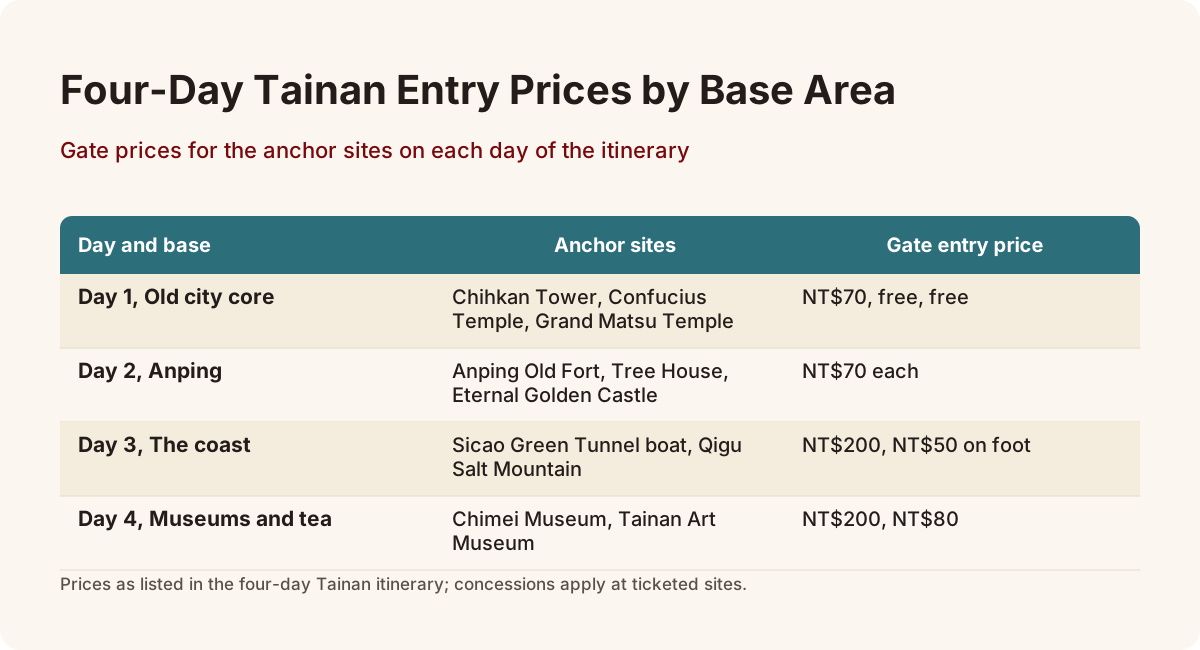
Here is the shape of the four days, with the verified entry prices for each anchor site:
| Day | Base | Anchor sites | Entry price at the gate |
|---|---|---|---|
| 1 | Old city core | Chihkan Tower, Confucius Temple, Grand Matsu Temple | NT$70, free, free |
| 2 | Anping | Anping Old Fort, Anping Tree House, Eternal Golden Castle | NT$70 each |
| 3 | The coast | Sicao Green Tunnel boat, Qigu Salt Mountain | NT$200, NT$50 on foot |
| 4 | Museums and tea | Chimei Museum, Tainan Art Museum | NT$200, NT$80 |
The city's own pages state that prices are for reference and the on-site notice governs, so treat every figure here as the gate price rather than a guarantee. Concessions are half price at the city-run sites, and Tainan residents enter free with ID, but a visitor is not a resident and should not plan around that.
Day 1 in Tainan: The Old City Core
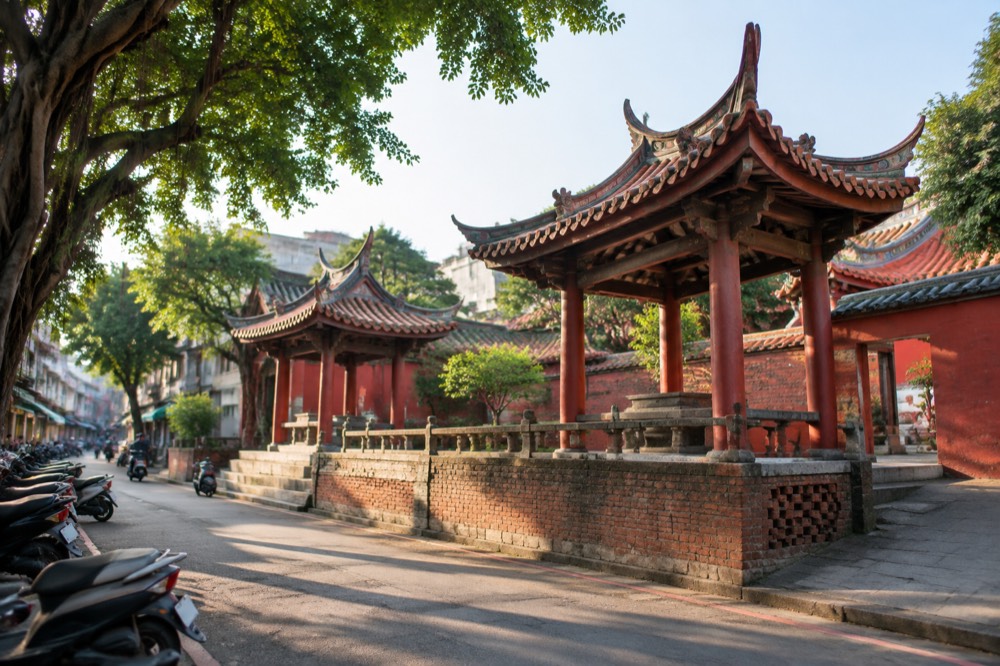
Day 1 belongs to the old city core: Chihkan Tower in the morning, the Confucius Temple and its free temple neighbors at midday, and the West Central District food streets in the afternoon, ending at a night market that matches the day of the week. Chihkan Tower costs NT$70 at the gate and, unusually for a historic site, stays open until 21:30 daily, which makes it one of the few heritage sights a visitor can see after dinner.
Start at Chihkan Tower. The Tainan City Government Tourism Bureau's page for the site states the Dutch built Fort Provintia here in the early 1650s, and the brick and the stone plaques that stand there today span the Dutch and Qing periods side by side. The late closing, 08:30 to 21:30, is worth knowing twice: it means you do not have to choose between the fort and the food streets on your first evening.
From there the old city is walkable. The Tainan Confucius Temple charges no entry fee at all and opens 08:30 to 17:30, closing only on Lunar New Year's Eve. The Grand Matsu Temple, five minutes away, is also free and opens 06:00 to 21:00. The Five Concubines Temple and Kaiyuan Temple round out a free temple trail that costs nothing but shoe leather, and the temple trail itinerary expands it if temples are your reason for coming.
The afternoon belongs to food and streets. Guohua Street is the classic grazing street, and Shennong Street after dark is the city's most photographed old lane, a row of low brick shopfronts lit by lanterns. The food crawl itinerary maps the snack route properly, and no official price list exists for a bowl of beef soup or danzai noodles, so plan on cash and small notes rather than fixed numbers.
For the evening, a guided walk is one of the few things in Tainan that is genuinely a booking rather than a free sight. Most of this city costs nothing or NT$70, and a guide is the exception, not the rule.
If you would rather go unguided, the evening plan is simple: Shennong Street before dark, then whichever market is open, per the table at the bottom of this page.
Day 2 in Tainan: Anping
Day 2 is the Anping day: Anping Old Fort in the morning, the Anping Tree House before lunch, the old street and canal at midday, and the Eternal Golden Castle in the late afternoon. Each of the three ticketed sites costs NT$70 at the gate, and all three close between 17:10 and 17:30, so Anping is a day-shape, not an evening plan.
Anping is where Tainan's Dutch story starts. The Tainan City Government Tourism Bureau's page for Anping Old Fort states the Dutch East India Company occupied the site in 1624 and completed Fort Zeelandia in 1634, and that Koxinga took the fort in 1662. The same page carries an honest detail most guides skip: the only genuine Dutch-period remains are the brick walls of the south outer rampart, and much of what visitors photograph is Japanese-era rebuilding plus a 1975 city renovation that added the pointed lookout roof. Hours are 10:00 to 17:10 daily.
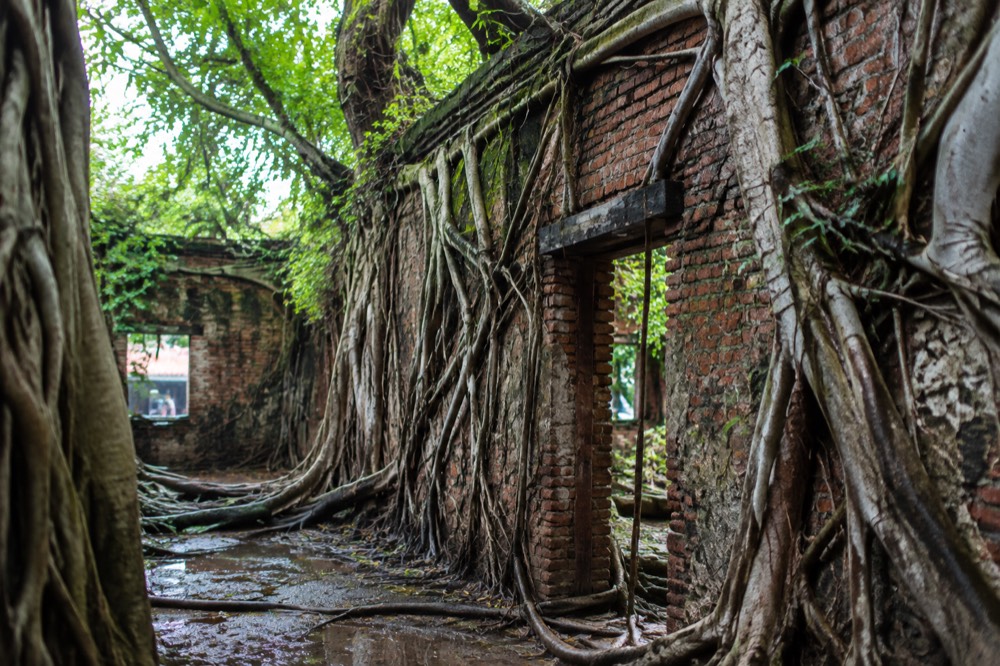
The Anping Tree House is the more atmospheric of the two, a former warehouse swallowed by banyan roots, open 08:30 to 17:30. The Eternal Golden Castle, a Qing-era artillery fort built partly with stone taken from Fort Zeelandia, keeps the same hours and the same NT$70 gate price. Three sites at NT$70 each is NT$210 for the day, and the half-price concession applies at each.
Midday is Anping Old Street and the canal, both free, both crowded by late morning, which is the argument for doing the forts first. The Anping half-day itinerary compresses all of this if your four days shrink, and the sword lion motifs scattered on old doorways give the street a scavenger-hunt layer that costs nothing.
Anping is also the district to photograph in a rented qipao, which is a bookable experience rather than a sight, and one that pairs naturally with the old street backdrop.
Evening options on the Anping day depend on the weekday. If it is a Friday, all three big outdoor markets run, and the choice is wide. If it is a Wednesday, Wusheng is the only big outdoor market, and Siaobei, which is indoors and open every day, is the fallback.
Day 3 in Tainan: The Qigu Coast and Sicao
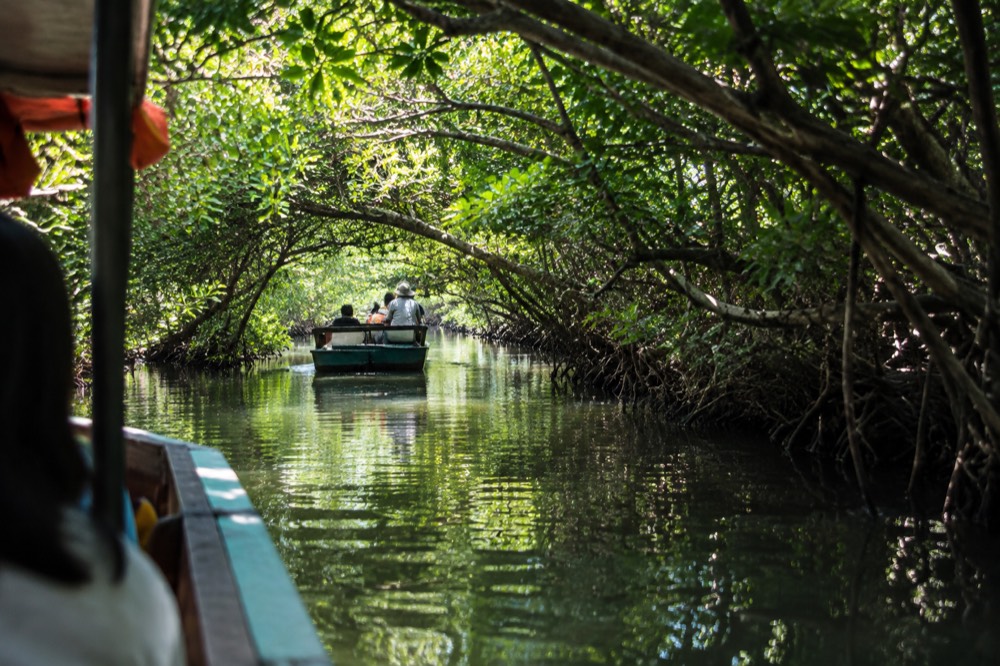
Day 3 leaves the city for the lagoon coast: the Sicao Green Tunnel mangrove boat ride in the morning, Qigu Salt Mountain around midday, and the Taijiang wetlands in the afternoon. The boat costs NT$200 whichever route you take, the Green Tunnel or the longer Taijiang route, and the salt mountain charges a NT$50 cleaning fee per person on foot or NT$100 per car.
The boat is the point of the day. The Tourism Bureau's page for the Sicao Green Tunnel lists boats from 08:00 to 16:00 daily, NT$200 full fare, with concessions for primary-school children and a reduced accessibility ticket. Both routes cost the same, so the choice is between the shorter mangrove tunnel and the longer Taijiang route, not between a cheap and an expensive option. The ride through the green tunnel is roughly 30 minutes, and boats depart when about 30 passengers have gathered or after a wait, so a quiet weekday means patience.
Qigu Salt Mountain, an hour or so up the coast, is a white hill of harvested salt you can walk up. The city's page lists 09:00 to 18:00 daily, a NT$50 cleaning fee per person on foot or per scooter or bicycle, and NT$100 per car. The salt flats and the black-faced spoonbill reserve sit in the same district, and the spoonbills arrive around September or October and stay into spring, which makes a winter version of this day better for birds and cooler for walking.
A guided day tour is the alternative to self-driving this coast, and it is the one day of the four where a tour genuinely saves logistics, since the lagoon sites are scattered and public transport out there is thin.
If you would rather the whole coast day be arranged for you, from the boat to the temples, a full-day tour bundles it:
Come back to the city for the evening, and if this is your third night, the remaining night market rotation will be waiting. Check the days before you go, because the city updates these pages and the days do change.
Day 4 in Tainan: Museums, Tea and the Slow Morning
Day 4 is the culture day: the Chimei Museum in the morning at NT$200 for the permanent collection, the Tainan Art Museum in the afternoon at NT$80, and a tea ceremony or an old-street wander in between. Chimei is closed every Wednesday, the art museum is closed every Monday, and the art museum stays open until 21:00 on Saturdays, so the day of the week decides which order works.
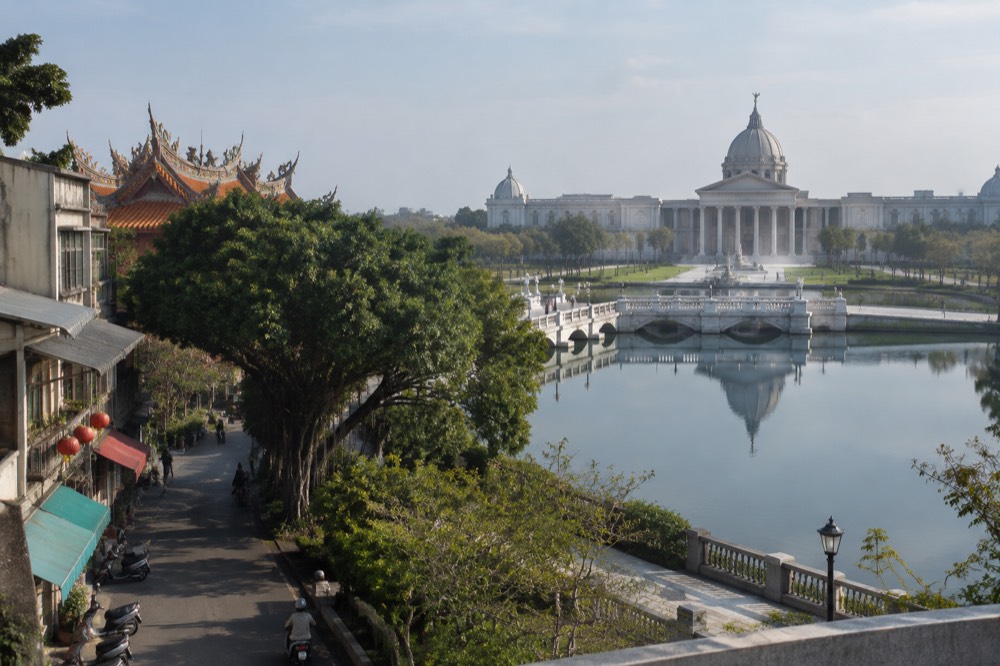
The Chimei Museum is the city's most striking building, a classical palace on a park, and its own visitor page sets the permanent collection at NT$200, concessions at NT$150, last entry at 17:00, and closure every Wednesday and Lunar New Year's Eve. A detail worth planning around: the H31 HSR shuttle's section break falls at the Chimei Museum, which means the museum sits directly on the shuttle route from the HSR station, free for HSR passengers with a ticket stub.
The Tainan Art Museum is a different animal, two buildings including a restored Japanese-era police station, open Tuesday to Sunday 10:00 to 18:00 and Saturdays to 21:00, closed Mondays. Entry is NT$80, and the museum's own hours page notes it takes EasyCard and iPASS at the desk and closes when the city government declares a typhoon day.
Between museums, the slower pleasures. A Chinese tea ceremony is a bookable hour and a half, and it fits the fourth day precisely because the first three days are walking days. The National Museum of Taiwan History, out toward the coast at Annan, is the alternative if your four days fall in a week when Chimei's Wednesday closure bites.
End the fourth evening where the first began, in the old city, or at the market you have not yet hit. Four nights is long enough that the rotation repeats, and Garden Night Market, Thursday to Sunday, is the one most itineraries aim at.
Which Night Markets Are Open During Your Four Days in Tainan?
The big outdoor night markets rotate by day of week: Garden runs Thursday to Sunday, Wusheng runs Wednesday, Friday and Saturday, Dadong runs Monday, Tuesday and Friday, and Siaobei is indoors and open every day. Friday is the only night all three big outdoor markets run, and Wednesday is the thinnest, with Wusheng alone.
This is the fact that should fix which day of the week your four days start on. The Tainan City Government Tourism Bureau publishes the opening days market by market, and the current verified schedule is:
| Market | Open | Closed | Hours |
|---|---|---|---|
| Garden Night Market | Thu, Fri, Sat, Sun | Mon, Tue, Wed | 17:00 to 00:00 |
| Wusheng Night Market | Wed, Fri, Sat | Sun, Mon, Tue, Thu | 17:00 to 00:00 |
| Dadong Night Market | Mon, Tue, Fri | Wed, Thu, Sat, Sun | 18:00 to 01:00 |
| Siaobei Night Market | every day | none | 12:00 to 00:00, indoor |
A four-night stay that starts Thursday or Friday catches Garden at its best and still gets a second market. Locals compress this into a seven-character mnemonic, but it is folk shorthand rather than an official schedule, and against the city's current pages it misses that Garden also opens Friday and Saturday and that Wusheng also opens Friday. Use the table, and check before you go, because the city updates these pages and the days do change.
Siaobei is the wet-weather and wrong-night answer: indoors, noon to midnight, every single day. If your four days include a rainy evening, that is where the plan bends. The rainy day itinerary covers the rest of a washed-out day.
What Does Four Days in Tainan Cost?
The fixed sightseeing cost of this itinerary is a handful of small gate prices: NT$70 at Chihkan Tower, NT$70 each at the three Anping sites, NT$200 for the Sicao boat, NT$50 on foot at the salt mountain, and NT$200 plus NT$80 at the two museums, with every temple and old street free. Food has no official price list, so budget cash for night markets and street stalls, and the bus system makes the getting-around cost close to zero for short hops.
The verified fixed costs, at the gate:
| Item | Price |
|---|---|
| Chihkan Tower | NT$70 |
| Anping Old Fort, Tree House, Eternal Golden Castle | NT$70 each |
| Sicao Green Tunnel boat | NT$200 |
| Qigu Salt Mountain, on foot | NT$50 |
| Chimei Museum permanent collection | NT$200 |
| Tainan Art Museum | NT$80 |
| Confucius Temple, Grand Matsu Temple, Five Concubines Temple, Kaiyuan Temple | free |
| City bus, first 8 km with an electronic card | free |
What no source can tell you is what you will spend on food, because no official price list exists for a bowl of beef soup or a plate at a night market, and inventing one would be a guess. What is fair to say qualitatively is that Tainan's street food is cheap by the standards of Taiwan's big cities, that night market stalls take cash, and that a card is more use at hotels and department stores than at a stall with three tables.
The savings levers are real. Half-price concessions apply at the city sites for students, seniors and several other groups. The temples, the old streets, the canal and the salt flat viewpoints cost nothing. And the bus fare waiver, below, quietly removes most of the in-city transport line from the budget.
How Do You Get Around Tainan in Four Days?
City buses are free for the first 8 km with an electronic card, Citizen Card, iPASS, EasyCard or iCash 2.0, on the trunk and branch network, provided you tap on and tap off, and the same trip costs NT$26 in cash. The scheme runs for the 2026 calendar year, so treat it as current policy rather than a permanent one, and the tap off is the part visitors miss.
The city's own bus fare page states the 8 km waiver in English, and it is the single best transport fact in Tainan. The conditions are mechanical: hold one of the four cards, tap on, tap off, ride a trunk or branch route. Miss the tap off and the waiver does not apply. EasyCard and iPASS also work at the Tainan Art Museum ticket desk, though not on the High Speed Rail, so do not plan an HSR day around one.
Getting in from the HSR station matters on day one. The station is at Shalun in Guiren District, outside the old city, and reaching the center means a transfer. The H31 express bus is free for HSR passengers on production of a ticket stub, with no card tap needed; other passengers pay NT$18 for one section or NT$36 for two, with the break at the Chimei Museum.
| HSR route to Tainan | Standard Car, reserved |
|---|---|
| Taipei to Tainan | NT$1,350 |
| Nangang to Tainan | NT$1,390 |
| Taoyuan to Tainan | NT$1,190 |
| Taichung to Tainan | NT$650 |
| Chiayi to Tainan | NT$280 |
| Zuoying (Kaohsiung) to Tainan | NT$140 |
Those fares come from Taiwan High Speed Rail's own fare table. One warning from the same table: it is a single grid with Standard Car in the lower-left triangle and Business Car in the upper-right, and a careless read returns the business fare of NT$2,230 for Taipei to Tainan and overstates the price by 65 percent. The standard reserved fare is NT$1,350.
For the coast day, self-drive, a charter or a guided tour are the realistic options, because the lagoon sites are scattered. The first-time visitor itinerary covers the full toolkit, and scooter rental deserves its own caution: an International Driving Permit is not automatically sufficient in Taiwan, the authorities expect it to be registered at a Motor Vehicles Office, and rental shops may refuse without it. Check the official rules before renting anything with an engine.
When Is the Best Time of Year for Four Days in Tainan?
October to March is the best window: the Central Weather Administration's 1991 to 2020 normals for Tainan show October averaging 30.8C maxima with just 2.8 wet days, and December bringing only 16 mm of rain, against August's 466 mm across 16 wet days. Tainan records 186 days a year above 30C, so even the cool half of the year is warm by temperate standards.
The rainfall table is the planning tool. Nearly three-quarters of the annual 1,761 mm falls between May and September, with August the wettest month by far. Typhoon risk concentrates in the late summer months, and when the Tainan City Government declares a typhoon day, attractions and transport can suspend, which the Tainan Art Museum states plainly on its own hours page.
| Month | Mean max C | Rain mm | Rain days |
|---|---|---|---|
| January | 23.0 | 20.7 | 3.8 |
| April | 29.3 | 69.8 | 5.9 |
| July | 33.0 | 374.6 | 13.0 |
| October | 30.8 | 30.8 | 2.8 |
| December | 24.4 | 16.2 | 3.0 |
There is a counterintuitive wrinkle: the Tourism Administration's visitor data shows Tainan's peak months are January and February, driven by temple pilgrimage and Lunar New Year, not by summer. The biggest draws are not the Dutch forts either, with Nankunshen Daitian Temple drawing roughly fifteen times Chihkan Tower's 2023 numbers. So the comfortable season and the crowded season are the same season, and a November or early-December visit gets you the dry weather with thinner crowds.
Festival timing can reshuffle the four days. The Yanshui Beehive Fireworks are held in February, on the Lantern Festival, and the city's own calendar places the Yuejin Lantern Festival in February to March, the mango season in June to July and the Guanziling Hot Spring and Food Festival from September to November. Months only: exact dates are published closer to each event.
Common Questions About Four Days in Tainan
Is four days in Tainan too many?
No. Two days covers the old city and Anping, a third adds the Qigu coast, and the fourth gives you the Chimei Museum, the Tainan Art Museum and an unhurried evening. Four days is the shortest length that fits the coast and the museums without cutting a night market night.
What is the best order for four days in Tainan?
Old city first, Anping second, the Qigu coast third, museums fourth. The order also lets you match each evening to whichever night market is open that day, using the verified day-by-day schedule: Garden Thursday to Sunday, Wusheng Wednesday, Friday and Saturday, Dadong Monday, Tuesday and Friday.
How much do the sights cost over four days in Tainan?
The gate prices are small and fixed: NT$70 at Chihkan Tower, NT$70 each at the three Anping sites, NT$200 for the Sicao boat, NT$50 on foot at the salt mountain, NT$200 at the Chimei Museum and NT$80 at the Tainan Art Museum. Every temple on the trail, the old streets and the canal are free.
Do you need a car for four days in Tainan?
Only for the coast day. The old city, Anping and the museums are reachable by city bus, which is free for the first 8 km with an EasyCard, iPASS, Citizen Card or iCash 2.0, provided you tap on and tap off. The lagoon sites at Sicao and Qigu are scattered, so a tour, a charter or a rental car saves time there.
What if it rains during four days in Tainan?
Siaobei Night Market is indoors and open every day, noon to midnight, and the Tainan Art Museum and the National Museum of Taiwan History are the wet-weather anchors. Rain in Tainan is overwhelmingly a summer event, with August the wettest month, so a visit between October and March makes the question mostly moot.
Can you do four days in Tainan without a tour?
Yes, and most of the city is not bookable anyway: temples, old streets and the canal cost nothing and need no ticket. The exceptions worth booking are the coast day, an evening walk and a tea ceremony, and those are the three this itinerary flags at the decision points.
Four days in Tainan, planned around the market rotation and the dry half of the year, is a complete trip rather than a sampler. Anchor the nights to the schedule, keep the coast day flexible, and let the fourth day be the slow one. This Tainan Travel Guide page is one of a set: if four days stretches into a week, the southern Taiwan itinerary and the ten-day Taiwan plan pick up where this one ends.