Tainan Map and Orientation
Tainan is easier to read on a map than most Taiwanese cities once you know three things: the old core is compact and walkable, the High Speed Rail station is far outside it, and the big night markets rotate by day of the week.
Short answer
Tainan's historic core sits in West Central and Anping districts and is compact enough to cover on foot. The HSR station is at Shalun in Guiren District, well outside the center, so every rail arrival includes a transfer.
Tainan Map and Orientation
Tainan was Taiwan's capital for more than two centuries, until the late nineteenth century, and the city's geography still records that history. The Dutch built Fort Zeelandia at Anping in 1624, completed it in 1634, and the old administrative core that grew around their second fort, Fort Provintia, is today's West Central District. What that means for a visitor is unusually convenient: most of the temples, old streets and famous snack stalls of the old city sit within a rectangle roughly two kilometers on a side, and the harder part of the trip is not moving around the center but arriving at it, because the High Speed Rail station is not in Tainan at all.
This page lays out the city the way a map does, district by district, with the transport reality, the night market schedule and the walking clusters that decide how most days actually go. If you want the full picture of the city's sights, the Tainan attractions overview lists them all, and when to visit Tainan covers the seasonal side. This page is about where things sit relative to each other.
How Is Tainan Laid Out?
Tainan is a special municipality of Taiwan covering 37 districts, but nearly everything a short visitor wants sits in two of them: West Central District, the old walled core around Chihkan Tower, and Anping District, the former island where the Dutch landed in 1624. The two are about four kilometers apart and connected by bus, bike and a walkable canal route. The High Speed Rail station is at Shalun in Guiren District, a separate town to the east, and every arrival into it involves a transfer to reach the center.
The city grew outward from its harbor, and the harbor moved. Anping was once separated from the mainland by the Taijiang inner sea, which is why the Dutch chose it: a defensible island guarding a channel. That sea silted up during the Qing period, Tainan's political weight declined with it, and the modern city is now an inland sprawl with its historic harbor district stranded four kilometers from the old administrative core. The Tourism Bureau's own Anping Old Fort page records this sequence, including the detail that Qing troops dismantled parts of Fort Zeelandia to build the Eternal Golden Castle further south.
For orientation purposes, picture three zones. West Central District holds Chihkan Tower, the Confucius Temple, the Grand Matsu Temple and the dense snack streets around Guohua Street. Anping holds the Old Fort, the Tree House, the old street and the canal. Everything else, the museums, the night markets in the north and east of the city, the lagoon coast at Qigu, is a bus or a short ride away. The Tainan history guide explains how those zones came to exist; this page is about moving between them.
Where Do the Old City Districts Sit?
West Central District is the historical and culinary heart, bounded roughly by the old city gates, with Chihkan Tower at its center and the food streets a ten minute walk south. Anping District sits to the west on the old coast, holding the Dutch-era sites along a single stretch of Anping Road. East District and North District hold the newer museums and two of the three big night markets, while the lagoon coast at Qigu, Anshan and Beimen is a day trip to the northwest.
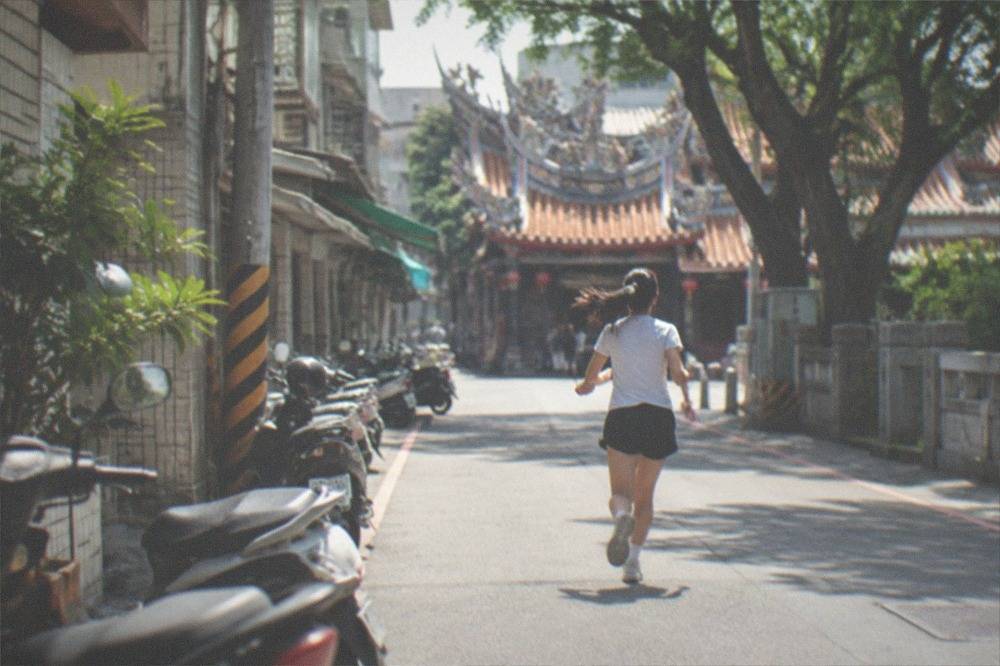
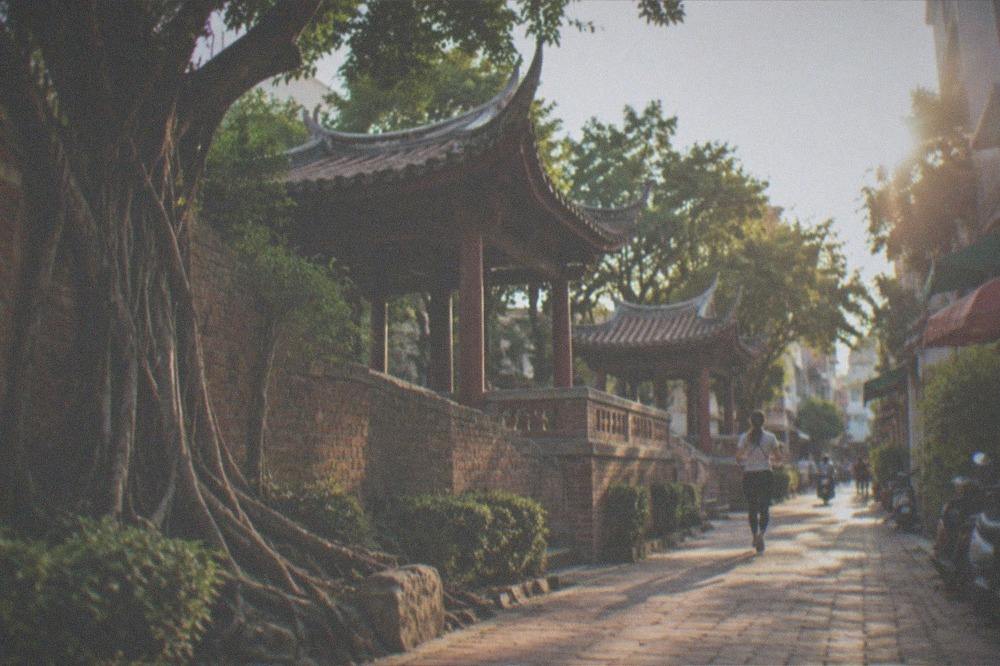
The old core rewards walking more than any other part of Taiwan's cities, because it was laid out before cars and never fully rebuilt around them. The distance from Chihkan Tower to the Confucius Temple is under a kilometer. The Grand Matsu Temple, the Official God of War Temple and the Sacrificial Rites Martial Temple all sit within that same rectangle, which is why a Tainan temple trail works as a single morning's walk. Shennong Street, the canal-side old merchant street, runs south from the west edge of the core.
Anping works as a half day on its own, and the Anping half day itinerary exists because the district's sites cluster tightly: the Old Fort, the Tree House, the Former Tait and Co. Merchant House and the old street are all within a few hundred meters of each other. The Eternal Golden Castle is a longer walk or a short bus ride south. A guided day tour that strings the coast and the old city together removes the transfer planning entirely.
The districts matter less than the clusters, so the practical version of the map is a short table. Distances below are straight-line approximations between the named centers, useful for planning, not for walking directions.
| Zone | Anchor sights | Rough distance from Chihkan Tower |
|---|---|---|
| West Central core | Chihkan Tower, Confucius Temple, Grand Matsu Temple, Guohua Street | 0 km, the reference point |
| Shennong Street and the canal | Old merchant street, Hayashi Department Store | about 1 km west |
| Anping | Old Fort, Tree House, old street, canal | about 4 km west |
| North District | Garden Night Market, Tainan Park | about 2 to 3 km north |
| East District | Dadong Night Market, Tainan Art Museum area | about 3 km east |
| Chimei Museum, Rende | Chimei Museum, HSR shuttle route | about 10 km southeast |
| Qigu lagoon coast | Salt Mountain, Sicao Green Tunnel, spoonbill reserve | about 30 km northwest |
The one distance that catches people out is the last-but-one. The Chimei Museum is not in the walkable core at all, it sits southeast of the city on the HSR shuttle route, which is a fact worth knowing before you plan a museum morning and a temple afternoon in the same day.
How Do You Arrive in Tainan?
Most visitors arrive by High Speed Rail and then transfer, because Tainan HSR station is at Shalun in Guiren District, well outside the old city. A reserved standard seat from Taipei costs NT$1,350, from Zuoying near Kaohsiung NT$140, and the onward connection into the center is either the free H31 shuttle for HSR ticket holders or a paid Taiwan Railway Shalun Line ticket. The city's trunk and branch buses are free for the first 8 km with an electronic card during 2026.
The fare table published by Taiwan High Speed Rail lists Taipei to Tainan at NT$1,350 for a reserved standard seat and NT$1,305 non-reserved. The same grid shows a business class figure of NT$2,230, which is the number a careless read of the table produces; the standard fare is the one in the lower triangle of the grid. From Zuoying, the HSR stop that serves Kaohsiung, the standard fare is NT$140, which is why so many travelers combine the two cities. The Kaohsiung to Tainan guide covers that hop, and getting around Tainan covers everything after arrival.
The transfer is the part to plan. The city's own bus ticketing page states that the H31 Tainan City Government Line express bus is free for HSR passengers on production of a ticket stub, with no card tap needed, and that other passengers pay NT$18 for one section or NT$36 for two, with the section break at the Chimei Museum. The same page sets out the bus fare policy: trunk and branch routes are free for the first 8 km with a Citizen Card, iPASS, EasyCard or iCash 2.0, provided you tap on and tap off. The cash fare for the same trip is NT$26. The scheme runs through the 2026 calendar year, so treat it as current policy rather than a permanent one.
The city bus ticketing page is the source for all of those fares, and it is the page to re-check if you are reading this close to your travel dates. The Tainan HSR station guide covers the transfer options in detail, and the Taipei to Tainan guide covers the long haul. If you fly, Tainan Airport is small and mostly domestic, and most international visitors arrive through Taoyuan or Kaohsiung and continue by rail; the Tainan airport guide explains the difference.
Arriving is also the moment when the map's biggest trap closes. People book a hotel near the HSR station thinking it is central, then discover the station is in Guiren District, a bus or train ride from everything they came to see. Book in West Central or Anping instead, and the where to stay in Tainan guide breaks down the neighborhoods by travel style.
How Do the Night Markets Rotate Around the Week?
Tainan's three big outdoor night markets do not all open every night. Garden Night Market runs Thursday to Sunday, Wusheng runs Wednesday, Friday and Saturday, and Dadong runs Monday, Tuesday and Friday. Friday is the only night when all three operate, Wednesday is the thinnest with Wusheng alone, and Siaobei Night Market is indoors and open every day, which makes it the wet-weather and wrong-night answer.
This rotation is the single most useful practical fact in the city, and it is verified market by market from the Tainan City Government Tourism Bureau's own attraction pages. Locals compress it into a seven-character rhyme, but the rhyme is shorthand, not a schedule: against the city's current published hours it misses that Garden also opens Friday, and the city does not publish the rhyme as an official schedule at all. Trust the table, and check before you go, because the city updates these pages and the days do change.
| Night | Big outdoor markets open |
|---|---|
| Monday | Dadong |
| Tuesday | Dadong |
| Wednesday | Wusheng |
| Thursday | Garden |
| Friday | Dadong, Wusheng and Garden, all three |
| Saturday | Wusheng, Garden |
| Sunday | Garden |
Siaobei Night Market is covered, open from 12:00 to 00:00 every day, so a Tuesday arrival is not a night market disaster. The full breakdown, with hours and locations, is in the Tainan night markets guide, and the individual markets have their own pages: Garden, Dadong and Siaobei.
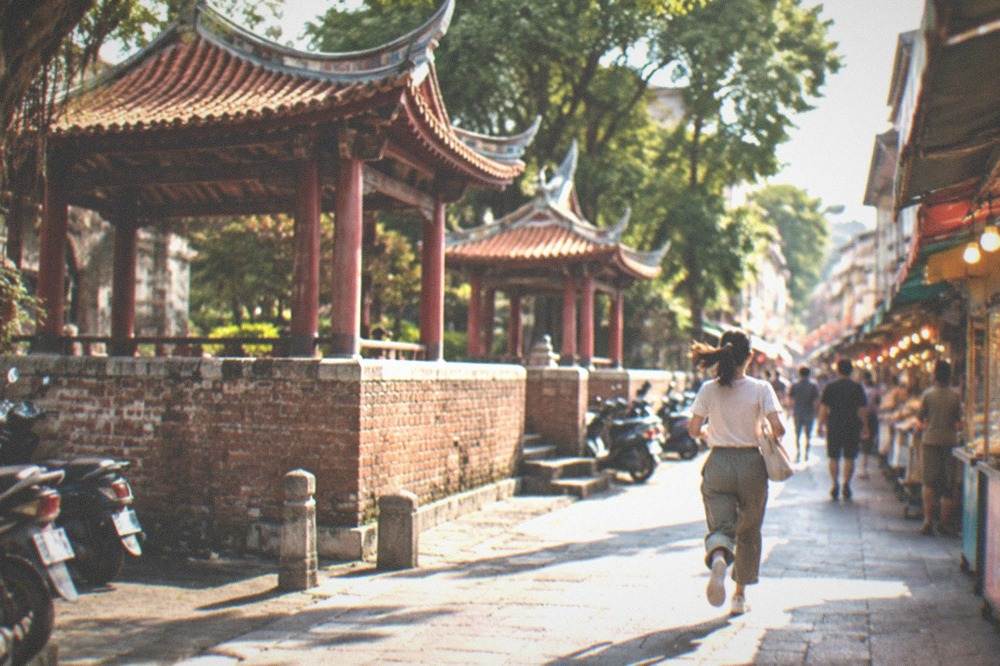
Geographically, the markets ring the old core rather than sitting in it. Garden is in North District on Hai'an Road, Dadong is in East District on Linsen Road, and Wusheng is west of the center on Wusheng Road. None is more than about three kilometers from Chihkan Tower, so a bus, a bike or a short taxi ride covers the gap on any night of the week.
Which Sights Cluster Within Walking Distance?
The Dutch-era and Qing-era sites split into two walkable clusters. In West Central, Chihkan Tower, the Confucius Temple, the Grand Matsu Temple and the Wu Garden all sit within about a kilometer of each other. In Anping, the Old Fort, the Tree House and the old street form a second tight cluster about four kilometers west, while the Chimei Museum and the lagoon coast are separate trips that need transport.
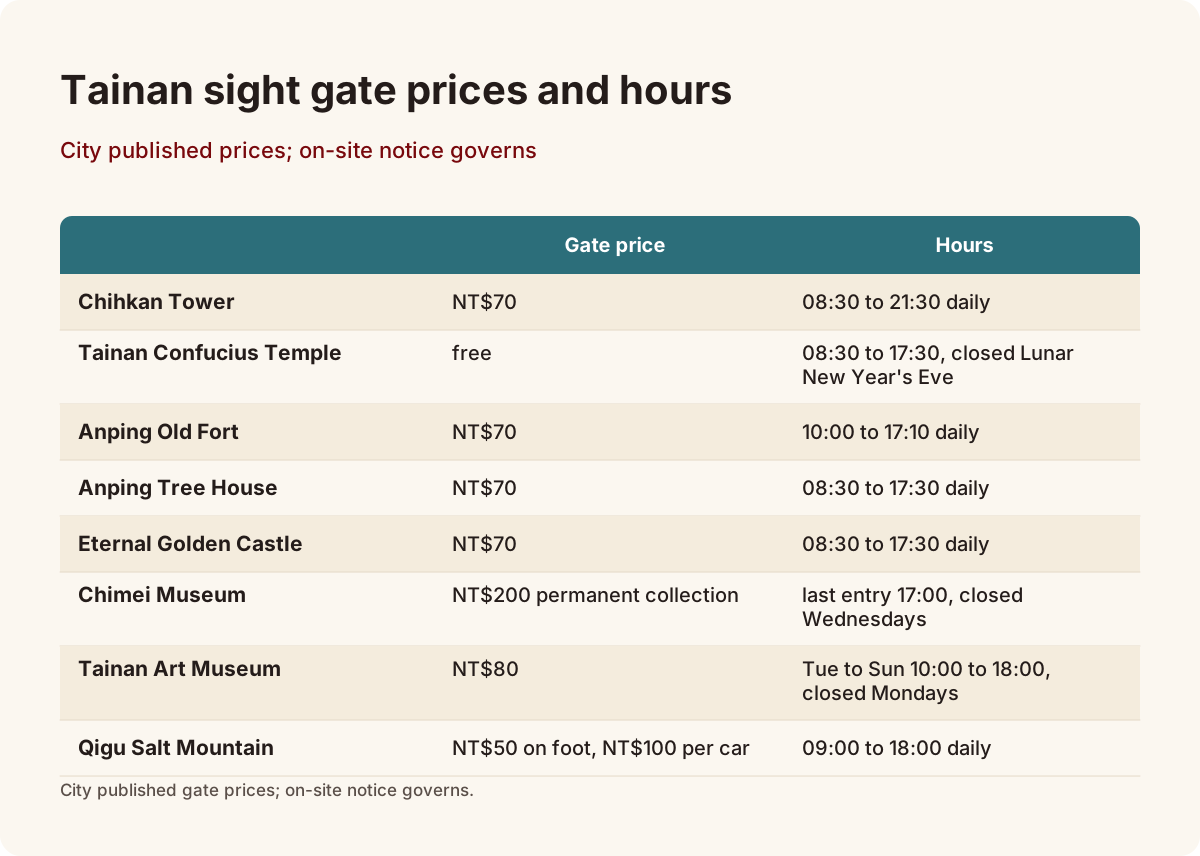
The prices below are the city's own published gate prices, and the city's pages carry the disclaimer that the on-site notice governs, so treat each figure as the current posted price rather than a guarantee. Chihkan Tower is the one to note for evening planning: the Tourism Bureau's page lists it open 08:30 to 21:30 daily, which makes it one of the few historic sites in the city a visitor can see after dinner.
| Site | District | Gate price | Hours |
|---|---|---|---|
| Chihkan Tower | West Central | NT$70 | 08:30 to 21:30 daily |
| Tainan Confucius Temple | West Central | free | 08:30 to 17:30, closed Lunar New Year's Eve |
| Grand Matsu Temple | West Central | free | 06:00 to 21:00 daily |
| Anping Old Fort | Anping | NT$70 | 10:00 to 17:10 daily |
| Anping Tree House | Anping | NT$70 | 08:30 to 17:30 daily |
| Eternal Golden Castle | Anping | NT$70 | 08:30 to 17:30 daily |
| Chimei Museum | Rende | NT$200 permanent collection | last entry 17:00, closed Wednesdays |
| Tainan Art Museum | West Central | NT$80 | Tue to Sun 10:00 to 18:00, Saturdays to 21:00, closed Mondays |
| Qigu Salt Mountain | Qigu | NT$50 on foot, NT$100 per car | 09:00 to 18:00 daily |
| Sicao Green Tunnel boats | Annan | NT$200 | 08:00 to 16:00 daily |
Concessions are half price at the city sites, and Tainan residents enter free with ID, but a visitor is not a resident, so do not plan around free entry. The two free temples in the table are genuinely free for everyone, which is why the free things to do in Tainan page is not a gimmick on this site: the Confucius Temple, the Grand Matsu Temple, the Five Concubines Temple and Kaiyuan Temple all cost nothing.
The lagoon coast deserves its own line on the map because it is the one part of the region people underestimate. Qigu Salt Mountain, the Sicao Green Tunnel boat dock, the black-faced spoonbill reserve and the Taijiang National Park wetlands are all in the northwest, roughly 30 kilometers from the old core, which is a bus ride or a day tour rather than a detour. The Qigu guide covers the district, and the Sicao Green Tunnel page covers the boats, which cost NT$200 on either route, the short mangrove tunnel and the longer Taijiang route alike.
A guided day tour is the efficient answer for the coast, because it folds the transfer, the boat and the salt mountain into one vehicle.
How Does the Weather Shape the Map?
Tainan's rain is almost entirely a summer event, so the map changes shape with the season. August averages 466 mm of rain across about 16 wet days, December just 16 mm across 3, and nearly three-quarters of the annual 1,761 mm falls between May and September. October to March is the dry, comfortable half of the year, which is why the city's visitor numbers peak in January and February, not in summer.
Those figures come from the Central Weather Administration's published climate normals for the Tainan station, covering 1991 to 2020. What they mean for orientation is that the walking clusters in the old core work year-round, but the lagoon coast, the outdoor night markets and anything involving standing in the open are summer-hardened plans: August is both the wettest month and one of the hottest, with a mean maximum of 32.6C. The city records 186 days a year above 30C, and from April to October it exceeds 30C on most days.
| Month | Mean max (C) | Rain (mm) | Wet days |
|---|---|---|---|
| January | 23.0 | 20.7 | 3.8 |
| April | 29.3 | 69.8 | 5.9 |
| July | 33.0 | 374.6 | 13.0 |
| August | 32.6 | 466.1 | 15.8 |
| October | 30.8 | 30.8 | 2.8 |
| December | 24.4 | 16.2 | 3.0 |
October is the quiet surprise in that table: it is the driest month by wet days, 2.8, while still averaging 30.8C maxima. The full month-by-month picture is in the Tainan weather guide, and the typhoon side of the late summer, when the city government may declare a suspension day that closes museums and attractions, is covered in the Taiwan typhoon season guide.
Where Does the Food Map Concentrate?
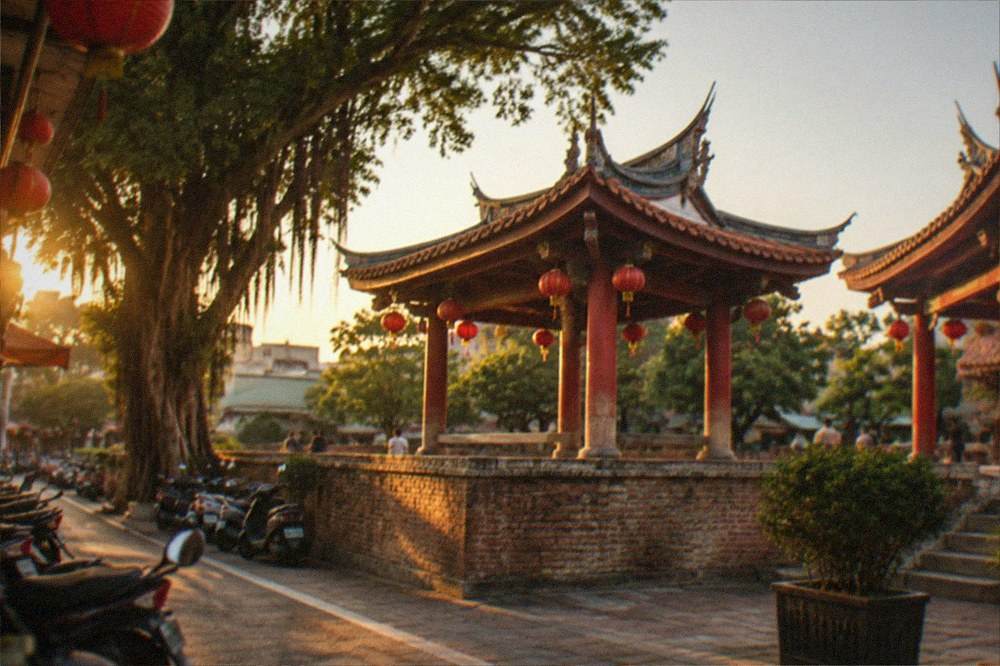
The old city's food sits in three bands: the Guohua Street and West Central snack zone around Chihkan Tower, the breakfast beef soup shops that open before dawn across the core, and the night markets ringing the center in the north and east.
Anping adds a seafood cluster near the old street, and the Tainan food guide maps all of it, but the short version is that a visitor staying in West Central is within a short walk of most of the dishes the city is famous for.
The named dishes have their own pages because people plan whole days around them: dan zai noodles, coffin bread, beef soup and the wider street food crawl. No official price list exists for any of them, and none is invented on this site, so the honest planning line is qualitative: Tainan is among the cheapest of Taiwan's big cities to eat in, and the night markets run on cash.
Geographically, the food map and the sightseeing map overlap almost completely, which is the city's quiet gift to visitors. The Guohua Street snack zone is two blocks from Chihkan Tower. The beef soup shops cluster in the blocks south and west of the railway station. Shennong Street's cafes sit on the canal walk between the two. A visitor who bases in West Central can eat three famous meals a day without transport, then take one bus or one tour for the coast.
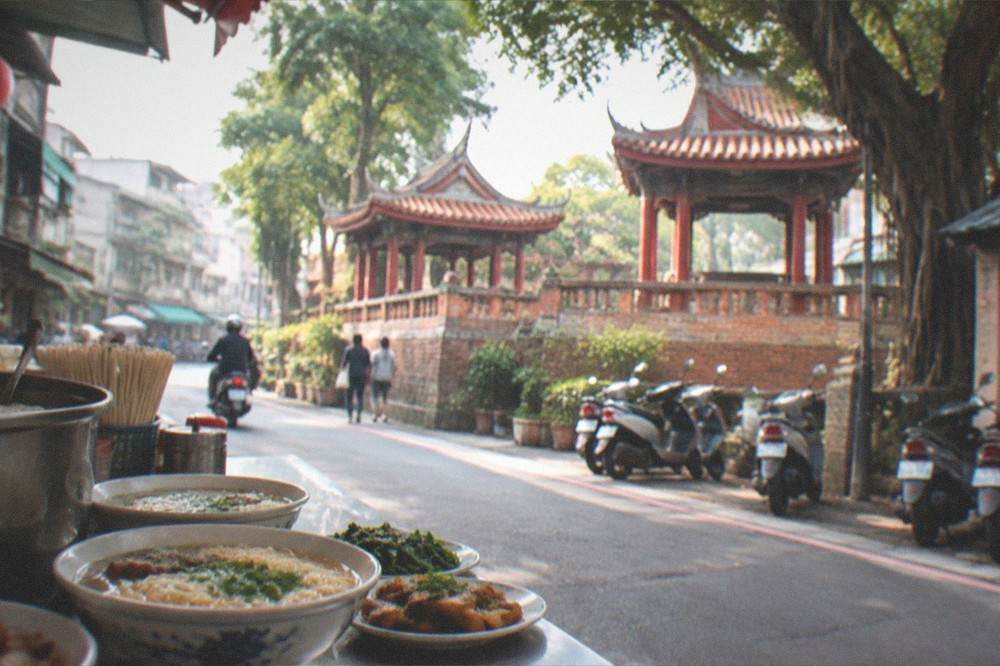
A guided food walk is the shortcut when the clusters matter more than the individual stalls, since a guide who knows the rotation and the neighborhoods compresses two days of self-navigation into one afternoon.
Should You Plan Around the Map or Around a Tour?
For the old city core, plan around the map: it is compact, flat and walkable, and the free bus policy covers the short hops. For the lagoon coast, Anping combined with a tight schedule, or any trip where you want context rather than just locations, a tour earns its price, because the coast is 30 kilometers out and the transfer planning is real work. Most visitors do best with two self-guided days in the core and one guided day for the coast.
The tea ceremony option is the other mapless pleasure worth flagging, because it sits in the old core and needs no navigation at all: a 90 minute seated oolong ceremony is a rest stop in the middle of a walking day, and it is one of the highest-rated experiences in the city on the operators' listings.
For the second half of that plan, the one day in Tainan and two days in Tainan itineraries build the days cluster by cluster, and this site's Tainan Travel Guide homepage ties every district, dish and day trip together if you want the full index.
Common Questions About Tainan Maps and Orientation
Is Tainan walkable without a car?
The old core, West Central District and Anping, is walkable, with most major temples and snack streets within a kilometer or two of Chihkan Tower. The lagoon coast at Qigu and the Chimei Museum need transport, and the city's buses are free for the first 8 km with an electronic card under the 2026 policy.
Where is the Tainan High Speed Rail station?
Not in central Tainan. It is at Shalun in Guiren District, east of the old city, and reaching the center requires a transfer: the free H31 shuttle for HSR ticket holders, a Taiwan Railway Shalun Line ticket, or a bus.
Which district should I stay in?
West Central District for the temples and food streets, or Anping for the historic harbor sites. Both keep you inside the walkable core. Avoid booking near the HSR station unless you specifically want Guiren District, because it is a transfer away from everything.
How far is Anping from the city center?
About four kilometers from Chihkan Tower, connected by bus routes and a canal-side walk. The Anping sites themselves cluster tightly, so once you are there the Old Fort, the Tree House and the old street are all a few minutes apart on foot.
What is the best night of the week for night markets in Tainan?
Friday, when Garden, Wusheng and Dadong all open. Wednesday is the thinnest night, with only Wusheng. Siaobei Night Market is indoors and open every day, which covers every other night of the week.
Is one day enough to see the Tainan map's highlights?
One day covers the West Central core and a half visit to Anping. The lagoon coast, the Chimei Museum and the outer districts each need separate time, which is why most itineraries on this site run two to four days.
The map of Tainan is really three maps: a walkable old core that needs no plan beyond comfortable shoes, a transfer diagram that starts at a station 30 minutes outside the city, and a coastal ribbon to the northwest that rewards a full day. Get those three straight and the rest of the trip, the temples, the snack streets and the night market that happens to be open on your night, arranges itself.