Wu Garden
Wu Garden is a small classical garden tucked into the downtown blocks of Tainan's West Central District, a five-minute walk from the department stores and snack streets, and one of the calmest corners of the old capital.
Short answer
Wu Garden is a compact classical Chinese garden in downtown Tainan, set around a pond with pavilions and old trees, best paired with the nearby historic sites and streets of the West Central District.
Wu Garden sits in the middle of Tainan the way a pocket of quiet sits in the middle of a conversation: one moment the street is full of scooters and milkfish soup shops, the next there is a pond, a pavilion and a stand of old trees. The garden is one of the surviving classical gardens of the old capital, a city that was Taiwan's capital for more than two centuries, until the late nineteenth century, and its downtown blocks still carry that weight in temples, gates and courtyards. This page sets out what Wu Garden is, how to reach it, what to pair it with, and when to go, using the city's own published information wherever a figure is involved. For the wider picture of the city, Tainan Travel Guide covers the whole old capital, from Anping's forts to the lagoon coast.
What Is Wu Garden?
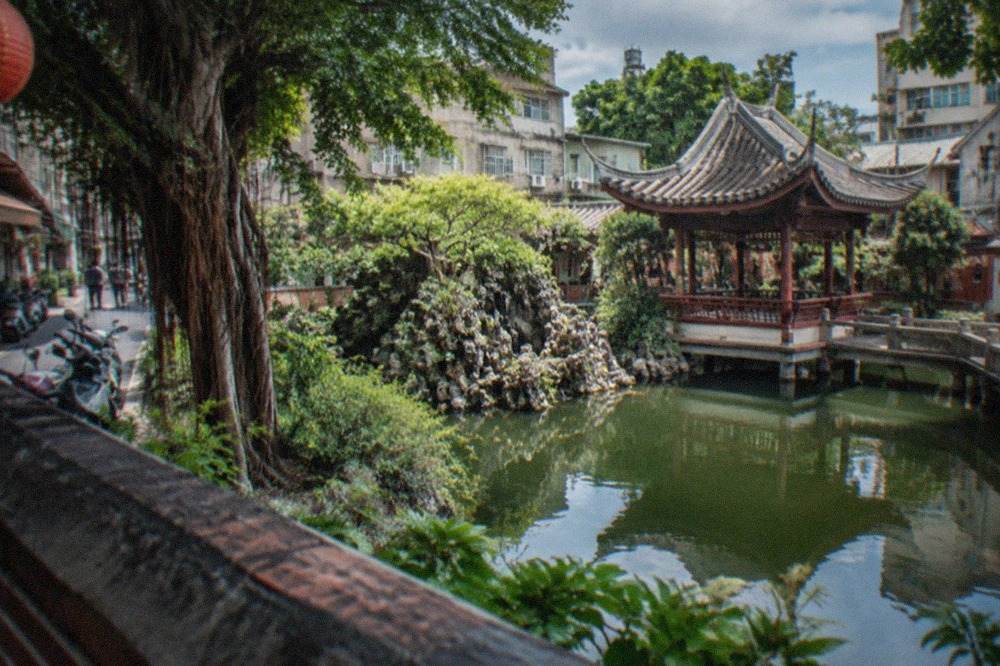
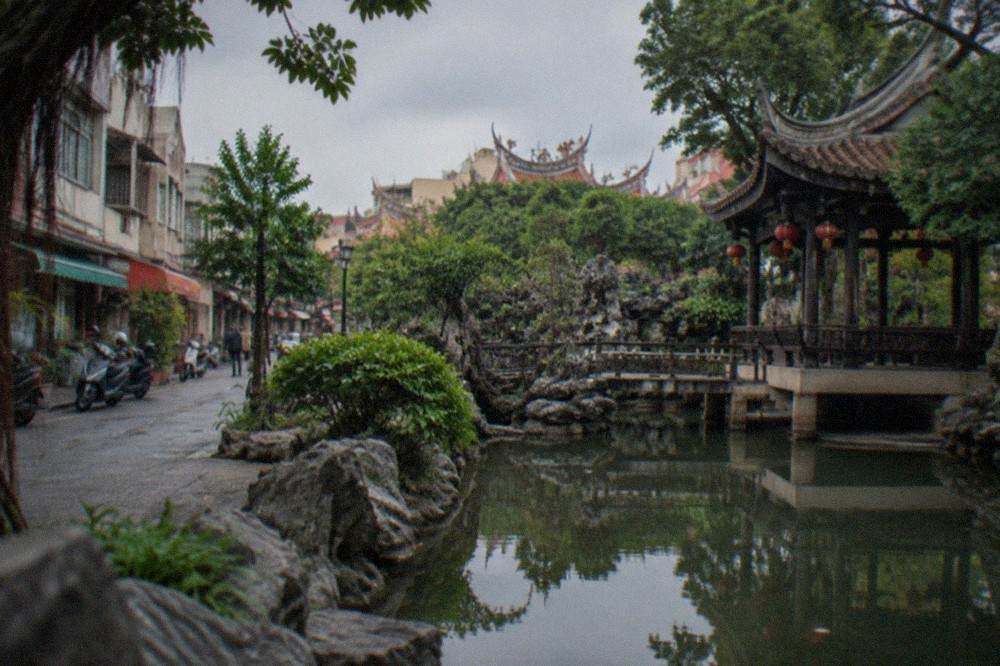
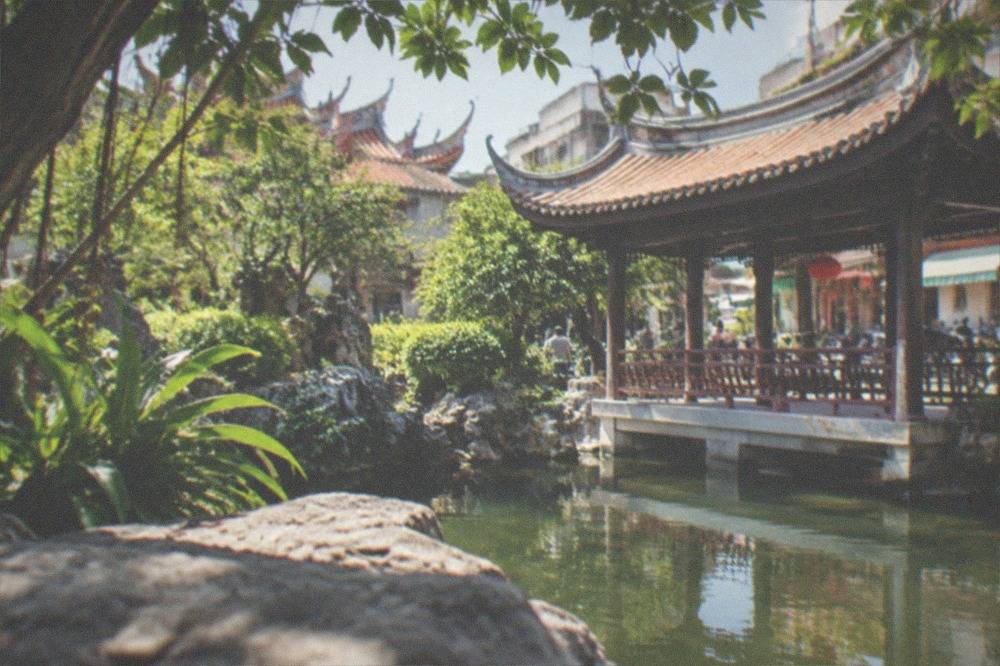
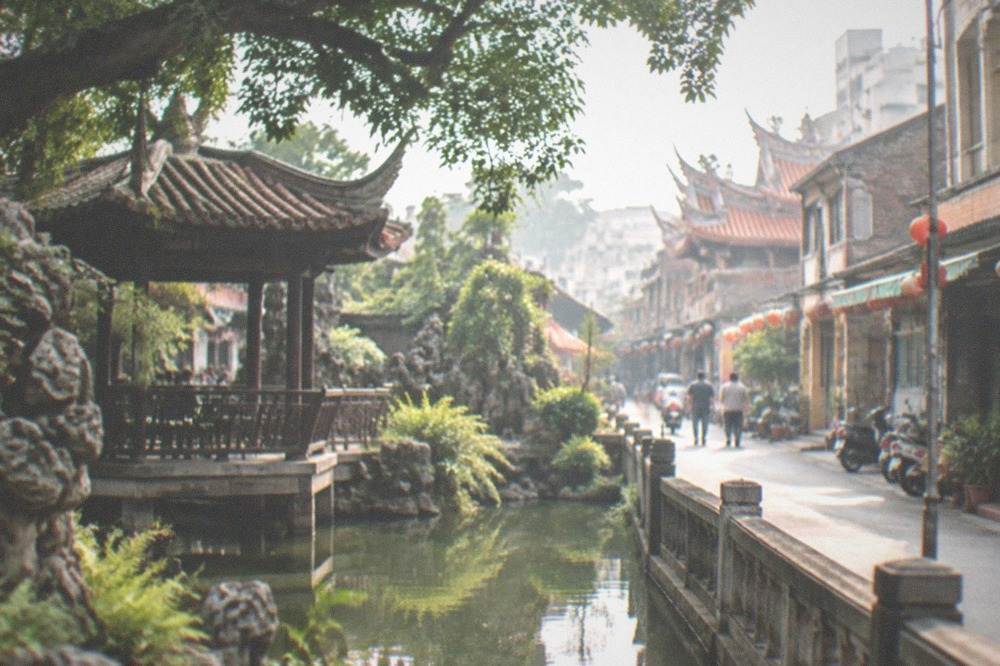
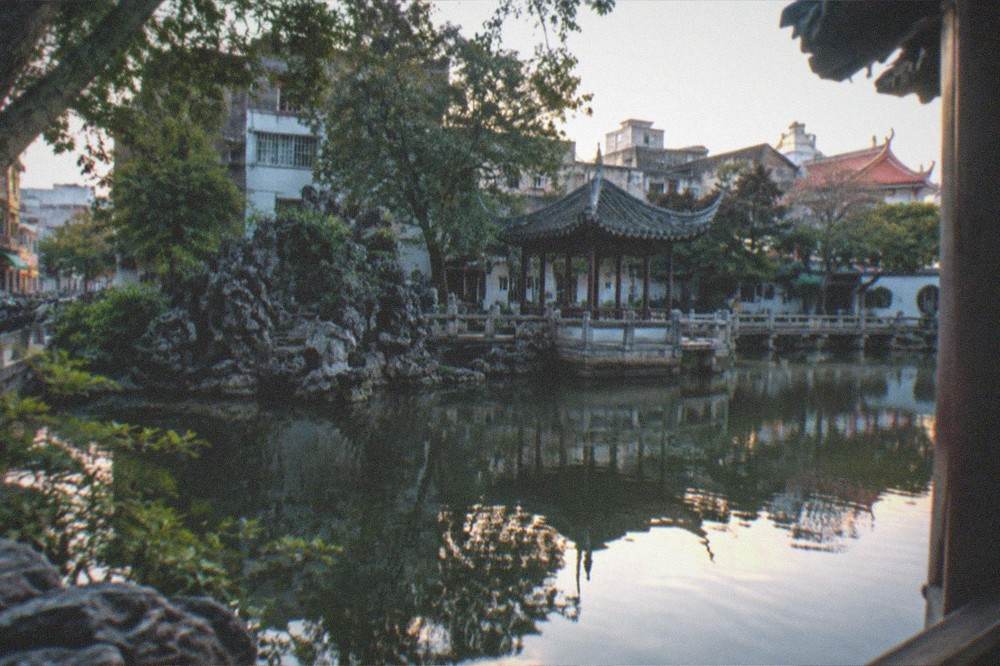
Wu Garden is a compact classical Chinese garden in Tainan's West Central District, laid out around a pond with pavilions, rockwork and mature banyan trees. It belongs to the same family of walled merchant gardens that once dotted the old capital, and it survives today as a small, shaded public space a short walk from the city's busiest shopping streets.
Classical gardens in Taiwan follow a pattern a visitor can read without any background: a pond at the center, pavilions placed to catch a breeze or frame a view, curved walkways, and old trees doing most of the atmospheric work. Wu Garden fits the pattern closely. The garden is small by the standards of the great gardens of Suzhou, and that smallness is the point. It is a pause rather than a destination in itself, the kind of place a visitor walks through between two bigger stops and remembers longer than expected.
The garden's setting matters as much as its contents. Downtown Tainan is dense with history: temples that open at dawn, Japanese-era commercial buildings, and snack streets that fill after dark. A garden like this one is the quiet room in that busy house. The city that grew around it was the island's administrative and cultural center for over two hundred years, and the garden's walls, pond and planting belong to that older, slower city rather than to the modern one outside them.
It is worth being honest about scale. Nobody writing this site has stood in Wu Garden, and no verified figure for its size, founding date or admission price appears in the city's checked listings, so none is printed here. What is safe to say is structural: it is a downtown classical garden, it is walkable in a short visit, and it sits inside the district where most first-time visitors stay anyway, near Shennong Street and the old city's temple core.
Where Is Wu Garden and How Do You Get There?
Wu Garden is in Tainan's West Central District, the downtown heart of the old city, within walking distance of the main shopping streets, the temple quarter and Shennong Street. City buses serve the surrounding streets, and the first 8 km of any trunk or branch bus trip is free with an electronic card, tap on and tap off.
The West Central District is the part of Tainan where most of the city's oldest institutions cluster: the Confucius Temple, the Grand Matsu Temple, Chihkan Tower and the old commercial streets. Wu Garden sits inside that walkable grid. A visitor staying downtown reaches it on foot, and a visitor arriving by bus reaches it the same way, because the garden's block is a short walk from the stops that serve the district.
The bus detail is worth knowing because it is verified and genuinely unusual. The Tainan city bus site states that travel on the trunk and branch network, the green, blue, brown, orange, yellow and red routes, is free of charge for the first 8 km of distance with an electronic card: a Citizen Card, iPASS, EasyCard or iCash 2.0. The card must be tapped on boarding and tapped off when leaving, and tap off is the part visitors miss. The same trip paid in cash costs 26. The scheme runs for the 2026 calendar year, so it is a current policy rather than a permanent one, and it makes short downtown hops effectively free for anyone holding a card.
Visitors arriving by High Speed Rail should remember one structural fact that catches almost everyone: the HSR station is not in Tainan. It sits at Shalun in Guiren District, outside the old city, and reaching downtown means a transfer, either the TRA Shalun Line, which is a paid railway ticket, or the H31 HSR shuttle bus, which is free for HSR passengers on production of a ticket stub. Other passengers on the H31 pay 18 for one section or 36 for two, with the section break at the Chimei Museum. From downtown, Wu Garden is a walk.
What Can You See Inside Wu Garden?
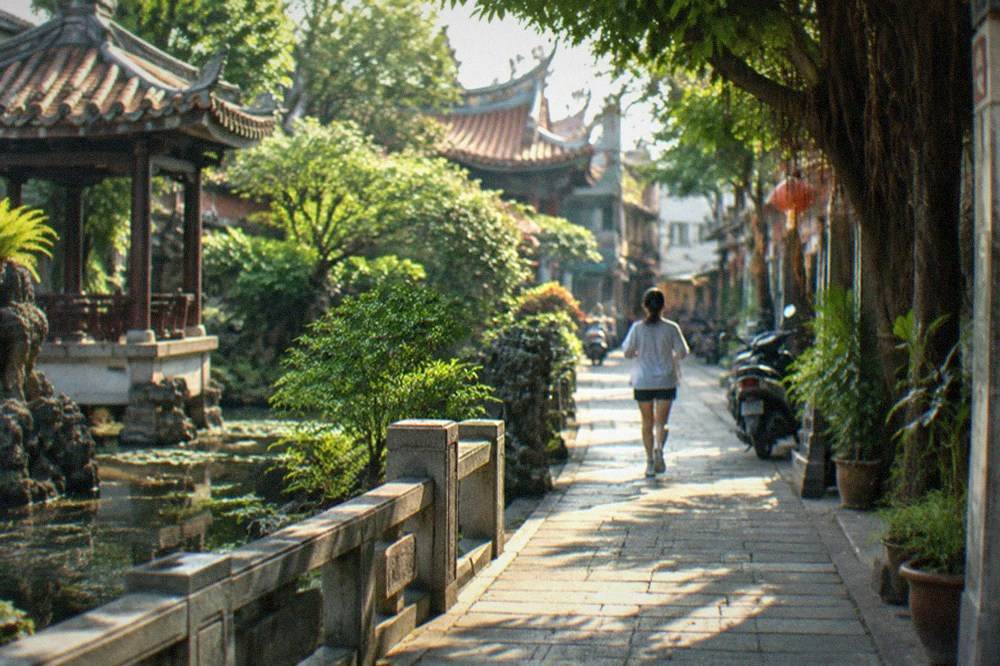
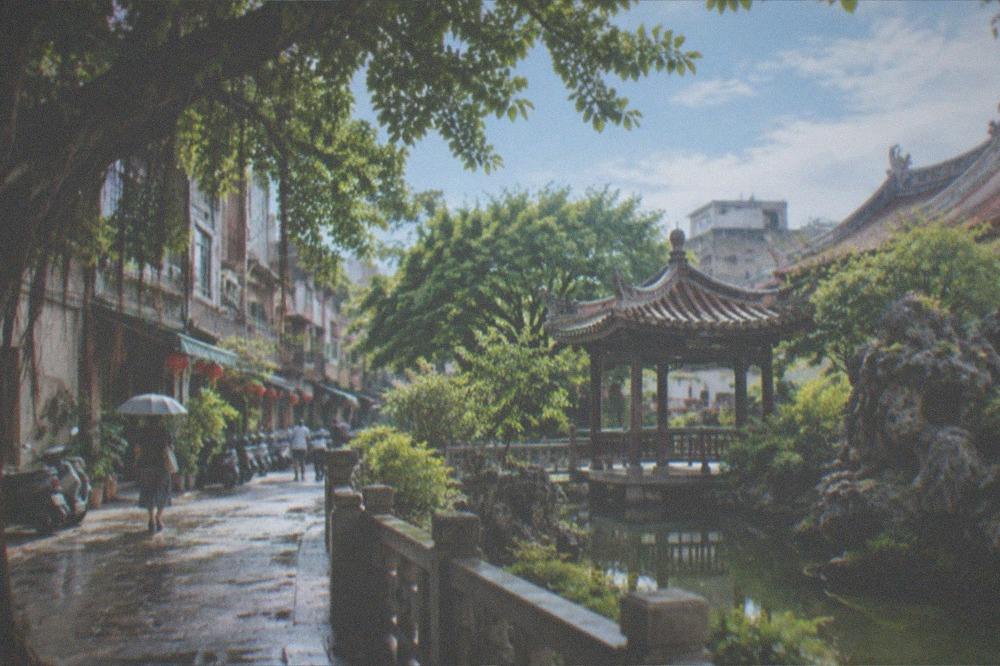
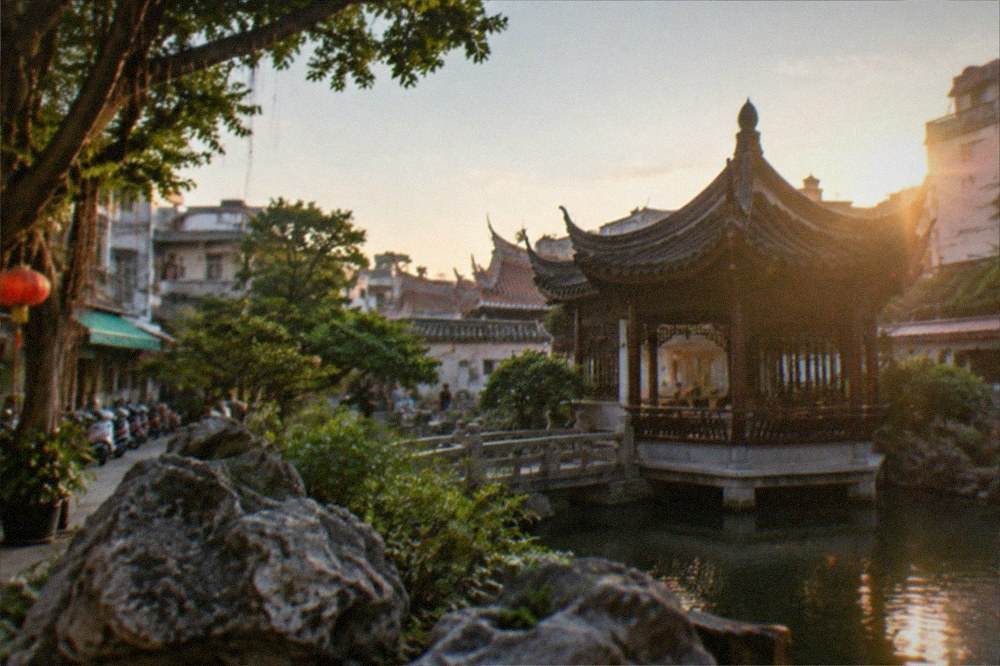
Inside Wu Garden the visitor finds the classic furniture of a Chinese scholar garden: a pond, pavilions, rockwork, curved paths and mature banyan trees, arranged as a single composed scene rather than a park. The garden is compact, so the visit is measured in minutes rather than hours, and the pleasure is in the composition, not the acreage.
The pond is the anchor. Classical garden design in the Chinese tradition treats water as the mirror of the whole composition, and the pavilions around a garden pond are placed to be seen across it as much as to sit in. The banyans are the other half of the scene. Old banyans in a Taiwanese garden do the work that clipped hedges do in a European one: they give the space its depth, its shade and its sense of age, and their root structures are themselves part of the display.
The walls matter too. A walled garden in a dense city is a frame, and the frame is what makes the view inside feel composed. Downtown Tainan is loud, scootered and commercial, and the garden's enclosure is precisely what makes ten quiet minutes possible in the middle of it. Visitors who enjoy this kind of space should also look at Tainan Park, the city's large central park, which offers the open, spacious version of the same green experience.
For visitors who want the garden experience and the history experience in one day, the honest planning advice is to treat Wu Garden as a pause between heavier stops. The old city's ticketed historic sites, Chihkan Tower and Anping Old Fort, carry the Dutch-era and Koxinga-era story, and the temples carry the living religious culture. The garden carries none of that weight. It is simply beautiful, and small enough that missing it costs little while catching it rewards much.
Is Wu Garden Free to Visit?
No verified admission price for Wu Garden appears in the city's checked listings, so this page prints none. What is verified is the pattern around it: Tainan's major temples and several of its historic spaces charge nothing, while its Dutch-era forts and museums charge a modest gate fee, so visitors should expect free or cheap entry and confirm the on-site notice on arrival.
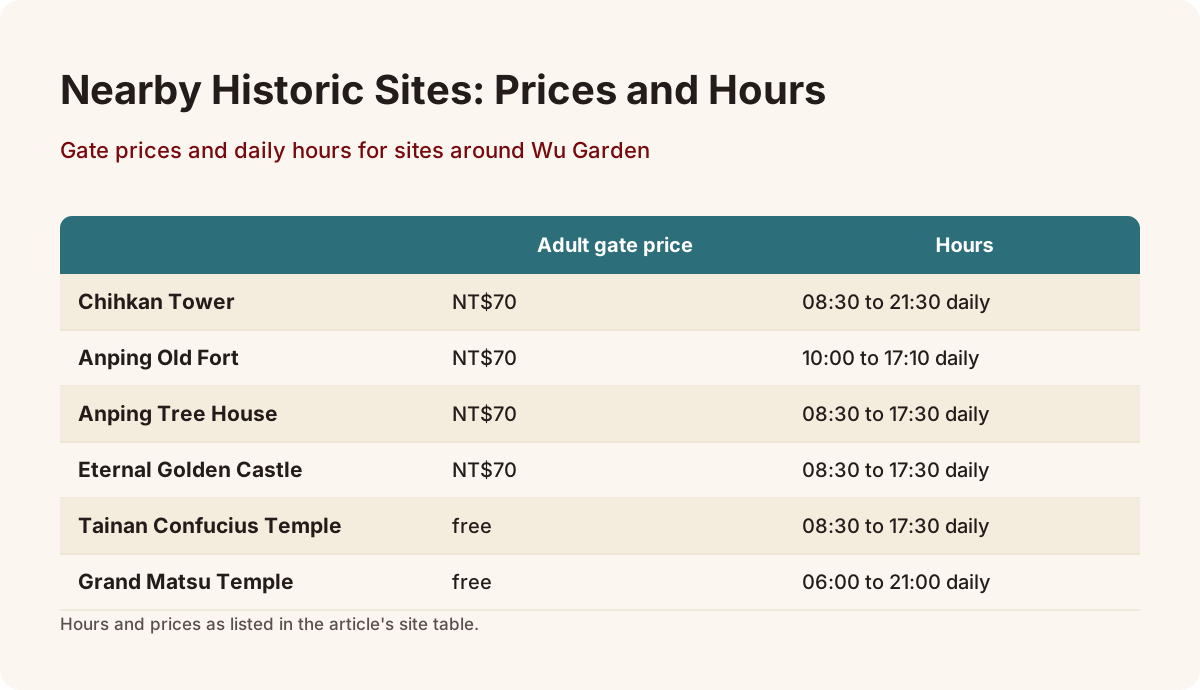
The city's own attraction pages carry a standing disclaimer that published prices are for reference and the on-site notice governs, and that applies across the board. For planning purposes, the reliable split in Tainan is this: the temple network is free, and the ticketed sites are cheap. The table below shows the verified gate prices for the sites a visitor is most likely to pair with a downtown garden stop.
| Site | Adult gate price | Hours | Notes |
|---|---|---|---|
| Chihkan Tower | NT$70 | 08:30 to 21:30 daily | Unusually late closing, open after dinner |
| Anping Old Fort | NT$70 | 10:00 to 17:10 daily | Dutch-era site, 1975 renovation visible today |
| Anping Tree House | NT$70 | 08:30 to 17:30 daily | Banyans growing through a former warehouse |
| Eternal Golden Castle | NT$70 | 08:30 to 17:30 daily | Qing-era battery |
| Tainan Confucius Temple | free | 08:30 to 17:30 daily | Closed Lunar New Year's Eve |
| Grand Matsu Temple | free | 06:00 to 21:00 daily | Opens at dawn |
Concessions at the city sites are half price, and Tainan residents enter free with ID, but a visitor is not a resident and should not plan on that. The free-entry temples are the real gift for a budget visitor: the Tainan Confucius Temple, the Grand Matsu Temple, the Five Concubines Temple and Kaiyuan Temple all charge nothing, and together they carry more of the city's history than any ticketed site.
What Is Near Wu Garden?
The streets immediately around Wu Garden hold the densest concentration of old-city attractions in Tainan: Shennong Street, the temple quarter around the Grand Matsu Temple and the Official God of War Temple, Chihkan Tower, and the shopping streets that fill up after dark. Everything on that list is within an easy walk of the garden.
Downtown Tainan rewards walking more than any other city in Taiwan, and the garden sits inside the walkable core. Shennong Street, the old canal-side street of restored townhouses, is the neighborhood most visitors fall for, and it is minutes away. Chihkan Tower, the site of the Dutch Fort Provintia built in the early 1650s, anchors the district's history and stays open until 21:30, one of the few historic sites in the city a visitor can see after dinner.
The temple quarter deserves more of a visitor's time than most itineraries give it. The Grand Matsu Temple opens at 06:00 and closes at 21:00, which makes it one of the most flexible sites in the city, and the Official God of War Temple and the Sacrificial Rites Martial Temple sit in the same streets. Visitors planning a temple-focused day can follow the temple trail itinerary through the same district.
One pairing that is less obvious but rewarding is with Yanshui Wu Temple, out in Yanshui District. The two share a family name, and Yanshui itself is one of Taiwan's oldest towns, famous for the Beehive Fireworks held in February, on the Lantern Festival. A downtown garden morning and an afternoon train out to Yanshui make a full and varied day.
When Is the Best Time to Visit Wu Garden?
October to March is the best window for Tainan generally and for a garden visit specifically: the Central Weather Administration's 1991 to 2020 normals show the dry half of the year brings under 31 mm of rain a month, while August alone brings 466 mm across 16 wet days. A garden built around a pond and trees is best seen dry, and winter here is warm, not cold.
The climate data for Tainan, from the Central Weather Administration's published normals for station 467410, tells a clear story. Tainan's rain is almost entirely a summer event. Nearly three-quarters of the annual 1,761 mm falls between May and September, and August is the wettest month by a wide margin. December, by contrast, brings 16 mm across about three wet days. October is the quietest month of all for rain, 2.8 wet days on average, while still averaging 30.8C maxima.
| Month | Mean max (C) | Rain (mm) | Wet days |
|---|---|---|---|
| January | 23.0 | 20.7 | 3.8 |
| April | 29.3 | 69.8 | 5.9 |
| July | 33.0 | 374.6 | 13.0 |
| August | 32.6 | 466.1 | 15.8 |
| October | 30.8 | 30.8 | 2.8 |
| December | 24.4 | 16.2 | 3.0 |
The second headline from the same dataset: Tainan has 186 days a year above 30C, and from April to October it is above 30C on most days. For a garden visit, that means shade and timing. A morning visit in the hot half of the year avoids the worst of the heat, and the garden's banyans are exactly the kind of cover a visitor wants at midday. Typhoon risk concentrates in the late summer months, and when the Tainan City Government declares a typhoon day, schools, offices and many attractions suspend operations, so late-summer visitors should watch the forecasts.
There is one counter-intuitive fact worth carrying into the planning. The city's visitor numbers, from the Tourism Administration's own dataset, peak in January and February, driven by temple pilgrimage and Lunar New Year, not in summer. Winter is both the comfortable season and the busy season, and a visitor who wants the garden quiet should aim for a weekday morning outside the holiday weeks.
Can You Visit Wu Garden in the Evening or on a Rainy Day?
For evening, downtown Tainan has strong options: Chihkan Tower stays open until 21:30, the Grand Matsu Temple until 21:00, and the night markets run late into the night, with Garden Night Market open until midnight Thursday to Sunday. For rain, the city's indoor fallbacks are Siaobei Night Market, open daily and covered, and its museums.
The night market schedule is the single most useful practical fact in Tainan, because the big outdoor markets rotate by day of the week, and a visitor who arrives on the wrong night finds nothing. The days below come from the Tainan City Government Tourism Bureau's own attraction pages, and the city updates those pages, so the standing advice is to check before going.
| Night | Markets open |
|---|---|
| Monday | Dadong, plus Siaobei (indoor, daily) |
| Tuesday | Dadong |
| Wednesday | Wusheng |
| Thursday | Garden |
| Friday | Dadong, Wusheng and Garden all open |
| Saturday | Wusheng, Garden |
| Sunday | Garden |
Friday is the one night all three big outdoor markets run, and Wednesday is the thinnest, with Wusheng alone. Siaobei Night Market is indoors and open every day from noon to midnight, which makes it the wet-weather and wrong-night answer. The Garden Night Market is the largest of them and the one most first-time visitors aim for. The official roster of registered markets is maintained by the Tainan City Market Administration.
For a rainy afternoon, the museum list is the fallback. The Chimei Museum, with its permanent collection at NT$200 and last entry at 17:00, is closed every Wednesday, and the Tainan Art Museum, at NT$80, is closed Mondays but stays open until 21:00 on Saturdays. The National Museum of Taiwan History is closed Mondays as well. A garden visit squeezed between two museum stops is a realistic rainy-day shape for downtown.
How Does Wu Garden Fit Into a Bigger Tainan Plan?
Wu Garden works best as a short stop inside a half-day or full-day downtown walk: temples in the morning, the garden and Chihkan Tower around midday, Shennong Street in the afternoon, and a night market after dark. Two or three days is the right length for Tainan overall, which leaves room for Anping and the lagoon coast beyond the downtown core.
The standard first-day shape for Tainan is a downtown loop, and the garden slots into it without adding any travel time. Anping, the old coastal district where the Dutch built Fort Zeelandia from 1624, is a separate half-day, reached by bus or bike along the canal, and it holds the Tree House, the Old Fort and the old street. The lagoon coast beyond, the Sicao Green Tunnel with its NT$200 boat rides and Qigu Salt Mountain, is a day trip in itself.
Visitors with more time can go further. The itineraries for one day in Tainan and two days in Tainan cover the sequencing in detail, and the coast and hot-spring towns, Guanziling in the east, Yanshui and Beimen in the north, reward anyone with a third day. Tea culture is another thread worth pulling: a Chinese tea ceremony experience is one of the most reliably praised activities in the city, and it pairs naturally with a garden visit, since both are about sitting still in a composed space.
For anyone whose Tainan time is an evening only, the city still works. Chihkan Tower's late closing, the Grand Matsu Temple's 21:00 closing and the night markets together make a genuinely full evening, and an evening walking tour is one way to cover that ground with a guide who knows which streets matter after dark.
Common Questions About Wu Garden
What is Wu Garden in Tainan?
Wu Garden is a compact classical Chinese garden in the West Central District, laid out around a pond with pavilions, rockwork and mature banyan trees. It is a quiet, shaded stop in the middle of the old city's busiest district, minutes from Shennong Street and the temple quarter.
How much time do you need at Wu Garden?
A short visit. The garden is small by classical garden standards, so most visitors spend minutes rather than hours. The sensible plan is to fold it into a downtown walk between bigger stops such as Chihkan Tower and the temple quarter.
Is Wu Garden free?
No verified admission price for Wu Garden appears in the city's checked listings, so this page prints none. The pattern across central Tainan is free temples and cheap ticketed forts, and the city's own pages say the on-site notice governs, so confirm at the gate.
When is the best time of year to visit Wu Garden?
October to March. The Central Weather Administration's 1991 to 2020 normals for Tainan show the dry half of the year brings well under 70 mm of rain a month, while August alone brings 466 mm across 16 wet days. Winter in Tainan is warm, dry and sunny.
What is near Wu Garden?
Shennong Street, Chihkan Tower, the Grand Matsu Temple, the Official God of War Temple and the downtown shopping streets are all within an easy walk. Anping, with the Old Fort and the Tree House, is a separate half-day by bus or bike along the canal.
Can you visit Wu Garden at night?
The garden itself is a daytime stop. For evening, downtown Tainan has strong options: Chihkan Tower is open until 21:30 daily, the Grand Matsu Temple until 21:00, and the night markets run to midnight or later, with Garden Night Market open Thursday to Sunday.
Wu Garden will never be the reason anyone books a trip to Tainan, and it does not need to be. The old capital's draw is the layering: Dutch forts, Qing temples, Japanese-era streets and a living snack culture, all inside a district a visitor can cross on foot. A classical garden with a pond and old banyans is the quietest layer of that stack, and the visitors who enjoy it most are the ones who arrive with the schedule already loose, sit for ten minutes in the shade, and then walk on toward the next temple, the next street, or the night market that opens, as the city's own pages confirm, at five in the afternoon.