Qigu Lagoon and the Oyster Rafts
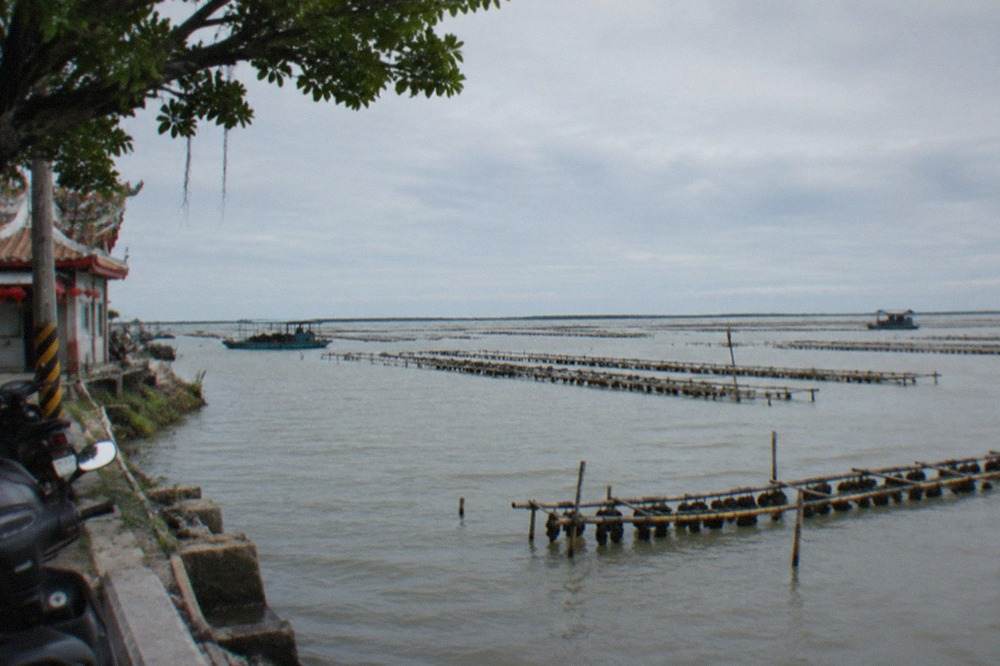
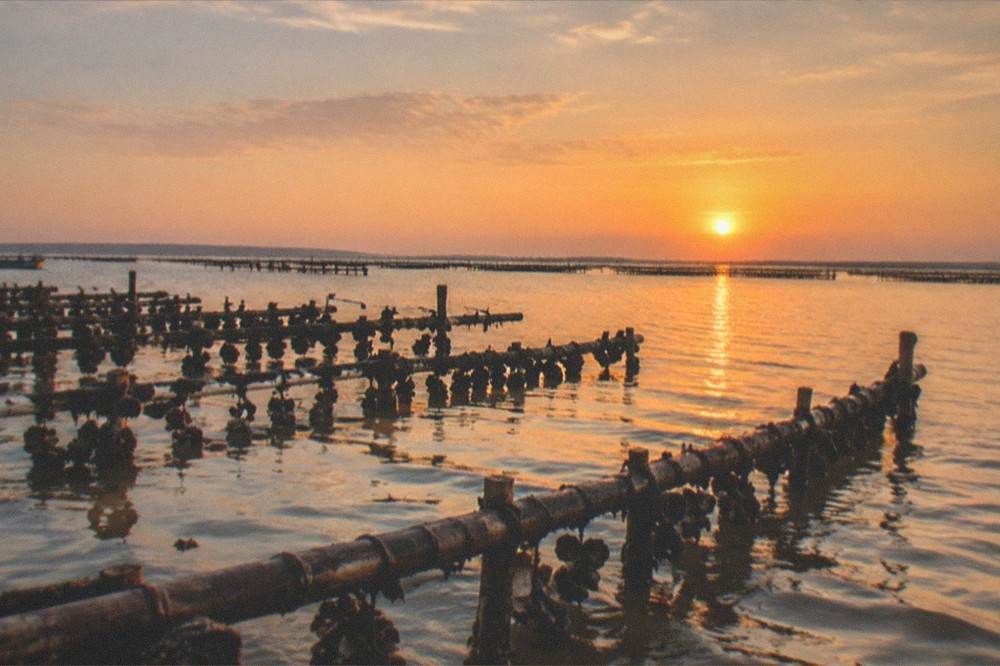
Qigu Lagoon is the shallow water behind the sandbars of Tainan's southwest coast, and it is a working landscape: oyster rafts, mangrove channels, fish farms and a wintering ground for black-faced spoonbills.
Short answer
Qigu Lagoon sits behind the offshore sandbars of Qigu District, about an hour north of the Tainan old city. Boat trips on the lagoon and the nearby Sicao Green Tunnel cost NT$200 full fare, the lagoon coast pairs naturally with Qigu Salt Mountain, and the whole area can be done as a day trip from Tainan or Kaohsiung.
Qigu Lagoon is the shallow inner water that sits behind the long sandbar islands along Tainan's southwest coast, and almost nothing about it is decorative. The lagoon is a working oyster ground, threaded by channels that fish farms and raft operators use daily, fringed by mangrove, and famous among birders as wintering habitat for the black-faced spoonbill. The Tainan Travel Guide desk has assembled this page from the city's own tourism pages and the verified fare tables, so every number here is one an official source publishes.
The lagoon is part of the wider coastal system that also includes Qigu Salt Mountain, the Qigu salt flats and the Taijiang national park wetlands, and the practical effect is that a Qigu day is really a lagoon-coast day. Most visitors arrive by car or tour bus, because the district sits well outside the old city, closer to the lagoon coast's own rhythm than to Tainan's temple quarter.
What Is Qigu Lagoon and Where Exactly Is It?
Qigu Lagoon is the shallow, semi-enclosed body of water between the Tainan mainland coast and the offshore sandbars of Qigu District, roughly an hour's drive north of the Tainan old city. It is an estuarine lagoon shaped by the Zengwen River, and its waters hold oyster farms, fish ponds and mangrove-fringed channels rather than beaches. It lies inside the area the city promotes as the lagoon coast, between the Sicao wetlands to the south and the salt-pan landscape inland.
The sandbar islands are the lagoon's defining feature. They shield the inner water from the Taiwan Strait's swell, which is exactly why oyster farming works here: the rafts sit in calm, nutrient-rich water that the river and the tide refresh twice a day. The Qigu area guide covers the district as a whole, including the salt industry sites that made this coast one of Taiwan's main salt producers for decades.
Ecologically, the lagoon drains into the Zengwen River estuary, and the estuary's mudflats are the reason the black-faced spoonbill winters here. The Tourism Administration's nature pages record the birds arriving in the September-to-October window and departing by March to May, with the core viewing season in winter. No source in this desk's files promises a sighting, and no honest page should.
How Do You See the Lagoon: Boat Rides, Raft Tours or by Car?
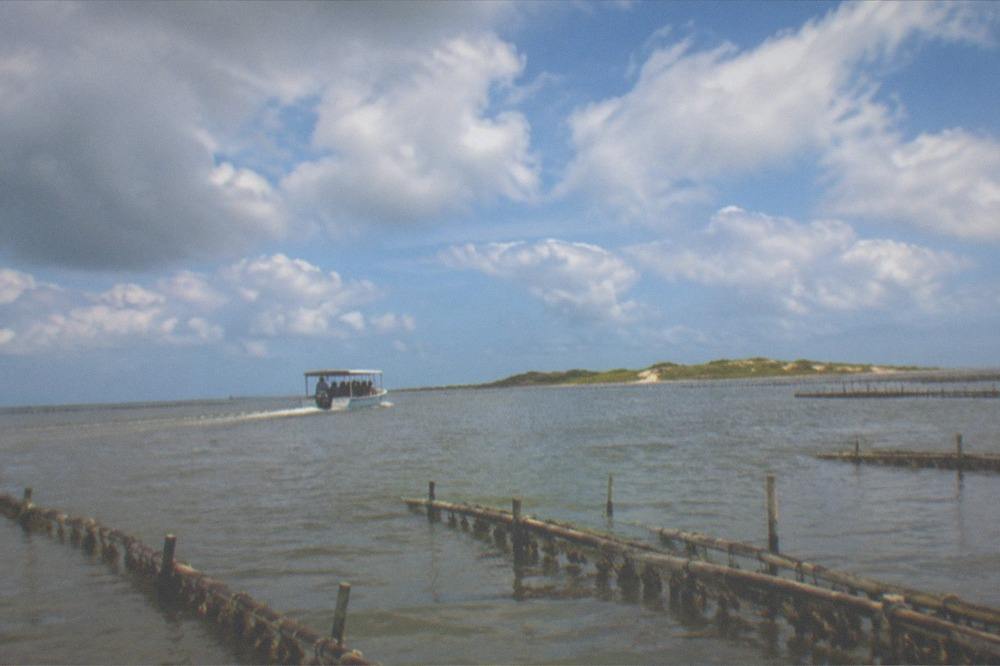
The two main ways onto the water are the Sicao Green Tunnel boat ride, NT$200 full fare, and the longer Taijiang route, which also costs NT$200, so neither is cheaper. Both run from the Sicao area at the southern edge of the lagoon system, daily from 08:00 to 16:00, with child and accessibility tickets at lower rates. Beyond the boats, the lagoon coast is most often seen from the road, from the salt-mountain viewpoint, or on a guided day tour that strings the coast together.
The fare detail matters because it is easy to get wrong. The Tourism Bureau's Sicao Green Tunnel page lists the full fare at 200, a 100 concession for primary-school children, a 30 "black-faced spoonbill" ticket for ages 0 to 6 and 80 and over, and a 100 accessibility ticket whose holder may bring one companion. The page also confirms both routes cost the same, the short mangrove tunnel and the longer Taijiang route. Concessions are half price at city sites generally, and the on-site notice governs, so treat every figure as the gate price rather than a guarantee.
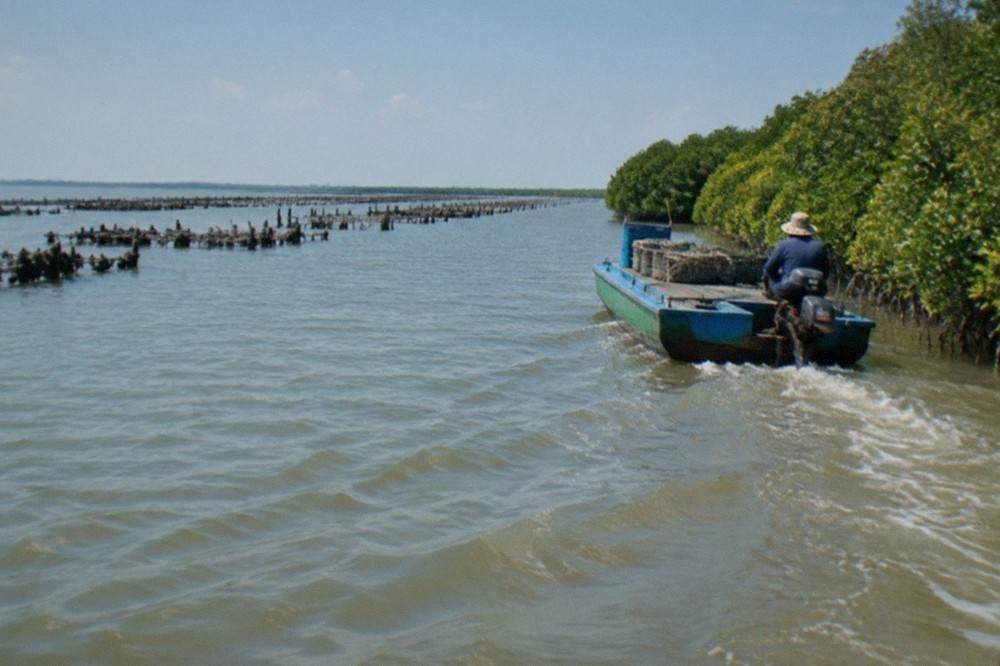
The Green Tunnel itself is the compact option: a roughly 30-minute round trip through a mangrove canal whose canopy closes overhead, which is the image most photos of the lagoon coast actually show. The Taijiang route covers more open water. If you want the lagoon's oyster-farming landscape specifically rather than the mangrove canal, the ecological tours that visit the oyster grounds and the sandbars are the better fit, and the booked options below cover exactly that.
For independent travelers, the honest picture is that the lagoon is not walkable in the way the old city is. The water is the point, and the water needs a boat. The Sicao boats sell at the temple counter on site, and the city's page notes departures depend on demand and weather, so a boat that waits for roughly 30 passengers may not suit a tight schedule. A booked boat seat removes that uncertainty.
What Are the Oyster Rafts and Why Is Qigu an Oyster Coast?
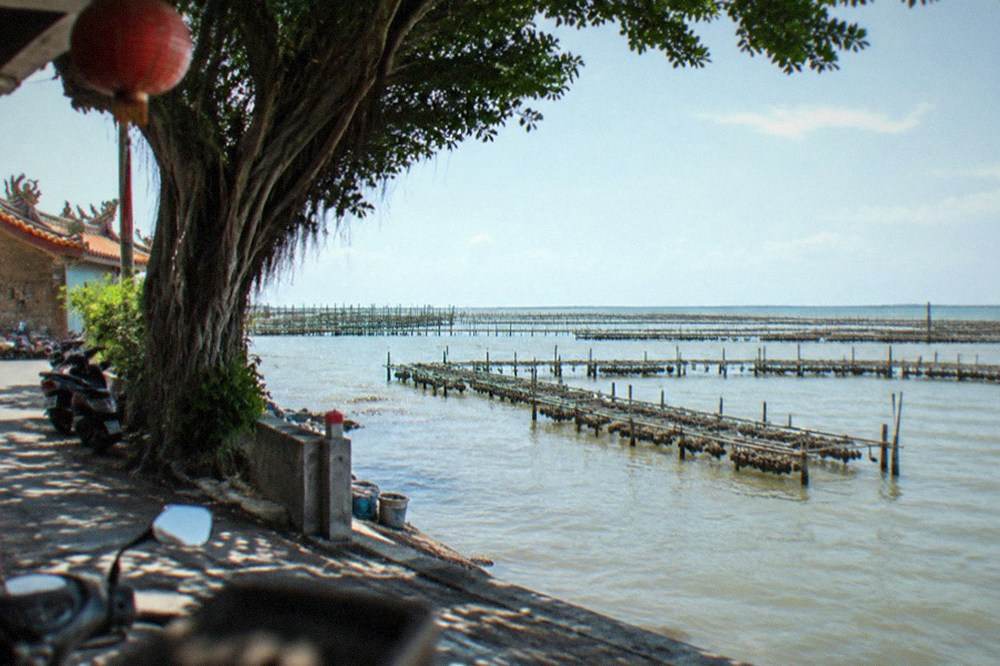
The oyster rafts are floating frames and standing racks on which Pacific oysters are grown in the lagoon's calm, brackish water, and they define the working landscape a visitor sees from any boat. Oyster farming here relies on the sandbars' shelter and the Zengwen estuary's nutrients, and the harvest feeds both the local seafood trade and the all-you-can-eat oyster buffets the lagoon coast is now known for. The rafts are private farm infrastructure, not a visitor attraction you walk onto.
Oysters in Qigu are farmed on racks in the shallows and on suspended rafts in deeper water, and the tide does the feeding. The lagoon's mix of river water and sea water is what makes the flats productive, and the same sheltered geometry that suits oysters suits milkfish and other pond farming inland of the coast. This is why the district's food identity runs from grilled oysters to milkfish soup, and why the seafood festival on the city's own calendar sits in July to August, peak oyster-and-heat season.
The visitor-facing version of the oyster economy is the boat-and-buffet combination. The most-reviewed booked experience on this coast pairs an ecological lagoon trip with a one-hour all-you-can-eat oyster buffet, and its listing shows a strong rating from a large number of reviews. That tour is this page's featured pick, and it exists precisely because the rafts and the dinner are the same industry.
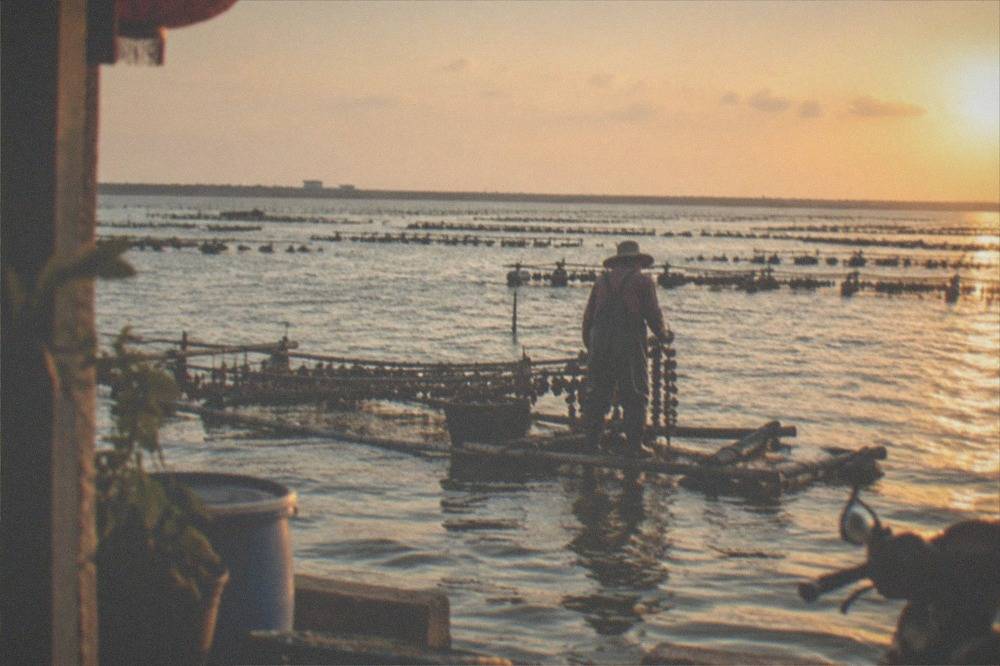
If that combination is the reason you are reading this page, it is worth knowing what the booking actually covers before you commit: the boat leg, the buffet hour, and the transfer logistics that a coastal day otherwise makes you solve yourself.
When Can You See Black-Faced Spoonbills at Qigu?
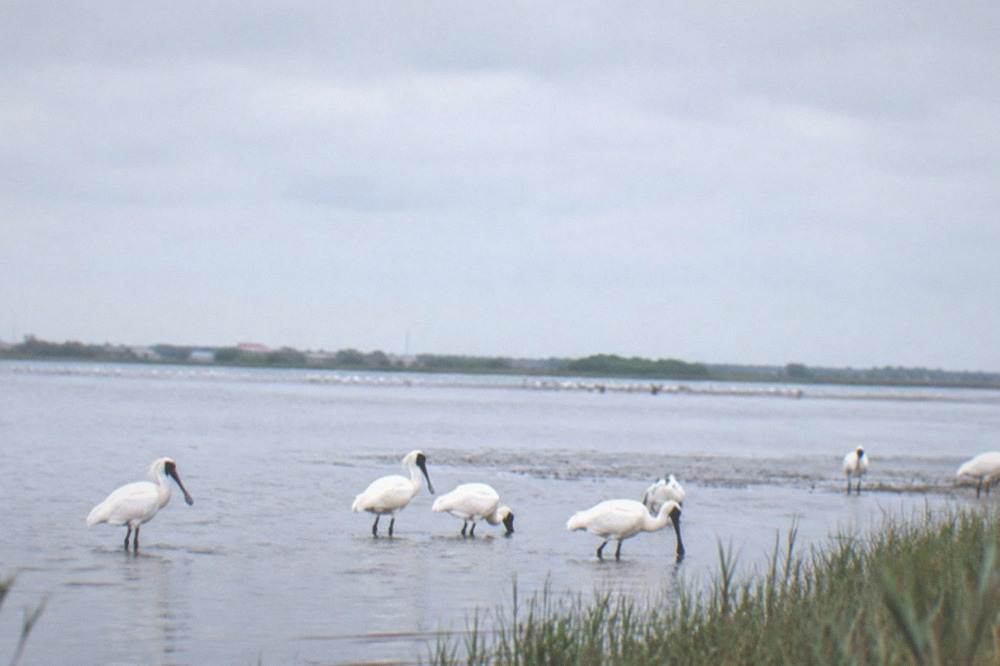
The black-faced spoonbill winters in the Qigu wetlands and the Zengwen River estuary, with birds typically arriving in September or October and departing by March to May, so the core viewing window is the northern-hemisphere winter. The spoonbill reserve area is protected habitat, and sightings depend on tide, weather and the birds' own movements, so no count, no season guarantee and no promised sighting should be believed. Winter is also, conveniently, Tainan's dry season.
The Tourism Administration's nature pages are the desk's source for the arrival and departure windows, and they describe the Qigu wetlands and the estuary as the core wintering area. The black-faced spoonbill reserve page on this site covers the birding side in detail, including the etiquette of watching a globally scarce species without disturbing it.
The climate data makes the timing easy to defend. The Central Weather Administration's 1991 to 2020 normals for Tainan show December bringing just 16 mm of rain across about 3 wet days, against August's 466 mm across 16. October is the driest month by wet days, 2.8, while still averaging 30.8C maxima. A winter trip to the lagoon is therefore both the bird season and the comfortable-weather season, which is why the coast's visitor counts peak in the cool months rather than the summer.
What Does a Qigu Lagoon Day Trip Cost?
A DIY lagoon day costs NT$200 for either Sicao boat route and NT$50 per person on foot at Qigu Salt Mountain, or NT$100 per car. Booked tours run from roughly $9 for a boat-ride ticket to around $88 to $95 for a full guided coast day, per person, per the operators' listings. Food on the coast is cheap by big-city standards, but no official snack price list exists.
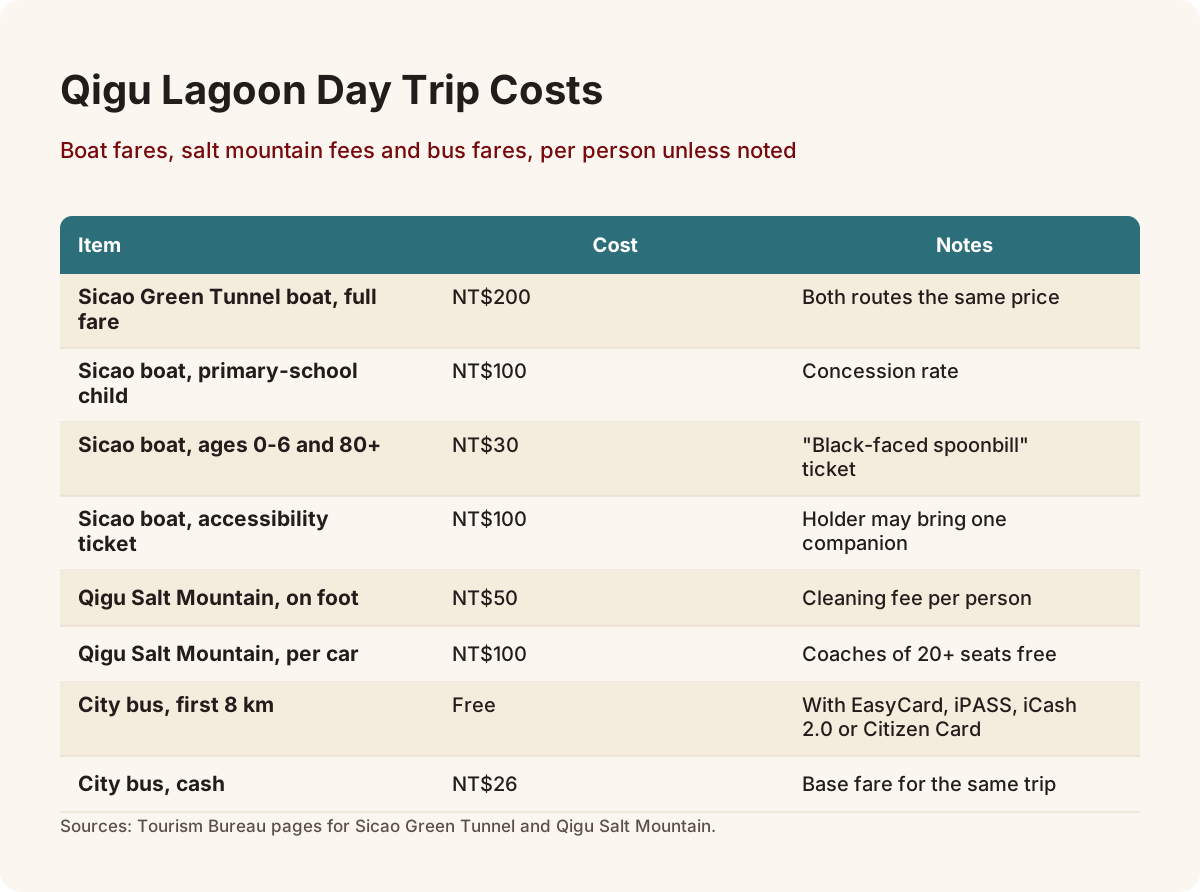
The verified numbers, in one table:
| Item | Cost | Notes |
|---|---|---|
| Sicao Green Tunnel boat, full fare | NT$200 | Both routes the same price |
| Sicao boat, primary-school child | NT$100 | Concession rate |
| Sicao boat, ages 0-6 and 80+ | NT$30 | "Black-faced spoonbill" ticket |
| Sicao boat, accessibility ticket | NT$100 | Holder may bring one companion |
| Qigu Salt Mountain, on foot | NT$50 | Cleaning fee per person |
| Qigu Salt Mountain, per car | NT$100 | Coaches of 20+ seats free |
| City bus, first 8 km | Free | With EasyCard, iPASS, iCash 2.0 or Citizen Card, tap on and off |
| City bus, cash | NT$26 | Base fare for the same trip |
Two caveats on that table. First, the bus free-distance scheme runs for the 2026 calendar year as a renewed annual policy, not a permanent one. Second, the salt-mountain fee is a cleaning fee, not a ticketed admission, and the Tourism Bureau's Qigu Salt Mountain page is the source for it, open 09:00 to 18:00 daily.
For booked options, the boat-only scenic ride lists from around $9 per person, the ecological tour with the oyster buffet from around $12.65, and the full guided coast days that add temples and the salt mountain from the high $30s to the high $80s. Those are listing prices, and the live listing governs.
Which Tour Should You Book for the Lagoon Coast?
For the oyster experience specifically, book the ecological tour with the one-hour all-you-can-eat oyster buffet, from around $12.65 per person, which is also the coast's most-reviewed option. For the wider lagoon, salt and temple landscape in one day, the Sicao-Qigu guided day tour from around $88 covers the most ground. For a cheap taste of the mangrove tunnel alone, the scenic boat ride from around $9 is enough. All three are listed with live availability.
The decision is really about depth. The buffet tour is short, food-forward and the crowd favorite on review count. The full day tour suits travelers who want the lagoon plus Chihkan Tower or the salt mountain without organizing transport. The bare boat ride suits anyone already in the area with a car and a free morning.
How Do You Get to Qigu Lagoon from Tainan or Kaohsiung?
From the Tainan old city, Qigu is a road trip of roughly an hour by car, tour bus or taxi, and there is no rail line to the coast; the High Speed Rail station is at Shalun in Guiren District, outside the old city, and does not serve Qigu directly. From Kaohsiung, the HSR to Tainan station costs NT$140 standard reserved, then the same road leg applies. Most independent visitors drive, and most everyone else takes a booked day tour that includes transport.
The structural fact every arrival plan needs: the HSR station is not in Tainan city, and it is certainly not on the lagoon coast. The verified fare table from Taiwan High Speed Rail lists Taipei to Tainan at NT$1,350 standard reserved and Zuoying to Tainan at NT$140, but no official journey time in minutes is published in this desk's verified files, so check the operator's timetable for times rather than any number quoted elsewhere. The free H31 shuttle from the HSR station is free for HSR ticket holders, but it runs to the city government line, not to Qigu.
For the coast itself, the practical options are a rental car, a booked tour with transport included, or the slow local buses, which exist but serve a district where most people drive. The getting around Tainan picture generally applies: the old city rewards walking and buses, the lagoon coast rewards wheels.
What Should You Pair with the Lagoon on the Same Day?
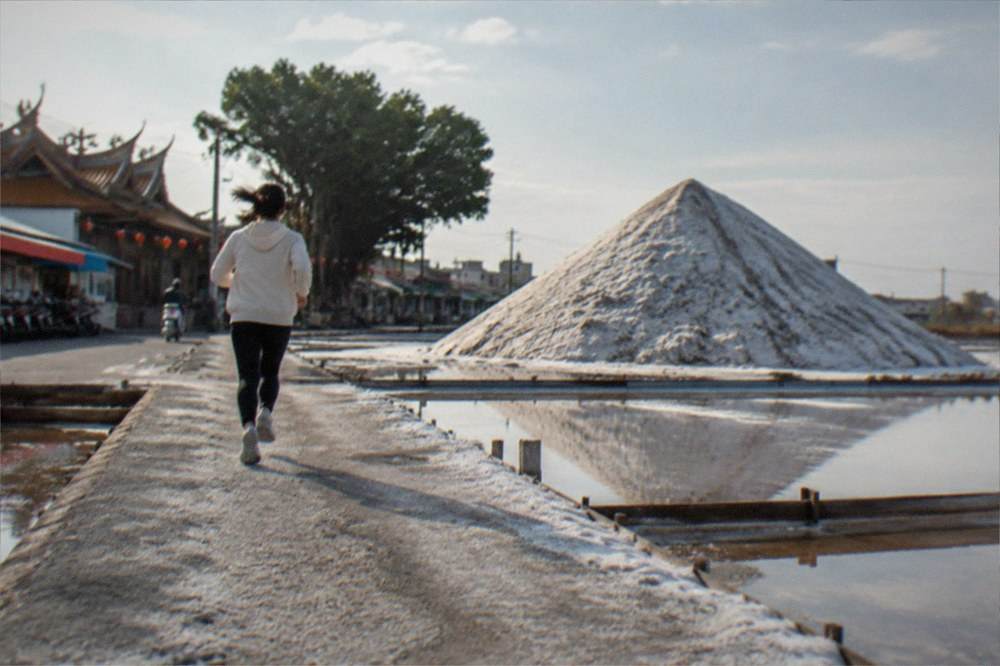
The natural pairing is Qigu Salt Mountain, NT$50 on foot, open 09:00 to 18:00 daily, and the Jingzijiao tile-paved salt fields, which drew 636,193 visitors in 2023. Southward, the Sicao Green Tunnel and the Taijiang national park wetlands chain the lagoon to Tainan's Anping quarter, where Anping Old Fort and the Tree House carry the Dutch-era story. A one-day loop of salt mountain, boat ride and Anping is the standard shape of a Qigu day.
The 2023 visitor counts from the Tourism Administration's own dataset show how the coast's pieces rank: the Qigu Salt Industry Recreation Area drew 690,750, Jingzijiao 636,193, and Beimen's salt recreation area 344,093. Those are operator-compiled counts and methods differ between a ticketed site and an open landscape, but the shape is clear: the salt coast out-draws most of the old city's individual museums.
| Pairing | What It Is | 2023 Visitors |
|---|---|---|
| Qigu Salt Industry Recreation Area | Salt-mountain and salt-heritage landscape | 690,750 |
| Jingzijiao Tile-Paved Salt Fields | Photogenic working salt pans | 636,193 |
| Beimen Salt Industry Recreation Area | Salt coast east of the lagoon | 344,093 |
| Chihkan Tower, for comparison | The old city's Dutch-era landmark | 443,622 |
The pairing logic also works southward. The Sicao Green Tunnel is the lagoon's southern gateway, and from there the road runs to Anping Old Fort, the Anping Tree House and the old streets, which makes a full coast-and-city day entirely feasible with a car or a tour.
When Is the Best Time of Year for the Lagoon?
October to March is the best window: it is Tainan's dry season, with October averaging just 2.8 wet days and December 16 mm of rain, and it is also the black-faced spoonbill season, when the birds are present in the Qigu wetlands. Summer brings the oyster-and-seafood festival season from July to August but also the heaviest rain, with August averaging 466 mm across 16 wet days, plus concentrated typhoon risk in the late-summer months.
The Central Weather Administration's normals for Tainan carry the whole argument. Rainfall runs 20 to 30 mm a month from October through March and 165.6 to 466 mm a month from May through September, with close to three-quarters of the annual 1,761 mm falling between May and September. A winter lagoon day is a dry one; a summer one is a gamble with a forecast.
| Month | Rain (mm) | Wet Days | Mean Max (C) |
|---|---|---|---|
| January | 20.7 | 3.8 | 23.0 |
| April | 69.8 | 5.9 | 29.3 |
| August | 466.1 | 15.8 | 32.6 |
| October | 30.8 | 2.8 | 30.8 |
| December | 16.2 | 3.0 | 24.4 |
The counterweight is the calendar. The city's own festival list puts the Qigu Seafood Festival in July to August, when the oyster trade and the coastal heat are both at their peak, and the summer music festivals sit in the same stretch. Travelers who want the food festival accept the forecast; travelers who want spoonbills and dry paths come in winter.
Can You Visit Qigu Lagoon as a Day Trip from Kaohsiung?
Yes, and it is a well-trodden shape: Kaohsiung to Tainan by High Speed Rail is NT$140 standard reserved from Zuoying, and the coast's guided day tours list departures from both Kaohsiung and Tainan, with a private historical highlights version from around $125.87 per person and a ten-hour group day trip from around $350 per group. The drive from Kaohsiung to Qigu is the longest single leg, so a tour with transport beats self-driving for a one-day out-and-back.
The booked options that fit this shape include the private historical highlights tour from Kaohsiung and the ten-hour day-trip product that departs from either city, both in the roster above. The private chartered versions cost more but remove every transfer decision. The HSR leg itself is short and cheap by Taiwan standards, and the fare table is the verified source for every number in that sentence.
For a two-day version, the coast pairs with an overnight in the old city, where the night markets rotate by day of the week: Garden runs Thursday to Sunday, Wusheng Wednesday, Friday and Saturday, Dadong Monday, Tuesday and Friday, and Siaobei is indoors and open daily. Check the current days before you go, because the city updates these pages and the days do change.
Common Questions About Qigu Lagoon
How much does the Qigu Lagoon boat ride cost?
The Sicao Green Tunnel boat is NT$200 full fare, NT$100 for primary-school children, NT$30 for ages 0 to 6 and 80 and over, and NT$100 for the accessibility ticket, which allows one companion. The longer Taijiang route costs the same NT$200, so there is no cheaper route.
When is the black-faced spoonbill season at Qigu?
The birds typically arrive in September or October and depart by March to May, so winter is the core season. Sightings are never guaranteed, and the reserve habitat should be watched from a distance.
Can you eat oysters at Qigu Lagoon?
Yes. The lagoon's oyster farms supply the local seafood trade, and the coast's most-booked experience combines an ecological boat trip with a one-hour all-you-can-eat oyster buffet, listed from around $12.65 per person.
Is Qigu Lagoon the same as the Sicao Green Tunnel?
No. The Green Tunnel is a short mangrove canal boat ride at the southern edge of the same lagoon-coast system. Qigu Lagoon is the wider open water with the oyster rafts further north, seen on the Taijiang route or the ecological tours.
How do you get to Qigu Lagoon without a car?
There is no rail to the coast, so without a car the realistic options are a booked day tour with transport included or the slow local buses. The High Speed Rail station is at Shalun in Guiren District, outside the old city, and does not serve the coast directly.
The lagoon coast is the part of Tainan that least resembles the temple quarter, and that is its whole value. Come for the rafts and the mangroves, stay for the oysters, and time it to winter if the spoonbills matter to you.