Qigu Salt Flats and Lagoon Day Trip
Qigu, on Tainan's lagoon coast, stacks a mountain of salt, a museum of the salt trade, mangrove boat rides and one of the world's most important black-faced spoonbill wintering grounds into one compact day trip from the old city.
Short answer
A Qigu salt flats and lagoon day trip pairs the NT$50-entry Qigu Salt Mountain with the Taiwan Salt Museum, the Sicao Green Tunnel mangrove boats at NT$200 a head and the Jingzijiao tile-paved salt fields, all within a short drive of central Tainan along the lagoon coast.
Qigu Salt Flats and Lagoon Day Trip
The Qigu coast, an hour or so west of central Tainan, is where the island's salt industry left its most visible mark: a literal mountain of the stuff, stacked beside a lagoon that has since become a mangrove-framed boat ride and one of the most significant wintering grounds on Earth for the black-faced spoonbill. The Tainan City Government Tourism Bureau's page for Qigu Salt Mountain records the essentials: a cleaning fee of NT$50 per person on foot, open 09:00 to 18:00 daily. The 2023 visitor counts from the Tourism Administration show this is not a niche corner either: the Qigu Salt Industry Recreation Area drew 690,750 visitors and the Jingzijiao Tile-Paved Salt Fields 636,193, numbers that comfortably outrank several of the city's Dutch-era forts. This guide lays out what the day costs, how to get there, what each stop actually is, and how to sequence the coast into one realistic loop, with every price below taken from an official source. For the wider district context, see the Qigu area guide.
Where Are the Qigu Salt Flats and Why Are They Worth a Day?
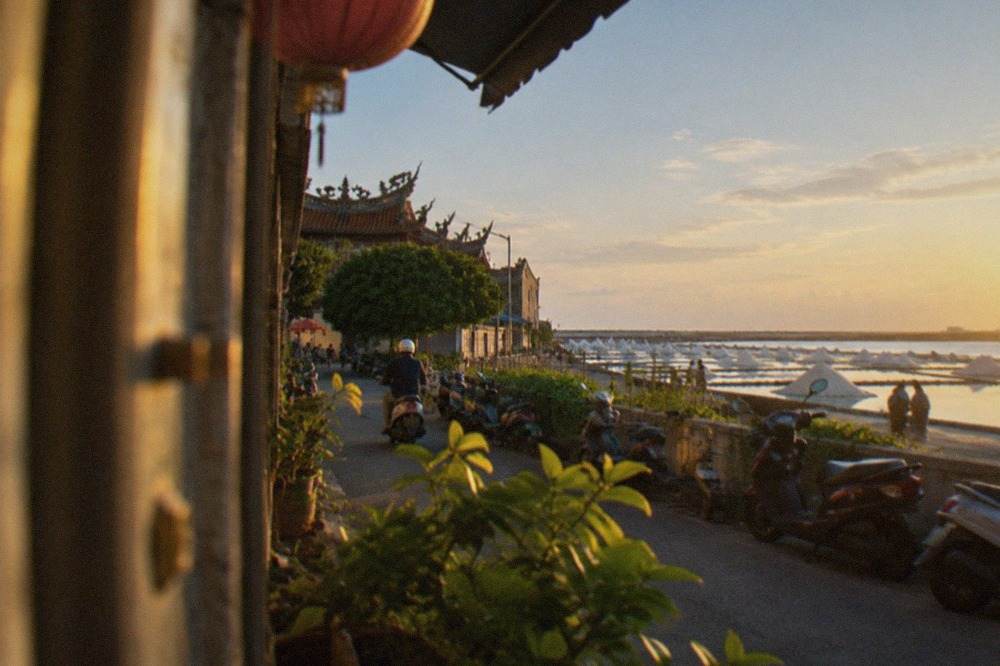
The Qigu salt flats sit on Tainan's lagoon coast in Qigu District, roughly an hour's drive west of the old city, where a former industrial salt field has become a recreation area of white salt mountains, a salt museum, mangrove waterways and a globally important spoonbill wetland. The salt industry here was industrial in scale, and what it left behind is unusually photogenic: not ruins, but heaps. The Tourism Administration's 2023 dataset puts the recreation area at 690,750 annual visitors, and the neighboring Jingzijiao Tile-Paved Salt Fields at 636,193, which makes this coast one of Tainan's bigger draws outside the temple circuit.
The reason it works as a single day is geography. The salt mountain, the salt museum, the Jingzijiao fields and the Qigu Lagoon boat docks sit along one coastal strip, and the Sicao Green Tunnel mangrove boats in Annan District lie on the road back toward the city. A visitor by car or tour bus can do the whole string in a loop without backtracking. Travelers planning the trip down from the capital should read is it possible to take a day trip from Taipei to Tainan first, because the HSR station's distance from the old city, covered below, changes the arithmetic.
The coast also answers a question the city center cannot: what the landscape around Tainan actually is. The lagoon, the wetlands and the flat salt pans are the Taijiang inner sea's modern descendants, and the boat rides and birdwatching here are the natural-history counterpart to the Dutch forts downtown.
What Does a Qigu Salt Flats and Lagoon Day Trip Cost?
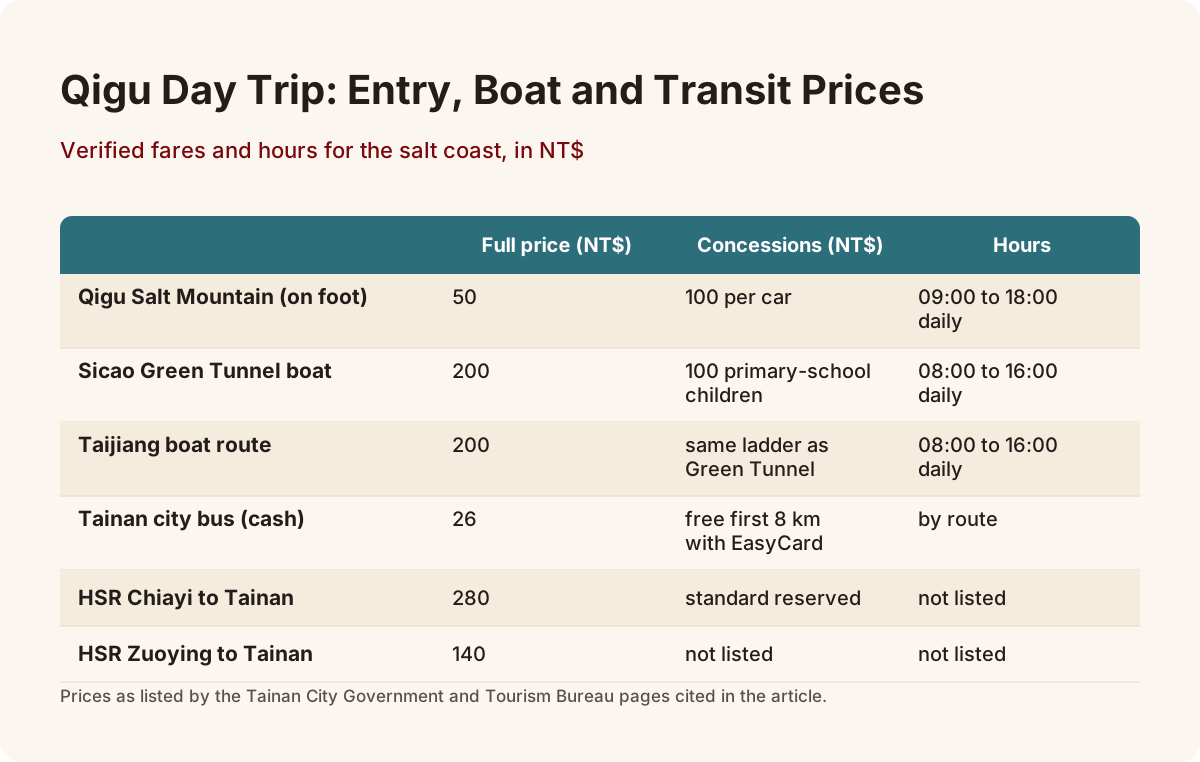
Entry to the salt coast is cheap and mostly paid at the gate: Qigu Salt Mountain charges a NT$50 cleaning fee per person on foot or NT$100 per car, the Sicao Green Tunnel and Taijiang boat routes both cost NT$200 full fare, and the Taiwan Salt Museum and Jingzijiao salt fields should be confirmed on site, while the black-faced spoonbill reserve viewing areas are public wetland with no ticket listed by the city. The salt mountain's fee structure comes straight from the Tourism Bureau's page: 50 per person on foot or per scooter or bicycle, 100 per car, and coaches of 20 or more seats free. Hours are 09:00 to 18:00 daily.
The boat tickets carry more concessions than most visitors expect. The Tourism Bureau's Sicao page lists 100 for primary-school children, a 30 "black-faced spoonbill" ticket for ages 0 to 6 and 80 and over, and a 100 accessibility ticket whose holder may bring one companion, with boats running 08:00 to 16:00 daily. One point the sources are firm on: the Green Tunnel route and the longer Taijiang route cost the same, both 200 full fare. Any write-up claiming one is cheaper is wrong.
| Item | Full price (NT$) | Concessions (NT$) | Hours |
|---|---|---|---|
| Qigu Salt Mountain (on foot) | 50 | 100 per car; coaches of 20+ seats free | 09:00 to 18:00 daily |
| Sicao Green Tunnel boat | 200 | 100 primary-school children; 30 ages 0 to 6 and 80+; 100 accessibility ticket plus one companion | 08:00 to 16:00 daily |
| Taijiang boat route | 200 | same concession ladder as the Green Tunnel | 08:00 to 16:00 daily |
| Tainan city bus (cash) | 26 | free first 8 km with EasyCard, iPASS, Citizen Card or iCash 2.0, tap on and tap off | by route |
The city's own pages carry the standard disclaimer that prices are for reference and the on-site notice governs, so treat every figure above as the published rate rather than a guarantee. What the table makes clear is that the expensive part of this day is not entry, it is transport. Two people paying bus fares and boat tickets still spend less than one museum ticket in Taipei; a private car or a guided tour is the line item that moves the total.
How Do You Get from Tainan to the Qigu Salt Coast?
There is no rail on the Qigu coast, so the day trip runs by road: city buses serve the district on the trunk network where the first 8 km are free with an electronic card, a car or scooter covers the whole coastal strip flexibly, and guided tours from central Tainan bundle the driving with Chihkan Tower and Anping in one loop. The bus detail is the one worth knowing before anything else. The city's own bus site states that trunk and branch routes (green, blue, brown, orange, yellow, red) are free for the first 8 km with a Citizen Card, iPASS, EasyCard or iCash 2.0, against a cash fare of 26 for the same trip, and the policy runs through the 2026 calendar year. The catch is that you must tap on and tap off, and the tap-off is the part visitors miss.
For anyone arriving by High Speed Rail, the structural fact that changes every plan: the HSR station is not in Tainan. It sits at Shalun in Guiren District, well outside the old city, and the Qigu coast is further west still, so an HSR arrival adds a transfer before the coast is even in reach. The verified HSR fares that matter here are Chiayi to Tainan at NT$280 standard reserved and Zuoying to Tainan at 140, both from the operator's own fare table; the H31 HSR shuttle bus is free for HSR passengers on production of a ticket stub, otherwise 18 for one section or 36 for two, with the break at the Chimei Museum.
Driving is the straightforward answer for the coast itself. The distances between the salt mountain, the museum, Jingzijiao and the lagoon docks are short but not walkable, and there is no circular transit line tying them together. Scooter renters should note the honest version of the licence rule: an International Driving Permit is not automatically sufficient in Taiwan, the authorities expect it to be registered at a Motor Vehicles Office, and rental shops may refuse without it, so check the official page before planning around one.
What Is There to See at Qigu Salt Mountain and the Salt Flats?
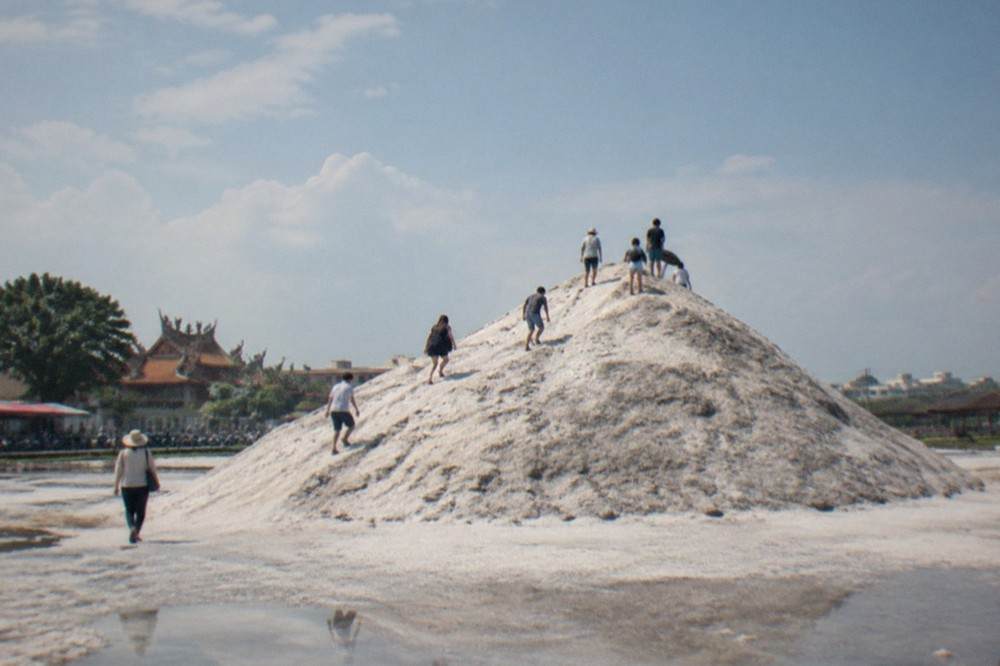
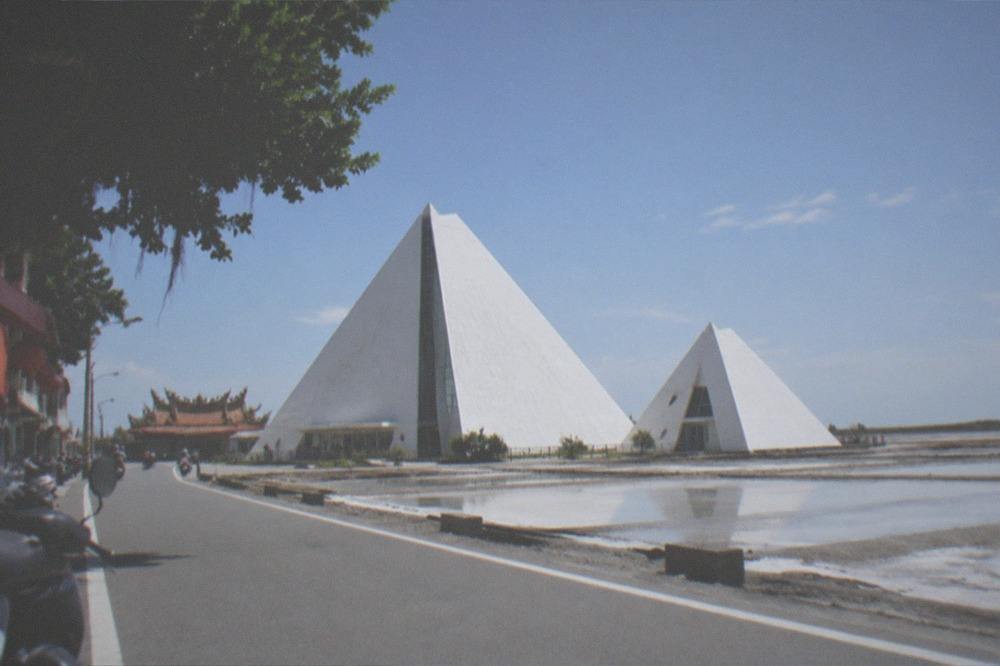
Qigu Salt Mountain is a heap of harvested industrial salt turned into a climbable landmark, beside a salt-industry recreation area that holds the Taiwan Salt Museum, salt-pan scenery, salt-themed gift shops and DIY activities, with the Jingzijiao Tile-Paved Salt Fields a short way up the coast preserving the older, tile-floored evaporation method. The Tourism Bureau's page for the mountain describes the site's origin in Taiwan's industrial salt production, and the 2023 counts, 690,750 for the recreation area and 636,193 for Jingzijiao, confirm both halves of the coast pull real crowds.
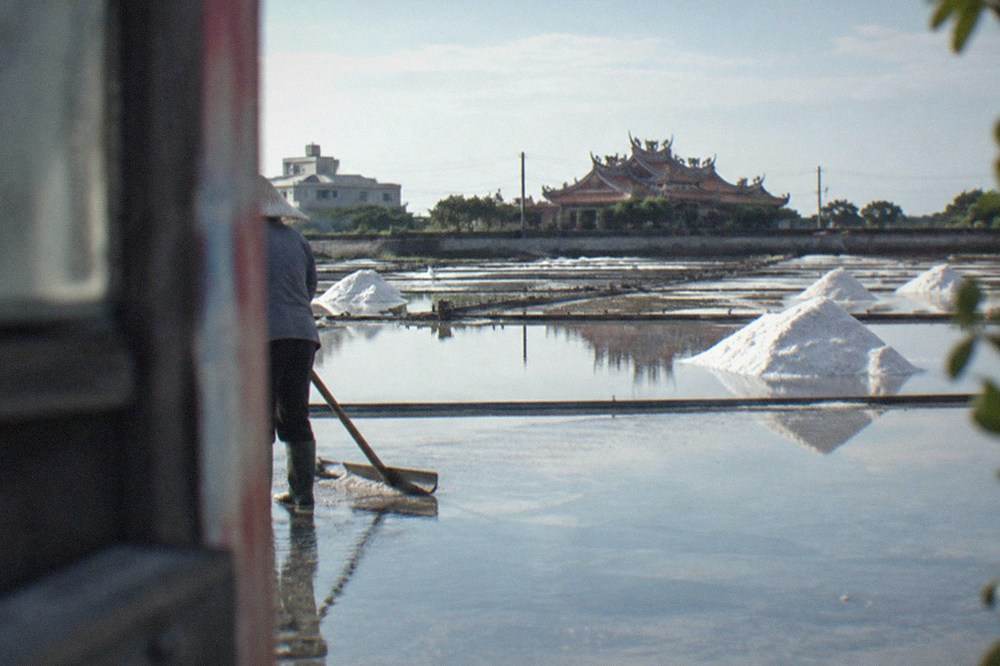
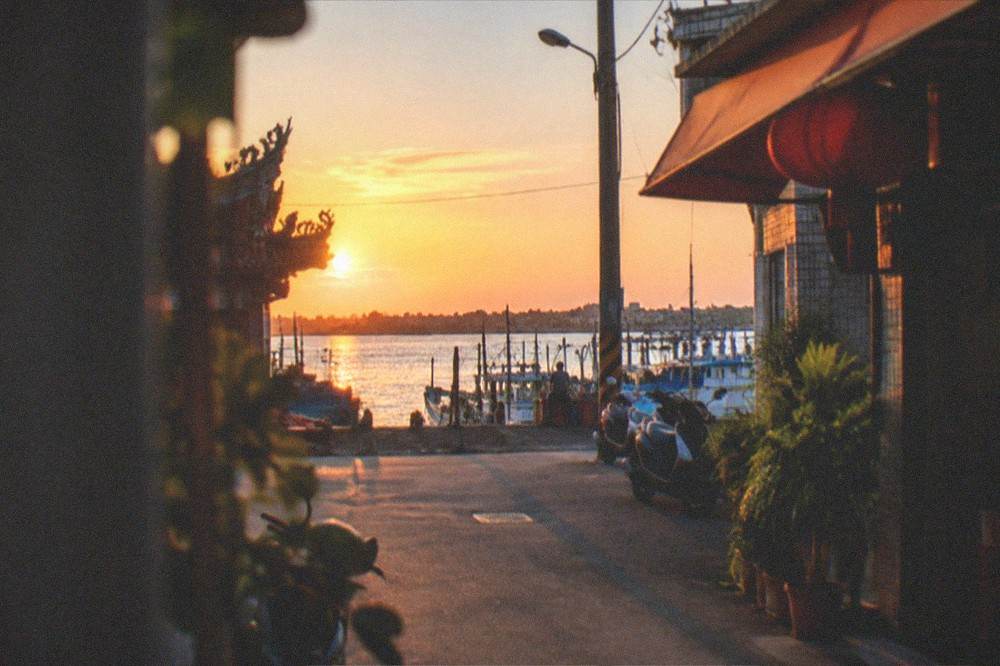
The Taiwan Salt Museum is the indoor anchor and the sensible first stop in hot weather. It documents the island's salt trade, the labor system behind it and the machinery, and its exhibitions explain what the white heaps outside actually represent. Jingzijiao, meanwhile, is the more atmospheric half for photographers: tile-paved evaporation pans that catch shallow water and reflect sky, which is why the fields appear in so many images of the Tainan coast at sunset.
A practical note on the mountain itself: the Tourism Bureau's page lists the site open 09:00 to 18:00 daily, with closure on Lunar New Year's Eve and government typhoon days. The climb is short but exposed, and the coast's climate table, below, explains why the morning hours are the comfortable ones for it.
What Is the Sicao Green Tunnel Boat Ride?
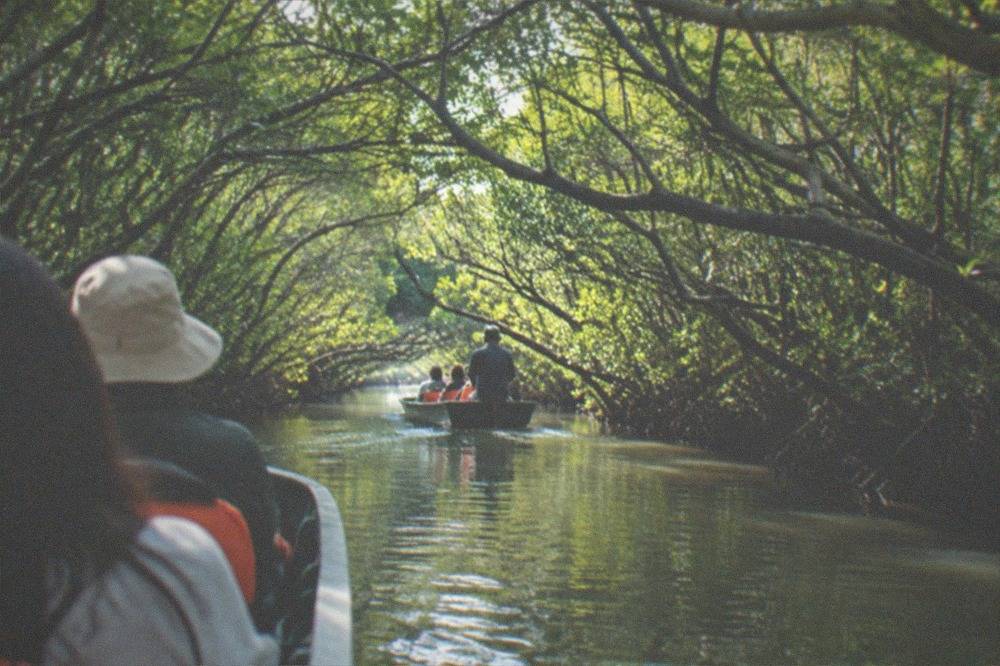
The Sicao Green Tunnel is a roughly half-hour mangrove boat ride through a narrow, overgrown waterway in Annan District on the road back from Qigu, costing NT$200 full fare with boats running 08:00 to 16:00 daily, and the longer Taijiang route across the open lagoon costs exactly the same 200, so the choice between them is about scenery, not price. The Tourism Bureau's page for the site lists both routes and both fares, and the concession ladder is unusually generous: 100 for primary-school children, 30 for ages 0 to 6 and 80 and over, and a 100 accessibility ticket whose holder may bring a companion.
The two routes are genuinely different experiences. The Green Tunnel is the famous one: the mangrove canopy closes overhead, the channel narrows to a shaded corridor, and the ride is slow and quiet. The Taijiang route goes wider, out toward the open water of the lagoon and the wetlands where the spoonbills winter. Boats depart when roughly 30 passengers have gathered or after a wait, per the operator's arrangement as summarized in the site facts, so off-peak visitors should build waiting time into the schedule rather than treating departures as a timetable.
Booking is straightforward: tickets are sold at the temple counter at the dock, and the ride can also be arranged through tour platforms or as part of a coastal day tour. Visitors who prefer everything arranged in one price can look at the boat-focused options below.
When Is the Best Time of Year for a Qigu Salt Flats Day Trip?
The best months for the Qigu coast are October through March, when the Central Weather Administration's 1991 to 2020 normals for Tainan show the dry half of the year, October alone averaging just 2.8 wet days while still reaching 30.8C maxima, but birders should target the winter months, because that is when the black-faced spoonbills are present at Qigu. The Central Weather Administration's published climate normals are unambiguous about the shape of the year. August brings 466 mm of rain across about 16 wet days; December brings 16 mm across 3. Close to three-quarters of the annual 1,761 mm falls between May and September.
| Period | Rain (mm) | Wet days | Mean max (C) | What it means for the coast |
|---|---|---|---|---|
| October | 30.8 | 2.8 | 30.8 | Driest month by wet days, still hot: ideal salt-field light |
| December | 16.2 | 3.0 | 24.4 | Cool, dry, peak spoonbill season |
| August | 466.1 | 15.8 | 32.6 | Wettest month, typhoon risk at its peak |
| June to August | 370.5 to 466.1 per month | 12.1 to 15.8 | 32.4 to 33.0 | Heavy summer rain, lagoon trips weather-dependent |
The second verified headline matters for anyone planning the walk up the salt mountain: Tainan records 186 days a year above 30C, and from April to October it is above 30C on most days. There is almost no shade on the salt pans, so the coastal stops reward a 09:00 start and punish a mid-afternoon one. Typhoon risk concentrates in the late summer months, and the salt mountain's own listing names government typhoon days as a closure condition, so the Central Weather Administration's warnings are the thing to watch in July to September.
Can You See Black-Faced Spoonbills at Qigu?
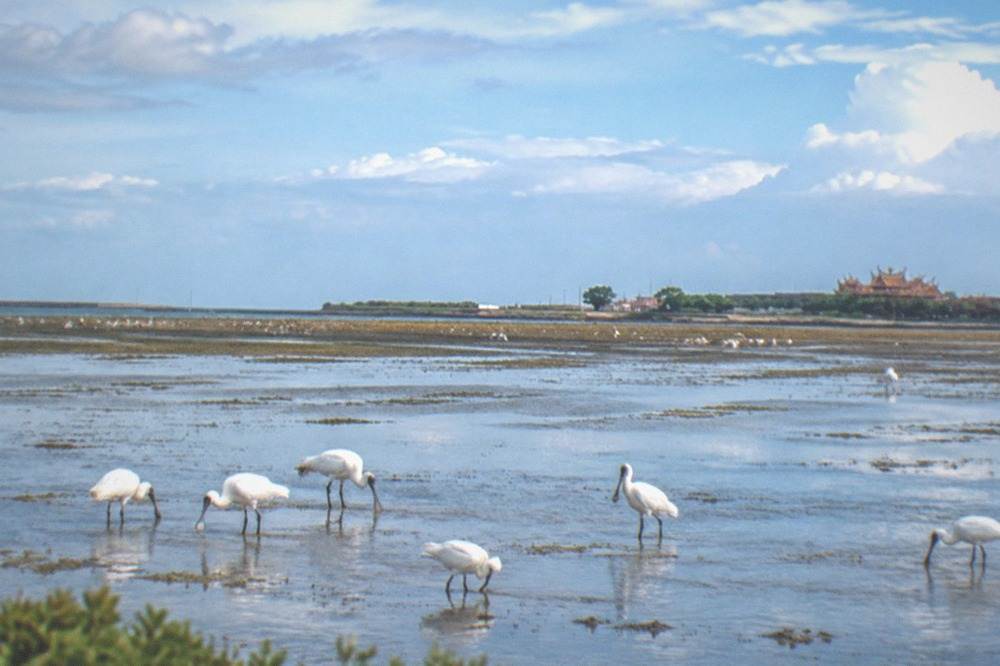
Yes, Qigu's wetlands and the Zengwen River estuary are one of the world's principal black-faced spoonbill wintering areas, with the birds typically present from around September or October until March to May, and the core viewing season is winter, which conveniently overlaps the coast's driest, most comfortable weather. The Tourism Administration's own nature page for the species records the Qigu wetlands and estuary as the key Taiwanese wintering habitat. No count should be printed here, because none is verified in the sources available, and no sighting is ever guaranteed; what is verified is the habitat, the season and the global significance.
The practical consequence for a day trip is sequencing. A winter visitor can pair the salt mountain in the morning with wetland viewing around midday and the boat ride in the afternoon, all in the dry season. A summer visitor gets the better boat weather risk in the morning and no spoonbills at all, which is a fair trade for the mangroves themselves, since the Green Tunnel's shade is at its best value in the hot months.
Birders should treat the reserve as its own stop rather than an incidental one, with binoculars and time built in. The counts that do exist in the verified dataset are human ones: the Qigu Salt Industry Recreation Area's 690,750 visitors in 2023 peaked in January, which is exactly the spoonbill season, and the pattern is consistent with the Tourism Administration's wider finding that Tainan's peak months are January and February, driven by pilgrimage and Lunar New Year.
What Does a Realistic Qigu Day Trip Itinerary Look Like?
A realistic loop starts at Qigu Salt Mountain and the Taiwan Salt Museum in the morning, moves to Jingzijiao's tile-paved fields or the spoonbill wetlands around midday, takes a Sicao Green Tunnel or Taijiang boat between 08:00 and the 16:00 last departures, and can finish in Anping for the old fort and the evening street food, using a car, a tour bus or a careful bus-and-taxi mix, because no rail reaches any of it. The constraint that shapes every version of this day is the 16:00 boat cutoff at Sicao: the boats stop earlier than every other stop on the coast, so they anchor the afternoon.
| Time | Stop | What you are doing | Verified entry |
|---|---|---|---|
| 09:00 | Qigu Salt Mountain | Climb the salt heap before the heat builds | NT$50 on foot, 100 per car |
| 10:30 | Taiwan Salt Museum | Indoor exhibitions on the island's salt trade | confirm on site |
| 12:00 | Jingzijiao Tile-Paved Salt Fields | Tile-paved pans, best in flat midday light | confirm on site |
| 14:00 | Sicao Green Tunnel or Taijiang boats | Mangrove corridor or open lagoon route | NT$200, boats 08:00 to 16:00 |
| 16:30 | Anping Old Fort and old street | Fort, tree house and evening snacks on the way back | NT$70 at the gate |
The Anping finish is not padding; it is on the road home and it is where the food is. The Tourism Bureau lists Anping Old Fort at 70 at the gate, open 10:00 to 17:10, and the Anping half-day itinerary covers the district in detail. Visitors with only one day in the whole city should weigh this coast against the old-town core using the one day in Tainan plan, because the salt coast and the Dutch-era sites compete for the same daylight.
Should You Drive Yourself or Take a Guided Tour on the Salt Coast?
Drive yourself if you want to set your own pace and linger at the wetlands, and take a guided tour if you would rather not plan bus connections or rent a car, because the coast's stops are spread out, the boat has a 16:00 cutoff, and a tour that bundles Qigu Salt Mountain with Chihkan Tower and Anping turns a fragmented day into a single loop with the driving handled. The honest case for the tour is structural, not promotional: the verified transport facts show a bus network whose free 8 km covers the city but not the coast, no rail west of the old city, and a scooter licence rule that trips up foreign renters. That is a lot of friction for a day that should be simple.
The case for independence is real too. A car reaches Jingzijiao at the right hour for photographs, waits out a boat departure without stress, and adds the spoonbill reserve as a proper stop. The trade is parking, which is cheap on this coast, and the driving itself, which is flat, straight and quiet outside weekends. Whichever way a visitor goes, the two things not to compromise on are the 09:00 salt mountain start and the boat before 16:00.
What Should You Bring for a Day on the Salt Coast?
Bring sun protection and more water than feels reasonable, cash for small stalls and boat tickets, an EasyCard or iPASS for the city bus legs, and binoculars in winter for the spoonbills, because the coast is flat, exposed and hot for most of the year, with 186 days above 30C in Tainan and almost no shade on the salt pans. The climate normals make the sun case numerically: even October, the driest month, averages 30.8C maxima. A hat and a refillable bottle matter more here than in the shaded old city.
Cash matters because the coast is not a card-first economy. The boat counter and the small food stalls around the salt mountain work the way night markets do, and the verified payment facts are blunt about that pattern island-wide: cards work at hotels, chains and convenience stores, cash is essential at small local eateries and many buses. An EasyCard or iPASS covers the city bus legs under the free-first-8 km scheme, and the Tainan Art Museum's ticket desk is the verified example of a cultural venue taking them, but no source verifies them for the salt coast's own counters, so carry notes.
Can You Combine Qigu with Other Tainan Day Trips?
Yes, the Qigu coast combines naturally with the Sicao and Anping stops on the road home, and it pairs with Yanshui and Jingliao as a northern-coast loop, but it does not combine well with the inland trips like Guanziling or the Alishan direction, because those pull in the opposite compass direction and the boat's 16:00 cutoff forces a choice. The pairing that works is the coastal one: Yanshui's old street and temple sit north of the lagoon, and the Yanshui and Jingliao day trip covers them. The inland hot springs of Guanziling are covered separately, and squeezing both coasts and hot springs into one day is how itineraries break.
For visitors building a longer stay around this day, the two-day Tainan itinerary and the three-day version both reserve a day for the lagoon coast, which is the right instinct: the coast is a full day by itself, and pretending otherwise produces a rushed boat and a missed wetland.
Common Questions About the Qigu Salt Flats and Lagoon Day Trip
How much does it cost to visit Qigu Salt Mountain?
The Tourism Bureau's page lists a NT$50 cleaning fee per person on foot or per scooter or bicycle, NT$100 per car, and coaches of 20 or more seats free, with the site open 09:00 to 18:00 daily. The on-site notice governs, so confirm at the gate.
How much is the Sicao Green Tunnel boat ride?
NT$200 full fare, with 100 for primary-school children, a 30 ticket for ages 0 to 6 and 80 and over, and a 100 accessibility ticket whose holder may bring one companion. The longer Taijiang route costs the same 200. Boats run 08:00 to 16:00 daily.
Can you get to the Qigu salt flats by public transport?
Partly. City buses serve Qigu District on the trunk network, where the first 8 km are free with an EasyCard, iPASS, Citizen Card or iCash 2.0, tap on and tap off, against a 26 cash fare, through the 2026 calendar year. But the individual stops along the coast are spread out, and there is no rail, so a car, a taxi or a guided tour is the practical answer for the full loop.
When can you see black-faced spoonbills at Qigu?
The Tourism Administration's nature page records the Qigu wetlands and Zengwen River estuary as a principal wintering habitat, with the birds typically present from around September or October until March to May. Winter is the core season, and no sighting is guaranteed.
What is the best month for a Qigu salt flats day trip?
October through March, per the Central Weather Administration's 1991 to 2020 normals for Tainan: October averages just 2.8 wet days while December sees only 16 mm of rain, against August's 466 mm. Birders should target winter to overlap the spoonbill season.
Is the Qigu coast worth it without a car?
Yes, but the shape of the day changes. A guided tour that bundles the salt mountain with Chihkan Tower and Anping covers the driving in one loop, and the boat and museum stops are compact once you are there. Independent travelers relying on buses should expect a slower, more fragmented day.
The salt coast is the half of Tainan that the fort posts leave out, and the verified numbers say visitors respond to it: 690,750 at the salt recreation area in 2023 against 443,622 at Chihkan Tower. Plan around the 09:00 opening, the 16:00 boat cutoff and the dry winter months, and the day assembles itself. For more on planning the wider region, the Tainan Travel Guide homepage covers the old city, the temples and every other day trip from town, including the Kaohsiung day trip and the Chiayi day trip for travelers stringing the south together.