National Cheng Kung University Campus
The National Cheng Kung University campus is one of the most pleasant free walks in central Tainan: a banyan-shaded quarter a short distance south of the railway station, ringed by cheap student eateries and some of the city's oldest temples.
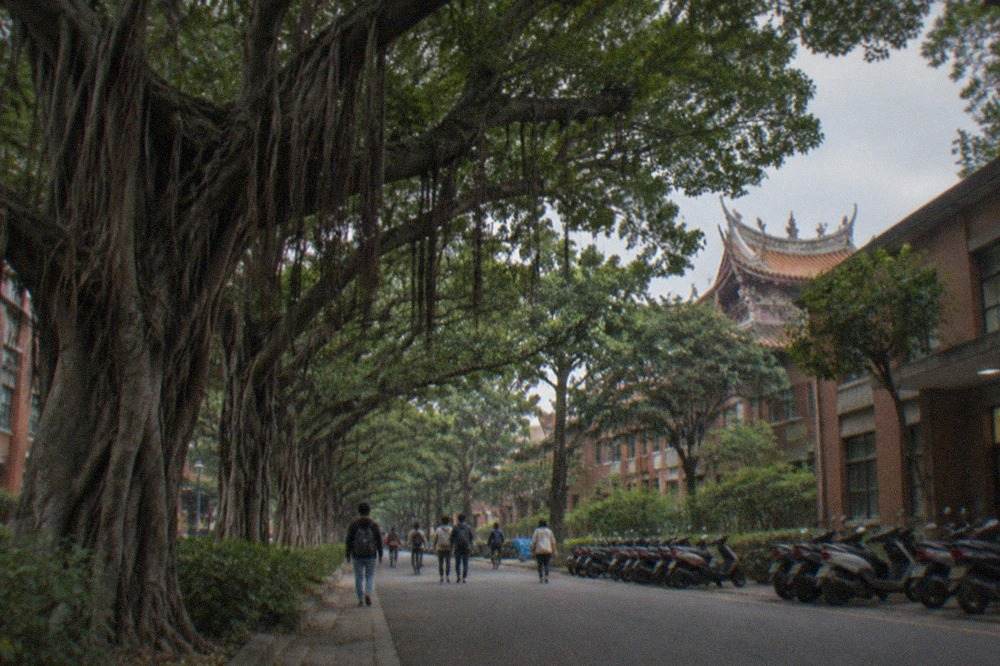
Short answer
The National Cheng Kung University campus is free to enter and open to the public, a leafy, walkable district of banyan-lined roads and low academic buildings in Tainan's East District, a short distance south of Tainan Railway Station and next to the Koxinga Shrine.
The National Cheng Kung University campus is the rare Tainan attraction that costs nothing, needs no ticket and rewards aimlessness. It is a working university quarter in the city's East District, a short distance south of Tainan Railway Station, where banyan trees arch over the campus roads and the surrounding blocks fill with some of the cheapest food in the city. Students keep the neighborhood's prices honest and its opening hours long, and the campus itself functions as a public park that happens to contain lecture halls.
This page lays out what the campus is, how to reach it using the city's bus and rail links, what you can actually see once you are through the gates, and how to bolt it onto the rest of a Tainan day. Everything practical here, fares, hours and prices, comes from official operator and city sources, and where a figure is not published we say so rather than guess it.
What Is the National Cheng Kung University Campus?
The National Cheng Kung University campus is the main grounds of one of Taiwan's leading national universities, a free-to-enter, tree-shaded district of low-rise academic buildings and banyan-lined avenues in Tainan's East District, sitting just south of Tainan Railway Station. It is a public space rather than a ticketed attraction, and it is best treated as a calm, green interlude between the station, the Koxinga Shrine and the old city's temple quarter.
National Cheng Kung University, usually shortened to NCKU, is one of the island's most prominent public universities and a major reason the blocks around the campus feel younger and cheaper than the rest of central Tainan. The university takes its name from Koxinga, the Ming loyalist who took the Dutch fort at Anping in 1662, and the Koxinga Shrine stands immediately adjacent to the campus, which makes the pairing of the two an easy half-morning.
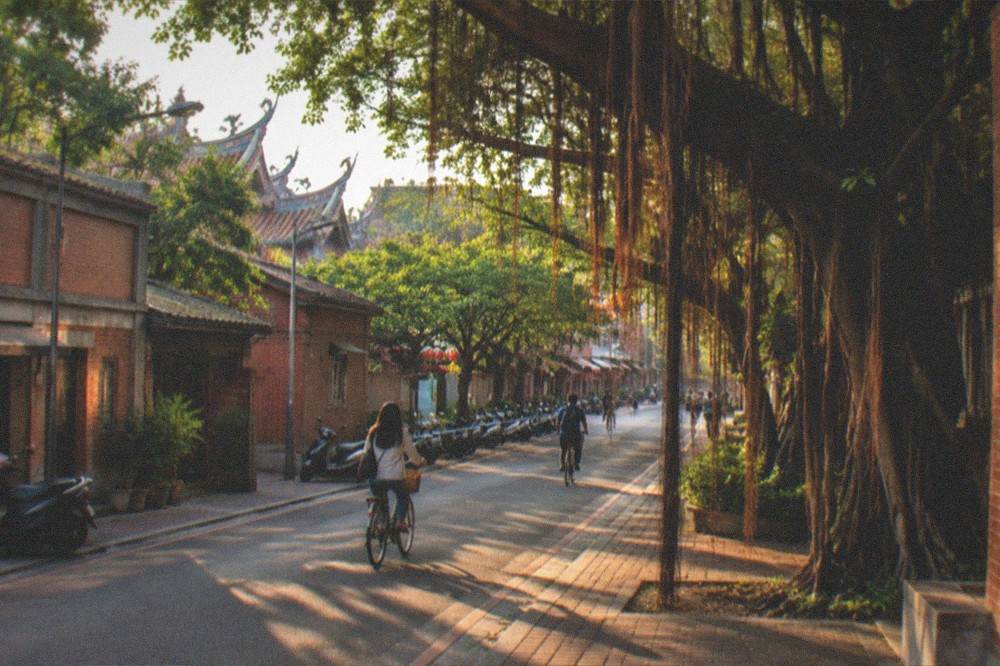
The campus is not a museum piece. It is a working academic precinct, and its appeal is exactly that: wide roads under mature trees, red-brick and cream-walled faculty buildings, students cycling between lectures, and benches that belong to whoever sits on them. There is no gate fee, no ticket counter and no published closing time for the outdoor areas; the buildings themselves keep their own hours and are not the point of a visit.
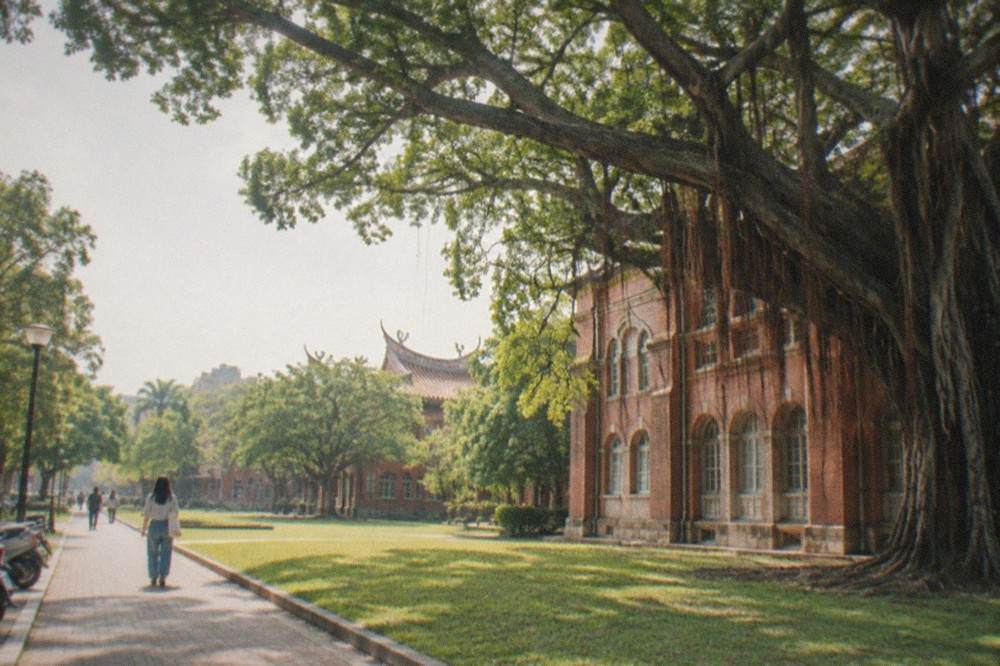
For a visitor, the practical frame is this: the campus is the green heart of the Rear Station district, the area east and south of the railway tracks, which most tourists walk through on their way somewhere else and which rewards a slower pass. The Koxinga Shrine is the anchor at one end, and the food streets around the university's gates are the reason to arrive hungry.
How Do You Get to the National Cheng Kung University Campus?
The campus sits a short walk south of Tainan Railway Station, which makes it reachable by Taiwan Railway from anywhere on the western line, and by city bus on the trunk and branch network, where the first 8 km of any trip is free in 2026 with an electronic card. Visitors arriving by High Speed Rail should note that the HSR station is at Shalun in Guiren District, outside the old city, and reaching the campus requires a transfer.
The railway station is the natural approach. Tainan Railway Station is the city's conventional-rail hub, and the campus begins a few blocks to its south, close enough that the walk is part of the visit rather than a commute. No official walking time is published, so plan on a short stroll through the Rear Station commercial blocks rather than a quoted number of minutes.
City buses are the other practical route, and the fare rules are worth knowing before you board. The city's own bus ticketing page states that trunk and branch routes, the green, blue, brown, orange, yellow and red networks, are free for the first 8 km of travel with an electronic card, a policy published by the Tainan bus authority that runs through the 2026 calendar year. The card must be an EasyCard, iPASS, iCash 2.0 or a Citizen Card, and the part visitors miss is the tap off: you tap on when boarding and tap off when leaving, and skipping the second tap can cost you the discount. The cash fare for the same trip is 26.
High Speed Rail arrivals have one extra step. The HSR station is not in Tainan proper; it sits at Shalun in Guiren District, well outside the old city, and every arrival into the center involves a transfer. The verified option is the H31 Tainan City Government Line express bus, which is free for HSR passengers on production of a ticket stub, with no card tap needed, and which has its fare break at the Chimei Museum, meaning the museum sits directly on the shuttle route. Other passengers pay 18 for one section or 36 for two.
| Route | Cost | Notes |
|---|---|---|
| City bus, first 8 km, with card | Free | EasyCard, iPASS, iCash 2.0 or Citizen Card; tap on and tap off; 2026 policy |
| City bus, same trip, cash | NT$26 | Base fare the card discount waives |
| H31 HSR shuttle, with HSR ticket stub | Free | No card tap; section break at Chimei Museum |
| H31 HSR shuttle, without stub | NT$18 one section, NT$36 two | Standard section fares |
| Taipei to Tainan by HSR, standard reserved | NT$1,350 | From the operator's own fare table |
The HSR fare line deserves a caveat: the operator's fare grid puts Standard Car in the lower-left triangle and Business Car in the upper-right, and reading the wrong triangle quotes the 2,230 business fare instead of the 1,350 standard one. The transfer options from Shalun are covered in detail elsewhere on this site.
What Can You See on the National Cheng Kung University Campus?
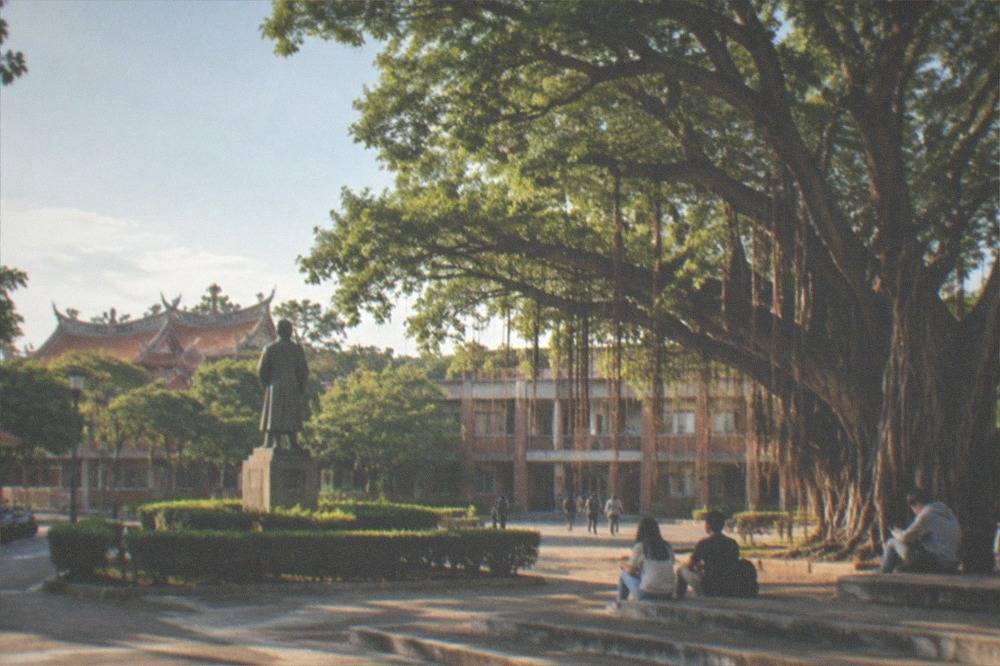
The campus's signature sight is its mature banyan trees, whose canopies close over the internal roads and shade them year-round, alongside low red-brick and cream-walled academic buildings, open lawns, and the adjacent Koxinga Shrine, which commemorates the Ming loyalist who took the Dutch fort at Anping in 1662. The grounds are free, unhurried and best seen as a circuit rather than a checklist.
The banyans are the thing people remember. Their aerial roots drop from canopies that have had decades to spread, and the campus roads underneath stay cool even in Tainan's long hot season, which the climate record shows is most of the year: the Central Weather Administration's 1991 to 2020 normals for Tainan show 186 days a year above 30C, with April to October above that mark on most days. Shade is not a luxury in this city, it is infrastructure, and the campus has more of it than almost anywhere in the center.
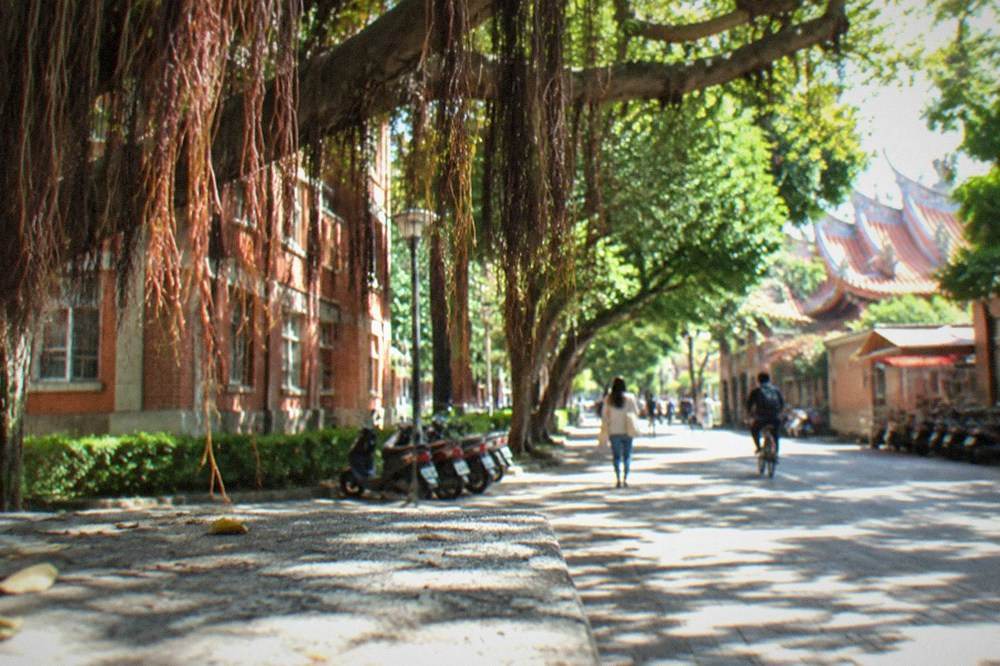
The buildings are low-rise by the standards of a modern Asian university, and the older faculty blocks, with their arched windows and warm brick, photograph better than the newer concrete towers. None of the interiors is a published visitor attraction, so treat the buildings as streetscape rather than seeking entry. What the campus offers a visitor is the walk itself, and the contrast it makes with the dense temple-and-shop fabric a few blocks west.
The Koxinga Shrine next door is the natural pairing. The city's Tourism Bureau record for Anping confirms that Koxinga took the Dutch fort in 1662 and renamed the place Anping, and the shrine is the city's memorial to him. Between the shrine and the campus you have an hour or two of quiet, green, free sightseeing that needs no planning beyond comfortable shoes.
Is the National Cheng Kung University Campus Free to Visit?
Yes, the campus outdoor areas are free to enter and have no ticket, no gate fee and no published admission charge, because they are the public grounds of a national university rather than a ticketed attraction. The adjacent Koxinga Shrine is likewise free, and the surrounding student food streets cost only what you eat, which is the cheapest eating district in central Tainan.
This matters more here than at most attractions because so much of Tainan is already free. The verified free-entry list includes the Tainan Confucius Temple, the Grand Matsu Temple, the Five Concubines Temple and Kaiyuan Temple, all of which charge nothing at the gate. The campus belongs on that list, with the difference that it is a secular, green space rather than a religious one, which makes it the right stop for a visitor who has temple fatigue, a real condition after two days in this city.
The paid sites nearby are worth knowing for contrast. Chihkan Tower charges NT$70 at the gate and, unusually, stays open until 21:30 daily, which makes it one of the few historic sites a visitor can see after dinner. Anping Old Fort and the Anping Tree House are both NT$70. None of these prices is a guarantee; the city's own pages state that the on-site notice governs.
Which Nearby Attractions Pair Well with a Campus Visit?
The strongest pairings are the Koxinga Shrine immediately beside the campus, Chihkan Tower and the old West Central District a short bus ride west, the Tainan Confucius Temple's free grounds, and, for an evening, the Dadong Night Market on the campus side of the city, which opens Monday, Tuesday and Friday from 18:00 to 01:00. All of these sit inside a single afternoon-and-evening arc.
The Rear Station district, where the campus sits, is the quieter half of Tainan, and most first-time visitors spend their days across the tracks in West Central District. That is not a criticism of the campus area, it is the itinerary: a morning on the campus and at the shrine, a bus or short taxi ride west to the dense cluster of Chihkan Tower, the Grand Matsu Temple and the Confucius Temple, then an evening back east as the food streets open.
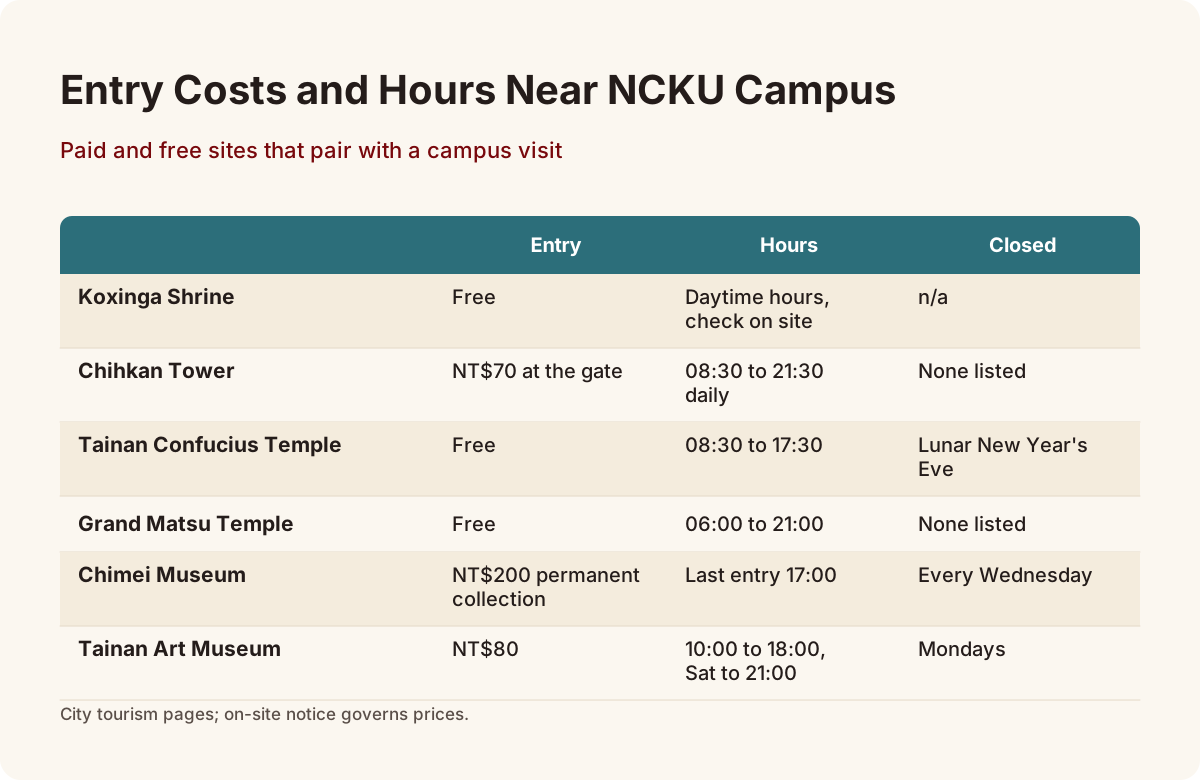
| Site | Entry | Hours | Closed |
|---|---|---|---|
| Koxinga Shrine | Free | Daytime hours, check on site | n/a |
| Chihkan Tower | NT$70 at the gate | 08:30 to 21:30 daily | None listed |
| Tainan Confucius Temple | Free | 08:30 to 17:30 | Lunar New Year's Eve |
| Grand Matsu Temple | Free | 06:00 to 21:00 | None listed |
| Chimei Museum | NT$200 permanent collection | Last entry 17:00 | Every Wednesday |
| Tainan Art Museum | NT$80 | Tue to Sun 10:00 to 18:00, Sat to 21:00 | Mondays |
Two of these deserve their own half-days rather than a bolt-on. The Chimei Museum, out toward the HSR corridor, is the city's flagship collection and sits on the free H31 shuttle route, which makes it the natural campus-morning-plus-museum-afternoon combination for HSR arrivals. The Chimei Museum guide covers the Wednesday closure and the concession rules. The Tainan Art Museum, closer to the old center, takes EasyCard and iPASS at its desk and stays open to 21:00 on Saturdays.
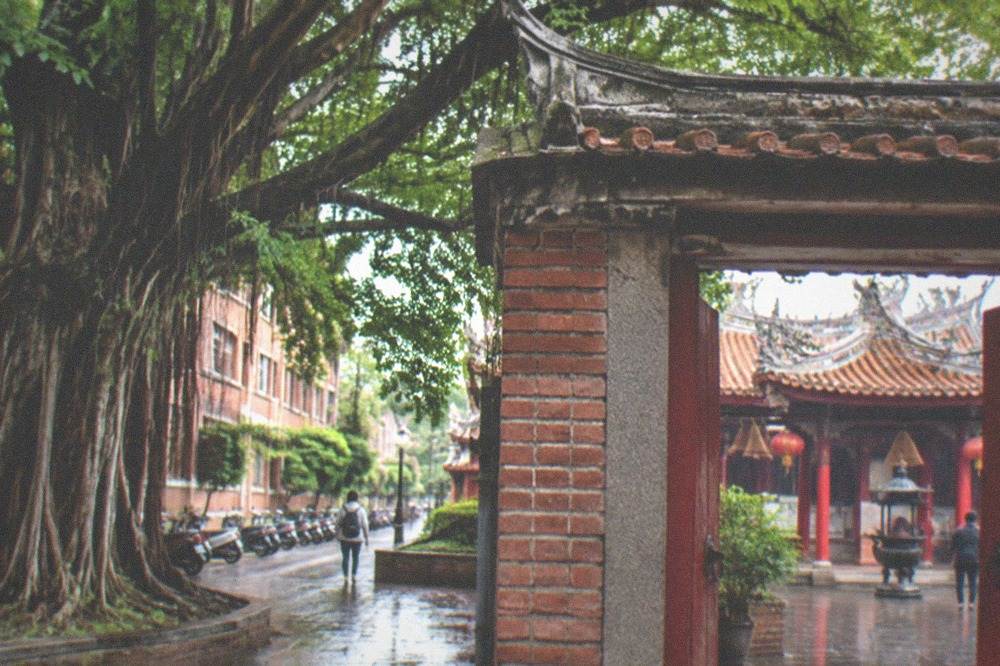
If the afternoon runs long, the evening options near campus are strong. Shennong Street, the lantern-lit old merchant lane, is the city's best after-dark stroll, and the Hayashi Department Store, the restored Japanese-era shop with its rooftop shrine, stays into the evening. The Garden Night Market, the biggest of them all, runs Thursday through Sunday from 17:00 to midnight.
When Is the Best Time to Visit the Campus Area?
October to March is the comfortable half of the year in Tainan, with October the driest month by wet days at 2.8 while still averaging 30.8C maxima, and December bringing only 16 mm of rain across about 3 wet days. The campus's banyan shade makes it tolerable even in summer, but the dry season is when the walk is a pleasure rather than an endurance.
The Central Weather Administration's 1991 to 2020 normals for Tainan tell the story plainly. Rain is almost entirely a summer event here: August alone brings 466 mm across 16 wet days, and close to three-quarters of the annual 1,761 mm falls between May and September. From October the tap shuts off, and the campus's tree cover becomes a bonus rather than a survival tool.
| Month | Mean max C | Rain mm | Wet days |
|---|---|---|---|
| January | 23.0 | 20.7 | 3.8 |
| April | 29.3 | 69.8 | 5.9 |
| July | 33.0 | 374.6 | 13.0 |
| August | 32.6 | 466.1 | 15.8 |
| October | 30.8 | 30.8 | 2.8 |
| December | 24.4 | 16.2 | 3.0 |
Typhoon risk concentrates in the late-summer months, July to September, which the rainfall table independently confirms. A typhoon day is declared by the city government, not nationally, and when Tainan declares one, schools close, which on a university campus means the whole district goes quiet. There is no published frequency statistic worth quoting, so the honest planning line is simply to watch the forecast if traveling in late summer and to build a museum into any wet-day plan.
Timing within the day matters too. The campus is at its best in the early morning and around dusk, when the light comes low through the banyans and the food streets are firing up. Midday in summer is when the shade matters most and the photography is flattest, so treat the middle of the day as the slot for an air-conditioned museum instead.
Where Do Students Eat Around the National Cheng Kung University Campus?
The blocks around the university's gates are among the cheapest eating territory in Tainan, because the customer base is students, and the area's night market is Dadong, which opens Monday, Tuesday and Friday from 18:00 to 01:00. No official price list exists for any individual stall, so treat eating here as a low-cost, cash-first activity rather than a budgeted line item.
The honest position on food prices in Tainan is that no official source publishes them, and this site does not invent numbers. What can be said is structural: student districts price for students, and the campus perimeter has decades of cheap eateries, noodle stands and drink shops that survive on volume. Cash is still king at night markets and small stalls, even as cards work in hotels, chains and convenience stores.
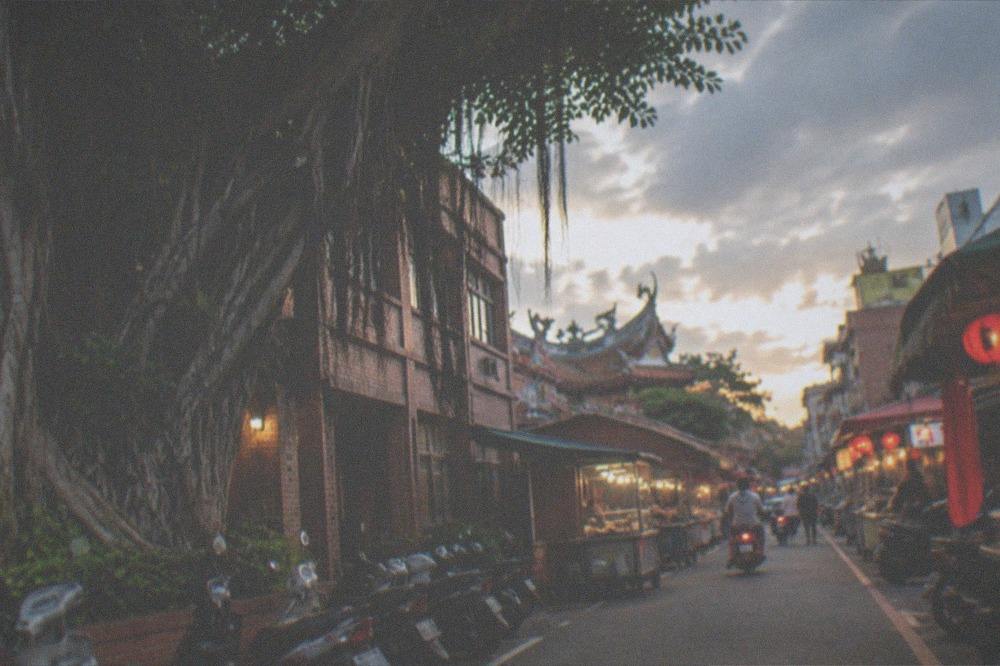
The night market rotation is the single most useful practical fact in this city, and it is verified market by market from the Tourism Bureau's own pages. Friday is the only night all three big outdoor markets run; Wednesday is the thinnest, with Wusheng alone; and Siaobei is indoors and open daily, which makes it the wet-weather and wrong-night answer. Always check before you go, because the city updates these pages and the days do change.
| Market | Open | Hours |
|---|---|---|
| Garden | Thu, Fri, Sat, Sun | 17:00 to 00:00 |
| Wusheng | Wed, Fri, Sat | 17:00 to 00:00 |
| Dadong | Mon, Tue, Fri | 18:00 to 01:00 |
| Siaobei | Every day, indoor | 12:00 to 00:00 |
Dadong, on the campus side of the city, is the one that fits a university evening: Monday and Tuesday are nights when nothing else big is open, and Friday overlaps with everything. The Dadong Night Market guide has the details, and the city's broader street food scene, beef soup, danzai noodles, coffin bread, is mapped across the food pages of this site, none of which has a published official price.
How Does the Campus Fit Into a One-Day Tainan Plan?
A realistic one-day plan puts the campus and the Koxinga Shrine first thing in the morning, crosses to Chihkan Tower and the Confucius Temple's free grounds through the middle of the day, adds the Grand Matsu Temple or the Hayashi Department Store in the afternoon, and finishes at whichever night market is open that evening, with Dadong on Monday, Tuesday or Friday and Garden from Thursday to Sunday.
The campus earns its slot at the start of the day for two reasons. First, it is free and needs no timing, so it absorbs whatever the morning throws at it, an early arrival, a late breakfast, a jet lag. Second, it sits on the station side of the city, so a visitor arriving by train can drop into it before ever crossing the tracks into the old center.
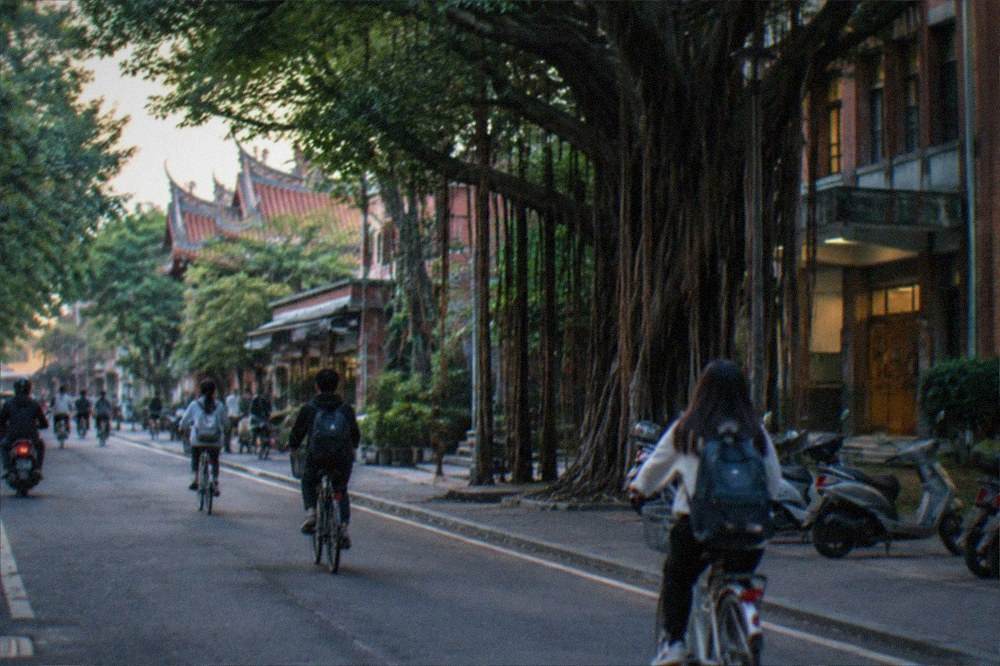
From there the day builds westward. Chihkan Tower's 08:30 to 21:30 hours make it forgiving, and the Confucius Temple's free grounds make a good rest stop in the hottest hours. Anping, the old Dutch quarter with the Anping Old Fort, the Tree House and the old street, is the one destination that genuinely wants its own half-day, so a one-day visitor should choose between Anping and a deeper exploration of the campus-adjacent east side rather than rushing both.
For visitors with more time, the first-time visitor guide on Tainan Travel Guide assembles these pieces in full, and the campus slots into it as the calm opening hour. The east side also holds the National Museum of Taiwan History, closed Mondays, which pairs with a campus morning for families.
Common Questions About the National Cheng Kung University Campus
Is the National Cheng Kung University campus free to visit?
Yes. The outdoor grounds are a public space with no gate, ticket or published admission charge. The adjacent Koxinga Shrine is also free, and the surrounding student food streets cost only what you eat.
Where is the National Cheng Kung University campus?
In Tainan's East District, a short distance south of Tainan Railway Station, on the Rear Station side of the tracks. The Koxinga Shrine sits immediately adjacent to the grounds.
How do I get to the National Cheng Kung University campus by bus?
City bus trunk and branch routes are free for the first 8 km with an EasyCard, iPASS, iCash 2.0 or Citizen Card, provided you tap on and tap off; the same trip in cash costs NT$26. The scheme runs through the 2026 calendar year.
Can I visit the campus from the High Speed Rail station?
Yes, but the HSR station is at Shalun in Guiren District, outside the old city, so a transfer is required. The H31 express bus is free with an HSR ticket stub and runs via the Chimei Museum.
What is there to see on the NCKU campus?
Mature banyan trees closing over the internal roads, low red-brick academic buildings, open lawns and the adjacent Koxinga Shrine. It is a walk rather than a checklist, best in the early morning or around dusk.
Which night market is near the National Cheng Kung University campus?
Dadong Night Market, on the same side of the city, open Monday, Tuesday and Friday from 18:00 to 01:00. Garden Night Market, the biggest, runs Thursday to Sunday. Always check current days before you go, because the city updates them.
The National Cheng Kung University campus will never top a list of Tainan's headline sights, and that is its value. It is the free, green, unhurried hour between the railway station and the temple-dense old center, shaded by trees the climate data says you will be grateful for, and surrounded by food priced for students. Arrive early, walk slowly, eat on the way out, and let the rest of the day start from there. The shrine next door, the tower to the west and the night markets after dark each have their own guides on this site, and every one of them is a short walk, bus ride or train hop from where this one ends.