Koxinga Shrine
Koxinga is the figure who anchors Tainan's founding story, and the shrine that carries his name sits in the city he made his capital. This guide reports what the official sources say about the man, the 1662 turning point, and the sites around the city where that history is still standing.
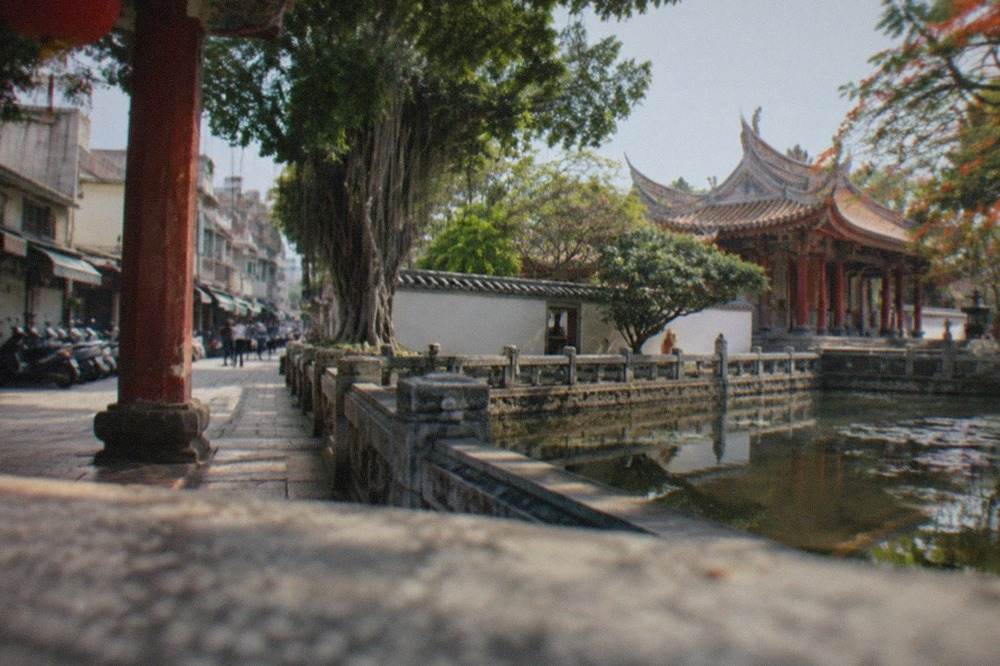
Short answer
The Koxinga Shrine honors Zheng Chenggong, the Ming loyalist who took the Dutch fort at Anping in 1662 and made Tainan his administrative center. The city's Tourism Bureau documents the story across its Anping Old Fort and Chihkan Tower pages, and the related sites charge NT$70 at the gate or nothing at all.
Koxinga is the single name most tangled up with Tainan's identity. The Tainan City Government Tourism Bureau's own Anping Old Fort page records the sequence plainly: the Dutch East India Company occupied what is now Anping in 1624, completed Fort Zeelandia in 1634, and lost it in 1662 when Koxinga took the fort and renamed the place Anping. The shrine that honors him is one stop on a longer trail, and this guide walks that trail using only what the official pages state, from the verified admission prices to the night-market nights that fit around a day of history.
Who Was Koxinga and Why Does Tainan Honor Him?
Koxinga, Zheng Chenggong in Chinese, was a Ming loyalist who arrived on Taiwan's coast, besieged the Dutch stronghold at Anping, and in 1662 took Fort Zeelandia and renamed the settlement Anping. The Tourism Bureau's page for Anping Old Fort records that the inner fort became his residence, which locals called the King's Castle. That single year is the hinge of Tainan's entire founding story.
He was a military man before he was a city founder. The Bureau's account continues past 1662 into the Qing period, when Tainan declined as the Taijiang inner sea silted up and Qing troops dismantled parts of Fort Zeelandia to build the Eternal Golden Castle downstream. In other words, the fort Koxinga captured was cannibalized by the era that followed him, and the shrine city that grew around his name kept the memory anyway.
The name itself is an honorific. "Koxinga" derives from the title Lord of the Imperial Surname, bestowed on Zheng Chenggong by the Ming court he refused to abandon. Romanised Taiwanese names spell themselves on this site, and Koxinga is one word, never split or re-cased.
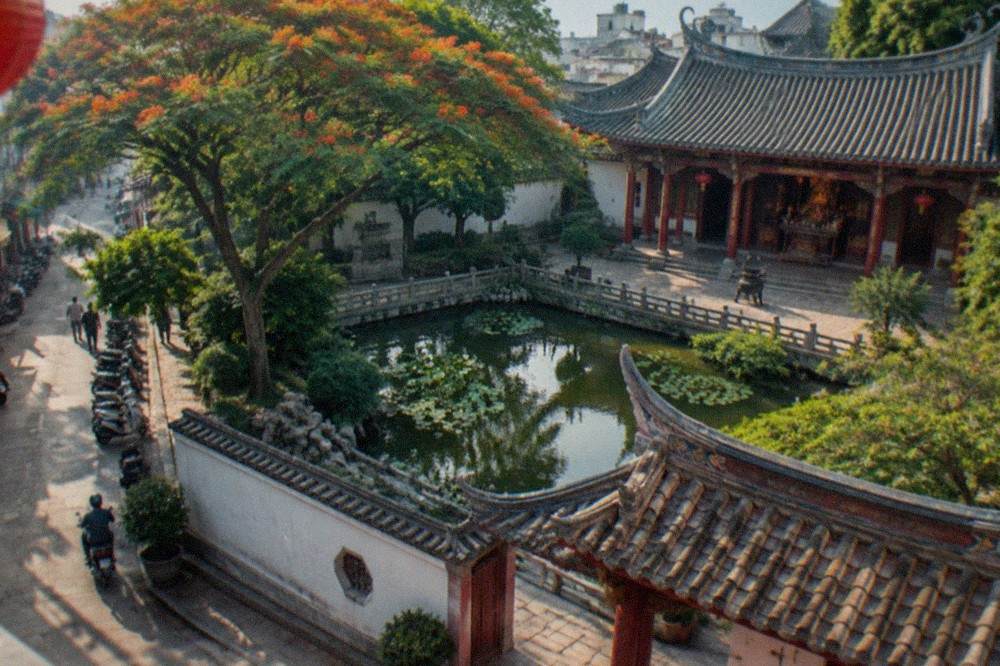
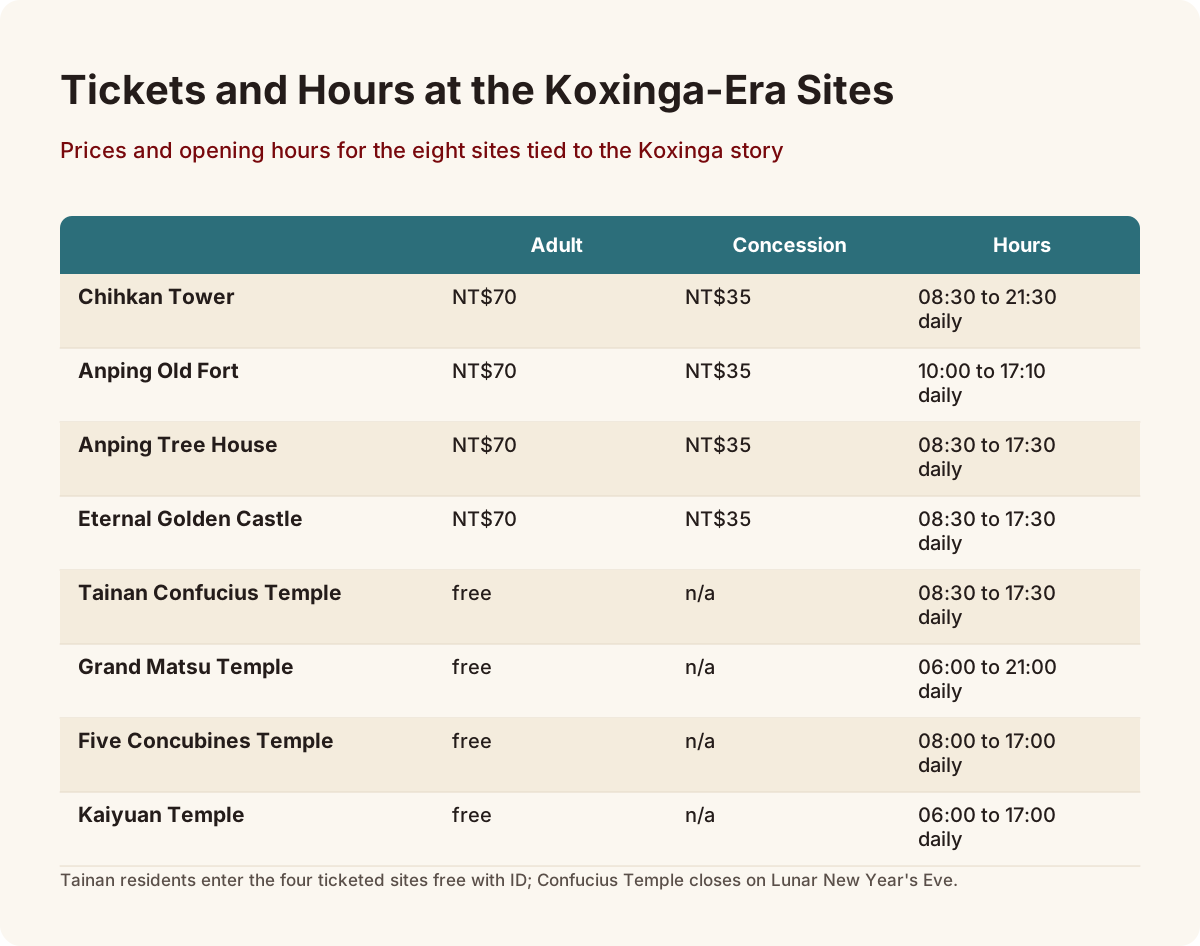
What the shrine means to Tainan is best understood against the city's longer arc. Tainan was Taiwan's capital for more than two centuries, until the late nineteenth century, and the temples, academies and fort sites from that span are densest here. The Tainan Confucius Temple, whose "first academy of Taiwan" title is real and documented, belongs to the same era of city-building that Koxinga began.
What Happened at Fort Zeelandia in 1662?
In 1662 Koxinga took Fort Zeelandia from the Dutch East India Company and renamed the place Anping, and the inner fort became his residence, the King's Castle. The Bureau's page records that the only genuine Dutch-period remains at the site today are the brick walls of the south outer rampart in front of the fort, because most of what visitors photograph there is Japanese-era and 1975 work.
The verified timeline is short and hard, and it is worth setting out in order because the contested dates around it are easy to get wrong.
| Year | Event | Status |
|---|---|---|
| 1624 | The Dutch East India Company occupies what is now Anping and begins Fort Zeelandia | Verified, Tourism Bureau |
| 1634 | Fort Zeelandia completed | Verified, Tourism Bureau |
| Early 1650s | The Dutch build Fort Provintia at what is now Chihkan Tower | Contested, 1652 on the city page, 1653 elsewhere |
| 1662 | Koxinga takes the Dutch fort, renames the place Anping, the inner fort becomes his residence | Verified, Tourism Bureau |
| Qing period | The Taijiang inner sea silts, Tainan declines, parts of Fort Zeelandia are dismantled to build the Eternal Golden Castle | Verified as a period, Tourism Bureau |
| 1975 | The city renovates Anping Old Fort, adding the pointed roof and white walls visitors see today | Verified, Tourism Bureau |
Two dates on that table are deliberately vague, and the reason is honesty rather than sloppiness. The city's own Chihkan Tower page says the Dutch built Fort Provintia in 1652, while 1653 is the more commonly cited date elsewhere, so "the early 1650s" is the only defensible phrase. Likewise, the year Tainan stopped being the capital is a two-stage change with two defensible readings, so this site writes "capital for more than two centuries, until the late nineteenth century" and stops there.
The 1975 renovation is the detail most visitors miss. The pointed-roofed lookout tower and white walls that define the postcard view of Anping Old Fort are twentieth-century municipal work, sitting on Dutch foundations and beside a single surviving stretch of Dutch brick. The Bureau's page states this directly, and it changes what a visitor should look for: the rampart wall, not the tower, is the Dutch-period original.
How Does the Koxinga Story Connect Chihkan Tower and Anping?
The Dutch built two strongpoints, Fort Zeelandia at Anping and Fort Provintia inland at what is now Chihkan Tower, and Koxinga's campaign took both. The city's Chihkan Tower page places Fort Provintia's construction in the early 1650s, and the site today charges NT$70 at the gate and stays open until 21:30 daily, one of the few historic sites in Tainan a visitor can see after dinner.
That late closing hour is unusual enough to plan around. Most of Tainan's heritage sites shut between 17:10 and 17:30, so an itinerary that saves Chihkan Tower for the evening gains an hour or two that the forts at Anping cannot give back. Anping Old Fort's listed hours are 10:00 to 17:10, and the Anping Tree House and Eternal Golden Castle both close at 17:30.
The Anping side of the story is the richer half for a day trip. After 1662 the settlement Koxinga renamed became the heart of his administration, and the district still carries the weight of it: the Anping Tree House, the Eternal Golden Castle built later from the dismantled Dutch brick, and Anping Old Street winding between them. The Tourism Bureau's Anping pages note that Tainan residents enter these sites free with ID, and that concessions are half price, but a visitor is not a resident and should expect the full fare at the gate.
How Much Do the Koxinga-Era Sites in Tainan Cost?
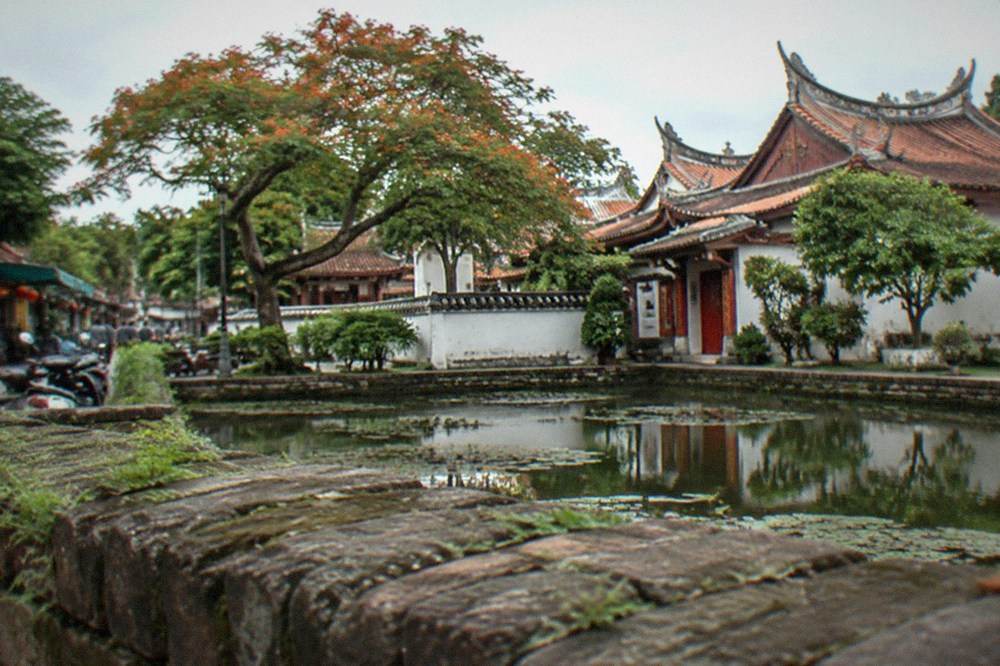
The four ticketed sites tied to the story each charge NT$70 full price at the gate: Anping Old Fort, Chihkan Tower, the Anping Tree House and the Eternal Golden Castle, with concessions at NT$35 and Tainan residents free with ID. The Tainan Confucius Temple, Grand Matsu Temple, Five Concubines Temple and Kaiyuan Temple are all free, with no ticket listed by the city.
The city's own pages carry the disclaimer that prices are for reference and the on-site notice governs, so treat every figure below as the listed price rather than a promise. Here is the full verified set.
| Site | Adult | Concession | Hours | Closed |
|---|---|---|---|---|
| Chihkan Tower | NT$70 | NT$35 | 08:30 to 21:30 daily | none listed |
| Anping Old Fort | NT$70 | NT$35 | 10:00 to 17:10 daily | none listed |
| Anping Tree House | NT$70 | NT$35 | 08:30 to 17:30 daily | none listed |
| Eternal Golden Castle | NT$70 | NT$35 | 08:30 to 17:30 daily | none listed |
| Tainan Confucius Temple | free | n/a | 08:30 to 17:30 daily | Lunar New Year's Eve |
| Grand Matsu Temple | free | n/a | 06:00 to 21:00 daily | none listed |
| Five Concubines Temple | free | n/a | 08:00 to 17:00 daily | none listed |
| Kaiyuan Temple | free | n/a | 06:00 to 17:00 daily | none listed |
One caution from the research file: whether a single ticket covers both the Anping Tree House and the adjacent Former Tait & Co. Merchant House is unverified, and so is any combined Anping Old Fort plus Tree House ticket. Do not buy on the assumption of a combo, and check at the gate.
For visitors who want the history without walking it alone, a guided option exists. The Day Tour to Qigu Salt Mountain, Chikan Tower and Anping Castle strings the inland and coastal ends of the story into one day, and the operator's live listing carries the current price and availability.
What Else Is Near the Koxinga Sites in Tainan?
The Koxinga-era sites cluster in West Central District and Anping, and both districts carry plenty beyond the forts: Shennong Street and the Hayashi Department Store inland, the Anping canal and old street on the coast, and rotating night markets in the evening. The city's Tourism Bureau pages list Garden Night Market open Thursday to Sunday, 17:00 to 00:00, and Siaobei Night Market indoors and open every day.
The night-market rotation is the single most useful scheduling fact in Tainan, because the big outdoor markets do not run every night. Friday is the one night all three big outdoor markets operate, and Wednesday is the thinnest, with Wusheng alone. The city updates these pages and the days do change, so check before you go.
| Market | Open | Hours |
|---|---|---|
| Garden Night Market | Thursday, Friday, Saturday, Sunday | 17:00 to 00:00 |
| Wusheng Night Market | Wednesday, Friday, Saturday | 17:00 to 00:00 |
| Dadong Night Market | Monday, Tuesday, Friday | 18:00 to 01:00 |
| Siaobei Night Market | every day, indoor | 12:00 to 00:00 |
Between the forts and the markets, the old city fills a day easily. Shennong Street is the preserved Qing-era merchant lane that survived Tainan's redevelopments, and the Hayashi Department Store is the Japanese-era store with its rooftop shrine, both a short walk from Chihkan Tower. Out at Anping, the Sicao Green Tunnel boats run the mangrove waterway north of the old fort, NT$200 for either route, the Green Tunnel or the longer Taijiang run, both at the same fare.
When Is the Best Time to Visit Tainan for the Shrine Trail?
October to March is the dry, comfortable half of the Tainan year, and October is the driest month by wet days, 2.8, while still averaging 30.8C maxima. The Central Weather Administration's 1991 to 2020 normals for Tainan show August bringing 466 mm of rain across 16 wet days against December's 16 mm across 3, so the late-summer visitor plans around rain and the winter visitor does not.
The climate table also explains a counter-intuitive fact about Tainan's visitor numbers. The Tourism Administration's own dataset shows Tainan's peak months are January and February, driven by temple pilgrimage and Lunar New Year, not the summer a European-trained reader might assume. Nankunshen Daitian Temple drew 6,583,100 visitors in 2023, roughly fifteen times Chihkan Tower's 443,622, and Anping as a district drew 4,441,443, numbers that line up exactly with a winter that is dry, warm and sunny.
| Month | Mean max C | Rain mm | Wet days |
|---|---|---|---|
| January | 23.0 | 20.7 | 3.8 |
| April | 29.3 | 69.8 | 5.9 |
| July | 33.0 | 374.6 | 13.0 |
| August | 32.6 | 466.1 | 15.8 |
| October | 30.8 | 30.8 | 2.8 |
| December | 24.4 | 16.2 | 3.0 |
Typhoon risk concentrates in the late-summer months, and the rainfall table shows the same shape independently. When the Tainan City Government declares a typhoon day, schools and many offices close and attractions may suspend, a rule the Tainan Art Museum states explicitly on its own hours page.
How Do You Get to the Koxinga Sites Without a Car?
City buses are free for the first 8 km with an electronic card, a Citizen Card, iPASS, EasyCard or iCash 2.0, on the trunk and branch network, against a cash fare of NT$26 for the same trip. The High Speed Rail station is not in Tainan at all but at Shalun in Guiren District, and the H31 shuttle bus is free for HSR passengers on production of a ticket stub.
The tap-off is the part visitors miss. The free first 8 km only applies when the card is tapped on boarding and tapped off on leaving, and the scheme runs for the 2026 calendar year, so it is a current policy rather than a permanent one. Transferring between Taiwan Railway and a city bus within two hours adds a further NT$9 discount with the same cards, though using a public bike in between voids it. The city's own bus fare notice sets out the card and tap-off conditions.
For arrivals by High Speed Rail, the fare table published by Taiwan High Speed Rail lists Taipei to Tainan at NT$1,350 for a reserved standard seat and NT$1,305 non-reserved, while Zuoying, the Kaohsiung HSR stop, is NT$140 standard. The Business Car fare in the upper-right triangle of the operator's grid is NT$2,230, and a careless read of that grid overstates the Taipei price by 65 percent. Journey times in minutes are the operator's to publish, so check the timetable search for those.
Can You See the Koxinga Story in One Day?
Yes, and the geometry helps: Chihkan Tower sits inland in West Central District, the free Confucius Temple is a short walk from it, and Anping holds the old fort, tree house and Eternal Golden Castle in a walkable cluster by the canal. Starting inland, finishing at Anping and ending the evening at Chihkan Tower, which closes at 21:30, is the sequence the opening hours reward.
A realistic order looks like this. Morning inland at Chihkan Tower and the Confucius Temple, both open from 08:30, then lunch around the old street lanes. Afternoon out at Anping for the old fort, the tree house and, with time, the Eternal Golden Castle, all closing between 17:10 and 17:30. Evening back at Chihkan Tower for the lit courtyard, or at a night market if the day of the week cooperates.
The one day in Tainan itinerary on this site works through the same logic in full, and visitors with more time can spread the trail over the two days in Tainan plan instead, which pairs the history day with the lagoon coast at Sicao and Qigu.
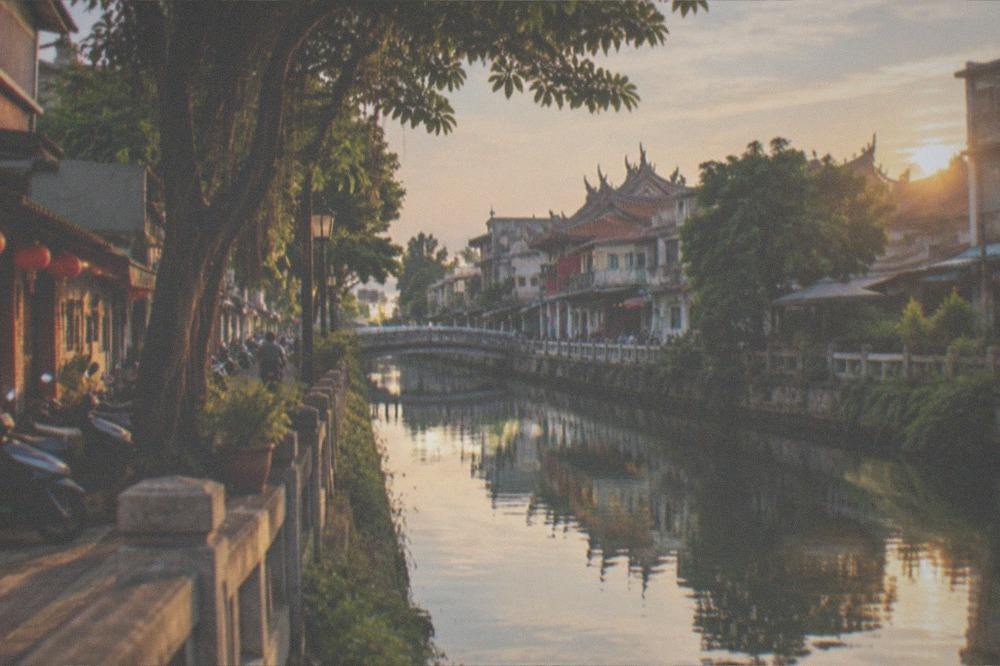
The shrine trail also photographs well, and that is not a throwaway line. Anping's historic streets are the backdrop most visitors choose for costume photography, and the qipao rental above exists precisely because the district's Dutch brick, Qing lanes and banyan roots make a period setting. The operator's listing states a full-day rental window, which is generous enough to cover the fort, the tree house and the old street in one outfit.
What Should You Not Get Wrong About the Koxinga Story?
Three things: do not print a single year for the end of Tainan's capital status, do not print a single year for Fort Provintia's founding, and do not assume the tower at Anping Old Fort is Dutch. The official record supports 1624, 1634, 1662 and 1975, frames the rest as periods, and states that the only Dutch-period remains at Anping are the brick walls of the south outer rampart.
The temptation to round history off is real, and the research behind this site resists it. The year Tainan stopped being the capital has two defensible readings of a two-stage change, so this site writes "capital for more than two centuries, until the late nineteenth century". Fort Provintia's founding splits between 1652 on the city's own page and 1653 elsewhere, so "the early 1650s" is the honest phrase. Koxinga's siege in 1661, the Qing annexation, the Japanese colonial dates and the city-county merger are all unverified on official pages in this site's research and so do not appear here as fact.
What remains is still a full story. A merchant company builds a stronghold, a Ming loyalist takes it, a city grows around the wreckage, and four centuries later the city charges NT$70 to walk through the gate and nothing at all to stand in its temples. The Tainan Travel Guide homepage lays out the wider set of things to do across the city, and the Tainan history guide carries the longer arc.
Common Questions About the Koxinga Shrine
Who was Koxinga?
Koxinga, Zheng Chenggong, was a Ming loyalist who took the Dutch Fort Zeelandia at Anping in 1662, renamed the place Anping, and made the inner fort his residence, which locals called the King's Castle. The Tainan City Government Tourism Bureau's Anping Old Fort page records the sequence.
How much does it cost to visit the Koxinga-related sites?
Chihkan Tower, Anping Old Fort, the Anping Tree House and the Eternal Golden Castle each list NT$70 full price at the gate, with concessions at NT$35 and Tainan residents free with ID. The Confucius Temple, Grand Matsu Temple, Five Concubines Temple and Kaiyuan Temple are free, with no ticket listed by the city.
What is the oldest thing you can see at Anping Old Fort?
The brick walls of the south outer rampart in front of the fort are the only genuine Dutch-period remains at the site, according to the Tourism Bureau's page. The pointed-roofed tower and white walls are 1975 municipal renovation work.
Can you visit the Koxinga sites in the evening?
Chihkan Tower is open 08:30 to 21:30 daily, which makes it one of the few historic sites in Tainan that works after dinner. Anping Old Fort closes at 17:10, and the Tree House and Eternal Golden Castle at 17:30.
When is the best month to visit Tainan?
October to March is the dry, comfortable half of the year. October averages 30.8C maxima with just 2.8 wet days, while August brings 466 mm of rain across 16 wet days, according to the Central Weather Administration's 1991 to 2020 climate normals for Tainan.
Is the High Speed Rail station in Tainan?
No. The HSR station sits at Shalun in Guiren District, outside the old city, and reaching the center means a transfer. The H31 shuttle bus is free for HSR passengers on production of a ticket stub, and city buses are free for the first 8 km with an electronic card in 2026.
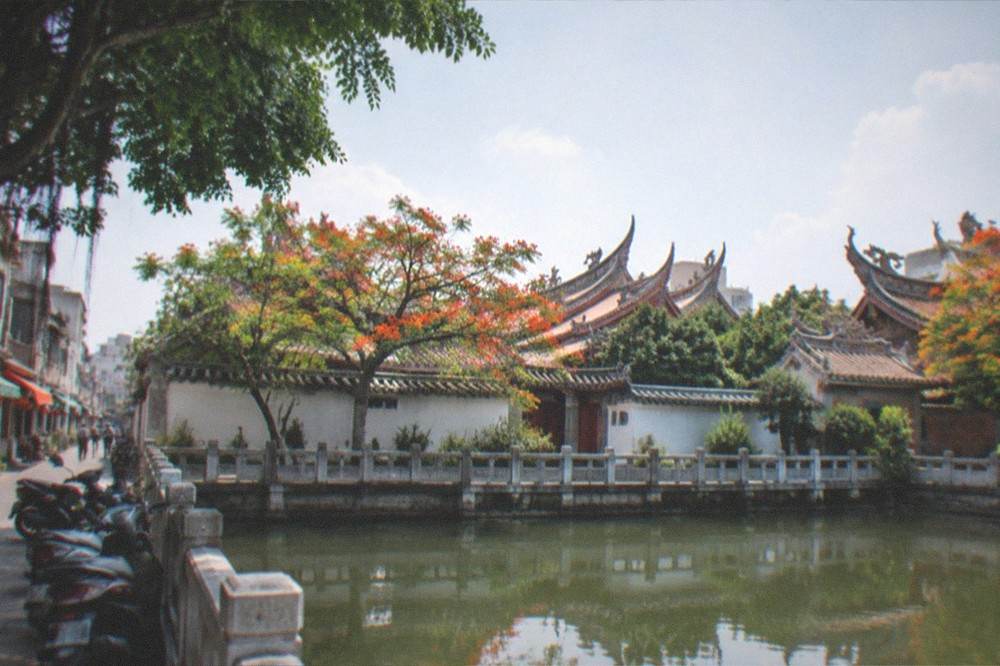
The Koxinga Shrine is one thread of a story the whole city tells, and the thread pulls in both directions: inland to Chihkan Tower and the free temples around it, seaward to the rampart brick at Anping and the lagoon beyond. Plan the day around the closing hours, hold the contested dates loosely, and check the city's own pages before you go, because the on-site notice governs and the schedules do change.