What Is Taiwan's Coldest Month?
January is Taiwan's coldest month, and the verified climate normals for Tainan show what that actually means: mild days, cool nights, and almost no rain.
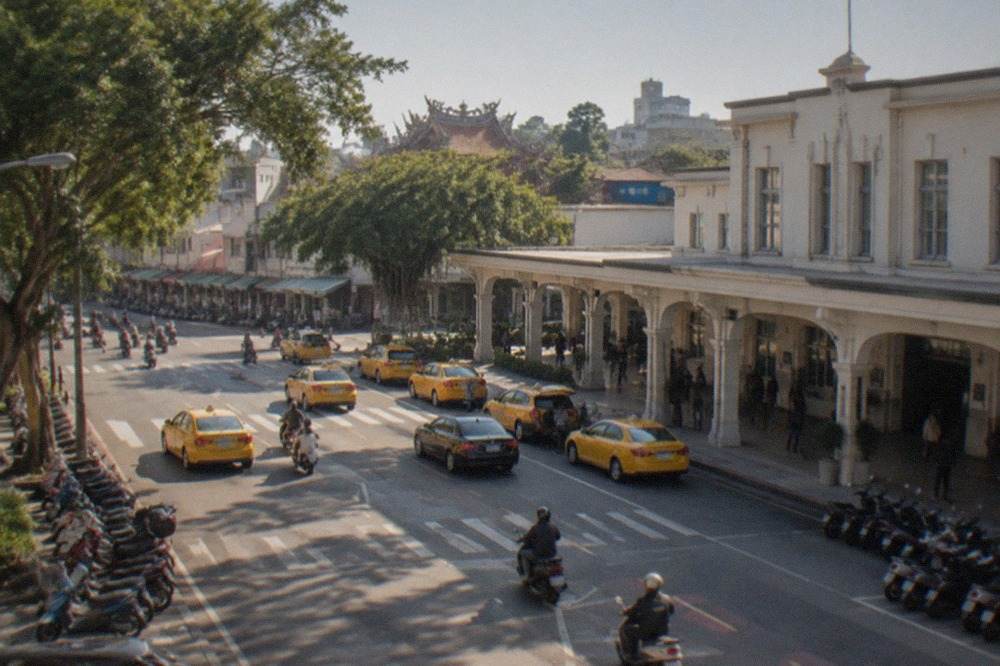
Taiwan sits just south of the Tropic of Cancer, and its winters are mild by the standards of almost anywhere in Europe, North America or Northeast Asia. January is the coldest month across the island, and the numbers for Tainan, from the Central Weather Administration's published 1991 to 2020 climate normals for station 467410, put the January mean temperature at 17.9C, with average daily maxima of 23.0C. Rain almost disappears: January averages 20.7 mm across 3.8 wet days, against August's 466.1 mm across 15.8. For a city that sees 186 days a year above 30C, the coldest month is not an ordeal. It is the start of the dry, comfortable half of the year, and this Tainan Travel Guide page reports exactly what the official record shows about it.
How Cold Does January Actually Get in Tainan?
January is the coldest month in Tainan by every measure in the official record, with a mean temperature of 17.9C, average daily maxima of 23.0C, and 20.7 mm of rain across 3.8 wet days. December is a close second at a 19.6C mean, and February sits at 18.9C. No month in the 1991 to 2020 normals drops below a 17.9C mean, and none of the three winter months averages more than 4.1 wet days.
The Central Weather Administration's normals for station 467410, covering 1991 to 2020, are the reference dataset behind every figure on this page. They show a winter that is cool rather than cold: January's mean maximum of 23.0C is a pleasant spring day in most of the world, and the mean minimum implied by the 17.9C mean sits in the low teens. Humidity stays around 75 percent, which is the island's baseline rather than a winter spike.
What the averages hide is the occasional cold surge. Northeast monsoon pushes can drop temperatures sharply for a few days at a time, and local news treats those events as notable precisely because they are not the norm. The normals describe the typical January, not the coldest night of the decade. Anyone planning around the record should pack for mild days and cool evenings, with one warm layer for a monsoon surge.
The comparison with summer is the useful part. August, the wettest month, brings 466.1 mm of rain, roughly twenty-two times January's total, and 27.6 days above 30C. January has none. The Tainan weather guide carries the full month-by-month table for readers who want the whole year at a glance.
There is a second reading worth doing on the same table. The gap between the mean maximum and the mean minimum in January, roughly 23.0C against the low teens, is wider than in summer, when nights stay warm. That matters for anyone planning early starts: a temple that opens at 06:00, such as the Grand Matsu Temple with its 06:00 opening hour, is a genuinely cold walk in January and a warm one in July. The official hours pages for each site are the place to check opening times before committing to a dawn visit.
What Is Winter Rain Like in Tainan?
Winter is the dry season in Tainan. January brings 20.7 mm of rain across 3.8 wet days, February 21.6 mm across 4.1, and December just 16.2 mm across 3.0, the lowest monthly total of the year. Close to three-quarters of Tainan's annual 1,761 mm falls between May and September instead, so the coldest months are also the driest.
This is the pattern that makes winter the practical high season for Tainan even though it is the temperature low. October, November, December, January, February and March form a six-month block in which no month averages more than 4.2 wet days. October is the driest month of all by wet days, 2.8, while still averaging maxima of 30.8C, which makes it a genuinely hot month with almost no rain.
| Month | Mean temp | Mean max | Rain mm | Wet days |
|---|---|---|---|---|
| December | 19.6C | 24.4C | 16.2 | 3.0 |
| January | 17.9C | 23.0C | 20.7 | 3.8 |
| February | 18.9C | 24.0C | 21.6 | 4.1 |
| August (for contrast) | 28.9C | 32.6C | 466.1 | 15.8 |
Typhoon risk, which concentrates in the late summer months, is effectively absent in winter. The rainy season guide explains the summer half of the year, when plum rain in May and June and typhoon season from July onward reshape the calendar. A reader choosing between a January trip and an August trip is choosing between 21 mm and 466 mm of rain, and the official numbers make that choice unusually easy.
Winter rain, when it does arrive, tends to come in short grey spells rather than all-day downpours, and the wet-day counts suggest most January days stay dry. The practical reading of the data: plan outdoor days freely in winter, and keep one flexible indoor option, a museum or a covered night market, for the odd wet afternoon.
The indoor options are worth knowing in advance, because the closure days differ. The Chimei Museum closes every Wednesday, the Tainan Art Museum closes on Mondays and stays open until 21:00 on Saturdays, and Siaobei Night Market is indoors and open every day from noon to midnight. A wet January afternoon therefore has a different answer depending on which day of the week it falls, and the museum hours are published on each venue's own visitor page.
Is Winter the Best Time to Visit Tainan?
For weather alone, winter is the best time to visit Tainan: October to March is the dry, comfortable half of the year, with January and February combining the coolest temperatures of the calendar with barely 21 mm of rain each. The city's own visitor data points the same way, since Tainan's peak months are January and February, driven by temple pilgrimage and Lunar New Year.
The peak-season finding comes from the Tourism Administration's own dataset, and it inverts the European assumption that a tropical city peaks in summer. Nankunshen Daitian Temple drew 6,583,100 visitors in 2023, peaking in January, and Anping as a district drew 4,441,443, peaking in February. The climate table explains why: winter is when the city is at its most comfortable, and the festival calendar, from the Yanshui Beehive Fireworks in February to the Yuejin Lantern Festival from February to March, is built around it.
The trade-off is crowds. Lunar New Year is the busiest stretch of the year, and the caveat that the 2020 to 2022 counts are COVID-depressed applies to any year-over-year comparison. A reader who wants winter weather without the New Year peak should look at late November or early December, which offer the same dry pattern with slightly warmer afternoons and thinner crowds. The question of the best month to go to Taiwan covers the island-wide picture for readers fitting Tainan into a longer route.
There is one more winter advantage that the temperature table does not show directly: the historic sites stay open late. Chihkan Tower keeps hours of 08:30 to 21:30 daily, which the city's own page for the site lists, and that late closing is unusual among Tainan's heritage sites. In July, a 21:30 visit means arriving in full heat. In January, it means an evening at a comfortable temperature, and the Tourism Bureau's page for the site is the source for those hours.
What Should You Pack for Tainan's Coldest Month?
Pack for mild days and cool evenings: short sleeves for afternoons around 23C, a light jacket or long-sleeved layer for nights in the low teens, and something warmer in reserve for the occasional northeast monsoon cold surge. An umbrella is a low-priority item in January, when the month averages 3.8 wet days, but a sun hat is not, since winter skies over Tainan are mostly clear.
The packing logic follows the numbers. A 23.0C mean maximum is t-shirt weather in the afternoon, and a 17.9C overall mean means evenings and early mornings want a layer. The monsoon surges that make local news every winter can push temperatures well below the average for a few days, so one genuinely warm piece, a fleece or a proper coat, earns its place in the bag even though the normals suggest it will mostly stay in the hotel.
Footwear matters more than outerwear in Tainan. The city's appeal is walkable: old streets, temple circuits, the Anping district, and night markets that run into the late evening. Garden Night Market opens Thursday to Sunday, Wusheng on Wednesday, Friday and Saturday, Dadong on Monday, Tuesday and Friday, and Siaobei is indoors and open every day, so there is a market any night of the week, and winter evenings are when walking one is comfortable rather than an endurance test. The city updates these schedules on its own pages, so check before you go.
Rain gear can be minimal. Three or four wet days a month means a compact umbrella from a convenience store covers the realistic worst case. Anyone extending a trip into April or May should reread the rainfall table first, because April's 69.8 mm is more than triple January's, and May's 165.6 mm begins the climb toward summer.
One packing note is specific to the cold surges: they are dry. The same northeast monsoon that drops the temperature also brings the clear skies, so the coldest days of a Tainan winter are usually the sunniest. That is the opposite of a European winter, where cold and grey arrive together, and it means the warm layer and the sunglasses get used on the same days.
What Is Taiwan's Coldest Month?
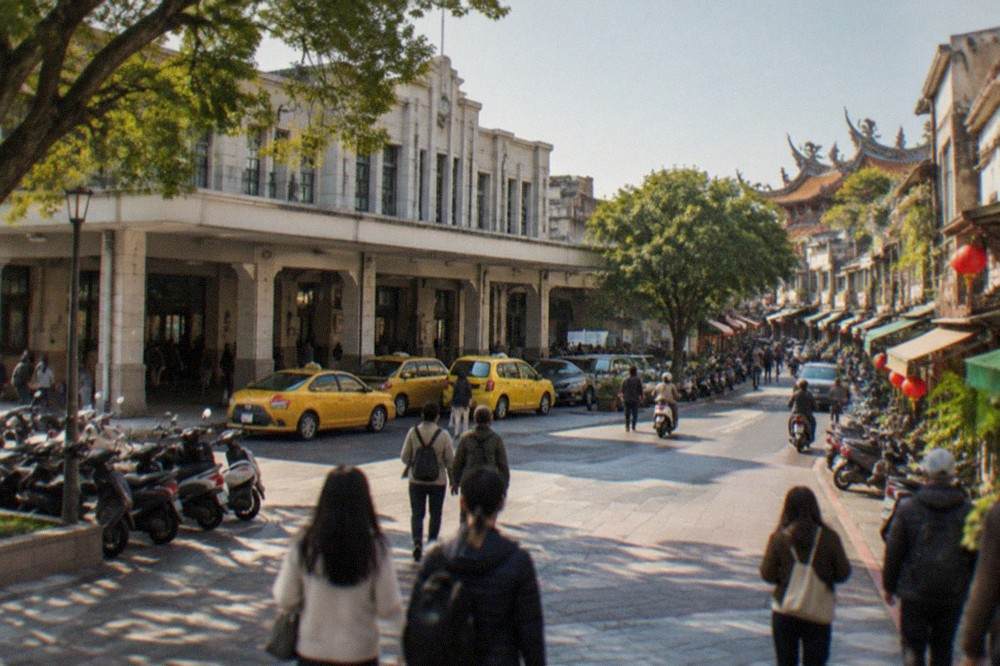
Taiwan's coldest month is January, and in Tainan the official 1991 to 2020 climate normals record a January mean of 17.9C, average daily maxima of 23.0C, and only 20.7 mm of rain across 3.8 wet days. December, at a 19.6C mean, is the second coldest month, and February, at 18.9C, is the third. None of them is cold in any absolute sense.
The island's latitude does the explaining. Tainan sits in the south, where the Central Weather Administration's normals show an annual mean of 24.6C and 2,185 hours of sunshine, and where 186 days a year exceed 30C. January is the trough of that curve, not a departure from it. Northern Taiwan is cooler in winter than the south, but January is the coldest month island-wide, and the southern cities are where the January difference between "cool" and "cold" is widest.
For Tainan specifically, the answer carries a bonus: the coldest month is also one of the driest and one of the most festival-dense. The city's calendar lists the Yanshui Beehive Fireworks in February, on the Lantern Festival, and the Confucius Temple Cultural Festival in September, with the Lunar New Year period driving the January and February visitor peak. Anyone wondering whether Tainan is worth visiting in winter has the climate record on their side.
Common Questions About Winter Weather in Tainan
What Is Taiwan's Coldest Month?
January. In Tainan, the Central Weather Administration's 1991 to 2020 normals record a January mean of 17.9C, maxima averaging 23.0C, and 20.7 mm of rain across 3.8 wet days.
Does it ever freeze in Tainan?
The normals show no month with a mean below 17.9C in Tainan. Short cold surges from the northeast monsoon can push temperatures down for a few days each winter, but the 1991 to 2020 averages describe a city that never approaches freezing.
Is Tainan rainy in winter?
No. Winter is Tainan's dry season. December averages 16.2 mm of rain across 3.0 wet days, January 20.7 mm across 3.8, and February 21.6 mm across 4.1. Nearly three-quarters of the annual 1,761 mm falls between May and September.
Is January a good time to visit Tainan?
Yes, on the weather. January and February are the city's peak visitor months according to the Tourism Administration's own data, driven by temple pilgrimage and Lunar New Year, and the climate record shows why: cool, dry, sunny days well suited to walking the old streets and Anping.
What should I wear in Tainan in January?
Short sleeves for afternoons near 23C, a light jacket for evenings, and one warm layer in reserve for a monsoon cold surge. Rain gear is a low priority in the driest stretch of the year.
The short version: January is Taiwan's coldest month, and in Tainan that is a recommendation rather than a warning. The official record shows the coolest, driest, sunniest stretch of the calendar running from October to March, with the city's own visitor data confirming that January and February are when Taiwan travels to Tainan in the largest numbers. Pack a light jacket, keep an umbrella as an afterthought, and plan long walking days, because the climate is on your side.