Is Tainan Better Than Taipei?
An honest comparison of Tainan and Taipei for travelers: history, food, costs, transport, weather and pace, based on official sources from both cities.
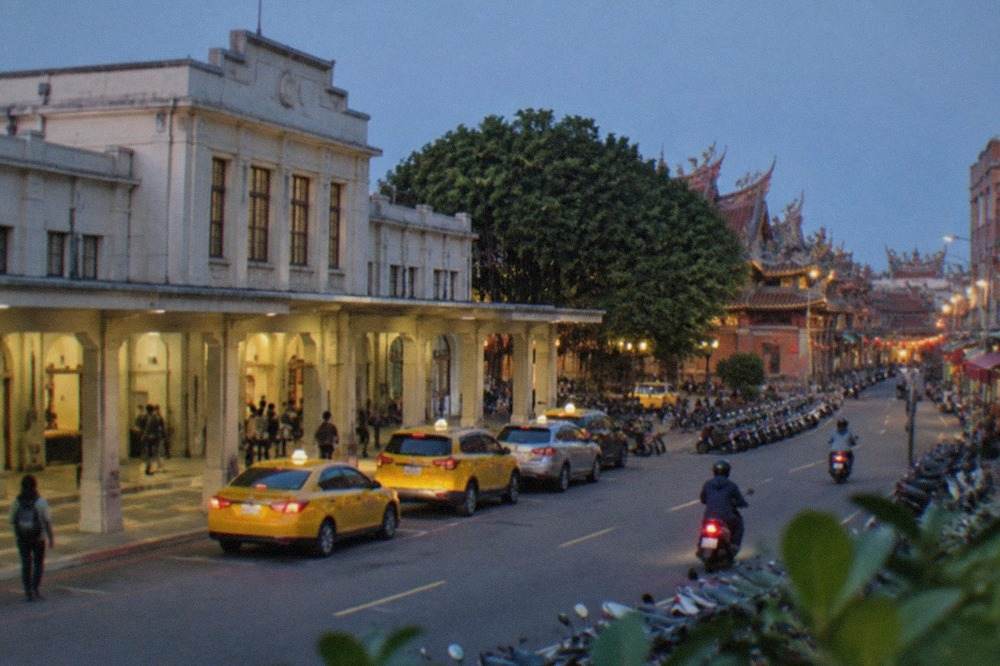
Is Tainan Better Than Taipei?
Taipei is Taiwan's capital, its transport hub and the city most international itineraries are built around. Tainan was the capital first, for more than two centuries, until the late nineteenth century, and it never lost the habit of behaving like a place that matters. The two cities offer genuinely different trips, and the question of which is better has a real answer once the question is narrowed to what a traveler actually wants from the days. This page compares them on history, food, cost, weather and pace, using published fares, opening hours and climate records rather than impressions.
What Does Each City Do Best?
Taipei is the better city for a first taste of Taiwan, for big-museum culture, for nightlife and for anyone who needs international flight connections or a metro system. Tainan is the better city for history, street food, temples and slow travel, and it packs more of Taiwan's oldest surviving sites into a walkable old core than anywhere else on the island.
The trade-off is concentration against variety. Taipei spreads its attractions across a large metro network: the National Palace Museum, landmark towers, night markets in several districts, day trips to the north coast. Tainan concentrates almost everything worth seeing inside a compact old city where the Dutch-era sites, the Qing temples and the Japanese-era department store sit within a short walk or a free bus ride of each other. The Tainan City Government Tourism Bureau's own pages describe the city as Taiwan's ancient capital, and the density backs the claim.
A useful way to frame the choice:
| What you want from the trip | Better fit | Why |
|---|---|---|
| Oldest surviving architecture | Tainan | Fort Zeelandia's walls date to 1624 to 1634; Chihkan Tower's Fort Provintia to the early 1650s |
| Museums on a world scale | Taipei | The National Palace Museum has no Tainan rival; Chimei Museum is excellent but younger and smaller |
| Street food density | Tainan | The city is widely regarded as Taiwan's food capital, with beef soup, danzai noodles and coffin bread originating here |
| Public transport for a newcomer | Taipei | A full metro; Tainan relies on buses, with free first 8 km rides on an electronic card |
| International arrivals | Taipei | Taoyuan is the main gateway; Tainan Airport is small, mostly domestic and short-haul |
| Temples and festival calendar | Tainan | The city's official calendar lists more than twenty recurring festivals, from fireworks to hot spring food events |
Neither column is weak. Taipei's food scene is serious and its history, while younger as a capital, includes strong Japanese-era and post-war layers. Tainan has a metro-free transport reality and a small airport, which is exactly why most visitors arrive by High Speed Rail and transfer. The Tainan vs Kaohsiung comparison covers the southern half of the same decision.
Is Tainan Cheaper Than Taipei?
On the verified numbers available, Tainan costs less to move around in: city buses are free for the first 8 km with an electronic card in 2026, against a 26 cash fare, and the HSR shuttle from the station is free with a ticket stub. No official price list exists for meals or hotels in either city, so honest cost comparisons beyond transport have to be qualitative: Tainan is broadly regarded as the cheaper of the two.
The transport arithmetic is where published figures exist. In Taipei a traveler pays metro fares for essentially every ride. In Tainan, the city's own bus site states that trunk and branch routes are free for the first 8 km with a Citizen Card, iPASS, EasyCard or iCash 2.0, provided the rider taps on and taps off, a condition the cash fare of 26 does without. The scheme runs for the 2026 calendar year, so treat it as current policy rather than permanent. Add the H31 shuttle, free for High Speed Rail passengers on production of a ticket stub, and a visitor in Tainan can spend days without paying a transport fare at all.
Food and lodging are harder to pin down with sources. No Taiwanese government body publishes a price list for a bowl of beef soup or a mid-range hotel night in either city, and this site does not invent numbers. What can be said, qualitatively and defensibly, is that Tainan's food culture is built around small shops and night market stalls, and that travelers' budgets in Taiwan's old capital generally stretch further than in the capital, particularly for accommodation near the historic core. Anyone weighing the two cities on money should read the broader Tainan travel costs picture before committing.
How Easy Is It to Get from Taipei to Tainan?
The High Speed Rail fare from Taipei to Tainan is NT$1,350 for a reserved standard seat, NT$1,305 non-reserved, on the operator's own fare table. The catch is that Tainan's HSR station is not in Tainan: it sits at Shalun in Guiren District, outside the old city, so every arrival includes a transfer, by free H31 shuttle with a ticket stub, by train, or by city bus.
That fare figure deserves care, because it is easy to get wrong. Taiwan High Speed Rail's fare table is a single grid where the lower-left triangle holds Standard Car prices and the upper-right triangle holds Business Car prices, and the business fare of NT$2,230 is what a careless read of the grid returns. The standard reserved seat is 1,350, and the operator's own fare table is the page to check before booking. No official journey time in minutes is published in the sources this site uses, so the honest advice is to read the timetable on the operator's site rather than trust a number repeated around the web.
The transfer at the far end matters for the comparison. Taipei's main station sits in the center of Taipei, connected to the metro. Tainan's High Speed Rail station is a district away, and the last leg into the old city is part of the trip. The free H31 shuttle covers it for HSR passengers, with the section break at the Chimei Museum, which conveniently puts one of Tainan's major museums on the shuttle route. The full arrival mechanics, fares and transfer options are laid out in how to travel from Taipei to Tainan, and the distance question is answered separately at how far is Tainan from Taipei.
For anyone wondering whether the whole thing can be done as a day trip, the honest answer is that the rail fare and the transfer make it possible but tight, and the dedicated day trip feasibility page works through the arithmetic.
Which City Has Better Food?
Taipei has the widest range of food in Taiwan, from every regional cuisine to international fine dining. Tainan has the deepest claim on the island's food identity: danzai noodles, coffin bread, milkfish soup and the breakfast beef soup culture all trace to Tainan, and the city's night markets rotate on a published weekly schedule that gives a visitor a genuine local scene rather than a tourist one.
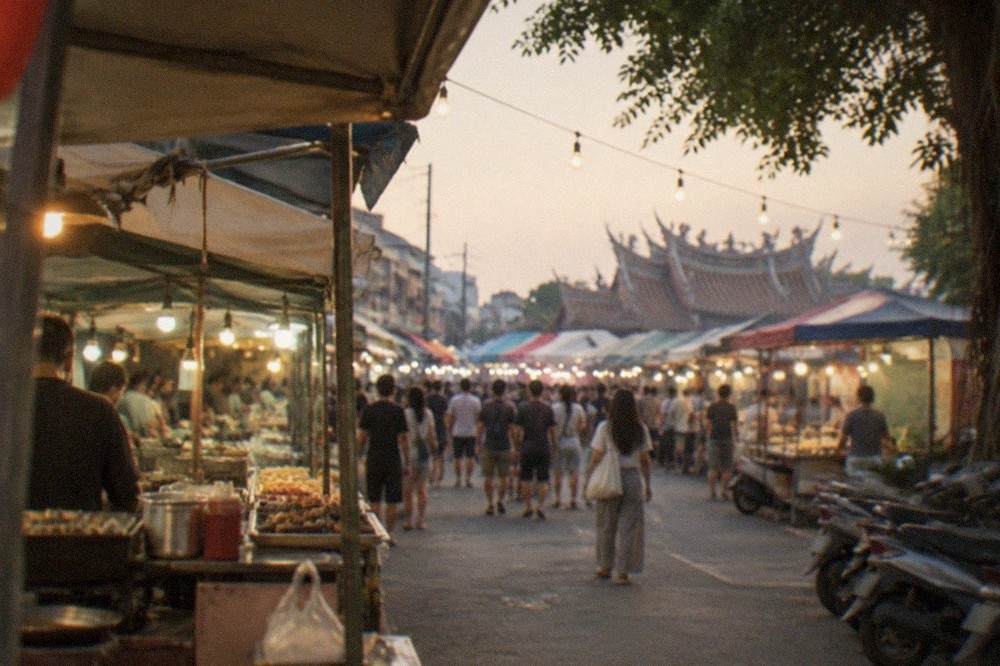
The night market rotation is the practical detail that surprises most travelers. Taipei's major markets, like Shilin and Raohe, run every night. Tainan's big outdoor markets take turns:
| Market | Open | Hours |
|---|---|---|
| Garden Night Market | Thursday, Friday, Saturday, Sunday | 17:00 to 00:00 |
| Wusheng Night Market | Wednesday, Friday, Saturday | 17:00 to 00:00 |
| Dadong Night Market | Monday, Tuesday, Friday | 18:00 to 01:00 |
| Siaobei Night Market | every day, indoor | 12:00 to 00:00 |
Friday is the one night all three big outdoor markets run, and Wednesday is the thinnest, with Wusheng alone. Siaobei is indoors and open daily, which makes it the wet-weather and wrong-night answer. The days come from the Tainan City Government Tourism Bureau's own attraction pages, and the city updates them, so check before going. The full index of guides sits on Tainan Travel Guide.
On quality, the fair framing is depth against breadth. Taipei can serve anything, including Tainan's dishes, at every price level. Tainan is where those dishes were born, and the versions served a few streets from their origin are the ones the island argues about. A food-motivated traveler with limited days gets more concentrated eating done in Tainan, and a guided food and culture walk is the efficient way to cover the canonical stalls in one pass.
Which City Has More History?
Tainan has more surviving history than Taipei, and it is not close. The Dutch East India Company occupied what is now Anping in 1624 and completed Fort Zeelandia in 1634; Koxinga took the fort in 1662; and Tainan served as Taiwan's capital for more than two centuries, until the late nineteenth century. Taipei's historic core is real but largely dates from later periods.
The verified spine matters here because Tainan's dates are often garbled. What the city's own Tourism Bureau pages confirm: the Dutch arrived at Anping in 1624, Fort Zeelandia's construction finished in 1634, and Koxinga seized the fort in 1662, renaming the place Anping and making the inner fort his residence. Fort Provintia, at what is now Chihkan Tower, went up in the early 1650s. Much of what visitors photograph at Anping Old Fort today is later work: the city government's 1975 renovation added the pointed lookout roof, and the only genuine Dutch-period remains are the brick walls of the south outer rampart.
The practical advantage is access. Chihkan Tower is open 08:30 to 21:30 daily, an unusually late closing that makes it one of the few historic sites in Taiwan a visitor can see after dinner. The Tainan Confucius Temple, the Grand Matsu Temple, the Five Concubines Temple and Kaiyuan Temple are all free to enter, with hours published by the city. A traveler can walk between layers of four centuries in an afternoon, which Taipei, for all its merits, cannot offer.
For depth on the old capital's story, the Tainan history guide carries the full timeline, and what Tainan is best known for summarizes the headline attractions.
Which City Has Better Weather?
Tainan is warmer, sunnier and drier than Taipei, especially in the winter half of the year. The Central Weather Administration's 1991 to 2020 normals for Tainan show 2,185 hours of annual sunshine, a mean temperature of 24.6C, and December rainfall of just 16 mm, against a summer that concentrates nearly three-quarters of the annual 1,761 mm between May and September.
The pattern that decides most trips: Tainan's rain is almost entirely a summer event. August brings 466 mm across 16 wet days; December brings 16 mm across 3. October is the driest month by wet days, 2.8, while still averaging maxima of 30.8C, which makes it arguably the city's best-kept secret. From October to March Tainan is dry, warm and sunny. Taipei, in the same months, sits under the north coast's winter cloud and drizzle that the island's residents know well.
The summer is the trade-off. Tainan records 186 days a year above 30C, and from April to October it exceeds 30C on most days. Typhoon risk across Taiwan concentrates in the late summer months, and the same rainfall table shows why: the wet season peaks in June, July and August. The Central Weather Administration's climate statistics are the underlying source for every figure in this paragraph, and the best-time-to-visit guidance on this site applies them to trip planning.
For a winter or shoulder-season trip, Tainan's weather is the stronger argument. For a summer trip, both cities are hot, and Tainan is the hotter of the two.
Common Questions About Tainan vs Taipei
Is Tainan Better Than Taipei?
For history, food tradition, temples and low-cost local transport, Tainan is the stronger choice. For a first visit to Taiwan, international connections, big museums and metro-based exploring, Taipei fits better. Many travelers do both, since the High Speed Rail connects them at NT$1,350 for a reserved standard seat.
Can You Do Tainan as a Day Trip From Taipei?
It is possible but tight. The High Speed Rail fare each way is NT$1,350 standard reserved, and the HSR station sits at Shalun in Guiren District, outside the old city, so the transfer time has to be budgeted. Two nights is the more common recommendation for seeing the historic core and a night market properly.
How Many Days Should Tainan Get Compared to Taipei?
Most itineraries give Taipei three to four days and Tainan two to three. Tainan's attractions are concentrated in the old city and Anping, so two full days cover the core sites, with a third for the lagoon coast at Qigu and Sicao.
Is Tainan's Night Life Worse Than Taipei's?
Different rather than worse. Taipei has bars, clubs and live music at international scale. Tainan's evening culture centers on its rotating night markets, late-opening historic sites like Chihkan Tower, which closes at 21:30, and the Shennong Street old-street atmosphere.
Do People in Tainan Speak English?
Tourist areas, key markets, buses and public facilities increasingly carry bilingual signage under city initiatives, but coverage is not universal, especially in smaller and older shops. Taipei has broader English coverage overall.
The Verdict
Neither city wins outright, but the decision rule is simple: a traveler whose priority is Taiwan's oldest streets, its founding food dishes, free temple entry and a compact walkable core should give Tainan the majority of the trip, while a traveler who wants the widest choice of everything, seamless transport and international arrival convenience should anchor in Taipei and give Tainan at least two nights by High Speed Rail.
The climate table says October to March is when a Tainan-focused trip is most comfortable, with October the driest month by wet days while still averaging maxima above 30C. The fare table says the two cities are NT$1,350 apart on a reserved standard seat, close enough that splitting a trip between them is the standard move rather than a compromise. And the old capital is the one place in Taiwan a short visit genuinely cannot be replicated anywhere else on the island, which is the strongest argument for it in a head-to-head against the capital that replaced it.