What Is Kaohsiung Famous For?
Kaohsiung is famous as Taiwan's harbor city: a port turned cultural metropolis of night markets, waterfront arts spaces, temple lakes and easy high speed rail links north to Tainan.
What Is Kaohsiung Famous For?
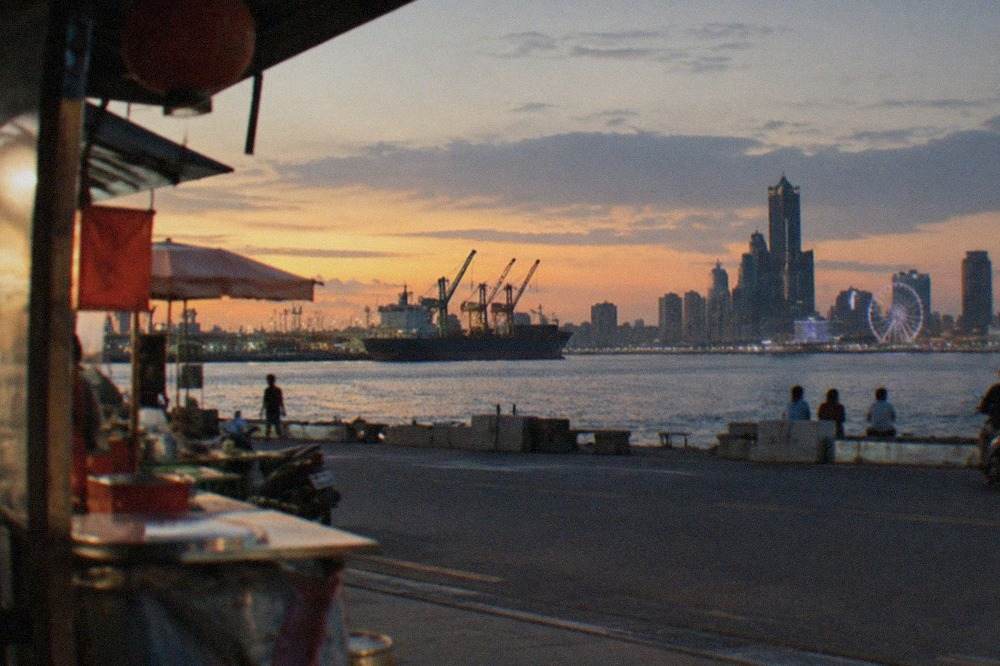
Kaohsiung is famous for its harbor. The city grew up around one of the largest container ports in the world, and almost everything visitors associate with Kaohsiung, the waterfront, the old warehouses turned into art districts, the seafood-heavy night markets and the ferry rides across the channel, traces back to that single fact. It is Taiwan's main southern metropolis, the counterweight to Taipei in the north, and it has spent the last two decades converting industrial land into public space: former rail yards and warehouse rows are now galleries, music venues and cycling routes along the water.
This site is a Tainan site first, and the two cities sit so close together, about a dozen high speed rail minutes apart on the same western coastal plain, that most travelers end up seeing both. That makes the question of what Kaohsiung is famous for a practical one. If you know what each city does best, you can split your days properly instead of repeating yourself. The pages on Kaohsiung day trips and on getting from Kaohsiung to Tainan cover the logistics in detail.
What Is Kaohsiung Most Famous for? The Short Answer
Kaohsiung is most famous for its harbor and port heritage, for Liuhe and Ruifeng night markets, for the Lotus Pond with its Dragon and Tiger Pagodas, for the Pier-2 Art Center built in old port warehouses, for Cijin Island reached by a short ferry across the channel, and for being the warm, laid-back southern alternative to Taipei. It is also famous as a base: the city's high speed rail station at Zuoying connects it to Tainan in a single short hop, which is why so many southern Taiwan itineraries treat Kaohsiung and Tainan as a pair.
The port is the thread that runs through all of it. Kaohsiung's harbor handled container shipping at a scale few cities in the world matched during the boom decades, and when the industry modernized and moved, the city inherited a huge stock of warehouses, rail lines and waterfront land close to the center. Pier-2 is the best known result: a district of converted warehouses now used for exhibitions, independent shops and performance spaces. The Love River, once heavily polluted, was cleaned up and lined with walkways and boat rides, and it became the symbol of the city's wider reinvention.
The reinvention is also why Kaohsiung's reputation has shifted in the last ten years. Older guidebooks describe an industrial, smoggy city worth skipping. Current descriptions emphasize the National Kaohsiung Center for the Arts, the metro system with its architecturally notable stations, and the night market culture. Travelers who arrive expecting a rough port town are usually the most surprised by what they find, and that gap between the old and new reputation is itself part of what the city is now known for.
What Food Is Kaohsiung Famous For?
Kaohsiung is famous for seafood, night markets and a handful of dishes with strong local identities: milkfish preparations shared with neighboring Tainan, eel noodles, grilled squid and fresh catches sold at outlets connected to the fishing harbor, plus two rival night markets, Liuhe in the center and Ruifeng in the north, that anchor the city's evening food scene. The port means the seafood arrives close to where it is eaten, and the night market culture means it is cooked cheaply and served late.
The night market question is the one travelers get wrong most often. Liuhe Night Market is the famous one, the name that appears in older guides, and it sits near the Love River in the tourist core. Ruifeng is the one locals recommend more often, a larger and more varied market in the Zuoying area. Both run on fixed weekly schedules and both change stall lineups over time, so the honest advice is to check current opening days before planning an evening around either one. That mirrors the single most useful practical fact on this site about Tainan: its big night markets rotate by day of week, with Garden open Thursday to Sunday, Wusheng on Wednesday, Friday and Saturday, and Dadong on Monday, Tuesday and Friday, so a combined Kaohsiung and Tainan trip needs its market nights planned in advance rather than improvised.
Kaohsiung's food reputation overlaps heavily with Tainan's, and that confuses first-time visitors. Tainan is the older city, the former capital, and it is famous for origin-story dishes: danzai noodles, coffin bread, beef soup served at dawn, milkfish in a dozen forms. Kaohsiung's claim is different, less about invented dishes and more about volume, freshness and price at the harbor end. A sensible split is to eat your way through Tainan's heritage snacks in Tainan and save Kaohsiung for seafood and market nights. If you want the full argument for the Tainan side, read what Tainan is famous for in food.
| City | Food Reputation | Signature Scene |
|---|---|---|
| Kaohsiung | Harbor seafood, night markets, grilled squid and fresh catch | Liuhe and Ruifeng night markets, fishing harbor outlets |
| Tainan | Heritage dishes with origin stories: danzai noodles, coffin bread, dawn beef soup | Guohua Street snack crawls, rotating big night markets |
What Landmarks Make Kaohsiung Famous?
Kaohsiung's best known landmarks are the Lotus Pond in Zuoying with the Dragon and Tiger Pagodas, the Pier-2 Art Center in the old port warehouses, the Love River running through the center, Cijin Island and its beachfront reached by ferry, the Formosa Boulevard metro station with its Dome of Light, and the National Kaohsiung Center for the Arts. The city's landmark list is unusually spread out, which shapes how a visit works: Kaohsiung rewards a metro day pass more than a walking loop.
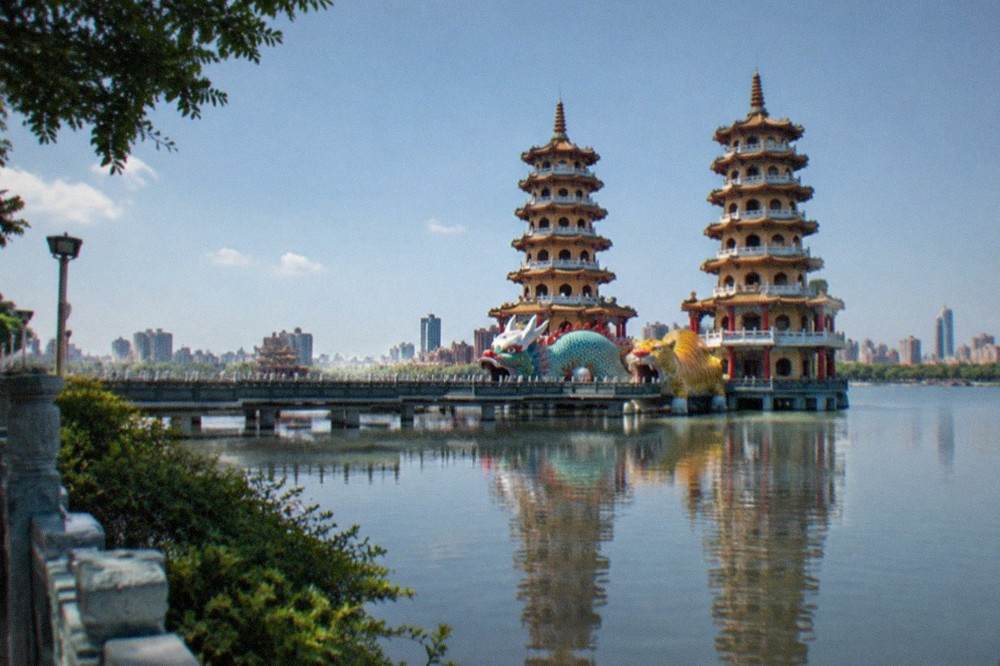
The Lotus Pond is the most photographed of these, a large ornamental lake in the Zuoying district ringed with temples and pagodas, including the Spring and Autumn Pavilions and the Dragon and Tiger Pagodas, which visitors enter through the dragon's mouth and exit through the tiger's. The Confucius Temple at the pond's northern edge is one of the largest in Taiwan. Zuoying is also where the high speed rail station sits, so the pond area is often the first or last thing a rail traveler sees of the city.
Cijin Island is the other essential stop. A short ferry crosses the harbor channel to a thin barrier island with a beach, a lighthouse, a former fortress and a seafood street. The ferry itself is part of the attraction, one of the few places in Taiwan where a routine commuter crossing doubles as a harbor sightseeing ride. Back on the mainland side, the British Consulate at Takao, a restored colonial-era building on a hill above the harbor, is the city's clearest window into its nineteenth century treaty-port period.
Is Kaohsiung Worth Visiting Compared with Tainan?
Kaohsiung is worth visiting and so is Tainan, and the honest comparison is that they do different jobs: Kaohsiung delivers waterfront scale, modern arts infrastructure, beaches and a big-city metro, while Tainan delivers the dense concentration of temples, old streets and heritage food that no other Taiwanese city matches. Most travelers with five or more days in the south should take both rather than choose, using the short high speed rail link between them.
The choice matters more on short trips. With two days, the standard advice on this site is to base in Tainan, because its attractions cluster within walking and short-bus range of each other, and add Kaohsiung only if your flight or rail route runs through it. With three or more days, a split works well: Kaohsiung's harbor and Cijin Island fill a relaxed day that contrasts with Tainan's temple-dense old core. Two full comparisons on this site lay out the trade-offs in detail, one asking which city is better to visit, Tainan or Kaohsiung, and one on whether it is better to stay in Kaohsiung or Tainan.
The two cities also differ in rhythm. Kaohsiung is built for evening waterfront strolls, night markets and metro rides between spread-out sights. Tainan is built for mornings: its old streets and temple trail reward early starts, and its own headline sights, Chihkan Tower among them, keep unusually late hours, open until 21:30 daily at NT$70 at the gate, which makes Tainan the rarer city where the historic center works after dinner too. A traveler who plans Kaohsiung for nights and Tainan for mornings gets the best of both without forcing either city into the other's shape.
How Close Is Kaohsiung to Tainan?
Kaohsiung and Tainan are neighboring cities on Taiwan's western plain, close enough that the high speed rail fare between Zuoying station and Tainan station is NT$140 standard reserved, one of the shortest intercity hops on the whole line, and the two city centers connect by conventional rail, bus and highway as well. The high speed rail stations sit on the edge of each urban area, so door-to-door time is longer than the rail segment alone, but the cities function as a practical pair for itineraries.
The fare detail comes straight from Taiwan High Speed Rail's own fare table, which lists NT$140 for the Zuoying to Tainan standard reserved seat. One caution that matters for planning: Tainan's high speed rail station is at Shalun in Guiren District, outside the old city, so every HSR arrival into Tainan involves a transfer, by shuttle bus or the Shalun rail branch, to reach the historic center. The H31 shuttle is free for HSR passengers with a ticket stub. The full arrival logistics are on the page about how to get from Tainan to Kaohsiung, and the distance question in detail is covered under how close Tainan is to Kaohsiung.
That proximity is why the two cities share so much food culture and why so many tours treat the south as one region. It also explains the multi-day products that string them together, including a three-day southern loop that runs Tainan, Kaohsiung and Kenting in a single itinerary, useful for travelers who want the region covered without re-planning transport each day.
Common Questions About Kaohsiung
What Is Kaohsiung Famous For?
Kaohsiung is famous for its harbor, the Lotus Pond with the Dragon and Tiger Pagodas, the Pier-2 Art Center in converted port warehouses, Cijin Island across the ferry, the Love River, Liuhe and Ruifeng night markets, and its role as Taiwan's laid-back southern metropolis a short high speed rail ride from Tainan.
Is Kaohsiung famous for night markets?
Yes. Liuhe Night Market near the Love River is the internationally famous one, while Ruifeng in the Zuoying area is the larger and more locally favored market. Both run on fixed weekly schedules that change over time, so check current opening days before planning an evening around either.
Which is better, Kaohsiung or Tainan?
They do different jobs. Kaohsiung offers waterfront scale, beaches and modern arts infrastructure; Tainan offers the densest concentration of temples, old streets and heritage food in Taiwan. With three or more days in the south, take both, using the NT$140 high speed rail hop between Zuoying and Tainan.
What food should you try in Kaohsiung?
Seafood first: grilled squid, fresh harbor catch and the seafood streets near the fishing harbor and on Cijin Island. Then the night market staples at Liuhe or Ruifeng. Save Tainan's origin-story dishes, danzai noodles, coffin bread and dawn beef soup, for Tainan itself.
How many days does Kaohsiung need?
Two full days cover the core: the Lotus Pond and Zuoying sights, Pier-2 and the harbor, Cijin Island and an evening at a night market. A third day allows day trips, including the short hop north to Tainan or the run south toward Kenting.
Do you need to choose between Kaohsiung and Taipei?
No, but they feel like different countries. Taipei is the northern capital, dense, administrative and fast. Kaohsiung is warmer, more spread out, cheaper and built around water. Most first-time Taiwan routes include both, flying into one and out of the other.
Kaohsiung's fame, in the end, is a port story that turned into a culture story, and its best use for a Tainan-bound traveler is as the other half of a southern pair. Eat the heritage dishes in Tainan, walk the harbor in Kaohsiung, and let the 140-dollar rail ticket do the connecting. That is the shape of a southern Taiwan trip that gets both cities right, and every practical detail for the Tainan half of it is on this Tainan Travel Guide site, starting with the arrival and getting-around pages.