Is It Safe for US Citizens to Travel to Taiwan Right Now?
The current US travel advisory for Taiwan, typhoon and health realities, visa rules for US citizens, and what the verified numbers say about safety in Tainan.
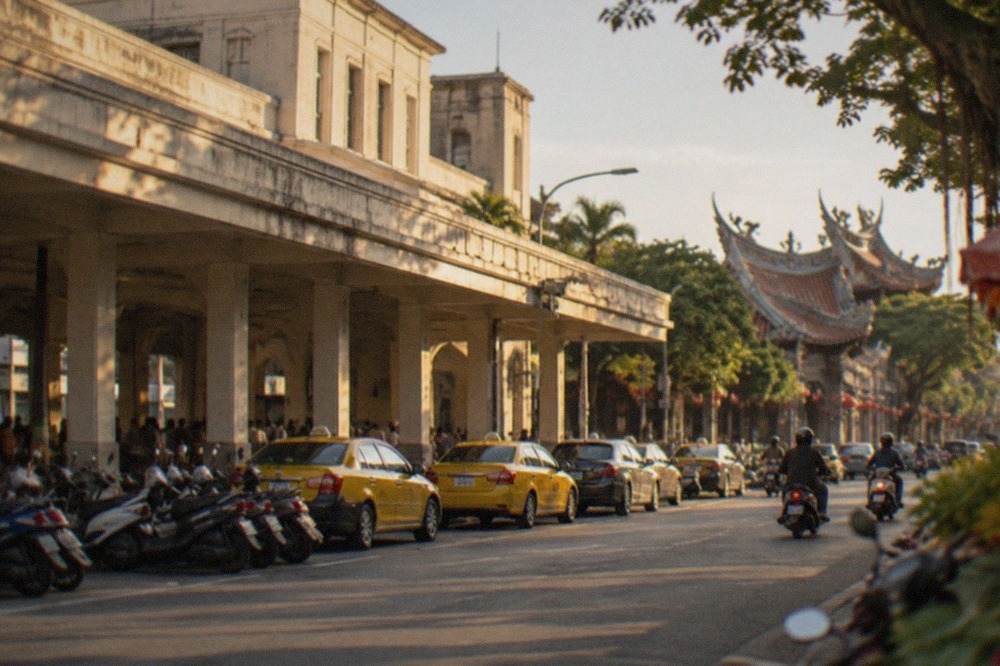
Taiwan sits at the lowest rung of the US government's four-level travel advisory scale, and it has stayed there for years. The State Department's current notice for Taiwan is Level 1: Exercise Normal Precautions, the same category it assigns to destinations it considers broadly safe, updated in late 2025 and carried into 2026 with no elevation. For a US citizen weighing a trip, the honest summary is that Taiwan's real risks are seasonal weather and the ordinary hazards of any city, not crime or unrest. This page walks through what the official sources say, what the verified climate data shows about typhoon season, and what it all means for a visit to Tainan specifically, the old capital on the southwest coast.
What Is the Current US Travel Advisory for Taiwan?
The US State Department maintains a Level 1 advisory, Exercise Normal Precautions, for Taiwan, its lowest tier, and that rating was stable through late 2025 and into 2026. Level 1 means the department considers ordinary travel safe and asks visitors to take the same sensible precautions they would at home, not that any special caution is required. No elevated advisory, no health notice and no departure warning specific to Taiwan is in force.
The State Department's Taiwan advisory page is the primary source, and it is worth reading directly rather than relying on secondhand summaries, because advisory levels do change and the page carries the current text. The UK's Foreign, Commonwealth and Development Office takes the same structural view, with standard advice plus seasonal typhoon guidance rather than any elevated warning. Two governments, two separate assessments, one conclusion: no official body is telling US citizens to avoid Taiwan.
What Level 1 does not mean is that Taiwan is risk-free. The advisory system's own wording is that Level 1 is the lowest precaution level, not the absence of one. Taiwan sits in a seismically active region, and earthquakes happen; the practical response is the same as in Japan or California, know where your exits are and follow local instructions. The State Department's general guidance also reminds travelers to enroll in the Smart Traveler Enrollment Program so the nearest American Institute in Taiwan can reach them in an emergency.
Is Tainan Itself Safe for American Visitors?
Tainan is a low-crime, low-conflict city by the standards of Taiwan, which is itself one of Asia's most-visited and most-stable destinations. No verified crime statistic, safety index or incident count for Tainan exists in the official sources this site is allowed to cite, so the honest statement is structural: the city is a special municipality built around temples, night markets and historic sites, its peak visitor season is a family pilgrimage season, and nothing in any official advisory singles it out for concern.
That last point deserves expansion, because it is a genuine information gain rather than a reassurance. The Tourism Administration's own visitor dataset for 2023 shows Tainan's biggest draws are religious: Nankunshen Daitian Temple recorded 6,583,100 visitors and the Anping district 4,441,443, roughly ten to fifteen times the number at the Dutch-era forts. The busiest months are January and February, driven by Lunar New Year and temple pilgrimage. A city whose tourism economy runs on family temple visits in winter is not a city with a safety problem travelers need to plan around. One caveat the dataset itself carries: each site compiles its own count, methods differ, and the 2020 to 2022 figures are COVID-depressed.
Practical safety in Tainan is mostly traffic safety. Scooters are everywhere, and the city's streets mix them with pedestrians and tour buses in the old quarters. The verified transport facts worth knowing: city buses are free for the first 8 km with an electronic card such as EasyCard or iPASS, provided you tap on and tap off, and the cash fare for the same trip is 26. The High Speed Rail station is not in the city center but at Shalun in Guiren District, so every arrival involves a transfer, and the H31 shuttle is free for HSR passengers on production of a ticket stub. Our Tainan safety guide covers street-level practicalities in more depth.
If the question behind the question is whether Tainan is worth the flight at all, the answer on this site's own pages is an unqualified yes: see is Tainan worth visiting and what Tainan is best known for.

What About Typhoons and the Rainy Season?
Typhoon risk in Taiwan concentrates in the late summer months, roughly July through September, and the broader season runs into October. No official frequency statistic is published in the sources this site cites, but the Central Weather Administration's own 1991 to 2020 climate normals for Tainan show the pattern plainly: August averages 466 mm of rain across 16 wet days, while December averages 16 mm across 3, and nearly three-quarters of the annual 1,761 mm falls between May and September.
The Central Weather Administration's published climate normals are the primary source for that table, and they matter for planning more than any advisory paragraph. October to March is the dry, comfortable half of the Tainan year: October is actually the driest month by wet days, 2.8 on average, while still averaging maxima of 30.8C. That aligns exactly with the visitor data, which is why January and February, not summer, are Tainan's peak.
| Month | Mean max (C) | Rain (mm) | Wet days | Days over 30C |
|---|---|---|---|---|
| January | 23.0 | 20.7 | 3.8 | 0.0 |
| April | 29.3 | 69.8 | 5.9 | 14.9 |
| August | 32.6 | 466.1 | 15.8 | 27.6 |
| October | 30.8 | 30.8 | 2.8 | 23.6 |
| December | 24.4 | 16.2 | 3.0 | 0.5 |
Two practical notes follow from this. First, a typhoon day in Taiwan is declared by the local city government, not nationally: when Tainan announces one, schools and many offices close, and attractions and transport may suspend. The Tainan Art Museum states on its own hours page that it closes when the city government announces a work suspension for a typhoon or earthquake, which is a concrete, verified example of how the system works. Second, the rain is not evenly spread: a July trip faces a real chance of heavy rain, a December trip almost none. For live conditions, see our pages on whether there is a typhoon in Taiwan now and whether it is rainy season in Taiwan now.
Do US Citizens Need a Visa for Taiwan?
US citizens receive 90 days of visa-free entry to Taiwan with a valid US passport, confirmed by Taiwan's Bureau of Consular Affairs, and no visa or advance authorization is needed for tourism. The passport must be valid for the duration of the stay, and one extension of the 90-day period is possible from inside Taiwan. No 2026 rule change affects this arrangement.
The practical mechanics are simple. Taiwan's visa-free program covers US passport holders arriving as tourists, and the Bureau of Consular Affairs publishes the terms. Arrival is usually through Taoyuan (TPE) near Taipei or Kaohsiung (KHH), because Tainan's own airport is small, mostly domestic, with only limited short-haul international service; most international visitors continue to Tainan by High Speed Rail. The fare from Taipei to Tainan is NT$1,350 for a reserved standard seat on Taiwan High Speed Rail's own fare table, and from Zuoying, the Kaohsiung HSR station, it is NT$140. Journey times vary by service, so read them off the operator's own timetable search rather than any secondhand figure.
One travel-document note that is not a visa matter: an International Driving Permit is not automatically sufficient for scooter rental in Taiwan. The official position is that Taiwan expects an IDP to be registered with a Motor Vehicles Office, and rental shops may refuse without that registration. Do not plan a scooter-based trip on the assumption that a US state license plus an IDP is enough, and check the official Motor Vehicles Office page before renting.
What About Health, Water and Everyday Precautions?
No elevated health notice for Taiwan is in force for US citizens, and no official statement confirms that Tainan's tap water is safe to drink unboiled. The honest, sourced line is that bottled and filtered water are everywhere, convenience stores are on every corner, and most locals boil or filter rather than drinking from the tap. Routine travel health precautions, the same ones the State Department lists for any Level 1 destination, are the whole of the medical preparation a typical visitor needs.
Everyday precautions are refreshingly ordinary. Cards work at hotels, department stores and convenience stores, while night markets and small eateries run on cash, so carry both. English signage is improving in Tainan's tourist areas under city bilingual initiatives, but it is not universal in older streets, so a translation app helps. Typhoon-season travelers should keep plans flexible and watch the Central Weather Administration's warnings, which are published in English. And if the weather turns wet, Siaobei Night Market is indoors and open every day, noon to midnight, while the big outdoor markets rotate by day of the week, so a rainy Tuesday does not mean a lost evening.
| Concern | What the official sources say |
|---|---|
| US advisory level | Level 1, Exercise Normal Precautions, stable through late 2025 into 2026 |
| Visa for US citizens | 90 days visa-free, one extension possible, no 2026 change |
| Typhoon timing | Risk concentrates July to September; typhoon days declared locally |
| Tap water | No verified safe-to-drink statement; boiling or filtering is standard practice |
| Payments | Cards at hotels and chains, cash at night markets and small stalls |
For a first-time visitor still deciding how much time to allow, where to go in Tainan for the first time and how many days you need in Tainan are the natural next stops on this site.
Common Questions About US Citizen Travel to Taiwan
Is It Safe For US Citizens To Travel To Taiwan Right Now?
Yes. The US State Department keeps Taiwan at Level 1, Exercise Normal Precautions, its lowest advisory tier, with no elevation, no health notice and no departure warning in force. The realistic risks are seasonal weather, especially typhoons from July to September, and ordinary city precautions, not crime or unrest.
Is Tainan safe at night?
Tainan's evenings run on night markets, temple streets and food stalls, and no official source singles the city out for nighttime concern. The verified schedule is worth knowing: Garden Night Market opens Thursday to Sunday, Wusheng on Wednesday, Friday and Saturday, Dadong on Monday, Tuesday and Friday, and Siaobei is indoors and open daily. Check the city's current pages before you go, because the days do change.
When is typhoon season in Taiwan?
Risk concentrates in the late summer months, roughly July through September, within a broader season that extends into October. The Central Weather Administration's 1991 to 2020 normals for Tainan show August as the wettest month at 466 mm across 16 wet days. Typhoon days are declared by the local city government, and attractions follow the city's announcement.
Do US citizens need a visa for Taiwan?
No. US passport holders get 90 days visa-free for tourism, per Taiwan's Bureau of Consular Affairs, with one extension possible from inside Taiwan. The passport should be valid for the duration of the stay. No 2026 rule change affects this.
Can I drink the tap water in Tainan?
No official statement verifies that Tainan's tap water is safe to drink unboiled, and this site will not claim it. Bottled and filtered water are everywhere, convenience stores are on every corner, and most locals boil or filter. Treat it as you would in many Asian cities and the question resolves itself.
Is Taiwan safe for solo American travelers?
The advisory framework applies the same Level 1 rating regardless of travel style, and Taiwan is a standard solo destination. The practical notes that matter in Tainan are traffic awareness around scooters, carrying cash for night markets alongside cards, and watching weather warnings in late summer. Enrolling in the Smart Traveler Enrollment Program before departure is the one step that costs nothing and helps in any emergency.
The bottom line for an American planning a trip: the official record supports going. Taiwan's advisory level is the lowest the State Department issues, US citizens enter visa-free for 90 days, and Tainan's verified data, a winter pilgrimage peak, an indoor daily night market, a dry and sunny October to March, describes a city whose main hazards are a July downpour and a scooter at an unmarked corner. Pack for the season, keep an eye on the weather administration's warnings if traveling in late summer, and the rest is ordinary travel sense. More of the practical layer, from arrival at the HSR station to getting around on free-for-8-km buses, is covered across Tainan Travel Guide.